Posted from my Patreon community where I take requests for book lists to create, share resources, and offer up coaching for members. It is a very easy way for me to be accessible to people around the world, you can join here.
I am continuing with my updates of the picture book lists I made several years ago to accompany the teaching of a variety of reading skills. This time, the focus is on “Internal Conflict” or that moment when a character asks a large question in order to try to make sense of themselves or the story. This can give us a further clue as to who they are, the conflicts of the story, why they may be acting the way they are, the theme of the story, or even predict the future.
When I first started out teaching this skill, I was inspired by the language of Notice and Note: Strategies for Close Reading by Kylene Beers and Robert Probst. This book provided my students with the foundation for deeper reading conversations and a common language as we developed our thoughts and discussion skills.
White Water by Michael S. Bandy and Eric Stein has several tough questions in it and also doubles as an amazing book to discuss a really powerful topic with students; racial segregation. This is the book I used to introduce the strategy to my students with the bonus of having aha moments and a contrast and contradiction in it as well.
A book near and dear to my heart The Yellow Star By Carmen Agra Deedy. Although the story is not true, it still speaks of my people’s fight against the Nazi occupation and opens up great conversations. The tough question is when King Christian wonders what can be done to fight the yellow stars.
What Do You Do With An Idea? by Kobi Yamada is a book I use a lot in the classroom as it is great for inferencing, and inspiring creativity, but it also works well for this strategy as it starts out with tough questions and then has several more further in.
The tough question is not posed as a question in Henry’s Freedom Box by Ellen Levine but instead as a desire to be free. I would use this later in the strategy to teach students that tough questions are not always in a question format.
Boats for Papa by Jessixa Bagley only has one question in it but it will lead to great questions and will also be a great inference exercise.
Did I miss any? If you are wondering how I use these picture books, just ask, and I will gladly share ideas.
PS: Are you looking for coaching, in-person support, or virtual presentations? I am available and would love to support your work. Whereas I am physically located in Denmark now, I can travel if needed. In fact, I will be in the US and Canada in February 2023. If you would like me to be a part of your professional development, please reach out. I am here to help. For a lot more posts, resources, live and recorded professional development, please join my Patreon community where most of my sharing takes place these days.
Posted from my Patreon community where I take requests for book lists to create, share resources, and offer up coaching for members. It is a very easy way for me to be accessible to people around the world, you can join here.
I am continuing with my updates of the picture book lists I made several years ago to accompany the teaching of a variety of reading skills. This time, the focus is on “Memory Moments” or that moment when a character has a flashback that in some ways gives us further clue to who they are, why they may be acting the way they are, the theme of the story, or even predict the future.
When I first started out teaching this skill, I was inspired by the language of Notice and Note: Strategies for Close Reading by Kylene Beers and Robert Probst. This book provided my students with the foundation for deeper reading conversations and a common language as we developed our thoughts and discussion skills.
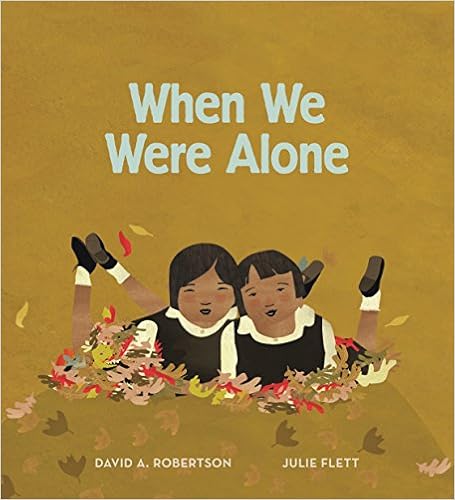
An incredible picture book, When We Were Alone by David A. Robertson and Julie Flett have a memory moment every time the grandmother answers her grandchild’s questions. Powerful message that will capture curiosity. This is the book I will use with my 7th graders.
Both The Day the Crayons Quit and its follow up The Day the Crayons Came Home by Drew Daywalt and illustrated by Oliver Jeffers have great memory moments as the crayons tell Duncan how they were used and what they remember. Considering these are must have picture books for any classroom, since there are so many things you can teach with them, I am thrilled that both can be used for this strategy as well.
The retelling of the story of King Christian X in The Yellow Star by Carmen Agra Deedy and illustrated by Henri Sørensen is an example of a memory moment in the lesson that we are all to glean from it. The fact that the story is not true does not hinder its deeper meaning.
The books of Peter H. Reynolds has been featured in all of my signpost picture books, and it speaks to their incredible versatility. You and Me written by Susan Verdi and illustrated by Peter H. Reynolds is a memory moment from the start as the characters reminisce about what would have happened had their day not unfolded the way it did. A beautiful story of friendship and serendipity.
Memories abound as the Wolf shares the story of what really happened with the pigs in Tell the Truth B.B. Wolf by Judy Sierra and illustrated by Jotto Seirold.
Did I miss any? If you are wondering how I use these picture books, just ask, and I will gladly share ideas.
PS: Are you looking for coaching, in-person support, or virtual presentations? I am available and would love to support your work. Whereas I am physically located in Denmark now, I can travel if needed. In fact, I will be in the US and Canada in February 2023. If you would like me to be a part of your professional development, please reach out. I am here to help. For a lot more posts, resources, live and recorded professional development, please join my Patreon community where most of my sharing takes place these days.
I cannot be the only one who navigates productivity guilt.
You know, that feeling of never having accomplished enough as an educator, or adult, and therefore not deserving of rest.
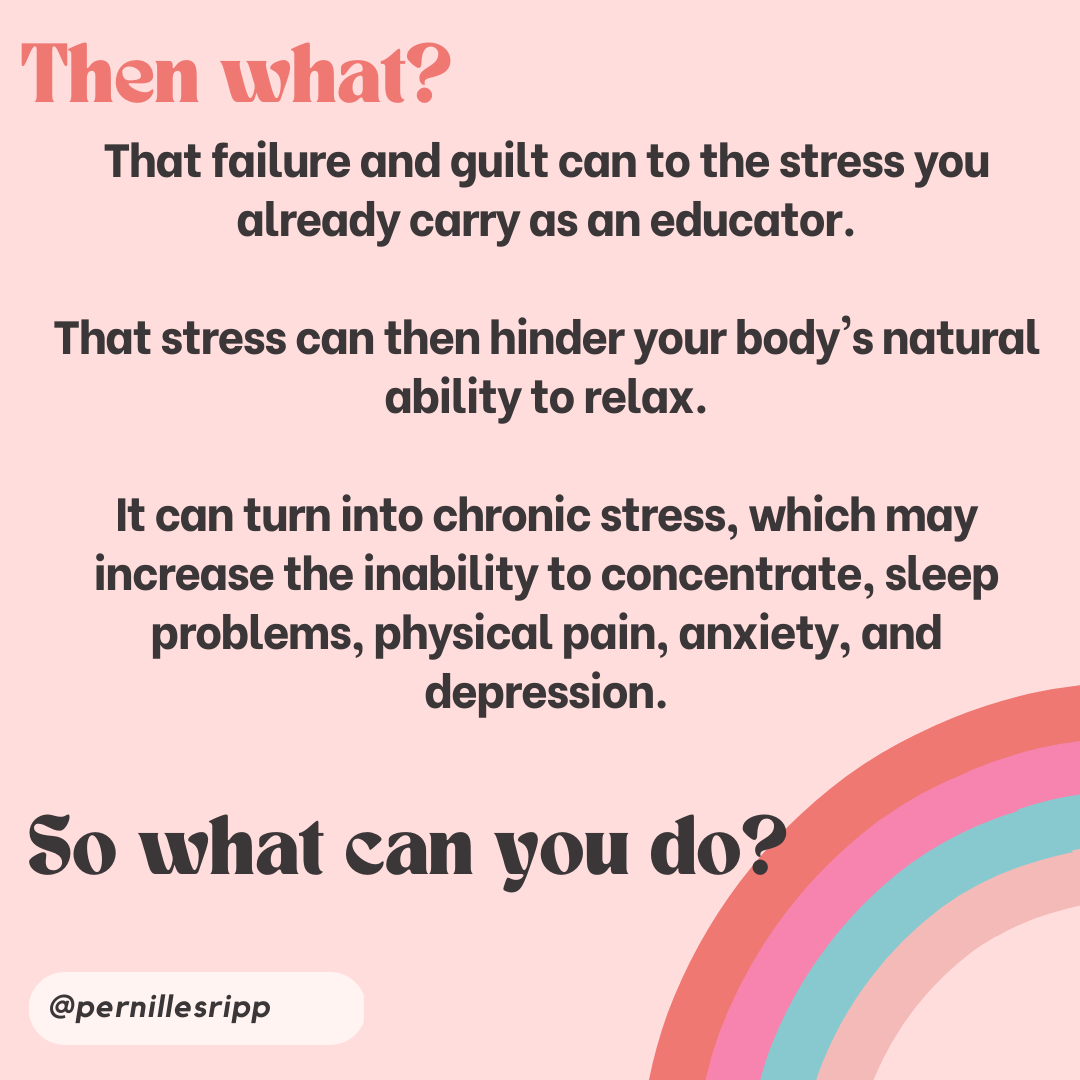
The bad news? Productivity guilt can lead to major health implications, I know this, I have had major health implications the last 5 years of being a teacher such as anxiety, a weakened immune system leading to multiple pneumonia and bronchitis bouts, and high blood pressure.
The good news – it doesn’t have to be this way. But as someone who is still trying to break productivity guilt habits, it is hard to break. The educational system is set up to make us constantly cross our own self-imposed boundaries. And the needs of our communities can be so high. So finding a way to still be productive while also knowing when to work can be a process in itself.
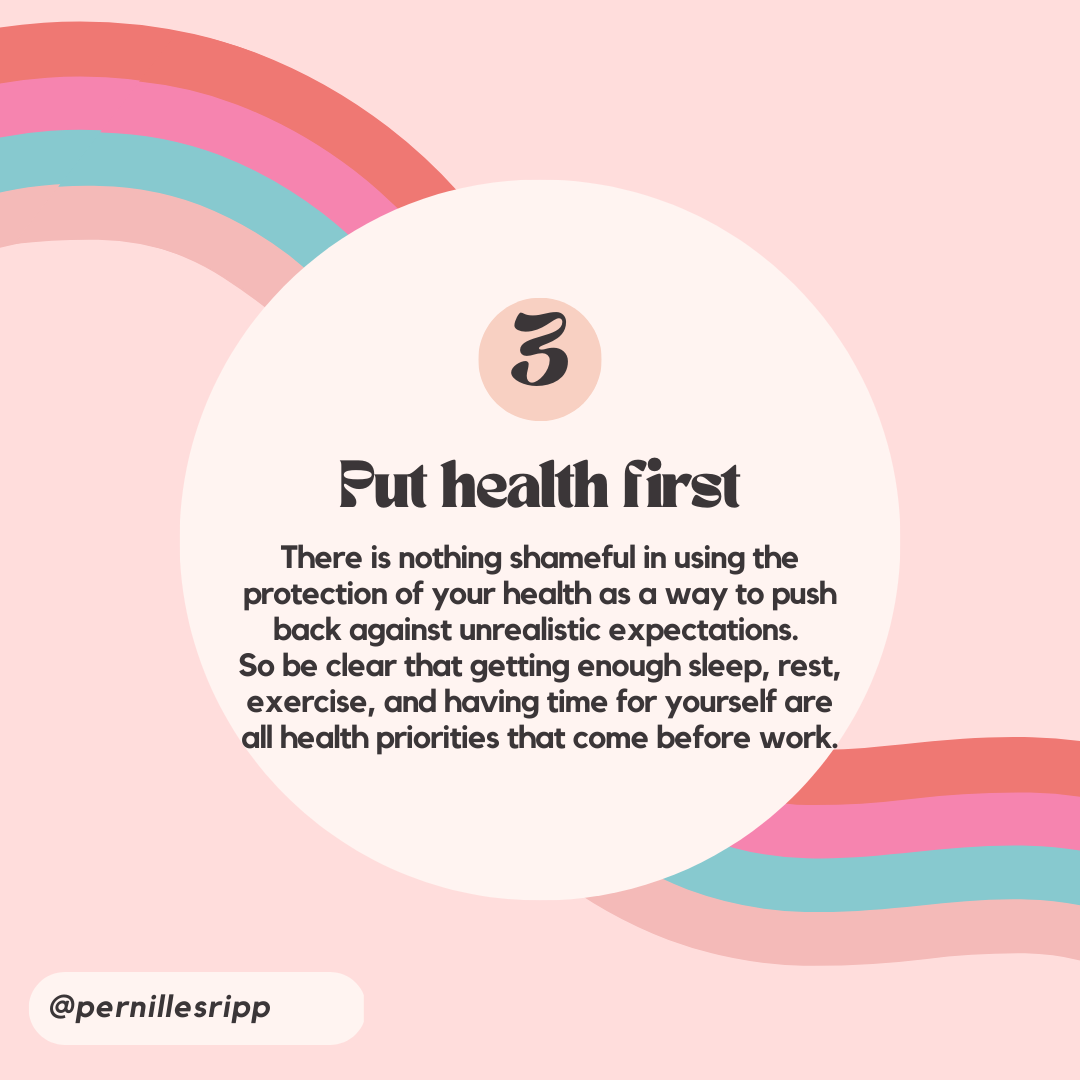
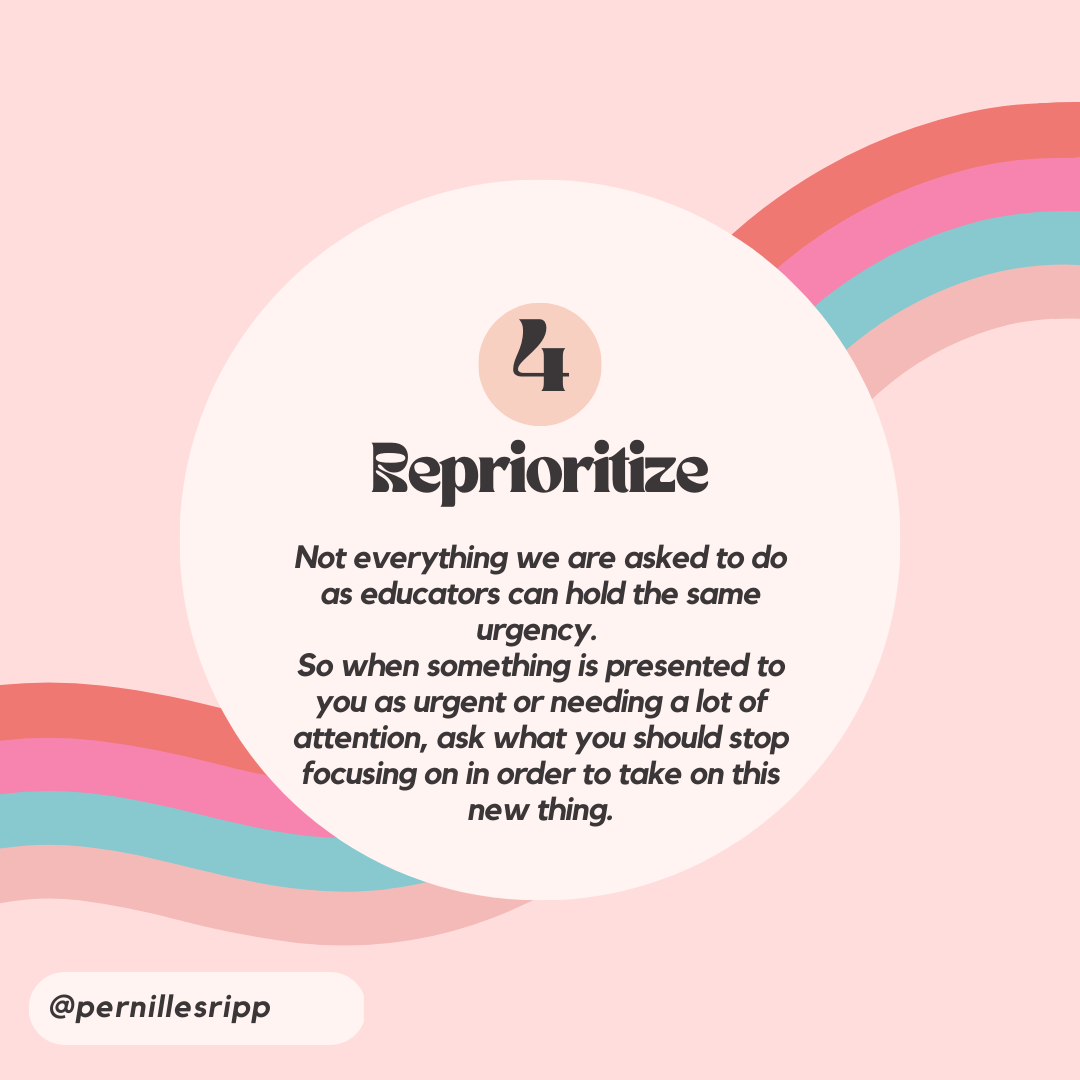
After learning more about productivity guilt, I wanted to share a few tips and ideas for how to recognize t, and more importantly, how to do something about it in order for you to feel healthier. I cross-posted this on Instagram but wanted to make sure I shared it here as well.
If you are not sure how to cut down on your workload, I will gladly help alleviate some of it. Just let me know how I can help.
Here are a few ideas for how to recognize and lessen productivity guilt so you can get back to living the life you deserve.
Posted from my Patreon community where I take requests for book lists to create, share resources, and offer up coaching for members. It is a very easy way for me to be accessible to people around the world, you can join here.
One of the reading strategies we teach students is to notice character changes, whether it be in chapter books, movies, or even in life. When I first started out teaching this strategy, I was inspired by the language of Notice and Note: Strategies for Close Reading by Kylene Beers and Robert Probst. This book provided my students with the foundation for having deeper reading conversations and a common language as we developed our thoughts and our discussion skills.
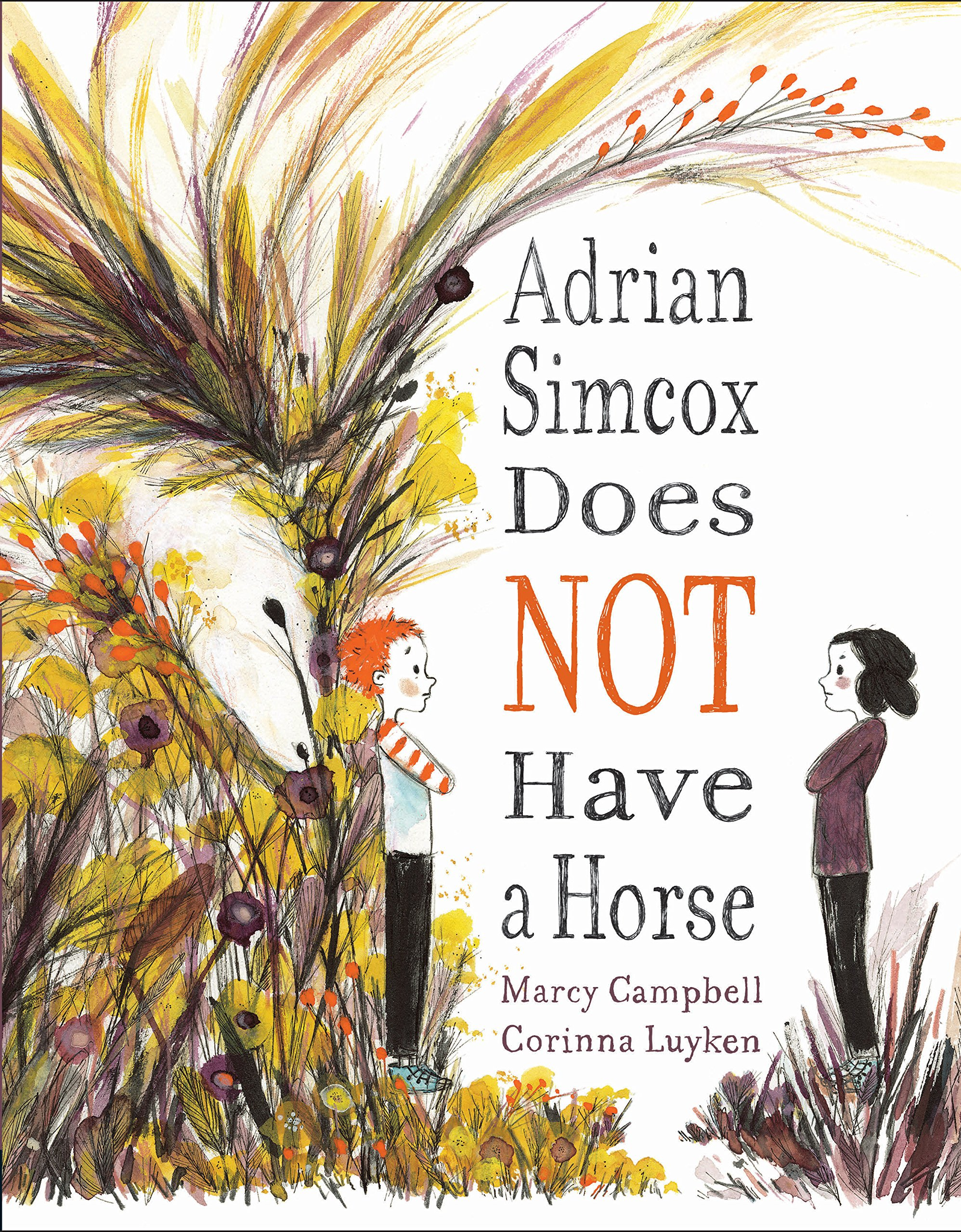
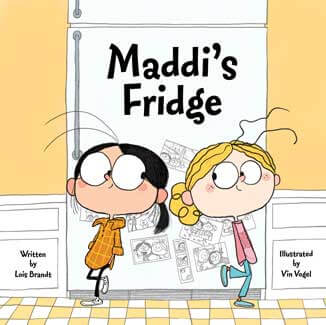
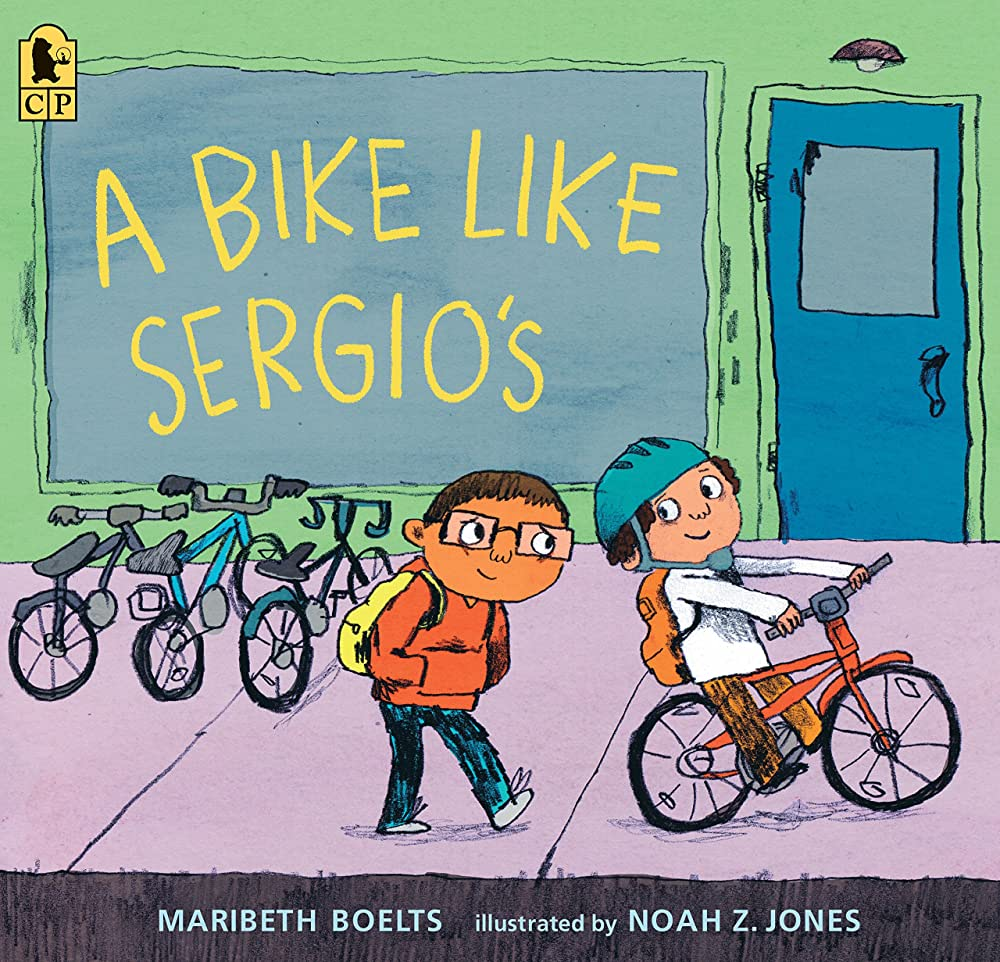
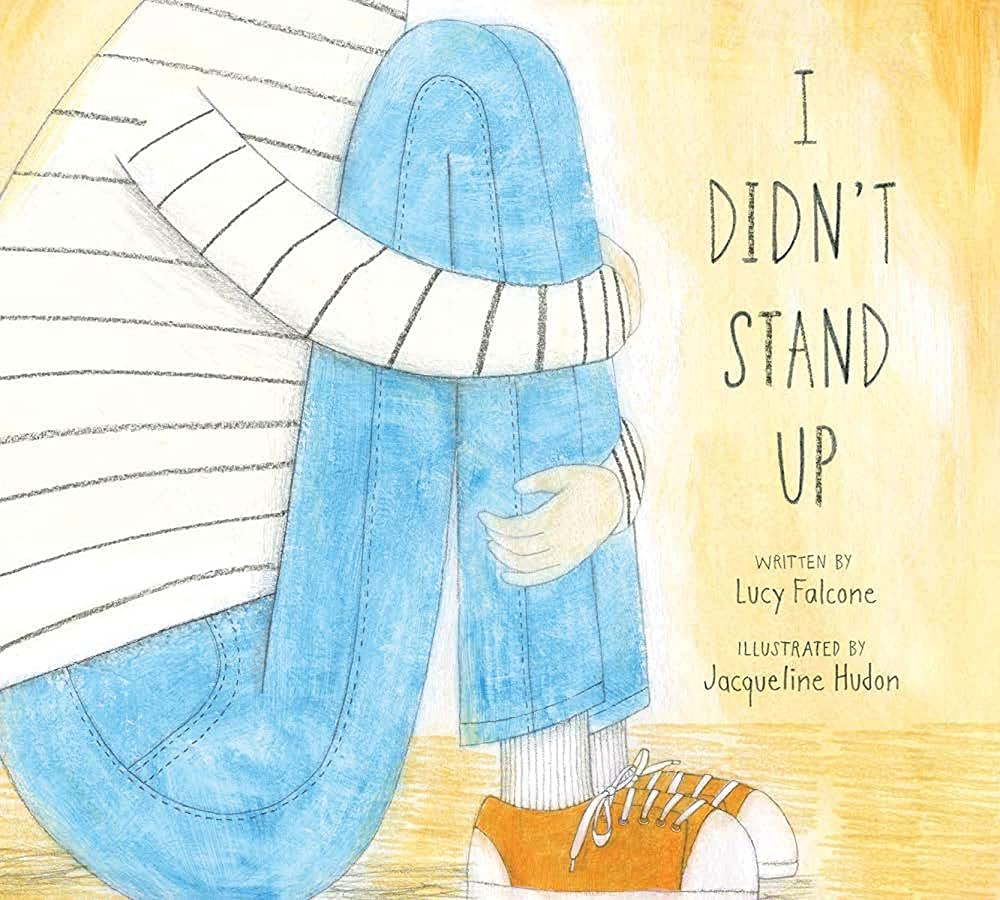
While being able to track characters and notice when they act out of character is a great reading strategy, it is an even bigger life skill. Inferring and noticing when people don’t seem like themselves or when they change can be practiced within literature and media. As a way to introduce and really focus on the strategy, I have long used picture books to showcase it. 8 years ago, I created this initial list of picture books and I figured it was about time to update it as I sit and watch Titanic with my kids.
The Noisy Classroom by Angela Shanté and illustrated by Alison Hawkins. A young girl is about to enter the third grade, but this year she’s put into Ms. Johnson’s noisy class. Everything about the noisy class is odd. While all the other classes are quiet, Ms. Johnson sings and the kids chatter all day. The door is always closed, yet sounds from it can be heard in the hallway. With summer coming to an end and school starting, the girl realizes that soon she’ll be going to the noisy class. What will school be like now?
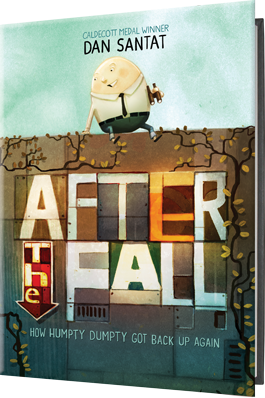
In After the Fall by Dan Santat, Humpty Dumpty has to come to terms with his own fear and anxiety after a great big fall. But that requires him to act opposite of what his fear tells him to.
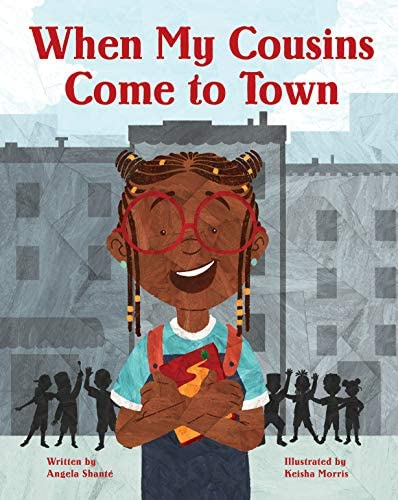
When my Cousins Come to Town by Angela Shanté and illustrated by Keisha Morris. Fitting in can be hard, but standing out isn’t easy either! Every summer a young girl eagerly waits for her cousins to come visit and celebrate her birthday. All her cousins are unique in their own ways and have earned cool nicknames for themselves… except for the girl. But this year things are going to be different. This year before summer ends, she’s determined to earn her own nickname!
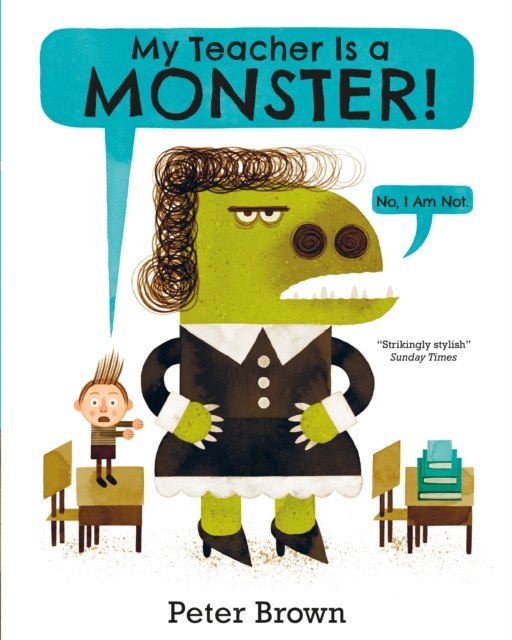
My Teacher is a Monster by Peter Brown. A young boy named Bobby has the worst teacher. She’s loud, she yells, and if you throw paper airplanes, she won’t allow you to enjoy recess. She is a monster! Luckily, Bobby can go to his favorite spot in the park on weekends to play. Until one day… he finds his teacher there! Over the course of one day, Bobby learns that monsters are not always what they seem.
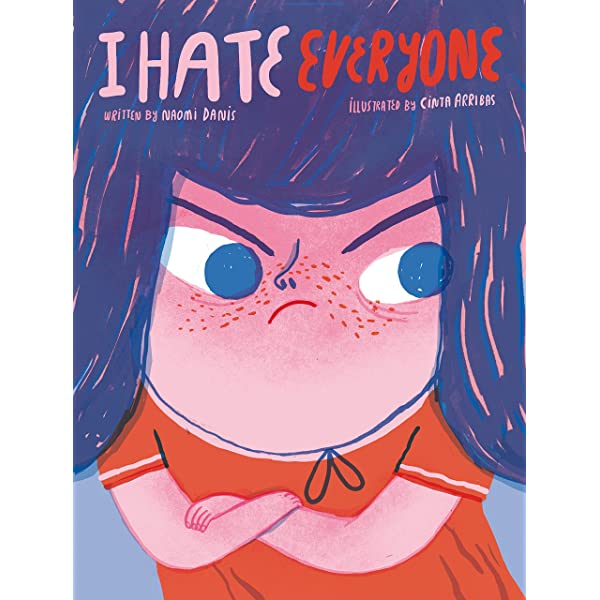
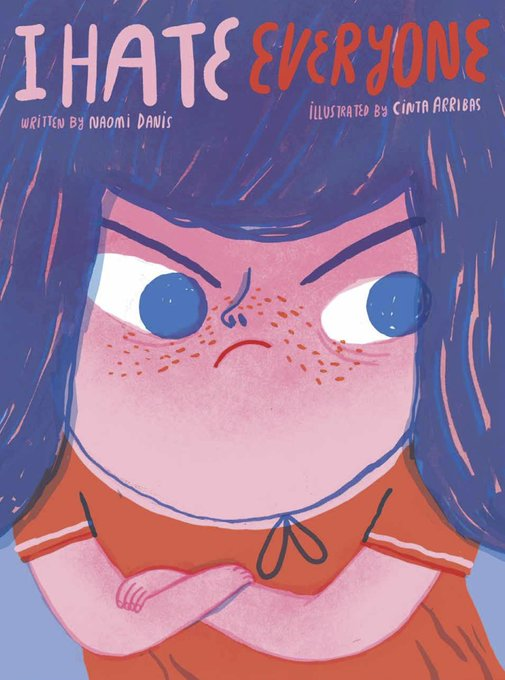
I Hate Everyone by Naomi Davis and illustrated by Cinta Arribas. “I hate everyone.” In your worst mood, it’s a phrase you might want to shout out loud, even if, deep down, you don’t really mean it. Set at a birthday party, this disgruntled, first-person story portrays the confusing feelings that sometimes make it impossible to be nice, even-or especially-when everyone else is in a partying mode.
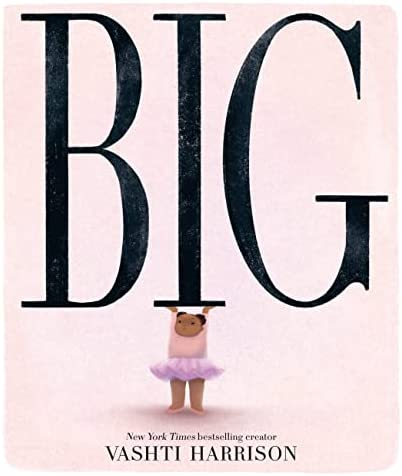
In Big by Vashti Harrison we follow our main character and she goes from loving herself, to feeling the direct pressure from society to fit in. Can she find herself and her strength again?
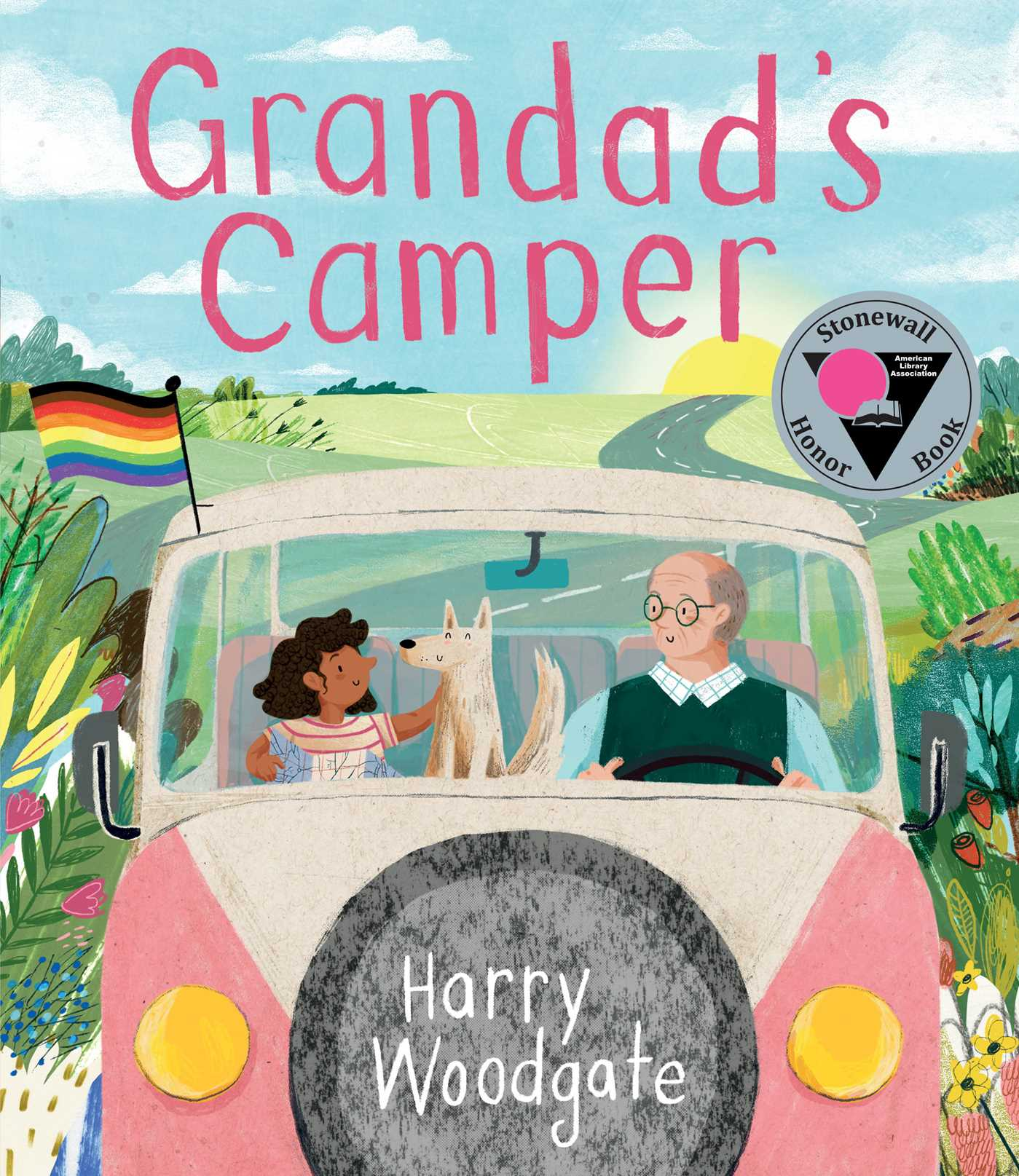
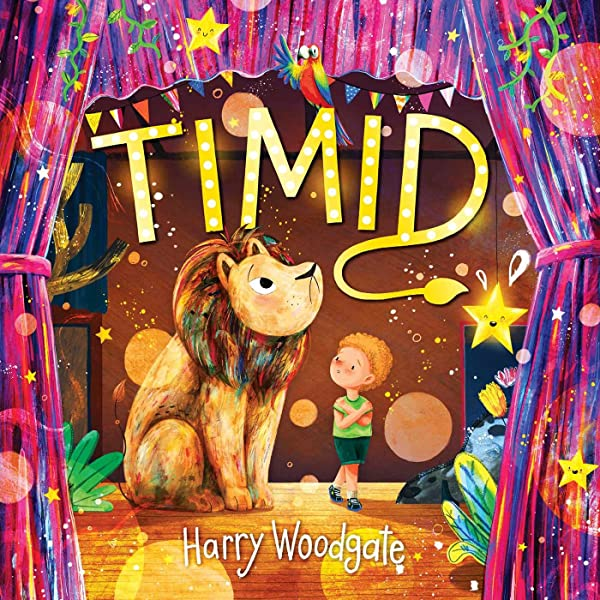
Timid by Harry Woodgate offers up the story of Timmy, who loves to perform even though they also have anxiety whenever they are asked to perform in front of others. While they want to overcome it, and nearly do, it turns out letting go of who you used to be is a lot harder than one might think.
In Francis Discovers Possible by Ashlee Latimer and illustrated by Shahrzad Maydani, Francis loves learning new words. At school, when her class is reviewing words that begin with the letter “F,” someone sneers “Fat, like Francis.” Francis always thought “fat” was a warm word—like snuggling with Mama or belly rubs for her puppy. But now “fat” feels cold, and Francis feels very small. After school, Baba takes Francis to the park. She chooses the bench instead of the swing set, and gets very quiet. But when Baba uses the word “possible,” Francis wants to know what it means.
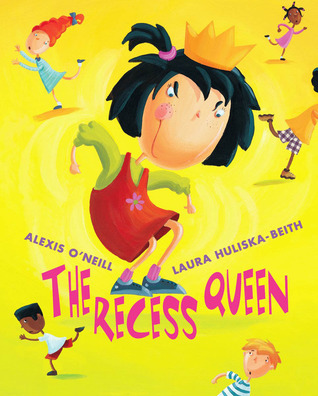
In The Recess Queen by Alexis O’Neill and Laura Huliska-Beith, Mean Jean was Recess Queen and nobody said any different. Nobody swung until Mean Jean swung. Nobody kicked until Mean Jean kicked. Nobody bounced until Mean Jean bounced. If kids ever crossed her, she’d push ’em and smoosh ’em, lollapaloosh ’em, hammer ’em, slammer ’em, kitz and kajammer ’em. Until a new kid came to school! With her irrepressible spirit, the new girl dethrones the reigning recess bully by becoming her friend in this infectious playground romp.
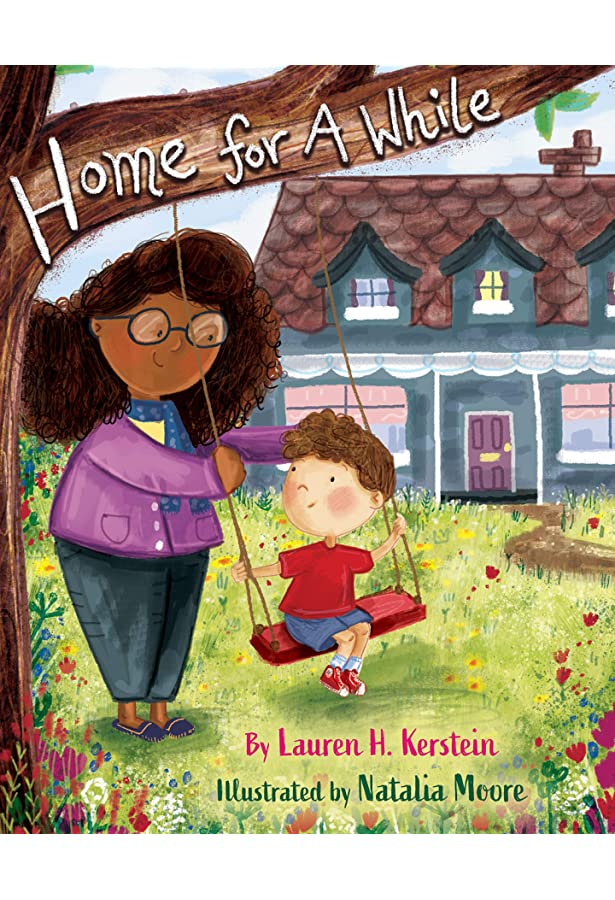
In Home for a While by Lauren H. Kerstein and illustrated by Natalie Moore, Calvin is in foster care, and he wants to trust someone, anyone, but is afraid to open his heart. He has lived in a lot of houses, but he still hasn’t found his home. When he moves in with Maggie, she shows him respect, offers him kindness, and makes him see things in himself that he’s never noticed before. Maybe this isn’t just another house, maybe this is a place Calvin can call home, for a while.
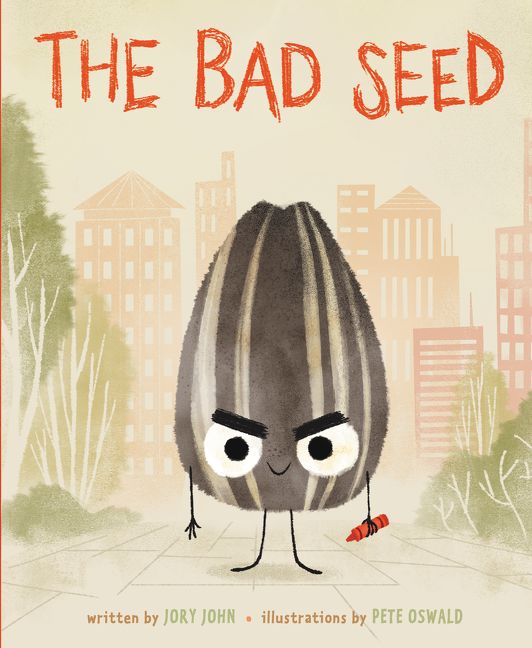
It’s like this picture book was written just for this lesson. The Bad Seed by Jory John and illustrated by Pete Oswald features two changes in character and also a powerful message about trauma and what can happen to you even after bad things happen.
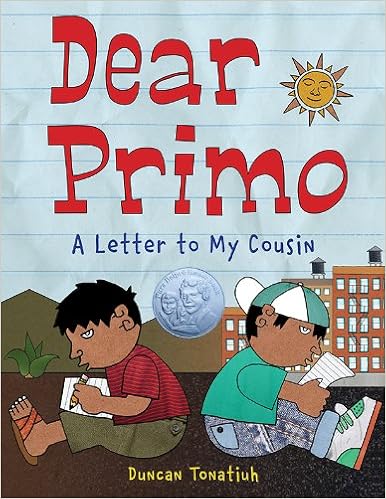
As two cousins write to each other, we see the contrast (and similarities) between their lives.
Tuesday by David Wiesner started us off in our discussions about contrasts and contradictions. This fantastic nearly wordless picture book is an easy entry into this discussion as it allows students to easily see how the magical event with the toads floating is in contrast to what frogs normally do.
With one of my classes I also used Rules of Summer by Shaun Tan, where the contrast lies in the rules being shared and the images. While this one was a little more advanced for the students, they greatly enjoyed the illustrations and discussing what they might mean.
The Invisible Boy by Trudy Ludwig and illustrated by Patrice Barton. Meet Brian, the invisible boy. Nobody in class ever seems to notice him or think to include him in their group, game, or birthday party . . . until, that is, a new kid comes to class.When Justin, the new boy, arrives, Brian is the first to make him feel welcome. And when Brian and Justin team up to work on a class project together, Brian finds a way to shine
Another contrast and contradiction text between self and society in Mr. Tiger Goes Wild by Peter Brown where Mr. Tiger just will not conform. When he tries to change his ways, he loses his real identity.
That Is Not A Good Idea by Mo Willems is another great example of a character changing and acting in a different way than we would expect. I do love this devious little tale.
What I love about Gaston by Kelly DiPucchio, illustrated by Christian Robinson, is that most of my students can relate to its message about being expected to fit in in a certain way. The contrast lies between the characters and how their upbringing has shaped them.
Any day I can use Pete and Pickles by Berkeley Breathed is a good day in our room. Here, we focus on the change that Pete the pig goes through as he meets Pickles. Great book also to use for character development and inferring.
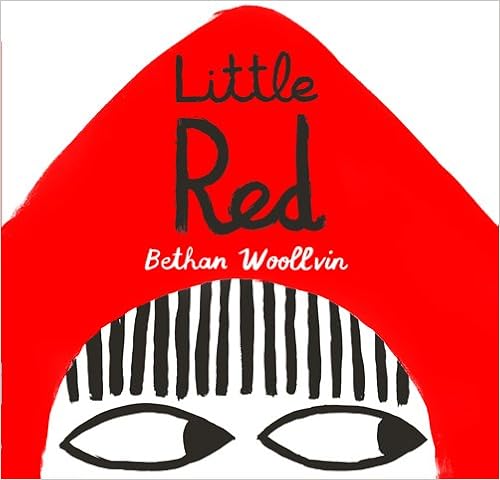
Little Red by Bethan Woolvin is wickedly funny, it follows the path of the regular story but with a twist at the end and it is that twist that provides our contract and contradiction.
Which books have you used for contrast and contradictions?
PS: Are you looking for coaching, in-person support, or virtual presentations? I am available and would love to support your work. Whereas I am physically located in Denmark now, I can travel if needed. In fact, I will be in the US and Canada in February 2023. If you would like me to be a part of your professional development, please reach out. I am here to help. For a lot more posts, resources, live and recorded professional development, please join my Patreon community where most of my sharing takes place these days.
About the kids whose existence we say doesn’t belong in the stories on our shelves. About the kids whose lives are not accepted in our spaces; classroom, libraries, hallways, and schools.
About the lives we don’t share in our book clubs, read alouds, or mentor text explorations. Because we are scared to be challenged. because we are directed to censor. Because we are told to remove titles. To withdraw invitations. To not share things that may potentially offend.
About the kids whose lives need to be validated and protected in this continued time of hate in the US.
In the land of the free, we have always known only some are truly free. Free to be the center of attention. Free to hold the power. Free to be held up as something worth paying attention to.
Why do I care while I sit in Denmark, a country that has prohibited book banning since the 1800’s (yes, really!)?
Because what is banned in the US, doesn’t get translated to other countries at the same rate. Those authors don’t get invited to conferences, to schools, to gatherings at the same rate.
Their sales are hurt by the book bans, it is not a badge of honor, which then hurts further publications.
When they write from their own experience, book bans and challenges once again show them that the story they carry is not one that is palatable to share with the world. That they should be ashamed to share who they are.
Because what is gatekept, simply not purchased, not shared, not published, or not even written out of fear of how it will be challenged and banned, directly impacts kids’ reading experiences globally.
The US publishing industry is the biggest in the world.
That means that once again the US sets the tone for the reading lives of so many others. Even those who will never set foot in the USA.
That means when a school board removes books, it limits sales, and that directly impacts the books I can access here in Denmark, a country far way from the hallways of American schools.
But it’s not just that.
It’s personal.
It is my own kid’s identity that is constantly put under the microscope as being “too mature,” as “indecent,” as being sexually inappropriate. It is my own kid’s identity mirrored in stories that are being banned outright or shadowbanned in the spaces of our schools and libraries. As if they control who they love or who they are. As if their very existence is one that is too mature for other children.
All because some adults decided that the bankrupt moral code they follow is more important than honoring the identity of my child. Than protecting my child. Than creating a society that respects the lives of the very children we produce.
And it angers me.
And it scares me.
Because when we remove the stories of others, we leave a void of misunderstanding. Of fear. Of thinking that there is somehow something morally wrong with simply existing in the LGBTQ+ community.
Of others telling my kid that they are probably just confused. Of telling our kid that they certainly can’t know these things because they are too young. Of failing to understand something that is simply who they are. Of others asking my kid when they will grow out of it. Of others asking my kid questions that no kid, or adult, should be asked. And thinking it is okay. And telling us to lighten up. And failing to see how every question is another cut, another punch, another closed door.
And I am so sick of “well-meaning” adults thinking that they somehow know better than we do as the parent of our own child. They don’t see how the words they so carelessly spew, the actions they support, and the hate they spread directly impacts our child, impacts us as a family.
So yeah, I may be in Denmark but I Am still going to fight with everything I can.
I am going to fight so that kids can see themselves in the stories we share. So adults can feel the value that sharing their stories have.
I fight because the youth of Denmark deserve a chance at being seen globally.
I fight because we cannot say we value kids and then support book bans at the same time.
The fight has not just begun, it has been going on for a long time. But it is ramping up and just like there are groups that are organized just to orchestrate book bans, so must we.
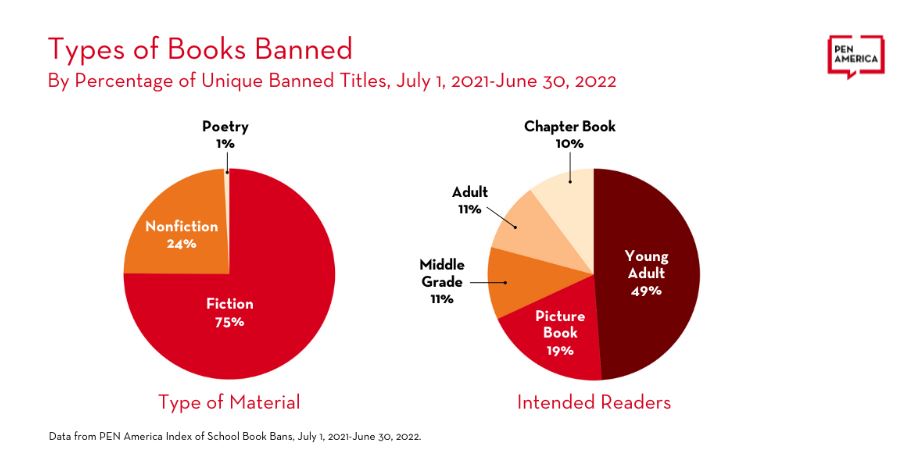
So what do we do? PEN America, whose images are used in this post and whose latest report is well worth a read, has a few ideas. They say to
But we also take a moment to check in with the kids we have in our care. How are they? How do these book bans and challenges affect them? How do we continue to fight back?
I know it is scary to speak up.
I know it is scary to place a book in our classrooms that may potentially cause a challenge.
But think of the kids you validate. The kids who need you to show them that you have their back.
That their story matters because they matter,
I think of how our actions now will reverberate for years to come. Of the kids who will search for questions on our shelves and come up empty-handed versus the kids who will find themselves and find peace.
Of those who will find love on our shelves. Of those who will find power.
I fight back for those kids, and for those who don’t even know which questions to ask yet.
I fight for my own kid, how can I not?
Who do you fight for?
PS: Are you looking for coaching or virtual presentations? I am available and would love to support your work. Whereas I am physically located in Denmark now, I can travel if needed. In fact, I will be in the US and Canada in February 20223. If you would like me to be a part of your professional development, please reach out. I am here to help. For a lot more posts, resources, live and recorded professional development, please join my Patreon community where most of my sharing takes place these days.
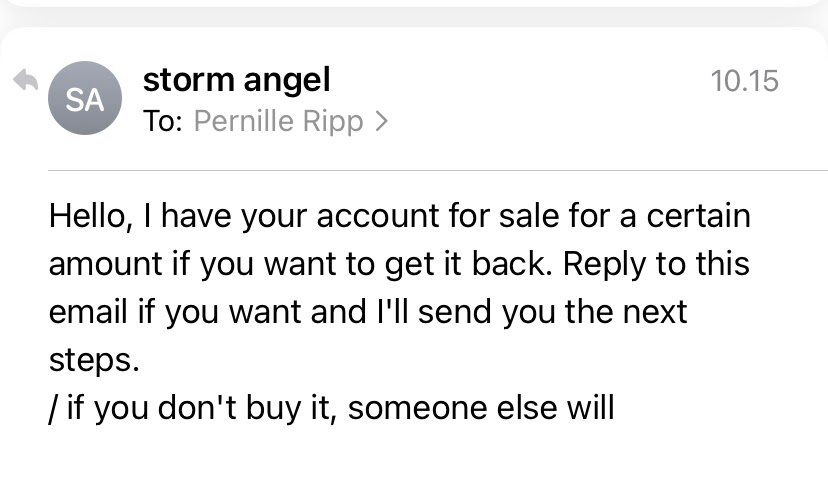
Yesterday, I received the following email about my Instagram account
At first, I laughed but thought I would check my Instagram account anyway.
And it was gone.
No username, no email, no phone number.
According to Instagram the more than 2,900 posts I have created never existed in the first place. I tried everything Instagram help center articles told me to do, consistently getting absolutely nowhere. When Instagram says you don’t exist there are no reports to file, no forms to fill in, no support to receive. They just keep referring you to the same article over and over.
So I emailed the hacker back.
They wanted $2,000 in bitcoin to release my account back or they are selling it to others to use however they see fit. No guarantees. That kind of money is not something we have to spend. So I cried while I raged, I know it is so silly to cry over something like this, but my account hold years of photos and videos, connections with people all over the world, and represents years of building connections with others. Since we moved to Denmark it has been one of my main ways to stay in touch with friends, former students, and all of those we left behind.
Instagram has been my favorite way to post the last many months as I transition into Denmark and make literary connections here. The people in Denmark have no idea wo I am, Instagram and all the years of posts helped me introduce myself.
I spent the rest of the day frantically securing every account I could think of while getting bombarded by bots saying they could help me recover my account – they can’t, they are just another way to scam you.
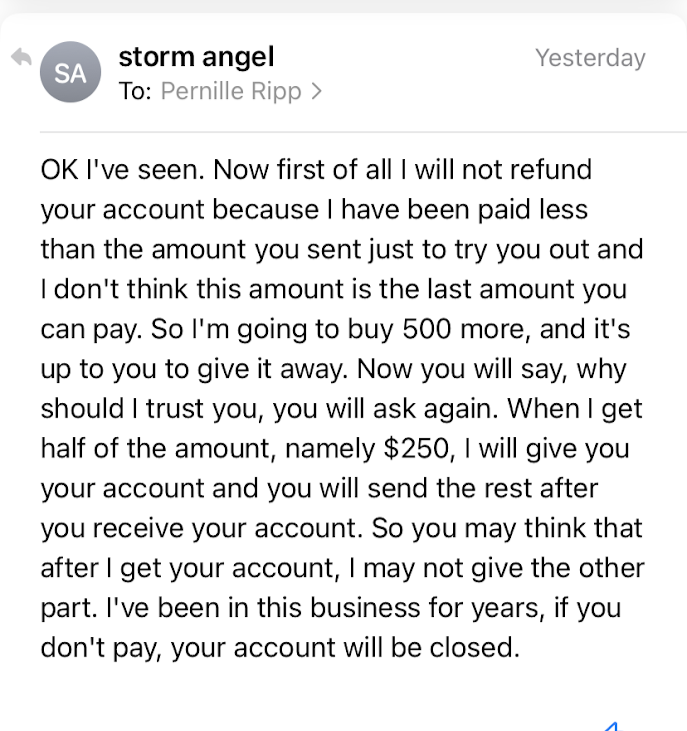
Meanwhile, 40 emails in as I went back and forth with the person who hacked my account, they said I could pay $200 in bitcoin to recover it. After discussing with my husband, I did.
And then I got this.
And that’s not something we can do. So I am starting over. All those years of posts are gone but I am still here. I can’t recreate all of the content, I will re-post some things, but I have to look forward as well.
So please come and follow me on my new account @pernilleripp I know there isn’t much to look at right now, but there will be. I will continue to post book recommendations, ideas, quotes, and snapshots from our life. I continue to want to learn and spread ideas. I am really hoping there is some sort of silver lining in all of this, I haven’t found it yet, but I will.
If you haven’t secured your accounts with two-factor authentication, do. It doesn’t guarantee anything but perhaps it would have stopped this.
If you want to help me, please share my new Instagram account with those who used to follow or may want to follow now.


























 Pernille Ripp