administration, being a teacher, leader

To All the Great Leaders Out There

I have worked for a few incredible administrators, both at the school level and also at the district level. I have worked for administrators that saw the bigger picture, that always trusted (even if they were scared), that always kept kids first.  I have worked for leaders that were visionary in the way they created opportunities for us to grow as educators.  That saw each of us on our own learning journey and would ask how they could support rather than tell us which way to go.  I am lucky.  Not everyone works for leaders like that.

So when I think of what I could share with administrators who are looking to create empowered teachers.  When I think of what I could share with those who want to be great, who probably are great, but want to keep growing.  When I think of what I could share with some of the amazing administrators that I know are out there, it boils down to a few things.

Don’t be the roadblock.  Be the one that sees the bigger picture and encourages teachers to try that new idea, to think new things, and to always ask a lot of questions.  If your technology is blocked, ask why.  If you keep hearing no from higher up, ask why.  Be a questioner yourself, and do not be afraid when educators question the systems they work in, be afraid when they don’t.

Don’t be the dominator.  Yes, the world needs your genius, but it also need the genius of others.  Be the facilitator of conversation, be the one that gives time for those to happen, not the one that speaks the whole time.  If you worry that you may speak too much, time yourself versus how often others speak.  I promise you it will be eye-opening.

Be the path that others want to follow, not the one they have to follow.  Be a leader that questions themselves, that celebrates the great but also discusses the failures.  Create an environment where self-reflection and school reflection is the norm, not just when something goes poorly.

Be someone who supports.  Someone who trusts.  Someone who sees the good even when it is hard to see.   Someone who celebrates and knows when someone needs to be celebrated.  Make tough decisions but explain how you make them.  Say yes more than you say no, but when you say no explain why.

Invest in choices that will benefit all learners not just the majority.  If a teacher has a concern about a program, question the program not just the teacher.  make sure kids know your name, know that you are in their corner.  Be the one that searches for the bigger story not just the story that is being told.  Be curious and be proud of your curiosity.  Be proud of your school, be proud of your staff, be proud of your kids.  Even if that school is tough.  Even those staff members are not perfect, even if those kids make your day as hard as they can. Be proud, be thankful and know that you are never alone.  That great leaders always are a part of the team, a part of the community and that they stand on the shoulders of the educators that they lead and the kids that they educator.  That your staff needs you as much as you need them.

I have worked for a few incredible leaders who led with their heart, as well as their mind.  Who led with everything they had in their pursuit to make school a place that all kids and all adults wanted to be a part of.  I am so grateful, I hope that many more educators get to work for leaders like that.

being a teacher, Literacy, Reading, Reading Identity

A Few Ideas For Better Book Shopping

As we continue our work bonding as a reading community, I am struck by how often the idea of finding a good book comes up.  Over and over again students share that they like reading only when they have the right book, that they cannot find the right book, that they have never read a book they truly like.  And I watch them browse the books, unsure of what to look for, idly picking a book up only to drop it again the very next day.  The more I think about; book shopping and how to find a great book is one of the biggest skills we can teach students before they leave us.  And others agree, Donalyn Miller wrote her phenomenal book Reading in the Wild based on the notion that students need to be able to be readers without us and I couldn’t agree more.  So while book shopping and how to find the right fit book is something being taught in classrooms all over the world, how can we make it more effective?

For the past few years, I have been inspired by my students to tweak the process a little bit.  Here are the small things that seem to make a big difference in how we book shop in our classroom.

img_0881_27291963891_o.jpg

Old way:  Books are displayed like a bookstore, in a row on the book shelves.

New way:  Books are grouped together in bins by genre, topic, or author.  

What difference does it make?  The bins can be placed on tables as a group and students can easily flip through them.  Students can also more easily identify where books are that may capture their interest.  It also means that book covers are displayed out, catching the eye of readers as they sit in the classroom.

Old ways:  Books are randomly placed back in their genre bins.

New way:  I place all books back in the library taking care with which book is at the front of the bin, thus facing out to the class.  

What difference does it make? Much like bookstores and libraries change their displays, so must we, so the fronts of our bins become mini displays that are ever changing.  This is also a great way for “older” books to be discovered.  Students see amazing books waiting to be read whenever they are in our classroom.

Old way:  A designated book shopping time.

New way:  Book shopping whenever they need it.

What difference does it make?  Kids need a new book whenever they need a new book.  They should not have to wait until a designated time or day to book shop.  Encouraging them to book shop whenever it is needed, means that they always a have a new book to read.  This also means that I can see how students book shop on their own and what their habits are, which, in turn, helps me help them become better book shoppers.

Old way:  Book shopping was mostly silent as students tried to get through it as quickly as possible.

New way:  Book shopping is a social event at least every few weeks.

What difference does it make?  One of the things we work a lot on is creating a community of readers, and that community comes from finding your reading peers.  So when students can bookshop and are encouraged to discuss books as they go, we are creating ties that bind us together as readers.  I jump in and out of conversations as they book shop, perhaps highlighting a few books or helping a child that seems to be lost, but I love the conversations that I overhear about books and why a certain one looks amazing.  This also shows that I am not the center of book shopping because students should not rely on me to be the one that finds them a great book, at least not at the end of the year, so the bookshopping event plants the seed for them to rely on each other, rather than just the teacher.

Old Way:  Book shopping meant just new books.

New way:  Book shopping piles are now a mix of new books and old favorites.

What difference does it make?  While we all love brand new books, there are so many great books published in earlier years.  I put these in the piles with the brand new shiny books so that students cane be introduced to them as well.  I love when a child sees a loved book and has to share it with others to recommend it.

Old way:  Book shopping lasts a few minutes.

New way:  Book shopping takes the time it takes.

What difference does it make?  Book shopping should take time, after all, students should be flipping through pages, perhaps reading a few, looking at the covers, and discussing books with each other.  I ask my students to slow down and savor the moment, this helps them understand that book shopping is not just something we get through, it is something we enjoy.

Old way:  Teacher as the first stop for book recommendations.

New way:  To-be-read list as the first stop.

What difference does it make?  Their To-Be Read list is my way of helping them rely on themselves rather than just on the teacher.  So while I love book-shopping and recommending books, I also need to teach students that they can rely on themselves.  So when a child asks me for a great new book to read, I ask them to find their to-be-read list first.  This year our list is in our reader’s notebooks which stay in the classroom so the students always have access to it.

Old way:  Book talks once in a while.

New way:  Book talks every day.

What difference does it make?  Inspired by Penny Kittle and her great book Booklove, I book talk a book every day, these can be books I have read or books that are brand new to us.  I try to book talk a new book every class because kids want to check out the books right away so it is not fair to tell them to wait until the end of the day.  My bigger goal though is that students take over these book talks, one student has already jumped in, and they start to recommend books to each other.  Again, trying to shift the responsibility back on themselves rather than the teacher to find them books.

Old way:  Little conversation about books they abandon.

New way:  Book abandonment is written down and discussed.

What difference does it make?  When a child abandons a book it is a conversation waiting to happen.  Why did they choose to abandon the book?  When did they abandon it?  This is why we keep track of the books we abandon on our To-Be-Read lists, something most of them think is odd, but when I try to help them discover who they are as readers  we start with the books they abandon.  It is amazing to see students realize what types of books they do like by studying the types of books they don’t.

Old way:  Book shopping guidelines apply just within the classroom.

New way:  Book shopping guidelines apply to the library as well.

What difference does it make?  I have noticed that students who know how to bookshop in our classrooms sometimes flounder in the larger school library.  So this year, students are asked to bring their reader’s notebooks with their to-be-read lists in them and then book shop together.  I will also be walking around with the groups pointing out great books.

A final idea for better book shopping is also to have a stack of books ready for the kid that just hates reading.  These should be some of the books that have had the most success with other kids that really have written off reading.  I pay attention to what the game changer books are for my 7th graders and will often pull these out when I help a child who says they hate reading  find a book.  It is amazing what some of these suggestions have done for planting a seed about how reading is maybe not the worst thing in the whole world.  To see our list of some our game changers, go here.  

I am currently working on a new literacy book.  While the task is daunting and intimidating, it is incredible to once again get to share the phenomenal words of my students as they push me to be a better teacher.  The book, which I am still writing, is tentatively Passionate Readers and will be published in the summer of 2017 by Routledge.  So until then if you like what you read here, consider reading my book Passionate Learners – How to Engage and Empower Your Students.  Also, if you are wondering where I will be in the coming year or would like to have me speak, please see this page.


Be the change, being a student, being a teacher, student choice, Student dreams

The Worst Class in (X) Years

No child should be defined by the actions of a group. @pernilleripp

My last year as a 5th grade teacher we were warned, in a friendly way ,of course, as these warnings tend to be.  “Oh, you will have your hands full…”  Oh, THAT group is coming up.”  My team and I had seen these kids come up through the years, that is the beauty of elementary school.  Yes, we had seen the tantrums, the fighting, the crazy behavior that made many label this group as the worst in (insert however many) years.  But we also had seen the kindness, the energy, the fun that these kids projected and knew that while we may have our hands full, the year with them would be a year where we would always strive to look for the good, rather than the bad because although the bad was so easy to spot, it should not define a group of kids.  Sure there were days where we could not believe what was going on but what I remember most about that year was how incredible the kids were.  How much fun we had.  How there were these incredible lows but also days that were some of the best of my teaching career.  My team would agree with me on this.  Yes we had THAT group but also loved THAT group.

Every year since then I have taken that same pledge; to always look for the good first.  To always praise, to always point out how great of a group this group is.  To change the group narrative in some small way.   To always assume that this will be an incredible year no matter the reputation of a group.  I think it is so easy to fall prey to the notion of the worst class ever.  I think it is so easy to just want to get through a year as quickly as possible, I know there are days that seem never ending where we question everything we do.  Yet when we do, we forget something very important; not every kid is going to have a bad day every day.  Not every kid is going to have a bad class every class.  Sometimes it may seem like this is the toughest day yet, but that too shall pass and just like we hope for a better day tomorrow, so do the very kids we teach.

When we let the actions of a few define an entire group, we are dismissing the individuals that make up that group.  We are dismissing the kids that come to school hoping that today will be a good day.  Hoping that this is the year they can finally escape the reputation that seems to follow them.  As a parent I shudder at the thought of my own children’s class being labeled as the worst in however many years, because how do you ever change that?  How do you stop a child from believing that they are horrible when that is what they hear whispered?

So today, much like every day, I will look for the good.  I will praise the kids for all of the amazing things I see and yes, there may be ill decisions and tempers flaring, but those will be handled on an individual basis.  I will not let the actions of a few tell the tale of the whole.  And I will tell my kids, much like I do almost every day, that I have the best job in the world, that I cannot wait to come back tomorrow even if today was tough.  Because it is true.  We get to teach and teaching is only for those who can see the good in kids, no matter how much a child cannot see it themselves.  We get to teach, which means that we d believe that this is the year a new narrative can be written.  That this is not how a year will be.

No children should be told that they are a horrible group of kids.  They are kids period.  And we owe it to them to see beyond their reputation and re-invent their group identity. That is why we teach, that is why we have the best job in the world.

I am currently working on a new literacy book.  While the task is daunting and intimidating, it is incredible to once again get to share the phenomenal words of my students as they push me to be a better teacher.  The book, which I am still writing, is tentatively Passionate Readers and will be published in the summer of 2017 by Routledge.  So until then if you like what you read here, consider reading my book Passionate Learners – How to Engage and Empower Your Students.  Also, if you are wondering where I will be in the coming year or would like to have me speak, please see this page.

being a teacher, new year, talking

How to Have Better Student Discussions

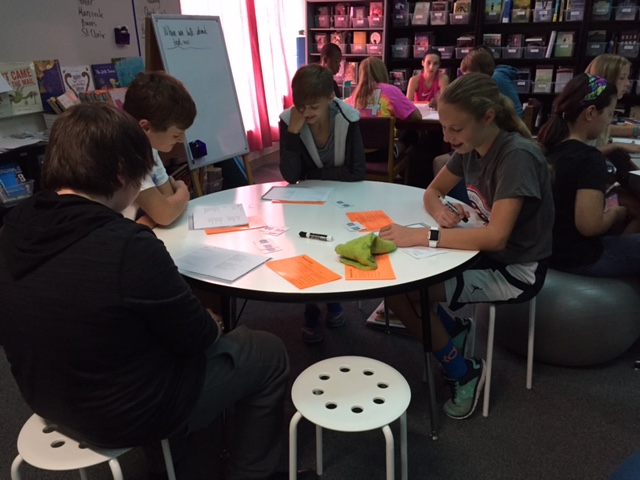
Today was the sixth day of school.  It has been a whirlwind of reading habits, book shopping, learning how to email, and today; how to actually have a decent discussion.  This may seem really simple but year after year I find that many students lack confidence when it comes to discussions, even when previous teachers have had them engaged in their classes.  So this year rather than just try to teach them throughout the year, we decided to create a foundation for it now, so what did we do? We combined a few tried-and-true strategies.

We fishbowled to start with. 

I invited four volunteers to come up and discuss an unknown text with me.  I had to follow the same expectations as them.  For the first few classes we did a poem with mixed results, for the final three we did an op-ed piece on why tweens should not have cell phones with better results.

So what was the set up?

  • Everyone gets a copy of the text, one classroom set,  so they do not have to share.
  • Everyone gets two cards or two of something else.
  • Groups either sat at whiteboard tables (tables covered in whiteboard contact paper – they are brilliant) or had a two-dollar whiteboard (take a shower panel and get it cut down into six pieces, they cost $2 a piece, I have twelve of them for collaboration).
  • Everyone gets a “Bounce card.”
  • Everyone gets an expo marker.

Expo marker and whiteboard:  After the text has been read (typically by themselves not out loud so make the text accessible for all.  This is not a reading strategy lesson per say but rather a discussion lesson), every child should take a few moments to write down their reactions or questions before the discussion starts.  That way everyone has a moment to think before the conversation ensues.

Two cards:   We used the tried-and-true way to get everyone to speak.  When a person speaks, they put their card into the middle.  They cannot speak again then until everyone else has also spoken and put a card in the middle.  This is to help everyone actually add their voice. I do two cards so that they all have to participate at least twice.  After the cards are used up, they can speak as much as they would like.

Bounce card:  Again, not my idea but from the book Total Participation Techniques: Making Every Student an Active Learner via our awesome 8th grade team.  The Bounce card is a visual tool for kids to remember to “bounce” off each other’s ideas rather than just state their own opinions.  There are three different paths they can take, they can bounce, sum up, or inquire.  Having the card in front of them is a helpful reminder to how they should be discussing.  Here is what our cards look like.

Teacher role:  Coaching, not teaching after the fishbowl.  Our job is not to lad the conversation but to let the kids figure it out.

After the fishbowl, it was their turn.  I numbered students off so they would be in mixed groups and let them loose, all supplies were already set up for them.

img_1370

I did not give them any questions to discuss because I want them to start thinking about their own reactions to text.  My students wanted me to but I did not, at some point they have to start generating their own questions so why not start today?

We kept this trial run short, around 15 minutes to make sure they stayed on track.  It worked pretty well.   As I walked around I loved seeing how engaged the kids were, how they were trying to help each other out and add their voice, and how they asked for people to “bounce off” of their ideas.

At the end of the class, I asked them to please reflect on themselves.  We spoke about how often we reflect on how others do in a task but forget to look inward and that we are the ones we need to be concerned with, not how others do.

On Monday, our follow-up lesson will be six different tables set up with three different types of topics.  Two tables are set up with wordless picture books (Unspoken by Henry Cole and Bluebird by Bob Staake), two are set up with op-ed pieces (why kids should have homework and why schools should have uniforms), and finally two tables will have poems (Langston Hughes I, Too and The Abandoned Farmhouse by Ted Kooser).  Students will pick which table they would like to be at but then have to select the other two formats the two next days.  Therefore all students will get to try discussing all three types of formats.  I am excited to see how this foundational skill will play out this year.

I am currently working on a new literacy book.  While the task is daunting and intimidating, it is incredible to once again get to share the phenomenal words of my students as they push me to be a better teacher.  The book, which I am still writing, is tentatively Passionate Readers and will be published in the summer of 2017 by Routledge.  So until then if you like what you read here, consider reading my book Passionate Learners – How to Engage and Empower Your Students.  Also, if you are wondering where I will be in the coming year or would like to have me speak, please see this page.
 

being a teacher, being me, new year

Yet…

So much depends on the word "yet..."

It happens every year without fail.  We get a few days in, the year slowly starting, and all of a sudden it hits me; I am doing something wrong.  Whatever I thought I was good at, I am clearly not.   After all, how can anyone feel this exhausted and consider themselves good at anything?

Driving home today, I kept thinking about how far we still have to go.  How much these brand new kids don’t know.  How they don’t get me or us.  How hard it is to get them started with something, how even the smallest thing takes a long time.  How every day goes by in a flash yet seems so long.  How a new year is hard and you end up questioning every single thing you do because surely you must be doing something wrong because didn’t this go much better the year before?

But that’s it, isn’t it; it’s a new year. And we forget that when we compare these kids to the kids we just said goodbye to.  We forget just how far we came last year and how hard we worked to get there.   Those kids that we remember so fondly because of how much learning happened started out confused, unsure, and just a little bit rowdy as well.  We forget how much work it is to set up a well functioning classroom, to help kids read, to help kids write, to help kids feel safe, because last year now seems so far away.

So before we give up on ourselves and assume this year is doomed.  Before we beat ourselves up too much.  Before we wonder if we really know what we are doing, just remember this…

We haven’t figured each other out…yet.

We don’t know each other’s habits…yet.

We don’t have a bond…yet.

We haven’t established our routines…yet.

We haven’t accomplished much…yet.

We do not feel quite like a class…yet.

That takes time, and right now that is one of the biggest things we have.  So tomorrow if you go to school wondering if you really know what you are doing, remember this; every single thing you are doing right now is planting a seed for what your classroom will feel like later in the year.  So much like we wait to see seed grow into flowers, we also have to wait for our students to bloom.   Because the whole year is ahead, a whole year to make this year great, a whole year to have these kids become those kids that we remember fondly when we stand in despair the following year.  No matter how long we teach, we seem to always forget that starting a new year is hard, is exhausting, and yet is one of the best parts of the year.  After all, we don’t know each other yet, but we are starting to.


being a teacher, books

Some New (To Me) Must Add Middle Grade Novels

I love back to school; the excitement in the air, the untested new ideas, the fear, the thrill.  All of these things put a pep in my step.  And yet, there is one major downfall to back to school; less time to read.  I have luxuriated in books this summer.  Gone days with no TV where I could be found under the covers needing to read just one more page.  My books read display at school shares the tale of a summer filled with amazing reads that now I cannot wait to book talk.  So what have been some of the best middle grade novels I have read lately?

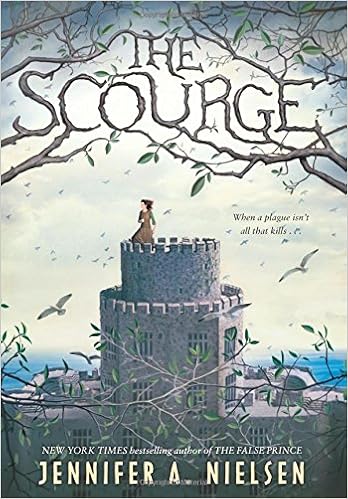
The Scourge by Jennifer A. Nielsen is a fantastic page turner.  Much like Jennifer made me fall in love with The False Prince (still one of our most loved series even in 7th), I too fell in love with Ani and Weevil and the trouble they cause.  This is an accessible book, many reading confidences will be able to get sucked in and stay sucked in as the action springs from page to page, and yet, it is also a book that speaks of human relationships, of deep commitments to each other.  My only disappointment with this book is that it is not a series; I would have loved for the story to keep on going because it is that good.

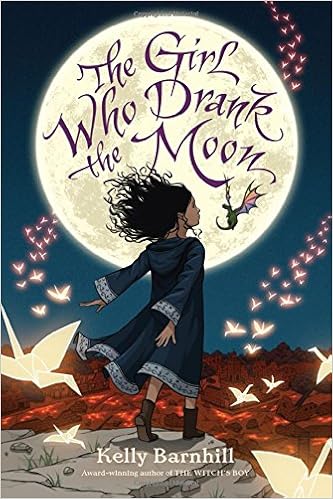
The Girl Who Drank the Moon by Kelly Barnhill was one of my last reads of the previous school year, and yet I still book talked and had one student read it in two days before the final day.  His face when he came back told me all I needed to know, “It was so good, Mrs. Ripp.”  And I agree.    With one of the best first chapters I have read in a long time and the most incredible language, this is a book you give to those kids that want to sink into a world of magic, destiny, and a quest.  Kelly’s storytelling is masterful and I would be incredibly surprised if this book does not end up on a lot of “best of…” lists.

I don’t read dog books, ask any of my students, and yet this year there have been an incredible slew of dog books to prove me wrong.  Lynn Plourde’s Maxi’s Secrets steals your heart from the very first chapter.  Just like Maxi quickly brings love and life back into the lives of the characters of the books, so does he for us.  I gave this book 5 stars when I read it and it still stands out as a 5 star book to me.  This is one of those books that make us thankful that there are writers out there that so gets what it means to be new, what it means to try to fit in and what it means to love something like a dog.

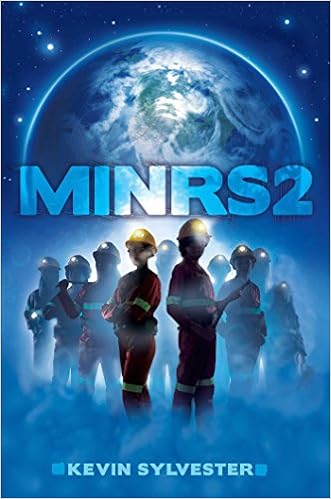
I have sung the praises of MiNRS by Kevin Sylverster since it came out lat year and so when I was lucky enough to receive an ARC of its sequel, MiNRS2, I knew this was a book I had to start right away.  I was not disappointed.  Kevin Sylvester masterfully picks up on the cliffhanger he left us on and takes this tale of kids surviving a devastating attack on a far away space colony to new heights.  This page turner is sure to have readers wanting to read just one more page and then much like me, eagerly await the third book.  Does it really have to be so far away?  This comes out October 11th.

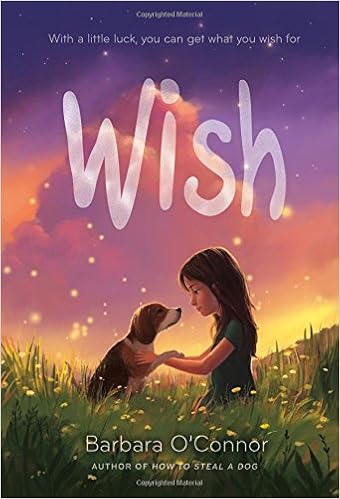
While I have not finished Wish by Barbara O’Connor yet, I know I will later today because I have to find out what happens to Charlie as she tries for a new start, albeit grudgingly.  The characters pull you right in as does the story.  How many of us can relate to feeling displaced?  To being angry?  To feeling all alone?  Barbara O’Connor is a master storyteller and shines in her latest book.

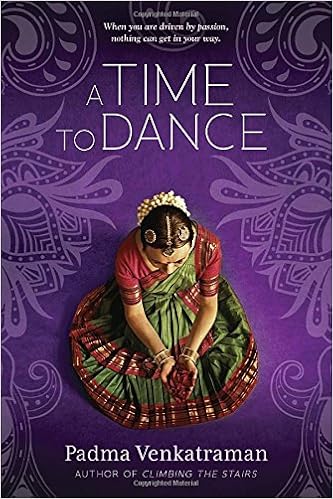
My students have been obsessed with free verse novels the past year.  It is hard not to be when some of the greatest books are being published in this format.  So when I was gifted a copy of A Time to Dance by Padma Venkatraman and noticed that this was not only a book written in free verse, but also represented  a cultural view that most of my students have not been exposed I knew I had to read it.  So I fell into the pages of the story of Veda and her dreams of becoming a dancer.  Wrapped in the beautiful world of India, I found myself reaching for my iPad as I read wanting to understood more fully all of the culture that was being shared in the pages.  It was a beautiful reading experience and one that I am thrilled I can pass on to my students.  One that I know will catch many of them too as they cheer for Veda and find connections between themselves and the story unfolding before them.  For too long my classroom library has not had enough multicultural diversity in its text, this books a small step toward rectifying that, and a beautiful one at that.

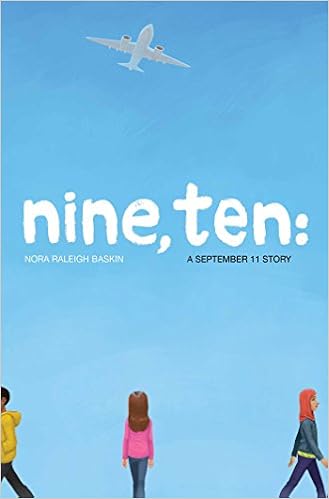
Nora Raleigh Baskin’s book Ruby on the Outside was a book that I said all libraries should own because it told a story that some our children live every day; a parent incarcerated.  Her latest book Nine, Ten: A 9/11 Story is another must own, must read, must share, must discuss.  Written delicately, yet honest, it follows four different children on the days leading up to what we know as 9/11.  The four stories means that we get four different perspectives of that day, of what it meant to be an American after the event.  I love the four different perspectives because they mirror so well how we felt as a country; fractured but together.  All with our own experiences coloring how we viewed the event.  This book is a must add to your library as we continue to try to teach such a historic and frail moment.  It is appropriate for young students, but my 7th graders also love it (I was gifted an advanced review copy).  I am grateful to the authors that are giving me the tools to make our future understand why we changed so much as a nation, why we are the way we are now.  How we came together as a country, even though these days, that seems like a long lost memory.  Perhaps books like this will help us remember how alike we all are, rather than how different.  One can only hope.

To see all of our other favorites, please go here