Be the change, being me, new year, rewards

Confessions of a Former Rewards Addict

When I moved this blog to WordPress some posts did not survive, so in an effort to move some of my favorite posts with me, I will be republishing them here.  This one was from 2010, as I first started my in my no rewards classroom.

I admit it.  Gold stars, super duper stickers, sticks, names on the board; I have done it all.  And when one reward system failed, another one took over.  Never one to sit and reflect that perhaps it was the system that was faulty and not just that the students grew tired of it.  After all, that carrot at the end of the stck was essential to my teaching success.  Those stickers meant I cared.  That Awesome board where A+ work was proudly displayed gave students something to strive for.  That certificate if you got an A on your math test meant that you were smart and that other students should look up to you.  Right?  Wrong again.

Oh, I thought I was clever.  I thought I knew how to motivate students and after all, what could a little reward do that would possibly hurt the child?  Well, after reading Alfie Kohn’s book “Punished by Rewards,” I realize just how wrong I have been.  Those papers on the awesome board did nothing to improve unity in my room.  Instead they acted as the great divide, highlighting the students that could from those that could not.  Those stickers I doled out for anything above 90%; not a cheerful way to celebrate achievement, but rather a glaring marker showing which students did the best in the room.  Those great “You did it” award certificates stapled to their math tests, not great posters of pride but instantaneous feedback on where a students falls within the grade hierarchy.  And yes, the students knew exactly where they fell within the classroom.

So this year I am throwing it all out.  Well, most of it anyway, I do like those stickers and will use them for good rather than evil.  And I am petrified.  After all, this is how I was taught to teach.  If a student does something good they should be rewarded and nothing says “Great job! I can tell you worked so hard” better than a smiley face sticker.  Except when it doesn’t.   A smiley face sticker says; “If you work hard, you will get a smiley face sticker.”  And when in life does that ever happen?  This year, I plan on talking to my students even more.  Telling them what was great, asking them what they thought was great and then peeling apart things that didn’t quite get there and figure out what went wrong.  We shall learn from our supposed mistakes, those will be our rewards.

So while I am excited for this new no-reward agenda, I do shudder a little bit at the implication it has.  No longer will I be the cool teacher with the Awesome board, the one you get to have pizza with if your stick doesn’t get moved, the one that doles out classroom parties as if they were clean socks.  Instead, I will be the one that shouts the praise the loudest to every kid.  The one that talks to all my students and highlights all the things they did right.  The one that creates more work for herself because talking rather than just placing a sticker takes more time, more effort, more thought.  And I can’t wait.  Will you join me?

H/T to this post from George Couros “The Impact of Awards

I am a passionate  teacher in Wisconsin, USA,  who has taught 4, 5th, and 7th grade.  Proud techy geek, and mass consumer of incredible books. Creator of the Global Read Aloud Project, Co-founder of EdCamp MadWI, and believer in all children. I have no awards or accolades except for the lightbulbs that go off in my students’ heads every day.  First book “Passionate Learners – Giving Our Classrooms Back to Our Students” can be purchased now from Powerful Learning Press.   Second book“Empowered Schools, Empowered Students – Creating Connected and Invested Learners” can be pre-ordered from Corwin Press now.  Follow me on Twitter @PernilleRipp.
being a teacher, being me, new year, reflection

I Am Afraid

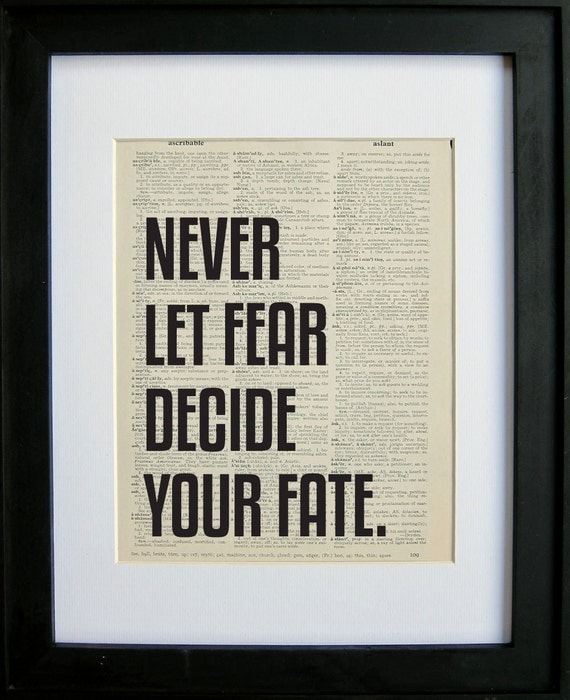
image from etsy

I have been to my new classroom twice this summer.  Twice.  This coming from the queen of being in the classroom over the summer.  So while I could chalk up my lack of visits up to the fact that I have been super sick for the past 8 days, or that I have moved to a new house, that I am further away, or that I having too much fun with my kids (which I kind of am), none of those reasons would be true.  The real reason is that I don’t know what to do there.  I am not sure where to start.  I can’t get the vibe of my room and I don’t know where to start.

So imagine how my incoming 7th grade students will feel?

Yet, the fact that I am recognizing this leaves me hope.  That means that those unfamiliar cabinets, filled with books I am not sure what to do with, has my attention.  That the desks (urgh desks) will need to be rearranged somehow.  That my own 3 teacher desks can be downsized.  That I can unpack my 100’s of books onto my new bookshelves.  That I can go garage saleing for more shelves because 3 bookshelves will not contain my collection of books.

And yet, that’s not really it either.  It is not the things that are stopping me.  It is the newness.  It is the unknown.  It is the feeling of being in over my head not sure where I can rest my feet, and yes, I am afraid.  I knew how to do elementary.  I knew how to do elementary well.  I knew what to do with 9 and 10 year olds.  But 12 and 13 year olds?  Yup, they terrify me .  And even though I am okay with that, there is just so much new that I don’t quite know where to begin.  As a 6th year teacher you would think I would remember what it feels like to be a new teacher, apparently I don’t.

So I will allow myself to be terrified a few days more.  I will allow my mind to procrastinate planning for a new year a few more days.  I will pretend that my heart doesn’t itch to unleash all of my books and dreams onto my new room.  I will pretend that my thoughts aren’t starting to think of the new adventures ahead.  I will pretend I did not just order new books specifically with our first unit in mind.  I will confront my fear and then chip away at it.  I will take my own advice and plant a seed of change.  I will allow myself baby-steps into the room, into the change, into the new me that doesn’t seem to have an identity anymore.  No longer a 5th grade teacher, no longer me.  I will continue to be afraid but I will start to reach for hope.  I will reach for the new me that really is just me but changed.  That really is me but just with a new title.

I will allow myself to be afraid but I will not let it stop me anymore.  The clock is ticking, the days are slipping, and my new students are waiting.

I am a passionate  teacher in Wisconsin, USA,  who has taught 4, 5th, and 7th grade.  Proud techy geek, and mass consumer of incredible books. Creator of the Global Read Aloud Project, Co-founder of EdCamp MadWI, and believer in all children. I have no awards or accolades except for the lightbulbs that go off in my students’ heads every day.  First book “Passionate Learners – Giving Our Classrooms Back to Our Students” can be purchased now from Powerful Learning Press.   Second book“Empowered Schools, Empowered Students – Creating Connected and Invested Learners” can be pre-ordered from Corwin Press now.  Follow me on Twitter @PernilleRipp.



being me

Drats – Problems With My Domain Name

When I moved to WordPress a year ago, I also transferred my domain name http://www.pernilleripp.com  to go with me.  However, anyone who has dealt with Blogger bought domain names may know what a hassle this is.  Especially since my blogger account was one of the few that does not link properly to its admin account.  Long story short, as of today http://www.pernilleripp.com does not work.

So if you use that to reference to this blog or if that is the feed you are subscribed to, please update it to http://www.pernillesripp.com (there is an “s” added).

That’s it.  Just another glitch in the blog.  But please update your feed if you need to.  And sorry for any confusion.

being me, punishment, reflection

When Students Go There

image from icanread

It’s 12:38 AM.  I have been up for the past few hours, bouncing between sick children who want to sleep in my arms.  Quite a feat when there is 4 of them, all sad, all needing so much from me, especially as I battle the virus myself.  I finally look at my little boy and tell him to go night-night.  That he has to get some sleep to feel better, that as much as I wish I could sleep in his crib, I just can’t.  He’s two, he doesn’t understand and instead cries as loud as his little lungs will let him.  I give him one last hug, tuck him into bed and then walk out.  I hate this part of being a parent.

I don’t even make it in to bed before he stands at the gate to his room, crying and loud!  When this doesn’t work he yells the one thing that he knows will make me come.  Not “Mom.”  Not “Help.”  But “Poopy!”  This little word, that we have been working on saying as we potty train tells him he will get a reaction.  That I will come, because I always come running when he says it.  Sure enough, I go against my instinct and go to him, only to find that there was no real reason for the word.  It was just a tool to use to get me to come.  And it worked, I came, and our cycle starts over again.

I think of this clever interaction and realize how often this trick is used in our classrooms.  Not that children yell that word or wake me in the middle of the night.  But they do the one thing that they know will give them our attention.  They act out in such a way that we have no way of ignoring it.  They go there, to whatever thing is their most extreme way of getting our attention and then they use it.  Whether it is screaming at another student, slamming the door, throwing a chair (all has happened within my room) or even screaming threats at us, they are going there, asking for attention, hoping for us to react and notice them.  It doesn’t make it right, or even show rational thinking, but in the moment, when they need us the most, they know it will work.

That’s why I don’t punish relentlessly.  That is why I focus more energy on building community, establishing trust, and opening up communication before we get to that point.  That’s why I try to be there for every kid, no matter how hard they push me away, no matter how many walls they construct to keep me out.  That’s why I try to show each child that they matter.  That’s why I try to not give up even when I am at my lowest point, with no energy left.  That’s why I keep trying day after day, sometimes moment after moment to make a connection.  To let that kid in, even if they don’t want me in their life.  So they don’t go there.  So they don’t get to that point.  But even if they do, then we have something to build on and get us out of it again.  That’s why every kid that walks into our room has a chance every day to change, to start over, to show their dreams, and not just their anger.  That’s why I teach the way I teach.

I am a passionate  teacher in Wisconsin, USA,  who has taught 4, 5th, and 7th grade.  Proud techy geek, and mass consumer of incredible books. Creator of the Global Read Aloud Project, Co-founder of EdCamp MadWI, and believer in all children. I have no awards or accolades except for the lightbulbs that go off in my students’ heads every day.  First book “Passionate Learners – Giving Our Classrooms Back to Our Students” can be purchased now from Powerful Learning Press.   Second book“Empowered Schools, Empowered Students – Creating Connected and Invested Learners” can be pre-ordered from Corwin Press now.  Follow me on Twitter @PernilleRipp.
being a teacher, being me, classroom management, new year, punishment, Uncategorized

So How Do You Manage Your Classroom When You Don’t Punish?

image from etsy


Following the debate over public behavior charts, many people wondered what they could do in its place to still keep students engaged and on track?  I referred to a few posts but then realized that I did not have just one post that laid out exactly what I do in my own room, tips and ideas are in many different places.  And then I realized, I don’t really have one system because my approach changes every year depending on the needs of the students and the type of community we strive to make.  And yet, there are threads that run through every year with my students of what we do.

  • I don’t set the rules.  The students know how to do school, in fact, by 5th grade they are experts at it.  So instead of me telling them what the rules of the room is, I ask them to make them.  They discuss expectations in their table groups and then share with the class.  Nothing is written down on paper but instead we get a feel for what type of classroom we want.
  • We create a vision.  Every year, I ask the students to create a vision of the room.  Sometimes a theme emerges and other times it is just our hopes and dreams.  This is one of the first steps in our community building.
  • We do community building all year.  Even on the last day of school we are trying to create family, and so we do challenges throughout the year, we have “huddles” (meetings led by me or students), we discuss how our room is doing, we change our rules, we set up new expectations, we sometimes even call people out.  Building community is not a beginning of the year thing, it is an all the time thing.
  • We do challenges together.  The very first day we do a bloxes challenge simply so I can get the students working together, this has to do with seeing them grow together and how they function without my guidance.  I love what this simple challenge shows me about the students.
  • When a problem arises, I consider my option before speaking.  Rather than call out a student for misbehaving I often pull them aside, ask them to leave the room to think about it, or do a quick check in.  Humor also gets me far in many situations.
  • When a larger problem arises, I stop if I can.  Often when a students is very, very angry, it needs my intervention or if more than one student is involved.  There is a root to the anger and something needs to be done to uncover it.  While it is very hard to stop what you are doing if you are the one passing out the information, often my students are engaged in a self-driven project r investigation.  This therefore frees me up to discuss/deescalate situations.  Not always, but often.
  • Engagement matters.  If my students are engaged, they misbehave less.  So if behaviors seem to be out of control it is often because of what we are doing.  If we need to stop, reevaluate, and re-think whatever we are doing then we do just that.  Yes, there is curriculum we need to do, but there are many ways to get through it.
  • I ask the students point blank what is going on.  I used to assume I knew why a child was misbehaving, now I ask them instead.  If its because they are bored, I dig deeper.  If it because of some other reason, we find the time to figure it out, even if it means for now they sit and take a breather for a bit.
  • I ask the students how they think their day is going.  If a child seems off, I can guarantee I am not the only one that notices.  That child, more often than not, is acutely aware of it as well.  So why not take this opportunity to build a deeper relationship?  If a child is acting out, there is a reason, we have to try to find the time to work with them and uncover it.
  • I look for the good.  I used to get so fixated on all of the things that were going wrong in the room, all of the “naughty” things a child kept doing that I forgot to see all of the good.  I now remind myself to look at the moments of kindness, the hard work, the laughter and learning that happens within a room on a daily basis.  I hold that up higher in my mind than the bad.  Sometimes it is all about mindset.
  • Every day is a new day.  Rather than label my students, I try to wipe the slate clean every day (of course, this is easier said than done).  Just like I want a new chance every day, I afford that to my students as well.
  • There are consequences, but they make more sense.  When I tell people I don’t punish they assume kids get away with whatever they want in our room, but that is not it at all.  There are consequences yes, but they are not meant to publicly shame a child, but rather to have them reflect and work on their behavior.  This can certainly still be viewed as punishment in the eyes of the child, but I do try to have a growth opportunity for them instead of just a  one action fits all solution.

In the end, I believe student motivation is a huge part of why students behave in a certain way in our rooms.  In fact, so much so, that I wrote about it in my book, “Passionate Learners – Giving Our Classrooms Back to Our Students.”  I therefore leave you with an excerpt from the book to help you peek into my brain some more.

Not punishing students does not mean letting things slide or letting them walk all over you. It simply means handling situations calmly and figuring out the “why” behind the behavior and then working on that rather than enforcing a set of rules. How you react changes from situation to situation — something that’s much more difficult to do when you have cut rules into stone the first week of school.

Much of misbehavior comes from students’ perception of control within the classroom. That perception also affects their intrinsic motivation for wanting to be successful participants. A problem with punishment and reward is that it often only motivates in the short term. And yet many teachers do not know how else to get students to behave. I certainly was not consistently successful until I realized that the problem wasn’t the students, it was more often the curriculum and how I taught it. Meaning, it was really me. While I may not be the one who decides what to teach, I am most certainly the one who decides HOW to teach it. If I thought that mostly lecturing (which even put me to sleep in

college) was going to capture the imaginations of 9-year olds, then I was in the wrong job. So I began to think and learn a lot more about motivating learners.

My lessons in motivation

Here is what I know about motivation from shifting my own teaching practice:

  • Choice matters. When students choose not just what they will do for a project but also what they would like to learn about (within some boundaries), you get buy-in. This continues to be one of the most simple and exciting realizations I have experienced.
  • Motivation is contagious. When one student gets excited and has an opportunity to share that enthusiasm, the contagion spreads. My students get to blog about projects, we have huddles where we share, and we are a bit louder than we used to be. But guess what? Those loud noises are usually indicators that my students are super excited about something inside those boundaries I mentioned.
  • Punishment/reward systems stifle learning. This short-term approach to motivation proved to be more harmful than helpful. It created a toxic learning atmosphere. Now we have class parties when we feel we want one. I have lunch with all my students several times a month because they ask me to. No one is excluded from anything. When homework doesn’t get done (I have limited homework when kids don’t get enough time to do it in class or they don’t use their time well), I ask them how they plan to fix it, and most students choose to do it at recess. This is fine by me; they are free to go out and play if they choose.
  • Be excited yourself. The fastest way for kids to lose interest is if you are bored. I faced up to the fact that I hated some of the things I taught and how I taught them (goodbye grammar packets). Something had to change. Now my students joke about how I almost always introduce something new with “I am so excited to do this…”
  • Consider outside factors. Some students have a lot more on their plates than we could ever fully imagine. We need to ask questions, get to know our students, and be a listening ear. When my husband lost his job, it was hard for me to be excited about everyday life. I was too busy worrying. I understand how outside worry can influence the way we function within our school. I’m sure you do, too.
  • Manage and guide what’s in front of you. We will never be able to control what our students go home to, but we sure can guide what happens in the room. Good teachers choose to create a caring environment where all students feel safe. Students let their guards down and feel it is okay to work hard and have fun. It’s the first essential step toward building a learning community.

And finally, read more about old and new ways to deal with common forms of misbehavior in this chart I’ve put together.

I am a passionate  teacher in Wisconsin, USA,  who has taught 4, 5th, and 7th grade.  Proud techy geek, and mass consumer of incredible books. Creator of the Global Read Aloud Project, Co-founder of EdCamp MadWI, and believer in all children. I have no awards or accolades except for the lightbulbs that go off in my students’ heads every day.  First book “Passionate Learners – Giving Our Classrooms Back to Our Students” can be purchased now from Powerful Learning Press.   Second book“Empowered Schools, Empowered Students – Creating Connected and Invested Learners” can be pre-ordered from Corwin Press now.  Follow me on Twitter @PernilleRipp.

Be the change, being a teacher, being me, new year, reflection, Uncategorized

Stop Labeling Different – It’s Time to Stop Teacher Bullying

image from icanread

I took a deep breath before I hit “publish” on my post “When Teachers Bully Teachers.”  I had decided that it was time to stand publicly behind the story, to claim my words, to face my fears, and yet with my fingers hovering over the button,  I couldn’t help but be afraid.  Afraid that nasty comments would follow, afraid that people would shun me, afraid that it would start all over again.

Within minutes the comments started coming.  At first, I opened each one with trepidation; would this be the comment that told me I was full of it?  That I had done it to myself?  That surely I deserved the treatment I had gotten?  Instead, it was story upon story of teachers sharing their experience, of teachers saying it had happened to them.  Then my inbox started filling up with private reach outs, then Facebook.  As I closed my computer that morning, I looked at Brandon and said, “There are so many of us and I thought it was just me.”

Teachers bullying teachers is real.  Principals bullying teachers is real.  Within our communities, where we try to teach children how to act as adults, there are many adults not living the words they teach.  Some are doing it on purpose like in my situation, others may not know the damage they are doing.  But it needs to end.  For me, hitting publish was the first step, but now I see that there is so much more must be done.

If you are being bullied:

  • Know you are not alone, unfortunately.  Look at my post and all of the comments it got. This is important, you are not alone, you are not the worst teacher in the world, you are not a horrible person, you do not deserve this.
  • Stop labeling yourself.  I was so good at coming up with excuses for why this was happening to me that I only made it worse.  I kept thinking how I was doing this to myself and it was all my own fault.  No one deserves to be treated poorly, not even someone who does things a little bit different or has a strong opinion.
  • Share your story and speak up.  Even if you are not ready to confront your bully, share your story with someone; an administrator, a colleague, the whole world like I did.  Reclaim your story to stop the process.
  • Then stand up for yourself or find a way out.  There are two ways to fix the situation because suffering through it is not one.  One is to confront your bully and try to put an end to the situation, however, when I tried to do this it didn’t do much.  SO then know it is okay to leave, to find another job, a better situation.  You are not a coward, nor are your running away.  You are saving your soul and that is important.
  • Make peace with yourself.  I still worry about what I did but it is time to let it go.  With each moment this summer I am allowing myself to put the past in the past.  We have to forgive ourselves and allow ourselves to heal.

To stop bullying at your school:

  • Be welcoming.  So much can be said for reaching out to new staff.  A friendly hello and introduction can go a long way, but don’t just do it in the beginning of the year, keep checking in.  Keep reaching out and making sure every person in the building feels they have someone to speak to.
  • Reach out to everyone.  Sure, my bullying started my first year, but there are others that have said it started later.  So make it your mission to make new connections every year, even with current staff, you never know who might be feeling lonely.
  • Be a nice person.  I know many of us assume we always are, but this is something we should all focus on.  Be nice, be kind, be open, be inviting.  Don’t put others down just because you disagree with them.
  • Don’t believe the talk.  I know many teachers at my old school were swayed by powerful words about me.  Instead, dismiss the talk completely or seek out the person who is being talked about to hear their story.  One teacher did that with me and it made a huge difference in how I saw her and our relationship.
  • Stop labeling different.  Too often the people we ostracize are those doing things differently.  Don’t be afraid of change, or at the very least, ask questions!  If someone has made a change in how they teach there is probably a reason for it, so ask them why, dig around a little bit, be open to new ideas.
  • Recognize your own behavior.  Too often we don’t see what we do as malicious or even bullying, but we need to be honest here.  How often have we slandered?  How often have we snickered?  How often have we excluded?  Take stock of yourself and see how you need to change.
  • Follow your own classroom rules.  We had one rule in our room, “Represent.” Whatever your rules are, make sure that you are following them too.  If the kids can do it, so can we.

We must say, “No more!” and share our stories.  Don’t be afraid like I was, don’t suffer in silence.  As a close colleague of mine told me when she read it, “I guess I knew you struggled, but I just never knew how severe it was.”  And that was my mistake.  I should have gone to administration with the union, or I should have gone higher up.  I should have stood up, but in the moment it was too hard, too scary, and so I kept my head down and suffered through it.  I will never make that mistake again.  Please help me stop the bullying.

I am a passionate  teacher in Wisconsin, USA,  who has taught 4, 5th, and 7th grade.  Proud techy geek, and mass consumer of incredible books. Creator of the Global Read Aloud Project, Co-founder of EdCamp MadWI, and believer in all children. I have no awards or accolades except for the lightbulbs that go off in my students’ heads every day.  First book “Passionate Learners – Giving Our Classrooms Back to Our Students” can be purchased now from Powerful Learning Press.   Second book“Empowered Schools, Empowered Students – Creating Connected and Invested Learners” can be pre-ordered from Corwin Press now.  Follow me on Twitter @PernilleRipp.