being a teacher, books, community, Reading

Our Favorite Picture Books for Middle School 2015

I used to think picture books were best placed behind my desk, labeled for teaching use.  Stowed away neatly so that they wouldn’t be lost, not the pages too creased.  After all, picture books were for little kids and certainly not the big kids I was teaching.  One day, a student asked me if he could borrow one of the books that were perched behind my desk fortress, I wanted to say no, but instead asked him why?  Why did he want to read that book and not the mature books in our classroom library?  Sheepishly he glanced at me and then muttered, “For fun….?”  And so I handed him the book.  It wasn’t long after that all of my students would ask for the picture books squared away and I soon realized what a fool I had been.  Picture books were not for little kids.  They were instead the perfect text to use in mini-lessons, to lead discussions, and to create a community of readers.  I have never stored my picture books away from students since.

But what do you bring into the middle school classroom?  Is there some sort of rule that applies for which books will work with these fantastically diverse years or does it not matter?  It turns out that the only thing that matters is the quality of the picture book itself, once that is taken care of, the students will not stop reading them.  If you are just adding picture books to your classroom library, pick wisely in the beginning, but don’t get too caught up in whether or not it will make a great mentor text, I have found that the most unlikely of books can always be used for something as long as the students are into the story.  So the favorite picture books we have in our room, in no particular order, are…

272412

A Sweet Smell of Roses by Angela Johnson

6352012

The North Star by Peter H. Reynolds

3118349

One by Kathryn Otoshi

2936121

Pete & Pickles by Berkeley Breathed

13083239

The Fantastic Flying Books of Mr. Morris Lessmore by William Joyce

21942920

Malala, A Brave Girl From Afghanistan/Iqbal, A Brave Boy From Pakistan by Jeanette Winter

2934707

Bad News for Outlaws:The Remarkable Life of Bass Reeves, Deputy U.S. Marshall by Vaunda Micheaux Nelson

13531024

This Is Not My Hat by Jon Klassen

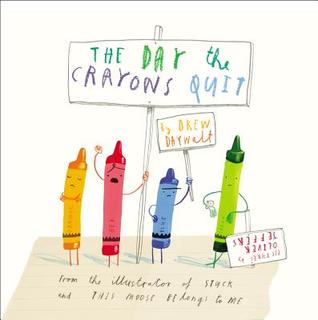
The Day the Crayons Quit by Drew Daywalt

The Day the Crayons Quit by Drew Daywalt

15799165

Bluebird by Bob Staake

13588082

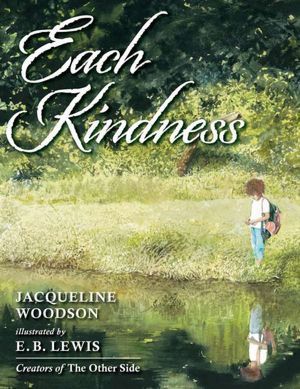
Each Kindness by Jacqueline Woodson

20307024

Wolfie the Bunny by Ame Dyckman

18383325

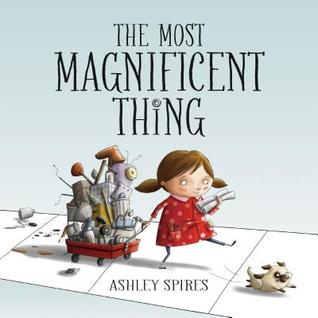
The Most Magnificent Thing by Ashley Spires

What Do You Do with an Idea? by Kobi Yamada

What Do You Do With An Idea?  by Kobi Yamada

Unicorn Thinks He's Pretty Great by Bob Shea

Unicorn Thinks He’s Pretty Great by Bob Shea

The Adventures of Beekle by Dan Santat

The Adventures of Beekle: The Unimaginary Friend by Dan Santat

18465557

Froodle by Antoinette Portis

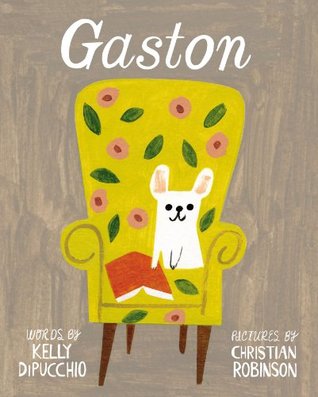
Gaston by Kelly DiPucchio
Gaston by Kelly DiPucchio

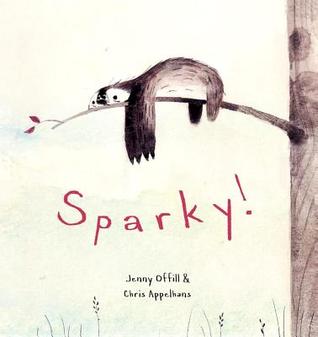
Sparky! by Jenny Offill

Sparky by Jenny Offill

Knock Knock by Daniel Beaty

Knock, Knock: My Dad’s Dreams For Me by Daniel Beaty

Product Details

Open This Little Book by Jesse Klausmeier

Creepy Carrots! by Aaron Reynolds

Creepy Carrots by Aaron Reynolds

It's a Book by Lane Smith

It’s A Book by Lane Smith

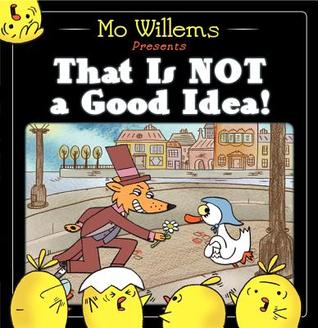
That Is Not a Good Idea! by Mo Willems

That Is Not A Good Idea by Mo Willems (Or anything by Mo!)

17140549

The Invisible Boy by Trudy Ludwig

And the list could go on and on, but at least this is start for those of you looking to add incredible picture books to your classroom library.  And don’t start like me; let the kids read them whenever they want, even the big kids, especially the big kids.  Which books would you recommend?

I am a passionate teacher in Oregon, Wisconsin, USA but originally from Denmark,  who has taught 4th, 5th, and 7th grade.  Proud techy geek, and mass consumer of incredible books. Creator of the Global Read Aloud Project, Co-founder of EdCamp MadWI, and believer in all children.  The second edition of my first book Passionate Learners – How to Engage and Empower Your Students” is available for pre-order now.   Second book“Empowered Schools, Empowered Students – Creating Connected and Invested Learners” is out now from Corwin Press.  Join our Passionate Learners community on Facebook and follow me on Twitter @PernilleRipp.

aha moment, being a teacher, being me, community, Passion, Student

7 Things to Try Before You Almost Give Up On A Student

I have to admit it; I have not loved all of my students in the same way.  Not all of my students and I have clicked.  Not all of my students and I have had the best relationships.  Not for lack of wanting to.  Not for lack of trying, but sometimes it seems that bigger things are in play and the universe just doesn’t align.  And yet, even if I had a harder time connecting with a child, whatever the reason, I still had to be the very best teacher I could be.  So what are some techniques I have used to make sure that I connected on some level, even with the seemingly most challenging students?

Take it personal sometimes.  My mantra used to be “don’t take it personal” until I realized that sometimes a poor relationship with a student is indeed a direct reflection to how they feel about me, not what I am doing.  So rather than dismiss it, I ask them questions, engage them as an equal to express my concern and then try to reflect on what it is they are reacting to.  If it is something I can adapt to or change from, then I do.  Other times, I have just had to suck it up and try a different approach.

Speak kindly about them.  The quickest way to build personal dislike is to constantly stay focused on the negative attributes of a child; those things that drive you crazy.  So turn your thinking around; whenever you feel yourself wanting to say something negative, stop, and find something positive to say instead.  Yes, even if it seems contrived, because what you say, you start to believe.  So if a child is having a particularly rough day in my classroom or with me, I go out of my way mentally to find something nice to say to others about them.  After all, they are running through my mind anyway, why not spread something positive.  This doesn’t mean you can’t vent, I think venting about situations can be very powerful, but keep it short and to the point.  Prolonged venting only exacerbates the negative emotions already attached to a student or situation.

Find the humor in the situation.  Even the kids who have driven me the most crazy can usually make me laugh by now.  It wasn’t always that way, but it has become a way for me to create a relationship with someone who I otherwise would probably label as a troublemaker in my mind.  So find the funny in the misbehavior, share a funny moment when they are not acting out, use humor as a way to bridge your personalities, even if you still don’t see eye to eye.

Forge a relationship outside of the classroom.  Some of my hardest students to teach have also been the ones that I made sure I checked in with outside of school, even if it just meant a casual conversation in the hallway or by the buses.  It is a chance for me to see them as kids, not that kid who does everything in their power to disrupt the teaching of others or whatever the situation is inside of class.

Keep digging.  I have never met a child who had nothing to like about them, but sometimes you really have to dig for it. Some of my students expect you to hate them when they walk through your doors because that is what they have experienced other times, some of my students hate school so much that they will never love it no matter what we change.  Some of my students have to be tough as nails to survive their own lives.  Those kids still deserve a teacher that tries to connect with them, even if they rebuff them 100 times, then you try 100 more times, even a little bitty connection is better than giving up.

Treat them as a human being.  Too often we start treating them like the label they may have, so a child who is angry becomes known as the angry child, or a student who is disrespectful or disruptive becomes known just for that.  Their negative label becomes their identity and nothing else.  We cannot let this happen, not in our minds and not in the way we speak of them.  They are children, yes, children who seem to have mastered the art of driving you up the wall, but children none the less.  And every child deserves to be treated with dignity.

Know when to admit defeat, but not out loud.  Sometimes no matter how hard we try, how much we change, how much we reflect and think and do; that child still hates it, that child still hates us.  Then our job becomes not to give up but to find another ally for them, to find another adult that can have a great relationship with them and for us not to get in the way.  No, that doesn’t mean asking for them to be transferred from our class, but instead allowing for opportunities where they can possibly forge a relationship with another educator or person in your building.  Every child deserves someone that will see the good in them, even if you can’t.

PS:  A few notes since this post was published a few days ago.  I tweaked the title to include the world almost because I don’t think we ever truly give up on child, even if we cannot forge a strong connection with them.  We still keep them in our hearts, they still wake us up at night, we still keep trying even when we feel like giving up.  That’s what teachers do.  Another note is the little bit of wondering there has been on knowing when to admit defeat, some people have viewed this as giving up and that is far from my intent.  Admitting defeat to me is humbling because it involves us realizing that we are humans and not every kid will like us.  Sometimes a child naturally connects with another adult in our building and rather than get jealous, which yes, can happen, we need to help foster that relationship.   I hope this clears everything up a bit.

I am a passionate teacher in Oregon, Wisconsin, USA,  who has taught 4th, 5th, and 7th grade.  Proud techy geek, and mass consumer of incredible books. Creator of the Global Read Aloud Project, Co-founder of EdCamp MadWI, and believer in all children. I have no awards or accolades except for the lightbulbs that go off in my students’ heads every day.  First book “Passionate Learners – Giving Our Classrooms Back to Our Students” can be purchased now.   Second book“Empowered Schools, Empowered Students – Creating Connected and Invested Learners” is out now from Corwin Press.  Follow me on Twitter @PernilleRipp.

classroom expectations, classroom management, community, discipline, punishment, student choice, student driven, Student-centered

Don’t Act Like An Idiot – My 5th Graders Make Our Rules

image from icanread

Silence…not something that happens in a room full of 27 students.

Then one hand cautiously rises, then another, but still mostly silence…

A minute ago I had asked my students, “What do we do in this classroom when you don’t behave well?”

This was now the reaction I faced; confused looks and silence.  4 years ago, my students would have prattled off a list: we write our name on the boards, you give us a checkmark, we lose recess, we lose free time, we call home, we go to the principal’s office.   All very common consequences in classrooms.  But now, 4 years later, I have unintentionally stumped my students.

One student finally says, “Well, you expect us to not act like idiots, so we don’t.”

Another student jumps in, “Yeah, and if we do something stupid then you tell us to fix it.”

And a third, “So we just talk about it and figure it out.”

Aha!  We discuss their behavior and then we fix it in whichever way it needs to be fixed.

I threw away punishment because I always punished the same students.  It also never solved the problem but just added a grudge between the student and myself.  Today, some question whether students can truly act well when you don’t punish.  When they don’t know the consequences of their behavior.  Some think that no punishment equals no rules, no perimeters, but it couldn’t be further from the truth.

No punishment means no public shaming, no loss of privileges, no loss of recess unless we need private time to talk.  It doesn’t mean no structure, no expectations, or a free for all of student chosen behavior.  It means I expect my students to make the classroom rules.  I expect them to behave well.  I expect them to make good choices.  I don’t have a perfect classroom, but I have kids that try.  I have kids that know what the expectation is.  I have kids that make a choice everyday, whether to be active participants in our learning journey, or whether to act like idiots.  They don’t always make the right choice, but if they don’t, then we deal with it on a situational basis.

So no, I don’t need to punish my students into behaving, and not because they are all angels (ha, far from it) but because as a classroom we have decided to learn, to share, to behave like a typical 5th grader.

Don’t act like idiots, in true 5th grade language, and represent.  Those are some of the rules for our classroom.  I din’t make them but I do give them to grow and become part of our culture.  Most kids know how to act in school, it is time we gave them our trust and a chance to prove it.

Edit:  As you can see from a comment, the word idiot can be taken to something much deeper than is its intention here.  When my students and I use the word “idiot” it is meant to convey a 5th grader that deliberately chooses to do something they shouldn’t, not someone with an intellectual disability.  I never mean to offend but here I chose to let the word stand since it portrays the conversation we had. 

collaboration, community, global, global read aloud

10 Tips On How to Create a Global Collaborative Project

image from icanread

While the third annual Global Read Aloud is in full swing and more than 28,000 kids participating, I cannot help but be in awe.  After all, as I have said many times, this idea seemed so simple, so minor when first discussed, and now here we are; 6 continents involved in reading the same two books and global connections being formed around the clock.  So how do you get to this point, what is the secret? Well, I’m not sure, but here are some ideas:

  1. Be simple!  No collaborative idea ever took off if it required hours of explanation.  The Global Read Aloud’s strength lies in its simplicity; read a book aloud and connect with others to discuss it. No convoluted rules, no disclaimers.  And the core premise has not changed.
  2. Make sure the idea is easily translatable.  Both in explanation but also in doing.  If it centers around a book make sure others can get it and that it wont cost them too much.  Whatever you are collaborating around has to be easily accesible for educators all over and for varying skill levels.
  3. Don’t make too many rules.  If there are too many rules the project may get stifled.  Relax and let the project develop, guidelines can be developed together and changed as needed.
  4. Invite others to contribute ideas.  Another reason I love the Global Read Aloud is all of the ideas being shared by people who are much smarter and much more creative than me.  This is what has made the project so special to so many people; they are invested in it because they helped create it.
  5. Don’t get stuck in a rut.  After the first year of the Global Read Aloud I pondered whether we should use the same book year after year and then realized that it would be too easy that way.  I love discovering new texts and must admit that I had not read “The One and Only Ivan” before its selection this year, now I count it as one of my favorite books.
  6. Use the tools.  We have an incredible array of technological tools available to us as educators and everybody feels comfortable with different things, so use them all or let people choose.  Schools, in particular, often block certain things but it varies from school to school, so if you let people use many different tools to connect chances are one of those use will be accesible.
  7. Create a community.  We established our Edmodo community in June so people had time to get to know each other and create connections before the October 1st kick off.  This has been valuable to many participating and the readiness level was more prominent this year than in prior years.  So find a venue to create a community outside of the project; Twitter or Edmodo are great places to start.
  8. Be accessible.  I love connecting with people and I love helping out so make sure people can get a hold of you.  I answer emails quickly, as well as tweets, and do my best to leave comments and showcase cool things people are doing.  I am as much of a participant as everyone else.
  9. Trust other people.  Again, another strength of the Global Read Aloud is all of the people involved and everything they bring to the project   So while it may have started as my idea, there are so many others now involved that it has evolved into true collaboration.  Everybody adds ideas and it benefits everyone.  Don’t be the only one making decisions, create a group to help plan and they will also spread the word.
  10. Make it fun!  Even if you are tackling serious subjects have an element of fun.  We tend to get excited over things we can see our students get excited over.  So whether it is the topic, the process, or how you will connect, do something that will bring out the smiles and cheers. 

community, first week, new year

Hold Off on that Curriculum – Slowing Down Now Speeds You Up Later

image from icanread

You feel the sense of urgency as you enter, the hallways are buzzing with sounds, and everywhere you look teachers and students are engaged in activities; welcome to the first few days of school.  And while we all feel the curriculum rushing up on us, here is why taking your time with your students those first few days will be the ultimate payoff for the rest of the year.

  • We are all brand new to each other.  Yes, you may have had their sister, or you may have started a relationship with them in an earlier grade but let’s face it; they are a brand new kid who just wants to be liked by their teacher.  How will you ever find common ground if you don’t find the time to actually hear about their lives?
  • We are cementing our routines.  I am not always a fan of prescriptive programs but there are certain routines that the students have to master for our days to get started quickly and for us to work more effectively.  Those routines will not be secured if we don’t take the time not just to practice them, but also to discover and discuss the need for them.  I don’t set the rules but I do show routines.
  • We are discovering our rules.  As I said, I don’t set the rules, my students do, so to do that we have to take the time to discuss what we want our year to look like, feel like, sound like.  What do we want to leave 5th grade with?  So we create a vision video for our room on Animoto and we talk a lot about what we need in order to be successful learners.  We do not write the rules down but bring them up throughout the year.  This takes time and that time needs to be given at the start of the year, later on it is too late.
  • The curriculum will mean nothing if we don’t get excited.  School has been done for too many years to students so I would rather see students get excited about what this coming year of learning will mean for them.  To do that you have to invest time in exploring just what the year will look like.  We pull our curriculum a little bit apart just so we know where we are headed and all of the things we have to look forward to.  It is wonderful to see a child get excited about something they will explore in February already.
  • We relish our freedom.  We sometimes have to unteach certain behaviors because we work a little bit differently in our room.  So instead of always raising our hand to answer, we figure out  how to do “adult” discussions.  We figure out how to work independently, what our help resources are, as well as how to take control of our misguided attempts or abject failures and figure out where to go from there.  Students tend to think at first that I am trying to trick them into misbehaving, they have to see that it isn’t a trick.  This takes time but is so important to the rest of the year.
  • We have to build trust.  Without trust our blogging does not work, and neither do many of the other learning activities we do.  I don’t demand their trust, I earn it just as they have to earn mine. Respect and representing ourselves well is something I hold very dear and I try to pass on those values to my students.  If we don’t trust each other to learn together then we cannot overcome all of the challenges we need to conquer.  Trust is a main tenet of our room.

Being on maternity leave doesn’t mean that I won’t have a first day of school, it jst means that it comes a little bit later and there may be changes for the students.  When I go back, I know that i will have to invest the time to start our relationships.  Right now, my 5th graders are not my kids, they belong to my sub, so to become mine, we have to build our relationship.  So yes, I will be taking the time to do so even if that means the curriculum has to wait a little.

Some of the activities I plan on using such as the human treasure hunt, our time capsule, as well as the letter to me can be found as a printable packet on Teachers Pay Teachers with 13 pages of ideas.

behavior, being a teacher, community, new year

We Should Act Like Our Students

image from icanread

You can feel it when you enter.  It hangs around you like a fog, enveloping you wherever you go, emphasizing the true nature of the school from your eyes.  Climate, and particularly a bad one, surrounds you when you enter into a school and can quickly soak its way into any perception otherwise presented. It doesn’t matter how many smiles you get, if a school is suffering from a lack of community, those smiles will not be able to mask it.

We spend so much time and thought in how we will build the community in our classrooms, perhaps even in our grade level, and yet where is our thought to how we will build community in our school for the staff?  At my school, we have new staff every year, and sometimes quite a bit, yet we assume that the community we have created in years past will just flow into the new year and welcome the new staff. What a strange notion!  We know as professionals that community must be nourished and preserved throughout the year and that every year we start anew.  So why does this not carry over into our staff development?  In fact, often in schools we act the opposite of how we expect our students to act.

We ask our students to work in groups, yet often close our own doors during collaboration time.

We ask our students to branch out and meet new people, yet we often stick to the same familiar faces, making it hard for anyone new to feel like they belong.

 We ask our students to discuss problems face-to-face, dialogue about issues, and come to an amicable agreement, yet we often speak ill of one another and shy away from conflict or confrontation.

We ask our students to work with new people and not always pick their best friends, yet we sit with those we know at our staff meetings and try to get into each others groups.

We ask our students to trust us as professionals, yet we don’t extend that trust to all of those we work with.

We ask our students to actively listen when we speak, yet we often bring work into meetings or have side conversations when someone speaks.

We ask our students to be up for the challenge, to embrace change, yet we roll our eyes and fight change whenever we can unless we are the ones wanting to do it.

We say this is a bully free zone, yet sometimes the bullies can be found amongst the teachers.

So we must focus on community and not just within our rooms.  We must act more like our students.