Once a year we run our official book clubs here in 7th grade. Very early on in our book club experiences, students had many ideas for how to make them better; please let us choose our books, please let us choose who we are discussing with, please don’t have us write in a packet. It wasn’t that they didn’t want to do book clubs, it was that they wanted to have meaningful conversations. To read books that were worthy of their time. To read books and share the experience with other because that was the point of the whole thing, after all.
So as we tweaked and changed our book clubs, we knew how much of it rested on the selection of the books they were given. How much of the whole experiences rode on finding the right book for the right kids and how they needed to be able to select their own books.
So we decided to not theme our books.
We decided to mix fiction and nonfiction.
We decided to bring in different format, even offering read aloud or audio versions so that all kids could have successful reading experiences.
And then we decided to bring as many books in as we could for them to choose from.
The books we select are books we loved ourselves. That we feel spark conversation. That we feel will matter to the very kids that will read them. We buy them throughout the years and add to our collection. We also have the students suggest books, so the list grows and the reading experiences only grow richer.

This year our collection topped more than 70 titles to choose from and after I shared a snapshot of some of them on Instagram, I was asked for a list. So here you are, our most-selected books from our book club selection, as well as a few new favorites for next year. Note, that some of these are more mature, for the more mature titles, students need parental permission to read them.
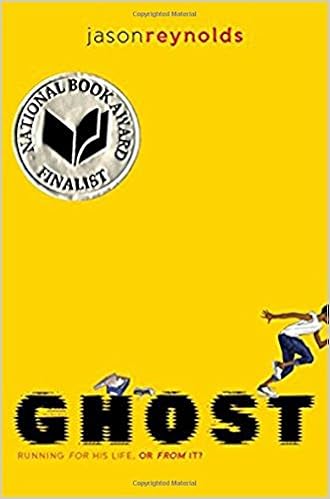
Ghost by Jason Reynolds
Ghost. Lu. Patina. Sunny. Four kids from wildly different backgrounds with personalities that are explosive when they clash. But they are also four kids chosen for an elite middle school track team—a team that could qualify them for the Junior Olympics if they can get their acts together. They all have a lot to lose, but they also have a lot to prove, not only to each other, but to themselves.
Running. That’s all Ghost (real name Castle Cranshaw) has ever known. But Ghost has been running for the wrong reasons—it all started with running away from his father, who, when Ghost was a very little boy, chased him and his mother through their apartment, then down the street, with a loaded gun, aiming to kill. Since then, Ghost has been the one causing problems—and running away from them—until he meets Coach, an ex-Olympic Medalist who sees something in Ghost: crazy natural talent. If Ghost can stay on track, literally and figuratively, he could be the best sprinter in the city. Can Ghost harness his raw talent for speed, or will his past finally catch up to him?
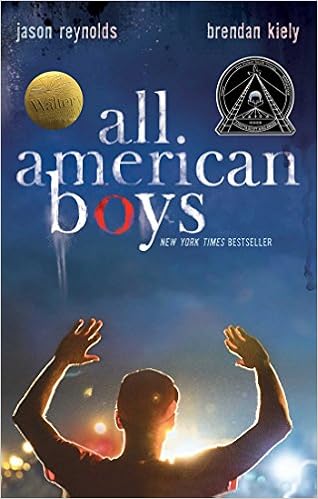
All American Boys by Brendan Kiely and Jason Reynolds
A bag of chips. That’s all sixteen-year-old Rashad is looking for at the corner bodega. What he finds instead is a fist-happy cop, Paul Galluzzo, who mistakes Rashad for a shoplifter, mistakes Rashad’s pleadings that he’s stolen nothing for belligerence, mistakes Rashad’s resistance to leave the bodega as resisting arrest, mistakes Rashad’s every flinch at every punch the cop throws as further resistance and refusal to STAY STILL as ordered. But how can you stay still when someone is pounding your face into the concrete pavement?
There were witnesses: Quinn Collins—a varsity basketball player and Rashad’s classmate who has been raised by Paul since his own father died in Afghanistan—and a video camera. Soon the beating is all over the news and Paul is getting threatened with accusations of prejudice and racial brutality. Quinn refuses to believe that the man who has basically been his savior could possibly be guilty. But then Rashad is absent. And absent again. And again. And the basketball team—half of whom are Rashad’s best friends—start to take sides. As does the school. And the town. Simmering tensions threaten to explode as Rashad and Quinn are forced to face decisions and consequences they had never considered before.
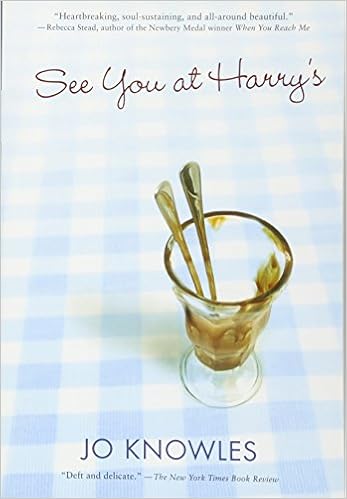
See You at Harry’s by Jo Knowles
Twelve-year-old Fern feels invisible. It seems as though everyone in her family has better things to do than pay attention to her: Mom (when she’s not meditating) helps Dad run the family restaurant; Sarah is taking a gap year after high school; and Holden pretends that Mom and Dad and everyone else doesn’t know he’s gay, even as he fends off bullies at school. Then there’s Charlie: three years old, a “surprise” baby, the center of everyone’s world. He’s devoted to Fern, but he’s annoying, too, always getting his way, always dirty, always commanding attention. If it wasn’t for Ran, Fern’s calm and positive best friend, there’d be nowhere to turn. Ran’s mantra, “All will be well,” is soothing in a way that nothing else seems to be. And when Ran says it, Fern can almost believe it’s true. But then tragedy strikes- and Fern feels not only more alone than ever, but also responsible for the accident that has wrenched her family apart. All will not be well. Or at least all will never be the same.
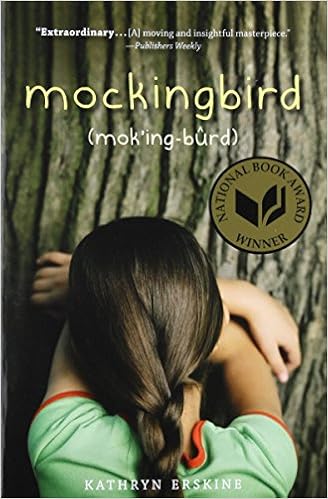
Mockingbird by Kathryn Erskine
Caitlin has Asperger’s. The world according to her is black and white; anything in between is confusing. Before, when things got confusing, Caitlin went to her older brother, Devon, for help. But Devon was killed in a school shooting, and Caitlin’s dad is so distraught that he is just not helpful. Caitlin wants everything to go back to the way things were, but she doesn’t know how to do that. Then she comes across the word closure–and she realizes this is what she needs. And in her search for it, Caitlin discovers that the world may not be so black and white after all.
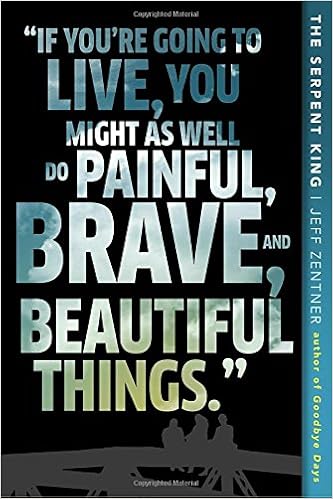
The Serpent King by Jeff Zentner
Dill isn’t the most popular kid at his rural Tennessee high school. After his father fell from grace in a public scandal that reverberated throughout their small town, Dill became a target. Fortunately, his two fellow misfits and best friends, Travis and Lydia, have his back.
But as they begin their senior year, Dill feels the coils of his future tightening around him. His only escapes are music and his secret feelings for Lydia–neither of which he is brave enough to share. Graduation feels more like an ending to Dill than a beginning. But even before then, he must cope with another ending–one that will rock his life to the core.
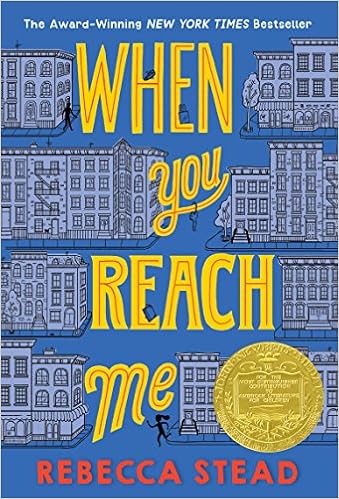
When You Reach Me by Rebecca Stead
Shortly after a fall-out with her best friend, sixth grader Miranda starts receiving mysterious notes, and she doesn’t know what to do. The notes tell her that she must write a letter—a true story, and that she can’t share her mission with anyone.
It would be easy to ignore the strange messages, except that whoever is leaving them has an uncanny ability to predict the future. If that is the case, then Miranda has a big problem—because the notes tell her that someone is going to die, and she might be too late to stop it.
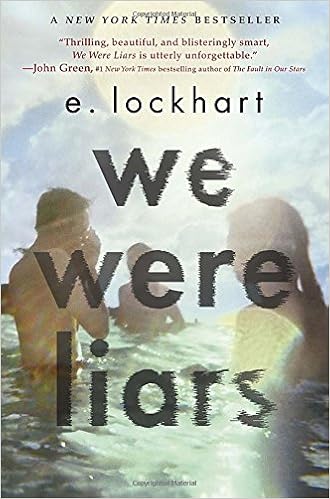
We Were Liars by e.lockhart
A beautiful and distinguished family.
A private island.
A brilliant, damaged girl; a passionate, political boy.
A group of four friends—the Liars—whose friendship turns destructive.
A revolution. An accident. A secret.
Lies upon lies.
True love.
The truth.
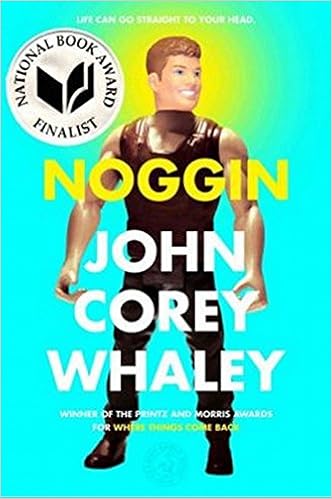
Noggin by John Corey Whaley
Listen—Travis Coates was alive once and then he wasn’t.
Now he’s alive again.
Simple as that.
The in between part is still a little fuzzy, but Travis can tell you that, at some point or another, his head got chopped off and shoved into a freezer in Denver, Colorado. Five years later, it was reattached to some other guy’s body, and well, here he is. Despite all logic, he’s still sixteen, but everything and everyone around him has changed. That includes his bedroom, his parents, his best friend, and his girlfriend. Or maybe she’s not his girlfriend anymore? That’s a bit fuzzy too.
Looks like if the new Travis and the old Travis are ever going to find a way to exist together, there are going to be a few more scars.
Oh well, you only live twice.
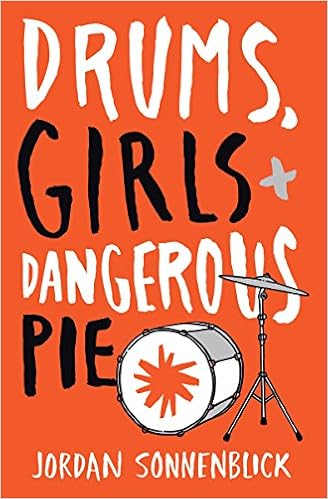
Drums, Girls, and Dangerous Pie by Jordan Sonnenblick
Thirteen-year-old Steven has a totally normal life: he plays drums in the All-Star Jazz band, has a crush on the hottest girl in the school, and is constantly annoyed by his five-year-old brother, Jeffrey. But when Jeffrey is diagnosed with leukemia, Steven’s world is turned upside down. He is forced to deal with his brother’s illness and his parents’ attempts to keep the family in one piece. Salted with humor and peppered with devastating realities, DRUMS, GIRLS, AND DANGEROUS PIE is a heartwarming journey through a year in the life of a family in crisis.
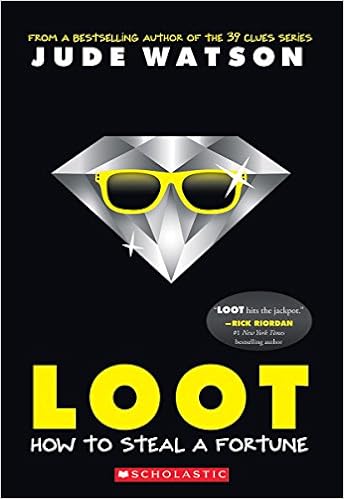
Loot by Jude Watson
On a foggy night in Amsterdam, a man falls from a rooftop to the wet pavement below. It’s Archibald McQuinn, the notorious cat burglar, and he’s dying. As sirens wail in the distance, Archie manages to get out two last words to his young son, March: “Find jewels.”
But March learns that his father is not talking about hidden loot. He’s talking about Jules, the twin sister March never knew he had. No sooner than the two find each other, they’re picked up by the police and sent to the world’s worst orphanage. It’s not hard time, but it feels like it.
March and Jules have no intention of staying put. They know their father’s business inside and out, and they’re tired of being pushed around. Just one good heist, and they’ll live the life of riches and freedom that most kids only dream about. . . . .
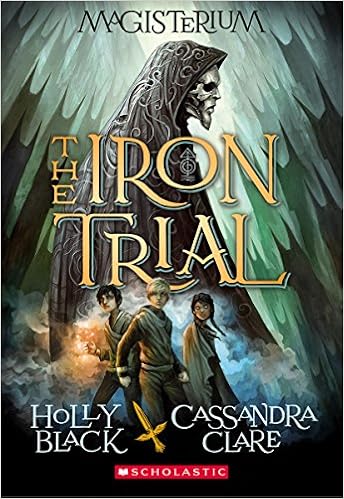
The Iron Trial by Cassandra Clare and Holly Black
Most kids would do anything to pass the Iron Trial.
Not Callum Hunt. He wants to fail.
All his life, Call has been warned by his father to stay away from magic. If he succeeds at the Iron Trial and is admitted into the Magisterium, he is sure it can only mean bad things for him.
So he tries his best to do his worst – and fails at failing.
Now the Magisterium awaits him. It’s a place that’s both sensational and sinister, with dark ties to his past and a twisty path to his future.
The Iron Trial is just the beginning, for the biggest test is still to come . . .
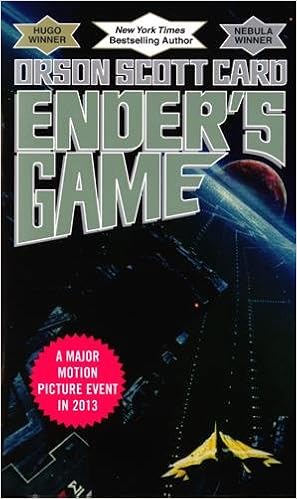
Ender’s Game by Orson Scott Card
In order to develop a secure defense against a hostile alien race’s next attack, government agencies breed child geniuses and train them as soldiers. A brilliant young boy, Andrew “Ender” Wiggin lives with his kind but distant parents, his sadistic brother Peter, and the person he loves more than anyone else, his sister Valentine. Peter and Valentine were candidates for the soldier-training program but didn’t make the cut—young Ender is the Wiggin drafted to the orbiting Battle School for rigorous military training.
Ender’s skills make him a leader in school and respected in the Battle Room, where children play at mock battles in zero gravity. Yet growing up in an artificial community of young soldiers Ender suffers greatly from isolation, rivalry from his peers, pressure from the adult teachers, and an unsettling fear of the alien invaders. His psychological battles include loneliness, fear that he is becoming like the cruel brother he remembers, and fanning the flames of devotion to his beloved sister.
Is Ender the general Earth needs? But Ender is not the only result of the genetic experiments. The war with the Buggers has been raging for a hundred years, and the quest for the perfect general has been underway for almost as long. Ender’s two older siblings are every bit as unusual as he is, but in very different ways. Between the three of them lie the abilities to remake a world. If, that is, the world survives.
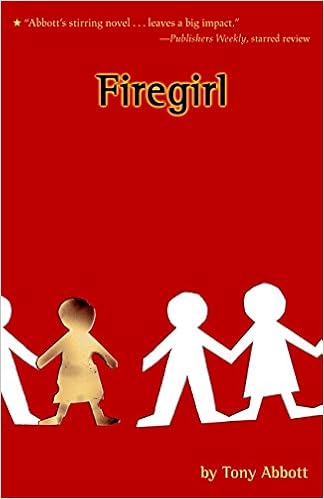
Firegirl by Tony Abbot
From the moment Jessica arrives, life is never quite the same for Tom and his seventh-grade classmates. They learn that Jessica has been in a fire and was badly burned, and will be attending St. Catherine’s will receiving medical treatments. Despite her appearance and the fear she evokes in him and most of the class, Tom slowly develops a tentative friendship with Jessica that changes his life.
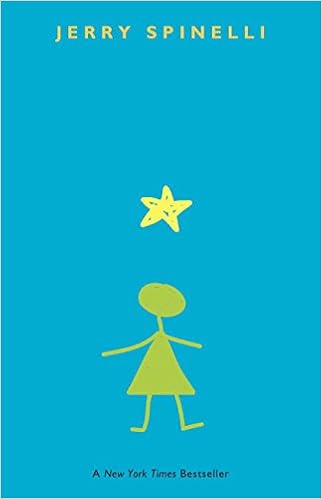
Stargirl by Jerry Spinelli
Stargirl. From the day she arrives at quiet Mica High in a burst of color and sound, the hallways hum with the murmur of “Stargirl, Stargirl.” She captures Leo Borlock’ s heart with just one smile. She sparks a school-spirit revolution with just one cheer. The students of Mica High are enchanted. At first.
Then they turn on her. Stargirl is suddenly shunned for everything that makes her different, and Leo, panicked and desperate with love, urges her to become the very thing that can destroy her: normal. In this celebration of nonconformity, Newbery Medalist Jerry Spinelli weaves a tense, emotional tale about the perils of popularity and the thrill and inspiration of first love.
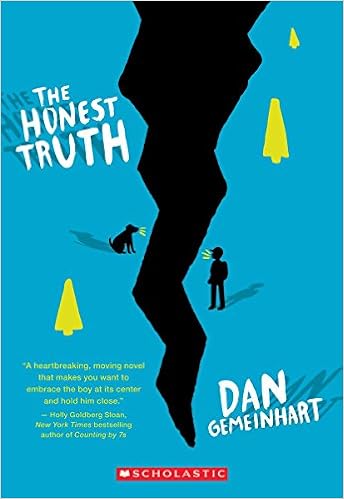
The Honest Truth by Dan Gemeinhart
In all the ways that matter, Mark is a normal kid. He’s got a dog named Beau and a best friend, Jessie. He likes to take photos and write haiku poems in his notebook. He dreams of climbing a mountain one day.
But in one important way, Mark is not like other kids at all. Mark is sick. The kind of sick that means hospitals. And treatments. The kind of sick some people never get better from.
So Mark runs away. He leaves home with his camera, his notebook, his dog, and a plan to reach the top of Mount Rainier–even if it’s the last thing he ever does.
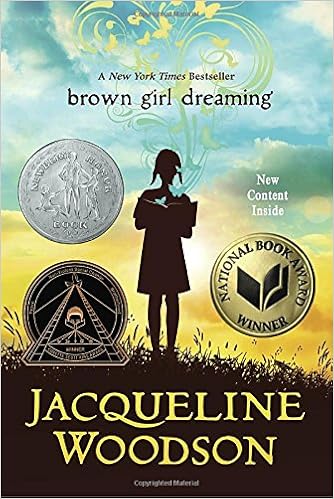
Brown Girl Dreaming by Jaqueline Woodson
Raised in South Carolina and New York, Woodson always felt halfway home in each place. In vivid poems, she shares what it was like to grow up as an African American in the 1960s and 1970s, living with the remnants of Jim Crow and her growing awareness of the Civil Rights movement. Touching and powerful, each poem is both accessible and emotionally charged, each line a glimpse into a child’s soul as she searches for her place in the world. Woodson’s eloquent poetry also reflects the joy of finding her voice through writing stories, despite the fact that she struggled with reading as a child. Her love of stories inspired her and stayed with her, creating the first sparks of the gifted writer she was to become.
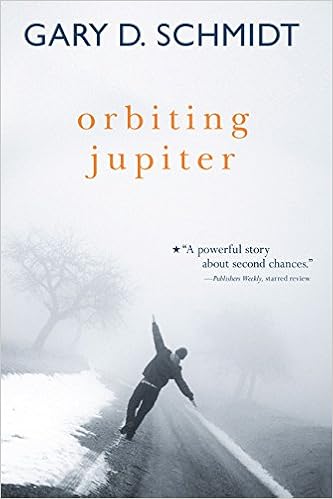
Orbiting Jupiter by Gary D. Schmidt
The two-time Newbery Honor winner Gary D. Schmidt delivers the shattering story of Joseph, a father at thirteen, who has never seen his daughter, Jupiter. After spending time in a juvenile facility, he’s placed with a foster family on a farm in rural Maine. Here Joseph, damaged and withdrawn, meets twelve-year-old Jack, who narrates the account of the troubled, passionate teen who wants to find his baby at any cost. In this riveting novel, two boys discover the true meaning of family and the sacrifices it requires.
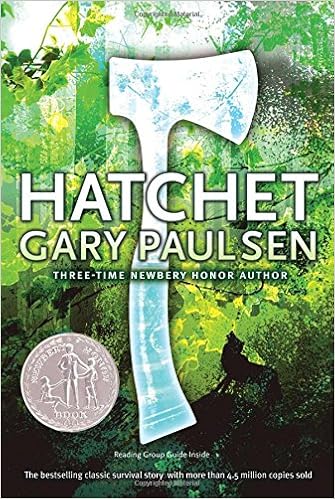
Hatchet by Gary Paulsen
Thirteen-year-old Brian Robeson is on his way to visit his father when the single-engine plane in which he is flying crashes. Suddenly, Brian finds himself alone in the Canadian wilderness with nothing but a tattered Windbreaker and the hatchet his mother gave him as a present—and the dreadful secret that has been tearing him apart since his parent’s divorce. But now Brian has no time for anger, self pity, or despair—it will take all his know-how and determination, and more courage than he knew he possessed, to survive.
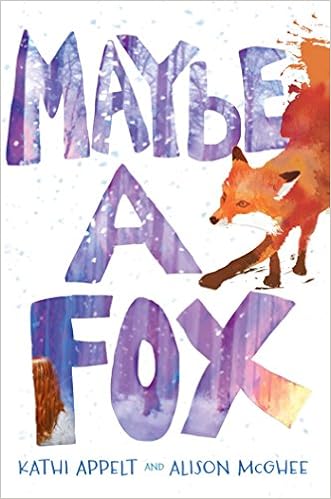
Maybe a Fox by Kathi Appelt and Alison McGhee
Sylvie and Jules, Jules and Sylvie. Better than just sisters, more than best friends, they’d be identical twins if only they’d been born in the same year. And if only Sylvie wasn’t such a fast—faster than fast—runner. But Sylvie is too fast, and when she runs to the river they’re not supposed to go anywhere near to throw a wish rock just before the school bus comes on a snowy morning, she runs so fast that no one sees what happens…and no one ever sees her again. Jules is devastated, but she refuses to believe what all the others believe, that—like their mother—her sister is gone forever.
At the very same time, in the shadow world, a shadow fox is born—half of the spirit world, half of the animal world. She too is fast—faster than fast—and she senses danger. She’s too young to know exactly what she senses, but she knows something is very wrong. And when Jules believes one last wish rock for Sylvie needs to be thrown into the river, the human and shadow worlds collide.
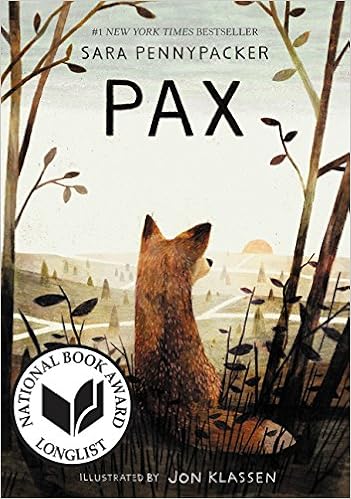
Pax by Sara Pennypacker
Pax and Peter have been inseparable ever since Peter rescued him as a kit. But one day, the unimaginable happens: Peter’s dad enlists in the military and makes him return the fox to the wild.
At his grandfather’s house, three hundred miles away from home, Peter knows he isn’t where he should be—with Pax. He strikes out on his own despite the encroaching war, spurred by love, loyalty, and grief, to be reunited with his fox.
Meanwhile Pax, steadfastly waiting for his boy, embarks on adventures and discoveries of his own. . . .
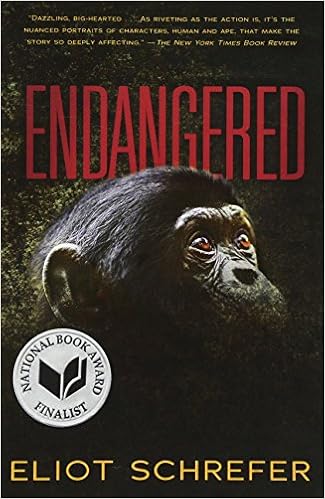
Endangered by Eliott Schrefer
Congo is a dangerous place, even for people who are trying to do good.
When Sophie has to visit her mother at her sanctuary for bonobos, she’s not thrilled to be there. Then Otto, an infant bonobo, comes into her life, and for the first time she feels responsible for another creature.
But peace does not last long for Sophie and Otto. When an armed revolution breaks out in the country, the sanctuary is attacked, and the two of them must escape unprepared into the jungle. Caught in the crosshairs of a lethal conflict, they must struggle to keep safe, to eat, and to live.
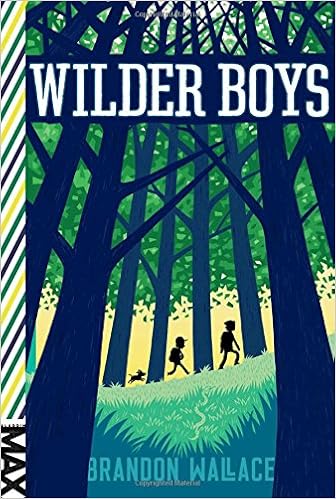
Wilder Boys by Brandon Wallace
Jake and Taylor Wilder have been taking care of themselves for a long time. Their father abandoned the family years ago, and their mother is too busy working and running interference between the boys and her boyfriend, Bull, to spend a lot of time with them. Thirteen-year-old Jake spends most of his time reading. He pores over his father’s journal, which is full of wilderness facts and survival tips. Eleven-year-old Taylor likes to be outside playing with their dog, Cody, or joking around with the other kids in the neighborhood.
But one night everything changes. The boys discover a dangerous secret that Bull is hiding.
And the next day, they come home from school to find their mother unconscious in an ambulance. Afraid that their mom is dead and fearing for their own safety, the Wilder Boys head off in search of their father. They only have his old letters and journal to help them, but they bravely venture onward.
It’s a long journey from the suburbs of Pittsburgh to the wilderness of Wyoming; can the Wilder Boys find their father before Bull catches up with them?
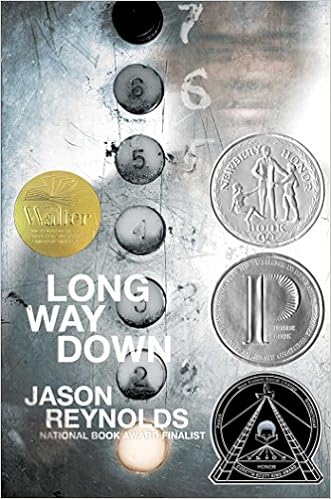
Long Way Down by Jason Reynolds
A cannon. A strap.
A piece. A biscuit.
A burner. A heater.
A chopper. A gat.
A hammer
A tool
for RULE
Or, you can call it a gun. That’s what fifteen-year-old Will has shoved in the back waistband of his jeans. See, his brother Shawn was just murdered. And Will knows the rules. No crying. No snitching. Revenge. That’s where Will’s now heading, with that gun shoved in the back waistband of his jeans, the gun that was his brother’s gun. He gets on the elevator, seventh floor, stoked. He knows who he’s after. Or does he? As the elevator stops on the sixth floor, on comes Buck. Buck, Will finds out, is who gave Shawn the gun before Will took the gun. Buck tells Will to check that the gun is even loaded. And that’s when Will sees that one bullet is missing. And the only one who could have fired Shawn’s gun was Shawn. Huh. Will didn’t know that Shawn had ever actually USED his gun. Bigger huh. BUCK IS DEAD. But Buck’s in the elevator? Just as Will’s trying to think this through, the door to the next floor opens. A teenage girl gets on, waves away the smoke from Dead Buck’s cigarette. Will doesn’t know her, but she knew him. Knew. When they were eight. And stray bullets had cut through the playground, and Will had tried to cover her, but she was hit anyway, and so what she wants to know, on that fifth floor elevator stop, is, what if Will, Will with the gun shoved in the back waistband of his jeans, MISSES.
And so it goes, the whole long way down, as the elevator stops on each floor, and at each stop someone connected to his brother gets on to give Will a piece to a bigger story than the one he thinks he knows. A story that might never know an END…if WILL gets off that elevator.
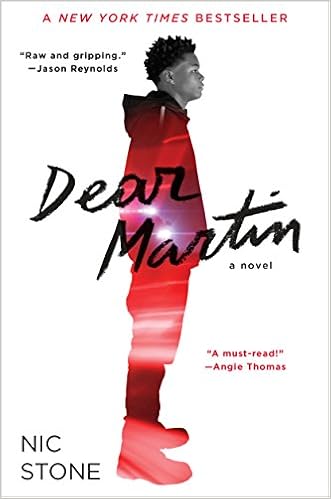
Dear Martin by Nic Stone
Justyce McAllister is top of his class and set for the Ivy League—but none of that matters to the police officer who just put him in handcuffs. And despite leaving his rough neighborhood behind, he can’t escape the scorn of his former peers or the ridicule of his new classmates.
Justyce looks to the teachings of Dr. Martin Luther King Jr. for answers. But do they hold up anymore? He starts a journal to Dr. King to find out.
Then comes the day Justyce goes driving with his best friend, Manny, windows rolled down, music turned up—way up, sparking the fury of a white off-duty cop beside them. Words fly. Shots are fired. Justyce and Manny are caught in the crosshairs. In the media fallout, it’s Justyce who is under attack.
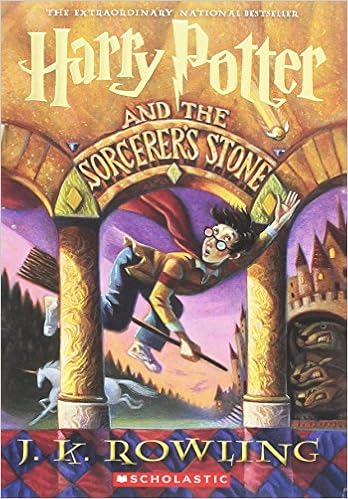
Harry Potter and the Sorcerer’s Stone by J.K. Rowling
Harry Potter has no idea how famous he is. That’s because he’s being raised by his miserable aunt and uncle who are terrified Harry will learn that he’s really a wizard, just as his parents were. But everything changes when Harry is summoned to attend an infamous school for wizards, and he begins to discover some clues about his illustrious birthright. From the surprising way he is greeted by a lovable giant, to the unique curriculum and colorful faculty at his unusual school, Harry finds himself drawn deep inside a mystical world he never knew existed and closer to his own noble destiny.
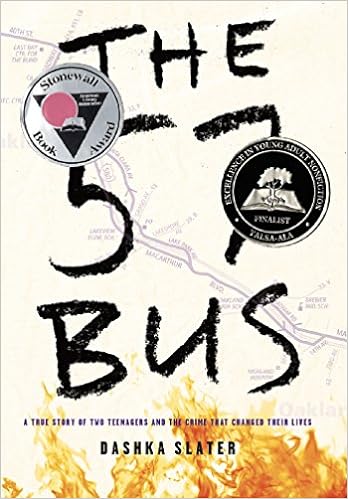
The 57 Bus by Dashka Slater
One teenager in a skirt.
One teenager with a lighter.
One moment that changes both of their lives forever.
If it weren’t for the 57 bus, Sasha and Richard never would have met. Both were high school students from Oakland, California, one of the most diverse cities in the country, but they inhabited different worlds. Sasha, a white teen, lived in the middle-class foothills and attended a small private school. Richard, a black teen, lived in the crime-plagued flatlands and attended a large public one. Each day, their paths overlapped for a mere eight minutes. But one afternoon on the bus ride home from school, a single reckless act left Sasha severely burned, and Richard charged with two hate crimes and facing life imprisonment. The case garnered international attention, thrusting both teenagers into the spotlight.
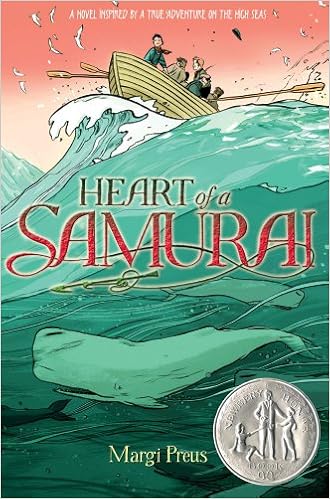
Heart of a Samurai by Margi Preus
In 1841, a Japanese fishing vessel sinks. Its crew is forced to swim to a small, unknown island, where they are rescued by a passing American ship. Japan’s borders remain closed to all Western nations, so the crew sets off to America, learning English on the way.
Manjiro, a fourteen-year-old boy, is curious and eager to learn everything he can about this new culture. Eventually the captain adopts Manjiro and takes him to his home in New England. The boy lives for some time in New England, and then heads to San Francisco to pan for gold. After many years, he makes it back to Japan, only to be imprisoned as an outsider. With his hard-won knowledge of the West, Manjiro is in a unique position to persuade the shogun to ease open the boundaries around Japan; he may even achieve his unlikely dream of becoming a samurai.
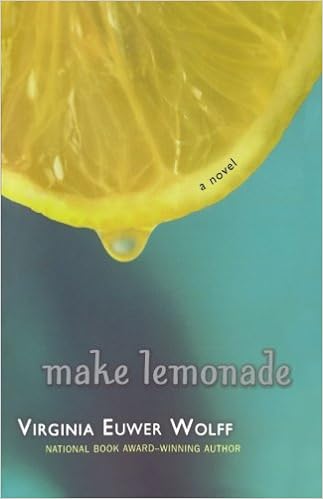
Make Lemonade by Virginia Euwer Wolf
Viginia Euwer Wolff’s groundbreaking novel, written in free verse, tells the story of fourteen-year-old LaVaughn, who is determined to go to college–she just needs the money to get there. When she answers a babysitting ad, LaVaughn meets Jolly, a seventeen-year-old single mother with two kids by different fathers. As she helps Jolly make lemonade out of the lemons her life has given her, LaVaughn learns some lessons outside the classroom.

I am Princess X by Cherie Priesr
Once upon a time, two best friends created a princess together. Libby drew the pictures, May wrote the tales, and their heroine, Princess X, slayed all the dragons and scaled all the mountains their imaginations could conjure.Once upon a few years later, Libby was in the car with her mom, driving across the Ballard Bridge on a rainy night. When the car went over the side, Libby passed away, and Princess X died with her.Once upon a now: May is sixteen and lonely, wandering the streets of Seattle, when she sees a sticker slapped in a corner window.Princess X?When May looks around, she sees the Princess everywhere: Stickers. Patches. Graffiti. There’s an entire underground culture, focused around a webcomic at IAmPrincessX.com. The more May explores the webcomic, the more she sees disturbing similarities between Libby’s story and Princess X online. And that means that only one person could have started this phenomenon — her best friend, Libby, who lives.
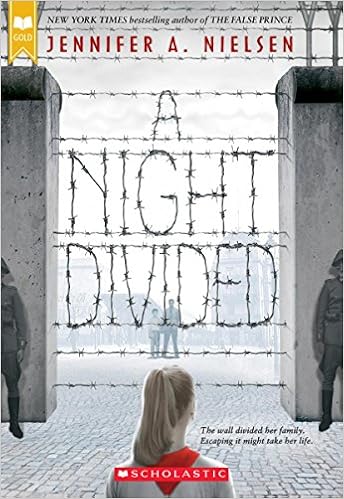
A Night Divided by Jennifer A. Nielsen
With the rise of the Berlin Wall, Gerta finds her family suddenly divided. She, her mother, and her brother Fritz live on the eastern side, controlled by the Soviets. Her father and middle brother, who had gone west in search of work, cannot return home. Gerta knows it is dangerous to watch the wall, yet she can’t help herself. She sees the East German soldiers with their guns trained on their own citizens; she, her family, her neighbors and friends are prisoners in their own city.
But one day on her way to school, Gerta spots her father on a viewing platform on the western side, pantomiming a peculiar dance. Gerta concludes that her father wants her and Fritz to tunnel beneath the wall, out of East Berlin. However, if they are caught, the consequences will be deadly. No one can be trusted. Will Gerta and her family find their way to freedom?
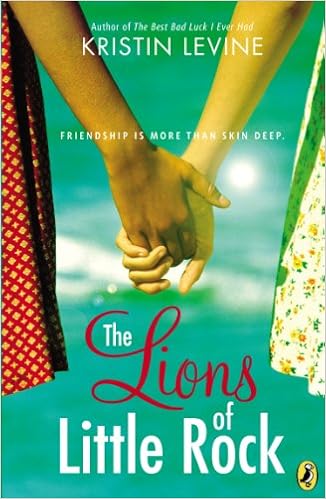
The Lions of Little Rock by Kristin Levine
As twelve-year-old Marlee starts middle school in 1958 Little Rock, it feels like her whole world is falling apart. Until she meets Liz, the new girl at school. Liz is everything Marlee wishes she could be: she’s brave, brash and always knows the right thing to say. But when Liz leaves school without even a good-bye, the rumor is that Liz was caught passing for white. Marlee decides that doesn’t matter. She just wants her friend back. And to stay friends, Marlee and Liz are even willing to take on segregation and the dangers their friendship could bring to both their families.

The Devil’s Arithmetic by Jane Yolen
Hannah thinks tonight’s Passover Seder will be the same as always. Little does she know that this year she will be mysteriously transported into the past where only she knows the horrors that await.
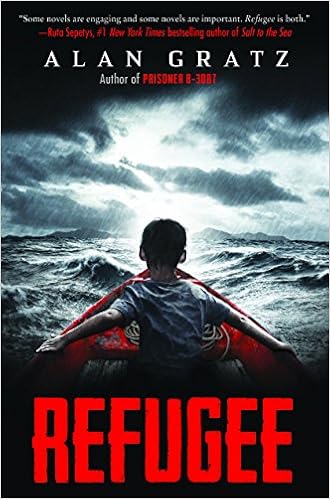
Refugee by Alan Gratz
JOSEF is a Jewish boy living in 1930s Nazi Germany. With the threat of concentration camps looming, he and his family board a ship bound for the other side of the world . . .
ISABEL is a Cuban girl in 1994. With riots and unrest plaguing her country, she and her family set out on a raft, hoping to find safety in America . . .
MAHMOUD is a Syrian boy in 2015. With his homeland torn apart by violence and destruction, he and his family begin a long trek toward Europe . . .
All three kids go on harrowing journeys in search of refuge. All will face unimaginable dangers — from drownings to bombings to betrayals. But there is always the hope of tomorrow. And although Josef, Isabel, and Mahmoud are separated by continents and decades, shocking connections will tie their stories together in the end.
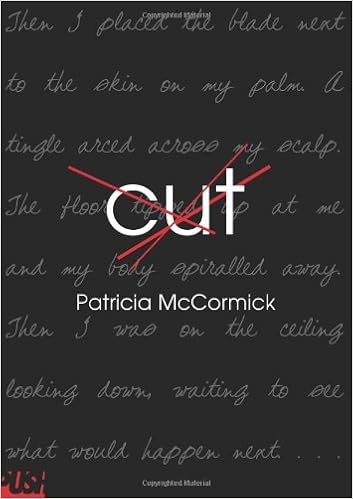
Cut by Patricia McCormick
A tingle arced across my scalp. The floor tipped up at me and my body spiraled away. Then I was on the ceiling looking down, waiting to see what would happen next.
Callie cuts herself. Never too deep, never enough to die. But enough to feel the pain. Enough to feel the scream inside.
Now she’s at Sea Pines, a “residential treatment facility” filled with girls struggling with problems of their own. Callie doesn’t want to have anything to do with them. She doesn’t want to have anything to do with anyone. She won’t even speak.
But Callie can only stay silent for so long….
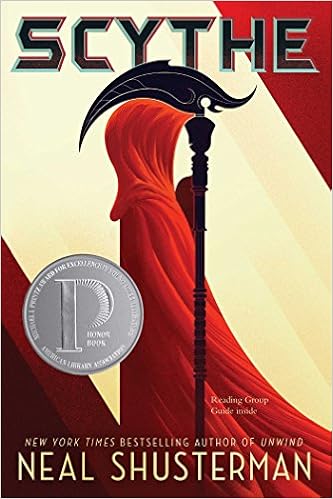
Scythe by Neal Shusterman
A world with no hunger, no disease, no war, no misery: humanity has conquered all those things, and has even conquered death. Now Scythes are the only ones who can end life—and they are commanded to do so, in order to keep the size of the population under control.
Citra and Rowan are chosen to apprentice to a scythe—a role that neither wants. These teens must master the “art” of taking life, knowing that the consequence of failure could mean losing their own.
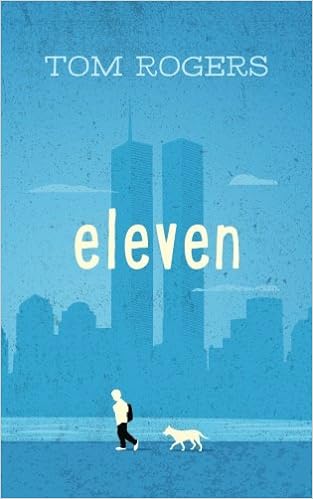
Eleven by Tom Rogers
Alex Douglas always wanted to be a hero. But nothing heroic ever happened to Alex. Nothing, that is, until his eleventh birthday. When Alex rescues a stray dog as a birthday gift to himself, he doesn’t think his life can get much better. Radar, his new dog, pretty much feels the same way. But this day has bigger things in store for both of them.
This is a story about bullies and heroes. About tragedy and hope. About enemies with two legs and friends with four, and pesky little sisters and cranky old men, and an unexpected lesson in kindness delivered with a slice of pizza. This is Eleven: the journey of a boy turning eleven on 9/11.
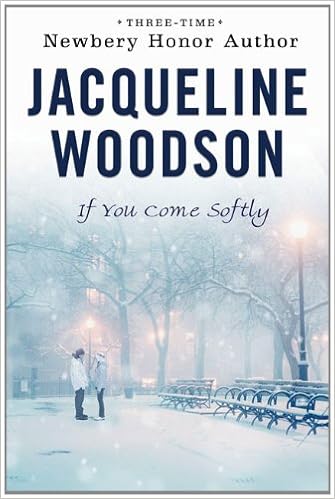
If You Come Softly by Jacqueline Woodson
Jeremiah feels good inside his own skin. That is, when he’s in his own Brooklyn neighborhood. But now he’s going to be attending a fancy prep school in Manhattan, and black teenage boys don’t exactly fit in there. So it’s a surprise when he meets Ellie the first week of school. In one frozen moment their eyes lock, and after that they know they fit together–even though she’s Jewish and he’s black. Their worlds are so different, but to them that’s not what matters. Too bad the rest of the world has to get in their way.
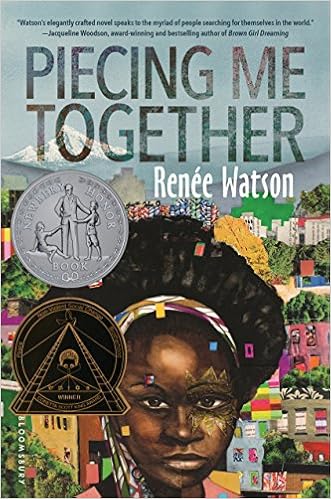
Piecing Me Together by Renee Watson
Jade believes she must get out of her poor neighborhood if she’s ever going to succeed. Her mother tells her to take advantage of every opportunity that comes her way. And Jade has: every day she rides the bus away from her friends and to the private school where she feels like an outsider, but where she has plenty of opportunities. But some opportunities she doesn’t really welcome, like an invitation to join Women to Women, a mentorship program for “at-risk” girls. Just because her mentor is black and graduated from the same high school doesn’t mean she understands where Jade is coming from. She’s tired of being singled out as someone who needs help, someone people want to fix. Jade wants to speak, to create, to express her joys and sorrows, her pain and her hope. Maybe there are some things she could show other women about understanding the world and finding ways to be real, to make a difference.
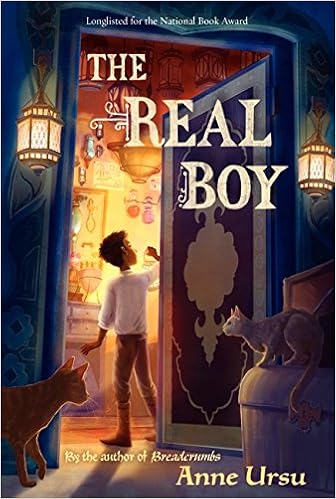
The Real Boy by Anne Ursu
On an island on the edge of an immense sea there is a city, a forest, and a boy named Oscar. Oscar is a shop boy for the most powerful magician in the village, and spends his days in a small room in the dark cellar of his master’s shop grinding herbs and dreaming of the wizards who once lived on the island generations ago. Oscar’s world is small, but he likes it that way. The real world is vast, strange, and unpredictable. And Oscar does not quite fit in it.
But now that world is changing. Children in the city are falling ill, and something sinister lurks in the forest. Oscar has long been content to stay in his small room in the cellar, comforted in the knowledge that the magic that flows from the forest will keep his island safe. Now even magic may not be enough to save it.
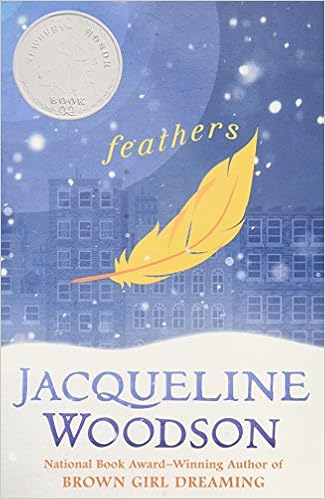
Feathers by Jacqueline Woodson
“Hope is the thing with feathers” starts the poem Frannie is reading in school. Frannie hasn’t thought much about hope. There are so many other things to think about. Each day, her friend Samantha seems a bit more “holy.” There is a new boy in class everyone is calling the Jesus Boy. And although the new boy looks like a white kid, he says he’s not white. Who is he?
During a winter full of surprises, good and bad, Frannie starts seeing a lot of things in a new light—her brother Sean’s deafness, her mother’s fear, the class bully’s anger, her best friend’s faith and her own desire for “the thing with feathers.”
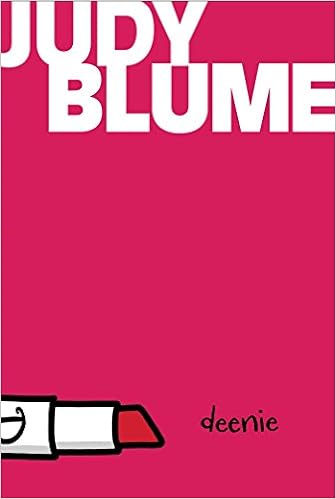
Deenie by Judy Blume
Deenie’s mother wants her to be a model, with her face on magazine covers—maybe even in the movies—but Deenie wants to spend Saturdays with her friends Janet and Midge, tracking Harvey Grabowsky, the captain of the football team, around Woolworth’s. She wants to be a cheerleader, too, and go to the seventh-grade mixer to hear Buddy Brader play his drums.
Instead, Deenie is diagnosed with scoliosis. And that means body stockings to squeeze into, a roomful of strangers to face, and a terrifying brace that she’ll need to wear for years that goes from her neck to her hips. Suddenly Deenie has to cope with a kind of specialness that’s frightening—and might be hers forever.
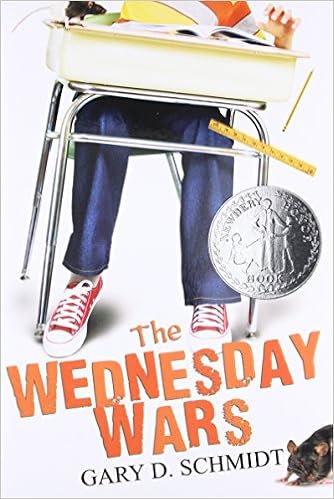
Wednesday Wars by Gary D. Schmidt
Meet Holling Hoodhood, a seventh-grader at Camillo Junior High, who must spend Wednesday afternoons with his teacher, Mrs. Baker, while the rest of the class has religious instruction. Mrs. Baker doesn’t like Holling—he’s sure of it. Why else would she make him read the plays of William Shakespeare outside class? But everyone has bigger things to worry about, like Vietnam. His father wants Holling and his sister to be on their best behavior: the success of his business depends on it. But how can Holling stay out of trouble when he has so much to contend with? A bully demanding cream puffs; angry rats; and a baseball hero signing autographs the very same night Holling has to appear in a play in yellow tights! As fate sneaks up on him again and again, Holling finds Motivation—the Big M—in the most unexpected places and musters up the courage to embrace his destiny, in spite of himself.
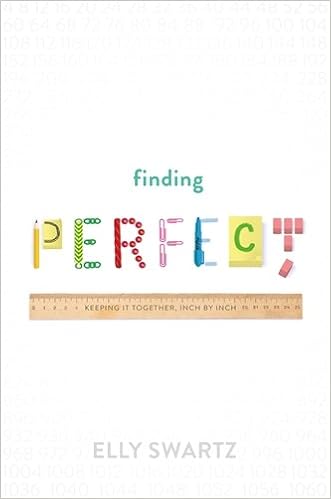
Finding Perfect by Elly Swartz
To twelve-year-old Molly Nathans, perfect is:
―The number four
―The tip of a newly sharpened No. 2 pencil
―A crisp white pad of paper
―Her neatly aligned glass animal figurines
What’s not perfect is Molly’s mother leaving the family to take a faraway job with the promise to return in one year. Molly knows that promises are sometimes broken, so she hatches a plan to bring her mother home: Win the Lakeville Middle School Poetry Slam Contest. The winner is honored at a fancy banquet with white tablecloths. Molly is sure her mother would never miss that. Right…?
But as time passes, writing and reciting slam poetry become harder. Actually, everything becomes harder as new habits appear, and counting, cleaning, and organizing are not enough to keep Molly’s world from spinning out of control. In this fresh-voiced debut novel, one girl learns there is no such thing as perfect.
The Parker Inheritance by Varian Johnson
The One and Only Ivan by Katherine Applegate
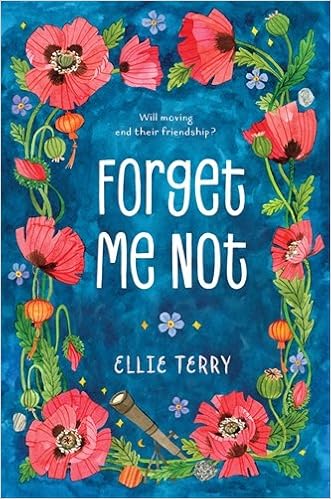
Forget Me Not by Ellie Terry
Astronomy-loving Calliope June has Tourette syndrome, so she sometimes makes faces or noises that she doesn’t mean to make. When she and her mother move yet again, she tries to hide her TS. But it isn’t long before the kids at her new school realize she’s different. Only Calliope’s neighbor, who is also the popular student body president, sees her as she truly is–an interesting person and a good friend. But is he brave enough to take their friendship public?
As Calliope navigates school, she must also face her mother’s new relationship and the fact that they might be moving–again–just as she starts to make friends and finally accept her differences.
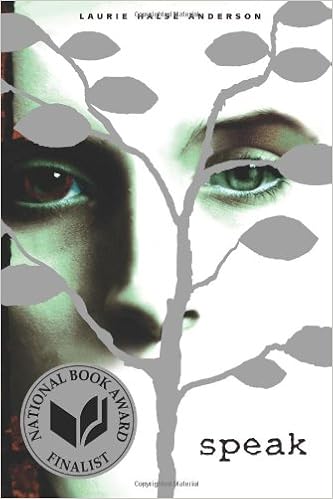
Speak by Laurie Halse Anderson
“Speak up for yourself–we want to know what you have to say.” From the first moment of her freshman year at Merryweather High, Melinda knows this is a big fat lie, part of the nonsense of high school. She is friendless, outcast, because she busted an end-of-summer party by calling the cops, so now nobody will talk to her, let alone listen to her. As time passes, she becomes increasingly isolated and practically stops talking altogether. Only her art class offers any solace, and it is through her work on an art project that she is finally able to face what really happened at that terrible party: she was raped by an upperclassman, a guy who still attends Merryweather and is still a threat to her. Her healing process has just begun when she has another violent encounter with him. But this time Melinda fights back, refuses to be silent, and thereby achieves a measure of vindication. In Laurie Halse Anderson’s powerful novel, an utterly believable heroine with a bitterly ironic voice delivers a blow to the hypocritical world of high school. She speaks for many a disenfranchised teenager while demonstrating the importance of speaking up for oneself.
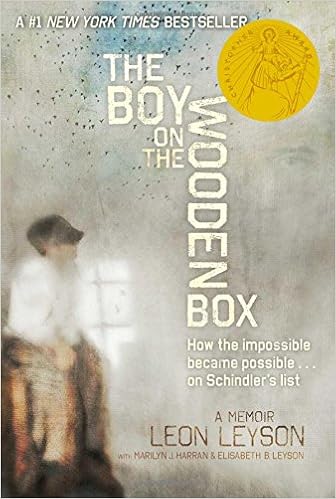
The Boy on the Wooden Box by Leon Leyson, Marilyn J. Harran and Elisabeth B. Leyson
This, the only memoir published by a former Schindler’s list child, perfectly captures the innocence of a small boy who goes through the unthinkable. Leon Leyson (born Leib Lezjon) was only ten years old when the Nazis invaded Poland and his family was forced to relocate to the Krakow ghetto. With incredible luck, perseverance, and grit, Leyson was able to survive the sadism of the Nazis, including that of the demonic Amon Goeth, commandant of Plaszow, the concentration camp outside Krakow.
Ultimately, it was the generosity and cunning of one man, Oskar Schindler, who saved Leon Leyson’s life, and the lives of his mother, his father, and two of his four siblings, by adding their names to his list of workers in his factory—a list that became world renowned: Schindler’s list.
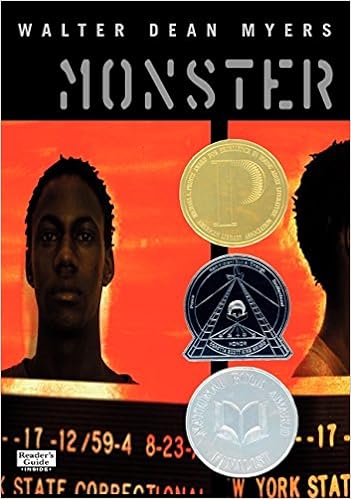
Monster by Walter Dean Meyers
This New York Times bestselling novel from acclaimed author Walter Dean Myers tells the story of Steve Harmon, a teenage boy in juvenile detention and on trial. Presented as a screenplay of Steve’s own imagination, and peppered with journal entries, the book shows how one single decision can change our whole lives.
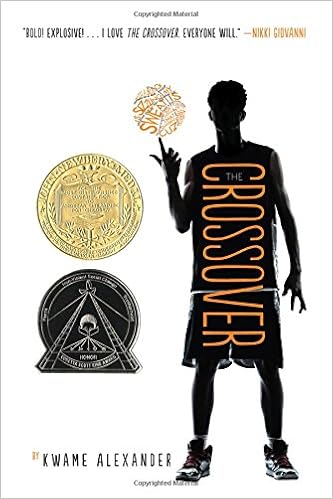
The Crossover by Kwame Alexander
“With a bolt of lightning on my kicks . . .The court is SIZZLING. My sweat is DRIZZLING. Stop all that quivering. Cuz tonight I’m delivering,” announces dread-locked, 12-year old Josh Bell. He and his twin brother Jordan are awesome on the court. But Josh has more than basketball in his blood, he’s got mad beats, too, that tell his family’s story in verse, in this fast and furious middle grade novel of family and brotherhood from Kwame Alexander.
Josh and Jordan must come to grips with growing up on and off the court to realize breaking the rules comes at a terrible price, as their story’s heart-stopping climax proves a game-changer for the entire family.
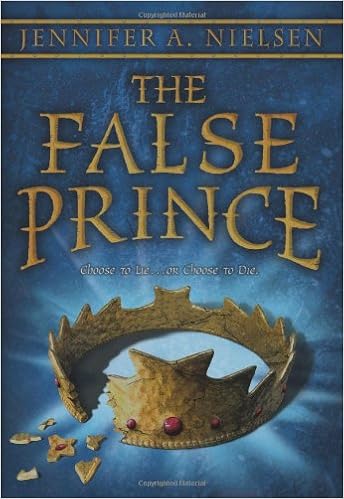
The False Prince by Jennifer Nielsen
In a discontent kingdom, civil war is brewing. To unify the divided people, Conner, a nobleman of the court, devises a cunning plan to find an impersonator of the king’s long-lost son and install him as a puppet prince. Four orphans are recruited to compete for the role, including a defiant boy named Sage. Sage knows that Conner’s motives are more than questionable, yet his life balances on a sword’s point — he must be chosen to play the prince or he will certainly be killed. But Sage’s rivals have their own agendas as well.
As Sage moves from a rundown orphanage to Conner’s sumptuous palace, layer upon layer of treachery and deceit unfold, until finally, a truth is revealed that, in the end, may very well prove more dangerous than all of the lies taken together.
![The Raven Boys (The Raven Cycle, Book 1) by [Maggie Stiefvater]](https://images-na.ssl-images-amazon.com/images/I/51Td8kF1ntL.jpg)
Raven Boys by Maggie Stiefwater
Every year, Blue Sargent stands next to her clairvoyant mother as the soon-to-be dead walk past. Blue never sees them–until this year, when a boy emerges from the dark and speaks to her.
His name is Gansey, a rich student at Aglionby, the local private school. Blue has a policy of staying away from Aglionby boys. Known as Raven Boys, they can only mean trouble.
But Blue is drawn to Gansey, in a way she can’t entirely explain. He is on a quest that has encompassed three other Raven Boys: Adam, the scholarship student who resents the privilege around him; Ronan, the fierce soul whose emotions range from anger to despair; and Noah, the taciturn watcher who notices many things but says very little.
For as long as she can remember, Blue has been warned that she will cause her true love to die. She doesn’t believe in true love, and never thought this would be a problem. But as her life becomes caught up in the strange and sinister world of the Raven Boys, she’s not so sure anymore.
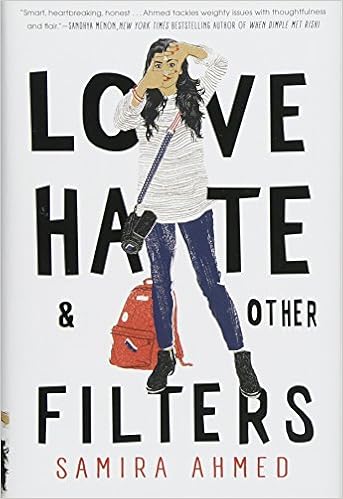
Love, Hate, and Other Filters by Samira Ahmed
American-born seventeen-year-old Maya Aziz is torn between worlds. There’s the proper one her parents expect for their good Indian daughter: attending a college close to their suburban Chicago home, and being paired off with an older Muslim boy her mom deems “suitable.” And then there is the world of her dreams: going to film school and living in New York City—and maybe (just maybe) pursuing a boy she’s known from afar since grade school, a boy who’s finally falling into her orbit at school.
There’s also the real world, beyond Maya’s control. In the aftermath of a horrific crime perpetrated hundreds of miles away, her life is turned upside down. The community she’s known since birth becomes unrecognizable; neighbors and classmates alike are consumed with fear, bigotry, and hatred. Ultimately, Maya must find the strength within to determine where she truly belongs.
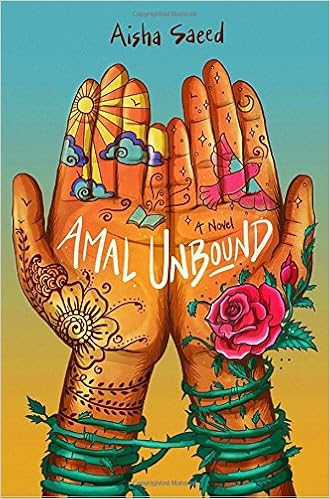
Amal Unbound by Aisha Saeed
Life is quiet and ordinary in Amal’s Pakistani village, but she had no complaints, and besides, she’s busy pursuing her dream of becoming a teacher one day. Her dreams are temporarily dashed when–as the eldest daughter–she must stay home from school to take care of her siblings. Amal is upset, but she doesn’t lose hope and finds ways to continue learning. Then the unimaginable happens–after an accidental run-in with the son of her village’s corrupt landlord, Amal must work as his family’s servant to pay off her own family’s debt.
Life at the opulent Khan estate is full of heartbreak and struggle for Amal–especially when she inadvertently makes an enemy of a girl named Nabila. Most troubling, though, is Amal’s growing awareness of the Khans’ nefarious dealings. When it becomes clear just how far they will go to protect their interests, Amal realizes she will have to find a way to work with others if they are ever to exact change in a cruel status quo, and if Amal is ever to achieve her dreams.
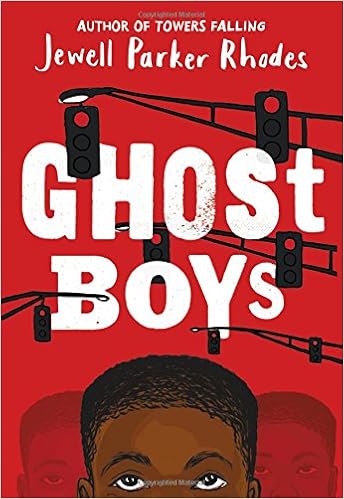
Ghost Boys by Jewell Parker Rhodes
Only the living can make the world better. Live and make it better.
Twelve-year-old Jerome is shot by a police officer who mistakes his toy gun for a real threat. As a ghost, he observes the devastation that’s been unleashed on his family and community in the wake of what they see as an unjust and brutal killing.
Soon Jerome meets another ghost: Emmett Till, a boy from a very different time but similar circumstances. Emmett helps Jerome process what has happened, on a journey towards recognizing how historical racism may have led to the events that ended his life. Jerome also meets Sarah, the daughter of the police officer, who grapples with her father’s actions.
Once again Jewell Parker Rhodes deftly weaves historical and socio-political layers into a gripping and poignant story about how children and families face the complexities of today’s world, and how one boy grows to understand American blackness in the aftermath of his own death.
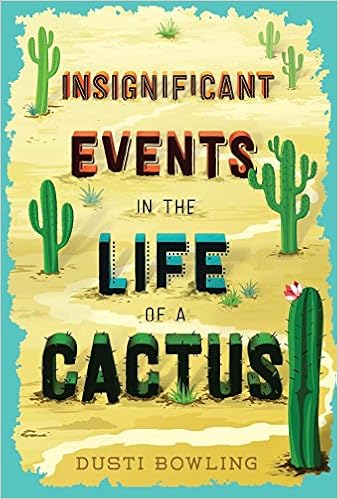
Insignificant Events in the Life of a Cactus by Dusti Bowling
Aven Green loves to tell people that she lost her arms in an alligator wrestling match, or a wildfire in Tanzania, but the truth is she was born without them. And when her parents take a job running Stagecoach Pass, a rundown western theme park in Arizona, Aven moves with them across the country knowing that she’ll have to answer the question over and over again.
Her new life takes an unexpected turn when she bonds with Connor, a classmate who also feels isolated because of his own disability, and they discover a room at Stagecoach Pass that holds bigger secrets than Aven ever could have imagined. It’s hard to solve a mystery, help a friend, and face your worst fears. But Aven’s about to discover she can do it all . . . even without arms.
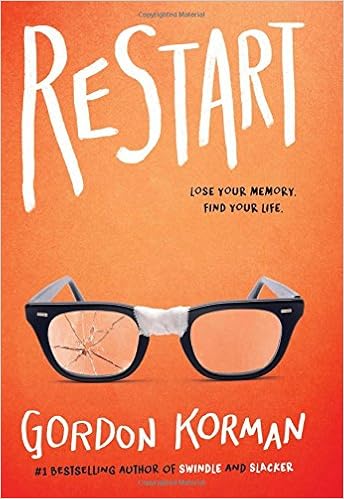
Restart by Gordon Korman
Chase’s memory just went out the window.
Chase doesn’t remember falling off the roof. He doesn’t remember hitting his head. He doesn’t, in fact, remember anything. He wakes up in a hospital room and suddenly has to learn his whole life all over again . . . starting with his own name.
He knows he’s Chase. But who is Chase? When he gets back to school, he sees that different kids have very different reactions to his return.
Some kids treat him like a hero. Some kids are clearly afraid of him.
One girl in particular is so angry with him that she pours her frozen yogurt on his head the first chance she gets.
Pretty soon, it’s not only a question of who Chase is–it’s a question of who he was . . . and who he’s going to be.
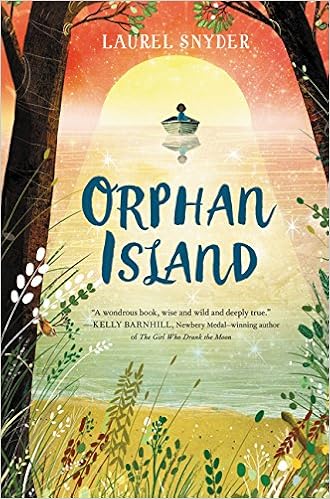
Orphan Island by Laurel Snyder
On the island, everything is perfect. The sun rises in a sky filled with dancing shapes; the wind, water, and trees shelter and protect those who live there; when the nine children go to sleep in their cabins, it is with full stomachs and joy in their hearts.
And only one thing ever changes: on that day, each year, when a boat appears from the mist upon the ocean carrying one young child to join them—and taking the eldest one away, never to be seen again.
Today’s Changing is no different. The boat arrives, taking away Jinny’s best friend, Deen, replacing him with a new little girl named Ess, and leaving Jinny as the new Elder. Jinny knows her responsibility now—to teach Ess everything she needs to know about the island, to keep things as they’ve always been.
But will she be ready for the inevitable day when the boat will come back—and take her away forever from the only home she’s known?
To see all of our other favorite books, go here



 Pernille Ripp