assumptions, being me, books, Literacy, Reading, students

Can We Find A Better Term Than Struggling Readers?

image from icanread
image from icanread

To struggle means to contend with an adversary or opposing force.  To struggle means to advance with violent effort.  To struggle means to cope with an inability to perform well.  Despite its relationship with these definitions, the term “struggling reader” has become one of the favored way to label our learners as we discuss their needs.  A term that means to advance with violent effort is somehow now associated with developing as a reader, and I cringe every time I hear it.

It is not that I don’t see children fighting with words when they are learning to read.  I see the tremendous effort.  I see the hard work that goes into becoming a reader.  And I see my older students still fight, sometimes word for word, as they process the text.  They are in a struggle at times, yes.  But they are not struggling readers.  They are not battling an epic foe that will take them down somehow, because I can’t allow them to identify that way.  I can’t allow that definition to define them in my own eyes.  they are so much more than struggling readers.

When we allow a term like this to permeate our instruction, to permeate the conversations we have about students, we are viewing the children we teach only through one lens.  We allow this term to overtake any other information we have on the child and the effort that they put into learning.  When we label someone as struggling, we have, in essence, given them a box to place themselves in and for the rest of their lives they can choose to stay within that box knowing that no matter what they do, they will never stop struggling.  That label becomes part of their identity.  In our own minds as teachers, we also create a neat box to put them in as we plan our lessons and our own assumptions about what they can or cannot do taints their future path.

When we tell a child they are developing rather than struggling, then there is hope.  Then there is a chance for them to think that some day whatever they struggle with will not be as hard for them.  That they are developing their skills and working through the process.  And yes, that process may take years and years, but that there will be success, however small, and that this learning journey is one they will be on for the rest of their lives.  We don’t give them that chance for hope when we call them struggling readers.

In fact, why label them at all?  Why not just call all of our readers just that; readers?  Almost every child reads in some way.  I see it in my own children when they pick up a book and point to the pictures, too young to process that there are words on the page as well.  I see it in Thea, my 6 year-old, who is reading from memory and developing systems to figure out words.  I see it in my 7th graders that slowly work through a page of text, exhausted by the end of it.  They are readers.  And yet, their path toward becoming better readers may be one that has obstacles, may be one filled with struggles, but that does not mean that they are the ones struggling at all times.  That does not mean that one label will define who they are human beings, and nor should we let it.  But that change starts with the very language we use to speak about our students.  That change starts with us.

What do you think?

If you like what you read here, consider reading my book Passionate Learners – How to Engage and Empower Your Students.  The 2nd edition and actual book-book (not just e-book!) comes out September 22nd from Routledge.  

being a teacher, Literacy, Passion, Reading, student choice, student voice

Stop Feeding the Beast – The Reading Myths We Pass on As Truth

“This is not a “girl” book even if the cover makes you think it is, boys can love it too…”And I stop myself.  And I cringe inwardly.  And I want to rewind time for just 10 seconds and tell myself to stop.  A “girl” book?  What in the world is that?  And since when did I label our classroom books by gender?

The stereotypes of reading seems to be a beast in itself.  We feed the beast whenever we pass on hearsay as fact.  We feed the beast whenever we fall victim to one of these stereotypical sayings without actually questioning it.  Through our casual conversation we teach our students that there are books for girls and books for boys.  We teach our students that a strong reader looks one way, while a struggling reader (God, I hate that term) is something else.  We say these things as if they are the truth and then are surprised when our students adopt the very identities we create.

So what are the biggest myths that I know I have fed in my classroom?

11232142_10153492591360196_439666777097332585_o
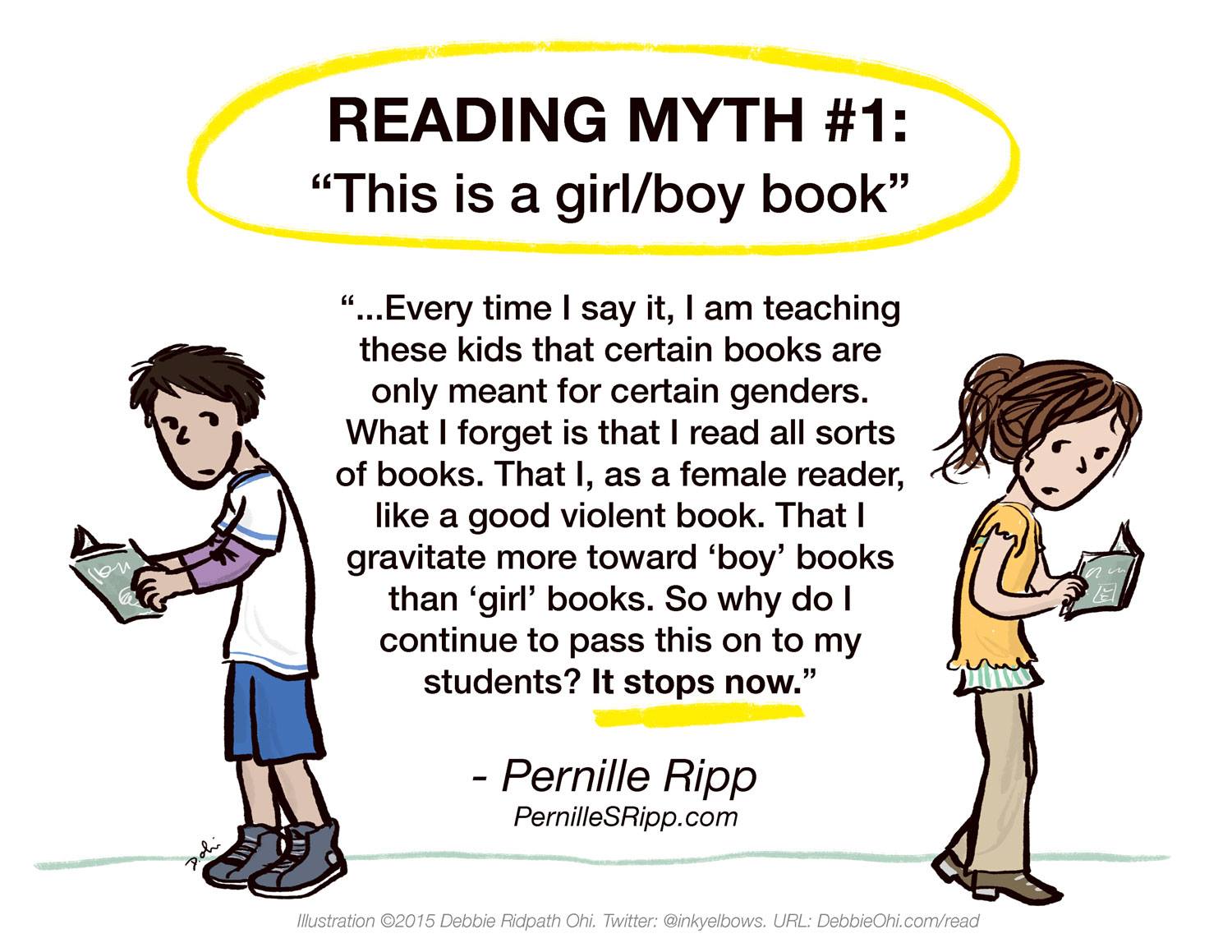
Thank you Debbie Ridpath Ohi for this image

“This is a girl/boy book.”  I have said this many times as I try to book talk a book.  I say it when I think the boys, in particular, will not give a book a fair chance because of its cover.  I say it when I think the girls will find a book to be too violent, to have too much action.  And every time I say it, I am teaching these kids that certain books are only meant for certain genders.  What I forget is that I read all sorts of books.  That I, as a female reader, like a good violent book.  That I gravitate more toward “boy” books than “girl” books.  So why do I continue to pass this on to my students?  It stops now.

“This is an easy read.”  Another common statement I have made while book talking.  What I mean by it is that for most students the text will not prove difficult to understand, yet I know now that ease of reading looks very different from student to student.  That what I may think is easy, even when I pretend to be a 7th grader, is not easy at all.  That even if a book is short does not make it easy.  Even if a book has a manageable story line does not make it easy.  That “easy” means different things to different readers and therefore does not provide a good explanation to anyone.  It stops now.

“He/she is a low or high reader.”  Our obsession with classifying students based on their data does not help our students, it only helps the adults when we are discussing them.  There is an urge in education to group kids according to data points so that rather than take the time to discuss each student, we can discuss them as a group.  Yet the terms “low” or “high” make no sense when discussing readers.  They make sense when we are discussing data points, but is that really all our students are?  How many of us have taught students who were amazing readers, yet scored low on a test?  What would we call them?  We need to discuss students using their names and their actual qualities, not these shortened quantifiable terms that only box them in further.  It stops now.

“Most boys don’t really like to read.”  I don’t know how many years of teaching boys I need to finally stop saying this.  Many boys like to read – period – but when we say that most don’t, we are telling them that what they love is not a masculine thing to do.  That boys loving reading is something strange and different.  If we want this to come true, we should just keep repeating this over and over.  Our male readers will soon enough get the message that reading is for girls.  It stops now.

“The older they get, the less they love books.”  I used to believe this, until I started teaching middle school.  Then I realized that it is not because students want to read less as they get older, they read less because we have less time for independent reading, and we dictate more of their reading life.  Homework builds up as do other responsibilities outside of school.  Compare a 5th grader who has 30 minutes of independent reading most days to my 7th graders that get a luxurious 10 minutes – who do you think reads more in a year?  Also, I wonder if anyone would want to keep reading if they did not get time for it in school or had choice over what they read for several years?  Sometimes I think it nearly a miracle that students’ love of reading can survive what we do to them in some educational settings.  It stops now.

“But they are not really reading…”  I used to be the hawk of independent reading, watching every kid and making sure that for the entire time their eyes were on the text.  If they stopped I was there quickly to redirect.  Independent reading time was for independent reading and by golly would I make sure that they used every single second of it.  Yet I don’t read like that myself.  When I love a book, I pause and wonder.  When I love a book, I often look up to take a break, to settle my thoughts.  When I love a book, my mind does not wander but I still fidget.  That doesn’t need a redirection, that doesn’t need a conversation, that simply needs to be allowed to happen so I can get back to reading.  Our students are not robots, we should not treat them as such.  Re-direct when a child really needs it, not the moment they come up for air.  It stops now.

“They are too old for read alouds…picture books…choral reading…Diary of Wimpy Kid…”  Or whatever other thing we think our students are too old for.  No child is too old for a read aloud.  No child is too old for picture books.  No child is too old for choral reading.  No child is too old for books like Diary Of A Wimpy Kid.  Perhaps if we spent more time showcasing how much fun reading really is, kids would actually believe us.  It stops now.

The myths we allow ourselves to believe about reading will continue to shape the reading lives of those we teach.  We have to stop ourselves from harming the reading experience.  We have to take control of what we say, what we do, and what we think because our students are the ones being affected.  We have a tremendous power to destroy the very reading identity we say we want to develop.  It stops now.  It stops with us.

If you like what you read here, consider reading my book Passionate Learners – How to Engage and Empower Your Students.  The 2nd edition and actual book-book (not just e-book!) comes out September 22nd from Routledge.  
being me, books, Literacy, Reading

My Favorite Reads of This Summer – 2015 – Part 1

While summer still has a few weeks left in it, I have been surrounded by so many amazing reads that I felt I needed to share some of the incredible books I have been reading.  We are so lucky to have such incredible books to share with our students (and ourselves!)

I just finished MiNRS by Kevin Sylvester last night and couldn’t believe how good it was.  I love a great science fiction book and this one does not disappoint.  Best part is that I can see handing this book to so many students to read, with it’s accessible language and action scenes, this is sure to be a crowd favorite for 4th graders and up.

It is completely appropriate that The Blackthorn Key is released the very same day that I go back to school.  Why?  Because this is the book to give to students to read.  This is a book for anyone who loves a good mystery, fantasy, action, and hopefully something that will turn into a series.  This book, which again was an ARC given to me by Scholastic, will be a great book to hand to those students that loved Harry Potter or The False Prince.  And it will be one that I cannot wait to read aloud.
Bottom-line: 5th grade (or mature 4th graders due to the murders in it) and up.

I have loved Jennifer’s books for many years.  The False Prince and it’s sequels have been must-reads in my classroom for a long time.  To me she is such a fantasy writer, one that weaves tales that sucks us in and leaves us wanting more.  Imagine my surprise when I saw her new book A Night Divided.  Long gone are the tales of battles, kings and queens, instead replaced with a stark narrative of what happened when the Berlin Wall was erected over night.  It seemed so unlike her, but it is not.  Her masterful story telling shines as we enter the would of Gerta and Fritz and their quest to have their dream survive.  I was sucked into the story, needing to read just one more page until I sadly found myself at the end.  Well done Jennifer.

So this book is a must add to 4th grade and up.  There is shooting and death in it, after all it is historical fiction, but it is not graphic.

This is the post where I admit I have never read Wonderstruck. I have never read the The Invention of Hugo Cabret.  I had watched the movie and marveled at the beautiful story.  I have handed the books to students and told them to fall in love with them.  But I had never read them myself.  And I am not sure why.

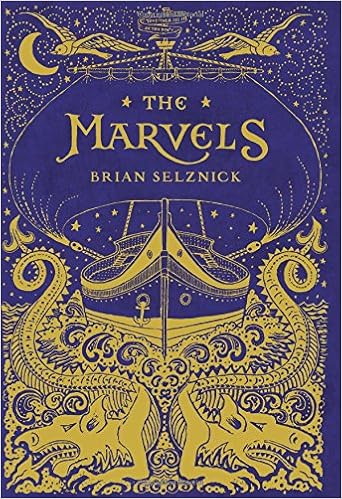
So when I was handed The Marvels after standing in line at ILA for more than an hour, sharing the delightful company of Alison Hogan, I knew I had to read it.  And it was worth every minute of standing in line.  The book is beautiful, the story captures your imagination and leaves you pondering.  I cannot wait to order this for my classroom and this time when I hand it to students really mean it when I say, “This is a must read.”

For 4th grade or perhaps even 3rd grade and up.


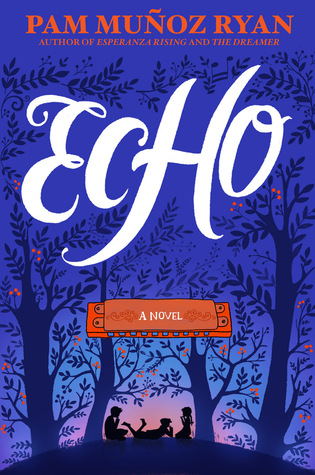
A favorite student of mine handed me a Barnes & Noble giftcard at the end of the year.  I was surprised because I was pretty sure middle school teachers do not get gifts and yet she handed me one of the best things in the world; a chance to get more books.  I therefore knew the books had to be special and I was not disappointed; Echo by Pam Munoz Ryan is a masterpiece.  All 500+ pages of it.  Once again she weaves a tale so masterful that you have to just read one more page, even if it is past midnight and you know tomorrow will be a long day.    What I also loved about this book is it ageless and timeless quality, I immediately could think of 4th grader and 7th graders that needed to read this book.  I am so thankful this book was recommended to me and now I am recommending it to you.

This is the book that took my breath away.  This is the book that I read in less than 2 hours and then passed it on the very next day.  This is the very first book that is a Global Read Aloud contender for 2016 for middle grades and up.  Gut-wrenching, beautiful, and still resonating weeks later for me.  Orbiting Jupiter by Gary D. Schmidt is a book that will resonate across our continents.

I had the honor of meeting Erin Soderberg at Nerdcamp and get a copy of her book.  I loved The Quirks, funny, lighthearted, yet with an universal theme that many kids will connect with, Erin has written a great book for 3rd grade and up but also appropriate for middle schoolers.

being a teacher, books, Literacy, Reading, student voice

Books Are A Chance To See the World They Do Not Live In

recite-j7nids

My classroom library is a large mix of reads.  Several thousands of books greet my 7th graders when they enter and are free to leave the room in their hands.  Over the last year I have tried to expand it as much as I can afford to make sure that it represents the world we live in, that it represents their experiences, that they can find themselves within our library and use that knowledge to boost their own lives.  My students need to see themselves in our books.

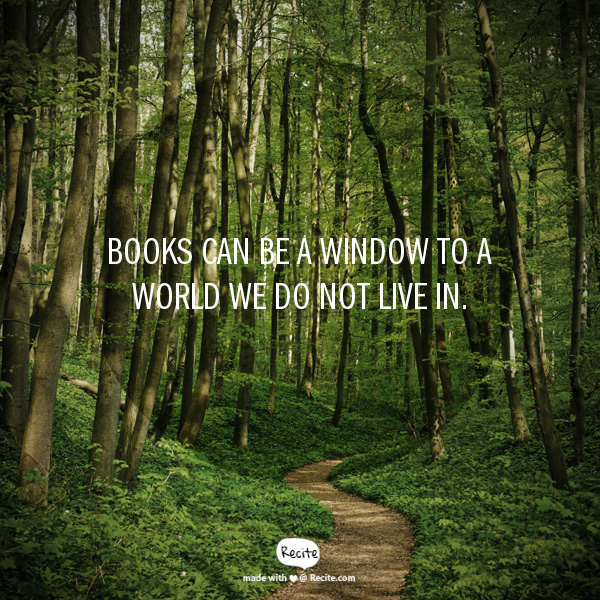
Yet, after a conversation with a great friend, I realized that it is not so much the need to find themselves within our library that I should be focused on because let’s face it, most of the world surrounding them is filled with images that look just like them, sound just like them, and share many of their same experiences.  They are used to turning on the TV and seeing kids that are like them.  They are used to picking up books and seeing like them in the pages.  To  many of my students seeing something other than white is uncommon.  For my mostly white, rural population of readers it is important that they find the rest of the world in the pages.  That through our library they can experience the world that they do not live in.  That their emotions can be stretched to encompass events that they will most likely never have to encounter.  That the library provides them with a window to things that they most likely will never have to live through such as racism, extreme poverty, no access to education, civil war, religious intolerance and a myriad of other issues that exists in only small ways in most of their lives.

So when we rally the cry for diverse books, it is not just so that our kids can find themselves within our pages and find books that mirror their experience.  It is so they can see the world they do not live in.  It is so they can see a world that may not make sense to them and start to make sense of it.  It is so they can start to develop empathy, interest, and community with other parts of the world, other societies, other experiences that do not mirror their own.

Most of my students have plenty of books that they can find themselves in.  My job is to provide them with ones they can’t.

I am a passionate teacher in Oregon, Wisconsin, USA but originally from Denmark,  who has taught 4th, 5th, and 7th grade.  Proud techy geek, and mass consumer of incredible books. Creator of the Global Read Aloud Project, Co-founder of EdCamp MadWI, and believer in all children.  The second edition of my first book Passionate Learners – How to Engage and Empower Your Students” is available for pre-order now.   Second book“Empowered Schools, Empowered Students – Creating Connected and Invested Learners” is out now from Corwin Press.  Join our Passionate Learners community on Facebook and follow me on Twitter @PernilleRipp.

books, Literacy, Reading, students

Why Picture Books – 5 Reasons Why They Belong in Every Classroom

recite-1xt0pg (1)

I don’t remember when I fell out of love with picture books, but I do remember wondering why any teacher would invest any money in them if they were not teaching young kids.  After all, picture books are so expensive and there is not much to them.  No, I would rather invest my money in chapter books, that is where you get the most value.  So picture books?  Perhaps a few selected mentor texts in my 4th grade classroom.

I don’t remember when I fell back in love with picture books.  Perhaps it was the first time students laughed out loud with me at Chick and Pug.  Perhaps it was the first time students held their breath with me when I read out loud Pete & Pickles.  Perhaps when I cried while I read Ivan: The Remarkable True Story of the Shopping Mall Gorilla. Perhaps it was when those kids that hated reading so much would ask if they could borrow some picture books so they could read to their little sister, and then tell me all about their night the very next day.  Whatever happened, I now know that picture books belong in every classroom, for every reader.  Here is why.

Picture books give us a common language.

I love how we can read a picture book and then refer back to it again and again as we weave our threads of community throughout the year.  The students remember it, they read it again, and the reminisce about reading it.  In a short amount of time we create a foundation for the students to bond through and a way for us to be a part of their world.  Even within my 45 minutes of instruction time, I know I can at least read a picture book out loud, most days.  And if you don’t teach English, read one once in a while, students need community in all classes, not just the literacy ones.

Picture books can teach us complex matters in a simple way.

When my students became curious about the great Malcolm X, I read them Malcolm Little.  When we spoke of the civil rights movement and the every day segregation that happened, I read them Ruth and the Green Book.  When they feel completely alone, I read them The Invisible Boy.  When we have to talk about what our actions do to others, we read aloud Each Kindness which with its less than perfect ending is a perfect mirror of what life is really like.  These books don’t offer all of the knowledge my students need, but they give us a chance to start the conversation.  There are so many curriculum picture books out there waiting for us to embrace them for the knowledge they give us, not written for the young reader but for mature kids that can take the information and do something with it.  Don’t leave your students out.

Picture books can make us feel successful when we have lost our way.

I often teach students who don’t think they will ever be a strong reader.  Who do not go home and read, who do not gravitate toward books, but instead spend them them flipping pages and waiting for the bell.  I hand these kids stacks of picture books.  I tell them to immerse themselves and come up when they are ready for more.  There is no judgment from other kids, nor jealousy.  Our picture books are waiting for anyone to read them.

Picture books relieve stress.

If a child is having a bad day, I can hand them a stack of Elephant and Piggie books and know that at some point a small smile will form.  I can hand them anything fantastical that is nothing like their real life and for a  moment they have a reprieve.  How often do our students get a chance to escape the stress of their lives and still work?  Picture books offer me that opportunity.

Picture books can make us believe that we can read well.

For the child who gave up a long time ago on reading.  For the child who does not believe that school is for them.  For the child who is angry, who is misplaced, who is lost; picture books can make the biggest difference.  I once taught a student so angry he scared the rest of the class, but if I could get a stack of picture books in his hands before it was too late, send him to a quiet place, he deescalated.  Picture books were not a threat, nor were they work.  They were an escape and something that made him feel successful.  If a child does not think they will ever read as well as the others, get them picture books, have them digest them slowly, see their progress and see them start to believe that they too can be readers, that they too can belong.  There is no shame in picture books, not when we embrace them fully as teachers.  Not when we make them a part of our classroom.  Remove the stigma so that students can find success within their pages, rather than feel there are no books for them out there.

PS:  To see some of new favorite picture books, go to the list part 1 and the list part 2.  You have been warned, they are amazing.

I am a passionate teacher in Oregon, Wisconsin, USA but originally from Denmark,  who has taught 4th, 5th, and 7th grade.  Proud techy geek, and mass consumer of incredible books. Creator of the Global Read Aloud Project, Co-founder of EdCamp MadWI, and believer in all children.  The second edition of my first book Passionate Learners – How to Engage and Empower Your Students” is available for pre-order now.   Second book“Empowered Schools, Empowered Students – Creating Connected and Invested Learners” is out now from Corwin Press.  Join our Passionate Learners community on Facebook and follow me on Twitter @PernilleRipp.

books, Literacy, Passion, Reading, students

My New Favorite Picture Books Part 2

As promised, I have more great new (to me) picture books to share.  This collection of funny, moving, and stunningly beautiful books are a must add to any classroom, not just the middle school one.  And yes, I purchased almost all of these myself, and yes, it cost a lot of money, but the experience it will provide my students with is worth it in the end.  I only feel bad because I am not sharing them as much with my own kids.

The Day I Lost My Super Powers by Michael Escoffier is a book that tells a familiar tale of childhood imagination.  I hope to use this to bring my students back to when they thought anything was possible and to reignite their passion for thinking they have the ability to make a difference in the world.

I love how A Perfectly Messed Up Story by Patrick McDonnell reminds me of Battle Bunny in all the best ways.  I love the message of working through adversity and the book is just downright funny.  My 3 year olds laughed at it, so I cannot wait to see what my 7th graders will do.

Orion and the Dark by Emma Yarlett is stunning. The story about a boy who is afrid of the dark is sure to elicit conversations about our fears and what we can do to conquer them.  I cannot wait for my students to discover all the details of this book.

To the Sea by Cale Atkinson is a book about unlikely friendships and loneliness, a theme that is so important to discuss with students.  I love the illustrations as well as they tell the story even more.

In the last 24 hours, we have read Shh!  We Have a Plan by Chris Haughton 5 times.  I think I loved it more each time.  Again the amazing illustrations tell half of the story and the simple language means that my youngest can read it by herself as well while giggling out loud.  You know a book is good when the minute you close it, the kids yell “Again!”

Language surrounds us all but by middle school certain words seem to lose their off limit-ness.  That’s why I love Little Bird’s Bad Word by Jacob Grant.  This book will give us a way to discuss what our language says about us as people and how our casual conversations can harm others.

I remember seeing a preview for The Cat, The Dog, Little Red, The Exploding Eggs, The Wolf and Grandma by Diane and Christyan Fox a year ago and then promptly forgot all about it.  Rediscovering it on my wish list I took a chance and ordered it, and I am so thankful I did.  This book is laugh out loud funny, even after you have read it once.  It speaks aloud so many of the questions my students have when it comes to the original fairy tales and will be a perfect match with our gruesome fairy tale unit (even though this book is not gruesome at all).

An amazing wordless picture book by Jon Arne Lawson and Sydney Smith that tells the tale of Sidewalk Flowers and what happens when we are too busy to notice the world around us.  As we discuss purposes for our devices, this will be a book to facilitate that conversation.

I am a passionate teacher in Oregon, Wisconsin, USA but originally from Denmark,  who has taught 4th, 5th, and 7th grade.  Proud techy geek, and mass consumer of incredible books. Creator of the Global Read Aloud Project, Co-founder of EdCamp MadWI, and believer in all children.  The second edition of my first book Passionate Learners – How to Engage and Empower Your Students” is available for pre-order now.   Second book“Empowered Schools, Empowered Students – Creating Connected and Invested Learners” is out now from Corwin Press.  Join our Passionate Learners community on Facebook and follow me on Twitter @PernilleRipp.