Reading, students

Ten Picture Books My Students Say You Need – 2014

Anyone who has been in our classroom know that picture books are a big deal.  A hush falls over the room whenever one is read and we hold our picture books as sacred text that not only let us relive our younger  years, but also spark deep conversation.  We realized we wanted to share our ten favorite reads from the year and I can say, it was hard to pick!  The students shouted out beloved titles and then each voted for their own top ten.  So without further ado, these are the ten picture books we think every classroom should read and own!

A few runner ups:  These lost out by one vote to make it in the Top Ten but are still worthy of a read any day…

Mr. Wuffles by David Wiesner

Turkey Trouble by Wendi Silvano

Naked Mole Rat Gets Dressed by Mo Willems

And now on to the Top Ten.

Number 10:

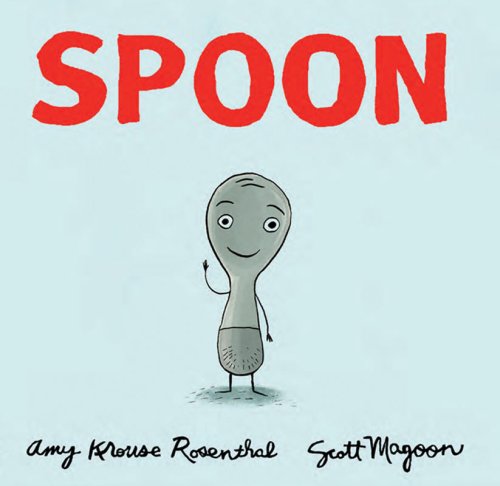
We love Spoon by Amy Krouse Rosenthal.  This sweet story of a spoon trying to fit in and finding his place in the world was one that made us laugh and think about our own place in the world.

Number 9:

The Invisible Boy by Trudy Ludwig, the story of a boy who feels invisible in his classroom was one that silenced the students.  The reflections that followed from them were some that I had to blog about right away.  have you had the conversation about the invisible children in your classroom?

Number 8:

Pete & Pickles by Berkeley Breathed is the story of an unlikely rescue mission and friendship , which was one that my students loved and gravitated toward many times.  This is one of my all-time favorite picture books and my students agree, this is a must read over and over.

Number 7:

I love when my students laugh out loud when I read aloud and Warning:  Do Not Open This Book by Adam Lehrhaupt  definitely did that to us.  Great illustrations as well as a fun story kept my students hooked.

Number 6:  

What can I say about The Dot that countless others have not said already?  The simple message of making your mark on the world and being good enough is one that left its mark on us.

Number 5:

Even though this book carries no words, my students could not get past the depth of the story.  The gasp of breath in “that” scene was audible as was the hush that followed when the book was done.  I love wordless picture books for the incredible imagination they possess, but this one downright shakes you awake to make you think about the world.  Bluebird by Bob Staake is a must add to any classroom.

Number 4: 

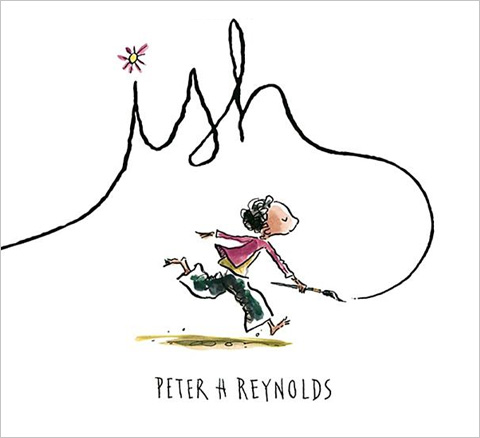
Another masterpiece by Peter H. Reynolds; Ish which is why he is the author study for Global Read Aloud 2014.  This book led to a deep discussion of what people’s words do to our dreams and how we can support others’ dreams.

Number 3:

Journey by Aaron Becker was used as the culmination of our first reading unit, which happened to be a lesson I was observed during.  I asked the students why I picked this book to share with them as our celebration book and their reasons blew me away.  “We are on a journey in reading like the girl.”  “we also can create what we want 5th grade to be like she does with her world” were among some of the things said.  Again a wordless picture book brought some of our deepest conversations.

Number 2:

Picture books do not always have to discuss heavy topics to leave a deep impression. Weasels by Elys Dolan was one my students loved because it was sheer fun watching the weasels try to overtake the world.  I love how picture books allows my otherwise cool 5th graders to just let go and laugh.

And finally, number 1 out of so many picture books read….

I pulled this book out after a recess incident that had really rattled my team.  Whenever I send my students out to play and be with their friends, I never think that they may not be friends outside, that they may say mean things about each other, that they may exclude, and yet that day they proved me wrong.  I knew we had to discuss what had happened but instead of another lecture from me about the power of our community, the sanctity of what we have built, and how we should all fit in, I let this picture book, Zero by Kathryn Otoshi do the talking for me.  The fact that this is the most favored read in my room tells me they may have been listening.

From our class to yours, we hope you add some of these to your collection.

I am a passionate (female) 5th grade teacher in Wisconsin, USA, proud techy geek, and mass consumer of incredible books. Creator of the Global Read Aloud Project, Co-founder of EdCamp MadWI, and believer in all children. I have no awards or accolades except for the lightbulbs that go off in my students’ heads every day.  First book “Passionate Learners – Giving Our Classrooms Back to Our Students” can be purchased now from Powerful Learning Press.   Follow me on Twitter @PernilleRipp.

global read aloud, Reading, Student-centered

Why the Global Read Aloud Matters

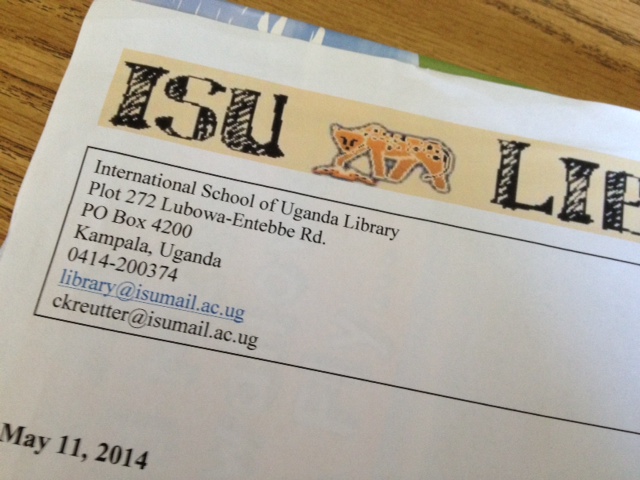
Wednesday started out as a normal day at school.  I walked into the office to check my mailbox when our amazing secretary handed me a mystery package.  I immediately looked at the mailing label and was astounded when I saw this.

photo 1 (6)


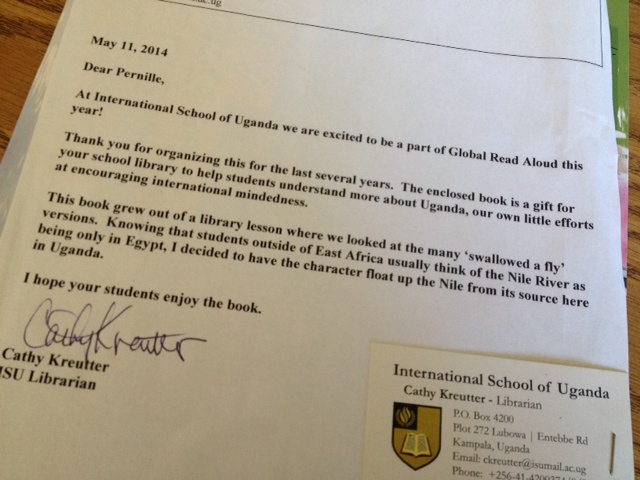
Immediately curios, I ripped open the package and was surprised when I saw this

photo 2 (6)

The package came from Cathy Kreutter, the librarian at the International School of Uganda, and she was reaching out to me continue the global connectedness started by the Global Read Aloud.   Not only was I shocked, but I was also over the moon excited, because the other thing in the package was this…

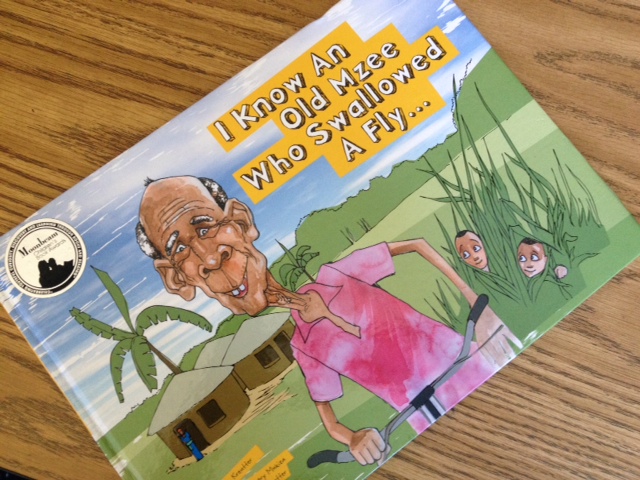
photo 3 (5)

A book, written by Cathy, based on the American Folk Tale “There Was an Old Lady Who Swallowed a Fly” meant to tell readers more about Uganda.  I couldn’t wait to read it to my students!  And what happened next was pure magic.

Not only did I read it my students, who couldn’t believe the things they were learning.  They also wanted to find out more about Uganda and had many questions.  Next, I took the book to our 1st grade buddies and shared it with them.  More questions and learning about Uganda happened.  Then I swung by one of our kindergarten classrooms and shared it with them, with the same result.  Within the span of an hour, 3 classes had learned and become curious about Uganda and Africa as a whole.  All through the power of a book mailed to us because of the Global Read Aloud.

Yet, the power of this book has not ended.  Our incredible librarian plans to share it next week with her classes and so we will see the seeds of curiosity planted in more kids.  More kids will find Uganda ion the globe and know a little about this faraway nation where the Nile starts and lions roar.  More kids will wonder about the world and what another child’s every day life is like.  All through the power of a shared read aloud.

So this year, for the Global Read Aloud, I will encourage people who connect to send a picture book to their partners.  A book that shares a little about them, that will deepen the connection between our homes.  I will secretly hope that some will send one to me as well so my students can see just what this project has started.

Thank you Cathy for reaching out to me.  That small gesture has started a wave of curiosity at our small school.  To purchase your own copy of this book, please go here, I am telling you, the students will love it.

I am a passionate  teacher in Wisconsin, USA,  who has taught 4, 5th, and 7th grade.  Proud techy geek, and mass consumer of incredible books. Creator of the Global Read Aloud Project, Co-founder of EdCamp MadWI, and believer in all children. I have no awards or accolades except for the lightbulbs that go off in my students’ heads every day.  First book “Passionate Learners – Giving Our Classrooms Back to Our Students” can be purchased now from Powerful Learning Press.   Second book“Empowered Schools, Empowered Students – Creating Connected and Invested Learners” can be pre-ordered from Corwin Press now.  Follow me on Twitter @PernilleRipp.

Reading, reflection, Student-centered

How I Know My Students Are Reading at Home

image from etsy

I remember the reading logs well, my brothers hastily whipping them out Sunday night asking my mom to sign off that they had read x number of minutes.  My mother never checked, she did not want to be the reading police, after all, she knew my brothers read.  She didn’t care how many minutes or which book, all that mattered was that at some point their eyes met something to read. A great post by Angela Watson got me thinking, how do I know my students are reading if I don’t check their reading log?  How do I know that at some point their eyes meet a text?  There are many ways actually.

  • I watch their reaction.  Kids who read want independent reading time.  Kids who are in a great part of a book want time to find out what will happen next.  Kids who slowly get their reading bin, who distract others on the way; those are the kids I need to check in with and help.
  • I keep an eye on their book bin.  A whole book shelf in my room is the proof that my students read.  Periodically I go look through their bins, noting which books a kid has and whether those book have changed.  If they haven’t, I check in with that child.
  • We recommend.  Another favorite in our room is the speed book dating.  We quickly rattle off a book we love and why it should be read while the listener has their “I can’t wait to read ” list in their hand.
  • We show off our reading.  I have my reading door outside of the room so that my students always know what I am reading and my students can recommend books on a bulletin board.  Our reading is visible.
  • We discuss.  Reading should not be a solitary endeavor so we make time to discuss our books and why they are the best or the worst book ever.
  • We reflect.  I often ask students to tie in today’s teaching point with whatever they are reading right now.  Whether it is in our thoughtful logs or on a post-it, students take a moment to think and apply and once again lets me see what they are reading.
  • We do monthly reading reflections.  This year I really wanted to have a open dialogue with the students in regard to their reading life and although I do constant one on one or small group instruction, I wanted something more formal that I could file away and look at when needed.  My students know they are not judged on what they write but rather that I use it as a way to start a conversation with them.  I always appreciate their honesty and my actions show that.
  • We have great books.  If you want kids to read, have great books.  I do not know how much money I spend a year on books, I know it is a lot, but every time I am able to booktalk a book and see the reaction in my kids, it is worth it.  Couple that with an incredbile librarian and my students are pretty lucky in the book department.
  • I lose a lot of books.  Because I encourage my students to take our books home to read, I inevitably lose a lot of books.  While it is hard to think of it from a financial standpoint, I also know that hose books are being read by someone.  So yes, it is hard to constantly replace books (and expensive) but it is something that goes along with being a reading classroom.

So yes, while my district mandates a reading log, it is not the treasure trove of information that I need.  What I need is conversation, observation, reflection, and interaction.  So how do I know my students read?  I ask them and listen.

I am a passionate (female) 5th grade teacher in Wisconsin, USA, proud techy geek, and mass consumer of incredible books. Creator of the Global Read Aloud Project, Co-founder of EdCamp MadWI, and believer in all children. I have no awards or accolades except for the lightbulbs that go off in my students’ heads every day.  First book “Passionate Learners – Giving Our Classrooms Back to Our Students” can be purchased now from Powerful Learning Press.   Follow me on Twitter @PernilleRipp.

Reading, students

Why My Students Are Connected

I have written a lot about being connected myself, even about connecting my students.  I have written of the conversations that happen, the connections that happen, and even how it brings this amazing world of strangers in to our rooms.  And yet, some people still don’t get the importance of being a connected educator, not just for yourself, but also for your students.

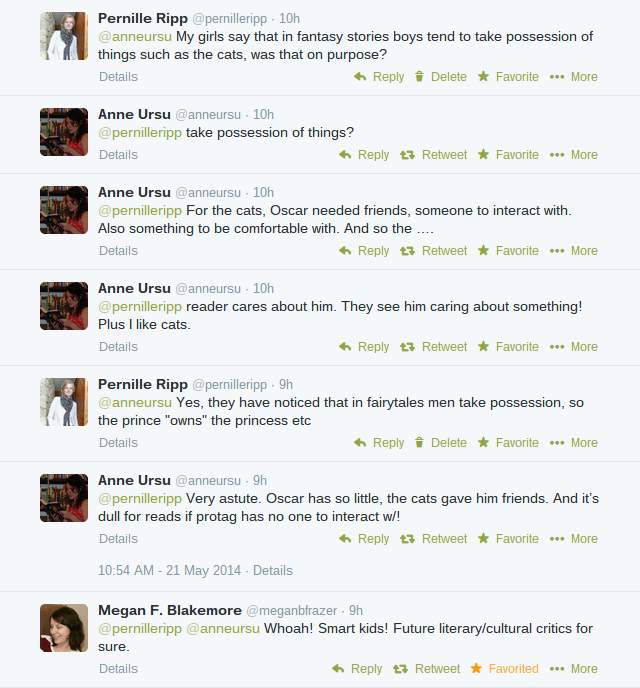
We are doing our final book clubs right now and a group of girls had picked Anne Ursu’s The Real Boy as their choice, something that made me quite happy because for some reason students had not yet gravitated toward this amazing read.  When it was time for me to check in with the girls, they immediately told me just how well their book club was going, how deep their conversations were, and all of the things they were speculating about.  It was clear that this book had made some new fans.  As they walked away, I mentioned that the author, Anne Ursu, is on Twitter and would they like to tweet her?

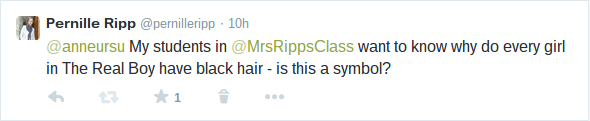
One minute passed and the girls told me what to tweet (we do have a class account but no one was logged into it at the time).  Here is what they said

Pernille Ripp (pernilleripp) on Twitter.clipular


I pressed send and the girls went back to their group.

3 minutes passed, I looked up from what I was doing and this caught my eye

Twitter - pernilleripp- @anneursu They say, that makes ....clipular

3 minutes!  And the author of their new favorite book had taken the time to reply to them.  The girls lit up and immediately started to discuss Mrs. Ursu’s reply and what that must mean.  This quickly spiraled into another questions and then another and what ensued was a deep literary discussion fueled by Anne’s answers and my students questions.  For 30 minutes, Anne Ursu took the time to answer them, ask them questions herself, and even having her own thinking pushed.  30 minutes!

As I stood back and let it unfold, I kept thinking how this is exactly why we are connected.  Not to just show off our learning as if the world is our audience but to interact with people that matter discussing things that matter.  That same morning I had written about engaging our strongest readers, and here my girls were pursuing ideas and theories grounded in a text much like I had discussed.  In the end, my girls asked this, officially blowing my mind…

Twitter - pernilleripp- @anneursu They say, that makes ....clipular (1)

Do I need any further assessment that these kids get what it means to think beyond the text, to make connections, to infer, to look for commonality between texts?  Thanks to Anne Ursu and her willingness to connect, my students just applied everything we have discussed within our own four walls.

So when people ask whether being connected is needed, I have a hard time not saying yes.  Sure, we can teach just fine without, in fact, we can be great teachers without being connected, but our students will miss out on amazing opportunities to connect with others.  They will miss out on great discussions waiting to happen, on opportunities to expands other people’s minds in the process.  These girls, my 5th graders, they made someone else think today, and that is invaluable.

I am a passionate (female) 5th grade teacher in Wisconsin, USA, proud techy geek, and mass consumer of incredible books. Creator of the Global Read Aloud Project, Co-founder of EdCamp MadWI, and believer in all children. I have no awards or accolades except for the lightbulbs that go off in my students’ heads every day.  First book “Passionate Learners – Giving Our Classrooms Back to Our Students Starting Today” can be purchased now from Powerful Learning Press.   Follow me on Twitter @PernilleRipp.


Reading, students

How to Engage Your Strongest Readers

image from etsy

This summer, I was lucky enough to be inn the presence of Mary Ehrenworth at Teachers College as she gave us strategies for how to support our strongest readers.  Inspired by her words and knowing that I would have readers that were well beyond their years, I decided to put her words into action.  But what did it look like in the classroom?

I met with them frequently.  All kids had one to one with me at least every other week depending on what we were doing.  This meant I knew what every kid was reading and working on.  I also met with them in small groups or in partner ships.  They pushed each other’s thinking just as much as they pushed mine.

We revisited ideas.  Too often their initial ideas were good, but not deep thinking.  In the past I would have been happy with that but I wanted more from these kids.  If they wrote something down, I would ask them to think deeper about it, add more thoughts, and clarify what they meant.  They learned to push themselves further than their initial thoughts.

We brought writing into reading more.  Students would jot more thoughts down as they read since I was not worried about the quantity of books they were consuming, so if they decided to sit and think while reading that was celebrated rather than frowned upon.

Their reading goals were catered to their thinking. My strongest readers don’t need to just work on vocabulary, connections,or the standard comprehension strategies but really need to have their thinking pushed.  Things we discussed in our books were:

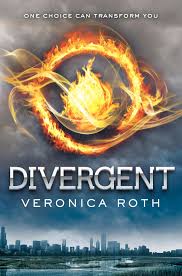
  • How would the characters react if placed in a different book such as putting Katniss in the Divergent series?
  • Gender roles in their books for example: why are strong female characters in science fiction still obsessed with love?
  • How would a character change if they were of the opposite sex?
  • How would characters react to each other if they met outside of a book?
  • What social issues were in the book?
  • How did characters develop throughout an entire series?
  • What was the author trying to tell us with the decisions the characters make?
  • Similarities and differences in genres as a whole, but not just within the genre but also with the time frame that it was written.  So how is science fiction written now different from science fiction written in the 1980’s?
  • How trends in literature show up in other media such television, movies, comics etc.
  • And finally, what the role models are now that we are creating for younger children?

If you had told me at the beginning of the year that I would have these deep conversations with 5th graders, 5th graders!, I would have thought you were joking.  But these kids, with their insatiable thirst for books, even if they read slowly, they were ready for these conversations and thoughts.  They brought things to the table that I had not thought of.  They pushed me in my thinking, even if I had never read the book they were discussing.

Mary Ehrenworth was right; our strongest readers need us just as much as our developing readers. They need to be pushed and challenged, they need to be handed books that will inspire them.  They need to discuss and think with each other and continue to push themselves.  I am so glad I listened, I am so glad I pushed myself.

I am a passionate (female) 5th grade teacher in Wisconsin, USA, proud techy geek, and mass consumer of incredible books. Creator of the Global Read Aloud Project, Co-founder of EdCamp MadWI, and believer in all children. I have no awards or accolades except for the lightbulbs that go off in my students’ heads every day.  First book “Passionate Learners – Giving Our Classrooms Back to Our Students Starting Today” can be purchased now from Powerful Learning Press.   Follow me on Twitter @PernilleRipp.


Be the change, being a teacher, Reading, Student-centered

Who Cares About Reading Strategies?

image from icanread

I saw him reading that bright green book, I snuck a closer look and recognized the cover.  “Guinness Book of World Records” was perched on his lap.  After independent reading, I asked him if he had any chapter books to read too.  I don’t mind Guinness but I love when students have a little bit of everything to read.  He told me no, and when I asked him why not, he said, “Reading is not my thing.”

This student has been taught every day in reading strategies.  How to comprehend, how to figure out themes, how to connect and draw meaningful conclusions.  He has diligently written post-its showing some thoughts, he has spoken to others about the books.  He has discussed goals with his teacher.  And yet, he doesn’t love reading, he doesn’t even like it, nor does he feel he needs to.

So then what does it matter if a student can tell me about theme?  What does it matter if a student can give me text evidence?  If there is no love of reading then what do we need reading strategies for?  Sure, students may be  equipped to move on in school and figure out the texts given to them.  But the child who does not like reading will not reach for books to enlighten them, or books that will challenge them.  They will not reach for books to transport them.  Books will not be a needed companion.  They will be okay with reading not being their thing and continue on that path.  And I am not okay with that.

Who cares about reading strategies and teaching them if we are not uncovering at least a like of books?  If we are not helping our students discover a book that they want to read, not because I told them to but because they want, whether it be fiction, nonfiction, or audio?  Who cares about theme if a child thinks reading is torture?  Who cares about connections when the most important one; the child connecting to the book, is missing?

Yes, we should teach students to be better readers but we should also help them uncover a love of books if it is missing.  We should be professing our own love of books and urging them to find the right one that may convince them that reading bears value.  Every year this should be our biggest focus, not the reading strategies, they come after.

I am a passionate (female) 5th grade teacher in Wisconsin, USA, proud techy geek, and mass consumer of incredible books. Creator of the Global Read Aloud Project, Co-founder of EdCamp MadWI, and believer in all children. I have no awards or accolades except for the lightbulbs that go off in my students’ heads every day.  First book “Passionate Learners – Giving Our Classroom Back to Our Students Starting Today” can be pre-bought now from Powerful Learning Press.   Follow me on Twitter @PernilleRipp.