This summer as I saw my niece, who is now a sophomore, we inevitably spoke about her reading life. She used to be a voracious reader, we could not get enough books in her hands. Then she came to the whole class novel, which inspired this post, and since then her reading life has been limping at best. This summer I asked, as usual, “What are you reading?” She told me The Kite Runner and then scoffed. Surprised I asked why the reaction. She then told me that she had read the book and loved it but now had to reread it to annotate it. “The whole book?” I asked. “The whole book.”When I asked her why she was not quite sure, perhaps they would use parts for discussion.
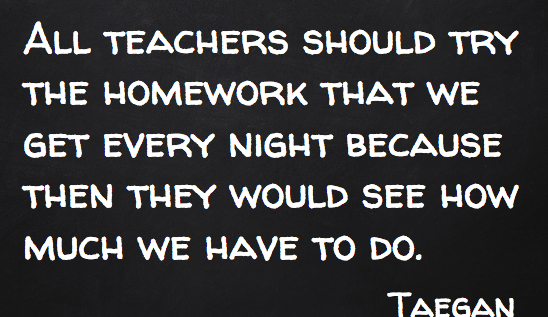
I wondered then, as I often do, when I come across homework assignments that appear nonsensical, whether her English teacher had done their own homework? Whether they had taken the time to annotate the entire book themselves. Whether they understand the labor that was involved with that task and how it would take away from the enjoyment of the book. It seems to me that once again something that is meant to teach kids how to better thinkers, instead is implicit in the killing of their love of reading.
Several years ago I started to do my own homework. From the stories we wrote, to the essays, to the speeches, and to the presentations. I started to experience what I was putting on the shoulders of my students and I quickly realized that what I thought would just take a few minutes never did. What I thought would be easy hardly ever was. What I thought would be meaningful sometimes wasn’t. So I stopped giving homework, except for reading. I stopped going by the formula of grade times 10 minutes. I stopped handing out packets and instead vowed to stop talking so much and instead spend the time in class on discussion and work time. I expected pushback or concern, but have hardly gotten any in the last six years. Most parents express relief instead.
So every year I make a deal with my students; if you work hard in our classroom, you should not have to do work outside of English. If you give me your best then besides reading a good book you don’t have to give me anything more after you leave our classroom. And for most it works. Most of my students come ready to work, ready to learn, and they hand their things in. Not everyone, just like when we have homework we have those kids that do not get it done, I also have kids that do not use their time wisely. So I work individually with them, after all, the acts of a few should never determine the conditions of the many.
So if you are still giving homework, I ask you for this simple task; do it yourself. Go through the motions as if you were a student and then reflect. Was it easy? How much time did it take? What did you have to go through to reach completion? In fact, if you teach in middle school or high school, do it all, truly experience what we put our students through on a day-to-day basis. I would be surprised if the process didn’t shape you in some way.
I still do my own assignments, although I have been slacking lately. Whenever I do, I am reminded of just how much time homework swallows. Of sometimes how little actual practice it gives, or even learning. How homework is unfair because we have already been given hours of their time in school. How those who really need the practice do not need it at home, but instead with us as support in our classrooms. Do your homework, tell your students, and see how they react. Then ask them how they feel about homework. Let their thoughts shape you as a teacher, I promise you won’t regret it.
I am currently working on a new literacy book. While the task is daunting and intimidating, it is incredible to once again get to share the phenomenal words of my students as they push me to be a better teacher. The book, which I am still writing, is tentatively Passionate Readers and will be published in the summer of 2017 by Routledge. So until then if you like what you read here, consider reading my book Passionate Learners – How to Engage and Empower Your Students. Also, if you are wondering where I will be in the coming year or would like to have me speak, please see this page.
I have the honor of teaching an incredible bunch of very energetic kids this year. Their kinesthetic energy level is high throughout the day, couple that with some also voicing loudly how bored they are in school and I have the best kind of challenge ahead. This will be a year to remember.
So I have been googling, I have been asking, and I have been spending a lot of time trying to think of ways to channel their energy into something great. Not to get them to quiet down necessarily but to get to a place where their energy is a tool rather than a hindrance. I have a lot to learn still, but a few things I have tried I thought I would share with others who may have the same awesome challenge we do.
Yoga balls. I have invested in 18 yoga balls and while the bouncing drives me a little bit nutty at times, I cannot help but marvel at the sight. After all, if this is what the kids need even right away in the morning then I cannot imagine putting them in regular chairs. Sure we have popped a few in the 6 months I have had them but when I am at a super store I pick up a few more just in case. Note; I have not switched all of my chairs for yoga balls because for some kids they are a nuisance or a distraction. Besides paying attention to their preferred seating arrangement is also giving me clues to their personality. We also have other alternate seating such as bean bags, exercise bands around the chair legs, office chairs and regular old chairs, but the yoga balls have made the biggest difference.
Switching up seating arrangement. I am a huge proponent of “choose your own seat” but this year in a few of my classes I have been doing a little bit of seat arranging to spread the energy. You see, when I have one really high energy cluster they may get really sidetracked but when I disperse the kids throughout the classroom their energy transfer to the new group. This does not always work and I am still tweaking it to get it right, but I like what I am seeing so far.
Picture book read alouds as calming tools. I end my days with a group of amazing boys. They are bouncing off of the walls by the time they get to me so sometimes trying to teach them is like a game of who can interrupt the most. Not because they are rude but because they are wired and excited. Today I had them sit on the floor with me, away from anything they could fiddle with and then read them Where the Wild Things Are in honor of Banned Books Week. I read it in the most soothing of voices, even when the Wild Things roar, and it was incredible. Immediately their demeanor changed, their voices hushed and for a few moments we got to work at a level of concentration and focus that I had not seen for a while. There is something incredible about the power of a great read aloud. There is something incredible about story time on the floor.
The turn and talk. When I teach my kids, i know I cannot be the only voice in the room so very little of our discussion is done in whole group, instead we utilize the turn and talk almost constantly. My students want to share, they want to discuss, they want to participate and so I need to make sure they all have the chance. Not just those that have enough courage to raise their hands in the air.
Incorporate brain games. I work with really smart people and one of them suggested I use some of the same brain games that another colleague had used. Genius. So in some of my classes, when we have worked for 15 to 20 minutes, the students will get 3 to 5 minutes of brain game time. All of our brain games are cooperative not competitive. All of them have very few props and are easy for kids to participate in. We play tri-bond, we build card houses, stack cups, hit a ball through the air as many times as we can without it falling to the ground and we do riddles. I am searching for more brain game activities to do with the kids as I see the benefit of them using their brains in a different way after working hard for awhile.
Writing before speaking. My students all process at different speeds and some times the very first thoughts that come to mind are not always the deepest. So we have started a write before we speak routine whenever they are doing formal discussion. It is simple; each child has access to a whiteboard (or they write right on the tables covered in whiteboard contact paper) and before they discuss something they take a few moments to write down their thoughts. Having these few minutes to gather their wits, channel their energy and also come up with something interesting to say means that all of the students have a better chance of being a part of the learning.
The right to move. Students in our classroom have the right to move as they learn. They are not asked to sit down; they can stand, nor are they are asked to sit still. As long as their movements do not distract others, they are perfectly fine. This is important because for some of our kids they listen better when they are in movement. They learn better when they have control over their bodies.
I know I need more ideas than this. I know I am only scratching the surface as far as incorporating more movement into our days but at least this is a start. This is a way for me to think more consciously about the need for movement and to embrace needs of all of the children that enter our classroom rather than just the quiet, compliant ones. So if you have more ideas please let me know, I would love to be inspired by your great ideas.
I am currently working on a new literacy book. While the task is daunting and intimidating, it is incredible to once again get to share the phenomenal words of my students as they push me to be a better teacher. The book, which I am still writing, is tentatively Passionate Readers and will be published in the summer of 2017 by Routledge. So until then if you like what you read here, consider reading my book Passionate Learners – How to Engage and Empower Your Students. Also, if you are wondering where I will be in the coming year or would like to have me speak, please see this page.
My last year as a 5th grade teacher we were warned, in a friendly way ,of course, as these warnings tend to be. “Oh, you will have your hands full…” Oh, THAT group is coming up.” My team and I had seen these kids come up through the years, that is the beauty of elementary school. Yes, we had seen the tantrums, the fighting, the crazy behavior that made many label this group as the worst in (insert however many) years. But we also had seen the kindness, the energy, the fun that these kids projected and knew that while we may have our hands full, the year with them would be a year where we would always strive to look for the good, rather than the bad because although the bad was so easy to spot, it should not define a group of kids. Sure there were days where we could not believe what was going on but what I remember most about that year was how incredible the kids were. How much fun we had. How there were these incredible lows but also days that were some of the best of my teaching career. My team would agree with me on this. Yes we had THAT group but also loved THAT group.
Every year since then I have taken that same pledge; to always look for the good first. To always praise, to always point out how great of a group this group is. To change the group narrative in some small way. To always assume that this will be an incredible year no matter the reputation of a group. I think it is so easy to fall prey to the notion of the worst class ever. I think it is so easy to just want to get through a year as quickly as possible, I know there are days that seem never ending where we question everything we do. Yet when we do, we forget something very important; not every kid is going to have a bad day every day. Not every kid is going to have a bad class every class. Sometimes it may seem like this is the toughest day yet, but that too shall pass and just like we hope for a better day tomorrow, so do the very kids we teach.
When we let the actions of a few define an entire group, we are dismissing the individuals that make up that group. We are dismissing the kids that come to school hoping that today will be a good day. Hoping that this is the year they can finally escape the reputation that seems to follow them. As a parent I shudder at the thought of my own children’s class being labeled as the worst in however many years, because how do you ever change that? How do you stop a child from believing that they are horrible when that is what they hear whispered?
So today, much like every day, I will look for the good. I will praise the kids for all of the amazing things I see and yes, there may be ill decisions and tempers flaring, but those will be handled on an individual basis. I will not let the actions of a few tell the tale of the whole. And I will tell my kids, much like I do almost every day, that I have the best job in the world, that I cannot wait to come back tomorrow even if today was tough. Because it is true. We get to teach and teaching is only for those who can see the good in kids, no matter how much a child cannot see it themselves. We get to teach, which means that we d believe that this is the year a new narrative can be written. That this is not how a year will be.
No children should be told that they are a horrible group of kids. They are kids period. And we owe it to them to see beyond their reputation and re-invent their group identity. That is why we teach, that is why we have the best job in the world.
I am currently working on a new literacy book. While the task is daunting and intimidating, it is incredible to once again get to share the phenomenal words of my students as they push me to be a better teacher. The book, which I am still writing, is tentatively Passionate Readers and will be published in the summer of 2017 by Routledge. So until then if you like what you read here, consider reading my book Passionate Learners – How to Engage and Empower Your Students. Also, if you are wondering where I will be in the coming year or would like to have me speak, please see this page.
The sniffles started almost immediately. Small choking noises came soon. Then full out wails, tears, and gasps. Theadora, our oldest daughter, was a mess as we drove home from Chicago today. What had caused this sudden crying? The end of Harry Potter Book seven. The end of our 9 month journey accompanied by the ever amazing Jim Dale and the audio books of Harry Potter. I was wistful myself to tell you the truth. As I tried to console our distraught daughter, I couldn’t help but feel slightly pleased, after all, isn’t this exactly the type of relationship that we hope our children, our students, have with books? One that makes you want to cry, or laugh, or scream in frustration? One that allows you to feel so intimately attached to something not created by yourself? To feel the gratitude of brilliant writing and a long journey along with an author’s imagination? To feel the loss of characters and of story as a book series finishes?
Yet, how many of our students have never experienced this type of sadness? How many of our students have not experienced what is means to complete a series that one has become so invested in that it feels like the loss of a family member once the last page has been read? How many years has it been for some, if at all, since they truly loved a book? While we cannot change the past, we do have control over the now, over what happens in our classrooms. Over what happens from the moment they enter to the moment they leave. And with that power comes an immense responsibility to empower our students, to offer them a chance at an incredible relationship with reading once again or for the very first time. While it may start with having them choose their own books, this is not the only place students need more control to be empowered and passionate readers.
Book choice. This fundamental right to choose what you read is one that is so often taken away from our students because we want to help them develop as readers. Yet when a child is not a allowed to choose the very text they are asked to engage with, we give them little room for an emotional attachment. How many of us adults will willingly invest in something we have been told to read? So while we can expose and recommend, we must create classrooms where student choice is the norm, not the exception. Where we help students find that next great book in order for them to become independent book selectors so that they can leave our classrooms knowing that they do not need us. Not in the same way as they did in the beginning. Where wild book abandonment is the norm and not something you need permission for. Where indifference rules when a book is given up because we know that a new book awaits. If we truly want students to feel in control of their reading identities then giving them the choice over which book to read is the very least we must do.
Book truths. If we do not know what we are up against, then we can never change their minds. This has been a mantra of mine since I started asking my students all sorts of things about their education. So every year, and throughout the year, we continuously discuss how we feel about reading (and writing). I never dismiss their truths, nor try to correct them. It is not my job to tell them how they should feel, but it is my job to hopefully create a better experience for them. I cannot do that well if students do not trust me, trust the community, and trust themselves and also trust the fact that perhaps how they feel about reading right now, if it is negative in any way, is something that can be changed. (Yes, growth mindset at work here). So ask them how they really feel and then truly listen, because it is when we listen, we can actually do something about it.
Student post-it’s cover our whiteboard, our very first discussion of why we like reading or not from Friday.
Book Tasks. Just Friday I was asked how many book summaries we would do this year. I must have looked perplexed, because another student quickly added, “You know, write a summary every time we finish a book?” I assured them that while we would work on summarizing, it would not be on every book, nor even books mostly. Instead we discussed what we want to do when we finish a book; discuss with others, pass it on, perhaps forget all about it. We must give our students control over what they do with a book once it has been finished. We must allow them to explore ways to communicate their emotions with a book and certainly still develop as thinkers. I keep thinking how I want our students to have choices every few weeks as we advance our reading; review, conversations, written ponderings, perhaps a summary, perhaps a video. The point is, I am not sure at this point what we shall do once we finish a book because it depends on what the students would like to do. I do not ever want to implement a task that makes a child slow down their reading or stop it altogether just because the task attached to it is horrific in their eyes. So when we plan our reading tasks make sure that the long-term effects are not unwanted. Make sure that it actually plays into our bigger picture; students who actually like to read, and does not harm this.
Book Selection. While choice is of utmost importance, so is the way books are selected. Too often we schedule in book shopping time for when it is convenient to us, forgetting that all students need books at different times. Selecting a book is a also something that must be taught, even in middle school, because many students still have a hard time finding a book. We therefore discuss how to bookshop, which yes, includes, judging a book by its cover, and then we take the time it takes. If we really want students to wander among great books then we must give them time for that wandering and we must embrace the social aspect that comes along with it. After all it is this book loving community that should sustain student reading after they have left our classrooms.
How many students would say the exact same thing?
Book Access. While I cannot continue to purchase books at the rate I have been due to a change in our household, I know that one of the biggest reasons many of our students end up identifying as readers is because of the sheer volume of books they have access to both in our classroom library and in our school library. Kids need books at their finger tips at all times. Much like they must have time to book shop when they need it, they also need to be able to book shop right in our classrooms. When a child is obviously lost, we or other classmates can jump in. When a child is only pretending to bookshop we can offer guidance. We cannot control how many books our students go home to, but we can make sure that whenever they are in our classrooms; the books are plentiful.
Book Time. Providing students time to read in our classes is one of the biggest ways we can signal to students that reading really matters. After all, it is what we give our time to that must be the most important. So whether it is only 10 minutes, like I provide every day, our a longer amount of time; time for reading in class is essential. Otherwise, how will we ever know that they are truly reading because anyone can forge a reading log. The time for reading should be just that, not time for tasks or post-its. Not time for partner discussions or writing. Reading, in all its glorious quiet. In all its glorious discovery.
While the above areas may seem so commonsense, perhaps it is their commonsense-ness that makes us forget to implement them all. It seems so obvious and yet… how many of us have told a child what to read (I have!). How many of us have asked students to create task upon task after they finished a book (I have!). How many of us have asked students to bookshop at a certain time and for a certain amount of time and wondered why they came up empty-handed (I have!). The point is really that we have the choice to empower our students. That we have the choice to show our students that their reading identity and developing it is a major part of our curriculum even if the standard does not cover it. Even if the test does not measure it. Because we know that at the end of the day we are not just teaching students that should be college and career ready, but instead are teaching human beings that should grow as human beings in our classrooms. I may not be able to change every child’s mind when it comes to books and reading, but I will go in there every day trying, because my hope will always that they too will someday cry when they realize that a series has ended.
I am currently working on a new literacy book. While the task is daunting and intimidating, it is incredible to once again get to share the phenomenal words of my students as they push me to be a better teacher. The book, which I am still writing, is tentatively Passionate Readers and will be published in the summer of 2017 by Routledge. So until then if you like what you read here, consider reading my book Passionate Learners – How to Engage and Empower Your Students. Also, if you are wondering where I will be in the coming year or would like to have me speak, please see this page.
Am I good enough? Will I be enough? Will this be a great year? These thoughts have haunted me this summer. Perhaps it is because I will start my third year as a teacher of seventh graders. Perhaps it is because I have eight and a half years under my belt and I have seen what great teaching can look like. This summer as I have traveled across the country working with fellow educators, I have seen what great teaching can be.
I have spent hours at home reading, learning, listening. Taking notes and finding ideas. I have run through scenarios, plotted possible courses. This week I have spent many hours in our classroom, moving furniture, fixing borders, shelving books, and dreaming. Dreaming of this year. Dreaming of what we can accomplish. Dreaming of the type of teacher I used to be, of the one I want to be.
So no matter how panicked I feel…
No matter the fears…
No matter the dreams, the ideas, the hopes and the wishes…
No matter the furniture, the planning, or even the bulletin boards…
What matters will never be found before school starts.
What matters will never be dreamt in my head. Concocted with colleagues or pinned for in a book.
What matters will never just be those ideas we came up with, that new thing we are going to try, or even the lessons we spent the most time on.
What matters will always be the kids.
And until they show up all we can do is dream. Is hope. Is wish. Is rest so that when they do arrive we know that all of that sleep lost and all of that time spent planning was worth it.
My friend, Jed Dearbury, says “Love first, teach second,” and he is so right. Because at the end of the day what matters most is not how much we got done or even how well prepared we were. What matters is how they feel when they are in our classroom and how we feel as their teachers. I am waiting for those kids to show up next week so that I finally can feel like a real teacher again.
Traveling this summer seems to have offered me a lot of time for reflection. There is something about sitting on an airplane, getting nervous about the days ahead and thinking of how did one ever up there? I realize time and time again that there are certain truths that guide everything I do and that if I ever stray from those truths then I hope I have the spine to admit it. Because as I travel, I realize more and more that this is not about me, about Pernille the teacher, but instead about the very kids I teach. About the kids we all teach and yet we seem to so easily forget that as we make decisions in our schools, in our classrooms.
So I realize once again that while I may think I have all of the answers, I won’t ever know unless I ask my students. That my job is not to foresee and problem solve every little thing, but instead to let them explore and to create alongside me.
That when we go out and share what our students are doing, we need to recognize that this is not about us, but about them. That it is their education at stake, not our own, and that is why this mission is so very urgent.
We are losing kids every single day in our classrooms. We are losing them when we remove control over even the slightest things. We treat them in a way we would not want to be treated ourselves, and then expect them to just be ok with it because that is a part of childhood. We dictate bathroom breaks, where they sit, who they work with, and even how they share, sometimes allowing very little autonomy in the process. And then at the end of the day we wonder why they are exhausted and cannot wait to get on with their “real” life?
What if every decision we made was centered on what is best for students? I know we say that that is what drives us, but is it really? When we decide on curriculum do we pick it because it is easy for the adults to implement or because it will inspire the children? When we seek out learning opportunities do we do it for the right reasons or because it is another thing to check off our to do list?
When we control our classrooms so that we can function, do we ever wonder who those we teach will react to the perimeters we set up?
So we can talk about personalizing learning, or whatever other buzz term we are all infatuated with at the moment, or we can talk about good teaching. About creating learning opportunities that center on the student, on the child, and not the adult needs. We can remove the “alizing” and just focus on the person instead.
Change may seem hard, but it gets easier as we go. Think of the small things that already communicate to students that what they need is not as important as what we need. Think of all the little rules we have in our classrooms that do not benefit them nearly as much as they benefit us. And then do something about it.
When I ask my students what they wish every teacher would do it is not to give them less work, to give them less tests, or even to speak less – we teachers, do love to talk – it is to let them choose where they sit. Almost every time. If that doesn’t speak volumes about how powerless students feel in their education, I am not sure what will.
So this summer, or winter depending on where you are, whenever a new decision needs to be made, don’t think of what you need. Think of what kids might need, and if you are not sure; ask them. They are ready to tell us if we only ask.
I am currently working on two separate literacy books. While the task is daunting and intimidating, it is incredible to once again get to share the phenomenal words of my students as they push me to be a better teacher. The first book titled Reimaging Literacy Through Global Collaboration is scheduled for release November, 2016 by Solution Tree. The second, which I am still writing, is tentatively Passionate Readers and will be published in the summer of 2017 by Routledge. So until then if you like what you read here, consider reading my book Passionate Learners – How to Engage and Empower Your Students. Also, if you are wondering where I will be in the coming year or would like to have me speak, please see this page.


 Pernille Ripp