parents, Reading

Parents: Creating Joyful Reading Routines at Home

We sit together with a book between us carefully piecing the words together. Sometimes they come haltingly. Sometimes they flow. Learning to read is hard work, but loving to read is not, not right now, not for most of our kids. We are a household of readers, all on a separate journey. All growing, exploring and learning, some more quickly than others. I am one of several bookworms in our household with books wherever we go, with a to-be-read pile bigger than we have hours in the day. We are a household of readers, and yet, even for us, in the hustle and bustle of the holidays, we haven’t done much reading lately. Not planned anyway, I know we cannot be alone.

So how do we keep reading front and center, even when life gets really busy? How do we try to create joyful reading experiences at home? It turns out, that many of the same things we do in our classrooms to create passionate readers also work at home.

Flood your home with books if possible. To be readers we need things to read. There has been a lot of research on the harmful effects of students living in book deserts and what the unintended consequences are when kids don’t have access to books. This is why book ownership is so important, kids who own books are 15 times more likely to read above the level they are expected to be at according to the National Literacy Trust. And more importantly, it sets the tone; reading is valued at home, reading is something we believe in by spending our money or procuring reading material somehow. However, this is also an equity issue, it is easy for someone to say; buy books for your kids, but if you don’t have disposable income, then that can become a challenge. Yet, finding books and other reading material for kids to have where they live is vital in creating readers. So if you have the money; buy books and other reading materials. If you do not, reach out to your child’s school, visit a little free library if possible, visit a public library if possible, or get connected with a book charity. Here in Madison, we have the Madison Reading Project whose mission is to get books in the hands of kids – what do you have where you live? (A great book to read on book access and how it helps students become readers is the book Game Changer – Book Access for All Kids by Donalyn Miller and Colby Sharp).

Leave reading materials everywhere. We have books everywhere at our house, which is a privilege in itself. Books are in our kitchen, bathroom, living rooms, cars, and, of course, bedrooms. But not just books, magazines, newspapers and other fun things to read. Lately, we have been loving MAD magazine which I grew up on in Denmark. Our kids gravitate toward the books, picture books and everything else because they are visible. So if you can leave books wherever your kids are: the car, the bathroom, the living room, their rooms.   If you do not have access to a lot of books ask their school for help, scour garage sales, or visit the library if possible.

Sneak in more reading. Because we remind our kids to bring books in the car, to family gatherings, to appointments, grocery shopping, and yes, even sometimes to lunch, we sneak in a lot of reading. Our kids don’t sit on iPads or phones on a regular basis, they sit with books. In fact, this has been one of aha moments, every time we pull out our phone to check Reddit (#ThereWasAnAttempt) or other social media, we could be pulling out a book. I am often asked how I read so much in a year, this is one of the ways. While we love sitting down for long chunks of time to read, there is a lot of value in the minutes that can be snuck in, and those minutes add up.

Create a reading routine.  One of the biggest things I discuss with those at home is to find a routine for reading and not leaving it to chance.  Is it that everybody reads before getting out of bed? Is it the last thing that happens at the end of the day? Find a time, space, and then make it an expectation. We have the kids read after school with us when I get home, on the weekends we have them read before TV. This isn’t because it is a punishment but because it shows importance. Create a drop-everything-and-read time and then abide by your own decisions and join in with your own books, because we know that children who see adults read, read more themselves, thanks Stephen Krashen.

Read yourself. This is an often missed step where we, adults, claim that we do not have time to read. I cannot tell you how many parents have sheepishly admitted that they do not read themselves and then wonder how they can best help their own kids become readers. My advice always; read with your kids. Go on your own quest to find incredible books. Abandon books that don’t work. Set yourself up to have incredible reading experiences just like you would hope your kid(s) would. Be a reading role model because kids need to see what real adult reading looks like. Read in front of them. While Brandon, my husband, has been a slow convert to reading for pleasure, he has been very deliberate in sharing his reading journey with our kids. I think it is incredibly powerful for kids to see their parents or caregivers start to embrace reading for pleasure finally as adults.

Visit places where books are present.  Build visits into the library, bookstores or even friends’ houses where there are books visible into your reading lives.  Seeing books within reach often entices reading and there is something about the promise of a brand-new crisp book that cannot help but be exciting.  And browse online as well. What are people sharing on the #BookADay thread? Which books are being shared on Instagram under hashtags like the one I use (#pernillerecommends)?

Give books. Despite the abundance of books that our kids already have we still give books at Christmas and birthdays. We make it a big deal; which book do you wish for? What is the one special book you would love right now? We go to the bookstore so they can browse and then we secretly buy them the book only to be wrapped and handed as a gift. We also have book giving traditions in our family, on lille juleaften (Little Christmas Eve) we host our family at our house for aebleskiver and instead of a nameplate, each guest is gifted with a brand-new book handpicked for them. And yes, even I get books. This year I was lucke enough to get Becoming and Art Matters (Signed by Neil Gaiman – argh!) as well as a few others.

Build excitement through book shopping. Go book shopping with your kids at your local bookstore, browse the displays at the library, look up the bestseller lists to see what is hot in literature right now, order from the book catalog that comes home (i get as excited as the kids).  Countdown the days together for that sequel or an amazing new book to be released, order it if you can or go to the bookstore on its release date. Build excitement for the act of reading together much like you would the release of a movie. If you need ideas for release dates, see Mr. Schu’s calendar of book releases.

Have your own to-be-read list.  I get super excited when new books show up or when we go to a bookstore together and my kids know that my to-be-read pile (or bookshelf because let’s be honest here…) is a neverending quest of great reading experiences waiting to happen. They see how big it gets, they see how I have piles in different places, I discuss how I pick a book at times if it comes up and I encourage them to have their own. What will they be reading next?

Embrace audiobooks.  We do a lot of driving as I travel to speak and as we visit others, so audiobooks from the local library are a constant companion. The kids select the text or we do when we know a book may be a great discussion for our family. This is also a great way to start conversations about social justice topics, such as when we listened to George by Alex Gino and we discussed gender identity, yes, even with our youngest.  Overall, audiobooks cut down on our kids arguing, creates conversation, and become a part of our reading memories.

Embrace real choice.  So your child wants to read the same book all the time?  Ok. So your child wants to read super “easy” books all the time?  Ok. So your child wants to read only one type of book all the time?  Ok. Reading at home is for great reading experiences, for having fun with your reading, for keeping the joy of reading alive.  We can recommend, we can purchase, we can entice, but I would never force certain texts on kids. I have seen too many kids stop their reading or fake it because of forced choice, usually through the eagerness of parents to share their favorite classic texts with their kids. While I love the sentiment of that, I am not always sure it is done well and can end up doing more harm than good. Perhaps, our focus instead should be to discover new classics instead such as The Poet X by Elizabeth Acevedo or The One and Only Ivan by Katherine Applegate.

Be invested and interested.  Ask genuine questions about their reading experiences.  Share your own. Embrace your reading slumps together and do something about them together.  Ask questions about what they plan on reading, whether they like the book or not, or what made them pick that book.  Keep it light but keep it constant.

Keep it joyful.  When kids come home from school, they are often tired and ready to do everything but read. I get it, after being at a conference all day or even teaching, reading is pretty far from my mind as well. We often lose readers at home because we see it as one more thing to do, rather than an experience waiting to happen. So keep it light, keep it fun.  Don’t assign journal prompts or summaries to go with it. Don’t make it homework, but instead revel in the joyful experience that reading a great book can be. Read aloud to your kids, even if they are older, this is one of the things many students report they miss the most with their parents. Celebrate new books, celebrate finishing books, celebrate abandoning books.

Fight for your child’s rights as a reader. While this will inevitably be a whole other post one of these days, I think it is vital, that we as parents/caregivers know what is happening to our children in their reading instruction at school. What are they making kids DO as readers? And what is that work DOING to your child as a reader? I can tell you that there are not many swords I care to fall on as “that” parent but reading logs and computerized programs to teach kids reading are two such swords. I have seen the damage done, and I refuse to sit idly by while decisions implemented at school harm our children’s reading lives, So know what their instruction looks like and what they are expected to do. Become an advocate for change if you need to or become an advocate for those who are using best practices, they often need our support as well. Don’t just trust schools to make the best instructional decisions, this is not always the case.

There is so much we can do to support our children as readers, and while it may seem like a lot of work, it isn’t. It is a chance for us to sit down with our kids, with something to read, and to create memories. But it starts with routines. With decisions that will support and not hinder. And with being readers ourselves.

If you like what you read here, consider reading my book, Passionate Readers – The Art of Reaching and Engaging Every Child.  This book focuses on the five keys we can implement into any reading community to strengthen student reading experiences, even within the 45 minute English block.  If you are looking for solutions and ideas for how to re-engage all of your students consider reading my very first book  Passionate Learners – How to Engage and Empower Your Students.      Also, if you are wondering where I will be in the coming year or would like to have me speak, please see this page.

being me

On the Day You Were Born

Five years ago today, I held our youngest daughter for the first time. She was 24 hours old. She was down to almost 3 pounds. She could fit into the palm of her father’s hand. I held her for the briefest of minutes until she stopped breathing, her alarm went off, and she had to go back in her incubator. I remember being too scared to hold her, she was so tiny, and yet the nurse, Layla, told me she would be okay. That being held by us would only help, that we would get used to the alarms, the wires, the tubes. That what Augustine needed most at that time from us was our touch. It was the one thing we could do.

I wasn’t supposed to be able to get pregnant on my own. I still remember the doctor being as surprised as we were. The whole pregnancy with her was one fraught with complications. 8 weeks in we thought we lost her, but it turned out that it wasn’t her that was causing the bleeding, it was the blood clots that I had. After weeks of bleeding, and so many ultrasounds we could fill an album, the news came that they thought she had Spinal Bifida. One more ultrasound in a darkened room as they meticulously scanned every centimeter of her body. Her gender was revealed as a side-note, “…by the way you’re having a girl…” and I remember calling my husband, Brandon, to tell him. Standing in front of the hospital shouting into my phone over traffic; we’re having a girl, and she may be okay, they didn’t see any holes…

When my labor started at 29 weeks, we were surprised, yet didn’t think it meant anything. Surely, it would stop. Surely, it was much too soon. Yet, 6 days later as Augustine came so fast that the nurse caught her because there was no doctor in the room, we became part of a group of families that got to take the elevator up to the 8th floor of the hospital, to scrub in, to watch their baby grow under plastic. Who got used to alarms beeping and others caring for a child, we were supposed to take home. Whose crib stood empty as her siblings asked us what happened to the baby?

And to this day, while I see the child she has become, the child that knows no limits, I also am reminded of the events of her birth, of the brutality of her birth. Of how we didn’t know why I was in so much pain that even the strongest pain medicine they could give, didn’t do anything. Of how my mother came to visit and didn’t know how to help. How Brandon stood by my side, holding my hand, imploring the doctors to figure out what was going on. How I couldn’t even scream in the end and just cried silently as I felt like I was being torn apart and they couldn’t make it stop.

In those events, wrapped up in pain and fear, Augustine came into the world. Silently and quickly. Brandon was the first to tell me she was breathing as they rushed in and rushed her away.

It was then that they realized that the lining had separated from my uterus. A condition that can kill your baby and cause massive bleeding to the mother. Having Augustine early was my body’s way of saving her. Forcing her into the world was my body’s way of giving her a chance.

And she is fine. She just turned five. She is in school and knows how to write her name. She knows our phone number. She is a great friend and role model. She loves her teddy “Puppy” and asks me to sing to her every night. The doctors have declared her perfectly average years ago and yet, on her birthday, and in the days leading up to and away from it, I am reminded of one of the most traumatic events that happened to me. Of the fear, of the pain, and of the incredible guilt that comes with giving your child such a hard start to their life, even if you know rationally it is not your fault. I can see that she is fine. I know she is fine, and yet, the joy is wrapped in memories that are hard, still, to process.

How many others carry memories such as these silently?

I think of our students as they come to class with unknown trauma surrounding them. Of how small things that we see as harmless may be triggers. Of how we all carry our stories with us and within us and that sometimes those stories can still make us cry when we are reminded of them. That one of the things trauma does to you is to intricately change the connections in your brain and that you might never fully heal, even if you know you should. That it causes you sometimes to act in ways that don’t make fully sense at first, but then later can be traced back to a reaction caused by something that happened to you. That it is something I have had to recognize within my own actions as I cried on her birthday and I couldn’t figure out why.

And so as I share this seemingly too personal story, I do it in the hopes of giving myself the freedom to speak these words out loud. When I recognize that her birthday, while joyful, is also one that carries many layers, I can feel the burden lighten. When I write out the thoughts that continue to haunt me, they seem to lose some of their weight as we look to a new year of memories.

Sometimes I wonder how some of our students do it every day, knowing full well the lives they live in, the lives that continue to produce trauma in their world. How perhaps in our rooms they can feel safe. How perhaps our time together can be something good in their lives that doesn’t cause them more pain. How perhaps with us they can find courage if they need it, reclaim their voice if they lost it, find hope if they seek it. Because I know that what we do everyday matters, that how we help kids feel everyday matters. And as Augi sits here next to me, I am reminded of what we all know to be true; every moment is but a moment, and yet, every moment has the power to break us or empower us. We choose its legacy. Happy birthday, Augustine Grete, and many more.

being a teacher

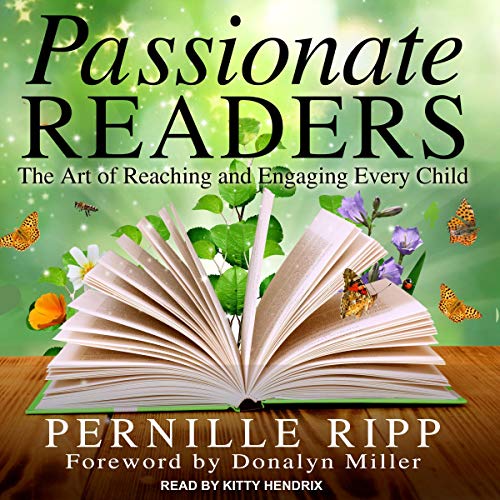
Win A Copy of the Audio Version of Passionate Readers

Passionate Readers audiobook cover art
Brand new cover, same great book (hopefully)

Yesterday was a new milestone in my author life; my book, Passionate Readers, came out as an audiobook!    I shared the news with my students and they thought it was pretty cool as well.  It is certainly not every day that you get to see your name on Audible but then hear someone else speaking your words professionally.

So in honor of this milestone moment for me, and in preparation for our winter book club study of the same book, I thought a little giveaway was in order.  If you would like the chance to win an audio version of Passionate Readers please enter below.  The contest will run until Sunday evening, December 16th at 8 PM CST.  This is open to anyone in the world as long as you can access the website http://tantortitles.com/

Thank you for your encouragement of my students and I.  Thank you for believing in the message of Passionate Readers.  Thank you for giving me so much love.  

Book Clubs, Reading, Student-Led

Partner Feedback Groups – A Tip for Better Book Clubs

In room 235D, we have been immersed in our dystopian book clubs.  These past two weeks kids have been quietly reading, and loving, their self-chosen texts, using strategies that they have been taught previously, as well as the ones introduced each day, to gain a deeper understanding of the text.  Navigating these books as they try to figure out how they will discuss what they have uncovered, how they will prepare for their own student-led discussions.    Every day, these kids and their thoughts are reaching new heights.  Each day, we get to sit and listen to them discuss without dictated questions, without packets, without us constantly holding their hand.  It is a brilliant thing to see.  

While we have loved seeing the growth in student discussions every year, we wanted to give students another chance to learn from each other and to also be exposed to great conversations.  Enter my brilliant colleague, Reidun, who came up with the following idea and template.  Introducing the partner feedback groups.

The idea is simple:  Students are matched up with a partner group.  Every time the group discusses, the partner group gives feedback to them using the following form.

The sheet is printed and handed to each student

We introduced this tool individually with each discussion group rather than as a group fishbowl.  This was for time’s sake and also helped everyone ask questions and ward off confusion.  While all kids give feedback, not all groups are matched, only because some groups have expressed anxiety over the extra audience and we wanted to respect that.  we are hoping that in the spring when we do our next round of book groups, all groups will be ready to be matched.

Each child is assigned the same person to follow and they take turns coaching each other.  They are not evaluating, but merely paying attention to what is actually happening in the conversation.  It works quite easily.  Let’s say Sam is evaluating Marcus.  Every time Marcus adds to the conversation, depending on what is said, she gives him a tally mark.  So if Markus brings up a new idea to discuss – i.e. the main character fits the villain archetype – she would put a tally in the “Brought up a new idea” box.  She could also write “Villain archetype” under specific example.  She categorizes everything Markus says in order to give him feedback at the end.

Once the discussion is over, they usually last between 10 and 15 minutes, I ask the discussion group, “What went well?”  After they reflect on this, then I ask them, “What do you need to work on? ”  They reflect on that and then it is their partner’s turn to give them feedback.  In our example of Sam and Marcus, she may let him know that while he did well in bringing up new ideas and also responding to other people, he didn’t use a lot of text evidence to back up his thinking.  This is then something he can work on for the following discussion.  After each feedback partner has gone, they are dismissed so that I can speak privately with their group about their actual evaluation.

What we have noticed since implementing this last week is the keen observational skills of our students.  They notice things that we miss and also have been providing spot-on coaching tips.  Just today a student stated how impressed she was with the growth of the member since the last discussion and all of the things she noticed they had worked on.  This tool is offering our students a way to give each other feedback that is constructive and without judgment.  They are merely stating their observations, not offering up a grade.  

In the long run, we hope this help students become better givers of valid and productive feedback.  For many years we have been stuck in a rut when it comes to kids helping each other grow more pointedly.  They often say that things are great when really they need work or simply don’t know what to say.  This little tool has helped them focus on what the tangible skills are and how they can be improved while also providing them with models of effective discussions.  An added bonus has been the excitement over each other’s books as well, and how some kids now want to read the books that other groups are reading.

So there you have, a small idea, shared by a great friend and colleague that has been making a difference in our book club discussions.  To see what else w do to make our book clubs better, go here.

If you like what you read here, consider reading my book, Passionate Readers – The Art of Reaching and Engaging Every Child.  This book focuses on the five keys we can implement into any reading community to strengthen student reading experiences, even within the 45 minute English block.  If you are looking for solutions and ideas for how to re-engage all of your students consider reading my very first book  Passionate Learners – How to Engage and Empower Your Students.      Also, if you are wondering where I will be in the coming year or would like to have me speak, please see this page.
being a student, writing

Reclaiming Handwriting

Every year it seems as if spelling, punctuation, and capitalization have become a little harder for students to master.  Despite the great lessons they have had before.  Despite the repeated instruction, reminders, and opportunities in previous year’s classes, the fundamentals of writing just seem harder to master.

Some might say that it is not a big deal.  That most written work doesn’t require handwriting anyway.  That handwritten work is slowly dying and so why waste time worrying about things that can be auto-corrected.  And sure, computers are definitely the way of the future, the way much of our society already is, and yet, there is still a place for handwriting.  For sitting down with a paper and pen(cil) and doing the work.  Even if kids choose to not do so on their own.  And while, I am a fan of spellcheck, Grammarly, and all of the autocorrections Google Docs does for us, we kept wondering as a team whether these tools were part of the problem.  Perhaps because we have moved so much of our writing to the computer, kids are not naturally noticing their own patterns?  Not noticing when they don’t capitalize on their own name, the beginnings of sentences, proper nouns because the computer does it for them?  Perhaps punctuation is being added at the end because it is easy to do on a computer and so it is missed while writing?    The only way to find out was to try to integrate more handwriting, see if it would make a difference.

So this year, every single time we do our free writes in our writer’s notebook, they are by hand.  Typing is no longer a choice unless it is a required component of an IEP.  Kids are asked to grab a pencil, we have plenty, and to formulate their thoughts on paper.  In the beginning, there were groans, complaints of how their hand hurt, which I get, how they preferred to type.  But we stuck with it.  Asking them to create in pencil, revise in pen, get a smelly sticker if you put in the effort (whatever they think effort might be).

And slowly, we are seeing a change.  More punctuation, for sure.  A greater awareness when sentences don’t make sense.  More capitalization.  The small components that seem to be needed as students grow as better writers.  Better letter formation as kids realize that they can control their handwriting because they need to.  We don’t assess their free writes, they are for them to play with writing, not for us to create a grade, but we do ask them to pay attention to the basics:  Does it make sense?  Did you capitalize?  Did you use punctuation?  But that is not the only change.  We are seeing more writing.  More ideas coming quicker.  Better ideas being developed.  Kids wanting to share their stories, their thoughts.  Kids experimenting with the way they write and what they write about.  An added bonus, but an important one, as we tackle all of the emotions that sometimes stop kids from feeling like writers.

Typed writing is still a part of our class.  When we do large projects, when we research and such.  And yet, there needs to be a space for the written word by hand as well.  As more and more districts race toward one-to-one, I worry about the effect of eyesight with the increase in screen time, I worry about the lost instructional time every time a child has to log in, find the website, and the internet is slow.  I worry about how kids share that sometimes staring at a blank document is more overwhelming for some of our kids than a blank piece of paper.  So as my students tell me time and time again; everything in moderation, and that includes working on a computer.

For now, we will continue to sharpen our pencils every day, share a prompt, and ask the kids to fall into their writing.  To simply try to write something, even if it is not very good.  To focus on reclaiming this part of themselves that they may have become disconnected from in rush to computers.  Settle in, settle down, get to writing…

If you like what you read here, consider reading my book, Passionate Readers – The Art of Reaching and Engaging Every Child.  This book focuses on the five keys we can implement into any reading community to strengthen student reading experiences, even within the 45 minute English block.  If you are looking for solutions and ideas for how to re-engage all of your students consider reading my very first book  Passionate Learners – How to Engage and Empower Your Students.      Also, if you are wondering where I will be in the coming year or would like to have me speak, please see this page.

being a teacher, Literacy, picture books, Reading

Our Mock Caldecott List 2019

After winter break, we welcome our students back with one of our favorite units of the year; our Mock Caldecott unit.  And while I have blogged about the process before, I see this as a great opportunity for students to not only immerse themselves in incredible works of art but also to think about how to read complex imagery while building community.  But to do this incredible work, we need to have the books whose images will draw us on, hopefully, mesmerize us, move us, and make us invested when the awards are broadcast live on Monday, January 28th.

Here is my lesson plan for the unit

In no particular order, here are the books (I think) our students will judge this year.

Limitless: 24 Remarkable American Women of Vision, Grit, and Guts by Leah Tinari (Author, Illustrator)

Dreamers by Yuyi Morales 

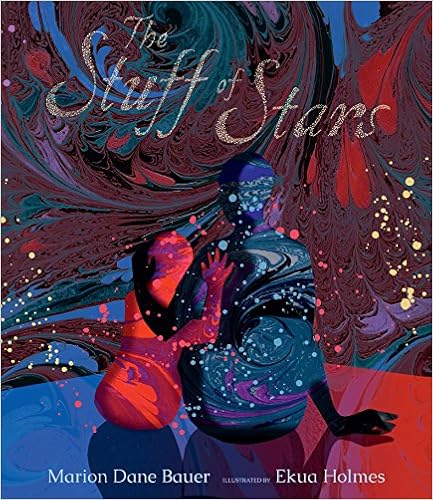
The Stuff of Stars by Marion Dane Bauer illustrated by Ekua Holmes

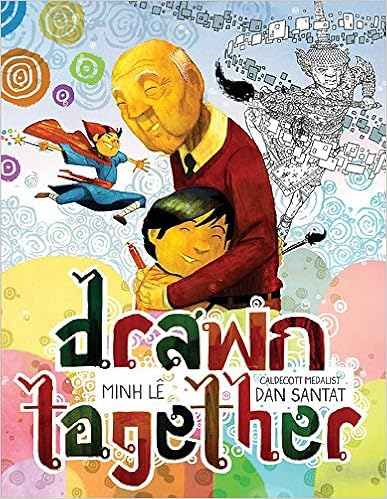
Drawn Together by Minh Le and illustrated by Dan Santat 

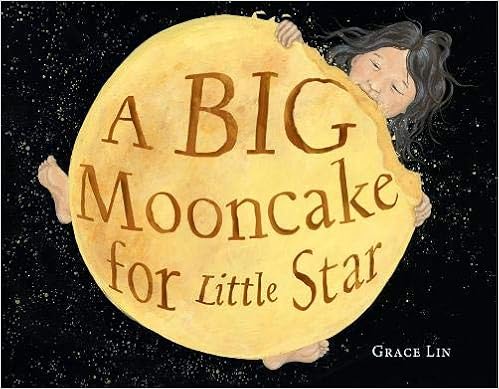
A Big Mooncake for Little Star by Grace Lin 

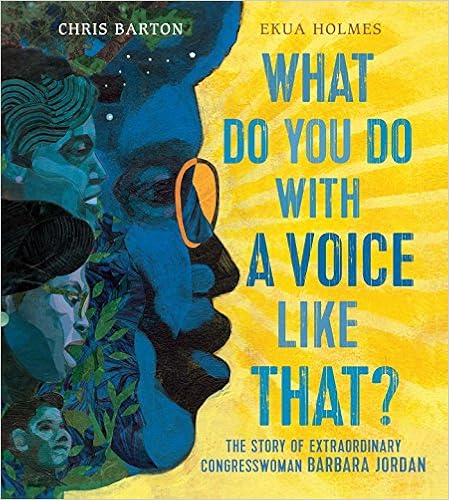
What Do You Do With a Voice Like That? By Chris Barton and illustrated by Ekua Holmes

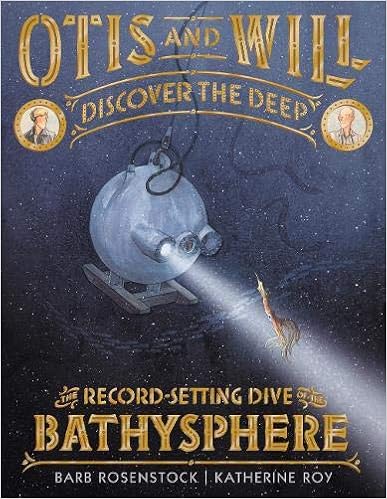
Otis and Will Discover the Deep by Barb Rosenstock and illustrated by Katherine Roy

The Prince and the Dressmaker by [Wang, Jen]

The Prince and the Dressmaker by Jen Wang

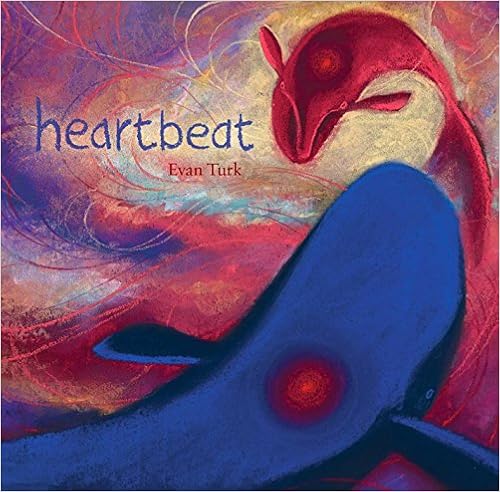
Heartbeat by Evan Turk

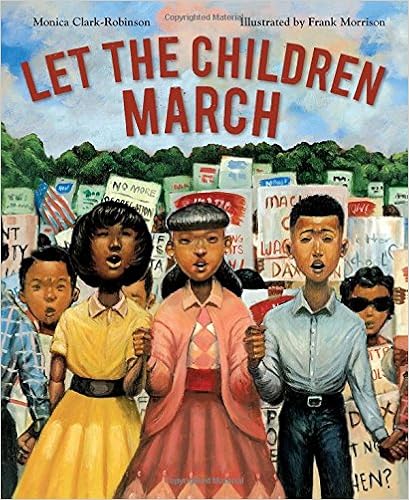
Let the Children March by Monica Clark-Robinson and illustrated by Frank Morrison

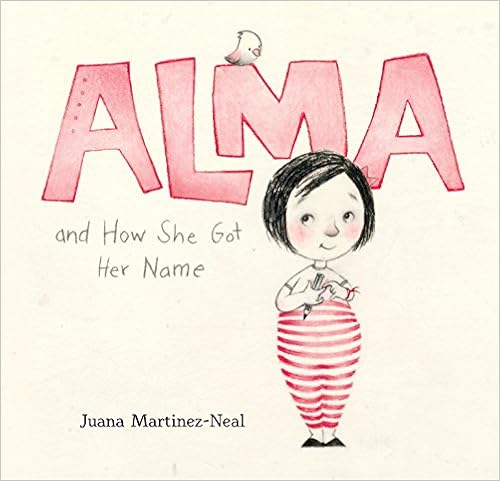
Alma and How She Got Her Name by Juana Martinez-Neal

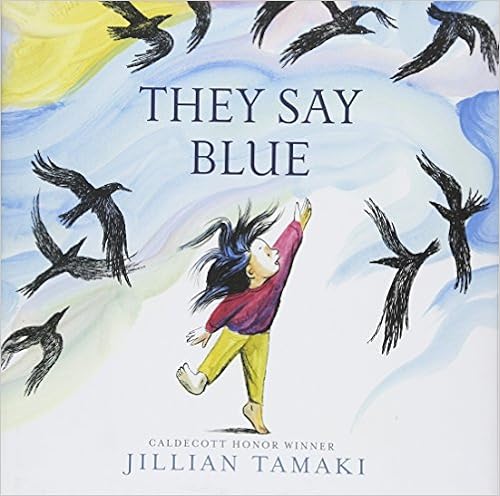
They Say Blue by Jillian Tamaki

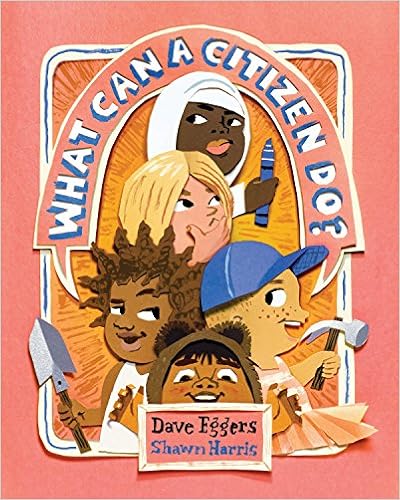
What Can A Citizen Do by Dave Eggers and Shawn Harris

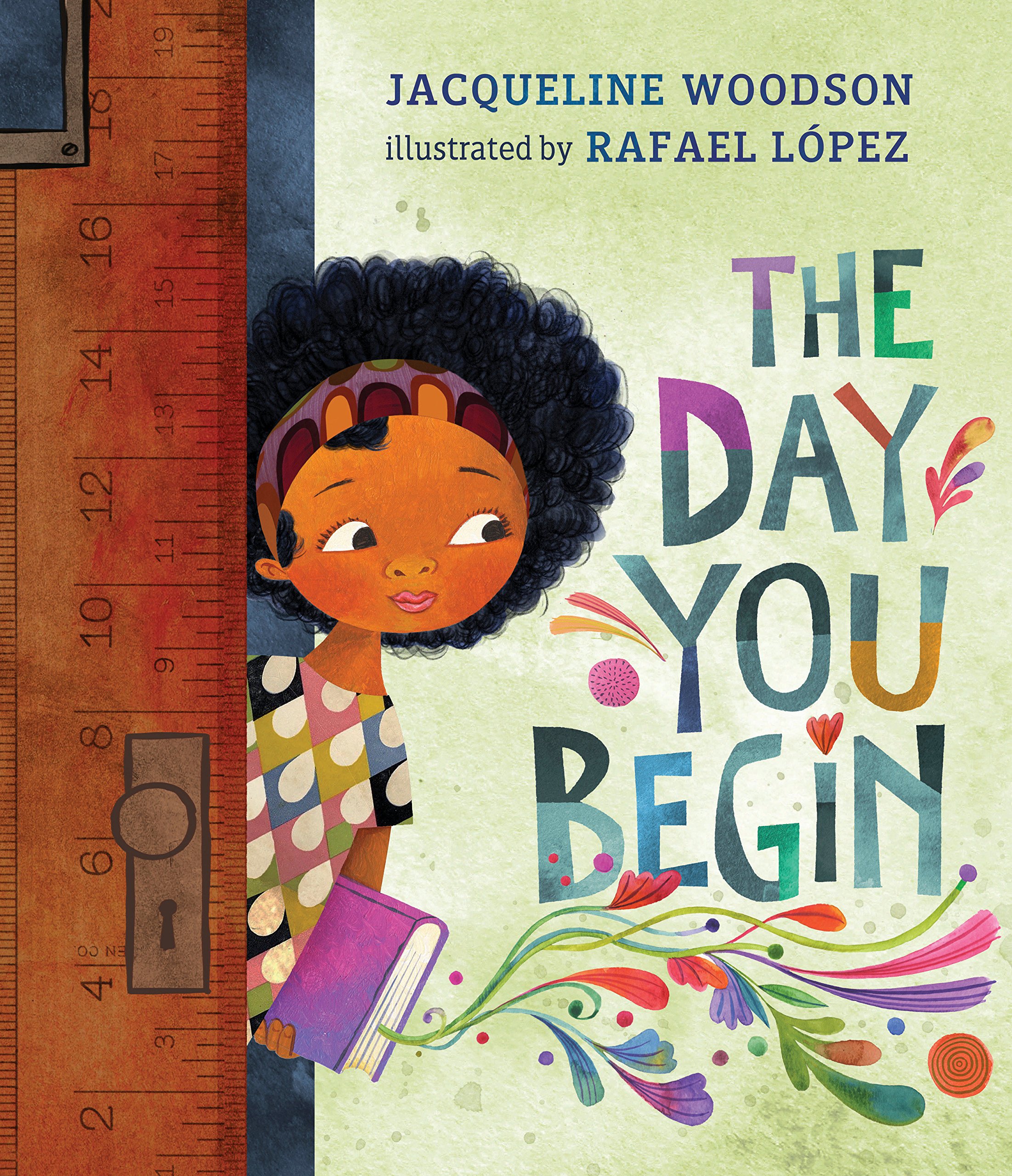
Image result for the day you begin

The Day You Begin by Jacqueline Woodson and illustrated by Rafael Lopez

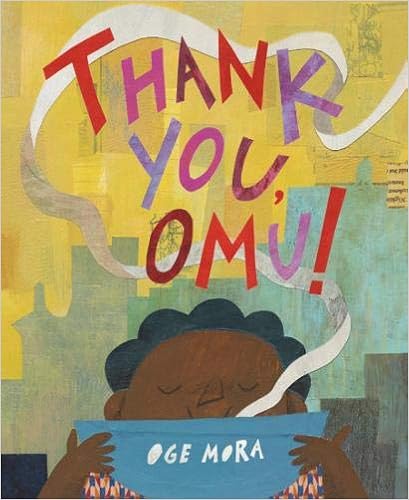
Thank you, Omu! by Oge Mora

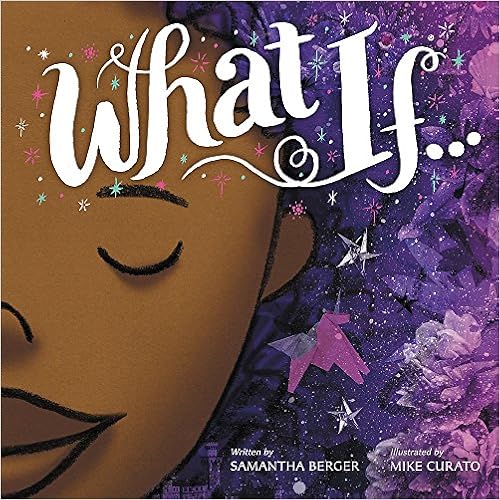
What If…by Samantha Berger and illustrated by Mike Curato

Possible Additions that I am Still Pondering:

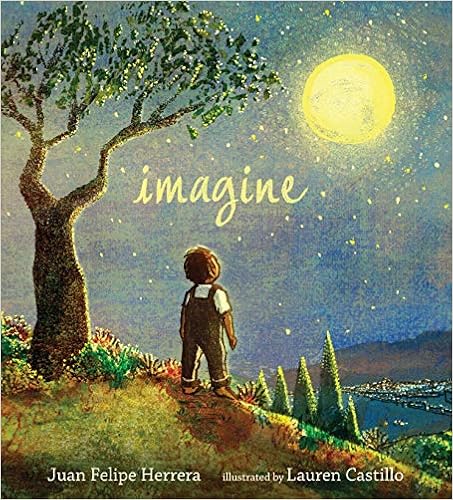
Imagine by Juan Felipe Herrera illustrated by Lauren Castillo

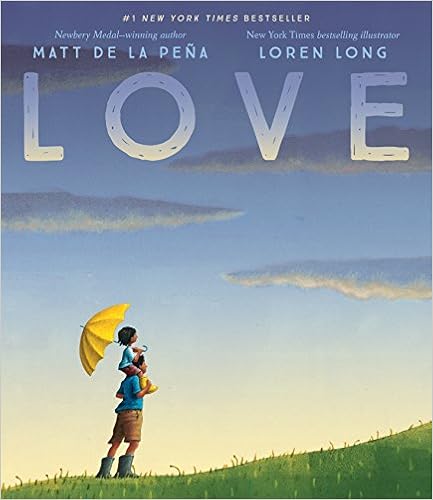
Love by Matt de la Pena and illustrated by Loren Long

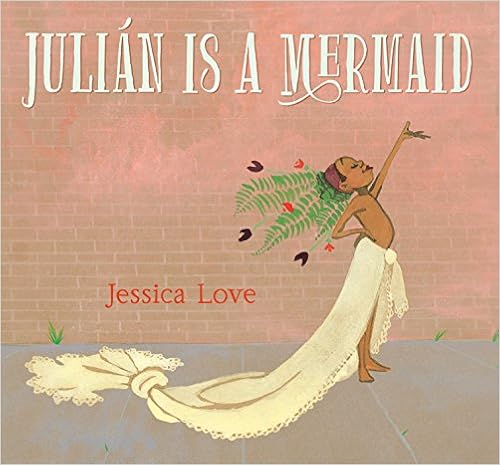
Julian is a Mermaid by Jessica Love

Adrian Simcox Does Not Have a Horse by Marcy Campbell and Corinna Luyken