Be the change, being a teacher

On the Need for Phone Free Classrooms

I teach 7th grade and if there is one thing I have learned about 7th graders, it is that sometimes they do goofy things.  Sometimes they see a hole in a chair and stick their head in it only to find that they are now stuck.  Sometimes they say something that unintentionally makes their peers laugh.  Sometimes they take a risk but fail miserably.

And for the longest time, it was no big deal.  For the longest time, we laughed at our mistakes, used them to create a community where we could fail together, laugh when things didn’t work, and then go home knowing we tried.

But I have noticed in the past couple of years that this feeling of security in our classroom,  that this sense of community where we can take risks and not care as much if it doesn’t work seems to be harder and harder to accomplish.  I thought 7th graders were hard to get to trust me, but it turns out they have a much harder time trusting each other.

Why?

I am starting to think cell phones have a lot to do with it.  The pictures.  The videos.  The instant access to everyone you know.

Now before the onslaught begins; yes, cell phones can be powerful tools, yes, cell phones can bring the world in, yes, we have to help children learn how to use their cell phones well.

But…let’s be honest here for a moment,  how many of us adults have said or thought how we would not want to be a child growing up these days due to the lack of privacy?  How many of us would hate having all of our missteps and mess ups blasted across every social media channel we know? How many of us are over-connected to our phones and then wonder why we are exhausted every day? How many of us are so thankful that there isn’t evidence of all of the stupid things we did when we were younger and didn’t know any better?    And that’s it for me.  I try to create a classroom environment that is safe and accepting for all of our students, but the moment cell phones enter the classroom, that feeling shifts.

Because we have a BYOD policy in my school, kids bring their cellphones to our classroom and while many don’t use them, I know that many of our students feel the weight of the phones in the room whenever we do anything remotely risky, such as public speaking or more physical work.  And while I tell kids to please not film each other or take pictures, they still do on the sly and they share, and they make fun of, and they then forget about it.  But the person ridiculed doesn’t.  And so instead of taking risks, instead of trying new things, I get to teach some kids who are seemingly constantly wondering what others will think, and not just the others present in the room but the others out there in the world only a click away.

And it is exhausting for them and for me.  To constantly feel watched.  To constantly be on alert.  To constantly have to know that every little thing they do could potentially be the next big meme or Snap or Insta post.

I know that I have pushed the use of phones in our classrooms before on this blog, how I have written about using them purposefully, but I will no longer subscribe to the notion that when kids use their phones it is only because they are bored.   It is too easy to say that if teachers just created relevant and engaging lessons then no child would use their phones improperly in our rooms.  That’s not it,  all of us with devices have had our attention spans rewired to constantly seek stimulus. To instantly seek something other than what we are doing.  To constantly seek something different even if what we are doing is actually interesting.  And not because what we seek out is so much better, look at most people’s Snapchat streaks and you will see irrelevant images of tables and floors and half faces simply to keep a streak alive.  It is not that our students are leaving our teaching behind at all times because they are bored, it is more because many of us, adults and children alike, have lost the ability to focus on anything for a longer period of time.

And their brains don’t get a break.  They are constantly plugged in, constantly searching for stimuli beyond what is there right in front of them.  They wonder why they are exhausted and they don’t see how their device is playing into that.  How this hyper-connectivity is draining them rather than firing them up.

Yet, it’s bigger than that.  I worry about the mental health issues that I see my students struggle with because of how their mistakes are amplified.  How they worry about what they are wearing even when they are in small groups of friends because someone might not “like” their outfit.  How they worry what they look like when they are doing something because someone may be capturing it on film.  How a great moment captured on camera can turn sour because of other people’s comments.  How they worry about how their friends will react if they say what they are really thinking.

And they don’t get a break from it either.  The phones and the social media follow them home, for good and for bad.  There is no longer little chance to leave your mistakes at school.  Instead, they can instantly be replayed over and over for anyone that has it shared with them.

So as a teacher, I feel we need to do better.  I feel we need to step in as the adults in the room and create the types of learning environment we all need; ones that are calm, accepting, and safe.   Ones that lend themselves to experimentation, to face-to-face connections, to working hard but also to getting in the optimal zone of thought.

So after spring break, I am declaring our classroom a cell-free zone.  I have done it before, but that was because of distractibility, not because of this.  I am asking students to please leave their cell phones in their lockers, mine will be put away as well, during our 45 minutes together so that we all can let our guard down and take risks together.  There will days where phones are welcomed as a way to amplify their voices, but most, if not all, of the projects we do, can be created using Chromebooks.

And I will tell my students why.  It will, in fact, be one of the first conversations we will have together as we gear up for our final quarter together.  A conversation I think that is long overdue in many of our classrooms.  Yes, cell phones can be sources of good, but not always.  Our students deserve to feel safe with us, not wondering who is watching beyond our classroom walls.  The least I can do right now is start the conversation.

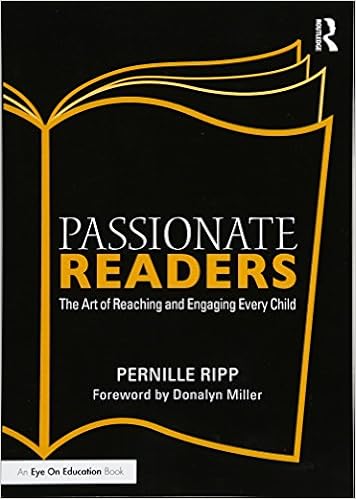
If you like what you read here, consider reading my newest book, Passionate Readers – The Art of Reaching and Engaging Every Child, out August 2017.  This book focuses on the five keys we can implement into any reading community to strengthen student reading experiences, even within the 45 minute English block.  If you are looking for solutions and ideas for how to re-engage all of your students consider reading my very first book  Passionate Learners – How to Engage and Empower Your Students.      Also, if you are wondering where I will be in the coming year or would like to have me speak, please see this page.


being a teacher, Reading, Reading Identity, student choice, Student dreams, Student Engagement

Growing Readers Past our Classroom Walls

I recently had the gift of being observed by teachers outside of our district.  Our students are used to it and go about their regular ways, no putting on a show for strangers here.  I always get nervous because while I think our community it magical, I am not sure what it looks like to outsiders.  Do they see all of the growth?  The work?  The small routines and decisions that go into creating the learning community we have?

During our conversation, a fellow teacher asked me how I help our students read outside of our classroom, after they leave, either for the day, the week, or even the year.  And while I am not sure all of our students do, I have seen the change once again this year.  I have seen many students read more.  I have seen more students embrace books and reading.  I have heard kids who told me they hate reading also have a favorite book to share when asked.  Knowing that there is a change afoot,  made me realize that once again, this subtle difference of not just wanting to read inside the classroom, but outside of it, is something we accomplish through a lot of small steps and not just one thing.  And that as always many of the ideas I have come from others who have graciously shared their ideas such as Penny Kittle, Nancie Atwell, and Donalyn Miller with a few tweaks thrown in just for us.

It starts with a fully stocked classroom library because I need our students surrounded by books at all time.  I need them to see the importance of always having a book ready, of always picking their next read.

Then it becomes where else do you get books from?  We use our school library but also talk about all of the other books are present.  Where can they access books beside our room?  Where will they get books from over the summer? If they can’t get to a library, I will gladly lend them some.

It starts with the creation of a to-be-read list and while some readers already have these in place, many don’t.  Many also don’t see the need and fight me for a long time about it, usually dismissing it with the idea that they already have a book to read.  Yet, we make one and then we use it, day in and day out as I ask them to please open to it when we have a book talk in the room.

Then it becomes a tool they adapt to use on their own.  So we start with one way to keep track but then we discuss how else they can have a list.  Is it on their phone? Is it their Goodreads account?  Is it the never-ending wishlist on Amazon?    What will they actually use so that they always have ideas for what to read next?  It cannot be my system because they will never maintain it once I am gone.  And so when they ask me what they should read next my first reminder is always to check their to-be-read list, to start there so they remember all of those books they thought might be worth their time.

It starts with book talks by me.  Every day, every class.  Students get used to the routine and write down titles they are interested in.

Then it becomes book talks by students because little beats a recommendation from a fellow student.  Whether it is through unofficial moments where I ask students to share a recent favorite read, our more structured thirty -second book talks where they actually write down what  they will say and I have the covers ready to project, or to their end of year “Best book of the year” speech, they get used to discussing books, sharing favorites and not so favorite, of speaking about books without me.

It starts with book shopping with them, we set up our routine together the first week of school remembering how to book shop.  Discussing how it is totally fine to judge a book by its cover as long as we look at other things as well.  Then we book shop as a class or I help a child who needs it with one-on-one guidance.

Then it becomes them book shopping with friends.  Rather than book shopping with me, I step further in the background, not highlighting as many books and also looking around for a peer for them to book shop with rather than me.

It starts with me being a reading role model.  And being an obvious one.  While I always say this is “our classroom,” it is my books read covers that grace our walls, and my book talks that dominate at first.  However, that is not good in the long run because we don’t set students up for continued independence but instead further their reliance on us.

Then it becomes students as reading role models.   And so, giving the conversational space back to students to make sure they know each other as readers, while they learn about themselves as well is a main focus for us. Students not only reflect on their own reading habits but also share with each other. They not only recommend books but also discuss reading plans. And while I certainly share my own as well, I am only one voice of many.

It starts with a discussion of summer reading and it’s importance.  Casual comments made about keeping the reading spark alive, of discovering who they are as a reader.

Then it becomes making plans.  Actually discussing how they plan on continuing their reading after they leave our classroom.  They share ideas, I share ideas, and we discuss why it matters.  We discuss the books they want to read.  We take pictures of their to-be-read list and email it home.  They borrow books from me and share their favorite reads.  This isn’t a one day lesson, it is a lesson that evolves, that crops up when needed, that is repeated more urgently as the year winds down.  After all, it took some of our students a long time to become readers, why should staying one take less time?

when I look at the reading community I get to be a part of every day, I cannot help but notice how the power of it always lies within the small details; the books, the displays, the conversations and yes, the patience and persistence that it takes to help build a reader.   None of that happens overnight.  None of that happens with just one book.  Or just one person.  It takes a community, it takes deliberate action, and it takes an endless amount of belief that every child can have positive experiences with reading.

If you like what you read here, consider reading my newest book, Passionate Readers – The Art of Reaching and Engaging Every Child, out August 2017.  This book focuses on the five keys we can implement into any reading community to strengthen student reading experiences, even within the 45 minute English block.  If you are looking for solutions and ideas for how to re-engage all of your students consider reading my very first book  Passionate Learners – How to Engage and Empower Your Students.      Also, if you are wondering where I will be in the coming year or would like to have me speak, please see this page.
being a teacher

Win a Copy of Passionate Readers in Honor of My Birthday

Thank you so much to all who entered, through a random number generator the winner was selected and notified yesterday!

I woke up a year older this morning.  Amazing how that happens just like that.  Like a year is no big deal.  Like a year passing is just something to get used to.

In all honesty, it hasn’t hit me yet.  38.  What an age.  I remember my mother being 38 and thinking how young she still was yet knowing that being in your 30’s somehow meant you were very much an adult.  I feel very much like an adult at times, other times not so much.

Every year, I write a letter to myself to be delivered on my birthday through FutureMe, it never ceases to amaze me what I was thinking at the time I wrote the letter.  The questions I have for myself.  Last year’s letter asked me how Passionate Readers turned out, whether it was useful, whether people found inspiration within its pages.  I think it has been, I am not sure, it is hard to judge one’s own work.  And yet, it is being read and shared, and I am just a little bit amazed.

So in honor of my birthday and in honor of my student’s who have had the most significant impact on me as a teacher, I am giving away a copy of Passionate Readers today.  The giveaway will end at midnight tonight.  All you have to do is leave a comment and I will select a winner randomly.  Bonus; if you have read the book and leave a review, I will enter you into the drawing twice as a thank you and then you can give a copy of the book away.

I am not sure what this upcoming year will hold.  More travels for sure, more laughs I hope, more time becoming better, becoming more than what I was.  But I do know that I am planning on making this year count.  The quiet moments and the loud.  On growing deliberately.  On slowing down deliberately.  On being grateful.  So thank you for the love and support you have given me this past year.  Thank you for being on this journey with me.

If you like what you read here, consider reading my newest book, Passionate Readers – The Art of Reaching and Engaging Every Child, out August 2017.  This book focuses on the five keys we can implement into any reading community to strengthen student reading experiences, even within the 45 minute English block.  If you are looking for solutions and ideas for how to re-engage all of your students consider reading my very first book  Passionate Learners – How to Engage and Empower Your Students.      Also, if you are wondering where I will be in the coming year or would like to have me speak, please see this page.

being a teacher

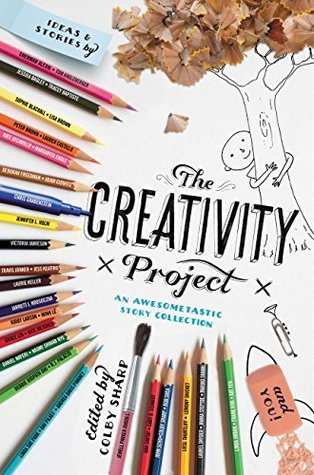
Happy Book Birthday Mr. Sharp – Let’s Give Away a Copy of The Creativity Project

Thank you so much to all who entered, I am so glad I get to send a copy of this book to the lucky winner who was selected by a random number generator and notified yesterday!

I don’t remember when I first heard of Colby Sharp but I remember thinking to myself that he seemed like a nice guy.  Like someone, I could be friends with, like someone I would have been friends with in school if e had gone to school together.

I do remember the first time I met Colby Sharp.  He and the rest of the Nerdtastic team had asked if I would come to Nerdcamp.  How could I say no?  So one July morning, I got up at 4:30 AM and drove the 5 hours to Parma, Michigan so I could deliver my very first Nerdtalk and the rest, we could say, is history.

I have met a lot of people, but only a few are in Colby’s class; kind, giving, funny, dedicated to his family and to bettering our profession not for his own gains, but for kids everywhere.  He simply has his heart in the right place.  Is it, therefore, any wonder that I am so excited for his very first book project to be released today?  That’s right, the much anticipated, the incredibly worth it, the must read and then use teacher book The Creativity Project comes out today.

The book’s description:

Colby Sharp invited more than forty authors and illustrators to provide story starters for each other; photos, drawings, poems, prose, or anything they could dream up. When they received their prompts, they responded by transforming these seeds into any form of creative work they wanted to share.
The result is a stunning collection of words, art, poetry, and stories by some of our most celebrated children book creators. A section of extra story starters by every contributor provides fresh inspiration for readers to create works of their own. Here is an innovative book that offers something for every kind of reader and creator!
With contributions by Tom Angleberger, Jessixa Bagley, Tracey Baptiste, Sophie Blackall, Lisa Brown, Peter Brown, Lauren Castillo, Kate DiCamillo, Margarita Engle, Deborah Freedman, Adam Gidwitz, Chris Grabenstein, Jennifer L. Holm, Victoria Jamieson, Travis Jonker, Jess Keating, Laurie Keller, Jarret J. Krosoczka, Kirby Larson, Minh Lê, Grace Lin, Kate Messner, Daniel Nayeri, Naomi Shihab Nye, Debbie Ohi, R.J. Palacio, Linda Sue Park, Dav Pilkey, Andrea Davis Pinkney, Jewell Parker Rhodes, Dan Santat, Gary Schmidt, John Schu, Colby Sharp, Bob Shea, Liesl Shurtliff, Lemony Snicket, Laurel Snyder, Javaka Steptoe, Mariko Tamaki, Linda Urban, Frank Viva, and Kat Yeh.

So what better way to celebrate it, then to offer up a copy for a giveaway!  I hope you don’t mind, Colby, this book needs to be in the world and in the hands of teachers everywhere.  All you have to do to enter is to leave a comment below and then you should buy the book as well.   I will close the contest on Saturday, March 17th.

Be the change, being a teacher, Literacy, Reading, Reading Identity

On Certain Books for Certain Kids

We spend a lot of time in bookstores and libraries.  So much so that my own children at the moment are playing library downstairs.  We go for the inspiration, for the support of booksellers, to find new must-have purchases.  We go as a family to recommit to reading, to get excited about what it means to be a reader.

But once in a while, something strikes me as out of place even in a bookstore.  Today it was this sign at our Barnes and Noble.

IMG_3364

I fixed it for them on my Instagram account.

IMG_3365

And yet, all jest aside.  These small signs.  These sections of libraries.  These displays that cater to only one identity, only one culture, only one representation.  They may seem trivial at first and yet they add to the continued perpetuation that some books are for some kids.  That some books will only be liked by the people it is directly marketed to.  This is problematic because it once again speaks to certain books being for certain kids.  It speaks to certain stories being the ones worth publishing.  It speaks to how we only want diverse books if those books are diverse in the way we see fit.  (Just like what the NY Times wrote about here.)  It speaks to how we only display books celebrating African American history when February reminds us too.

We wonder why some of our students have stigmas when it comes to the books we read, and then don’t think to look at our own learning spaces to see where those stigmas are created.

But we have to do better than this.  We have to do more, and it once again starts with the small details that we do have control over.

We have to first question how we use the word “Diverse” as Chad Everett cautions us to do in his blog post, where he reminds us all that the minute we call something diverse we are once again establishing whiteness as the norm.

We have to question the divisions we create in our classroom and school libraries.  When we hand boys “Boy books” and don’t book talk a book to the whole class because it really is just meant for the “girls.”  When we describe certain books as girly or fluffy and then hand it to a female.

When a child needs our help with book shopping and in our eagerness to help that child “see” themselves in books we only hand them books that feature characters that look like them.  We have gotten better at handing white, hetero, cisgender kids window books, but don’t other identities deserve that too?

When we invite female authors to our schools and then only invite the girls to see them because boys might not understand or be engaged with the message.

When we create displays that honor African Americans and only pull out books that feature them marching or Civil Rights or in chains as enslaved people.

When a child tells us they loved a certain book and we assume we know why and don’t ask them what they loved it so we can help them find a better book, not based on our assumptions but actually on their desires.

When we only purchase books from the large publishers and don’t seek out the independent ones like Lee and Low who have been focused on creating a better world through books for many years.

When we herald big publishers creating special imprints to honor the voices of those who have been traditionally left out from their publishing houses, but we don’t question why they were left out in the first place.  Why not publish them within their traditional branch?

When we are quick to “otherize” books and then hand them to kids as something that they can only identify with because of a shared trait, we are quickly teaching kids that they should only care about those that they share those same traits with.  That unless they can find a surface commonality with someone then their time is not worth investing.

And so we must continue to do better.  We must evaluate our learning spaces, our books, our displays, our book talks, and even who we hand which books to so that we can do better.  We must continue to push for better representation and for an end to the notion that certain books are for certain kids, rather than just waiting to be discovered by everyone.

If you like what you read here, consider reading my newest book, Passionate Readers – The Art of Reaching and Engaging Every Child, out August 2017.  This book focuses on the five keys we can implement into any reading community to strengthen student reading experiences, even within the 45 minute English block.  If you are looking for solutions and ideas for how to re-engage all of your students consider reading my very first book  Passionate Learners – How to Engage and Empower Your Students.      Also, if you are wondering where I will be in the coming year or would like to have me speak, please see this page.


Be the change, being a teacher

The Choice We Make

We can spend our days thinking of our past glories.

Of how it turned out we were right all along.


We can spend our days reliving the past.

We can spend our days thinking we are right, no matter what others say.

We can spend our days never looking back except to the moments where we knew it all.

We can focus in on the things we figured out, how we saved the day and everyone in it.

We can congratulate ourselves on a job well done, how we were the loudest voice, how we had all of the answers if only the world would listen to us.

We can spend our days tearing others down when they disagree.

We can spend our time holding so tight to our beliefs that we forget what we are holding on to, only knowing that we must cling to them or be lost.

Or we can pause…

Hear the voice of others…

Hear people out…

Reset our understanding to not exclude, but include.

To really listen to understand, not to respond.

To ask more questions rather than jump to the defensive.

To discuss rather than dismiss.

To build others up instead of tearing them down.

Perhaps agree to disagree but do so with respect.

At the end of the day, it is a choice we make.  A choice we commit to.  And a choice we can change.  Let’s not forget that.

If you like what you read here, consider reading my newest book, Passionate Readers – The Art of Reaching and Engaging Every Child, out August 2017.  This book focuses on the five keys we can implement into any reading community to strengthen student reading experiences, even within the 45 minute English block.  If you are looking for solutions and ideas for how to re-engage all of your students consider reading my very first book  Passionate Learners – How to Engage and Empower Your Students.      Also, if you are wondering where I will be in the coming year or would like to have me speak, please see this page.