I am struck by the noise that surrounds us. As I walk through my school, Oregon Middle, the voices of kids float through the open doors. Sure, the teachers can be heard as well, but over and over, again and again, there the kids are. Asking questions, discussing, getting passionate. We are carried forward by the voices of the very kids we serve. It makes me even prouder to be a teacher here.
And yet. I think back to the days where I thought silence meant learning.
Where I thought deep engagement was almost always quiet. Punctuated by brief answers facilitated by me to check for understanding.
Where I thought that if only I could get them to listen, then they would learn.
If only they would stop talking then they would really understand.
If only one child answered then surely that was engagement.
If only they turned and talked when I asked them that meant we were doing student talk right.
And while we still savor the quiet hush that surrounds us when we reach the zone with our books or with our thinking or with our writing, we also relish the noise that comes from student engagement.
But not just any type of noise, the productive kind. The one that goes deeper. The one that isn’t just because the kids are being compliant but because they actually care. That is when student engagement is done right. So what can we look for when we evaluate the types of noise our kids are making?
Who is making the noise?
Is it you or is it them? While there is much to be said for teacher-led discussion, at some point we have to turn it over so the kids can do the probing, the analyzing, and the digging deeper. What if we didn’t give them all of the questions, but instead gave them the time to discuss? What if we modeled it but then truly let them take the reigns, not just once in a while but almost always? What if students came up with the discussion questions as well as moderated the flow?
How much noise is it?
Is the noise contained to brief periods of time in your class or is it throughout? Are students engaged outside of the questions we ask? Are the teaching points inspiring them to care more? To ask more? To push their thinking? Or is just having them discuss one thing and then lapsing into silence as they wait for the next direction?
Who controls the noise?
While I see many teachers embrace the “turn and talk,” I wonder how often that’s it for student talk. I am guilty of this thinking; as long as they turn and talk then surely there is student engagement. Yet I have found that in my eagerness to get to the next thing, I have often cut off the kids from going deeper into their conversations. That my desire to ask the next question has stopped their further inquiry. That my casual discomfort with student silence means they are not getting time to just think. I am working on seeing where it goes and following along when we can.
What emotions lie behind the noise?
I loved the discussion unfolding in our classroom today as students discussed “Who should get the baby?” after listening to an NPR podcast. They were so upset, not with each other, but with the facts of the case, how it wasn’t black and white, and also how others were not agreeing with them. To see this passion for a podcast as we discuss uncovering facts to change our perspective is exactly what I hope for; that they care about it. That they speak up because they cannot imagine staying quiet. That it matters enough for them to actually bother with adding their voice.
And for me that’s it; when I think of true student engagement through student talk, I look for the emotions. How students speak. Why they speak. What they say, but also how they say it. Within this exchange, we can gauge their interest. We can see whether they are simply going through the motions or whether our class, our learning exploration, actually matters to them. And so this is where we start, where I start every time I evaluate our student talk; with the emotional investment or lack thereof. It turns out that the truth can really be found in how they speak their words.
If you like what you read here, consider reading my newest book, Passionate Readers – The Art of Reaching and Engaging Every Child, out August 2017. This book focuses on the five keys we can implement into any reading community to strengthen student reading experiences, even within the 45 minute English block. If you are looking for solutions and ideas for how to re-engage all of your students consider reading my very first book Passionate Learners – How to Engage and Empower Your Students. Also, if you are wondering where I will be in the coming year or would like to have me speak, please see this page.
As we dive into our first fictional writing unit, I am reminded that sometimes kids don’t know how to move their story along. So of course, what better time than to read some more picture books to remind them of the amount of action needed for a short story. I dug through my shelves today and pulled a few favorites. Here they are.
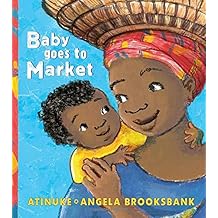
Market is very crowded. Mama is very busy. Baby is very curious.
When Baby and Mama go to the market, Baby is so adorable that the banana seller gives him six bananas. Baby eats one and puts five in the basket, but Mama doesn’t notice. As Mama and Baby wend their way through the stalls, cheeky Baby collects five oranges, four biscuits, three ears of sweet corn, two pieces of coconut . . . until Mama notices that her basket is getting very heavy! Poor Baby, she thinks, he must be very hungry by now!
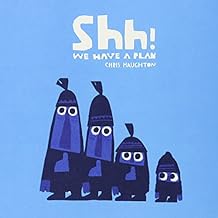
Four friends creep through the woods, and what do they spot? An exquisite bird high in a tree! “Hello birdie,” waves one. “Shh! We have a plan,” hush the others. They stealthily make their advance, nets in the air. Ready one, ready two, ready three, and go! But as one comically foiled plan follows another, it soon becomes clear that their quiet, observant companion, hand outstretched, has a far better idea.
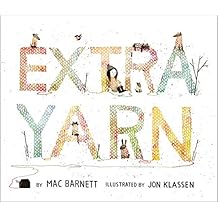
This is an extraordinary new picture book about a little girl who cocoons her cold, grey town in joy and warmth…and brightly coloured yarn! On a cold, dark day in a dull, grey town, little Annabelle discovers a box of brightly coloured yarn. She knits a cosy jumper to keep herself nice and toasty warm and finds, to her surprise, that she still has yarn left over. So she decides to knit her dog a jumper too but – hang on a second – she STILL has extra yarn! Annabelle knits and knits and, soon, she’s blanketed the entire town in a rainbow of colour, knitting away the dreary iciness that grips it. Her prodigious status spreads far and wide. It doesn’t take long for the evil Archduke to set his beady eyes upon Annabelle’s magical box of yarn but, little does he know, you have to have a little bit of magic inside your heart for it to work..
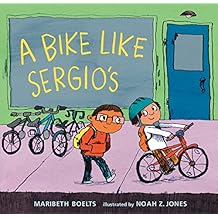
Ruben feels like he is the only kid without a bike. His friend Sergio reminds him that his birthday is coming, but Ruben knows that the kinds of birthday gifts he and Sergio receive are not the same. After all, when Ruben’s mom sends him to Sonny’s corner store for groceries, sometimes she doesn’t have enough money for everything on the list. So when Ruben sees a dollar bill fall out of someone’s purse, he picks it up and puts it in his pocket. But when he gets home, he discovers it’s not one dollar or even five or ten—it’s a hundred-dollar bill, more than enough for a new bike just like Sergio’s! But what about the crossed-off groceries? And what about the woman who lost her money?
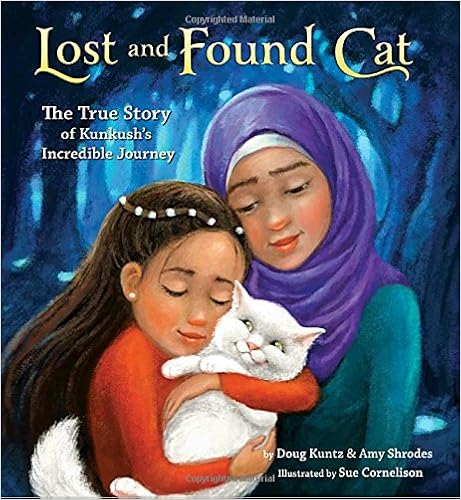
When an Iraqi family is forced to flee their home, they can’t bear to leave their beloved cat, Kunkush, behind. So they carry him with them from Iraq to Greece, keeping their secret passenger hidden away.
But during the crowded boat crossing to Greece, his carrier breaks and the frightened cat runs from the chaos. In one moment, he is gone. After an unsuccessful search, his family has to continue their journey, leaving brokenhearted.
A few days later, aid workers in Greece find the lost cat. Knowing how much his family has sacrificed already, they are desperate to reunite them with the cat they love so much. A worldwide community comes together to spread the word on the Internet and in the news media, and after several months the impossible happens—Kunkush’s family is found, and they finally get their happy ending in their new home.
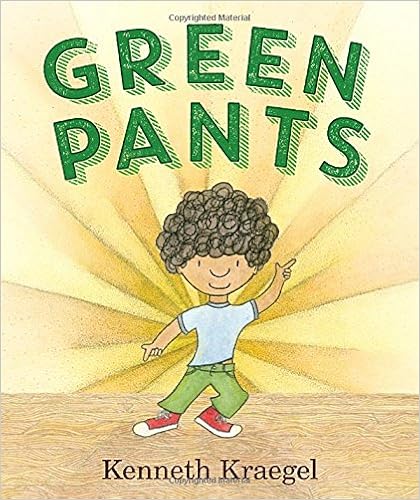
Jameson only ever wears green pants. When he wears green pants, he can do anything. But if he wants to be in his cousin’s wedding, he’s going to have to wear a tuxedo, and that means black pants. It’s an impossible decision: Jameson would love nothing more than to be in his cousin’s wedding, but how can he not wear green pants? Will Jameson turn down this big honor, or will he find a way to make everyone happy, including himself?
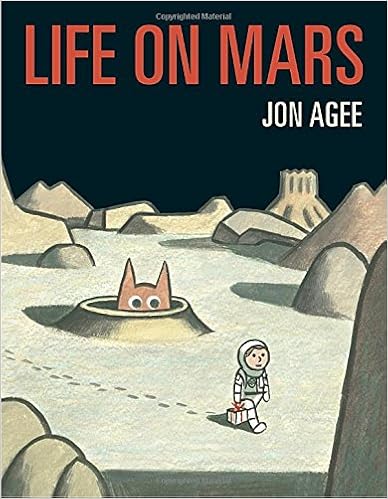
A young astronaut is absolutely sure there is life to be found on Mars. He sets off on a solitary mission, determined to prove the naysayers wrong. But when he arrives, equipped with a package of cupcakes as a gift, he sees nothing but a nearly barren planet. Finally, he spies a single flower and packs it away to take back to Earth as proof that there is indeed life on Mars. But as he settles in for the journey home, he cracks open his cupcakes—only to discover that someone has eaten them all!
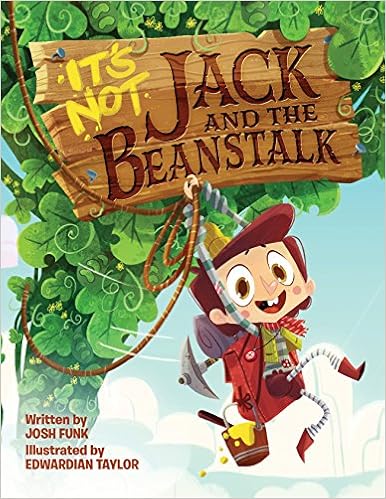
Jack is not fond of the bossy narrator of his fairy tale! When Jack is told to trade his beloved cow Bessie for some magic beans, throw the beans out the window, climb the ENORMOUS beanstalk that sprouts overnight, and steal from a GIANT, he decides this fairy tale is getting out of control. In fact, he doesn’t want to follow the story line at all. Who says Jack needs to enter a life of daring, thievery, and giant trickery? He takes his story into his own hands—and you’ll never guess what happens next!
Jabari is definitely ready to jump off the diving board. He’s finished his swimming lessons and passed his swim test, and he’s a great jumper, so he’s not scared at all. “Looks easy,” says Jabari, watching the other kids take their turns. But when his dad squeezes his hand, Jabari squeezes back. He needs to figure out what kind of special jump to do anyway, and he should probably do some stretches before climbing up onto the diving board.
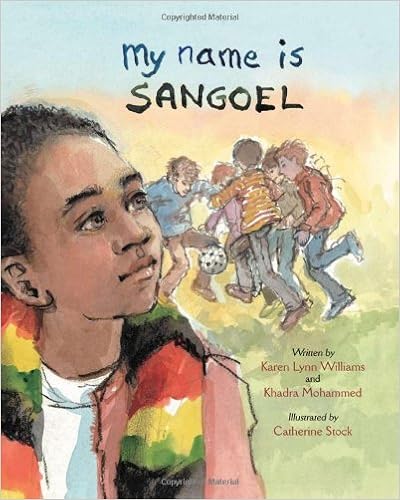
Sangoel is a refugee. Leaving behind his homeland of Sudan, where his father died in the war, he has little to call his own other than his name, a Dinka name handed down proudly from his father and grandfather before him.
When Sangoel and his mother and sister arrive in the United States, everything seems very strange and unlike home. In this busy, noisy place, with its escalators and television sets and traffic and snow, Sangoel quietly endures the fact that no one is able to pronounce his name. Lonely and homesick, he finally comes up with an ingenious solution to this problem, and in the process he at last begins to feel at home.
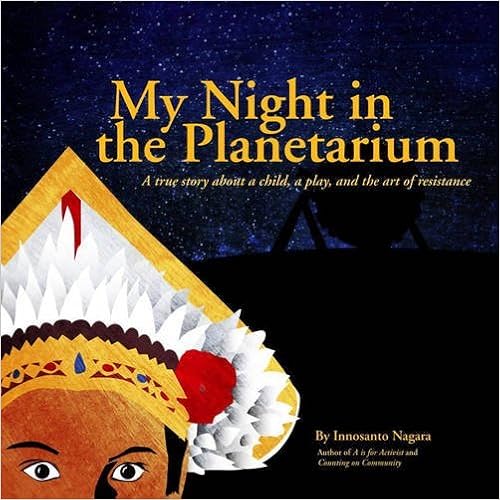
Seven year-oldInnosanto’s father, a famous Indonesian playwright, is in trouble with the government for his newest play’s unfavorable portrayal of governmental power and corruption. After a rousing performance at a large theater complex which also houses the Jakarta Planetarium, Innosanto’s father manages to sneak out of town to avoid arrest while Innosanto and his mother spend an exciting night sleeping under the stars in the Jakarta Planetarium.
Gus lives in a big park in the middle of an even bigger city, and he spends his days with Ida. Ida is right there. Always.
Then one sad day, Gus learns that Ida is very sick, and she isn’t going to get better. The friends help each other face the difficult news with whispers, sniffles, cuddles, and even laughs. Slowly Gus realizes that even after Ida is gone, she will still be with him—through the sounds of their city, and the memories that live in their favorite spots.
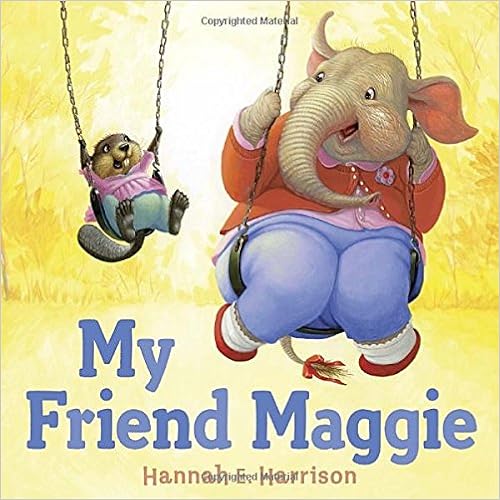
Paula and Maggie have been friends forever. Paula thinks Maggie is the best—until mean girl Veronica says otherwise. Suddenly, Paula starts to notice that Maggie is big and clumsy, and her clothes are sort of snuggish. Rather than sticking up for Maggie, Paula ignores her old friend and plays with Veronica instead. Luckily, when Veronica turns on Paula, Maggie’s true colors shine through.
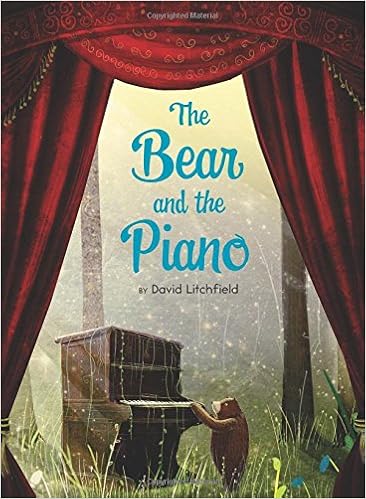
One day, a bear cub finds something strange and wonderful in the forest. When he touches the keys, they make a horrible noise. Yet he is drawn back again and again. Eventually, he learns to play beautiful sounds, delighting his woodland friends.
Then the bear is invited to share his sounds with new friends in the city. He longs to explore the world beyond his home, and to play bigger and better than before. But he knows that if he leaves, the other bears will be very sad . . .
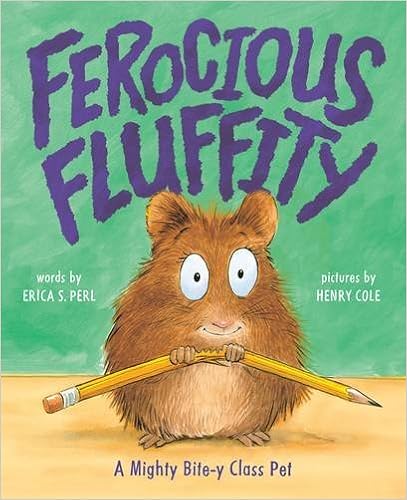
Mr. Drake’s second grade class has a new class pet. Fluffity appears to be a cute and docile hamster—but the kids soon discover that she is not the cuddly pet they expected. From the moment her cage door opens, Fluffity becomes FEROCIOUS—biting and chasing everyone down the hall and into the library! Will the class be able to tame this beast and bring peace back to their school?
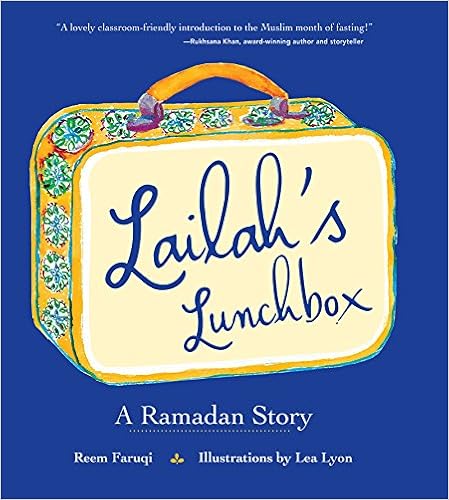
Lailah is in a new school in a new country, thousands of miles from her old home, and missing her old friends. When Ramadan begins, she is excited that she is finally old enough to participate in the fasting but worried that her classmates won’t understand why she doesn’t join them in the lunchroom.
Lailah solves her problem with help from the school librarian and her teacher and in doing so learns that she can make new friends who respect her beliefs.
Jacob loves playing dress-up, when he can be anything he wants to be. Some kids at school say he can’t wear “girl” clothes, but Jacob wants to wear a dress to school. Can he convince his parents to let him wear what he wants?
Giovanni’s friends are coming over for Sunday dinner, and his grandmother is serving rice and beans. Giovanni is embarrassed he does not like ‘rice and rocks’ and worries his friends will think the traditional Jamaican dish is weird. But his favorite Auntie comes to the rescue. She and Giovanni’s pet parrot, Jasper, take him on a magical journey across the globe, visiting places where people eat rice and rocks.
Drawing is what Ramon does. It�s what makes him happy. But in one split second, all that changes. A single reckless remark by Ramon’s older brother, Leon, turns Ramon’s carefree sketches into joyless struggles. Luckily for Ramon, though, his little sister, Marisol, sees the world differently. She opens his eyes to something a lot more valuable than getting things just “right.”
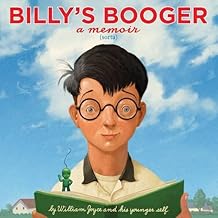
Billy loves to draw. He draws on books and on his homework and even on his math tests—he might not get the answer right, but doesn’t it look swell sitting in a boat at sea? His teacher doesn’t think so, and neither does the principal. But the librarian has an idea that just might help Billy better direct his illustrative energies: a book-making contest!
Billy gets right to work, reading everything he can about meteors, mythology, space travel, and…mucus? Yep, his book is going to be about the world’s smartest booger, who stays tucked away until needed—say, to solve multiplication problems, or answer questions from the President. Billy’s sure his story is a winner. But being a winner doesn’t mean you always win.
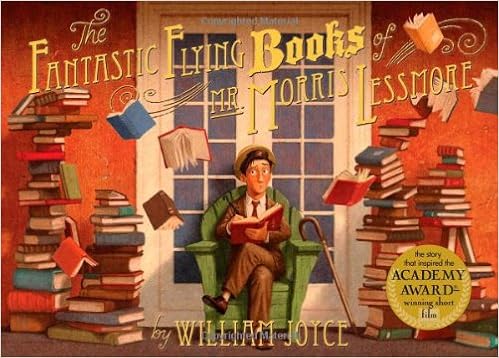
Morris Lessmore loved words.
He loved stories.
He loved books.
But every story has its upsets. Everything in Morris Lessmore’s life, including his own story, is scattered to the winds.
But the power of story will save the day.
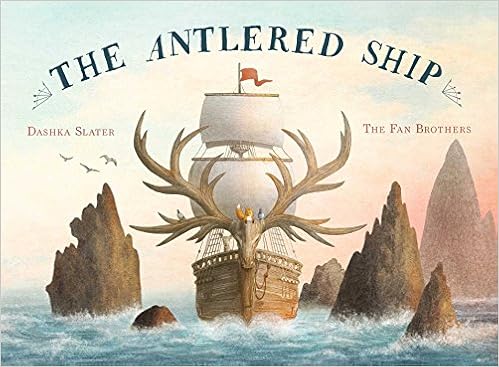
An inquisitive fox sets off on a seafaring voyage with a crew of deer and pigeons in this enchanting tale of friendship and adventure.
Marco the fox has a lot of questions, like: how deep does the sun go when it sinks into the sea? And why do birds have such lizardy feet? But none of the other foxes share his curiosity. So when a magnificent ship adorned with antlers and with a deer for a captain arrives at the dock looking for a crew, Marco volunteers, hoping to find foxes who are as inquisitive as he is that can answer his questions. The crew finds adventure and intrigue on their journey. And, at last, Marco finds the answer to his most important question of all: What’s the best way to find a friend you can talk to?
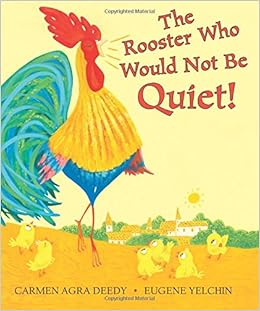
La Paz is a happy, but noisy village. A little peace and quiet would make it just right.
So the villagers elect the bossy Don Pepe as their mayor. Before long, singing of any kind is outlawed. Even the teakettle is afraid to whistle!
But there is one noisy rooster who doesn’t give two mangos about this mayor’s silly rules. Instead, he does what roosters were born to do.
He sings:
“Kee-kee-ree-KEE!”
There are many more, but I thought I would share a few. happy reading and if you are looking for more of our favorite books, go here.
If you like what you read here, consider reading my newest book, Passionate Readers – The Art of Reaching and Engaging Every Child, out August 2017. This book focuses on the five keys we can implement into any reading community to strengthen student reading experiences, even within the 45 minute English block. If you are looking for solutions and ideas for how to re-engage all of your students consider reading my very first book Passionate Learners – How to Engage and Empower Your Students. Also, if you are wondering where I will be in the coming year or would like to have me speak, please see this page.
It has been building for a while. This idea that teachers need to “just” innovate more. That we need to break the system, try a new idea every day. That we need to just do more. Just do it better. Just be more.
But that little word “just” has such a huge implication.
It tells me that what I am doing is not already innovative.
That what I am doing is not enough.
That I am not good enough, nor enough for the very kids I teach.
That if I only would “just” be a better teacher then perhaps all kids would run into my classroom with a smile on their face and beg me not to send them home.
But I teach real live children who have friendships, and emotions, and families, and lives to live and so no, I don’t get offended when they don’t run into my classroom, I look for the small acknowledgments that what we do matters, rather than the big empty promises of a smile that may or not be plastered on for my benefit.
And the thing is, I do innovate. Educators and administrators do every single day. When we see a child not getting what they are meant to learn, I am innovating on the spot trying to problem solve a situation with a child I may or may not know very well and come up with a solution so that this child can feel like what we are doing at this very moment matters to them.
And I am innovating when I lesson plan and I pull my own resources, my own expertise, my tried-and-true, and find those from others and I take into account the story of every single child I teach, 100 and counting, and I try to create lessons that they will have power over, that they will be invested in, that they will remember. And then I repeat it for the next day.
And I am innovating when a child tells me their truth, that school is not for them and I ask them what I can do to be a better teacher, to make this a place they want to come to.
And I am innovating when I sit with colleagues and we problem-solve and we ask each other how we can reach every child and make sure every child has a chance of success.
And I am innovating when I speak to those at home and ask how I can be more for their child.
But that doesn’t count as innovative in many “experts” eyes. I am not flipping my classroom, or doing blended learning, or even bringing in new technology that is sure to blow my student’s minds.
My classroom has tables, and ratty bean bags, and yoga balls that deflate from too many wild bounces. My classroom has books, not digital ones, but the ones with paper that allow children to pass them on to each other when they know they need to share their experience with someone else who will get it.
My classroom has Chromebooks and we use them to bring the stories of others in. We use them to bring our stories out. We use them to make sense of the world that sometimes seems so senseless.
Every day we try to make count. Every day, we hope these kids entrusted to us will have a great experience, will learn something, will be something more than when they came. We innovate every day, but you don’t see it if you don’t look for it.
And yet we are told as teachers over and over to do more. To be more. Because the more that we are doing is not enough. If we “just” embraced innovation and took a risk. Finally tried something new. Then, maybe then, all kids would finally love school.
It is a race none of us can win, and yet we keep on running, hoping that someday we will have it figured out. And so we innovate quietly before we go to sleep, when we wake up in the middle of the night, when we drive to work when we take our lunch break.
So I ask those who tell us these things who are no longer in the classroom. And I don’t mean just out of touch administrators because I would say that the administrators that I know innovate every single day on their feet long after I get to go home, but anyone who has forgotten what it means to be a teacher. What it means to juggle hundreds of things every single day, well knowing that the very future of this country lies within our hands.
Come teach.
Come be in our classroom and innovate alongside us. Not for a day, anyone can make it a day in 7th Grade English. Come for a week, a month. Come tell me how to be more and then tell me what I no longer need to do, because it has been a while since that has happened.
Come be with us. Show us what innovation can look like but stop using the word “just.” Just implies easy, as if I don’t want to be more. Just implies that it is something I am choosing not to do.
Teaching is an art, we can hope to do it well by the time we retire. It is a permanent pursuit of innovation that many would not be able to do. Perhaps that is why so many choose to leave. Some to teach others their best ideas, others to tell us what to do without remembering what it means to actually do it. I, for one, am staying, are you?
If you like what you read here, consider reading my newest book, Passionate Readers – The Art of Reaching and Engaging Every Child, out August 2017. This book focuses on the five keys we can implement into any reading community to strengthen student reading experiences, even within the 45 minute English block. If you are looking for solutions and ideas for how to re-engage all of your students consider reading my very first book Passionate Learners – How to Engage and Empower Your Students. Also, if you are wondering where I will be in the coming year or would like to have me speak, please see this page.
Who are you as a reader is a question that shapes our experience together in room 235D.
At first, their answers are typically short. ..
I am a reader because I like to read.
I hate reading.
I only read because I am told to.
As the year progresses so do their thoughts. They start to realize the parts that were there all along and that they are discovering and so gradually their answers change.
I am a reader who only reads a certain type of book.
I read because it takes me away.
I am a picky reader who loves to read but struggles with finding the next great book.
As their identities develop, the responsibility shifts from me to them. They set the goals at the beginning of the year, I make sure they revisit them, but I also ask them, “Now what?” when they say they don’t like reading.
I ask them, “Then what?” when they say they cannot find a book.
I ask them, “How can I help?” when they tell me they don’t know what to do as readers.
These questions subtly change the power of the room, the control of the learning. they may seem insignificant but they add up.
As the year progresses, our conversations shift. No longer a focus on what I need to do but rather on what they need to do. But this doesn’t just happen, I ask them to take responsibility, to figure out their own part so that I can help guide them rather than lead them.
Today, as we settled back after a long weekend break, I asked them to tell a partner who they were as readers. I modeled it and then let them loose.
Their words surrounded us for a few minutes and then they turned their eyes on this reflection.
Only four questions, but again, such a simple reflection of the thinking that needs to happen. The ownership that needs to be taken and honed.
I read their answers and am reminded once again how such a small assignment can help me grow so much.
They need my help still with book shopping.
They want more time to read.
They have grown but are still not sure that reading is for them.
They ask me to speak to them more about their reading.
And they see their own role in what it means to be a reader. As one child writes, “Ms. Ripp doesn’t have to do anything to help me. I think that this is something I need to work on myself.”
So much growth, all from the little things we can do that go beyond handing a child a book and giving them time to read.
It has been four days since I stood in my classroom and surveyed the books. Four days since I got the papers ready. Four days since I sharpened the pencils and then shut the door, ready to take a break. My brain is now thinking of how in one day I go back. rejuvenated, refreshed, excited, and yet…
Am I really ready to be the teacher that these kids so wholeheartedly need?
I keep seeing the ideas shared. The quippy lines. The hopes and dreams that we so eagerly pass on as reminders to one another. The mantras, the quotes and even the blog posts that tell us how we should be teaching. With urgency, with passion, with creativity.
We should see each child.
We should strive for more.
We should make it relevant.
We should make it challenging.
We should make it real-world learning, whatever that means.
And yet…
We say we want the students to talk, but are we quiet long enough to hear them?
We say we want innovative classrooms, but are we embracing new ideas, unafraid of change?
We say we want hands-on learning, but are we providing opportunities for that or are we stumped for how to do it?
We say we want kids to explore, but are we giving them the time to veer off our path?
We say we want choice, but are we giving it?
We share the ideas that others have and tell ourselves that they are right. That we can do education better, but then fall into our same patterns as we shut our doors and get to teaching. We nod our heads in agreement with all the pretty statements but then cannot find the time, the courage, or the know how to change.
So as I prepare for this Monday, I ask myself, is this everything you hoped it would be or could it be better? And if so, how?
Perhaps I need to ask myself the following, and perhaps you should too:
How is there choice involved?
How are their voices heard?
How can they move around?
How can it be relevant to them?
How can it matter?
How can it be fun?
How will this help them grow?
And then I can plan my lesson.
If you like what you read here, consider reading my newest book, Passionate Readers – The Art of Reaching and Engaging Every Child, out August 2017. This book focuses on the five keys we can implement into any reading community to strengthen student reading experiences, even within the 45 minute English block. If you are looking for solutions and ideas for how to re-engage all of your students consider reading my very first book Passionate Learners – How to Engage and Empower Your Students. Also, if you are wondering where I will be in the coming year or would like to have me speak, please see this page.
I often get asked how I started writing, where this blog came from. My answer has always been the same; this blog should b called Pernille’s Random Thoughts. Pernille’s thoughts that keep me up at night. Pernille’s reflections that I need to to make so that I can grow from them. While I know others now read it, this was never my intention, it still isn’t.
I write for myself.
For the words that otherwise haunt me.
For the experiences, I have to process.
Sometimes I write to share ideas because I am so proud of something that worked.
Sometimes I write to share failures so that others can learn alongside me.
Sometimes I write simply to think out loud, to hold myself accountable, to set my thoughts out in the world so that I can be reminded of what I believe in to my core.
On Sunday, 8 AM, at NCTE, I was part of a session with 6 powerful women. That morning Jess Lifshitz, Katie Muhtaris, Kathleen Sokolowski, Sara Ahmed, Katherine Hale, Donalyn Miller and I got the chance to share a personal story to help others reflect on their identity and our society. The invitation was wide open for me to share whatever I felt like. I knew that this was an opportunity for me to take the privilege that I have been handed because of my skin color, my socioeconomic status, my resources and so many other things and shine a light on it.
And yet, I was scared. My hands shook. Not because my risks are great; what’s the worst that can happen?! (Although I sometimes do forget that things can happen that would greatly affect my family) But because I was afraid of not saying it right. Of muddling my words. Of unintended consequences. But the words came out and so did the tears. So for all of you who were not in our little session at NCTE, here is the story I chose to share, some pieces already shared on this blog, and others not.
I remember clenching the steering wheel. The red and blue lights behind me flashing. My heart in my throat. My breathing fast. In my head, I kept wondering what I had done. I knew I had followed the speed limit. I knew I had used my blinkers. I knew my registration was up to date.
And yet, I was getting pulled over and all of my kids were in the kid yelling at me about the police car behind us. As the police officer walked up, I was scared. After all, I didn’t have my Green Card on me. That little card that grants me the permission to be in the United States as a lawful immigrant. That little card that tells authority that I am legal. That little card that I am supposed to carry on me at all times, in case anyone ever needs to see it. In case the police, or ICE agents, or any other authority ever decides to question whether I have the right to be in the United States of America.
I didn’t have it. It was at home. And then the police officer came up to my window.
I rolled down the window, ready to ask if I could please go home and get it, ready to make promises to always carry it with me in the future. I still had no idea why I was being pulled over.
She asked me for my license and I held my breath as I handed it over and she began to speak.
My brake light was out. That was it. A brake light. I had seven days to get it fixed or else but my “or else” was a ticket, not questioning, not deportation.
She thanked me for my time. And then she walked away.
She never asked about my green card. She never asked if I was an American. She never even thought to ask.
I almost cried as I pulled my car out into traffic and went home.
I was raised in Bjerringbro, Denmark, a small town of about 8,000 people. My mother moved my siblings and me there, I was 6 months old when she found the courage to look for a better life. My mother was a strong single mother, who also had a wandering heart and so when I was six years old, she moved us to America so that she could write a book at Berkeley. I was six years old the first time I spoke a word of English taught to me in an inner city classroom in San Francisco. For seven months I navigated this foreign tongue, I navigated not understanding what someone said to me when they spoke. I navigated trying to find the bathroom when you don’t know how to ask to leave or even how to say “Bathroom.” I navigated how to make friends when you don’t speak the same language, how to show I was smart even if I didn’t know what I was supposed to be doing. And just when I felt like I had mastered this new language, this new culture, this new me, we went home. Back to Denmark where we resumed the life we had left behind. Becoming Danish once again, rather than a kid who doesn’t have English as their first language.
So when you see me; do you see a woman whose first language is not English? Do you see the ESL student I was? Or do you just see my white skin? Hear my American English?
When I was 18, my mother decided it was time to move again and she asked me once more if I would come. “Stay for a year and if you don’t like it, I will buy your ticket home.” In July of 1998, I walked up to the counter in Logan Airport and declared myself an immigrant. I was alone, traveling by myself, and clutching my sealed papers as tightly as I could. The immigration official, a surly man, pulled me into a small room, took my papers and then opened them without a word. I stood there silent, afraid that I somehow would make the wrong move or say the wrong thing. Afraid that at any moment the uniformed man, this stranger, would decide that I was not going to America and just like that I would be sent back home to a country where my family no longer was. After questioning, he stamped my passport, handed it back and simply said; “Welcome to America” as he led me out into what felt like a whole new world.
Newly moved to Wisconsin, in my 18 year old glory
For 19 years no one has ever asked me for my papers again. I have walked freely wherever I wanted to without being questioned, without being pulled over, without name-calling, all because of how I look. That is white privilege,
When I wrote about how I am never assumed to be an immigrant, someone replied; “Well, that is easy to understand, after all, you look like an American.”
Let’s think about that for a moment. How can I look like an American when I do not have a single drop of American blood in me? How can I look like an American when I can trace my Danish roots back more than a thousand years? How can I look like an American when my first language is Danish and not English?
Take Martha, our nanny. She is a full-blooded American and yet she gets pulled over regularly for as she calls it “Driving while Mexican.” She is questioned about her heritage, asked where she is really from, whether her parents came here illegally. When we go out together, she is automatically viewed as the immigrant and I am not. Our assumptions about what makes someone American follows her everywhere she goes. She shrugs it off like it is no big deal, says that’s just the way it is, but I am not okay with that, we shouldn’t be okay with that.
And I get it, I am so white I am like a caricature of whiteness. You see me coming; blonde, blue eyes, tall, my Viking heritage directly responsible for the four blonde children that cruise around with me in our mini-van while we bungle the words to Despacito. I was born white, it is who I am, but I am on a journey to use my innate privilege to be something more. Not just an ally, but a fighter. Someone who doesn’t just shut the door when the going gets tough but leaves it wide open.
My children go to a school that does not mirror us. It is through circumstance we came to it but by choice that we stayed. Learning among other cultures, races and identities have brought many questions to our dining room table. Questions that were hard for us to navigate with our young children, questions who pushed our own thinking. I shudder to think whether these questions would have been posed by my children if they did not go to the school they do. And so I think of the choices we, as white people, make as a privileged society to keep our lives homogenous. How we live in neighborhoods where people look like us, we send our kids to schools where they float in a sea of whiteness, we not only elect people whose values mirror our own but so do their faces. I can choose to step away from racism. I can choose to step away from inequity discussions. I can choose to step away from anything that may be upsetting, dangerous, or demoralizing.
I am privileged because I get to be afraid of the type of reaction my teaching may cause if I continue to discuss inequity. If I continue to discuss racism. If I continue to discuss what it means to be privileged in my classroom. I get to be afraid for my job and I get to choose whether to have these hard conversations or not. But the truth is, there should be no choice. We, as teachers, are on the front lines of changing the future narrative of this country. Ugliness and all. We are the bastions of truth, so what truth are we bringing into our classrooms?
Where is our courage when it comes to being a part of dismantling a racist and prejudiced system? It is not enough to have diverse books in our classrooms if we are too afraid to discuss diversity and what the lack of humanity for others does to our democracy. It is not enough to say “You matter” and then do nothing to change the world that we live in. Or to celebrate diversity and then not accept a child for who they truly are, differences and all. It is not enough to say we are an ally if our actions don’t match our words. I don’t need 100 clones of me, I need to create more opportunities for the students to do the hard work. To offer them an opportunity to decide. To create an environment where they can discover their own opinion. Where they can explore the world, even when it is ugly so that they can decide which side of history they want to fall on.
So this year I am planning for even harder conversations. I am planning on being an ally, for being a fighter, even when I get scared. We say we teach all children, but do we teach all stories? Do we teach the whole truth, and nothing but the truth, or just the sanitized version that will not ruffle any feathers? Do we give the students time to discuss, to formulate their own opinions, to evaluate the society that they live in and reach their own conclusions?
I am so white, I am like a caricature of whiteness, but perhaps even this white person can make a difference by not being so afraid. By listening, by asking questions, and by doing more than just saying that this world is filled with wrongness.
I am no longer just an immigrant, this summer I became a United States Citizen. I no longer have to fear being deported and separated from my children, but then again; did I ever really have to fear that? Or did my white skin shield me from what it truly means to be an immigrant to this country? Did it give me the cover of assumptions when I am assumed to be American? And so I wonder; what assumptions do you make about those that you teach?
My beautiful friend, Jess Lifshitz’ also shared her story, please go read it, it took my breath away.








 Pernille Ripp