Be the change, being a teacher, Student dreams, student driven, Student Engagement, student voice

Maybe Next Year…

I was a “just fine” teacher for many years.

The kids who came to me who were successful in school did just fine.  The kids who had already figured out the way to do school were just fine.  The kids who seemed to find things to like about school ended up just fine.

And yet, every year there they were.  Their data staring back at me as fiercely as their refusals.  That little group of kids that no one seemed to be able to reach, to help, to figure out how to make them grow like we hoped they would.

And every year, at the end of the year,  I hoped for the very same thing; maybe next year it will finally click.  Maybe next year’s teacher will figure it out.  Maybe next year they will be a better teacher than me.  Maybe next year…

But what I seemed to forget for so many years.  What I still forget at times is one simple truth; for all of our kids, we are the “Next year…”

We are the teachers that are supposed to finally figure it out, to make the difference, to help them grow.

We are the teachers that are supposed to find just one more idea when we seemingly have tried everything and yet nothing has made a difference.

We are the teachers that we hoped all of “those” kids would get.  We are the maybe next year…

So we cannot sit back and wait for next year when that is exactly what we are.

We cannot hope that others will figure it out better than us when we are what these kids got.  We cannot pass the child on as an unsolved mystery without working until the very last day, the very last moment, in the hopes that something, even something minuscule, will finally help them grow.

So we keep trying, and we keep reflecting, and we keep asking questions.  And we slide those book stacks across their desks with our most enticing books, and we keep sliding them even when they dismiss us through their eye rolls or outright refusal.

We purchase the books we hope they will read.

We confer with them even if they have little new to say.

We give them as much of our time as we can so that they can see that rather than giving up we keep coming back.

And we rediscover the hope of becoming a reader that may have been extinguished either by our own actions or of actions outside of our control.

So when I am asked but what do we do when the kids still don’t read?

When they still don’t care?

When they still just don’t?

I remind myself and anyone else.

Not yet.

But they will, however small.

There will be a moment of success, perhaps not transformation yet, and we will know that instead of simply hoping that next year’s teachers would figure it out, with this one little piece we have gotten one step further.  And we cannot dismiss that.  So look for the little, for the often overlooked, pump up your patience, and find your successes.  Don’t give up on a child just because it hasn’t worked yet.  Don’t give up just because nothing seems to matter.  Don’t give up and hope that others will figure it out when you are what that child has.

Teach, work, believe and love, and know that instead of “next year” we can make it become “this year…” and then for this one child, we will make a difference.  But we can’t do that if we already are waiting for next year’s teachers to figure it out.

If you like what you read here, consider reading my newest book, Passionate Readers – The Art of Reaching and Engaging Every Child, out August 2017.  This book focuses on the five keys we can implement into any reading community to strengthen student reading experiences, even within the 45 minute English block.  If you are looking for solutions and ideas for how to re-engage all of your students consider reading my very first book  Passionate Learners – How to Engage and Empower Your Students.      Also, if you are wondering where I will be in the coming year or would like to have me speak, please see this page.


Be the change, being a teacher, reflection

A Few Questions to Re-Discover your Essentials

As I plan for the next quarter,  I am reminded of what is essential to this classroom.  To the very experience, we are trying to create for all of the kids that we get to teach every day.  We want them to come to school feeling safe.  Feeling accepted.  Feeling challenged but in the right way.  We want them to feel like what we do matters and we want them to feel needed.  Like their presence here matters and that to us they are more than just a child we get to teach.

As the ideas come for what we can do with all of the time we are given, I am reminded of what is most important to us; reading time.  Eyes on text.  Books loved.  Conversations had.  Not worksheets created, papers written, or even how many books they read.  But the very experience they can have with text and how it can change them as they grow as readers. Not all of the little things that otherwise seem to suck up our time.

That is my essential and so with this in mind, I plan our lessons.

Discovering or re-discovering your essential is important throughout the year.  It is easy to get lost in the task of doing school.  As the year passes, we often get consumed in the day-to-day of doing, of teaching, that we forget about the bigger picture; the one hope we had for all of the kids this year.  And so instead, we let all of these little things whittle away at our instructional time, not finding time for the one thing we hoped we would do the most, whatever it may be.

Therefore, now is a great time to remind yourself of what your essential is for the year.  The one thing that you had planned would take up time, but now may have been forgotten.

To help you re-discover or discover your essential, you can ask yourself:

  • When you set up your classroom, how did you envision your classroom would be?
  • What type of learning experiences did you want students to have?
  • What is the one thing you want to ensure students experience on a regular basis?
  • What is the one area of practice that will make the biggest difference to all of your students?
  • What are you spending the most time on right now?
  • What do you need to stop doing to give your students more time for something else?
  • What do you need to start doing more of?

And finally; are you doing what you said you would this summer?

As I look at my students reading, I am reaffirmed that the gift of time to read is the biggest gift I can give all of them.  That simply having the time read is the pillar of everything else I hope they will accomplish this year.  That if they read, we can work on protecting the like or love f reading, but if they don’t we can’t.  Everything else comes after and so with that in mind, I plan our experiences together.

What is your essential and are you teaching with it in mind?

If you like what you read here, consider reading my newest book, Passionate Readers – The Art of Reaching and Engaging Every Child, out August 2017.  This book focuses on the five keys we can implement into any reading community to strengthen student reading experiences, even within the 45 minute English block.  If you are looking for solutions and ideas for how to re-engage all of your students consider reading my very first book  Passionate Learners – How to Engage and Empower Your Students.      Also, if you are wondering where I will be in the coming year or would like to have me speak, please see this page.


being a teacher, Reading

Mock Caldecott 2018 Predictions For Now

The leaves have fallen, Halloween has passed, and now November is here reminding us that this year will, too, come to an end.  And what a year it has been once again in the world of illustrations for children’s books.  For the fourth year in a row, our 7th graders will participate in our Mock Caldecott unit in January, trying to assess the illustrations of children’s books to find the ones they believe deserve the honor.  So as the year-end nears, I thought I would share a few books that are on my radar for possibilities.

The Antlered Ship by Dashka Slater and the Fan Brothers.

The Fan Brothers are at it again with their incredible illustrations that make this picture book soar.  Even the texture of the book is divine.

The incredible, whimsical Claymates is by the uber talented Dev Petty and Lauren Eldridge.  I have been loving this book before it even came out because it is so funny and unlike anything else I have seen.  It is also a sure kid pleaser.

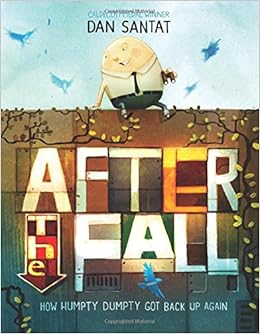
One of my most favorite picture books of the year is After the Fall by Dan Santat, and while the story itself makes this picture book read aloud worthy, the illustrations are what really makes the story incredible.  Once again, Dan Santat has outdone even himself.


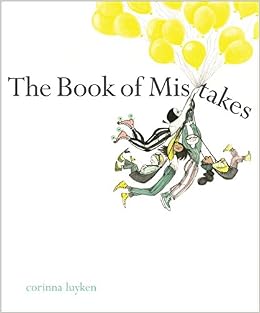
The simplicity of the illustrations is what makes The Book of Mistakes by Corinna Luyken such a stand out.  With a powerful message to all of us, the illustrations truly show how we can turn anything, even a mistake, into something beautiful.

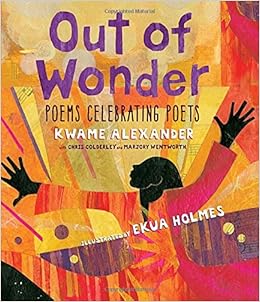
The illustrations in Out of Wonder by Kwame Alexander, Chris Colderley, Marjory Wentworth and illustrated by Ekua Holmes makes the poetry come alive.

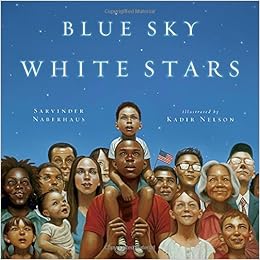
Kadir Nelson’s illustrations in Blue Sky White Stars by Savinder Naberhous are breathtaking.  The beauty of the poignant text is truly lit on fire by the work of the Kadir Nelson.

I pored over the illustrations in Muddy: The Story of Blues Legend Muddy Waters written by Michael Mahin and illustrated by Evan Turk.  The colors and the detail are what made this picture book stand out to me.

I read Silent Days, Silent Dreams by Allen Say as an F&G and immediately placed my order.  While the story about James Castle in itself is worth your time, the techniques used by Allen Say is what makes this one of my favorite picture books of the year.


The illustrations in Dazzle Ships by Chris Barton and illustrated by Victo Ngai is what made me want to pore over this book for a long time.   Amazing how this lesser-known part of WWI history springs to life within the pages of this fantastic book from one of the master of nonfiction picture books himself, Chris Barton.

In Why Am I Me? by Paige Britt, Sean Qualls, and Selina Alko the illustrations deeply reinforce the powerful message of who we are and how we intersect with others.

Update – Adding a few more titles

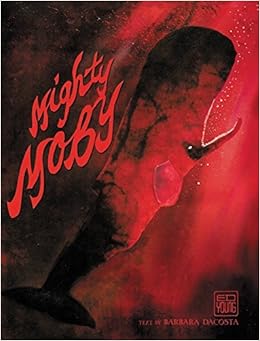
What an incredible visual journey Mighty Moby by Ed Young and Barbara DaCosta is.  It is truly a book that pulls you in every which way it can.

I added Chef Roy Choi and the Street Food Remix because I thought the illustrator captures the whole essence of Chef Choi’s message so well in the art.  A perfect example of when text and images reach a higher state together.

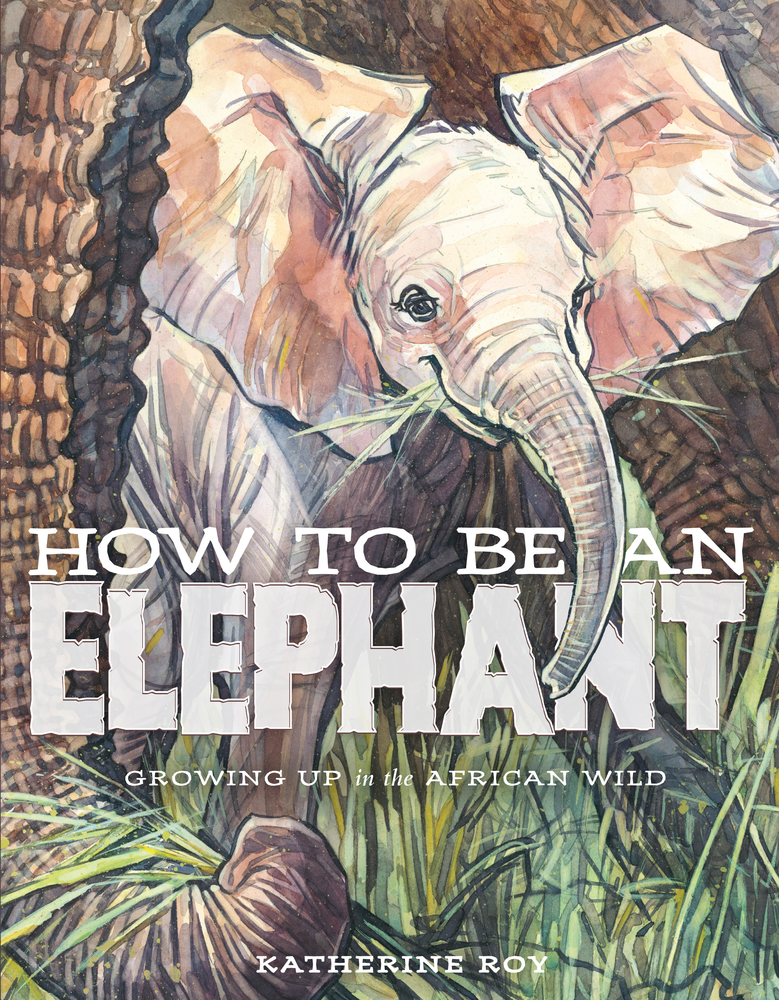
How to Be an Elephant by Katherine Roy wouldn’t be the same picture book without the incredible illustrations, I was simply lost in them.

Every time I read This House Once by Deborah Freedman, I become more mesmerized by the book.  The subtlety of the images can take your breath away if you let them.  This is a book to savor.

I still have some thinking to do but here at least is a start.  Which ones do you think will be in the running?

PS:  To see all of our favorite books, go here

Be the change, being a teacher, Literacy, Reading, Reading Identity

On Accelerated Reader and All the Other Computer Programs

Pardon me while I write what is on my mind for a little bit.

I just took an Accelerated Reader practice quiz on Elephant and Piggie’s There’s a Bird on Your Head.  A picture book  I have read so many times I think I know it by heart.  A picture book series that my 7th graders end up loving too as we perform plays based on them.  A picture book series that made me cry when the last book came out and they told us all “Thank you for being a reader.”

You know what AR wanted me to know about the book?

It wanted to know what happened and what was said.

That’s it.

Not why Gerald didn’t like the birds on his head.  Not what the message of the book was.  Not what they could learn from the book and apply to their own life.  After all, that doesn’t prove they have read it.  That doesn’t prove they have understood, right?!

Sheer memorization and retelling.

Of Mice and Men wasn’t any better.  Again, memorization was the key factor here.  Not deep thinking.  Not deep conversation about the ultimate decision made at the end.  Not how this book will change you or make you think about the world you live in.

An American classic boiled down to remembering minute details.

All in the hands of computer programs which purport to help readers grow.

And before, someone tells me that for some kids programs like this works, I would like to know what we define as “works?”  Do we define “works” as rushing to read another book?  As sharing the incredible experience a book just provided them with others?  Do we define “works” as cannot wait to read another book, outside of class not because they have to but because they want to?  Do we define “works” as continuing to develop a positive reading identity that will carry them into adulthood?

Or do we define ‘”works” as kids doing it because they are rule followers and don’t want to cause a stir? Do we define “works” as a computer telling us how much a child remembered from the book they just read?  Do we define it as how many points they have gained this year as a supposed reflection on how they have grown as readers?  Or as now we know which book a child should read next because the computer told them so?

Because if that is what we mean be developing lifelong readers then I must have lost my mind.

When people ask me why I dislike programs like AR so much, it is hard to know where to start.  My problem with these blanket programs are many; we rob kids of actual true choice not determined by a reading database that only allows you to select books that have quizzes on them.

You know which books don’t have AR quizzes on them right now?  Long Way Down by Jason Reynolds and Dear Martin by Nic Stone.  Arguably two of the most important books for adolescents to read this year. I hope they never add them, I can’t even begin to imagine what types of low-level questions they would ask.

We rob kids of the chance to have conversations with others about the books that are changing them.  We rob kids of the messy process that it is to get to a deeper meaning within a book, even when they are young.  We rob kids of the chance to be seen more as the points they are given.  We rob our most vulnerable readers, those we label struggling, low, or whatever other harsh terms in our data meetings, the opportunity to have the best possible chance at becoming a reader through the determined instruction of a knowledgeable teacher.

In our eagerness to make sure every child is reading the right fit book, we have forgotten about the very child reading those books.

Reading was never meant to be about points.  Or scores.  Or correct answers.

It was never meant to be about levels or data or rewards for goals met.

Reading was never meant to be easy either.  It was meant to be a complex process in which we discover parts of ourselves that we didn’t know before.  A process that brought us closer together as a community of learners, as we felt the growth we made not because a test told us but because the very book we just finished was an accomplishment in itself.

Don’t believe me?  How can simple computer programs really be so bad?  Why don’t we ask the very kids we subject these programs to?  A novel idea, I suppose, as what would kids really know?  And yet, I am here writing about this because of the very things kids (and their horrified parents) have told me over the years.

“AR means my child picks the smallest books they can in order to get the points they need…”

“AR means I am not allowed to read the book I wanted to…”

“I am a bad reader because I cannot get the answers right…”

So what can we do instead of these programs?

We can start the conversation first.  We can ask the very kids we subject to the reading programs and then do something about what they tell us.

We can ask parents and caregivers how this program either hurts or harms their child.

We can invest all of that money spent on this program into great books and then put them in every single classroom.  And then we can read them and speak about them and help kids find great new books.

We can give teachers training on reading workshop and how to have meaningful conversations about books with kids.

We can tell our teachers to go back to common sense reading instruction.

We can tell our teachers that teaching to fidelity doesn’t mean fidelity to the program but to the kid in front of them.

We can evaluate everything we do with kids and see if it really gets to what we hope they become; kids who read books because they want to!

If we want to know whether a child is reading, we can look at them while they read.

If we want to know whether a child understands what they are reading, we can ask, sometimes face to face, other times on paper.

If we want to know how a child is progressing as a reader, we can assess them, hearing them read out loud, conferring with them and asking further questions.  And sure, use a computer to give them a test but make sure that the test is actually giving you valid information.  Let the data be a part of the conversation, not the whole conversation.

If we want to know what book a child should read next, we can ask them. Then we can bookshop.  If a child doesn’t know how to select a great book then that is where we start.

If we want to know whether a book is a good fit for a child, we can ask them.  And we can remember the words of Fountas and Pinnell who said, that “Levels are a teacher’s tool and not a child’s label.”

You know what helping a child figure out their reading identity is?  It’s hard.  It’s messy.  It’s exhausting at times.

It’s not easy.

But it’s worth it.

it’s worth it every time we see child realize that they, too, can be a reader.

It’s worth it every time we see a child realize that they, too, can get something out of a book.

It’s worth it every we see a child realize that they, too, can understand what it means to want to keep on reading.

Not because a computer told them to select another book from their level.

Not because they were given points for their work.

Not because they were given rewards.

But because to them, it mattered, beyond the computer, beyond the quiz, beyond the task.

But because to them, they became readers because someone cared about their reading journey and protected the very hope they carry for being a reader some day.

A computer program will never do that for a child, no matter how “research-based” it is.

PS:  Whoa, apparently this post which was just me thinking out loud has struck a chord for many.  I encourage you to reflect on it and see where it fits into your reading philosophy.  As I have said before, if a program harms even one child’s love of reading then we need to question it, which is what I am doing here.  I am not shaming teachers, I am a teacher myself, but instead asking us to really reflect on whether the thousands of dollars spent on these computer programs are really helping us achieve our goals in the long-run, because of course programs like these can garner compliance in the short run, but we are in this reading life for the long run.

To see more thoughts on AR please see Jen Robinson’s posts which showcases other work on it.  Donalyn Miller’s post on it and do take the time to read Stephen Krashen’s discussion of the research that AR uses as a selling point.

If you like what you read here, consider reading my newest book, Passionate Readers – The Art of Reaching and Engaging Every Child, out August 2017.  This book focuses on the five keys we can implement into any reading community to strengthen student reading experiences, even within the 45 minute English block.  If you are looking for solutions and ideas for how to re-engage all of your students consider reading my very first book  Passionate Learners – How to Engage and Empower Your Students.      Also, if you are wondering where I will be in the coming year or would like to have me speak, please see this page.


being a teacher, Literacy, Reading, Reading Identity, student choice, Student dreams, Student Engagement, student voice, Student-centered

In It For the Long Game

It’s been four weeks since I have had a chance to discuss his reading one on one.  Four weeks since he decided to abandon the first book he had started after he was only 60 pages in and it had been more than three weeks of reading every day.  Four weeks since I got to have more than a surface level conversation about his reading life and I cannot wait to see what he says.

He tells me his goal is to read more, a goal I hear quite often in 7th grade.  I ask him to tell me more, why this goal, how is it going.  he grins and says, not so well, he really isn’t reading much.

I ask him about his book but that’s not it, he likes it a lot.  Then what is it?  He says, like so many kids before him, “I just don’t like to read…”

We finish our conversation and he pledges to try to find some time outside of class to get further.  After all, he has yet to actually finish a book this year.  I pledge to check in more often, even just a short visit, just to see if his new laid plans are working out.

He returns to his book and I return to the next child waiting to tell me about their reading life.

How often does this moment play out in our schools?  How often have we met those kids that tell us that they just don’t like reading and we feel the end of the year rushing toward us as if we, too, will fail in helping these kids create positive reading identities?

How often do we question the very practices we know kids need to become readers; time, access, choice, and community?

How often do we feel like we must be the teachers that cannot crack the code of this child and that all is already lost?

But before we despair.

Before we punish.

Before we tighten the reins.

Before we add more steps, more logs, more comprehension worksheets.

Before we think of what else we need to keep them accountable.

Take a moment and realize that we are in this for the long game.

That a child not liking reading even after we have been their teacher for almost two months does not mean that we have failed.  It does not mean that they have failed either.

It means that we are working on it.

That we celebrate the honesty when a child dares to tell us that they don’t like reading, and no, they are not reading outside of school.

That we thank them for the information and then ask them what they plan on doing with it.

That we remind them that reading matters and that we hope that they will find a way to make it matter to them.

We are not in this reading game to get them reading just this year.  We are in it to get them reading for life.

So before we change the approach of giving kids choice in books, time to read, access to books, and a community to read with, remember to have some patience.

Patience to remember that creating new habits takes time.

Patience to remember that it often takes many books to see yourself as an established reader.

Patience to remember that it often takes many conversations, many opportunities, many check-ins and walk-aways to really help a child find themselves as a reader.

And then when we question our own practices that we thought would work for every child, we remember that we may be up against years of unestablished reading habits and that just a few short months with us is not enough.  That sometimes we are just the tourniquet that stops the flow of hatred of reading and that it won’t be until later years that a child finds themselves within the pages of a book and cannot imagine coming back out.

So give yourself credit for the successes you see in your reading communities.  Give yourself credit for the books being shared.  For the joy being created.  And give yourself credit for having unlimited patience, especially for the child that tells you once again that they just don’t like reading.  Not yet, anyway.

If you like what you read here, consider reading my newest book, Passionate Readers – The Art of Reaching and Engaging Every Child, out August 2017.  This book focuses on the five keys we can implement into any reading community to strengthen student reading experiences, even within the 45 minute English block.  If you are looking for solutions and ideas for how to re-engage all of your students consider reading my very first book  Passionate Learners – How to Engage and Empower Your Students.      Also, if you are wondering where I will be in the coming year or would like to have me speak, please see this page.


Be the change, being a teacher, Reading, Student dreams

Cover Reveal: Albie Newton by Josh Funk and Some Very Exciting News

I first properly met Josh Funk when he bought me a cup of tea in a convention center in Boston for ILA.  Properly because we had actually met at NerdCamp but had not had much time together.  So in a crowded hallway, we sat down to talk picture books, writing, and what it means to work with kids and try to make the world better.  Had I known that I would make a friend that day I would have made him buy me a donut (chocolate with sprinkles, please).

That day Josh told me of his latest picture book, he was still writing it and was wondering out loud about how characters would react to a child that perhaps didn’t see the wrong in his ways.  We laughed about the perfect endings we both wished for all of our children and realized that the not so perfect endings are sometimes what makes books so amazing and also life so hard.  I spoke of one student who right away reminded me of Albie Newton and how I wished that he would be a part of a world where his set ways were seen as strengths rather than an oddity.

More than a year later and that picture book we talked about is ready to have its cover revealed.  When Josh asked me if I would do the honor, there was no other answer than yes.  After all, this would perfectly coincide with another announcement I had planned; Josh Funk is a contender for Global Read Aloud 2018!  His books are some of my 7th graders’ favorites, as well as my own childrens’, and will be perfect for sparking conversations around the world.    I have wanted to tell him for some time but thought a little surprise would be better.

So surprise, Josh, thank you for trusting me to reveal Albie Newton to the world.

Who is Albie Newton?

A clever scientist?

A brilliant artist?

A mischief-maker?

On the surface, it might seem like ALBIE NEWTON is a cute little story about a boy’s first day at school and how he attempts to make friends (and fails with hilarity), but everything eventually works out in the end. Hopefully, you’ll revel in the adorable illustrations created by Ester Garay. And I certainly want you to laugh at the silly STEAM-related situations in which Albie finds himself. For example:

Arjun ate his snack and finished Albie’s cleanup duties,

while Albie built a science lab and found a cure for cooties.

But there’s a deeper level; one I really struggled with getting right. And Pernille Ripp helped me realize exactly who Albie was and how to keep his character true.

We talk about the need for windows and mirrors. I believe Albie will be a mirror for some kids who often don’t get to see themselves in everyday, non-”issue” related stories.

Let me back up. One of the very first lessons you learn as a picture book writer is this:

The main character must solve the problem on their own – and learn a lesson in the process.

It’s a basic picture book paradigm – flip through pretty much any picture book and you’ll see what I mean. And this generally makes sense. Stories are far more satisfying if the main characters figure out how to solve their own problems. It’s less satisfying if a parent or teacher solves the problem and didactically explains the lesson.

But as an educator, you’ve likely encountered some students who, in certain social situations, have difficulty solving their own problems. And in some of those cases, kids may not even notice that they’ve caused problems … until it’s too late.

Back to Albie’s story, on his first day of school, he ends up unintentionally and unknowingly alienating his classmates one by one on each and every page of the book. As the tension rises and his classmates’ anger reaches a boiling point, Albie is still unaware he’s caused a conflict.

And then, I had my own conflict: How do I end this book?

Does Albie solve the problem himself? Does he apologize? Does he learn a lesson? That was the textbook answer according to the “Picture Book Paradigm”.

But I knew Albie’s character. He wouldn’t apologize on his own. I didn’t even believe he would change throughout the story. Would this be a satisfying ending for the reader? Would it be believable? After several phone calls and emails with my agent AND editor about this very topic, a decision had to made. Deadlines loomed. The illustrator was already hard at work.

And there I was, having coffee on a bench at the Hynes Convention Center for ILA 2016 in Boston explaining my struggle to Pernille Ripp. If you’ve read Pernille’s writing (and I’m assuming you have because this is her site, after all), you’ll know she’s got passionate opinions. And that day she didn’t disappoint.

Pernille said that she’d had students like Albie. And sometimes social interactions are incredibly challenging, to say the least. She adamantly said I needed to stick to my gut and have Albie NOT apologize or learn a cliché lesson. Because that’s how it would have been for many of the Albies she’s taught. And especially not because that’s just how picture books work.

Pernille’s encouragement gave me the confidence to keep Albie’s character the way I’d always intended – a mirror for those who need him to be one. And hopefully, Albie is a window for the rest of your students, who often have trouble interacting with and understanding the Albies of the world.

You might even say that Albie Newton isn’t really the main character of ALBIE NEWTON; the main character is everyone else in the class. And they’re the ones who learn that valuable lesson and come out of the story changed.

Without further ramblings, explanations, and ado, here is the cover of ALBIE NEWTON.


_Albie Newton.jpg


Thank you, Pernille, for hosting this cover reveal. And thank you for giving me the advice and confidence to make this book the way it needed to be.

ALBE NEWTON by Josh Funk, illustrated by Ester Garay, published by Sterling Children’s Books will be available everywhere on May 1, 2018.

Bio: Josh Funk writes silly stories and somehow tricks people into publishing them as books – such as the Lady Pancake & Sir French Toast series (including The Case of the Stinky Stench and the upcoming Mission: Defrostable), It’s Not Jack and the Beanstalk, Dear Dragon, Pirasaurs!, and the forthcoming Albie Newton, How to Code a Sandcastle (in conjunction with Girls Who Code), Lost in the Library: A Story of Patience and Fortitude (in conjunction with the New York Public Library), It’s Not Hansel and Gretel, and more coming soon!


Josh is a board member of The Writers’ Loft in Sherborn, MA and was the co-coordinator of the 2016 and 2017 New England Regional SCBWI Conferences.

Josh grew up in New England and studied Computer Science in school. Today, he still lives in New England and when not writing Java code or Python scripts, he drinks Java coffee and writes manuscripts.

Josh is terrible at writing bios, so please help fill in the blanks. Josh enjoys __(naps)_____ during ___(rain storms)_____ and has always loved ___(doing his taxes)_______. He has played __(old and wise)_____ since age _(2)_ and his biggest fear in life is being eaten by a __(goldfish)________.

For more information about Josh, visit www.joshfunkbooks.com or @joshfunkbooks on Twitter.