being a teacher

Tonight, I am Afraid

I was born in Denmark; home of hygge, Lego, and Georg Jensen.  Home of Queen Margrethe the Second, of Barbie Girl, and The Little Mermaid.  I was born white.  My mother passed to me her blonde hair, her blue eyes, and her fierce determination for standing up for myself and others.

I came to America as an immigrant by choice when I was eighteen.  I did not have to flee a war.  I was not running from terror or persecution.  My family’s economic situation allowed us to come.  I have considered myself a Danish-American for the eighteen years since, forgetting about my Green Card, about my not quite Americanism, not thinking about how I am immigrant.

I don’t speak with an accent.  Most people are not even aware that I was not born here, nor raised.  I think in English, I dream in English, I even teach English, even though it has never been my first language and never will be.  And for the first time since coming to this country, I am afraid.  As an immigrant, I am afraid.

Logically I shouldn’t be; after all, I am not seen as an enemy.  I am not from one of the seven nations whose people have been banned from entering this country.  I am not a Muslim.  I am not someone whose people have been vilified for acts of a few.  My own inherent privilege has shielded me from so much.  I know this, and still…

As someone who holds a Green Card.  As someone who is waiting to be sworn in as a citizen, as someone who does not have the full protection of the law, I realized that the pit in my stomach that I felt today was not just of outrage, but of fear.  Because I am leaving for an international trip soon and for the first time ever, I have to consider whether I could be stopped from re-entering.  Would I be told to return to Denmark, my country of citizenship because of my beliefs?  Because of what I say?  After all, I am publicly speaking out against the policies that are being implemented.  I am not hiding my beliefs and I wonder if I should be?  I cannot help but wonder…

As I turned to my  America born husband today and told him of my fear, I felt so stupid.  Was this another sign of my white privilege assuming that even a sliver of what is happening around us has anything to do with me?   After all, the hatred, fear, and ignorance of those in power of this nation are not being directed toward people like me, it so rarely is, which that is a whole other post.  I expected him to tell me I was over thinking it, that I was being silly, that I needed to take a step back and breathe.  Instead he told me that he got it, that he knew logically that we probably have nothing to worry about but that doesn’t mean it couldn’t happen.  We have already seen such extreme actions, what will be next?  After all, first they came for the Socialists…

So tonight, as I try to find resources to somehow have my students discuss these past few days’ events, without sharing my own thoughts,  I am trying to tell myself that I have nothing to fear.  That my trip will be fine.  That my re-entry will be nothing out of the ordinary.  I cannot fathom how all of those families must feel around the world as they don’t get to dismiss their fears as irrational.

This is my truth tonight and I am not quite sure why I am sharing it.  But there you go.

Be the change, being a teacher, being me, challenge

The February UnSlump Yourself Challenge

Aah February; a month of love, of reading, of waiting for spring if you in the Northern Hemisphere.  While February may  be the shortest month of the year sometimes in teaching it can feel like the longest of them all.  While I love this month for the work I can do with my students, I find that sometimes the dark nights and cold Wisconsin winters can be positively slump inducing.  Rather than dread the slump, why not do something pro-active?

So this year I plan on doing my very own unslumping challenge and you are more than welcome to join me.  Every day for the month of February, I plan on doing something to either reinvigorate myself or make a difference to others.  It will not cost me much money but will hopefully instead lead to a deeper level of gratitude for the incredible job I have, the amazing students I get to teach, and the wonderful people in my life.

Here is what I plan on doing – to see the document, go here 

FEBRUARY 2017 Challenge - Google Docs.clipular.png

I will be introducing this in the Passionate Learners book club as well if you would like to have a community to unslump yourself with.  To join, go here.  And remember; we choose how we feel about our days, even when we feel the influence of others. Here’s to an amazing February.

If you like what you read here, consider reading any of my books; the newest called Reimagining Literacy Through Global Collaboration, a how-to guide for those who would like infuse global collaboration into their curriculum, was just released.  If you are looking for solutions and ideas for how to re-engage all of your students consider reading my very first book  Passionate Learners – How to Engage and Empower Your Students.  I am currently working on a new literacy book, called Passionate Readers and it will be published in the summer of 2017 by Routledge.  I also have a new book coming out December, 2017 .   Also, if you are wondering where I will be in the coming year or would like to have me speak, please see this page.
being a teacher, student choice, Student dreams, Student Engagement, student voice, Student-Led

The Grading Conversation We Need to Have


On Monday, we discussed grades and standards scores in our classroom.  As the end of the semester is here, it is now time for my students to assess themselves and somehow turn that evaluation into not just a standard score, but also a letter grade.  I meet with them individually to discuss as well, but the initial work always starts with them.  So on Monday I asked them, “What does a “1” mean to you?”  as a way to get our conversation started.  I was surprised, to say the least, at their answers…

“It means that I have failed…”

“It means I am bad…”

“It means they didn’t try…”

Receiving a “1” on standard score did not mean they were at the beginning of their learning.  That they had not yet mastered something.  That they had some knowledge but still had a way to go.  No, it meant failure, no effort, that they were stupid.  Even in our classroom where students self-assess all of the time.  Where we have actively tried to change the conversation from a score to feedback.  Where I have tried to put students in control of their learning.  They still think that if they get a “1” they are bad kids.

So rather than move into the definition of letter grades (they did this after) we stopped for a moment and discussed what each standard score really means.  What they need to do when they give themselves a “1” or a “2.” How a “1” does not mean they didn’t try but that they do not understand yet.  That a “2” does not mean they are bad at English but that they still have teaching to be a part of.  That those scores certainly can have something to do with effort but must of the time it does not.  That those scores do not determine how smart they are but are really just an indication of what they have shown me so far.

The sigh of relief in our classroom was nearly visible as a new sense of understanding dawned on the kids. These scores were in their hands, these scores were meant as signals, these scores were meant to guide not punish.  I thought they already knew that, after all, this is not their first year with standards based scores, and yet the conversation showed me otherwise.

So have you had this conversation with your students?  Do they understand what their grades mean and not just from a project standpoint?  Do they feel in control of how they are assessed?  How they are seen by themselves and others?  I encourage you to ask, I encourage you to have students set their own grades.  I encourage you to reframe the narrative that they may have when it comes to scores and assessment.  Assuming they know what they really mean means you are probably wrong.  I know I was.

If you like what you read here, consider reading any of my books; the newest called Reimagining Literacy Through Global Collaboration, a how-to guide for those who would like infuse global collaboration into their curriculum, was just released.  If you are looking for solutions and ideas for how to re-engage all of your students consider reading my very first book  Passionate Learners – How to Engage and Empower Your Students.  I am currently working on a new literacy book, called Passionate Readers and it will be published in the summer of 2017 by Routledge.  I also have a new book coming out December, 2017 .   Also, if you are wondering where I will be in the coming year or would like to have me speak, please see this page.
 

Be the change, being a teacher, being me, books, picture books

The Portals We Create – A Guest Post for The Nerdy Book Club

I have loved The Nerdy Book Club for many years.  How can you not?  To find a community online of such amazing people is not something that happens often.  So I am honored to share part of the guest post that they featured yesterday, a day that marked marches all over the world standing up for our rights.   Please make sure you go to the site to see the rest, subscribe to the blog (it gets delivered right in my mailbox) and then sign up to be a guest blogger.  They are always looking for stories…

I don’t remember the first time someone told me I should be fired as a teacher in response to work my students had done.  I know it was several years ago.  I remember the fear though, how it felt like a bucket of water was thrown in my face.  Here I thought we were doing good work, and yet others vehemently disagreed.  I was not fit to be a teacher, couldn’t my district see that?

I do remember the most recent time I was told I should be fired.  The internet has a way of bringing hate into our lives, whether we ask for it or not.  It was in response to a video that Microsoft had produced surrounding an exploration we had done as a class.  For several weeks we had investigated the refugee crisis all in an attempt to come up with our own opinion on what the role of the United States should be in it if any.  My 7th graders had dug in with gusto, using the skills that we incorporate on a regular basis to disseminate the information they were uncovering.  They used all of those skills we teach our students when we ask them to read closely, to questions, to clarify, and to create opinions all of their own.  Microsoft created a short two minute video about our work and highlighted how we had reached out to a refugee, an amazing woman named Rusul Alrubail, who is an Iranian refugee living in Canada and changing the world herself.  She had graciously shared her story with us via Skype, the students had had so many questions.  She happens to be Muslim, as are many of the refugees from Syria, a fact that many commenters could not get past.

As the video was posted I saw the comments roll in.  Some were grateful to the learning opportunity my students had had, but some were not.  I was an example of everything that is wrong with our society.  I was indoctrinating.  I should be fired.  How dare I expose them to Islam?  I felt fear for the first time in a long time; even though the logical part of me knew I had done nothing wrong, but what if “they” came to my school?  What if “they” came to my house?  When people hate they do it to hurt, they do it to make others afraid, and for a brief moment in time, they succeeded.  I was afraid for my job, for my family, for myself.  But then I scrolled further down and a comment caught my eye.  It was from one of my students telling someone that they had no idea what they were talking about.  That they would know if they were in our classroom that I do not tell my students what to think, but instead just ask them to think, to have an opinion, to figure out the world because this is the world they will inherit.  In that moment, I stopped being afraid, because if my 7th grader could have that courage.  If my 7th grader could find the words to push back.  If my 7th grader felt that they had the right to educate, then I certainly did too.

To read the rest of the post, go here

If you like what you read here, consider reading any of my books; the newest called Reimagining Literacy Through Global Collaboration, a how-to guide for those who would like infuse global collaboration into their curriculum, was just released.  If you are looking for solutions and ideas for how to re-engage all of your students consider reading my very first book  Passionate Learners – How to Engage and Empower Your Students.  I am currently working on a new literacy book, called Passionate Readers and it will be published in the summer of 2017 by Routledge.  I also have a new book coming out December, 2017 .   Also, if you are wondering where I will be in the coming year or would like to have me speak, please see this page.
 

Be the change, being a student, being a teacher, students teach me

Some Ideas for Better Student Revisions

I have never been good at helping students understand how to revise better.  It seems like every idea I have had has only made them more dependent on other people, rather than develop their own skills.  Sometimes I feel like I have tried it all; from checklists, to peers, to specific directions from me. From strengths to goals to next steps, for some reason the art of revising and revising well has not truly blossomed in our classroom.  Until now.  Because if the last two days are any indication, we are finally on to something.

This unit came from my own realization as a writer.  When I write, I edit as I go, but I also step away and give it time.  I don’t jump right back in even when my editor emails me back.  I marinate, I process, and I try to make it better when I finally do jump back in.  I take my time, I make it a priority and I don’t try to squeeze it in.  This is what I want my students to realize; that revising and editing creates more beautiful work.  That it is not just something a teacher makes you do.  That it is not just some thing on a check list.

So what have we done so differently these past few days?  Here are few things:

We stepped away from our written work for a while.  And by a while I mean over a month.  The two pieces my students have been revising were handed in before winter break. One is a short story, another is either an opinion piece or a summary.  Some of my students did very well, others did not do at all.  Before break they were asked to hand in their best draft (thank you Kelly Gallagher for that term) and then I told them to not do anything with them until I asked.  I told them that rather than they trying to figure out what to work on we would work on our revisions in class.

Why?  Because when we do revision during our writing process we cannot look at our own work with fresh eyes.  We get tired of it.  We don’t see our own mistakes.  We go through the process because the teacher told us to, not because we see anything wrong with what we have done.

We have one next step.  Inspired through a conversation with my friend Lauren, she told me how she tells her students what their specific next step is when she reads their writing.  I loved this idea; one next step, not ten things you still need to work on. So after my students had self-reflected on their work, I wrote what I saw as their strengths in their writing and then the very next thing they should work on next.

Why? This means that as a I handed my feedback to them, they knew where to start.  Instead of “just” trying to read the rubric, which most of them admit that they don’t read or understand, they knew how to get started.  Their process then developed from that next step.

We read our work aloud.  And not to get through it quickly but as if we are narrating our very own audiobooks.  My students do not believe me when I tell them that I read every thing I write aloud, but it’s true (I am reading this aloud as I type right now), however, this approach has helped me catch many mistakes.

Why?  I have been sharing with my students how when they read things aloud their ears often catch things that their eyes did not.  Once I got students to actually believe me, some moved into quiet spots and started to read.  They were often amazed at how many things they caught.

We edit on paper.  I asked every child to print their short story and hand it in.  Not because I needed it, but because they did.  On Wednesday, I handed it back to them as I asked them to read it aloud and then asked them to edit directly on it.  Not because we did not have computers in the room, but because they needed to see the mark ups that happen when we edit by hand.  As they read their story aloud, their papers filled in.  I did not tell them how to mark up their paper; they need to figure out their own symbols, but I told them I expected to see change.  And change I saw.

Why?  Because when they only edit on a computer they mistakenly believe that they either have little to change because there are no squiggly red lines, or they think they have already changed a lot.  When they sit with a paper version of their story they can see what they are changing, they can feel their story better, and they then get to type their changes into typed story.  This also offers them another hidden chance of editing their work.

32035266530_7aef95f3ab_k
A student let me share their marked up paper after they were done editing it.

Everybody edits and revises.  Often times we only tell our kids who may not have mastered something to edit/revise their stories deeper.  We assume that the kids who show us strong written work already have edited/revised it a lot, but that is not always the case.  In fact, I have seen how little editing/revising some of my more developed writers do.

Why?  For this every child was expected to change their work, even the ones who clearly had exceeded expectations, because they need to realize that there is no such thing as perfect work.  We can always make something better, we can always polish something more.  And sure enough, some of my more developed writers made their stories even better.

We took our time.  This was a unit in itself, not just one day’s worth of activity.  This was an event, something important that I hope they carry with them.  I explained how when I taught younger grades we used checklists and fabricated peer edits to show them what to focus on but that now they were ready for the next step; the idea editing rather than a checklist.  This means that I offer them ideas of what they can work on and sometimes even where but that they must critically evaluate their own work to see what it needs.

Why?  This is hard work and deserves to be treated as such.  This is why it stood on its own and not just the two final days of our writing project unit.

I didn’t partner them.  While I love a great writing trio (trio so that one child doesn’t do all of the work), I purposefully did not put them with a  peer.  I instead wanted them to shape their own process by choosing who they could work with.  And they did, often trading computers and leaving each other comments.  Were the pairings always the most powerful?  No, but they were honest.

Why?  The kids knew that they could help each other and were chosen to be a help and so they did their best to offer critical feedback.  I also want them to make connections without me so that they can shape their own writing process.  It was exciting to see how much students supported each other when I got out-of-the-way.

Once again, I am in awe of the small tweaks that we can implement to create a better writing process.  I have seen incredible changes in the work that my students have revised.  I have seen care taken to a new degree.  I have seen a re-investment, rather than just a shrug off.  By giving them the time and elevating this process to something that was treated with importance, my students now see a larger value in editing.  Now the very next step is to help them hang on to that as they continue to shape their writing identities.

If you like what you read here, consider reading any of my books; the newest called Reimagining Literacy Through Global Collaboration, a how-to guide for those who would like infuse global collaboration into their curriculum, was just released.  If you are looking for solutions and ideas for how to re-engage all of your students consider reading my very first book  Passionate Learners – How to Engage and Empower Your Students.  I am currently working on a new literacy book, called Passionate Readers and it will be published in the summer of 2017 by Routledge.  I also have a new book coming out December, 2017 .   Also, if you are wondering where I will be in the coming year or would like to have me speak, please see this page.
 

Be the change, being a teacher, books, global, Literacy, picture books, Reading, student choice, Student dreams

3 Questions to Ask for a Critical Re-Evaluation of Your Classroom Library

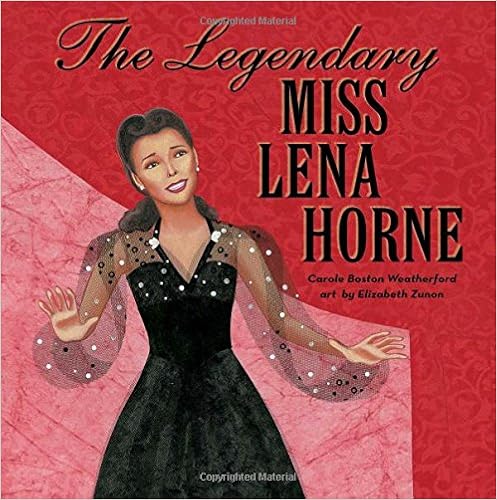
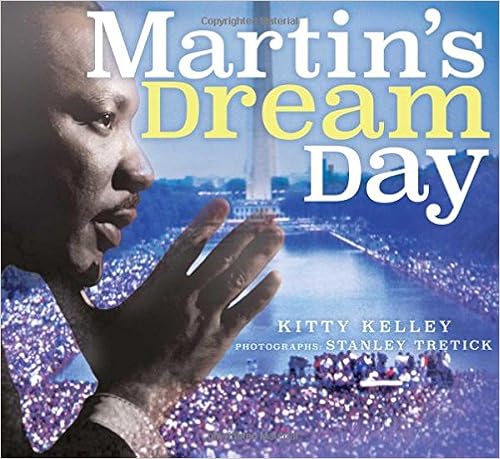
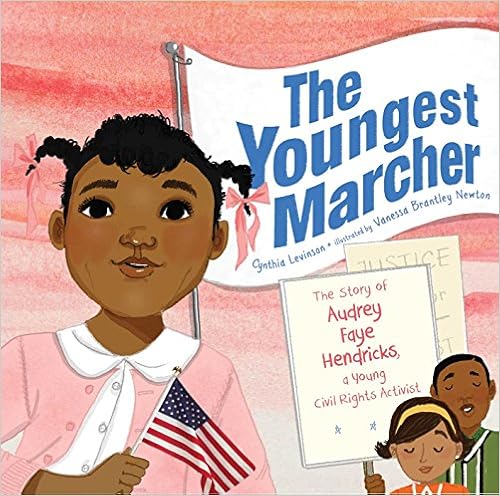
“Really, Mrs. Ripp, another book about Civil Rights?” Spoken by one of my African American students as I pulled out the picture book I intended to use in our mini lesson.

Another book about Civil Rights….

His words followed me all of the way home.  Not because I was worried he didn’t know enough but because of what had followed those first words.

“You always pick those books…”

And he was right.  In my eagerness to embed more knowledge about the Civil Rights Movement into our mini lesson on advice from older characters, I wasn’t thinking about his representation to the rest of our mostly white class.  How once more what I showcased only supported a familiar narrative.  His words prompted a realization that seemingly the only picture books I used or that we even had in our classroom library featuring African Americans in them had to do with either slavery or Civil Rights.  Not every day life.  Not non-famous African Americans.  Just those two topics.  This realization has shaped a lot of my book purchasing decisions as of late and just how much work I still have to do.

I have been focused a lot on diversity of books, it’s hard not to when our world seems to need understanding, empathy, and fearlessness more than ever.  While our classroom library has been ever expanding with more diverse picks, I have realized through the help of my students that diversity is not enough.  That simply placing books that feature anything but white/cisgender/Christian characters in them is not enough.  It is a start, sure, but then how do we go further than that?

We ask ourselves; how are characters represented?

Prompted by the comment from my student, I now look for how characters of any race/skin color/culture are represented in all of our books.  Is everyone represented?  Even sub-groups that my students may not even be aware of?  Are we only showcasing one experience?  Are we only highlighting the famous people of that sub-group?  Are we only representing one narrative of a group of people that live a myriad of narratives?  My own ignorance has often led to blunders, such as the one described here, but I can do better. I can make sure that the books I bring in lead to realizations and understanding about others, not more of the same.

So don’t just ask who is represented, but ask how are they represented?  How would I feel if my own children were represented in this way?

We ask ourselves; do we have #OwnVoices authors represented?

The #OwnVoices hashtag is one I have been paying attention to as I look at the diversity of our classroom library and even on my own reading experiences.  Started by Corinne Duyvis the hashtag focuses on recommending books written/illustrated “about marginalized groups of people by authors in those groups.”  That is why I know Google who the author is and what their background is as I decide on placing a book in the library.  That is why I read blogs like Disability in Kidlit  (soon to be shut down which breaks my heart), follow Reading While White which had an entire month dedicated to OwnVoices books,  and also try to educate myself on what is out there.  If we want true representation in our classrooms then we have to do the legwork to make sure all marginalized groups are represented in the books we share with students.

So don’t just ask do I have broad representation in characters, but ask do I have broad representation in authors/illustrators?

We ask ourselves; how are books highlighted and selected?

Gone are the days where I haphazardly selected books to put on display or book talk.  Now my displays and selection process takes a little bit more time; which books are put out to grab for students?  What do the covers look like?  Who are the stories representing?  I also do not “just” put African American books on display for February to celebrate Black history month, but have them out all of the time.  My students should be immersed in a diverse reading experience at all times, not just in carefully selected months.

So don’t just grab a few books to put out because they are new; grab books that will offer students a wide reading experience and will expose them to new authors/titles that will broaden their own world.  Do not reserve diverse texts for a few months but have them on display at all times.

While I have grown, I have a long way to go.  My wish-list of books right now are a few hundred titles deep, especially as I focus on the sub-groups that are severely underrepresented in our library.  I am still educating myself, seeking out new titles, and seeking out those that know more than me.  If you want to see books that are getting added to our classroom library, follow me on Instagram as I share all new titles there.

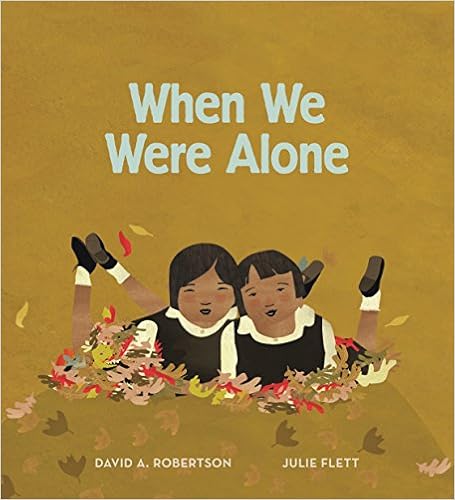
One picture book that I urging every one to read and buy is this one

when-we-were-alone

When We Were Alone by David A. Robertson and Julie Fleet.  

From Amazon:

When a young girl helps tend to her grandmother’s garden, she begins to notice things that make her curious. Why does her grandmother have long, braided hair and beautifully colored clothing? Why does she speak another language and spend so much time with her family? As she asks her grandmother about these things, she is told about life in a residential school a long time ago, where all of these things were taken away.

If you like what you read here, consider reading any of my books; the newest called Reimagining Literacy Through Global Collaboration, a how-to guide for those who would like infuse global collaboration into their curriculum, was just released.  If you are looking for solutions and ideas for how to re-engage all of your students consider reading my very first book  Passionate Learners – How to Engage and Empower Your Students.  I am currently working on a new literacy book, called Passionate Readers and it will be published in the summer of 2017 by Routledge.  I also have a new book coming out December, 2017 .   Also, if you are wondering where I will be in the coming year or would like to have me speak, please see this page.