Be the change, Passion, Personalized Learning, student driven, student voice

Some Ideas for Personalizing Learning in the Younger Grades

http---www.pixteller.com-pdata-t-l-215606

“Mom, you have to see this…?”

Thea hands me her science project, her very first in in 1st grade, and she is so excited she has a hard time standing still.

“I have to do this thing and I get to choose and I know I want to do coyotes and a video so we need to learn stuff…”

I grab the paper from her hand and once again marvel at the ingenuity of her teacher and the district we both are in.

Personalizing learning in the younger grades has always been something I felt slightly clueless about.  After all, most of the kids I have taught have been older than 9.  Yet, by watching what Thea is experiencing in her 1st grade classroom, I have a few ideas for how learning can become more personalized in the younger grades in order to create more passionate learners.

Give  scaffolded topic choice.  While this seems like a no-brainer, I think giving choice looks a lot different in a 1st grade classroom versus a 4th grade.  I know that 6 year olds often have many ideas, which can either lead to brilliance or indecisiveness, so I have seen how a limited amount of choice in specific areas can really help them get engaged.  In Thea’s science project she was told to study a Wisconsin animal and was then given a suggested list to select from.  She knew right away when we read the words “Coyotes” that they would be her choice, however, her teacher also left it wide open for any animals not on the list as long as they were found natively in our state.  Having choice, but with limitations helped Thea get straight to work, and helped her get excited about her topic.

Have many ways to access information.  Her teacher did not place a limit on how she should access the information but gave us ideas instead.  We therefore watched real coyote videos on YouTube, checked out books, found a PBS kids show, and also found pictures online.  Not being limited to one method of finding information meant that we could adapt it to what we had access to, as well as what would work for Thea in the moment.

Have various ways to show learning.  While all the students had to do a fill-in-the-blank written report they also had to come up with a way to present their knowledge to the class.  A few choices were given; diorama, poster, or a video, but again you could also come up with your own idea.  Thea immediately wanted to do a video because she thought it would be fun.  As we discussed it more in detail, she decided to act like a teacher because she wants to be one when she grows up.  Again, having this choice in how she would present her information made the assignment even more meaningful to her because she got to express her knowledge in a way that made sense to her.

Have selective goal setting.  The students all have several goals in each subject area, but the teacher lets them choose which one they want to pay special attention to.  That goal gets a star next to it.  When they have centers, one of their stations is for working on their selected goal, a clever way of tapping into what they think they need themselves.

Let them pick partners.  Even if you think it is a bad idea.  We assume more often than not that students will make a bad choice rather than a good one.  Yet, Thea tells me proudly how often she selects a new partner for math because she wants to try working with them.  This experience not only offers her a way to learn alongside someone else, she also gets to explore more kids who might be a great friend for her.  What an awesome skill to work on.

Have them self-asses with smiley faces.  Thea is just learning how to read and write, so having them self reflect through writing would take a very long time.  A quick and easy way to self reflect is by using smiley/frowney faces as you go through their learning.  Again, this allows students to take control of what they felt successful in and set goals for upcoming learning.  Another idea is to have students do a video or voxer message where they self-reflect.  This can then also be shared with parents to see how a child thinks.

Discourage parent over-involvement.  When I first saw the science project, my heart sank a little because I thought of how much work this might be for Brandon and I.  Yet, in the rubric itself, it said that to get a “4” or a “3” the work should not be parent produced but rather originate from the child with only minimal parent support.  So that is exactly what we did.  While we discussed with Thea what she wanted to do, we really wanted the ideas to come from her and then helped her as she needed.  The end result; a kind of messy but pretty funny video (who knows if there is a king coyote anywhere?) that clearly shows her enthusiasm for the topic, as well as her knowledge.

I am amazed at the trust Thea’s teacher puts in her little learners and am also reminded in how often we underestimate kids.  Personalizing learning is not something we should start when we think kids are old enough, they are never old enough.  It is something we should start right away because that is what will create classrooms filled with curious students.  That is what will create passionate learners. 

If you like what you read here, consider reading my book Passionate Learners – How to Engage and Empower Your Students.  The 2nd edition and actual book-book (not just e-book!) just came out!

authentic learning, global, projects, students

Want to Be Our Audience?

My fantastic 7th graders are working on short choral poetry performances and would love a real-live audience.  Well not live, but actual kids to watch their short videos and then give them feedback on their performance.  We are looking for 4th grade and lower to assess us, videos will be shared via Google Drive and feedback will be given via a short Google Form.  This is open to anywhere in the world.  Videos will be posted next week and then we would love feedback by the following Monday, November 9th.

If you are interested, please fill in the form below and you will receive a link with the videos when they are available, you can do as many as you would like.

aha moment, Be the change, ideas, Reading, students

On Slow Readers and What It Means for Student Reading Identity

http---www.pixteller.com-pdata-t-l-212837

I am ready to hang a banner in our classroom to loudly display the following words, “Being a slow reader does not make you a bad reader!” and then point to it every time a child tells me with a downward glance that they are slow readers.  The shame of the designation oozing from them.

Since when did taking your time as you read become something to be ashamed of?

And yet, they continue to tell me they are slow as they share their true reading lives.  They tell me that being a slow reader means they hate reading, that they cannot find any books, that there is no way they will ever read enough books in 7th grade and that there is nothing to be done about it.  They have given up because of speed.  They have given up because of everything they have attached to the word “slow.”

And with our emphasis on getting things done, including books, in our schools I cannot blame them.

So I tell them instead that they are not “slow,” they are simply taking their time.  That yes, increasing reading speed can become a goal for them but that it should not be the only goal.  That I understand that when you read at a slower pace (notice the difference in word choice) that you sometimes lose meaning so we need to find a pace that works for them.  Because you see, being a fast reader does not make you a great reader.  In fact, I struggle publicly with my own fast reading and have as one of my goals that I need to slow down.

Yet, they do not believe me.  Not yet anyway.  And how can they?  When the standardized tests they take to measure their worth as readers are timed?  When the countdown clock appears urging them to hurry up and answer or else it will count against them?  When I give them all a book challenge of reading 25 books or more and they automatically feel that is a mountain they cannot conquer?  When they see their friends whizzing through books and cannot help but compare themselves?

We create environments where fast = good and slow = bad.

So as Thomas Newkirk says, “There is no ideal speed in reading.”  Instead it depends on the purpose, the time, the book they are reading.  And that is what we should be teaching toward.  That students need to find a reading pace that works for them and then make sure that the reading environment we create supports that.  We have to remove the stigma of the word “slow.”  We have to help our students find success as readers, to redefine their own reading identity so that that very identity does not become a stranglehold or the reason they give up before they even begin.

So we hand them books they can conquer successfully to build up the confidence they lack.  And I don’t mean books designated by levels, but books that they want to read based on interest.  We hand them graphic novels.  We hand them page turners where they will want to read on.  And then we hand them time.  We remove the “get it done” pace that seems to surround us as we teach.  And every time they say they are slow readers and mean it as a bad thing, we tell them they are mistaken.  We change the very language we use so that they can find a new way to identify themselves.  So that they can feel proud of the time they take when they read, rather than see it as yet another deficit.

We decide what being a slow reader means.  That change comes from us.  Our job is to make sure students know it.

If you like what you read here, consider reading my book Passionate Learners – How to Engage and Empower Your Students.  The 2nd edition and actual book-book (not just e-book!) just came out!

books, Literacy, Passion, picture books, students

Great Picture Books to Spark Imagination

Whether it is to become less lonely, to find a friend, or to simply create – imagination is a huge theme of many amazing picture books at the moment. Behold some of my new, and not so new, favorites for inspiring students to use their imagination.  Beware; these tend to spark great conversations.

51zlodanbol-_sx417_bo1204203200_

What to Do With a Box by Jane Yolen and Chris Sheban is excellent in its simplicity.  Think of all of the things we can do with just a cardboard box.

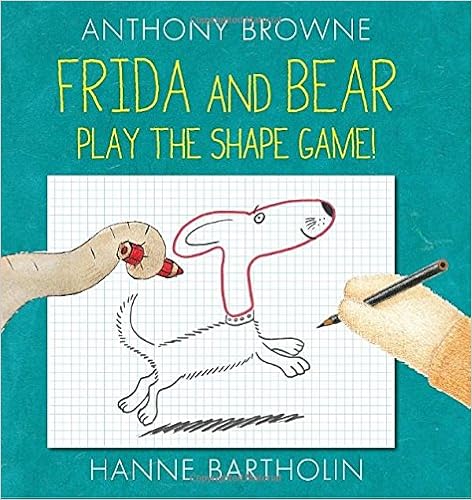
Frida and Bear Play the Shape Game by Hanne Bartholin is sure to inspire doodlers and anyone else who just wants to draw.  I loved how my own daughter right away wanted to do exactly what the characters in the book did.

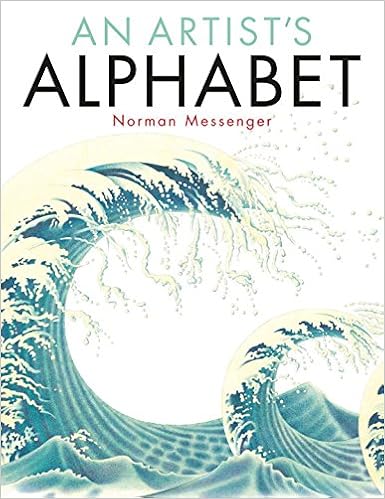
An Artist’s Alphabet by Norman Messenger is stunning.  I would love to see what types of letters kids would create after reading this book.

51xqlq2bjvpl-_sy480_bo1204203200_

I don’t know how I could have left off Peter Reynolds’ Creatrilogy from this list.  The godfathers of all creativity books these are must haves in your classroom library.

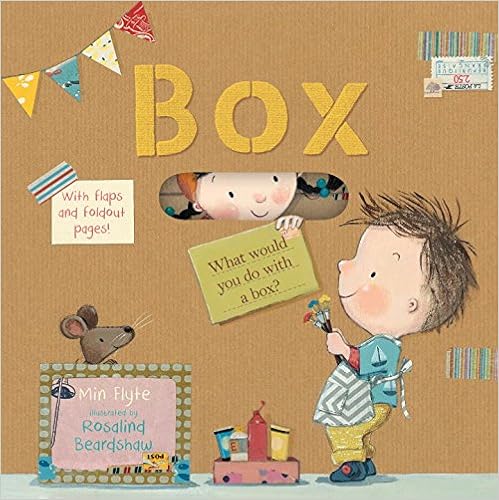
Box by Min Flyte and illustrated by Rosalind Beardshaw is a fun read with its fold out and flaps.  Yet the message is powerful, again, think of all of the things we can do with just a few items and out imagination.

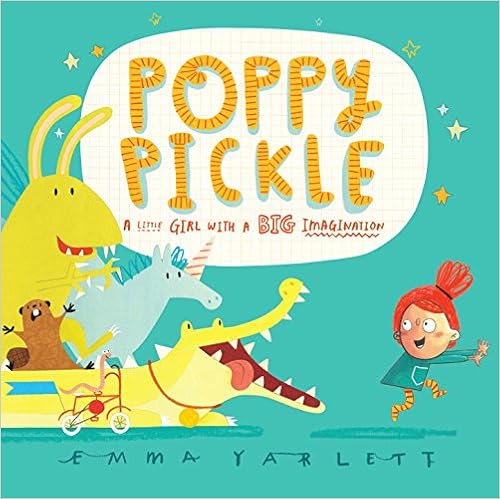
Poppy Pickle: A Little Girl with a Big Imagination by Emma Yartlett is such a fun ride.  I love poring over the pictures to see all of the mischief that happens.  What a great way to talk about what we can imagine.

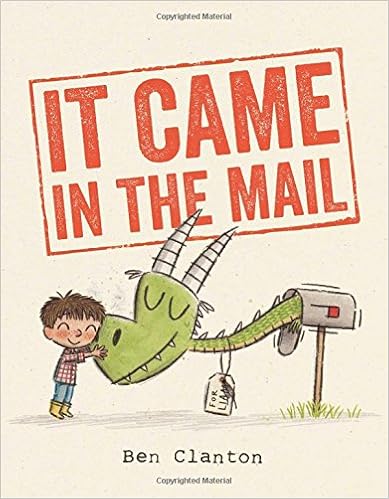
It Came in the Mail by Ben Clanton is another great mentor text.  I wonder what students would have come in the mail if they could and what the consequences would be.

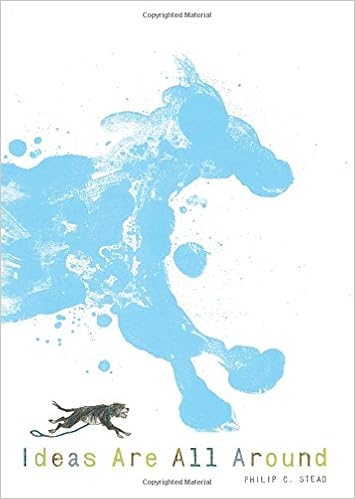
Ideas Are All Around by Philip C. Stead is a beautiful example of what happens when we are trying to write a story but seem so very stuck.  What a great book to share when we discuss writing process, how to find inspiration, and how to look for stories.

Imaginary Fred by Eoin Colfer and illustrated by Oliver Jeffers packs quite the punch on the theme of friendship, loneliness, and also what the power of finding a friend can be.  I love how it also shows what can happen with determination and once we feel we find our place in the world.  I love how it is not just the “real” people that can use their imagination to fit in.

A common theme of many of these picture books is how visually stunning they are.  Beyond the Pond by Joseph Kuefler speaks of a boy and what happens when he explores beyond the pond.  I love the vastness of the book and the journey he goes on.

I almost wrote a picture book post on powerful books about loneliness because I wanted to share the beauty of this book Lenny and Lucy written by Philip C. Stead and illustrated by Erin E. Stead somehow.  While that post will be written at some point, I also think this picture book fits quite nicely here.  Lenny and Lucy is about using your imagination to conquer your problems, and that is a powerful message indeed.  On a side note; Erin E. Stead is a contender for the Global Read Aloud 2016 picture book study!

Again the power of an imaginary friend and how having someone no one else can see cam become a problem.  I love the book We Forgot Brock by Carter Goodrich because of the friendship it portrays.

the illustrations in Imagine A World by Rob Gonsalves are astounding.  I loved reading this with my own children as well as with my 7th graders because of their reactions.  This definitely sparks ideas in students!

I love Mr. Cornell’s Dream Boxes by Jeanette Winter for how it can inspire children to use their imagination when it comes to making and creating.  By taking seemingly simple things and turning them into works of art, Mr. Cornell changed the world of art.

91IfBNII3DL

Draw! by Raul Colon is a masterpiece when it comes to explaining how an artist mind works.  I love seeing the reaction when students get to the final page and discover what the meaning behind the book is.

Papa’s Mechanical Fish by Candace Fleming and illustrated by Boris Kulikov is a book I turn to for many things; theme, perseverance, conflict, and also imagination, because it si only with imagination that the father of the book solves his problem.

How can your imagination save the most boring story?  I love the message of Battle Bunny written by Jon Sciezka and Mac Barnett, illustrated by Matthew Myers.  And I also love the students’ reaction when they first start to read it, someone always comes to report that the book has been defaced.

Only their imagination can save the kids in Chalk by Bill Thomson.  Another great wordless picture book to add to your collection.

Both Journey and Quest by Aaron Becker speak to the power of a girl’s imagination and the adventure that can unfold.  I also love how these books challenge my students’ imagination as they try to decipher what is really going on.

There are a few of our favorite books to spark imagination.  Please add those I missed in the comments.

To see the lists of other favorite books and picture books, please see the collection here.

advice, aha moment, being a teacher, being me, parents

How to Have Courageous Conversations With Your Child’s Teacher

http---www.pixteller.com-pdata-t-l-210867

Every year it has happened to me, you check your email or your voicemail not expecting much and there it is; a message from “that” parent that makes you so upset.  That message that makes you question everything you have been doing, everything you are trying to do.  And you cannot help but get a little angry, but get a little defensive, to immediately want to protect yourself rather than stop and think.  It is so hard sometimes being in a world where communication is so easy and words can be interpreted in a million ways.  And while those messages may seem hurtful at first, they can become the biggest inspiration for growth, if we let them.

No one sets out to be “that” parent.  No one sets out to send an email that can be read a million ways, to make a phone call that you know might dampen someone else’s day.  But sometimes we have to start the types of conversations that we hope to never have with our child’s teachers.  Sometimes we have to ask things that may be seen as questioning them.  And it is so hard.  Especially when you are a teacher and you know exactly how something can be taken.

And yet, for the sake of our children we have to find ways to have tough conversations.  When something is not working for our child it is our right and responsibility to speak up.  But there are ways to do it nicely, to where it will not immediately be taken as an attack but rather as an invitation to further discussion.  So what can you do?

Be nice.  Politeness goes such along way.  If you are about to ask some tough questions, use your manners and do not speak down to someone else.  All the teachers I know take great pride in their work and no one sets out to have bad experiences in their classroom, so show respect by the tone of voice you use whether written or spoken.

Investigate by asking questions.  If I believed all of the things our daughter, Thea, told me, I would have a crazy view of her school, after all she is 6 and sometimes pretty tired by the time she gets home from school.  So when something happens I always ask questions before I jump to any conclusions.  Often times what really happened is not what a child shares, so give the teacher the benefit of the doubt.

Do your research.  We oftentimes think that teachers have all  the power over what happens in their classrooms, but we do not.  Anything from district initiatives, state standards, and federal regulations all influence what we do in our classrooms, so make sure the teacher has control over whatever it is you are questioning, particualrly if it something that has upset you.

Ask for clarification.  When Thea came home with a reading log 5 days into kindergarten I emailed her teacher asking what the reasoning behind it was without sharing how much I hate reading logs.  I needed to make sure her teacher knew I was not questioning her, but rather trying to understand.  Once I had more information then I could ask further questions.

Leave room for conversation.  When we come across as brash or hotheaded, we are not inviting further conversation.  Ask for help.  Ask for support and ask to be a partner rather than dictate what someone should do.

Over-explain.  I would rather a parent over-explain their reasoning than under-explain.  Sometimes when we are too brief, we leave a lot of room for interpretation which almost always ends up being a negative experience for the recipient.  So state your point, explain why, and give enough information for the teacher to have something tangible to respond to.

Be specific.  If something is harming your child tell me how.  If your child has reported something to you tell me what that is.  I cannot sort through a situation or even respond to it well if I do not know the details, which can lead to further misunderstanding.

Keep it to your child.  If you are concerned for your child, state that, but do not generalize or ask questions about other children.  Teachers have to adhere to strict privacy laws and often cannot answer questions about children.  If this is a concern for many parents have them as part of the conversation to, do not just say that you speak for them.

Go to the teacher first.  Sometimes our gut reaction is to head to the top when we really need to first speak to the teacher.  It is common courtesy to give someone a chance to speak before others are involved.  That does not mean administration cannot be involved, it just means the teachers should have a chance to respond first.

Call rather than email.  Email can be misinterpreted in so many ways, trust me, I have probably misinterpreted intentions at least once a month, but a phone call or meeting is easier to navigate.  If someone is truly upset about something, I would much rather they seek me out and schedule a meeting, letting me know what we will be discussing, then sending an email.  And also, be mindful of school hours; if a teacher is in the middle of teaching they probably cannot speak to you at that moment.

Treat the teacher like you would want to be treated.  I cannot stress this enough; teachers are human  and sometimes we mess up.  It is not because we tried to, but it does happens.  If you treat us the way you would like to be treated in a tough conversation then our conversation will be much more productive.  Much can be handled via an honest and lighthearted conversation, even serious topics.

Gently question.  There is nothing wrong with questioning a teacher’s practice if you are seeing it harm your child, but do so gently.  Teachers spend a lot of time planning for best practices, and thus take pride in their work.  That does not mean it is always in the best interest in the child (public behavior charts, I am looking at you) but that can be a pretty hard thing to face.

And finally, a word to all of us teachers.  While criticism, even if just perceived, is hard, it is also a chance for us to reflect, grow and become better teachers.  Yes, there are times when criticism will be just that and those moments are hard to get through.  But in the end, I truly believe that when a parent asks us questions, even if they come of as a rude or disrespectful, within those questions are a seed for reflection, an opportunity to pause and make sure that what we are doing is in the best interest of children.  We are all trying to do the very best we can, after all, let’s not lose sight of that.

If you like what you read here, consider reading my book Passionate Learners – How to Engage and Empower Your Students.  The 2nd edition and actual book-book (not just e-book!) just came out!

books, Literacy, Passion, Reading

The Books That Flew Off Our Shelves First Quarter

I love watching my new crop of students develop their reading love.  While some come to me as voracious readers, others are more hesitant, still searching for that one book that will convince them that maybe reading is not quite as terrible as they thought it was.  Whatever the case, there are a few books that have been flying off our shelves since the moment they were book talked.  Here they are in no particular order.

MINrS by Kevin Sylvester has been a hit with a broad group of students.  This action packed new series is great for the kids that are eagerly awaiting a new series they can become invested in.

I just introduced The Nest by Kenneth Oppel a week ago and this book is the book all of my students want to read.  So much so that I have already gotten another copy of the book.  This creepy tale is also a Global Read Aloud contender for 2016.

We love Raina Telgemeier, who doesn’t?  So with her re-imaging of the Babysitters Club a whole new generation of kids are discovering these classic tales from Ann M. Martin.

If you have not added Echo by Pam Munoz Ryan to your library yet, your students are missing out.  Both copies have been checked out since the first day of school because of the fantastic storytelling in this book.

The students all know of my deep admiration for the work of Jason Reynolds by now because I cannot stop talking about this book, All American Boys written by Brendan Kiely and Jason Reynolds.  This is also a Global Read Aloud contender.

I loved The Blackthorn Key by Kevin Sands and keep gushing about this new must-read series to anyone who will listen.

The Iron Trial by Cassandra Clare and Holly Black flew off my shelves, so it is no wonder that the sequel to the book The Copper Gauntlet does as well.  The series is such a great add to our library.

Another favorite in our classroom is another Jason Reynolds book When I Was the Greatest.  A powerful tale that seems so deceptively simple but is anything but.

A Night Divided by Jennifer A. Nielsen continues to be a must read.

I am not sure I can write this post without mentioning the amazing Fish In A Tree by Lynda Mullaly Hunt.  I am using it as our Global Read Aloud book and the students cannot wait for me to read more.  Several have also asked to read it on their own.

There are also some “older” staples that continue to fly off our shelves.

Who can go wrong with getting kids hooked on The False Prince by Jennifer A. Nielsen?

The Maze Runner by James Dashner continues to be one of our top reads.

Divergent by Veronica Roth seems to be overtaking The Hunger Games this year.

I love that The One and Only Ivan by Katherine Applegate continues to be so well loved, now if I could only find my copy of Crenshaw.

What has been flying off of your shelves?

PS:  Stay tuned for a post on our favorite picture books this quarter.