being a teacher

What Administrators Can Do to Promote a Reading Culture

recite-enc68m

Dear administrators,

I have been pleading with teachers for a few years to please help students become passionate readers.  I have given as many ideas as I could and directed toward the great minds that inspire me as well.  I have begged at times, sharing the words of my students as proof that we teachers have an immense power when it comes to either nurturing a love of reading or killing it.  There are so many things we teachers can do that will have a lasting effect.

And yet, it is not just the teachers that have an immense power over  whether children will read or not.  It turns out that much of that power also lies within the realm of administration.  In fact, many of you that are doing incredible things to create schools that are seen as literacy communities that cherish the act of reading and becoming readers.  What  are they doing?  What can you do to foster a love of reading school-wide?

You can believe in choice for all.  That means protecting the rights of students to read the books they choose.  To help staff support this as well by speaking about choice, and making sure not to put restrictive policies in place that will hinder a child from developing their own reading identity.  That will stop a child from choosing a book they want to read.  Teachers should not be the only ones choosing books for students, please don’t put them in that position.  Instead, they should be working with students to learn how to self-select great books based on many things, not just their levels!

You can buy books.  Research shows again and again how vital having not only a well-stocked school library, but also a full classroom library, is to students becoming better readers.  Students need books at their finger tips, not far away, and they need high quality, high interest books.  That takes money, please help out in any way you can.

You can fight to have a librarian full-time in your building.  Everywhere we are seeing libraries that have no librarians, yet a knowledgeable librarian can be the lifeblood of a reading community.  I know budgets are being slashed, but the librarian should be seen as a necessity in schools, not as an unnecessary privilege.

You can celebrate books read.  Not the number of minutes logged or the points gained in computer based reading programs.  How about keeping a running tally of how many books students self-selected to read and then finished?  How about you keep a display board of all of the picture books being shared in your school, yes, even in middle school and high school?  Celebrate the right things, not the ones that can kill a love of reading.

You can protect the read aloud.  When schedules are made there should be time placed for reading aloud.  This should not be seen as a frill, nor as something that would be nice to fit in if only we had more time. All students at every age should encounter an adult that reads fluently with expression aloud to them every day.  It develops their minds as readers and creates community.  This should not just be reserved for special times in elementary school but should be protected throughout a child’s reading experience in school.

You can promote independent reading time.  Students reading silently is not time wasted, it is one of the most important investments we can make in our school day for any child, any age.  If you want children to become better readers, then give them the time to read.

You can hire teachers that love reading.  I am amazed that there are teachers who teach literacy in any capacity that do not identify themselves as readers.  This should not be happening.  Years of experience shows that students will read more if we read as well and are able to create a book community where our love of reading is a cornerstone of what we do.  Even when I taught non-literacy subjects, even when I taught science, the fact that I read for my own pleasure meant that our conversations were deeper, more engaging, and the students trusted me as a reading role model.

You can use levels for books and not for children.  Too often the levels that a child reads at becomes their entire reading identity.  Yet, that level is meant to be a teacher’s tool and not a child’s label to quote Fountas and Pinnell.  That level should be a part of that child’s reading identity but not the thing that defines them.  We should not have policies in place where students can only choose books that are at their levels, but instead have policies that promote exploration of texts so that students have a natural chance to figure out who they are as readers.  Confining them, even if meant to be helpful, will hurt them in the long run.

You can have tough conversations.  Part of my job as a teacher is to grow and learn and while I think that most of my ideas are solid, I wish an administrator would have questioned me when I had students do reading logs and forced book reports a few years back.  While the push-back may be hard to swallow, it certainly would have made me think.  However, within those tough conversations, please do listen to the teacher as well.  What are they basing their decisions on?  Perhaps they are the ones who are right, perhaps not, but ask the questions and keep the bigger goal in mind; students who like to read!

What else can you do to create a school where the love of reading flourishes?

You can be a guest read alouder.

You can have books in your office for students to read.

You can share your own reading life by displaying your titles outside your office.

You can make assemblies and other fun events celebrate literacy.

You can bring in authors.

You can promote reading literacy projects like The Global Read Aloud or Dot Day.

You can ask students what they are reading whenever you see them.

You can institute school-wide independent reading time.

You can stand up for poor literacy decisions being made within your district.

You can ask your teachers for ideas.  You can ask your students what they need and then implement their wishes when possible.

You can send your teachers to professional development with the likes of Kylene Beers, Donalyn Miller, Penny Kittle, Kelly Gallagher and any other of the incredibly talented literacy experts that inspire us all.

There are so many things that fall within your realm, please help us teachers (like my principal Shannon Anderson does) protect the love of reading that students have and nurture it as we teach.  You can choose to create passionate reading environments or you can support decisions that smother them.  The choice is yours.

If you like what you read here, consider reading my book Passionate Learners – How to Engage and Empower Your Students.  The 2nd edition and actual book-book (not just e-book!) comes out September 22nd from Routledge, but rumor has it that it is out on Kindle already!

being a teacher, books, Literacy

If They Loved the Hunger Games – What to Read Next

Most of my students love The Hunger Games, it seems to almost be a rite of passage to have read this series.  I see them start the first book and then this fever comes over them as they race through the pages waiting to find out the fate of the characters.  Hunger Games fever is a real phenomena I think.  Yet, the sadness that overcomes them when they finish the series is also palpable.  Where do they turn to next?  What is the next series that they can fall in love with?  Here are a few suggestions.

Pivot Point and its sequel Split Second by Kasie West is hands down one of my favorites duos ever.  And yet most have not heard of it or read it.  This is a travesty.  I had this in my 5th grade library and in my 7th, it is slightly mature for 5th graders but completely fine for 7th.  I still keep hoping that Kasie West will write a third book although she has said she won’t.

From Amazon:

Addison Coleman’s life is one big “What if?” As a Searcher, a special type of clairvoyant, whenever Addie is faced with a choice, she is able to look into the future and see both outcomes. So when her parents tell her they are getting a divorce and she has to pick who she wants to live with, a Search has never been more important.

In one future Addie is living with her mom in the life she’s always known and is being pursued by the most popular guy in school. In the other she is the new girl in school, where she falls for a cute, quiet artist. Then Addie finds herself drawn into a murder investigation, and her fate takes a darker turn. With so much to lose in either future, Addie must decide which reality she’s willing to live through . . . and who she’s willing to live without.

The Dissonance series by Erica O’Rourke is another often overlooked series that I absolutely love.  Two books are out in the series at the moment but the battle is only getting bigger and better in the books.  This is also fine for  mature 5th grade readers and up.

From Amazon:

Every time someone makes a choice, a new, parallel world is spun off the existing one. Eating breakfast or skipping it, turning left instead of right, sneaking out instead of staying in bed—all of these choices create alternate universes in which echo selves take the roads not traveled. Del knows this because she’s a Walker, someone who can navigate between the worlds, and whose job is to keep the dimensions in harmony.

But Del’s decisions have consequences too. Even though she’s forbidden from Walking after a training session goes horribly wrong, she secretly starts to investigate other dissonant worlds. She’s particularly intrigued by the echo versions of Simon Lane, a guy who won’t give her the time of day in the main world, but whose alternate selves are uniquely interested. But falling for Simon draws Del closer to a truth that the Council of Walkers is trying to hide—a secret that threatens the fate of the entire multiverse.

All Our Yesterday’s by Cristin Terrill is not a series, but it should be.  This book took my breath away when I read it and have found an appreciative audience with my 7th graders as well.  This is a page turner.

From Amazon:

Imprisoned in the heart of a secret military base, Em has nothing except the voice of the boy in the cell next door and the list of instructions she finds taped inside the drain.

Only Em can complete the final instruction. She’s tried everything to prevent the creation of a time machine that will tear the world apart. She holds the proof: a list she has never seen before, written in her own hand. Each failed attempt in the past has led her to the same terrible present- imprisoned and tortured by a sadistic man called the doctor while war rages outside.

Marina has loved her best friend, James, since they were children. A gorgeous, introverted science prodigy from one of America’s most famous families, James finally seems to be seeing Marina in a new way, too. But on one disastrous night, James’s life crumbles apart, and with it, Marina’s hopes for their future. Marina will protect James, no matter what. Even if it means opening her eyes to a truth so terrible that she may not survive it . . . at least, not as the girl she once was. Em and Marina are in a race against time only one of them can win.

Joelle Charbonneau knows how to write a great book, her new book Need is a must add to any 7th grade classroom, but I first fell in love with her writing by reading The Testing series.  This is also fine for mature 5th graders and up (Need probably is not).

From Amazon:

It’s graduation day for sixteen-year-old Malencia Vale, and the entire Five Lakes Colony (the former Great Lakes) is celebrating. All Cia can think about—hope for—is whether she’ll be chosen for The Testing, a United Commonwealth program that selects the best and brightest new graduates to become possible leaders of the slowly revitalizing post-war civilization. When Cia is chosen, her father finally tells her about his own nightmarish half-memories of The Testing. Armed with his dire warnings (”Cia, trust no one”), she bravely heads off to Tosu City, far away from friends and family, perhaps forever. Danger, romance—and sheer terror—await.

The Shattered series by Tahereh Mafi is another great contender for post Hunger Games reading.  There certainly are similarities between the series but it still has a unique concept revolving around the main character.

From Amazon:

I have a curse.
I have a gift.

I’m a monster.
I’m more than human.

My touch is lethal.
My touch is power.

I am their weapon.
I will fight back.

No one knows why Juliette’s touch is fatal, but The Reestablishment has plans for her. Plans to use her as a weapon. But Juliette has plans of her own. After a lifetime without freedom, she’s finally discovering a strength to fight back for the very first time—and to find a future with the one boy she thought she’d lost forever.

I have been gushing about Red Queen by Victoria Aveyard to anyone who will listen.  Yes, it reminds me of so many other  books but at the same time it is so good.  So good.  I was thrilled to put this into the hands of my 7th graders this week.  Only drawback is that this is the only book out so far.

From Amazon:

Mare Barrow’s world is divided by blood–those with common, Red blood serve the Silver- blooded elite, who are gifted with superhuman abilities. Mare is a Red, scraping by as a thief in a poor, rural village, until a twist of fate throws her in front of the Silver court. Before the king, princes, and all the nobles, she discovers she has an ability of her own.

To cover up this impossibility, the king forces her to play the role of a lost Silver princess and betroths her to one of his own sons. As Mare is drawn further into the Silver world, she risks everything and uses her new position to help the Scarlet Guard–a growing Red rebellion–even as her heart tugs her in an impossible direction. One wrong move can lead to her death, but in the dangerous game she plays, the only certainty is betrayal.

I don’t think it is possible to have a post like this without mentioning the Legend series by Marie Lu.  Yes, many have already read it and passed it on but there are still so many that haven’t.  This is also a great entry book into science fiction for students who might not think the genre is for them.

From Amazon:

What was once the western United States is now home to the Republic, a nation perpetually at war with its neighbors. Born into an elite family in one of the Republic’s wealthiest districts, fifteen-year-old June is a prodigy being groomed for success in the Republic’s highest military circles. Born into the slums, fifteen-year-old Day is the country’s most wanted criminal. But his motives may not be as malicious as they seem.

From very different worlds, June and Day have no reason to cross paths – until the day June’s brother, Metias, is murdered and Day becomes the prime suspect. Caught in the ultimate game of cat and mouse, Day is in a race for his family’s survival, while June seeks to avenge Metias’s death. But in a shocking turn of events, the two uncover the truth of what has really brought them together, and the sinister lengths their country will go to keep its secrets.

The Lunar Chronicles series by Marissa Meyer, Cinder is the first book shown here, is so loved in our classroom that I have had to repurchase it a few times.  And yes, we are counting down to November 15th when Winter comes out.  This book is equally loved by 5th and 7th graders and is just one of those series where you want to read the whole thing in one sitting.

From Amazon:

Humans and androids crowd the raucous streets of New Beijing. A deadly plague ravages the population. From space, a ruthless lunar people watch, waiting to make their move. No one knows that Earth’s fate hinges on one girl. . . .

Cinder, a gifted mechanic, is a cyborg. She’s a second-class citizen with a mysterious past, reviled by her stepmother and blamed for her stepsister’s illness. But when her life becomes intertwined with the handsome Prince Kai’s, she suddenly finds herself at the center of an intergalactic struggle, and a forbidden attraction. Caught between duty and freedom, loyalty and betrayal, she must uncover secrets about her past in order to protect her world’s future.

Another modern day classic series is the Unwind series by Neal Shusterman.  I first discovered this last year and had students use it in a book club, it was amazing.

From Amazon:

In America after the Second Civil War, the Pro-Choice and Pro-Life armies came to an agreement: The Bill of Life states that human life may not be touched from the moment of conception until a child reaches the age of thirteen. Between the ages of thirteen and eighteen, however, a parent may choose to retroactively get rid of a child through a process called “unwinding.” Unwinding ensures that the child’s life doesn’t “technically” end by transplanting all the organs in the child’s body to various recipients. Now a common and accepted practice in society, troublesome or unwanted teens are able to easily be unwound.

With breathtaking suspense, this book follows three teens who all become runaway Unwinds: Connor, a rebel whose parents have ordered his unwinding; Risa, a ward of the state who is to be unwound due to cost-cutting; and Lev, his parents’ tenth child whose unwinding has been planned since birth as a religious tithing. As their paths intersect and lives hang in the balance, Shusterman examines complex moral issues that will keep readers turning the pages until the very end.

Of course, a list like this would be woefully incomplete if it weren’t for The Maze Runner by James Dashner.  I don’t know if I even need to say much about this series except that I will never forget the 5th grader that told me to read it.  Thank you so much.

From Amazon:

If you ain’t scared, you ain’t human.

When Thomas wakes up in the lift, the only thing he can remember is his name. He’s surrounded by strangers—boys whose memories are also gone.

Nice to meet ya, shank. Welcome to the Glade.

Outside the towering stone walls that surround the Glade is a limitless, ever-changing maze. It’s the only way out—and no one’s ever made it through alive.

Everything is going to change.

Then a girl arrives. The first girl ever. And the message she delivers is terrifying.
 
Remember. Survive. Run.

If you like what you read here, consider reading my book Passionate Learners – How to Engage and Empower Your Students.  The 2nd edition and actual book-book (not just e-book!) comes out September 22nd from Routledge, but rumor has it that it is out on Kindle already!

being me, global read aloud

Global Read Aloud: One Book to Connect the World – A Video #GRA15

The International Literacy Association (formerly IRA) has been a huge supporter of the Global Read Aloud for a few years.  They put this video together for us as I prepare for the 6th project to start October 5th. I thought it might be nice to share it here.

Also, join me on Wednesday, September 10th at 8 PM EST for #ILAchat as we discuss all things reading aloud and the Global Read Aloud.

PS:  If you are wondering how to get your own reading warrior shirt, go here.

being a teacher, being me, Literacy, making a difference, notice and note, Reading

Great Picture Books to Use for Contrast & Contradictions – Notice and Note

One of the main texts we use to guide our reading instruction is the amazing Notice and Note: Strategies for Close Reading by Kylene Beers and Robert Probst.  This book provides us with the foundation for having deeper reading conversations and a common language as we develop our thoughts.  While the book has excellent text ideas to use as mentor texts, I thought it would be nice for my students to use picture books on the very first day of a new strategy before we delve into the longer text excerpts.  I have therefore looked for picture books I could use with the different strategies and will publish posts as I have them for the 6 different strategies since I cannot be the only one looking for ideas.

First up, “Contrast & Contradictions.”  Here are a few picture books I have used or will use with the kids.

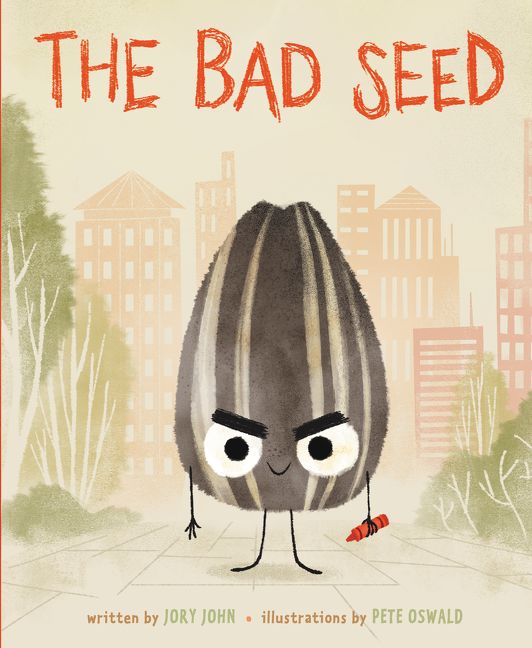
It’s like this picture book was written just for this lesson.  The Bad Seed by Jory John and illustrated by Pete Oswald features two changes in character and also a powerful message about trauma and what can happen to you even after bad things happen.
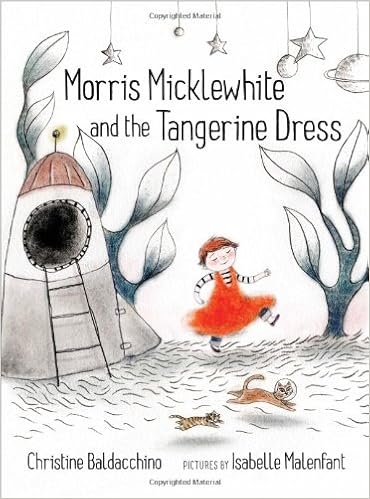
In Morris Micklewhite and the Tangerine Dress by Christine Baldacchino and Isabelle Malenfant, Morris goes from being sad and timid, unsure of his choice to wear a tangerine dress.  As the book progresses he changes as he realizes that he wants to be himself.
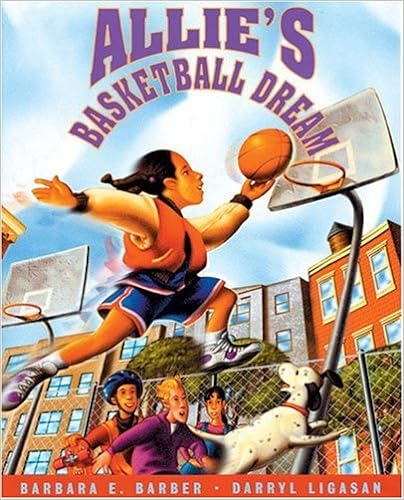
According to the boys watching Allie play, girls can’t play basketball.
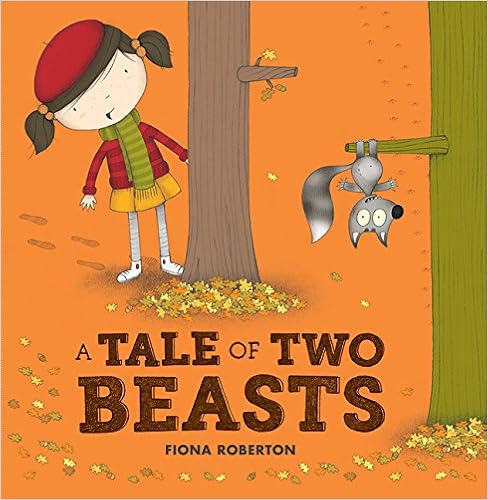
In A Tale of Two Beasts by Fiona Robertson, the C&C is how the two sides view the story.
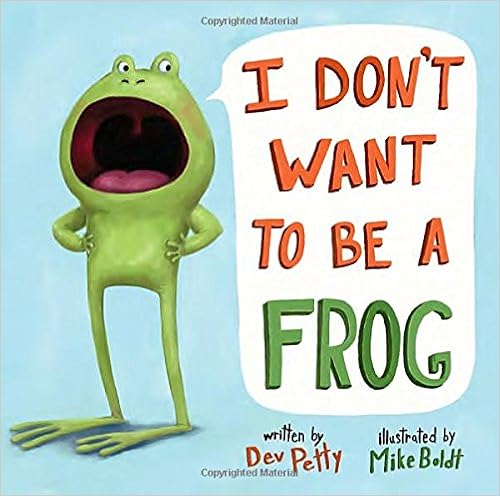
I Don’t Want to Be a Frog by Dev Petty and illustrated by Mike Boldt is C&C throughout.  The main character does not want to be what he is supposed to be and protests it every way he can.
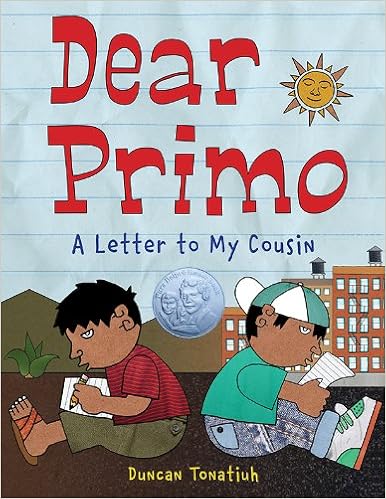
As two cousins write to each other, we see the contrast (and similarities) between their lives.

Tuesday by David Wiesner started us off in our discussions about contrasts and contradictions.  This fantastic nearly wordless picture book is an easy entry into this discussion as it allows students to easily see how the magical event with the toads floating is in contrast to what frogs normally do.


With one of my classes I also used Rules of Summer by Shaun Tan, where the contrast lies in the rules being shared and the images.  While this one was a little more advanced for the students, they greatly enjoyed the illustrations and discussing what they might mean.

Another contrast and contradiction text between self and society in Mr. Tiger Goes Wild by Peter Brown where Mr. Tiger just will not conform.  When he tries to change his ways, he loses his real identity.

This Is A Moose by Richard T. Morris and Tom Lichtenheld is a great example of the contrast between what a moose is supposed to be like and what they really are.

The Story of Fish & Snail by Deborah Freedman is a wonderful example about change in a character as Snail is too scared to follow Fish on a new adventure.

That Is Not A Good Idea by Mo Willems is another great example of a character changing and acting in a different way than we would expect.  I do love this devious little tale.

What I love about Gaston by Kelly DiPucchio, illustrated by Christian Robinson, is that most of my students can relate to its message about being expected to fit in in a certain way.  The contrast lies between the characters and how their upbringing has shaped them.

Any day I can use Pete and Pickles by Berkeley Breathed is a good day in our room.  Here, we focus on the change that Pete the pig goes through as he meets Pickles.  Great book also to use for character development and inferring.

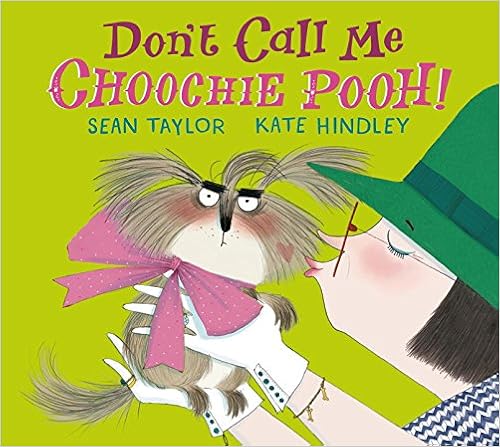
Don’t Call Me Choocie Pooh by Sean Taylor and Kate Hindley follow the story of a dog that does not want to be treated in a certain way afraid of what the other dogs will think.  Great ending that shows the change in the character.

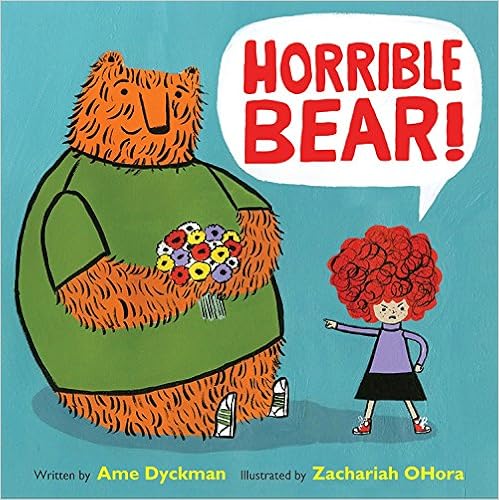
Horrible Bear written by Ame Dyckman and illustrated by Zachariah O’Hora is a lovely picture book that shows what happens when you don’t do what is expected.

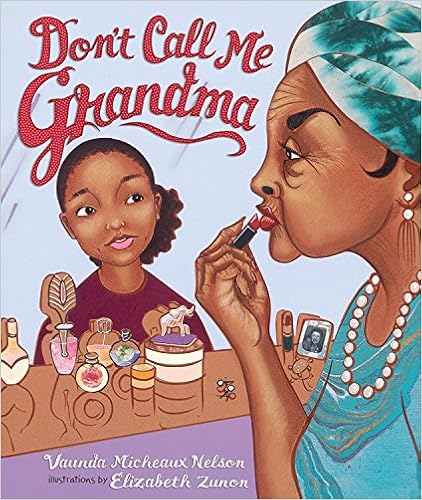
Don’t Call Me Grandma by Vaunda Micheaux Nelson and illustrated by Elizabeth Zunon is a perfect example of a character that does not fit the stereotype.  Great-Grandmother Nell isn’t anything but warm and fuzzy and as the great-grand daughter starts to understand why, we see a great slice of history as well.

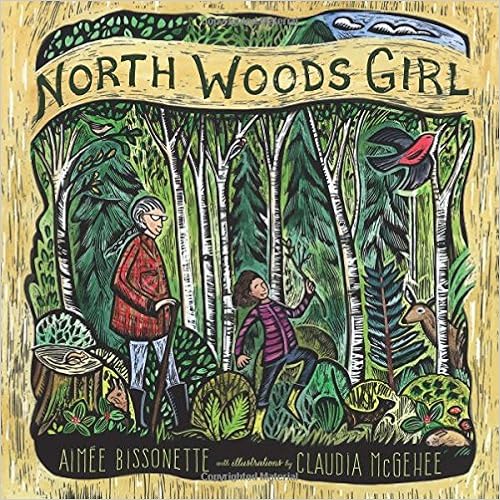
North Woods Girl written by Aimee Bissonette and illustrated by Claudia McGehee is also about a grandma that doesn’t quite fit the mold.

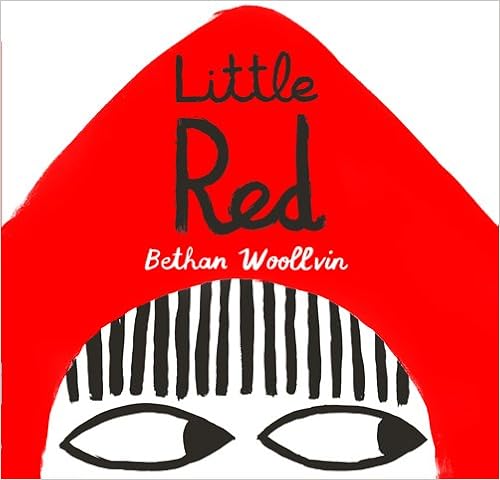
Little Red by Bethan Woolvin is wickedly funny, it follows the path of the regular story but with a twist at the end and it is that twist that provides our contract and contradiction.

Which books have you used for contrast and contradictions?

If you like what you read here, consider reading my book Passionate Learners – How to Engage and Empower Your Students.  The 2nd edition and actual book-book (not just e-book!) comes out September 22nd from Routledge, but rumor has it that it is out on Kindle already!

achievement, advice, assumptions, authentic learning, Be the change, being a student, being a teacher, reflection, Student-centered, students

Some Ideas for Re-Engaging Students

tumblr_nu5tz1bcUO1qzr04eo1_1280

For the past few days student engagement has been at the forefront of my mind.  Well, who am I kidding, it is always on my mind.  As I gave a workshop on student engagement, I was asked for quick tips on how to re-engage in class.  While these aren’t just simple ideas, I hope they can help you work through engagement lulls in your own classroom.

You can have an honest conversation with students.  If the same class is off-task or the same group, please pull the whole class or group together to discuss.  Do not judge, simply ask what is going on and then ask them to help you solve it.  Often students will blame being bored so then ask them how they can make it more exciting.  Part of creating classrooms where students are engaged is that students are expected to take control of their learning journey meaning you should not be trying to solve everything.

You can change it up.  Too often we fall in love with a routine like the workshop model and then forget that too much predictability can be a bore.  While I am not advocating for a zany show, I think it is important to be tuned into whether the routine is working at its optimal level or not, then tweak and change as needed.

You can turn on some music.  I have found that using music that has the opposite tempo of my students’ mood is great for refocusing them.  So if they are slow and lethargic, I play upbeat music while they work, if they are very energetic, I bring out the mellow tunes.

You can practice mindfulness.  I started using some short breathing or yoga videos after assemblies with my students because there was no way they would settle in on their own.  Once my 7th graders get past their giggles, they also benefit from 3 minutes of focused breathing.

You can stop a train-wreck.  When a lesson was going poorly, I used to ride it out to the end hoping that by then they would get it.  Now I know to stop, ask why they are not understanding, and then fix.  I also have the luxury of completely revamping it throughout the day since I teach the same class five times in a row (one of the only positive things about that).

You can move location or just move.  Sometimes my students have simply been sitting too long.  Past elementary level we sometimes do not realize how much time students spend sitting since we only see our slice of the day.  A natural restlessness is therefore bound to occur.  So we move around in the classroom either by sharing with peers, doing short book recommendations, or showing off our work, or we pick up and move altogether.  We can head to the library, outside, or into our team area.

You can affirm and replace.  This is a technique I adapted from the awesome book Awakened by Angela Watson.  When my students seems bogged down as a class, we spend a few minutes speaking about what is going on and then I try to help them replace those thoughts by shifting the focus to something else. It is important for students to feel validated in their thinking but then also for them to move beyond it.

You can find a different way for them to show off their knowledge.  We use turn-and-talk quite a bit, but I also ask students to act answers out, draw things out without speaking and any other way that will get different areas of their brains to light up.  This is not something I do the entire class period, but it is vital that we have students show knowledge in a variety of ways, rather than just one way.

You can make it personal.  Yes, personalized learning is a major buzzword right now, but I am talking about the personal connections that students can have to the learning and how we can tap into that.  A lot of disengagement comes from students being bored with the content, so we do need to re-evaluate the content we are focusing on, as well as what the students are doing with it.  Students may want to engage with the content in different ways but we won’t know that without knowing our students.

You can use technology.  We integrate technology throughout the year but sometimes introducing a new tool like Kahoot does fire students up in a new way.  However, with any new ideas, moderation is key because this does not address the problem in the long-term but simply changes the pace at that moment.

In the end, student engagement is just about the quick fixes we can make, but about the instrumental changes we need to have in our teaching philosophy.  It is too easy to just blame the students, although they do carry responsibility in all of this, so we must reevaluate whether what we are doing in our classrooms is truly worth being engaged in.  The bottom line is; we have to believe in what we are doing and show that passion every single day, because if we don’t, we have no right asking students to.

PS:  This is part of a three part series on student engagement.  The first post discussed the truths my students shared with me on why they are disengaged, the second post discussed the three areas we must re-evaluate.

If you like what you read here, consider reading my book Passionate Learners – How to Engage and Empower Your Students.  The 2nd edition and actual book-book (not just e-book!) comes out September 22nd from Routledge, but rumor has it that it is out on Kindle already!
advice, being a teacher, being me, Passion, student driven, students

These Three Areas May Be the Root of Student Disengagement

tumblr_nu3wgu161v1qzr04eo1_1280
image from icanread

Yesterday, I shared my students’ reasons for why they become disengaged, yet sometimes it is hard to figure out the why for longterm change.   It is easy for us to blame curriculum or things outside of our control, yet often, disengagement is happening because of a few simple things in our classrooms.  Therefore, I offer you up the three areas to evaluate as you try to engage your students.

Evaluate yourself.  Are you the reason they are off-task?  Did you speak too long or did you not make sense?  Do they like you?  This is huge.  If students do not like you, they are much more likely to be off task and the more we hammer down our authority, the more they will battle us.  So if you are not creating real relationships with students, then off task behavior will often turn into disruptive behavior.

Evaluate the content.  Does it make sense?  Is it engaging?  If it is something that you need to “get through” then students will treat it as such.  I often tell students that we are working on creating a foundation of knowledge that we can use to try new things, I try to steer clear of saying we have to just “get through” anything.  Also, does the content allow for them to speak to others, to move around, to use the information or are they listening to you deliver the content and then working silently with it?  Try to think about how much we ask students to work in silence all day, and then we wonder why students lose their voice?  Student choice and voice is a huge part of this.

Evaluate the time and place.  My third hour class (after study hall) and my sixth hour class (after lunch) are loud and take a lot more to become engaged.  They are wired with energy and need ways to work that off.  Their work often looks different that that of other classes because I need to tap into their energy.  I may play soft music when they come in, speak in a calm tone, and also have them reflect quietly for a few minutes after their independent reading time, all so they can get back in the zone of what we need to do.    My first class and my last class of the day needs energy.  They are tired.  They have either just woken up or have been sitting most of the day.  So I play fast music, get very animated and I create opportunities for them to get up and move around the room focusing more on group learning to get their energy up.  Are you adapting your teaching style to the time and place of the day?

While there are many sub areas we should also be evaluating, I have found that most of the time the answers lies within one of these.  And if in doubt, ask your students.  I know I sound  like a broken record but sometimes I spend hours thinking about why something is happening where I should have just asked the people it involved.  Yes, some times students will tell us things that are hard to hear, but I would rather hear the truth so that I may change, than pretend that I have it all figured out.

PS:  Stay tuned for part 3 of this series, the final part is all about the small changes we can make.

If you like what you read here, consider reading my book Passionate Learners – How to Engage and Empower Your Students.  The 2nd edition and actual book-book (not just e-book!) comes out September 22nd from Routledge, but rumor has it that it is out on Kindle already!