being a teacher, books, Literacy, new year, picture books, Reading

My 10 First Day Picture Books 2016 #pb10for10

The very first thing we do on the very first day is to read a picture book.  The look of surprise on my 7th graders when I ask them to come on over to the rocking chair is worth it every year.  We are a classroom of books, of stories,  of illustrations and they surround us beginning on the very first day.  All summer I scour my local book stores and libraries.  I read reviews, I reach out to friends.  I search high and low for that perfect book, the one that will make us wonder, make us laugh, make us think.  Make us start to believe again that reading is something magical.  Our pile of ten books is one that I look back upon remembering that this is what framed our very first day.  That will frame the experience we are about to have.

So as the students come on over, scoot in as close as possible so they can see all of the details, these are the 10 books that will be held up high for a vote.  I cannot wait to see which books they choose this year.

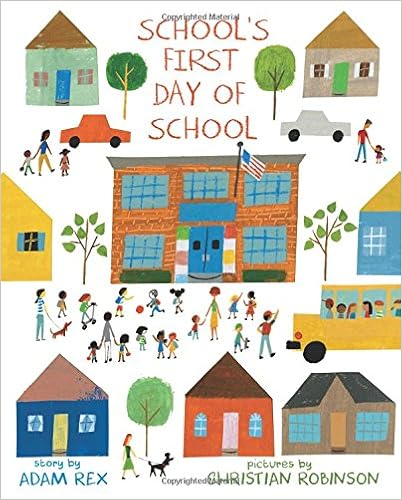
How many gushing words can I say about School’s First Day of School written by Adam Rex and illustrated by Christian Robinson.  I am fairly sure that these two have created one of the best picture books not just of 2016 but of many years to come.  This is bound to be a classic at every grade level.

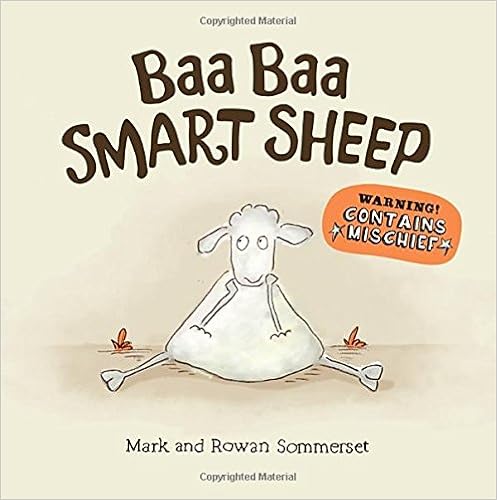
How great is Baa Baa Smart Sheep created by Mark and Rowan Sommerset? This story of a sheep that sets out to trick a turkey is laugh out loud funny and sure to gain attention.  There is even a sequel out which I also cannot wait to share.

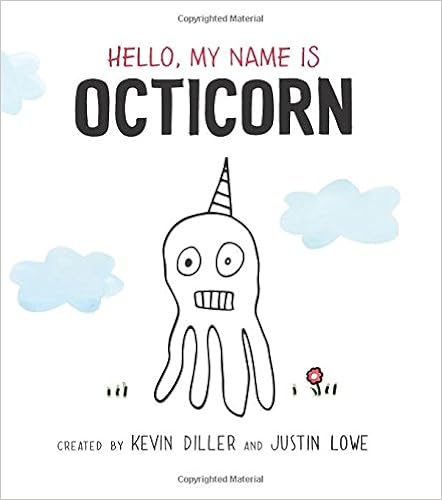
Hello, My Name is Octicorn created by Kevin Diller and Justin Love is also in my pile of books for the first day of school.  Funny yet poignant in its message, this will also make a great picture book to teach theme.

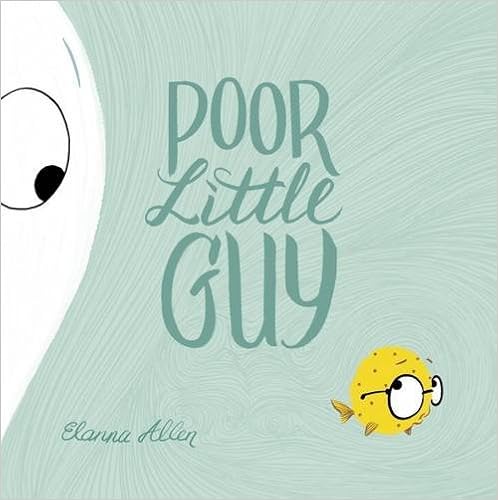
I laughed out loud when I read Poor Little Guy by Elaina Allen, but this book is not just funny, it also carries a great message; don’t judge others by their looks because you never know what will happen.  I am a fan of this book.

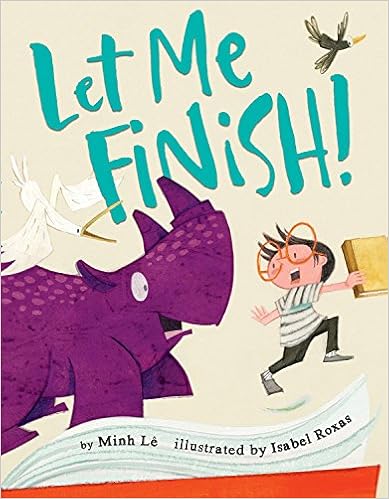
What happens when those around you decide to keep spoiling the book for you and all you want to do is read in peace?  That is exactly what Mihn Le shares in his fantastic picture book Let Me Finish illustrated by Isabel Roxas.  How fantastic will this picture book be for discussing reader identity?

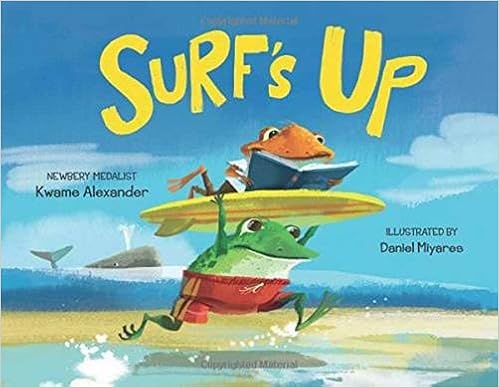
Kwame Alexander is the reason many of my self-identified non-readers are now readers, so this picture book was a given.  Come to find out Surf’s Up illustrated by Daniel Miyares (another of my favorite writer/illustrators out there) is all about the pleasure of reading.  Yes please!

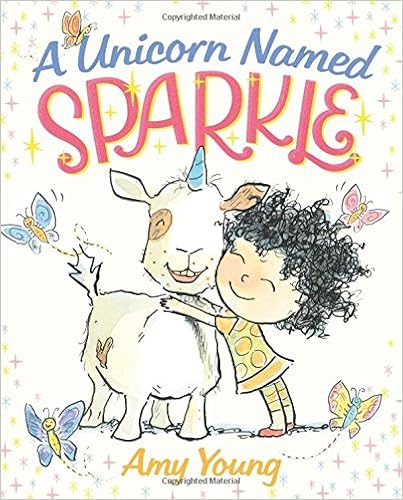
My friend Jillian Heise told me to read A Unicorn Named Sparkle by Amy Young because I would love it and she was right.  Funny yet with such a great message about how we can fall victim to wrong impressions, this book is a great book for all ages.

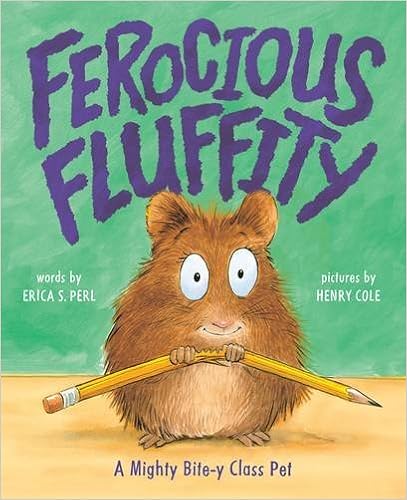
What happens when your classroom pet turns out not be so ice and cuddly?  Ferocious Fluffity written by Erica S. Perl and illustrated by Henry Cole is a tale of just that.  Sure to hold their attention and make us laugh.

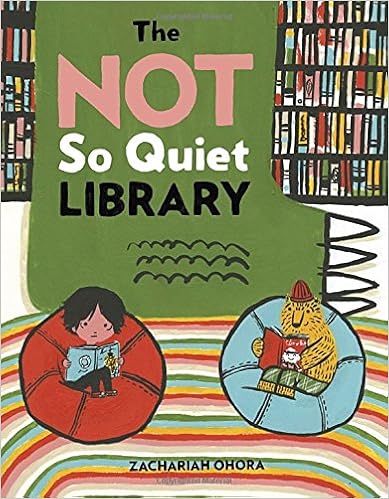
What happens when an angry monster shows up at the library and interrupts Oskar and Theodore’s quiet time?  Well, you will have to read The Not So Quiet Library by Zachariah Ohora to find out.  What a fantastic way to introduce our classroom library that should not always be quiet.

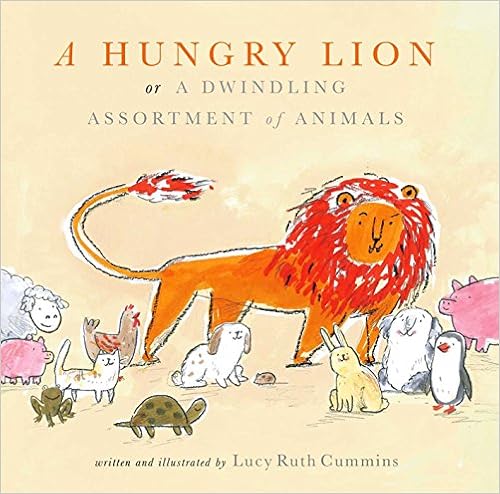
Every person I have had read A Hungry Lion or A Dwindling Assortment of Animals by Lucy Ruth Cummins has loved it.  Funny and surprising, I have loved the reaction that children and adults have to this book.  What do we do when our initial prediction turns out not to be true after all?

There you have it, my 10 picture books for the first day of school and also my blog post for the fantastic Picture Book Ten for Ten that happens every year on August 10th.  Make sure you check out the hashtag #pb10for10 and all of the other great posts to receive some more inspiration.

To see all of our lists for favorite picture books, please go here.  

being a teacher, new year, organization

A Few Ideas for a Better Organized Year

Uncluttered space, uncluttered mind

Our school is under construction and dust covers most surfaces as we enter.  I have been in and out of my room, setting things up, getting excited, and yet, because of the construction there are a few things that I am not able to do yet.  The unfinished to-do list seems to haunt me everywhere.

Staying organized is something that most of us do well as educators.  We know that we are setting an example for the students, we know we have to stay on top of all of our piles, especially when we teach more than just one class.  Yet sometimes staying organized seems to be just one more thing to-do on our ever expanding to-do lists.  One more thing to get done before we can actually work.  That is why over the years I have adopted a few small ideas that help me stay organized in our classroom.

The 1 minute rule.  If something can be accomplished in under 1 minute then I do it right away, because all of those 1 minute things quickly add up to way more than 1 minute when left unfinished.  That means most papers get filed away, most things are put in their right places and short replies are given on emails.  This year I may try to expand it to the 2 minute rule.

Where does something want to be?  I pay attention to where I place things naturally in the classroom and set up organizational spots for those things.  This is why my students finished work is not by my desk but by the front.  This is why my book stamp is right next to my computer rather than by the books.  All of these seemingly strange places for things happened because I paid attention to where I naturally wanted to place things rather than where the room told me to put them.

Letting go of paper.  Paper can be a monster in itself, so I have learned to purge.  While I am nowhere near embracing a paperless classroom, I do feel better about the lack of files I have because there is less paper to sort through.  I don’t really use any type of worksheet so most of our papers are classroom sets of texts.

Solicit student help.  Students should feel like this is “our classroom,” which means they are expected to clean up after themselves.  They may seem self-explanatory but I have noticed that students often don’t see the same mess as I do.  So I point it out and I ask them for help.  The last 3 minutes of the day are also used to stack chairs, pick up, and reset the classroom.

Purging the big stuff.  In the past I had too much stuff in our classroom.  Taking a hard look at our furniture and what we did not use helps keep the clutter down.

Replying right away to email.  I hate having a full inbox so if something can be handled right away, I do it.  I don’t strive for inbox zero, but the emails I have in my inbox should be reminders not more things I have to do.

Set up for the next day at the end of the day.  I have a 35 minute commute and while I try to get there at 7 AM every morning, sometimes traffic does not agree.  Cleaning up my space and setting materials out for the next day means I don’t feel rushed in the morning.  Taking those extra few minutes the day before to get ready means that I can walk in and work on something else or even just catch up with a co-worker if I need to.

Don’t send that email.  With the ease of emails I think we sometimes send unnecessary ones.  I have tried to call people more to ask a quick question rather than send them that email.  I am aware that every time I send someone an email, I am creating another to-do for them.

Checking my mood.  I have found that if my work space is disorganized or cluttered, I get grumpier as a teacher.  So if I seem to be having one of those days where I am in a funk, my environment is almost always playing a role.  Therefore taking a moment to re-organize, file, or de-clutter will almost always help alleviate my stress level.

Leave notes for next year.  When a day is done, or a lesson, I try to leave a few notes for next year in my lesson planner or document, in case I end up teaching that same lesson.  That way things I think I will remember as I go to tweak something are actually remembered and the ideas are not lost.  Doing it at the end of the day also means that it does not become one more lingering thing to do.

The Bullet Journal.  My husband introduced me to this way of keeping track of to-do’s and other lists that I need to make.  I love the simplicity of it and have to adapted it to my own needs.  I also try to end most days with a “Happiness is..” list where I list all of the things that made me happy that day.  This helps me see the bigger picture at the end of the day and helps un-clutter my mind.

Keeping our classroom simple.  The less stuff you have, the less stuff you have to organize.  While our classroom may seem sparse to some, to me it means room to breathe and move.  Everything has a place and if something is not used, it goes.  Being mindful of the piles means that my stress level stays sane.

Getting things done right away or as soon as I can means that nothing builds into a mountain.  Rather than wait for the weekend to assess that big pile of assignments, I start on it right away, chipping away so it gets done.  My students also tell me they appreciate the quick turn around, after all, they met their deadline for the project and would like to figure out what to work on now.  They cannot do that if my part isn’t done.

There you have it, a few ideas for staying more organized, especially if you teach 100+ students.  What are your favorite ideas for staying organized?

being a teacher, being me

With All

With all of the negative that surrounds us.

With all of the headlines that tear us apart.

With the reports of more death, more violence, more hatred being spewed filling our airwaves every day.

In a world where children get sick, where children go hungry, where some have so little and others have so much.

In a world where inequity is the new normal and disengagement is the norm.

Can we please create classrooms where students feel safe?

Where they feel welcomed?

Where they feel like they belong.  That what we do matters.  That how they feel matters.  Where they do not have to adopt another persona to be accepted but can be who they need to be.

In a world that seems hellbent on tearing our hearts open, can we please, as educators, make it our mission to create classrooms that work for all children, no matter the life they leave us for.  No matter what they face outside our walls?  It seems to be the very least we can do.


being a teacher, Literacy, Reading, Reading Identity, students

As We Plan Our Reading Classes

If the children aren't reading in our classrooms, then what are we really teaching? @pernilleripp

We start almost every single day with 10 minutes of reading in our classroom.  With 10 minutes dedicated just to eye on eye on text.  With 10 minutes dedicated to the noble pursuit of falling into a great story.  I wish we could dedicate more time, but teaching 45 minute English blocks, means that 10 minutes is all I have been able to give so far.  To an outsider it may look like not much teaching happens, like there must be more important things to do than just the solitary pursuit of story.  In fact, when I first started embracing independent reading time, I remember making excuses to my principal as to why I wasn’t teaching more at the time.  I am sure he didn’t need the excuses, but I thought he did.  And that’s it, isn’t it.  We mistakenly think that when students are sitting in silence, hopefully immersed in a book, that we are not doing our job as teachers.  That we are somehow not fulfilling  our responsibility or promises.

So we cram as much other stuff into our English classes and leave independent reading time for those days where we have the time.  We plan our lessons down to the last-minute and plan for reading last so that it becomes a reward at the end if we get through everything else.  We plan for it once a week or every couple of days hoping that that is enough and then we sacrifice the time set aside the minute we must cover something else.  Our independent reading time is hardly ever sacred because it doesn’t look like real teaching.  I get it too.  I already feel the panic of the upcoming year and all of the things we should experience.  I already get nervous when I look at how few days we really have together and just how much we have to do.  Yet in the past many years as a teacher of reading and English, the time to read has been the one thing that has made the biggest difference. Even if it meant some days not getting to everything I had hoped.  So we can hope that our students will read outside of our classrooms, perhaps they all will, or we can make sure that we give them the one thing that is the most important in our instructional time; time to read.  Time to find a book.  Time to develop a reading life.  We can assign reading, we can punish those who don’t, or we can simply build our classes around the need for reading, even if we teach in incredibly small blocks of time.

Yet when we speak of developing readers.  When we teach reading.  When we teach English; silent sustained reading time with support should be the very first thing we plan for.  The very last thing we sacrifice.  Our independent reading time should be the one thing that does not get cut.  The one thing that we must fit everything else around.  This is not just a fancy notion, it is research based, just see this post that the incredible Donalyn Miller took the time to put together. There is so much research out there supporting the notion of every child needing time to read in school that entire books have been written to defend it.  (Here’s just one of them!).  And if you are an administrator reading this, you are instrumental in making this happen.

Independent reading time should be a right for all children in English, not just for those who got through whatever they needed to get through.  It should be  a guarantee for all of the children that enter our doors, much like those who enter a science classroom know that they will, indeed, do science.  So why is reading any different?

I know it is not easy to find the time.  I know it is so hard to give up even just one  minute.  So when we cannot change the system and give ourselves more time, how can we fit reading in?

I am currently working on a new literacy book, two separate literacy books.  While the task is daunting and intimidating, it is incredible to once again get to share the phenomenal words of my students as they push me to be a better teacher.  The book, which I am still writing, is tentatively Passionate Readers and will be published in the summer of 2017 by Routledge.  So until then if you like what you read here, consider reading my book Passionate Learners – How to Engage and Empower Your Students.  Also, if you are wondering where I will be in the coming year or would like to have me speak, please see this page.


being a teacher

Review: When We Was Fierce

I first read When We Was Fierce by e.E. Charlton-Trujilla and loved it.  Once I got used to the “invented” language I couldn’t put it down.  It was a perfect book in my eyes; free verse, a genre that my students and I adore.  The rip-you-apart story.  The fast-paced narrative.  I  was excited to get this in the hands of students knowing that much like my own heart broke, they too would get sucked into the story of T and his friends as they tried to survive in the inner city.  I told my friends and colleagues to read it, even declaring it one of the must read books of the summer on Twitter.

A few days later, I woke up to this post on the blog Reading While White called When Whiteness Dominates Reviews systematically dismembering the book that I had just raved about.  I was stunned.  I felt stupid.  I felt ashamed, once again made aware of how my own white privilege had colored my judgment.  So I knew I had to  learn more, I read more reviews, reached out on Twitter and quickly found the same views being shared; this book is unjust, this book should not be in classrooms.  And it dawned on me…in my own heartbreak over the book.  In my own eagerness to proclaim this book a must read, I had forgotten to check myself and the narrative that I had fallen in love with.   I had forgotten to think of the picture that this book paints of what it means to be a young African American man in the US.  That this book is probably the opposite of what my mostly white students need because it once again affirms the narrative that the media and others would like us to remember when we speak of inner city America.  That this book, in its eagerness to highlight the lives of young men, may do more damage than good.

So for the past week I have watched the debate unfold, I have seen the responses of critics and praises, I have tried to think of what it must feel like to be the author who poured her heart into a book thinking it would be a good thing.  And I have been ashamed.  Ashamed at my own idiocy.  Ashamed at how little I know.  Ashamed at how quickly I bought into the same tragic story as a way to make my students think, where instead I should be looking for stories that combat this one-track narrative.  Because that is what my students need to know; that this is not the story of all, that this is not what always happen, that this is not reality for all or even some.

In the end, the words that keep haunting me are the words from Jennifer Baker’s review.  She writes, “Thinking of the young reader demographic I’d like someone to sit back and consider work created by so many marginalized artists that seeks to show an alternative while also showing truth and tell me if you would actually feel comfortable showing When We Was Fierce to a group of Black children and saying ‘This is how I see you.’”

This is how I see you.  Can you imagine if white rural kids were portrayed like this?  If Danish kids from small towns were portrayed that way?  I would be indignant at the portrayal.  I would be outraged.  And so I write this review as a way to process out loud.  For others to see just how easy it is to forget just how little we know.  How much we still have to learn.  And that’s it for me, in my own eagerness to try to add to the conversation about racial inequality I was going to give it more of the same.  I was going to use this book as a way to start a discussion, but that discussion would have been about the wrong things.  So now?  Well, now I remember how much I have to learn, how little I know.  How I cannot call myself an ally when I am so easily fooled.  How we all have a long way to go in trying to change the social injustice that perpetuates our combined story.  How I would never want a child to pick up a book in my classroom and think that this is how I saw them.  That this is the legacy they must be forced into because that is how the world sees them.  This book now becomes a teaching piece in my classroom; excerpts will be provided to discuss the portrayal, the starred reviews will be given and then the reviews that disagree.  I will invite my students into the debate so that perhaps they can see the danger of a single story when we let our emotions roll us into a narrative that is unjust and damaging.  Hopefully they will not be as easily fooled as me.

A few great articles that helped me think deeper:

The Rocky Unpaved Roads of Good Intentions

Jenn Baker’s Review

When Whiteness Dominates Reviews

Edi Campbell’s Review

Kirkus Starred Review

Publisher’s Weekly Starred Review

Zetta Elliot’s Blog Post 


Be the change, being a teacher

We Can Be

We can be afraid or we can do something... @pernilleripp

We can be afraid of the changes that are coming.  We can be afraid of the ideas we have.

We can be afraid of how others may view us.  We can even be afraid of what we will think of ourselves.

We can let our fears of failure, of success, or of no change at all determine our course and steer our path.

As educators we can spend a lot time being afraid.  We can spend a lot of time thinking about all the things that can go wrong, that probably will go wrong, that must certainly will go wrong.  We can think of all of the reasons why something won’t work, won’t fit, won’t do.

Or we can stop.

We can stop waiting for permission that may never come.

We can stop worrying about what others will think.

We can stop waiting for everyone to get on board, for others to speak up, for someone else to take the lead.

We can wait for the better teacher.

We can wait for better students.

We can wait for a better team, or a better administration, or a better time, or district, or state.

Or we can do .

We can try.

And we can change.

Because our students are waiting for permission to be taught.  They aren’t waiting for another teacher to show up, or to go to another school, or to be told that school is about them again.

So what is your choice?

If you like what you read here, consider reading my book Passionate Learners – How to Engage and Empower Your Students.  Also, if you are wondering where I will be in the coming year or would like to have me speak, please see this page.