While it feels like my to-be-read pile has not shrunk, looking back at my Goodreads, I can see that I did manage to read quite a few books. And while almost all were good, a few stood out.

My students have loved The Great Greene Heist by Varian Johnson for a long time and for some reason I had never cracked it open myself. That was a mistake. What a fun middle grade read this was!
From Goodreads:
Saving the school — one con at a time.
Jackson Greene has reformed. No, really he has. He became famous for the Shakedown at Shimmering Hills, and everyone still talks about the Blitz at the Fitz…. But after the disaster of the Mid-Day PDA, he swore off scheming and conning for good.
Then Keith Sinclair — loser of the Blitz — announces he’s running for school president, against Jackson’s former best friend Gaby de la Cruz. Gaby hasn’t talked to Jackson since the PDA, and he knows she won’t welcome his involvement. But he also knows Keith has “connections” to the principal, which could win him the election whatever the vote count.
So Jackson assembles a crack team to ensure the election is done right: Hashemi Larijani, tech genius. Victor Cho, bankroll. Megan Feldman, science goddess and cheerleader. Charlie de la Cruz, point man. Together they devise a plan that will bring Keith down once and for all. Yet as Jackson draws closer to Gaby again, he realizes the election isn’t the only thing he wants to win.

How do you tell others to read a book about child abuse knowing that it will probably make them cry? You just do. The Summer of Owen Todd by Tony Abbott comes out October 17th and is a must add for middle school classrooms and up. While the topic may be harrowing this is one of those books that could actually save a life.
From Goodreads:
Owen and his best friend, Sean, are both eleven years old. They’ve lived on Cape Cod all their lives, and now that they’re a little older, they’ll finally be free to spend some time on their own. But Sean’s mother has a different idea–she hires a babysitter to look after Sean. Paul is in his twenties, and a well-liked guy from church.
Paul starts doing things that just feel wrong. Because they’ve always been as close as brothers, Sean tells Owen, and no one else. What’s not certain to Owen is what he should do. Sean warns him not to tell anyone what is happening. But if Owen doesn’t tell, could something even worse happen to Sean?
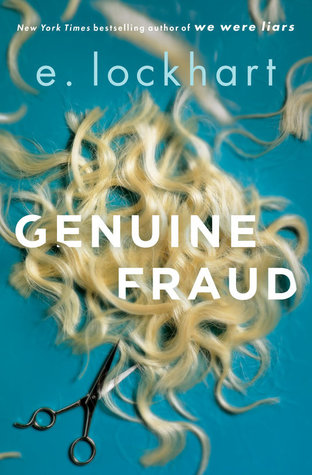
A page-turner that starts from the back and moves forward kept me riveted while on vacation. While perhaps not the most original story, I know that Genuine Fraud will entice many of my students. Middle school and up.
From Goodreads:
The story of a young woman whose diabolical smarts are her ticket into a charmed life. But how many times can someone reinvent themselves? You be the judge.
Imogen is a runaway heiress, an orphan, a cook, and a cheat.
Jule is a fighter, a social chameleon, and an athlete.
An intense friendship. A disappearance. A murder, or maybe two.
A bad romance, or maybe three.
Blunt objects, disguises, blood, and chocolate. The American dream, superheroes, spies, and villains.
A girl who refuses to give people what they want from her.
A girl who refuses to be the person she once was.

Elly Swartz is quickly becoming a trusted author for me. Her first book, Finding Perfect, was a Global Read Aloud finalist and Smart Cookie is another amazing middle grade read. Out in January, 2018.
From Goodreads:
Frankie knows she’ll be in big trouble if Dad discovers she secretly posted a dating profile for him online. But she’s determined to find him a wife, even if she ends up grounded for life. Frankie wants what she had before Mom died. A family of three. Two is a pair of socks or the wheels on a bicycle or a busy weekend at the B&B where Frankie and Dad live. Three is a family. And Frankie’s is missing a piece.
But Operation Mom is harder to pull off than Frankie expects. None of the Possibles are very momish, the B&B’s guests keep canceling, Frankie’s getting the silent treatment from her once best friend, and there’s a maybe-ghost hanging around. Worst of all, Gram and Dad are definitely hiding secrets of their own.
If a smart cookie like Frankie wants to save the B&B and find her missing piece, she’s going to have to figure out what secrets are worth keeping and when it’s time to let go.

I have tweeted repeatedly about Miles Morales, Jason Reynold’s foray into the Marvel universe. Not only is it Spiderman, but it also has some pretty important messages for its readers about how we view others. Middle Grade and up.
From Goodreads:
Miles Morales is just your average teenager. Dinner every Sunday with his parents, chilling out playing old-school video games with his best friend, Ganke, crushing on brainy, beautiful poet Alicia. He’s even got a scholarship spot at the prestigious Brooklyn Visions Academy. Oh yeah, and he’s Spider Man.
But lately, Miles’s spidey-sense has been on the fritz. When a misunderstanding leads to his suspension from school, Miles begins to question his abilities. After all, his dad and uncle were Brooklyn jack-boys with criminal records. Maybe kids like Miles aren’t meant to be superheroes. Maybe Miles should take his dad’s advice and focus on saving himself.
As Miles tries to get his school life back on track, he can’t shake the vivid nightmares that continue to haunt him. Nor can he avoid the relentless buzz of his spidey-sense every day in history class, amidst his teacher’s lectures on the historical “benefits” of slavery and the importance of the modern-day prison system. But after his scholarship is threatened, Miles uncovers a chilling plot, one that puts his friends, his neighborhood, and himself at risk.
It’s time for Miles to suit up.
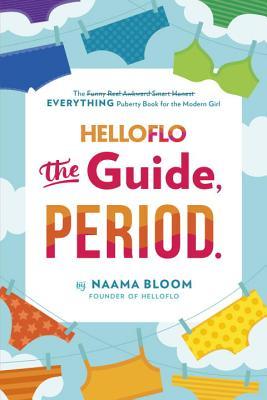
A book about periods? Yup! Well written, humorous and very informational, how many girls wish we had books like this in our libraries when they first enter puberty? Helloflo, The Guide, Period is out October 17th.
From Goodreads:
Honest, funny, and unafraid of the messy, real-life facts about a girl’s changing body, this is definitely not your mother’s puberty book. HelloFlo founder Naama Bloom’s mission is to create informed, empowered young women who are unafraid to ask questions and make the best choices for themselves and their bodies. A celebration of women’s bodies and all the confusing, uncomfortable, silly, transformative, and powerful changes that occur during puberty.
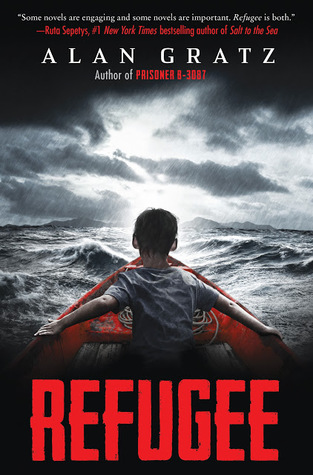
Refugee by Alan Gratz is one of my three must-read books for 2017. It was a bad idea reading this on an airplane, as this book kicks you right in the heart. 5th grade and up.
From Goodreads:
JOSEF is a Jewish boy living in 1930s Nazi Germany. With the threat of concentration camps looming, he and his family board a ship bound for the other side of the world . . .
ISABEL is a Cuban girl in 1994. With riots and unrest plaguing her country, she and her family set out on a raft, hoping to find safety in America . . .
MAHMOUD is a Syrian boy in 2015. With his homeland torn apart by violence and destruction, he and his family begin a long trek toward Europe . . .
All three kids go on harrowing journeys in search of refuge. All will face unimaginable dangers — from drownings to bombings to betrayals. But there is always the hope of tomorrow. And although Josef, Isabel, and Mahmoud are separated by continents and decades, their stories will tie together in the end.

A book about growing up in the 80’s with the threat of nuclear war hanging over you, about figuring out how two seemingly different cultures fit into you, about figuring out your friends and who you want to be. I loved This is Just a Test, great for middle-grade and up.
From Goodreads:
David Da-Wei Horowitz has a lot on his plate. Preparing for his upcoming bar mitzvah would be enough work even if it didn’t involve trying to please his Jewish and Chinese grandmothers, who argue about everything. But David just wants everyone to be happy.
That includes his friend Scott, who is determined to win their upcoming trivia tournament but doesn’t like their teammate — and David’s best friend — Hector. Scott and David begin digging a fallout shelter just in case this Cold War stuff with the Soviets turns south… but David’s not so convinced he wants to spend forever in an underground bunker with Scott. Maybe it would be better if Hector and Kelli Ann came with them. But that would mean David has to figure out how to stand up for Hector and talk to Kelli Ann. Some days, surviving nuclear war feels like the least of David’s problems.
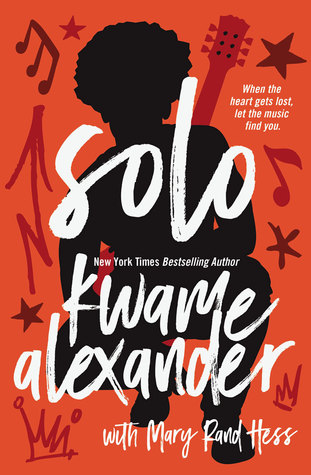
I think we can all agree that Kwame Alexander is a living master when it comes to the free verse form and Solo, his newest book, is more proof. Immerse yourself in the music as you read for a deeper reading experience. 7th grade and up.
From Goodreads:
Solo, a YA novel in poetic verse, tells the story of seventeen-year-old Blade Morrison, whose life is bombarded with scathing tabloids and a father struggling with just about every addiction under the sun—including a desperate desire to make a comeback. Haunted by memories of his mother and his family’s ruin, Blade’s only hope is in the forbidden love of his girlfriend. But when he discovers a deeply protected family secret, Blade sets out on a journey across the globe that will change everything he thought to be true.

A moving story of death, of friendship, of figuring out what is right, and also about one’s identity, All Three Stooges by Erica S. Perl comes out in January 2018 and is well-worth your pre-order. 4th or 5th grade and up.
From Goodreads:
Spoiler alert: This book is not about the Three Stooges. It’s about Noah and Dash, two seventh graders who are best friends and comedy junkies. That is, they were best friends, until Dash’s father died suddenly and Dash shut Noah out. Which Noah deserved, according to Noa, the girl who, annoyingly, shares both his name and his bar mitzvah day.
Now Noah’s confusion, frustration, and determination to get through to Dash are threatening to destroy more than just their friendship. But what choice does he have? As Noah sees it, sometimes you need to risk losing everything, even your sense of humor, to prove that gone doesn’t have to mean “gone for good.”
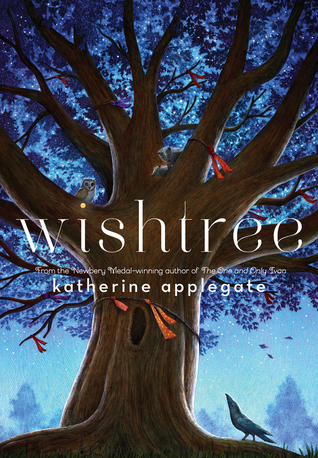
The much-anticipated release Wishtree from Katherine Applegate lives up to all of the hype. Sparse, beautiful, and told from the perspective of the tree in the backyard, life around this tree unfolds in an unexpected way. Out September 26th, 4th grade and up.
From Goodreads:
Trees can’t tell jokes, but they can certainly tell stories. . . .
Red is an oak tree who is many rings old. Red is the neighborhood “wishtree”—people write their wishes on pieces of cloth and tie them to Red’s branches. Along with her crow friend Bongo and other animals who seek refuge in Red’s hollows, this “wishtree” watches over the neighborhood.
You might say Red has seen it all. Until a new family moves in. Not everyone is welcoming, and Red’s experiences as a wishtree are more important than ever.

I don’t know how I have been a teacher and never read a Gordon Korman book before? I am so glad that has now been remedied with Restart. This middle-grade book is sure to pull in those kids who identify as not liking reading and is also a Global Read Aloud 2018 contender.
From Goodreads:
Chase’s memory just went out the window.
Chase doesn’t remember falling off the roof. He doesn’t remember hitting his head. He doesn’t, in fact, remember anything. He wakes up in a hospital room and suddenly has to learn his whole life all over again . . . starting with his own name.
He knows he’s Chase. But who is Chase? When he gets back to school, he sees that different kids have very different reactions to his return.
Some kids treat him like a hero. Some kids are clearly afraid of him.
One girl in particular is so angry with him that she pours her frozen yogurt on his head the first chance she gets.
Pretty soon, it’s not only a question of who Chase is–it’s a question of who he was . . . and who he’s going to be.
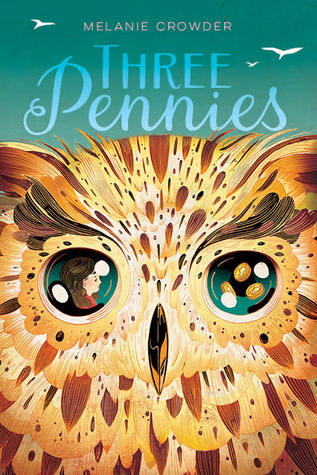
But what if your dream is not to be adopted but instead to find your mother and make her see all that she is missing? Three Pennies, Global Read Aloud 2018 contender, explores just that. 4th grade and up.
From Goodreads:
For a kid bouncing from foster home to foster home, The Book of Changes is the perfect companion. That’s why Marin carries three pennies and a pocket-sized I Ching with her everywhere she goes. Yet when everything in her life suddenly starts changing—when Marin lands in a foster home that feels like somewhere she could stay, maybe forever—the pennies don’t have any answers for her.
Marin is positive that all the wrongs in her life will be made right if only she can find her birth mother and convince her that they belong together. Marin is close, oh so close—until she gets some unwelcome news and her resolve, like the uneasy Earth far beneath the city of San Francisco, is shaken.

Thea and I devoured A Tale of Two Kitties in one day and then laughed for a long time. Dav Pilkey is a master, enough said.
From Goodreads:
He was the best of dogs… He was the worst of dogs… It was the age of invention… It was the season of surprise… It was the eve of supa sadness… It was the dawn of hope… Dog Man, the newest hero from the creator of Captain Underpants, hasn’t always been a paws-itive addition to the police force. While he can muzzle miscreants, he tends to leave a slick of slobber in his wake! This time, Petey the cat’s dragged in a tiny bit of trouble — a double in the form of a super-cute kitten. Dog Man will have to work twice as hard to bust these furballs and remain top dog!

If this post was a list in order of favorites, Dear Martin by Nic Stone would be at the top. In fact, this begs for a re-read as I want to continue to think about this book, another Global Read Aloud 2018 contender. 7th grade and up.
From Goodreads:
Justyce McAllister is top of his class, captain of the debate team, and set for the Ivy League next year—but none of that matters to the police officer who just put him in handcuffs. He is eventually released without charges (or an apology), but the incident has Justyce spooked. Despite leaving his rough neighborhood, he can’t seem to escape the scorn of his former peers or the attitude of his prep school classmates. The only exception: Sarah Jane, Justyce’s gorgeous—and white—debate partner he wishes he didn’t have a thing for.
Struggling to cope with it all, Justyce starts a journal to Dr. Martin Luther King Jr. But do Dr. King’s teachings hold up in the modern world? Justyce isn’t so sure.
Then comes the day Justyce goes driving with his best friend, Manny, windows rolled down, music turned up. Way up. Much to the fury of the white off-duty cop beside them. Words fly. Shots are fired. And Justyce and Manny get caught in the crosshairs. In the media fallout, it’s Justyce who is under attack. The truth of what happened that night—some would kill to know. Justyce is dying to forget.
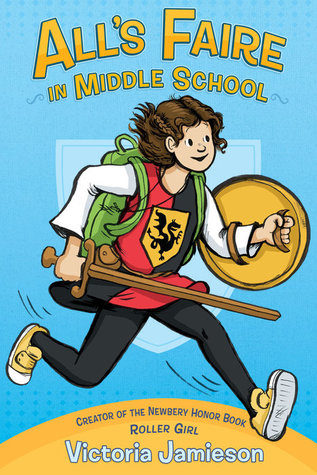
All’s Faire in Middle School hit on so many realistic middle school scenarios that I found myself cringing at times. Oh to go back to that time of trying to fit in, of figuring out who you are, and all of the mistakes you make in the process. 4th grade and up.
From Goodreads:
Eleven-year-old Imogene (Impy) has grown up with two parents working at the Renaissance Faire, and she’s eager to begin her own training as a squire. First, though, she’ll need to prove her bravery. Luckily Impy has just the quest in mind–she’ll go to public school after a life of being homeschooled! But it’s not easy to act like a noble knight-in-training in middle school. Impy falls in with a group of girls who seem really nice (until they don’t) and starts to be embarrassed of her thrift shop apparel, her family’s unusual lifestyle, and their small, messy apartment. Impy has always thought of herself as a heroic knight, but when she does something really mean in order to fit in, she begins to wonder whether she might be more of a dragon after all.

A book about a boy who loves a skunk and will do anything in his power to keep it. A book about a boy who just happens to seem different than others but without being about that. A Boy Called Bat is another Global Read Aloud contender for 2018, 3rd grade and up.
From Goodreads:
For Bixby Alexander Tam (nicknamed Bat), life tends to be full of surprises—some of them good, some not so good. Today, though, is a good-surprise day. Bat’s mom, a veterinarian, has brought home a baby skunk, which she needs to take care of until she can hand him over to a wild-animal shelter.
But the minute Bat meets the kit, he knows they belong together. And he’s got one month to show his mom that a baby skunk might just make a pretty terrific pet.
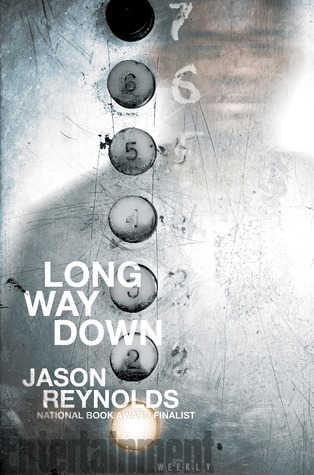
Masterful, heartbreaking, gut-wrenching, and stays with you long after that last page. Long Way Down is another absolute must-read of 2017. Global Read Aloud contender 2018, 7th grade and up, out October 17th.
From Goodreads:
A cannon. A strap.
A piece. A biscuit.
A burner. A heater.
A chopper. A gat.
A hammer
A tool
for RULE
Or, you can call it a gun. That’s what fifteen-year-old Will has shoved in the back waistband of his jeans. See, his brother Shawn was just murdered. And Will knows the rules. No crying. No snitching. Revenge. That’s where Will’s now heading, with that gun shoved in the back waistband of his jeans, the gun that was his brother’s gun. He gets on the elevator, seventh floor, stoked. He knows who he’s after. Or does he? As the elevator stops on the sixth floor, on comes Buck. Buck, Will finds out, is who gave Shawn the gun before Will took the gun. Buck tells Will to check that the gun is even loaded. And that’s when Will sees that one bullet is missing. And the only one who could have fired Shawn’s gun was Shawn. Huh. Will didn’t know that Shawn had ever actually USED his gun. Bigger huh. BUCK IS DEAD. But Buck’s in the elevator? Just as Will’s trying to think this through, the door to the next floor opens. A teenage girl gets on, waves away the smoke from Dead Buck’s cigarette. Will doesn’t know her, but she knew him. Knew. When they were eight. And stray bullets had cut through the playground, and Will had tried to cover her, but she was hit anyway, and so what she wants to know, on that fifth floor elevator stop, is, what if Will, Will with the gun shoved in the back waistband of his jeans, MISSES.
And so it goes, the whole long way down, as the elevator stops on each floor, and at each stop someone connected to his brother gets on to give Will a piece to a bigger story than the one he thinks he knows. A story that might never know an END…if WILL gets off that elevator.

Kate Messner is a master story-teller and she does not disappoint in her newest chapter book, The Exact Location of Home. I ached for the longing of Zig as he searches for his father. 4th grade and up but definitely for middle school as well.
From Goodreads:
Kirby “Zig” Zigonski lives for the world of simple circuits, light bulbs, buzzers, and motors. Electronics are, after all, much more predictable than most people–especially his father, who he hasn’t seen in over a year. When his dad’s latest visit is canceled with no explanation and his mom seems to be hiding something, Zig turns to his best friend Gianna and a new gizmo–a garage sale GPS unit–for help. Convinced that his dad is leaving clues around town to explain his absence, Zig sets out to find him. Following one clue after another, logging mile after mile, Zig soon discovers that people aren’t always what they seem . . . and sometimes, there’s more than one set of coordinates for home.
There you have it, what a fantastic summer of reading it has been!


 Pernille Ripp