being a teacher, Literacy, parents, Reading, Reading Identity

A Parent’s Role in Protecting the Love of Reading

Protect your child's love of reading as you would their health; it is vital for a happy life pernille ripp

I have not hidden the fact that my oldest daughter has been a developing reader for the past 2 years.  That something that came so easy for me, has been a fight for her, where the words stammered and stuttered and her frustration grew.  But.  We just received word from her teacher that she is at grade level as she finishes 1st grade.  That all of her (and their)  hard work has paid off.  That it now is up to us to keep her reading to keep building on the momentum she is on.

Thea is lucky.  She has been in a school where they value creating reading experiences above everything else.  Where they work with each child at their level and try to keep reading magical.  Where each child is given time to read self-chosen books, receive one-to-one or small group instruction, and the emphasis is on reading for fun, not reading for requirement or prizes.  As a school, they have said no to so many things we know can harm the love of reading.

Our role as parents has been to uphold the expectations they have created; reading for fun, reading as a natural part of our day, reading as something that becomes part of the conversations we have every day.  We have gladly embraced it.  We have not had to protect our daughter’s burgeoning love of reading from some of the practices such as reading logs, reading for rewards, AR, or forced daily reading reflections we see around schools, but what if we did?  What can we do then?

We can ask questions.  I think of all of the well-meaning things I did my first years as a teacher that I thought would help children read more that I now cringe at; reading logs, rewards, book reports and projects, reading reflections every night and so on.  No parent ever asked questions because they assumed I knew what I was doing, but the truth is, I was still developing and learning.  I did these things because I thought that is what good teachers did.   Whenever parents ask questions, it may at first be off-putting, but in the end it always helps me grow.  It always offers me a chance for genuine reflection, a chance to re-visit the components that I teach.  This is never a bad thing even if it feels that way at first.

We can share the research.  These ideas of protecting a love of reading are not just based on momentary whims.  Research has shown time and time again how for example external factors such as points, scores, or even food negatively impact a child’s desire to read.  (For a great article on reading logs see this).  If a school has misguided practices in place, then perhaps they have not seen what is out there that can help them grow?  There are nice ways to present research that doesn’t involve chastising other people, especially since it is not always the choice of a teacher to do some of these things, but instead that of a well-meaning district.  So share research and don’t be disappointed if it makes no difference, sometimes even the best research only plants a seed that we will not see come to fruition for a long time.

We can lie.  I know that sounds terrible, but as far as Thea’s kindergarten reading log, I decided to sign it every night and not show her.  She didn’t need to know that she was working toward anything, nor did she need to know that I had to keep track.  So I didn’t tell her and I didn’t keep track, instead I rummaged through her backpack every night and simply signed so her teacher could in turn sign off every morning.  Thea was a reader but even readers take a night off her and there.

We can say no.  No one wants to be THAT parent but sometimes we have to be.  Saying no to a school-wide practice such as reading logs or the use of AR can be a daunting task, but we have to remember the bigger picture; protecting a child’s love of reading.  In Thea’s first kindergarten class,  she was presented with a reading log on the 2nd day of school, all in order to be included in a pizza party.  When I asked questions about it, I was told that in later years the reading log would be a part of her grade for reading and that if she didn’t do it, her reading grade would suffer.  Her grade!  While, at first, this startled me  I soon realized that I was fine with that.  So be it if her grade was lower because she didn’t participate.  Her grade didn’t matter as long as she found reading enjoyable and not something you did to earn something.  Sometimes change will not come until parents speak up, so be the voice of reason and if you see something changing your child’s reading habits for the worse, then do something about it.  Don’t just expect it to be ok in the end. Protect your child’s love of reading as you would their health;  it is vital for a happy life.

We can create our own enjoyable reading experiences.  Sometimes we have to be the counterpoint to the environment our children are in.  If we know that self-selected books are a major component to creating pleasurable reading experiences then that is what we should strive for.  While the parent in me often felt panicked that Thea was not making the necessary gains as a reader, the teacher in me knew that it simply would take time.  That forcing her to read more books every night, or even write more about her reading, would only make the experience miserable for her.  So keeping reading fun, making it a family event (see this blog post for lots of summer reading experience ideas) and making it a natural part of your day are all choices we can make, whether or not our child’s school believes in it.

We have been so lucky as we look back on Thea’s short reading life.  As she switches school this coming school year, I can only hope that it will continue.  We may sometimes wonder about the policies that directly influence our children, but we should never feel powerless.  As parents, we have a right and a responsibility to protect our child, we must ever forget that.

If you are wondering why there seems to be a common thread to so many of my posts as of late, it is because I am working on two separate literacy books.  While the task is daunting and intimidating, it is incredible to once again get to share the phenomenal words of my students as they push me to be a better teacher.  Those books will be published in 2017 hopefully, so until then if you like what you read here, consider reading my book Passionate Learners – How to Engage and Empower Your Students.  Also, if you are wondering where I will be in the coming year or would like to have me speak, please see this page.
 

being a teacher, Literacy, Reading, student choice, Student dreams, student voice

The One Thing that Made the Biggest Difference (According to My Students)

http---www.pixteller.com-pdata-t-l-419967.jpg

I asked my students what made the biggest difference. I  asked them what I should tell other educators as I ready myself for speaking this summer, honored to be invited to so many great states.  I asked them what they wished every teacher would do, if they had to pick one thing, what would it be?  Answer after answer, paper upon paper, they told me their one thing.  And while I wasn’t surprised, I had not expected it to be so frequent.  I had not expected it to show up on so many independently answered surveys.  I had not expected it to be the ONE thing so many times.

Please tell them to give us time to read.  Please allow us at least 10 minutes.  Please tell us to read.  Tell us to read only great books.  Give us the time so we can fall back in love.

The time; that was the most important.

I have started almost every single day with a sacred 10 minutes of reading.  Not enough, I know, but when I only get 45 minutes to teach English, it is more than 1/5 of our time.  Every day I have expected all students to read and to read a good book.  Every day I have expected students to fall into the pages that they chose and only come back up when the timer sounds and the rest of our class begins.  I was scared of what we would lose in our curriculum by giving them so many minutes.  I was scared that I would not be enough of a teacher by telling them that for those 10 minutes I would only interrupt a few of them every day, but mostly they would be left to read.  I have read the research, of course, that speaks of the power of 10 minutes.  As a teacher I believe in it, but to have it come straight from the very students it effects?  That is powerful.  That is something worth sharing.

When we hope for a reading miracle, when we hope for the one thing that will make a child a reader, it seems like this is it.  That independent reading of self-chosen books is truly what will help all of our readers, whether dormant, resistant, or already in love, develop into readers who will leave our classrooms knowing that books have a place in their life.

So as we teach the older students, those students that might not have the luxury of longer literacy blocks.  Who may not have the luxury of reading work shop.  Who may not have the luxury of choice. I implore you to please take my students’ advice to heart; give them time to read, even if only for 10 minutes.  Give them time to read a book they choose.  Make it the expectation and not just once in a while, but every single day. I promise it will make the biggest difference.  At least it will, according to my students.

If you are wondering why there seems to be a common thread to so many of my posts as of late, it is because I am working on two separate literacy books.  While the task is daunting and intimidating, it is incredible to once again get to share the phenomenal words of my students as they push me to be a better teacher.  Those books will be published in 2017 hopefully, so until then if you like what you read here, consider reading my book Passionate Learners – How to Engage and Empower Your Students.  Also, if you are wondering where I will be in the coming year or would like to have me speak, please see this page.

being a teacher, being me, building community, end of year

Take the Time

For in the end it is not what we got done that matters, it is how we felt doing it. pernille ripp

There seems to be no greater rush in school then these last few precious days before we say goodbye, before our time is up.  I look at my own to-do list and wonder just how much will actually get to done.  The pressure of it all nips at my heels as I wonder whether my students could possibly speak a little bit faster as they deliver their end of year speeches.  Will we get through them all?  We have so much to do still.

Yet, as I listened today to a boy share his message of hope and forgiveness.  To another who shared the value of friendship.  To one who decided to challenge our racial beliefs, and one that made me cry (actually two did) because they stood up there and spoke their truth, I knew what I had forgotten.  To take the time.

To take the time to say goodbye the proper way.

To take the time to laugh.

To share memories and stories.  To take the time and not feel guilty all of the time for all of the things we didn’t get to do.

Take the time to remember all of the great and all of the not so great.

Take the time to remember the very best books, projects, or whatever else you may have shared.

To take the time to ask just a few more questions so that you can grow over the summer.

To take the time to thank you students for the journey you have been on.

May we never forget to be grateful for the things we take for granted, for the community we create, for the memories we make.

May we never take for granted that our year, while tough at times, was still a success and that all of those students did actually grow, even if it was not as much as we had hoped.

May we never forget that for a brief moment in time we were a part of the future by being a part of a child’s life.

So take the time to say goodbye and don’t worry so much about the to do.  Because in the end it is not what we got done that matters, it is how we felt doing it.  SO take the time to take the time and don’t let your guilt consume you.

If you like what you read here, consider reading my book Passionate Learners – How to Engage and Empower Your Students.  Also, if you are wondering where I will be in the coming year or would like to have me speak, please see this page.
being a teacher, Reading

Warning: This Will Get Stuck in Your Head

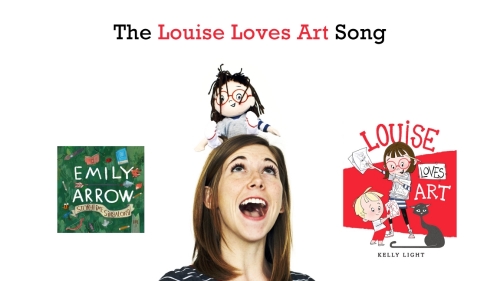
I first fell in love with the music (and videos) of Emily Arrow when Mr. Schu ran a contest for the picture book Louise Loves Art.  Be one of the first 5 classes to tweet out a picture of kids singing along and win a copy of the book.  I had heard of Emily Arrow before but for some reason had never clicked on her videos.  I wasn’t sure how my students would react, after all, they are sometimes way too cool to get a little silly, but that day I realized what a genius Emily Arrow and her music is.  As I played her infectious tune and watched my 7th graders, yes 12 and 13 year olds, dance and sign along, I knew that I had to share Emily Arrow and her talent with as many people as possible.

Emily Arrow is the real deal; her love of picture books flows through her songs, which entice us to read the books just one more time.  My own children are hooked as well and even my husband who has a notoriously picky style of music will play the songs and smile broadly.  You simply cannot help but sing along as the music starts to play.  Yet the genius of Emily Arrow is not just her songs, it is the videos she creates to go along with them.  This is why my students have acted out jazz hands and drawn in the air.  And this is why my students asked if they could please send her some questions, so we did, and she answered them!  Thank you Emily Arrow; we are so thankful you are sharing your genius with the world.

1.  What is your favorite song to sing?

I love to sing the Louise Loves Art Song (inspired by the book by Kelly Light) because I love when the audience echoes the lyrics in the chorus. Check out the video too!

2.  What inspired you to do this type of music?

I decided to create kidlit tunes (songs inspired by books!) because I was a music teacher for students in Kindergarten through sixth grade for three years!

3.  How do you come up with the ideas for the videos?

I try to think of a way to use the colors, ideas, and feelings from the song and/or book in the video. Then I think of two or three places to record parts of the video that have something to do with the song. The brainstorming is soooo much fun for me!

4.  What has been your favorite video to make?

I loved making the NO, NO, GNOME video because I got to hang out with my pal Ashlyn Anstee all day.


5.  How do authors and illustrators react to your songs?

One time, one sent me an illustration in the mail as a gift. One time, one cried! It’s always different but I always want them to feel appreciated for the work they do creating their amazing stories.

6.  What are some songs you are working on?

I’m working on a fun song about a wizard, one about a kid who’s a cactus, and another that’s about friendship called Zoomba Zoo as a collaboration with illustrator Zoey Abbott Wagner!

7.  How do you keep your imagination on the outside?

Love this Louise-y question! Writing songs is an awesome way to share what’s on my mind in the world. And I write LOTS of lists in medium-sized notebooks. I use about a notebook a month full of thoughts and ideas and to-dos!

So do yourself a favor; go check out Emily Arrow’s music on her website, order her cd, buy the books, and of course, watch the videos.  I promise you won’t regret it…jazz hands!

Be the change, being a teacher, ideas

Why Not You?

http---www.pixteller.com-pdata-t-l-413088

I have spent more minutes talking to Charter Spectrum in the last few months than I care to remember.  Apparently our internet is determined to make me not work every night and Charter continues to say there is nothing wrong.  As I spoke to the kind lady on the line tonight, I finally told her that I could not understand how this could be acceptable.  Her response; well, this is how it is with every internet provider.  Little did she know she would inspire me to blog, because this is what we hear over and over in our schools.  In education.  In our teaching.  “This is how it is..This is how we have always done…This is how it works.”

How often have those very words stopped our grand ideas?  How often have they stopped us from taking a risk?  From trying something new?  From being the first?  Or even from being the second?  How often has routine, tradition, and “just fine” ideas stopped us from doing something new?

Evolution happens when something changes.  It happens when someone takes a risk, even a small one, and tries something new.  Creativity is based upon risk taking, invention, and new ideas.  So if we say we want schools to be relevant.  If we say we want schools to work for all children.  If we say we want schools that will foster innovation and help students dare to be more, then why not you?  Why not let yourself be the one that tries something new?  That tries an idea that might not work?  Why not you and your ideas?  And why not now?

If you like what you read here, consider reading my book Passionate Learners – How to Engage and Empower Your Students.  Also, if you are wondering where I will be in the coming year or would like to have me speak, please see this page.


being a teacher, being me, Literacy, Reading, summer

Parents – How to Help Your Child Love Reading Over the Summer

I know many of us educators (and those at home) have been working hard all year to try to cultivate or protect a love of reading in our learners.   Now with warmer temperatures and summer beckoning for the Northern Hemisphere comes the real test; will kids keep reading over the summer?  Is what we did enough?  Did we lay enough of a foundation, get them excited, get them hooked so that the next few weeks or months will not put them in a reading drought?  While time will truly be the judge of how the work might pay off, here are a few ideas that may help depending on the age of the learner.

Have a to-be-read list.  All year we have cultivated ours, trying to add as many titles as possible so that when the students leave our classrooms they have something to help guide them when they are either at the library or at the bookstore.  This is especially important for our “fragile” readers, those who have just discovered that books and reading may be for them after all and need a constant diet of amazing books.  But really all kids should have one, not just some.  Even if school has not created a to-be-read list it is not too late to make one!  Browse the displays at the library or at the book store and write it down somehow. Keep the list on you because you never know when you come across an opportunity to find more books.

Visit places where books are present.  We go to the library a lot; when it is too hot and the pool is not open, when it is stormy, when we are tired.  We also go to our local book store and browse.  Accessing book, touching books, getting excited about books and anything that we can read is vital to keep the desire alive.  If you are not able to go places where there are books, ask your child’s teacher if you may borrow a big stack of books from them if you promise to bring them back.  I have often lent books to families over the summer as a way to help them keep reading.

Make it social.  I love reading a great book and then talking to others about the book or even better passing the book on to them (as long as they give it back).  Make reading a social aspect of your summer; have reading “parties” where kids can discuss books, create a book swap with other families, scour garage sales for long-lost favorites.  Offer up yourself to read with your learner or get more than one copy of a book (if you have access to them) so that others may join in the reading.  Too often as parents we think we should read all of the books our child is reading and while that can be a fun bonding experience, it may be more powerful if you can get a friend of your child to be a reading partner.

Use audio books.  I love that I can borrow audio books from our library – the entire Harry Potter series has been the backdrop to our commute for the past 4 months.  When your children are in the car, put on an audio book.  Have a copy of the book ready if  anyone wants to keep reading and you have reached your destination.  With all of the research coming out correlating audio books with further reading success this is a winning situation.

Find great books.  Get connected online to communities like #Titletalk, #BookADay, or Nerdy Book Club to get ideas of what to read next.  I am constantly adding to my wish list due to these two places.  Use the professionals like librarians,booksellers and teachers.  Also, ask other parents what their kids are reading, create a Facebook page to share recommendations or simply use you own page, anything to find out what great books are available.

Create a routine.  We read every night and sometimes even in the morning (as well as throughout the day but then again we may be slightly book obsessed).  Helping your child create a routine where reading is a natural part of the day mean that they will create ownership over the habit, thus (hopefully) inspiring further reading.

Allow real choice.  I have seen some parents (and schools) require learners to read certain books over summer, but summer is meant to be guilt-free reading.  Where we reach for those books we cannot wait to read because they will suck us right in, where we fill up our reserves so we can perhaps finally tackle that really challenging book that we have been wanting to read.  Where we explore new books because we want to.  Too often rules and expectations infringe on the beauty of summer reading; falling into a book’s pages and not having to come up for air until it is done.  That also goes for reading things that may be “too easy” or “too hard” – I devour picture books, graphic novels and all thing “too easy” in the summer, as well as trashy beach reads and Danish crime mysteries.  I refuse to feel guilty about my choices in reading, because that is never what reading is about.

Have books everywhere.  Again, this depends on how many books you have access to, but leave books wherever your kids go.  I have books in the car, in their rooms, in the kitchen, living room, etc.  That way the books seem to fall into their hands at random times; stopped in traffic, quiet time before lunch, a sneak read before falling asleep.  It is a luxury to have books in our house and so we try to make them as visible as possible.

Celebrate abandonment, but ask questions.  When a child abandons a book, this is a great thing.  They are learning that this book is not for them and they can use their energy for a book that will be for them.  But ask questions so that they may think about what type of book they might like.  So they can think about what type of reader they are and want to be.  Make sure that there are other books they want to read as well so that they can keep trying to find great books.

Be invested and interested.  This does not mean that you ask your child to write reports about what they read, in fact, I would be very careful as to what type of work goes along with reading over the summer beside reading, but do ask questions.  Ask whether they enjoy the book or not.  What they plan on reading next.  Read along with them or beside them.  Make reading a part of your life so it can become a part of theirs.

Keep it fun.  Too often, especially if our child is not a well-developed reader, we can get rather nervous as parents and think that we must keep them on a regimented reading program at all costs.  That we must have them write about reading or track it somehow.  Have them read, yes, but keep it light and fun.  The last thing we want to do is to make reading a worse experience for them or adding more stress to your family.

What other ideas do you have?

If you are wondering why there seems to be a common thread to so many of my posts as of late, it is because I am working on two separate literacy books.  While the task is daunting and intimidating, it is incredible to once again get to share the phenomenal words of my students as they push me to be a better teacher.  Those books will be published in 2017 hopefully, so until then if you like what you read here, consider reading my book Passionate Learners – How to Engage and Empower Your Students.  Also, if you are wondering where I will be in the coming year or would like to have me speak, please see this page.