being a teacher, books, Literacy, picture books, Reading

10 + 1 Picture Books to Teach Inference

I remember I was told to teach inference as a 4th grade teacher, it was one of the many skills students were supposed to develop in literacy, and I was a stickler for following the rules.  So the first year I sat with my lesson plans, every word penciled out and guided my students through the lesson.  We inferred because the book told us to.  When a child asked me why they were learning this, I answered, “Because you will need it next year.”  That successfully quieted the child, and I felt satisfied, I had been able to give them a reason for what we were doing and so they did it.

Yet, the act of inferring is so much bigger than “next year.”  It is so much bigger than learning how to read text better.  It is a life skill.  One we need to navigate difficult situations.  One we need to read other people.  One we need to become better human beings that care about others.  And so we infer, yes, but we also start to trust ourselves and our opinions, build confidence in our intuition and get more astute in our observations.  And picture books are about one of the best ways we can teach it in our classrooms.  So here are some of my favorite titles that I use.

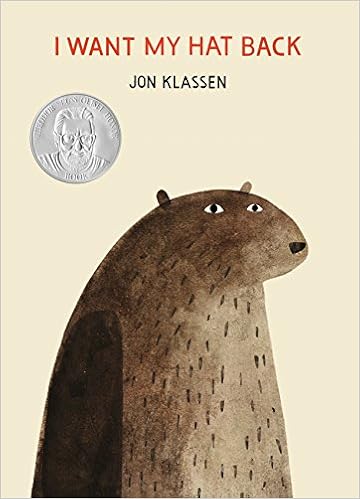
I have to start with one of my favorites and the one I chose to start this year’s lessons with; I Want My Hat Back by Jon Klassen.  Beloved by so many, the students laugh out loud, love to infer right away, even when you tell them not to and fall in love with the simple yet devilish story of who took the bear’s hat.  Magic I tell you.

And I have to highlight the kind of sequel This Is Not My Hat also by Jon Klassen.  I use this as a follow up book, to give my students another chance at visiting the magical world that seems to be Jon Klassen’s mind and they love it as much as the first one.  I also love all of the theories of what happened to the little fish that my student concoct.

Boats for Papa is a new picture book by Jessixa Bagley that I immediately fell in love with.  The story does not tell us where papa is, nor why the mother does what she does, leaving this open for interpretation by the students.

Knock Knock: My Dad’s Dreams For Me by Daniel Beaty is an emotional book that leaves the reader wondering where the father is.  I love the emotional connection that my students can feel to this book, as well as what they conclude.  This book will also provide us with a window into the lives of our students as they share their own experiences.

This amusing story of what really happened to a sandwich will allow you to peek into the minds of how deeply students understand textual clues, as well as how well they look for evidence.  The Bear Ate Your Sandwich by Julia Sarcone-Beach is one that makes me giggle every time I read it aloud and then leads to heated discussions of what exactly did happen to that sandwich?

Another book that is great for deeper level conversations as students try to decide why that skunk keeps following the main character.  I cannot wait to hear what my students will come up with, as well as what they would do in this situation if a skunk were to follow them home.  I have many of Mac Barnett’s and Patrick McDonnell’s book and love having The Skunk as well

Rules of Summer by Shaun Tan is one of those books you can turn to again and again because of the complexity within it.  I have used it to teach Contrast & Contradictions and will now also use it for deeper inferences.  What I love the most is that each child can truly have their own unique interpretation of what the entire book means and I don’t have enough books that allow us to do that.

Yes, I am biased when it comes to Amy Krouse Rosenthal,, she is after all the Global Read Aloud picture book author study this year.  But Duck Rabbit is a great inference and discussion book.  The simple text and witty illustrations means that every student is bound to have an opinion in the ongoing debate of whether that is a duck or a rabbit.  I always keep my opinion to myself.

Another wordless picture book on this list is The Red Book by Barbara Lehman.  Again, this levels the playing field for all students as they try to figure out what is happening in the story and have to be careful observers to support their conclusions.  Plus, I just love the message this book sends.

Another new picture book to me this summer is Shhh!  We Have a Plan by Chris Haughton.  I love asking my students what they think will happen if the group succeeds and what their purpose really is.

Before I published this post, I asked on Twitter for people to share their favorites.  Here are some crowd sourced ones as well.

No, David! by David Shannon

The Rabbits by Shaun Tan and John Marsden

Dear Santa Claus by Alan Durant

Mr. Peabody’s Apples by Madonna and Loren Long

Which ones did I miss?

If you like what you read here, consider reading my book Passionate Learners – How to Engage and Empower Your Students.  The 2nd edition and actual book-book (not just e-book!) just came out!
assessment, assumptions, Be the change, being a teacher, grades, ideas

7 Simple Things that Make Feedback and Assessment About the Students Again

http---www.pixteller.com-pdata-t-l-191398

I think we all are always looking for ways to ease the assessment and feedback process in our classrooms, I know I am!  And I get it, giving feedback and doing great assessment with 120 students, or even just 20 students, can seem like an unwieldy beast at times.   So while I wrote about lessons I have learned while trying to limit grades, I thought I would also offer up the practical things that have made my day-to-day better.  Behold, a few things to maybe make your feedback and assessment process easier.

Background:  I now work in a district that is doing Standards Based Grades and moving away from letter grades.  We also believe that formative work is practice work and can therefore not count toward a summative score, and finally, that students have the right to re-take work.  At my middle school, we have a 2 week automatic re-take policy that we encourage students to use in case they need extra help with a concept.  

They have a notebook that stays in the room.  I have learned the hard way that when students leave with their notebooks,  they sometimes do not come back with them.  So this year, I instead created a readers notebook for them to keep in the classroom.  Yes, it was a lot of paper, but it means that my students always know where to write their thoughts, it means that all writing about reading only happens in the classroom, and it also means that I have access to them at all time.  This means that not only do we have a routine established for responding to reading, which frees up time, but also that student scan see their thoughts develop over time along with the feedback I give them.  Each class has a bin on my shelf for easy access every day and they grab them when they come in before they start their independent reading time.

They have a manila folder with their names on it in real life or electronically.  Each class is separated into 5 different groups and each group has a folder.  All work that students do that is not in their readers notebook go in these folder.  This year, the students will even file it themselves to save time.  Why collect the work?  Because my students write way more than I can assess, so this allows them a gathering place for all of their work.  When a unit is nearing its end, I ask them to pick the one piece that they want me to assess.  I also do this for anything we do electronically (but I respect the fact that some of my students want to hand write rather than type).  The discussion that happens based on what they select for me to look at are richer because I know they had to think about it and not just hand me the last thing they wrote.  This also signals to them that they are not working to get through things, but to learn, and that every piece of work they create has value eve if it does not get assessed

I have pre-printed labels with comments.  Not for everything, but when I give feedback in their readers notebooks there are certain things that crop up again and again.  That is what the pre-printed labels are for.  These change throughout the year and I do not reuse the same ones from unit to unit.  It is always catered to what we are working on  what I am noticing with the students, and are explained before they are put on their work.

The students self-assess before I assess.  At the end of unit, before anything is handed back by me, the students will then set goals and reflect on their work.  This involves them scoring themselves as far as where they are with their  proficiency in the chosen standard.  The score is based on a standard they have deconstructed to put into student-friendly language, and also based on a rubric they have built with me or we have discussed.  I want my students’ to have a chance to reflect before their confidence is skewed by my words.

Standards are assessed twice at least.  We have 7 standards to cover in English this year and all of them will be assessed for a summative score at least twice in separate quarters.  It is a chance for students to truly see that mastery may come at a different time for them than their peers and that that is ok.  It also allows us to establish a baseline score and then see how they grow.  When a standard is only assessed once, we assume that all students grow at the same rate, which we know is not true.   So instead, make it a point to show students that knowledge is something we gain at all times and that they are the masters of their growth.

They have a chance to disagree.  Once students have self-assessed, it is my turn.  I will either handwrite their assessment or speak to them about it.  But even then it is not final, it is a conversation, and students know that this is their chance to speak up.  Too often we gloss over the assessment piece by handing things back at the end of class and forget that this is one of the largest opportunities we have for meaningful conversations about their learning journey.  Don’t rush through it but take the time to discuss, reflect, and set new goals.

All work is kept in the classroom, pretty much.   I need to know what my students know.  Not what others know, not what they later figured out, but what they know right now.  So any kind of summative work is done in the classroom, not at home, so that I can see how they work on a product with time management and the need for them to think deeper.  This also fits into my policy of limited homework.  And it forced me to evaluate what I am asking them to do, since I can see how much time something takes.  ( I also do all of the work my students have to do, which has definitely been an eye-opening experience).

PS:  For the how-to for eliminating or limiting grades, please consider reading my book Passionate Learners.  There is a whole chapter dedicated to not just the why, but the actual how.

Be the change, being a teacher, being me, students

Do We Forget What We Are Asking Students to Do All Day?

http---www.pixteller.com-pdata-t-l-186667

Yesterday I was in Michigan, surrounded by passionate educators, trying to make a change in the way they teach.  I was lucky enough to give the keynote at Googlefest and after I was done speaking, my job was to listen.  And so I did.  With every inch of me I listened to their stories, tried to answer their questions, and soak in the knowledge that I was being given.  What a gift it was.

It was exhausting.

By the time I reached the airport, my brain called out for sleep and food.  No more computers.  No more work.  By the time I sat down, I couldn’t fathom doing anything productive although my to-do list screamed out for attention.  My brain was full.  My brain was so tired.  And there was nothing I could do to trick it into thinking anything smart or productive.  Thank goodness I did not have a looming deadline.  So that’s when it struck me…

This is what happens to our students every single day.  

We ask them to give us their full attention.  For them to be on high alert all day as they learn. Ask any student and they will tell you they mostly listen throughout the day, interjecting knowledge throughout, yet their brain is constantly processing.  Constantly working to make sure they are fulfilling what we demand students do:  pay attention, be ready, learn.  And be ready to prove it to us, no slacking allowed, whenever we feel like calling on them.

As adults we forget how tiring that must be.  How not only are they asked to pay attention, but they are also asked to sit still, take notes, and be ready to answer any question we throw their way.  We expect them to care about what we are doing and give us their very best, every minute, every day.

So today as I plan for the learning to come, I cannot help but think of how I need to make sure my students are moving.  How I need to make sure they are talking and discussing.  How I need to make sure we are doing something with the knowledge that we are working with, so they are not just paying attention, not just getting more information.  And how I also need to be more understanding when they tell me they are tired.

We ask so much of our students because so much was asked of us when we went to school, yet we forget how hard it can be to live up to our standards.  Do you have room for students brains to take a break?  Do you plan for engagement and not just listening?  Do you ask the students what they need so they are not exhausted by the end of the day?  No wonder, students ask us to rethink  homework, when all their brain is asking for is to take a break.  I hope this is a lesson I don’t forget.

If you like what you read here, consider reading my book Passionate Learners – How to Engage and Empower Your Students.  The 2nd edition and actual book-book (not just e-book!) just came out!

Be the change, being a teacher, being me, Passion, power

A Rally Cry for Our Girls (And Boys)

11872287_893262384056709_8164193695113575675_o

A woman I admire greatly, Joyce Valenza, keynoted today on female leadership.  Before her keynote she asked me and other women I admire greatly to share their experiences of what it means to be a woman in education.  The following is roughly what I shared in a short video clip, I thought it only best to share it here as well but written instead of spoken.

I am the mother to 4 children all under the age of six.  I am the mother to 3 daughters that will one day, hopefully, become independent leaders, not afraid to speak up or speak out.  But for them to become just that, our society has to change.  Our classrooms need to change.  Our language needs to change.

In how many classrooms are girls expected to follow the rules better?  To sit still?  To listen quietly?  If a girl runs around, full of energy she is “acting like a boy.”  If she does it on a regular basis then something must be wrong with her.  If a girl raises her voice, has high energy, then she must be having a bad day.  She is labeled “wild” and “unruly.”  Because that is not how girls are supposed to be.  It goes against their very nature.

The same goes for boys, except only opposite.  If a boy is quiet, if a boy shows emotion, then something must be wrong.  If a boy does not engage in rough housing he must have a problem or be a wimp.  We call our boys “sensitive” like it’s a swear word.

As educators, we must see our students as full human beings that can act in whichever way they choose, even if that means not being a “good” girl every day.  As mothers, we must protect our children from the language that is sure to shape their identity so that they can be what they want to be, not just the archetype of a woman that society has bestowed upon us.

We are raising the future so I raise my girls to be independent.  To be brave.  To be fierce.  I raise my son to be proud of his emotions and to say no when he wants to.  That he does not have to fit into any gender stereotype someone else has decided for him.  But most of all, I raise my children to be themselves, no matter their gender.  Our classrooms, our very language, should protect that.

If you like what you read here, consider reading my book Passionate Learners – How to Engage and Empower Your Students.  The 2nd edition and actual book-book (not just e-book!) just came out!
being a teacher, books, Literacy, picturebooks

Great Picture Books to Use for Aha Moments

One of the main texts we use to guide our reading instruction is the amazing Notice and Note: Strategies for Close Reading by Kylene Beers and Robert Probst.  This book provides us with the foundation for having deeper reading conversations and a common language as we develop our thoughts.  While the book has excellent text ideas to use as mentor texts, I thought it would be nice for my students to use picture books on the very first day of a new strategy before we delve into the longer text excerpts.  I have therefore looked for picture books I could use with the different strategies and will publish posts as I have them for the 6 different strategies since I cannot be the only one looking for ideas.

The first post was on Contrast & Contradictions, so this week I am turning to Aha Moments.  These are the books my students and I will use as we explore this concept a little further.

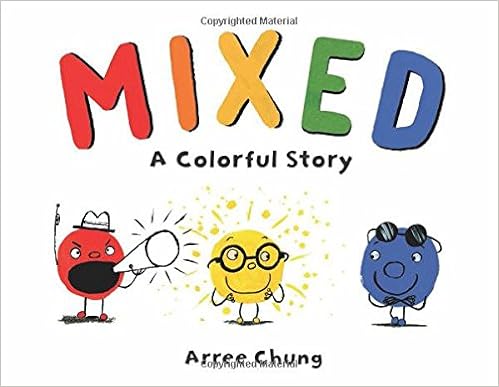
Fantastic Aha Moment in Mixed – A Colorful Story by Arree Chung as the community realizes that it is more fun to be mixed than separated.

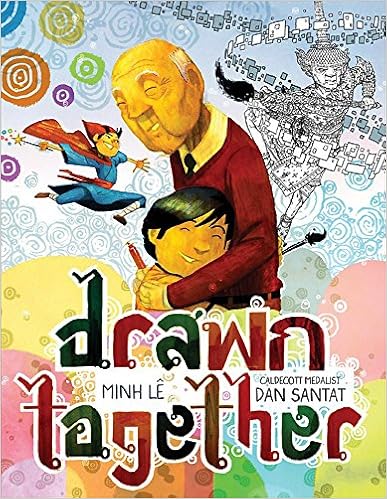
The little boy realizes that he is more alike with his grandfather than not in amazing Drawn Together by Minh Le and Dan Santat.

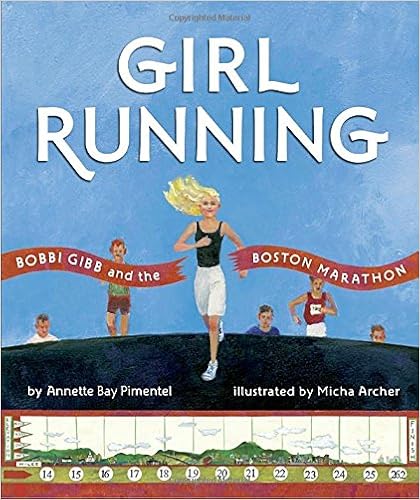
Girl Running by Annette Bay Pimentel and Micha Archer.  Bobbi Gibb realizes that she is good enough to run the marathon.


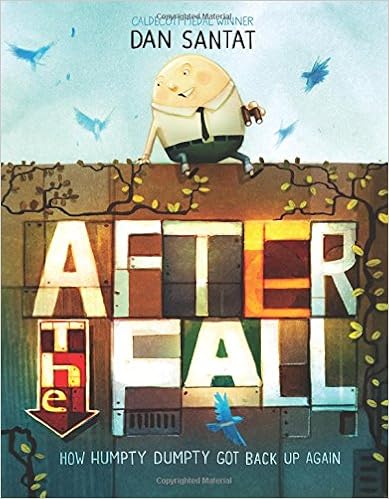
After the Fall (How Humpty Dumpty Got Back Up Again) by Dan Santat

Humpty Dumpty has to overcome his own fears, but how can he?

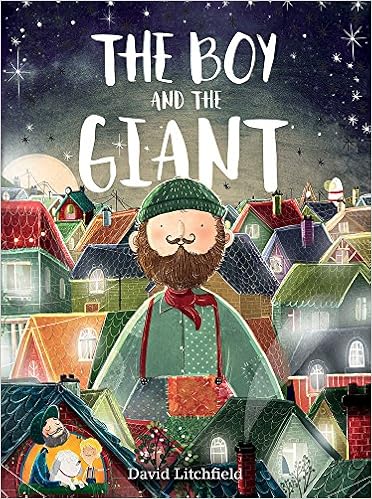
Billy realizes that instead of being scared of the giant, he needs to be how he would like others to treat him.
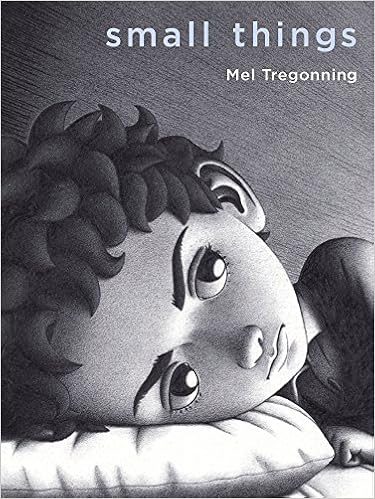
In this wordless picture book, we see the aha moment rather than read it when a boy has to figure out how to handle his anxiety.
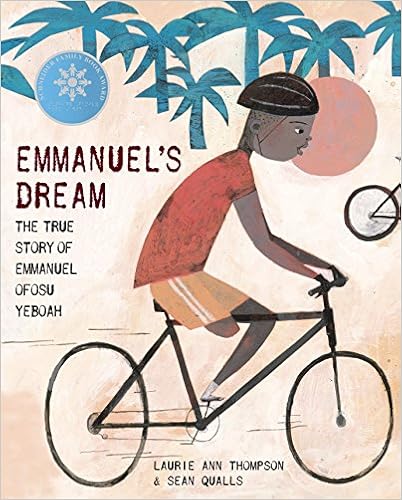
The aha moment is mixed in with words of the wiser from Emmanuel’s mother and is embedded into the story.  This is a good book to use when it may not be as obvious.


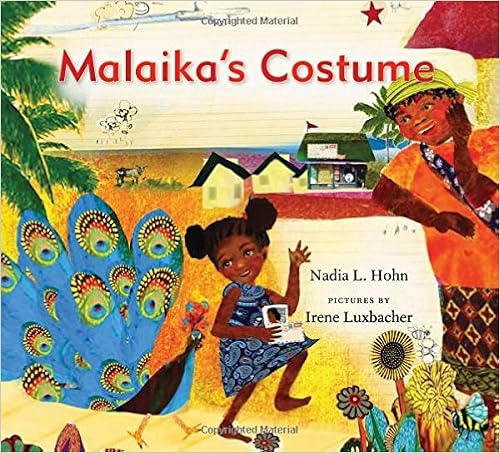
Malaika’s Costume
Malaika has to figure out how to navigate without the money her mom promised she would send to get her a costume for Carnival.
After a great discussion with her swim teacher (Words of the Wiser), Abigail realizes that she should not care what others say.

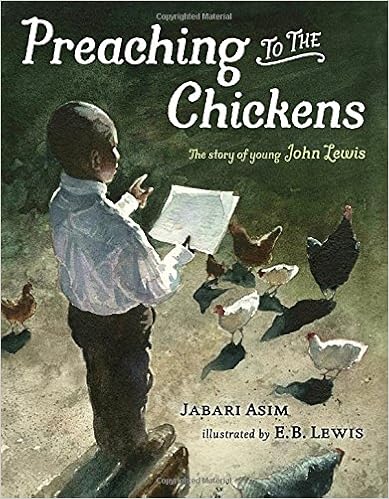
Preaching to the Chickens by Jabari Asim and illustrated by E.B. Lewis shares all of the Aha moments and realizations that John Lewis had as a young child.

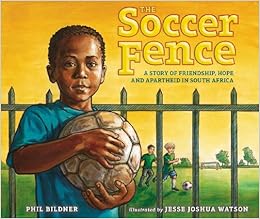
The Soccer Fence by Phil Bildner and illustrated by Jesse Joshua Watson not only serves as a wonderful mentor text for Aha moments , but also an an important historical reminder for us all.

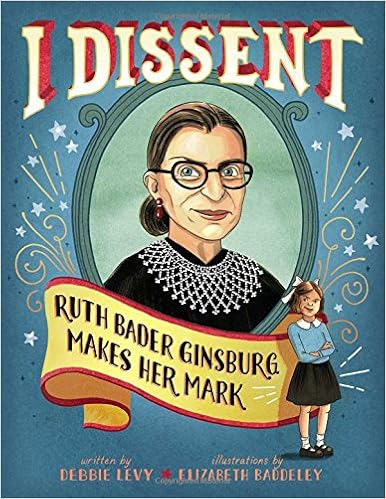
I Dissent – Ruth Bader Ginsburg Makes Her Mark written by Debbie Levy and illustrated by Elizabeth Baddeley is a phenomenal informational picture books that really show how having an aha moment truly shapes RBG’s life.  I love this picture book for many reasons and this is just one of them.

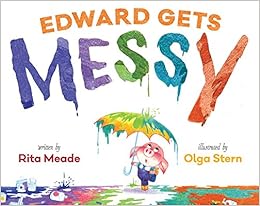
Edward Gets Messy written by Rita Meade and illustrated by Olga Stern has a wonderful tale of a pig that thinks his life needs t be a certain way but then realizes that it is okay to get a little messy.  This picture book could also be used for Contrast & Contradictions.


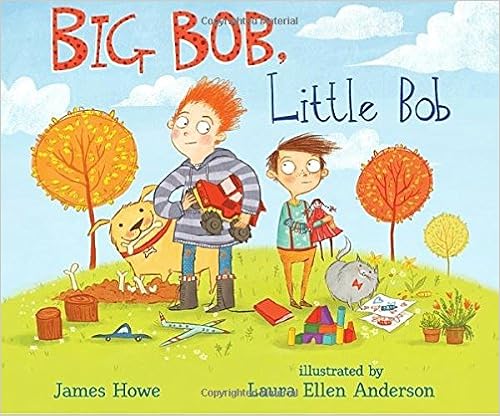
Big Bob, Little Bob written by James Howe and illustrated by Laura Ellen Anderson has a pretty awesome Aha moment toward the end that leads into a perfect conversation about the theme of acceptance and appreciating our uniqueness.


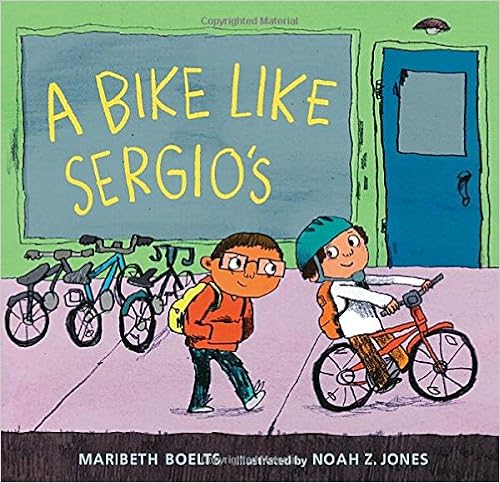
What do you do when you find money that doesn’t belong to you but you really want a new book?  A Bike Like Sergio’s by Maribeth Boelts and illustrated by Noah Z. Jones not only has an Aha moment, but will also lead to a great discussion between doing what is right or wrong.

There is no way to go wrong with using Jon Klassen books.  I love all three of his hat trilogy book because not only do they all contain Aha moments, but they are also crowdpleaser.  The Aha moment in I Want My Hat Back is a conflict aha moment and I love the discussion that naturally occurs when the students just have to discuss whatever happened to that rabbit.

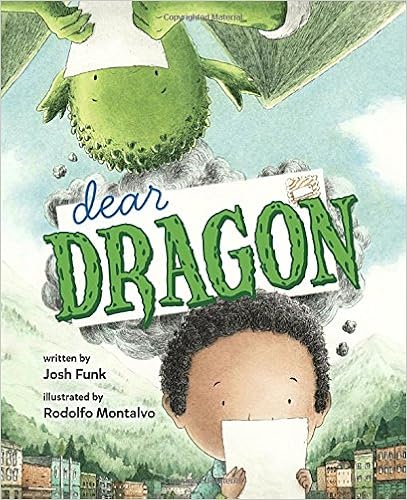
Dear Dragon written by josh Funk and illustrated by Rodolfo Montalvo is a must add to any classroom library.  The Aha moment is one that students can relate to and I love the theme of the book so much; yes we can be friends with people who lead vastly different lives than us.


While Oscar’s Spots by Janet Robertson is more than 20 years old, I still love the copy we have in our classroom.  Oscar has a pretty big moment when he realizes that maybe he doesn’t want to get rid of his spots after all.


We are huge fans of Mustache Baby by Bridget Heos, and so I am thrilled that I can use its sequel Mustache Baby Meets His Match to teach Aha moments.  I love how Billy changes his tune late in the book.


Henny by Elizabeth Rose Stanton is a quirky book and yet the aha moment cannot be denied when Henny realizes that maybe having arms is not such a bad thing after all.  My students are always puzzled when they first encounter this book but then end up liking it.


I am pretty sure I can teach all of the Notice and Note signposts with the help of Peter H. Reynolds.  His beautiful book Ish is a fantastic example of aha moment and will probably be the one that I use when I teach the strategy to the class.  It’s a good day when Peter’s books are read aloud.


While there is no specific aha moment in What Do You Do With An Idea? by Kobi Yamada, I feel like the whole book is an aha moment.  I am looking forward to the discussion that will happen around this book.


Each Kindness by Jacqueline Woodson is one of those picture books you can use for so many things; memoir, aha moment, words of the wiser, teaching empathy and such.  I have used this book for so many things that it only seems natural to discuss the aha moment that Chloe has.


A Perfectly Messed Up Story by Patrick McDonnell is one of many amazing picture books from this author.  I love the simple aha moment of realizing that it can be good enough even if it is not perfect.  This is a great read for many of our students who push toward perfect every time to the detriment of their own sanity.


The Promise by Nicola Davies is a story meant to be discussed.  I love it for its beautiful illustration, for its message, and also for its use as a mentor text.  The aha moment is one that I hope students will remember and apply in their own life.


Elwood Bigfoot: Wanted Birdie Friends by Jill Esbaum is not only a great book to discuss friendship and how we must stay true to ourselves, but is great for aha moments as well.  Elwood has a pretty big one and hopefully so will our students.


You Are (Not) Small by Anna Kang is a great book for those who really need direct aha moments to relate to.  This one is pretty straight forward and will be a great book to have students explore by themselves as well.

I am sure there are more out there, please make sure you share.

If you like what you read here, consider reading my book Passionate Learners – How to Engage and Empower Your Students.  The 2nd edition and actual book-book (not just e-book!) just came out!
being a teacher, books, community, Literacy, Passion, students

A Powerful Lesson in Book Choice and Discovery

tumblr_nutjskxIhY1qzr04eo1_1280
image from icanread

I felt so guilty this morning planning final details of my lesson.  After all, we are three weeks into the quarter and there is so much to do already.  Three weeks and what have we really done?  And yet, the books had been piling up.  I had seen the students book hopping, abandoning at a rapid pace.  And I knew there were so many great books to share.  If only we did not have to do these other things.  If only we had the time.

So this morning, I realized that we needed to find the time.  That book shopping was not a luxury I could hope to get to but instead was a necessity.  And not in a hurried, five minutes at the start of class kind of way either.  Not in a “let’s fit it in quick so we can get to this other thing” kind of way.  No, we had the need to make book shopping THE thing to do today.  No matter what else we should have been doing.

They came in and immediately saw the piles of books; my favorite reads from the summer, brand new books that I haven’t even read, and some older favorites that I know they need to discover.  Right away, the questions started.  “What’s this?  Did you see this?”  As the students grabbed their readers’ notebooks, I interrupted their conversation.  “Come on over.”  And they did, surrounding me in the rocking chair as I read aloud the inspiring It’s A Book by Lane Smith.  I love reading this book aloud to older students because they always giggle and then look to me to see if I got it too.  And I do and I giggle too, and we marvel at the wonders of simply reading a book.

I asked them how they find new books to read and we brainstormed a list together.  Nothing extraordinary but a simple reminder to indulge in the art of looking for a book.  To take the time to truly go through the books and not just cast a glance at the cover and then make a decision.

They were itching to go. The books calling out for them and yet, I held them back for another few minutes as I book talked a select few books in each pile.  Already the students were writing down titles.

“I know Echo by Pam Munoz Ryan looks like a giant book, but the pages will fly by as you read.”

“You think that The False Prince is a good book, but then you get to page 88 and it becomes a book you have to read as quickly as you can to see what happens next. And did you know the same author wrote A Night Divided?“

“In my hand I am holding the best book I have read so far this year.  Yes, Orbiting Jupiter by Gary D. Schmidt is really that good.”

Finally, I told them to take their time, that I would give them the whole class period if they wanted it.  And off they went.  Their papers clutched tightly and their hands reaching out for all the books.

I stood back, observed, and smiled.  Everywhere students were reading pages, sharing books, offering recommendations and scribbling down titles.  Questions floating through the air as students told each other why they had to read this one, or how they couldn’t wait to read this other one.  One child proudly showed me they had already found 10 titles to read and they knew they would find more.

As I walked around, the students came to me and offered up book recommendations, asking me to please write it down because they knew that so and so would love the book.  They asked me if they could book shop our regular shelves or if I knew of a book that was like this other one they loved?

As I stood there and observed, I realized that it was not merely book shopping that was happening in front of us.  It was the beginning of a community of readers.  Of students that want to talk about their books, that want to share the stories they love with others, and that cannot wait to read a book.  Not all of them, but many, and the others I will continue to work with.

We may not have gotten to that other lesson I thought we needed.  We may not have gotten all the work time we need for the first speech we are giving.  We may not even have had our independent reading time that we so ferociously protect.  Instead through the discovery of books, we really discovered each other.  I cannot wait to see where these communities will go next.

PS:  If you are wondering which books I book talked, many of them can be found right here.

If you like what you read here, consider reading my book Passionate Learners – How to Engage and Empower Your Students.  The 2nd edition and actual book-book (not just e-book!) comes out September 22nd from Routledge, but rumor has it that it is out on Kindle already!