I thought I had been doing book clubs well my first few years of teaching, but it wasn’t until I went to Teachers College and really learned how to do book clubs that I started loving them. No longer something we had to get through but instead something we were working toward and that students wanted to do. Yet, when I first started with them I didn’t feel I had the right books to get kids engaged. So that became my mission last year; find better book clubs to use with kids that mind you may be in 5th grade but had reading abilities ranging from beginning to advanced. Here are a few of our favorites.
Books I have Used Already:
Mockingbird by Kathryn Erskine

This haunting book has become a favorite of every students who has read it. Within a simple story lies a lot of thought provoking questions that will lead to deeper discussions. This can be used with your typical 5th grade reader and up.
From Goodreads:
Caitlin has Asperger’s. The world according to her is black and white; anything in between is confusing. Before, when things got confusing, Caitlin went to her older brother, Devon, for help. But Devon was killed in a school shooting, and Caitlin’s dad is so distraught that he is just not helpful. Caitlin wants everything to go back to the way things were, but she doesn’t know how to do that. Then she comes across the word closure–and she realizes this is what she needs. And in her search for it, Caitlin discovers that the world may not be so black and white after all.
Firegirl by Tony Abbot

I have loved how many students have been surprised by this book, particularly my boy readers. Often they would not pick this up by themselves but they end up with great discussions on what it means to be a friend.
From Goodreads:
From this moment on, life is never quite the same for Tom and his seventh-grade classmates. They learn that Jessica has been in a fire and was badly burned, and will be attending St. Catherine’s while getting medical treatments. Despite her horrifying appearance and the fear she evokes in him and most of the class, Tom slowly develops a tentative friendship with Jessica that changes his life.
The Lions of Little Rock by Kristin Levine.

This book has been a contender for a few years for the Global Read Aloud because of how accessible it makes this historical topic of integration and racial tensions. Students cannot believe this really happened and still happens to this day.
From Goodreads:
Two girls separated by race form an unbreakable bond during the tumultuous integration of Little Rock schools in 1958
Twelve-year-old Marlee doesn’t have many friends until she meets Liz, the new girl at school. Liz is bold and brave, and always knows the right thing to say, especially to Sally, the resident mean girl. Liz even helps Marlee overcome her greatest fear – speaking, which Marlee never does outside her family.
But then Liz is gone, replaced by the rumor that she was a Negro girl passing as white. But Marlee decides that doesn’t matter. Liz is her best friend. And to stay friends, Marlee and Liz are willing to take on integration and the dangers their friendship could bring to both their families.
The Watsons Go to Birmingham – 1963 by Christopher Paul Curtis

What I love about this book is that it is such a gateway book to all of his amazing stories. Students never pick this book up by themselves but they always get sucked into it and then cannot wait to convince other students to read it as well.
From Goodreads:
A wonderful middle-grade novel narrated by Kenny, 9, about his middle-class black family, the Weird Watsons of Flint, Michigan. When Kenny’s 13-year-old brother, Byron, gets to be too much trouble, they head South to Birmingham to visit Grandma, the one person who can shape him up. And they happen to be in Birmingham when Grandma’s church is blown up.
Out of My Mind by Sharon Draper

This was the official Global Read Aloud book of 2013. Phenomenal conversations abounded globally as well as students spurred to action. Melody and her story sat with us for the whole year as we thought about our own actions.
From Goodreads:
Eleven-year-old Melody has a photographic memory. Her head is like a video camera that is always recording. Always. And there’s no delete button. She’s the smartest kid in her whole school;but no one knows it. Most people;her teachers and doctors included, don’t think she’s capable of learning, and up until recently her school days consisted of listening to the same preschool-level alphabet lessons again and again and again. If only she could speak up, if only she could tell people what she thinks and knows . . . but she can’t, because Melody can’t talk. She can’t walk. She can’t write.
Being stuck inside her head is making Melody go out of her mind—that is, until she discovers something that will allow her to speak for the first time ever. At last Melody has a voice . . . but not everyone around her is ready to hear it.
The Real Boy by Anne Ursu

The students that picked this book had some of the deepest book club discussions I have yet to see. The questions and reflections they had only intensified when they connected with the author via Twitter.
From Goodreads:
On an island on the edge of an immense sea there is a city, a forest, and a boy. The city is called Asteri, a perfect city that was saved by the magic woven into its walls from a devastating plague that swept through the world over a hundred years before. The forest is called the Barrow, a vast wood of ancient trees that encircles the city and feeds the earth with magic. And the boy is called Oscar, a shop boy for the most powerful magician in the Barrow. Oscar spends his days in a small room in the dark cellar of his master’s shop, grinding herbs and dreaming of the wizards who once lived on the island generations ago. Oscar’s world is small, but he likes it that way. The real world is vast, strange, and unpredictable. And Oscar does not quite fit in it.
But it’s been a long time since anyone who could call himself a wizard walked the world, and now that world is changing. Children in the city are falling ill, and something sinister lurks in the forest. Oscar has long been content to stay in his small room in the cellar, comforted in the knowledge that the magic that flows from the trees will keep his island safe. Now, even magic may not be enough to save it
Three Times Lucky by Sheila Turnage

Once the students had gotten past the “whodunnit” part of their discussions they started to dig for clues, analyze actions, and really pondered why the author wrote this or that in a certain way. A mystery is a great way for students to consider author purpose and this text was loved by many.
From Goodreads:
Rising sixth grader Miss Moses LoBeau lives in the small town of Tupelo Landing, NC, where everyone’s business is fair game and no secret is sacred. She washed ashore in a hurricane eleven years ago, and she’s been making waves ever since. Although Mo hopes someday to find her “upstream mother,” she’s found a home with the Colonel–a café owner with a forgotten past of his own–and Miss Lana, the fabulous café hostess. She will protect those she loves with every bit of her strong will and tough attitude. So when a lawman comes to town asking about a murder, Mo and her best friend, Dale Earnhardt Johnson III, set out to uncover the truth in hopes of saving the only family Mo has ever known.
Books I Want to Use:
All of these books are ones that i have read and thought of using for The Global Read Aloud, some of them became the chosen books. All of these books have something to discuss for kids at varying reading stages, some of them are more mature so as with anything I would suggest reading them beforehand to see if they fit with your student group.
The Desperate Adventures of Zeno and Alya by Jane Kelley

From Goodreads:
An orphaned African grey parrot who can speak 127 words. A girl so sick, she has forgotten what it means to try. Fate––and a banana nut muffin––bring them together. Will their shared encounter help them journey through storms inside and out? Will they lose their way, or will they find what really matters?
One For the Murphy’s by Lynda Mullaly Hunt (Official GRA book 2014)

From Goodreads:
Twelve-year-old Carley Connors can take a lot. Growing up in Las Vegas with her fun-loving mother, she’s learned to be tough. But she never expected a betrayal that would land her in a foster care. When she’s placed with the Murphys, a lively family with three boys, she’s blindsided. Do happy families really exist? Carley knows she could never belong in their world, so she keeps her distance.
It’s easy to stay suspicious of Daniel, the brother who is almost her age and is resentful she’s there. But Mrs. Murphy makes her feel heard and seen for the first time, and the two younger boys seem determinded to work their way into her heart. Before she knows it, Carley is protected the boys from a neighbourhood bullly and even teaching Daniel how to play basketball. Then just when she’s feeling like she could truly be one of the Murphys, news from her mother shakes her world.
Circa Now by Amber McRee Turner

From Goodreads:
Twelve-year-old Circa Monroe has a knack for restoring old photographs. It’s a skill she learned from her dad, who loves old pictures and putting fun digital twists on them. His altered “Shopt” photos look so real that they could fool nearly anybody, and Circa treasures the fun stories he makes up to explain each creation.
One day, her father receives a strange phone call requesting an urgent delivery, and he heads out into a storm. The unimaginable happens: a tornado, then a terrible accident. Just as Circa and her mom begin to pick up the pieces, a mysterious boy shows up on their doorstep, a boy called Miles who remembers nothing about his past. The only thing he has with him is the photograph that Circa’s dad intended to deliver on the day he died.
As Circa tries to help Miles recover his identity, she begins to notice something strange about the photos she and her father retouched-the digital flourishes added to the old photos seem to exist in real life. The mysteries of the Shopt photos and Miles’s past are intertwined, and in order to solve both, Circa will have to figure out what’s real and what’s an illusion.
Absolutely Almost by Lisa Graff

From Goodreads:
Albie has never been the smartest kid in his class. He has never been the tallest. Or the best at gym. Or the greatest artist. Or the most musical. In fact, Albie has a long list of the things he’s not very good at. But then Albie gets a new babysitter, Calista, who helps him figure out all of the things he is good at and how he can take pride in himself.
Paperboy by Vince Vawter

From Goodreads:
An 11-year-old boy living in Memphis in 1959 throws the meanest fastball in town, but talking is a whole different ball game. He can barely say a word without stuttering, not even his own name. So when he takes over his best friend’s paper route for the month of July, he knows he’ll be forced to communicate with the different customers, including a housewife who drinks too much and a retired merchant marine who seems to know just about everything.
The paper route poses challenges, but it’s a run-in with the neighborhood junkman, a bully and thief, that stirs up real trouble–and puts the boy’s life, as well as that of his family’s devoted housekeeper, in danger.
The Liberation of Gabriel King by K.L. Going

From Goodreads:
Gabriel King was a born chicken. He’s afraid of spiders, corpses, loose cows, and just about everything related to the fifth grade. Gabe’s best friend, Frita Wilson, thinks Gabe needs some liberating from his fears. Frita knows something about being brave— she’s the only black kid in school in a town with an active Ku Klux Klan. Together Gabe and Frita are going to spend the summer of 1976 facing down the fears on Gabe’s list. But it turns out that Frita has her own list, and while she’s helping Gabe confront his fears, she’s avoiding the thing that scares her the most.
A Snicker of Magic by Natalie Lloyd

From Goodreads:
Midnight Gulch used to be a magical place, a town where people could sing up thunderstorms and dance up sunflowers. But that was long ago, before a curse drove the magic away. Twelve-year-old Felicity knows all about things like that; her nomadic mother is cursed with a wandering heart.
But when she arrives in Midnight Gulch, Felicity thinks her luck’s about to change. A “word collector,” Felicity sees words everywhere—shining above strangers, tucked into church eves, and tangled up her dog’s floppy ears—but Midnight Gulch is the first place she’s ever seen the word “home.” And then there’s Jonah, a mysterious, spiky-haired do-gooder who shimmers with words Felicity’s never seen before, words that make Felicity’s heart beat a little faster.
Felicity wants to stay in Midnight Gulch more than anything, but first, she’ll need to figure out how to bring back the magic, breaking the spell that’s been cast over the town . . . and her mother’s broken heart
Ophelia and the Marvelous Boy by Karen Foxlee

From Goodreads:
Unlikely heroine Ophelia Jane Worthington-Whittard doesn’t believe in anything that can’t be proven by science. She and her sister Alice are still grieving for their dead mother when their father takes a job in a strange museum in a city where it always snows. On her very first day in the museum Ophelia discovers a boy locked away in a long forgotten room. He is a prisoner of Her Majesty the Snow Queen. And he has been waiting for Ophelia’s help.
As Ophelia embarks on an incredible journey to rescue the boy everything that she believes will be tested. Along the way she learns more and more about the boy’s own remarkable journey to reach her and save the world.
A story within a story, this a modern day fairytale is about the power of friendship, courage and love, and never ever giving up.
Zebra Forest by Adina Rishe Gewitz

From Goodreads:
When eleven-year-old Annie first started lying to her social worker, she had been taught by an expert: Gran. “If you’re going to do something, make sure you do it with excellence,” Gran would say. That was when Gran was feeling talkative, and not brooding for days in her room — like she did after telling Annie and her little brother, Rew, the one thing they know about their father: that he was killed in a fight with an angry man who was sent away. Annie tells stories, too, as she and Rew laze under the birches and oaks of Zebra Forest — stories about their father the pirate, or pilot, or secret agent. But then something shocking happens to unravel all their stories: a rattling at the back door, an escapee from the prison holding them hostage in their own home, four lives that will never be the same. Driven by suspense and psychological intrigue, Zebra Forest deftly portrays an unfolding standoff of truth against family secrets — and offers an affecting look at two resourceful, imaginative kids as they react and adapt to the hand they’ve been dealt.
Pictures of Hollis Woods by Patricia Reilly Giff

From Goodreads:
Hollis Woods has been in so many foster homes she can hardly remember them all. When Hollis is sent to Josie, she’ll do everything in her power to make sure they stay together.
And the list could go on and on. Let’s help each other out – what books have you used successfully for book clubs, please leave them in the comments!
The Boy on the Wooden Box by Leon Leyson (Non-fiction)

From Goodreads:
Even in the darkest of times—especially in the darkest of times—there is room for strength and bravery. A remarkable memoir from Leon Leyson, one of the youngest children to survive the Holocaust on Oskar Schindler’s list.Leon Leyson (born Leib Lezjon) was only ten years old when the Nazis invaded Poland and his family was forced to relocate to the Krakow ghetto. With incredible luck, perseverance, and grit, Leyson was able to survive the sadism of the Nazis, including that of the demonic Amon Goeth, commandant of Plaszow, the concentration camp outside Krakow. Ultimately, it was the generosity and cunning of one man, a man named Oskar Schindler, who saved Leon Leyson’s life, and the lives of his mother, his father, and two of his four siblings, by adding their names to his list of workers in his factory—a list that became world renowned: Schindler’s List.
Those are just some of my favorites to help anyone get started with book clubs. I would love more suggestions in the comments section!
I am a passionate teacher in Wisconsin, USA, who has taught 4, 5th, and 7th grade. Proud techy geek, and mass consumer of incredible books. Creator of the Global Read Aloud Project, Co-founder of EdCamp MadWI, and believer in all children. I have no awards or accolades except for the lightbulbs that go off in my students’ heads every day. First book “Passionate Learners – Giving Our Classrooms Back to Our Students” can be purchased now from Powerful Learning Press. Second book“Empowered Schools, Empowered Students – Creating Connected and Invested Learners” can be pre-ordered from Corwin Press now. Follow me on Twitter @PernilleRipp.
lll1



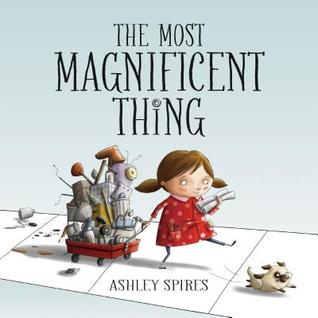 I will be using this book to introduce 20% time with my students, thank you Chris Lehman for the recommendation. I love the message of not giving up but also of finding use in other people’s mistakes.
 This seemingly silly book packs a powerful message; everyone should be allowed to experiment with their own voice. It is one I hope to read at the beginning of the year.
 Thea has this book and I have the book in my classroom as well. This book has such a great story about not judging, wrapped up in whimsy, and every time I read it aloud I laugh outloud.
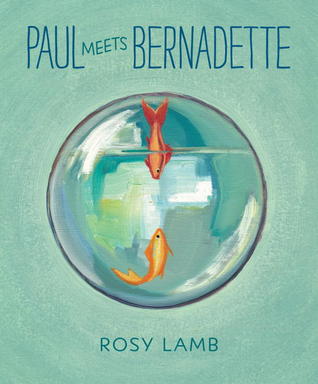 Every time I read this book, I think of another way to discuss it’s theme. Wrapped up in a simple love story it is a great book to discuss perspective and the lens with which we view the world.
 From the title to the illustrations, think of the discussion this book will elicit. I loved the message, but also the nuance with which it is presented, and let’s face it; many students think their teachers are not quite human and this is a great book to discuss just that.
 The first time I read this book, I didn’t love it as much as I do now. I thought it was fun but I didn’t stop to think about what it was really trying to say. Then Thea and I started to talk about it and her 5 year old perspective really made me think. This book is about being allowed to be whoever you want to be, no matter what others think; what a great message to send to kids.
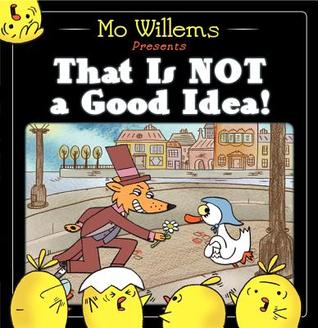 We often think we know the whole story but through the storytelling of the magical Mo Willems, we find can discover how wrong we are. Even after you know the twist, this is still such a great book to hand to students as they write their own stories.
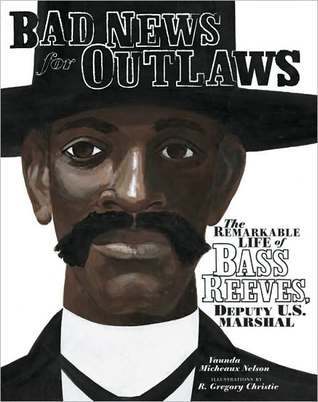 What an incredible history lesson wrapped up in the pages of this book. My former librarian Deb told me to get it and boy does she know me well. Students will marvel at this true story of one person’s character.
 So often we need books that mirror the harsh realities some of our students face, this book is one of those books. Hauntingly written, this is sure to start a discussion on how the boy views his own life.
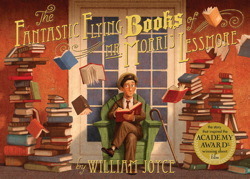 This book is beautiful, magical, and oh so on point for what books do for us. And even better; there is an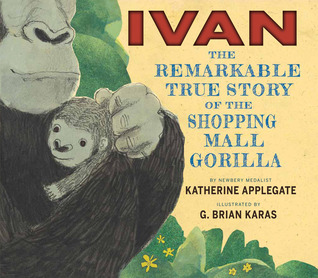
 Pernille Ripp