An oldie but a goodie as many start to slide into summerbreak. Here in Denmark we go all the way until the end of June, with “just” a month off, before we head back in August. Perhaps like me, you need to find a way to stop the teacher thought train?
As an educator in the US, it normally took me weeks to finally relax at the end of the year. In the countdown to goodbye, my body took on more and more thoughts, as it got ready to finally have the time to process the whirlwind of a ride I had just been on.
Those thoughts churn into late evening, meticulously turning over the last school year, analyzing needs, reflecting on mistakes, and, of course, planning for the next year. Is a teacher’s brain ever truly at rest?
So while the calendar may finally say break, my body takes a long time to believe it.
A few years ago, I realized that if I was ever going to get to a point of relaxation faster, I needed to somehow stop this process of thought pile-up my brain otherwise jumped into. And so I started reflecting in a way that felt opposite of how I normally reflected. In a way that focused on reclaiming my identity beyond teaching, as a way to find a better footing when, inevitably, the rush of the school year would swallow me whole again.
It didn’t always work and I go through many questions, sometimes they work, other times they don’t. Perhaps a silly exercise, but in so many ways these questions allow me to recenter, give myself permission to say “good enough” and also make some promises to myself about how I want to face another year that is bound to be even crazier than the last (at least, if the last couple of years have been an indicator).
So here are a few I have tried that seem to help me unlatch from the mania of teaching. That allow me to find myself again as my kids wait for me to become present once more. Perhaps they can help you as well?
Perhaps you have your own to share?
PS: I don’t always write the answers down. These can also be used in discussion or simply thinking about them. If writing feels like more work then I don’t do it.
I love these end of the year lists that come out, especially now that I sit in Denmark and don’t get to see quite the same amount of books written in America as I normally would.
So I figured why not share some of my favorite graphic novels, starting with this gift guide in case you are looking for that perfect gift for yourself or another reader.
Maisie is on her way to Fancon! She’s looking forward to meeting her idol, Kara Bufano, the action hero from her favorite TV show, who has a lower-leg amputation, just like Maisie. But when Maisie and her mom arrive at the convention center, she is stopped in her tracks by Ollie, a cute volunteer working the show. They are kind, charming, and geek out about nerd culture just as much as Maisie does. And as the day wears on, Maisie notices feelings for Ollie that she’s never had before. Is this what it feels like to fall in love?
Huda and her sisters can’t believe it when her parents announce that they’re actually taking a vacation this summer . . . to DISNEY WORLD! But it’s not quite as perfect as it seems. First Huda has to survive a 24-hour road trip from Michigan to Florida, with her sisters annoying her all the way. And then she can’t help but notice the people staring at her and her family when they pray in public. Back home in Dearborn she and her family blend right in because there are so many other Muslim families, but not so much in Florida and along the way. It’s a vacation of forced (but unexpectly successful?) sisterly bonding, a complicated new friendship, a bit more independence, and some mixed feelings about her family’s public prayers. Huda is proud of her religion and who she is, but she still sure wishes she didn’t care so much what other people thought.
Pedro Martín has grown up hearing stories about his abuelito—his legendary crime-fighting, grandfather who was once a part of the Mexican Revolution! But that doesn’t mean Pedro is excited at the news that Abuelito is coming to live with their family. After all, Pedro has 8 brothers and sisters and the house is crowded enough! Still, Pedro piles into the Winnebago with his family for a road trip to Mexico to bring Abuelito home, and what follows is the trip of a lifetime, one filled with laughs and heartache. Along the way, Pedro finally connects with his abuelito and learns what it means to grow up and find his grito.
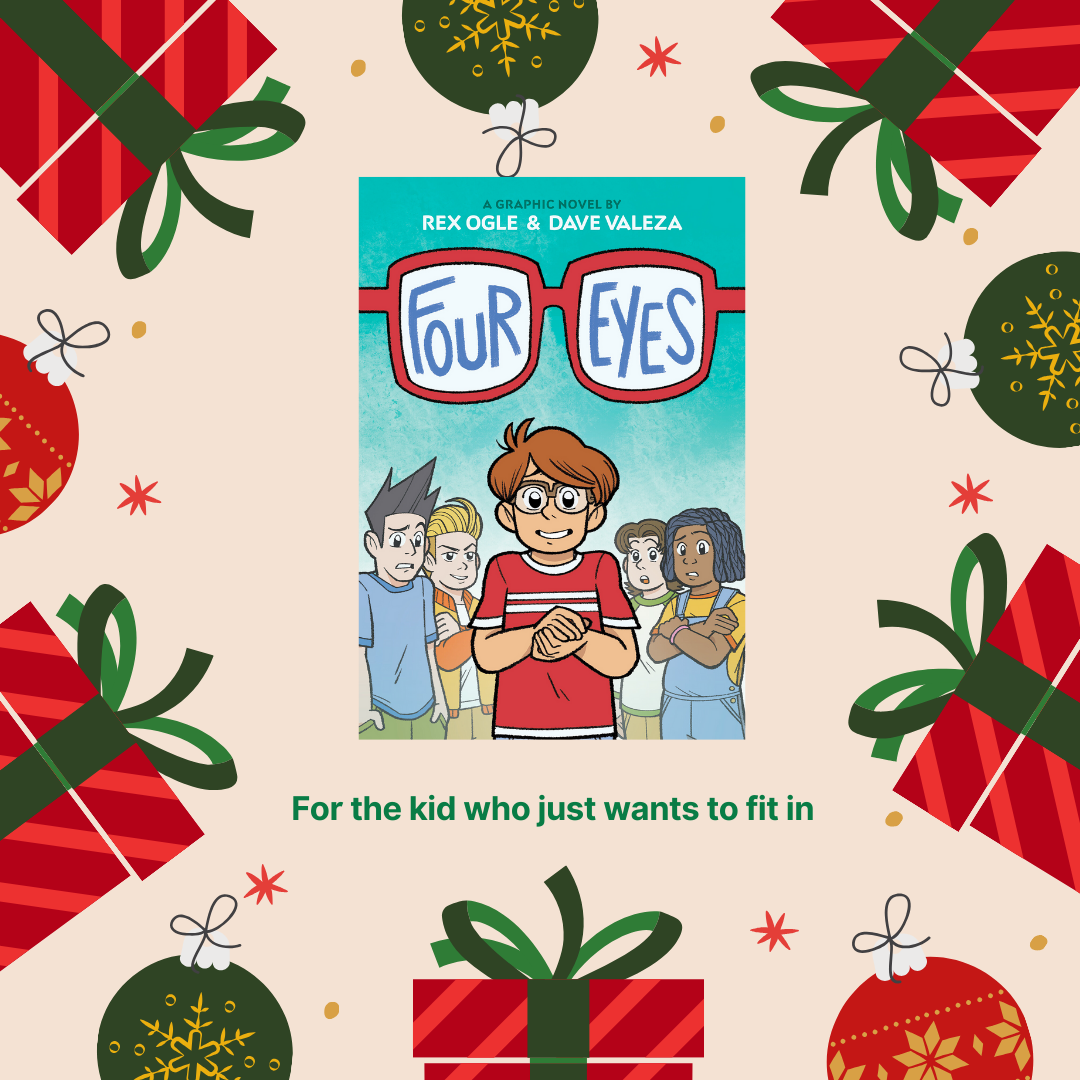
Sixth grade isn’t as great as Rex thought it would be. He’s the only kid who hasn’t had a growth spurt, and the bullies won’t let him forget it. His closest friend is unreliable, at best. And there’s a cute girl in his class, who may or may not like him back. With so much going on, everything is a blur — including Rex’s vision! So when he discovers that he needs glasses, and his family can only afford the ugliest pair in the store, any hope Rex had of fitting in goes completely out of focus.
Charlie has a foolproof plan for the first day at her new middle school. Even though she’s used to starting over as the new kid—thanks to her military family’s constant moving—making friends has never been easy for her. But this time, her first impression needs to last, since this is where her family plans to settle for good. So she’s hiding any interests that may seem “babyish,” updating her look, and doing her best to leave her shyness behind her…but is erasing the real Charlie the best way to make friends? When not everything goes exactly to plan—like, AT ALL—Charlie is ready to give up on making new friendships. Then she meets the Curlfriends, a group of Black girls who couldn’t be more different from each other, and learns that maybe there is a place for Charlie to be her true self after all.
Ignacio “Iggy” Garcia is an Ohio-born Colombian American teen living his best life. After bumping into Marisol (and her coffee) at school, Iggy’s world is spun around. But Marisol has too much going on to be bothered with the likes of Iggy. She has school, work, family, and the uphill battle of getting her legal papers. As Iggy stresses over how to get Marisol to like him, his grandfather comes to the rescue. The thing is, not only is his abuelito dead, but he also gives terrible love advice. The worst. And so, with his ghost abuelito’s meddling, Iggy’s life begins to unravel as he sets off on a journey of self-discovery.
Livy is already having trouble fitting in as the new girl at school—and then there’s Viola. Viola is Livy’s anxiety brought to life, a shadowy twin that only Livy can see or hear. Livy tries to push back against Viola’s relentless judgment, but nothing seems to work until she strikes up new friendships at school. Livy hopes that Viola’s days are numbered. But when tensions arise both at home and at school, Viola rears her head stronger than ever. Only when Livy learns how to ask for help and face her anxiety does she finally figure out living with Viola.
Dan’s always been a good kid. The kind of kid who listens to his teachers, helps his mom with grocery shopping, and stays out of trouble. But being a good kid doesn’t stop him from being bullied and feeling like he’s invisible, which is why Dan has low expectations when his parents send him on a class trip to Europe. At first, he’s right. He’s stuck with the same girls from his middle school who love to make fun of him, and he doesn’t know why his teacher insisted he come on this trip. But as he travels through France, Germany, Switzerland, and England, a series of first experiences begin to change him―first Fanta, first fondue, first time stealing a bike from German punk rockers… and first love.
This book tells the true stories of five brave teens fleeing their home countries of Guatemala, El Salvador, Honduras, and Guinea, on their own, traveling through unknown and unfriendly places, and ultimately crossing into the US to find refuge and seek asylum. Based on extensive interviews with teen refugees, lawyers, caseworkers, and activists, Tracy White shines a light on five individual kids from among the tens of thousands of unaccompanied minors who enter the US each year. In stark black and white illustrations, she helps us understand why some young people would literally risk their lives to seek safety in the US. Each one of them has been backed into a corner where emigration to the US seems like their only hope.
Mia is still getting used to living with her mom and stepfather, and to the new role their Jewish identity plays in their home. Feeling out of place at home and at her Jewish day school, Mia finds herself thinking more and more about her Muscogee father, who lives with his new family in Oklahoma. Her mother doesn’t want to talk about him, but Mia can’t help but feel like she’s missing a part of herself without him in her life.
Soon, Mia makes a plan to use the gifts from her bat mitzvah to take a bus to Oklahoma—without telling her mom—to visit her dad and find the connection to her Muscogee side she knows is just as important as her Jewish side.
Seventh-grader Viv never looks forward to picture day. It’s just another day where she wears a boring braid and no one notices her. (Her two best friends, Milo and Al, don’t count, of course.) But enough is enough. This year, she’s taking matters into her own hands. Literally. Viv grabs a pair of scissors, her phone for live-streaming, and, well, bye-bye braid. Suddenly Viv is an over-night influencer at Brinkley Middle School. Everyone wants her help planning their next big moment—from haircuts, to dance proposals, activist rallies and mathlete championships. She hardly even has time for her friends anymore. It’s exactly how she dreamed of reinventing herself…right?
A new year of school is starting, and Brit finds herself struggling with feelings for a seemingly rude boy from class who might have a soft side. Meanwhile, Christine can’t deny that she likes her best friend Abby…as more than just a friend. The only question is, does Abby have feelings for Christine, too? And will their feelings for each other mess things up in their friend group? Misunderstandings, betrayal, and jealousy are bound to get in the way. But hey! Look on the bright side: They’re in this together. Always.
Darrin Bell was six years old when his mother told him he couldn’t have a realistic water gun. She said she feared for his safety, that police tend to think of little Black boys as older and less innocent than they really are.
Through evocative illustrations and sharp humor, Bell examines how The Talk shaped intimate and public moments from childhood to adulthood. While coming of age in Los Angeles―and finding a voice through cartooning―Bell becomes painfully aware of being regarded as dangerous by white teachers, neighbors, and police officers and thus of his mortality. Drawing attention to the brutal murders of African Americans and showcasing revealing insights and cartoons along the way, he brings us up to the moment of reckoning when people took to the streets protesting the murders of George Floyd and Breonna Taylor. And now Bell must decide whether he and his own six-year-old son are ready to have The Talk.
Shakti is used to being the new girl at school. She and her two moms have moved more times than she can count. With her unborn baby brother on the way, Shakti hopes her family has found their forever home in Amherst, Massachusetts, and that she can finally make friends.
On her first day of seventh grade, she meets Xi and they bond over their shared passion for manga (and pizza with mayo). But the three meanest girls in school—Harini, Emily, and Kelly (aka “HEK”)—are determined to make life miserable for Shakti and her new friends.
When Shakti and Xi discover HEK casting spells in the woods, they fear what might happen to the other kids at school. Drawing on ancient Indian magic, Shakti seeks the aid of Durga Ma to stop HEK. But instead, Shakti accidentally conjures Kali Ma, the destroyer—Durga Ma’s dangerous twin. Kali Ma punishes HEK by transforming them into monsters and curses the entire town. As more and more people begin to fall ill, including Shakti’s mom, will Shakti be able to harness her own strength, power, and empathy to save those she loves—and put an end to all the hate?
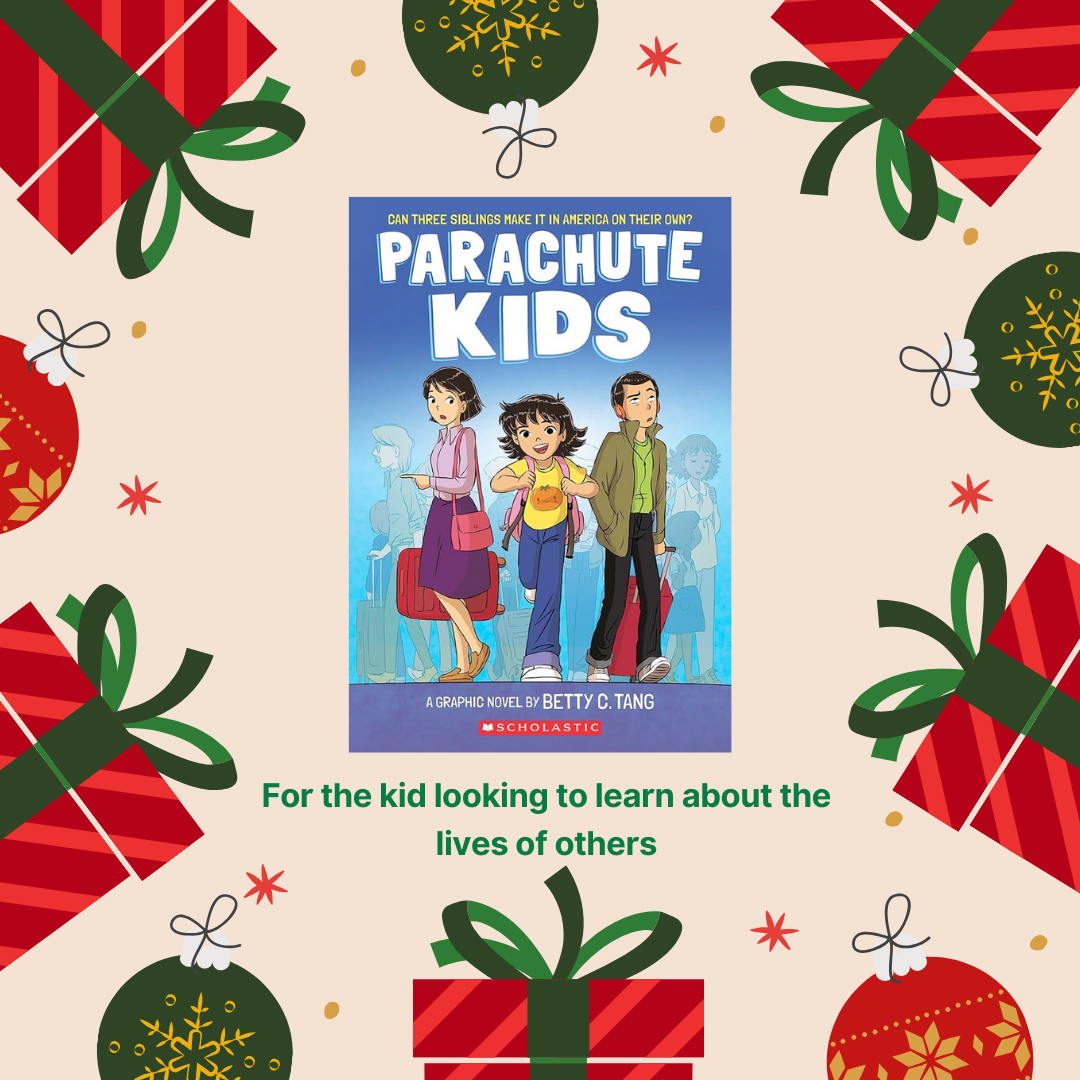
Feng-Li can’t wait to discover America with her family! But after an action-packed vacation, her parents deliver shocking news: They are returning to Taiwan and leaving Feng-Li and her older siblings in California on their own.
Suddenly, the three kids must fend for themselves in a strange new world–and get along. Starting a new school, learning a new language, and trying to make new friends while managing a household is hard enough, but Bro and Sis’s constant bickering makes everything worse. Thankfully, there are some hilarious moments to balance the stress and loneliness. But as tensions escalate–and all three kids get tangled in a web of bad choices–can Feng-Li keep her family together?
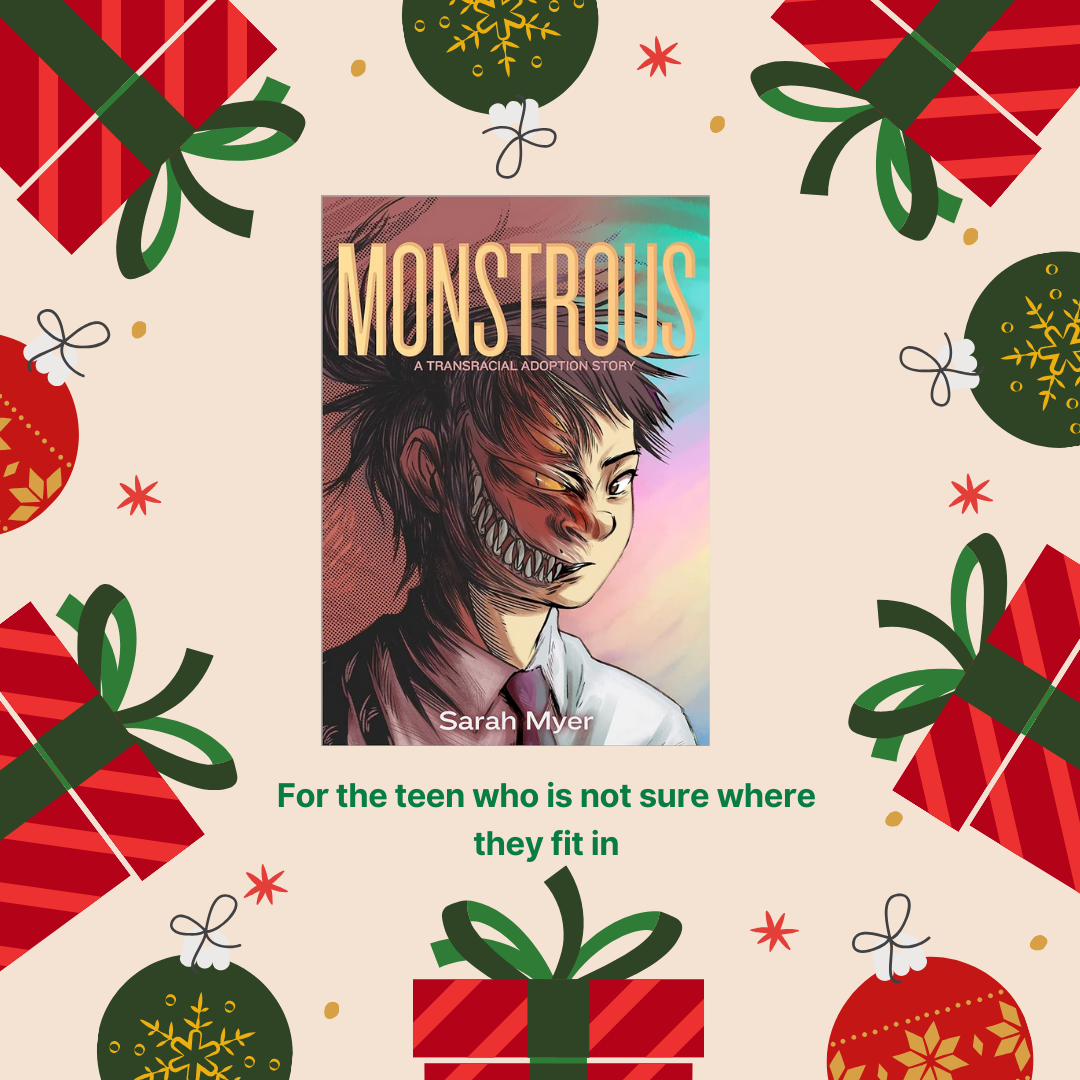
Sarah has always struggled to fit in. Born in South Korea and adopted at birth by a white couple, she grows up in a rural community with few Asian neighbors. People whisper in the supermarket. Classmates bully her. She has trouble containing her anger in these moments―but through it all, she has her art. She’s always been a compulsive drawer, and when she discovers anime, her hobby becomes an obsession.
Looking for a few end-of-year picture book read-aloud ideas – here are 30+ texts you could use. The list is always growing as new amazing books are published even if I have a few perpetual favorites on here.
I always end our year with a final read-aloud, yes, even with 7th graders, and it allows us to just sit together in community one final time. It is a beautiful way to say goodbye and one that I highly recommend.
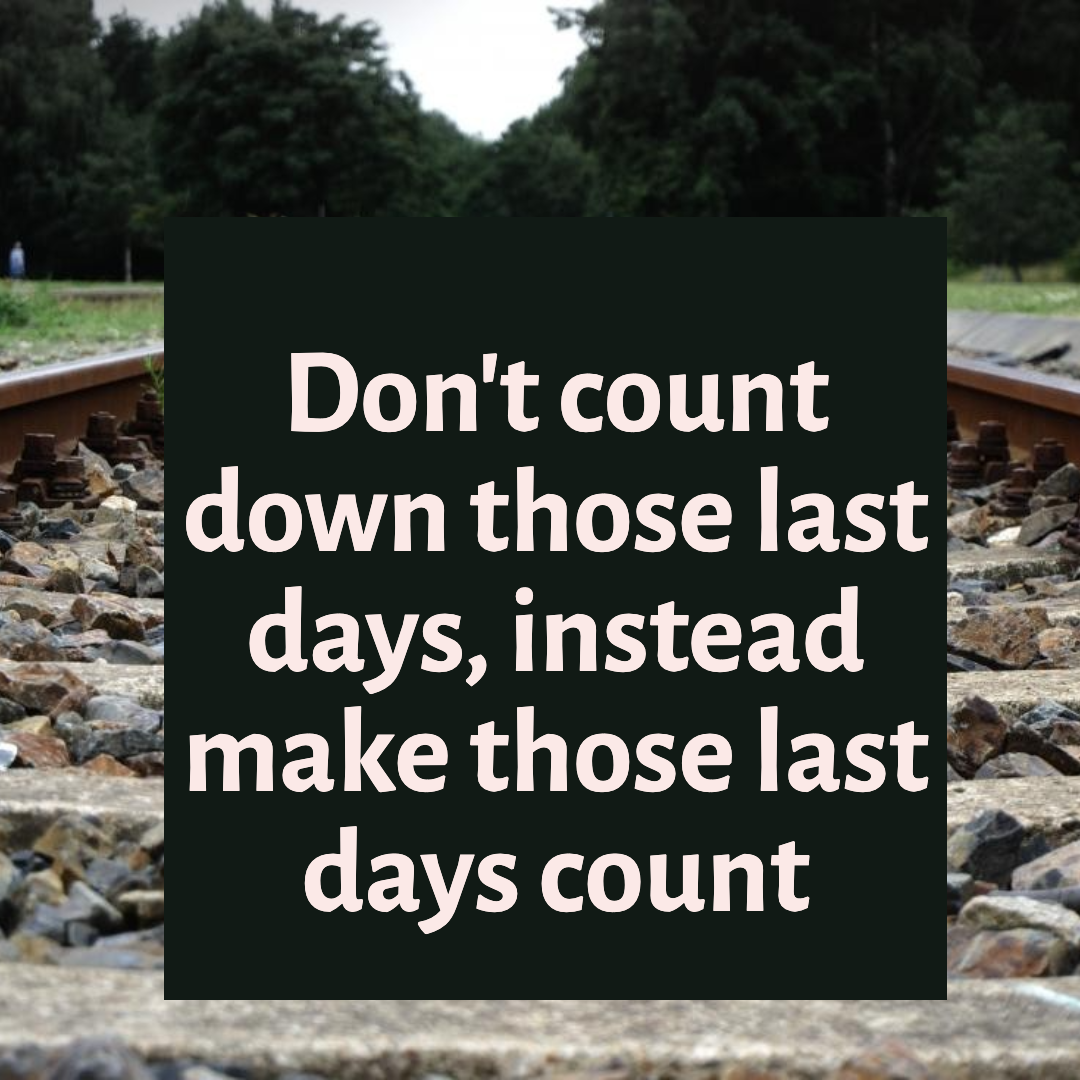
An older post from 2017 that still rings true today. I will not do a countdown for many reasons, even if I know how many days I have left. While the belief started as an epiphany of the wildness it was creating, it now rests more solidly in the notion that not every child has a safe place to be during the summer.And while this year of teaching has been like no other and every single person involved with schools deserves a break, to step away from simply making it through the day, I still know that for some being out of school does not allow them to thrive in the ways I hope every child has the possibility to; with food, a bed, adults to supervise and care, learning opportunities, and true rest. We can still celebrate a conclusion of an extraordinarily hard year without counting down the days together. We can still be glad to have the chance to step away to recharge without notching days.
The other day I was asked, “What is the one thing you would tell teachers to stop doing as the end of the year nears?” I needed no time to think because my answer is simple; the countdown.
I used to do the countdown with my students. 20, 19, 18 days left of school. Each day the kids would get more excited. “We are almost out of here, Mrs. Ripp!” They got crazier as the countdown neared the end, energy barely contained, and I loosened the reins, had fun, did less curriculum and more community building. Except the days dragged on. The kids grew restless, and I even started looking at the clock, wishing the day to be over. Was this what teaching the last few weeks of school would always be like?
Six years ago, after a particularly trying week, I had an epiphany – one that many have had before me. I was creating the excited mess unfolding every day in my classroom. My choices in doing a countdown and stepping away from our routines were signaling to the kids that school no longer mattered. That what we were doing no longer mattered. That all they had to do was wait it out and then this, too, would finally be over. As if our students needed any more reminders that school is not a great place to be.
So I stopped the countdown, I went back to teaching and have not looked back since. Because while the countdown may be fun on the surface; another way to show off student accomplishment – you made it through 7th grade! -it also sends a much deeper message; we are done with the year. I am done with you. Is that really what we want to tell our students?
Yet, this is not the only reason I hate the countdown. One year, a child cried under his desk on the last day of school. Inconsolable, I asked him what had happened. Had someone said something to him that I had not caught? Instead, he looked up at me, tears running down his face and said, “Don’t make me leave…I don’t want to go on vacation, I want to stay here.” I cried with him and did the only thing I could, hug him and tell him I would always be here for him if he needed me. Yet, his words have stayed with me all of these years. This child did not look forward to summer. This child faced a summer of unknowns, of food shortage, of not knowing who he would live with, of who would care for him. Summer did not represent a break, but an uncertain future where he had to carry the weight of a society who has very few safety nets for children in poverty and home adults who are trying to survive. Our classroom was his safe space. In our classroom, he felt cared for, knew he would eat, and knew he had people with him. Outside of school that wasn’t always the case. By counting down the days, I was reminding him every day of what was ahead after that last day of school; uncertainty, fear, hunger. None of those messages were what I hoped to convey to my students. None of those messages were what my silly countdown was meant to convey to him. And I am sure there have been others who silently dreaded the end of school, who didn’t show it through their tears but kept it inside or showed in other ways. Who didn’t excitedly tell their peers about all the things they couldn’t wait to do but instead hoped that they could stay together, sta where they were, instead of walking out on that last day of school. So while school certainly doesn’t represent safety for all children, for some it does.
So It is not that I don’t know how many days are left. That I pretend to be clueless as to the end of the year. It is just that I don’t advertise it. I don’t actively remind children how much better summer will be than what we are doing together, than what we have built together. It undermines the entire mission we have had all year of instilling the importance of the work we do. It undermines every single time we have said that school is important, that our community is valuable. I have less than three weeks left and so much still to teach and learn, so many opportunities to keep connecting with kids, to continue to build community and provide resources that will hopefully make a difference in the days ahead. So now, when a child tells me that they are excited about summer, I tell them I am too, but also that I will miss them, that I will miss our learning, that I will miss our classroom. That we have so much learning still to do. That we will work to the very last day because our time is valuable. Because we need every minute we can get. Because what we have built matters and I am sad to see it go. I am sad to see them go. I don’t need a countdown to remind me of that.
With just a few precious days left with the kids I have gotten to call mine for the year, my body is bone-tired. I think we all are. Yet, my mind is eager, I am excited to send these kids off for summer, and yes, I am also excited for the next group of kids coming our way.
So within these last few days lies an incredible opportunity to grow. To prepare for the next year even if this year is not quite over. I have seen some great posts on things to reflect on as the year ends for so many of us and thought I would share what I plan on doing. Perhaps, you could use a few ideas yourself?
I plan on surveying my students. While our school does both a home and student survey, I also need to know what I can work on. Every year, the words of my students help me shape the experience to come. Every year, the words of my students help me grow as an educator. Don’t let the kids leave without helping you grow.
I plan on keeping certain experiences. Looking through the year and reflecting on what really worked, whether it was a lesson, an idea, or simply a moment, helps me think of the year to come. Don’t let this year end without you realizing what worked. Whether you go through lesson plans or simply write a bullet list, take note so that when the time comes for your ideas to come back, you have a place to start.
I plan on getting rid of certain lessons. While our experience inevitably changes year after year, there are also certain things that despite our best intentions simply didn’t work. So I am getting rid of them both physically and mentally. goodbye curation project! Goodbye identity journals! Goodbye to you so that I can make room for better things.
I plan on freshening up the room. In fact, I already did that. Last week, my husband and I moved all of our bookshelves so that I could reclaim the front of the room as part of our teaching area. It has made a huge difference to the feel of the room, how welcoming it looks. Why wait until next year? Try it out now and see how it feels.
I plan a focus. This summer, I get to both teach others and learn from others and so I need a focus. Where does my craft need to grow? Writing is what comes to mind, as well as the hard work of equity and social justice. And so I go to conferences with a few goals in mind. I read PD books with these goals in mind. I reflect, invent, and write down ideas with these few goals in mind. In the past, when I have had a broad focus, I feel I have learned little, but when I have a few questions in mind, such as how will I continue to help students understand their role in the world or how we will we create more joyful writing experiences, then I leave summer with a few tangible ideas that shape our experience together.
I plan a challenge. Every summer, I try to discover the work of new amazing leaders in education. One year it was educators like Val Brown, Dana Stachoviak, and Cornelius Minor, another it was diving into the work of We Need Diverse Books and figuring out how to work through my own biases and change the way I taught. Every year, I pick a challenge that will push my thinking, make me realize my own mistakes, and also help me become a better educator. It can be hard at times, but it is definitely worth taking the time to realize the gaping holes you have and then actually doing something about it.
I plan a break. Teaching is amazing, it is my favorite thing to do as far as work., but it is also exhausting, heartbreaking at times, and hard. So summer is time for a break, and not a kind of break where I still work, but one where I feel no guilt for not checking my email. Where I feel no guilt for reading whatever I want even if it is slightly trashy. Where I feel no guilt for not checking in, creating something, or coming up with new ideas. But you have to plan for it or it won’t happen. We know how consuming teaching can be, how it can spill into every part of summer, but don’t let it. Allow yourself to detach completely so that you can get excited. So that you can let ideas marinate in the back of your mind. So that you can remember what it means to have a life, if even for a little bit, outside of teaching. Because if you never leave, then you cannot get ready to come back.
Summer is a break. A much-needed one for many. But it is also an incredible time to become something more than what we ended as. To remember why we entered teaching. To get excited, to catch up on sleep, and to become the very best version that we can be of ourselves so that when September rolls around, or whenever our students come back, we can say, “I am so glad you are here,” and truly mean it.
If you like what you read here, consider reading my newest book, Passionate Readers – The Art of Reaching and Engaging Every Child. This book focuses on the five keys we can implement into any reading community to strengthen student reading experiences, even within the 45 minute English block. If you are looking for solutions and ideas for how to re-engage all of your students consider reading my very first book Passionate Learners – How to Engage and Empower Your Students. Also, if you are wondering where I will be in the coming year or would like to have me speak, please see this page.
Every year our very last speech is a “Best Book of the Year” Speech. Every year, my students declare their love for books in front of the class. They share their favorite reads in order for everyone else to add them to their to-be-read list. I scribble down each title so I can create a blog post for the rest of the world. It is always fascinating to see the books that make the cut.
This year, we have worked on brevity. On the importance of words. On getting to the point, so we added a twist to this yearly event; you get 15 words exactly. No more, no less. 15 words to make others write down the title you loved. 15 words to somehow give enough of a glimpse into the book to tempt others.
To inspire my students I read them a Cozy Classic – a 12-word re-telling of some very well-known classics. Then I have them two days to create their speech, work on their gestures, and prepare for their performance. The results yesterday were pretty stellar. Engaged students and lots of titles added. Lots of laughs while sharing the love of books we have read. One more step toward creating reading experiences long after they leave us. Long after the last day of school.
If you like what you read here, consider reading my newest book, Passionate Readers – The Art of Reaching and Engaging Every Child. This book focuses on the five keys we can implement into any reading community to strengthen student reading experiences, even within the 45 minute English block. If you are looking for solutions and ideas for how to re-engage all of your students consider reading my very first book Passionate Learners – How to Engage and Empower Your Students. Also, if you are wondering where I will be in the coming year or would like to have me speak, please see this page.










 Pernille Ripp