being a teacher, Literacy, Reading, Reading Identity, student choice, Student dreams, student driven, Student Engagement, student voice, Student-centered

How to Create Empowered Readers – A Beginning

The sniffles started almost immediately.  Small choking noises came soon.  Then full out wails, tears, and gasps.  Theadora, our oldest daughter, was a mess as we drove home from Chicago today.  What had caused this sudden crying?  The end of Harry Potter Book seven.  The end of our 9 month journey accompanied by the ever amazing Jim Dale and the audio books of Harry Potter.  I was wistful myself to tell you the truth.  As I tried to console our distraught daughter,  I couldn’t help but feel slightly pleased, after all, isn’t this exactly the type of relationship that we hope our children, our students, have with books?  One that makes you want to cry, or laugh, or scream in frustration?  One that allows you to feel so intimately attached to something not created by yourself?  To feel the gratitude of brilliant writing and a long journey along with an author’s imagination?  To feel the loss of characters and of story as a book series finishes?

Yet, how many of our students have never experienced this type of sadness?  How many of our students have not experienced what is means to complete a series that one has become so invested in that it feels like the loss of a family member once the last page has been read?  How many years has it been for some, if at all, since they truly loved a book?  While we cannot change the past, we do have control over the now, over what happens in our classrooms. Over what happens from the moment they enter to the moment they leave.  And with that power comes an immense responsibility to empower our students, to offer them a chance at an incredible relationship with reading once again or for the very first time.  While it may start with having them choose their own books, this is not the only place students need more control to be empowered and passionate readers.

IMG_1281 (1).JPG

Book choice.  This fundamental right to choose what you read is one that is so often taken away from our students because we want to help them develop as readers.   Yet when a child is not a  allowed to choose the very text they are asked to engage with, we give them little room for an emotional attachment.  How many of us adults will willingly invest in something we have been told to read?  So while we can expose and recommend, we must create classrooms where student choice is the norm, not the exception.  Where we help students find that next great book in order for them to become independent book selectors so that they can leave our classrooms knowing that they do not need us.  Not in the same way as they did in the beginning.  Where wild book abandonment is the norm and not something you need permission for.  Where indifference rules when a book is given up because we know that a new book awaits.  If we truly want students to feel in control of their reading identities then giving them the choice over which book to read is the very least we must do.

Book truths.  If we do not know what we are up against, then we can never change their minds.  This has been a mantra of mine since I started asking my students all sorts of things about their education.  So every year, and throughout the year, we continuously discuss how we feel about reading (and writing).  I never dismiss their truths, nor try to correct them.  It is not my job to tell them how they should feel, but it is my job to hopefully create a better experience for them.  I cannot do that well if students do not trust me, trust the community, and trust themselves and also trust the fact that perhaps how they feel about reading right now, if it is negative in any way, is something that can be changed.  (Yes, growth mindset at work here).  So ask them how they really feel and then truly listen, because it is when we listen, we can actually do something about it.

IMG_1290 (1)
Student post-it’s cover our whiteboard, our very first discussion of why we like reading or not from Friday.


Book Tasks.  Just Friday I was asked how many book summaries we would do this year.  I must have looked perplexed, because another student quickly added, “You know, write a summary every time we finish a book?”  I assured them that while we would work on summarizing, it would not be on every book, nor even books mostly.  Instead we discussed what we want to do when we finish a book; discuss with others, pass it on, perhaps forget all about it.  We must give our students control over what they do with a book once it has been finished.  We must allow them to explore ways to communicate their emotions with a book and certainly still develop as thinkers.  I keep thinking how I want our students to have choices every few weeks as we advance our reading; review, conversations, written ponderings, perhaps a summary, perhaps a video.  The point is, I am not sure at this point what we shall do once we finish a book because it depends on what the students would like to do.  I do not ever want to implement a task that makes a child slow down their reading or stop it altogether just because the task attached to it is horrific in their eyes.  So when we plan our reading tasks make sure that the long-term effects are not unwanted.  Make sure that it actually plays into our bigger picture; students who actually like to read, and does not harm this.

Book Selection.  While choice is of utmost importance, so is the way books are selected.  Too often we schedule in book shopping time for when it is convenient to us, forgetting that all students need books at different times.  Selecting a book is a also something that must be taught, even in middle school, because many students still have a hard time finding a book.  We therefore discuss how to bookshop, which yes, includes, judging a book by its cover, and then we take the time it takes.  If we really want students to wander among great books then we must give them time for that wandering and we must embrace the social aspect that comes along with it.  After all it is this book loving community that should sustain student reading after they have left our classrooms.

IMG_1283 (1)
How many students would say the exact same thing?

Book Access.  While I cannot continue to purchase books at the rate I have been due to a change in our household, I know that one of the biggest reasons many of our students end up identifying as readers is because of the sheer volume of books they have access to both in our classroom library and in our school library.  Kids need books at their finger tips at all times.  Much like they must have time to book shop when they need it, they also need to be able to book shop right in our classrooms.  When a child is obviously lost, we or other classmates can jump in.  When a child is only pretending to bookshop we can offer guidance.  We cannot control how many books our students go home to, but we can make sure that whenever they are in our classrooms; the books are plentiful.

Book Time.  Providing students time to read in our classes is one of the biggest ways we can signal to students that reading really matters.  After all, it is what we give our time to that must be the most important.  So whether it is only 10 minutes, like I provide every day, our a longer amount of time; time for reading in class is essential.  Otherwise, how will we ever know that they are truly reading because anyone can forge a reading log.  The time for reading should be just that, not time for tasks or post-its.  Not time for partner discussions or writing.  Reading, in all its glorious quiet.  In all its glorious discovery.

IMG_1285


While the above areas may seem so commonsense, perhaps it is their commonsense-ness that makes us forget to implement them all.  It seems so obvious and yet… how many of us have told a child what to read (I have!).  How many of us have asked students to create task upon task after they finished a book (I have!).  How many of us have asked students to bookshop at a certain time and for a certain amount of time and wondered why they came up empty-handed (I have!).  The point is really that we have the choice to empower our students.  That we have the choice to show our students that their reading identity and developing it is a major part of our curriculum even if the standard does not cover it.  Even if the test does not measure it.  Because we know that at the end of the day we are not just teaching students that should be college and career ready, but instead are teaching human beings that should grow as human beings in our classrooms.  I may not be able to change every child’s mind when it comes to books and reading, but I will go in there every day trying, because my hope will always that they too will someday cry when they realize that a series has ended.

I am currently working on a new literacy book.  While the task is daunting and intimidating, it is incredible to once again get to share the phenomenal words of my students as they push me to be a better teacher.  The book, which I am still writing, is tentatively Passionate Readers and will be published in the summer of 2017 by Routledge.  So until then if you like what you read here, consider reading my book Passionate Learners – How to Engage and Empower Your Students.  Also, if you are wondering where I will be in the coming year or would like to have me speak, please see this page.

being a teacher, books, Literacy

My Can’t Wait to Booktalk Books of Summer 2016

This has been the summer of a lot of things; speaking, writing, airports and traveling, meeting incredible people, trying to help better education.  Of endless days and longing for home at times.  Of new adventures and having to become more extroverted.  But that is not all, it has also been the summer of pool-time, of ice cream, of snuggling with our kids in the morning and sometimes also at night.  Of days at the movies and dinner with friends.  And then it has been the summer of books.  Of glorious moments spent in the company of brilliant writing, of can’t wait to turn the next page, of I cannot wait for a child to discover this book.  A summer of books and those books now fill the tables in our classroom, waiting for others to discover them, love them, and then book talk them to others, much like I am book talking them here.

So what has been some of my amazing reads?  (You can follow me both on Goodreads and on Instagram if you would like to keep up live with what I am reading).
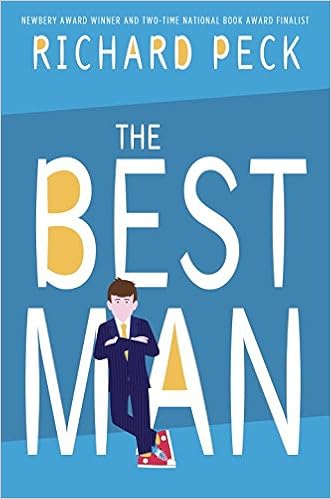
I started my summer with The Best Man by Richard Peck.  Spurred on by my friends’ love of this book and by the sad fact that I had never read a Richard Peck book before, I was glad to start the summer with this one.  I was delighted, surprised, and ever so wonderfully tangled into the story and yet I have had the hardest time booktalking this book other than to tell people they should read it.  In fact, I handed a copy of it to someone at ILA and said just that.  This is a great addition to classroom libraries 5th grade and up and I will definitely be revisiting all of my Richard Peck books because of this story.

From Amazon:

Archer Magill has spent a lively five years of grade school with one eye out in search of grown-up role models. Three of the best are his grandpa, the great architect; his dad, the great vintage car customizer,; and his uncle Paul, who is just plain great. These are the three he wants to be. Along the way he finds a fourth—Mr. McLeod, a teacher. In fact, the first male teacher in the history of the school.

But now here comes middle school and puberty. Change. Archer wonders how much change has to happen before his voice does. He doesn’t see too far ahead, so every day or so a startling revelation breaks over him. Then a really big one when he’s the best man at the wedding of two of his role models. But that gets ahead of the story.
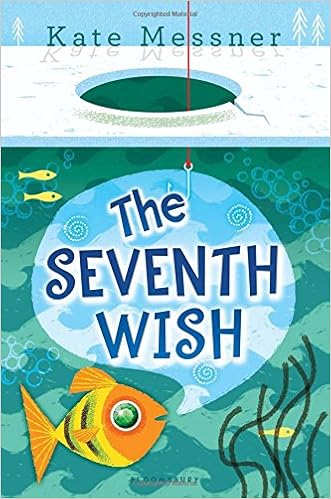
How amazing of a storyteller is Kate Messner?  I loved The Seventh Wish so much that it got it’s own stand alone review on this blog, and I stand by those words.  This book belongs in our classrooms, in our libraries, and yes even with elementary children.

From Amazon:

Charlie feels like she’s always coming in last. From her Mom’s new job to her sister’s life away at college, everything else always seems to be more important than Charlie’s upcoming dance competition or science project. Unsure of how to get her family’s attention, Charlie comes across the surprise of her life one day while ice-fishing . . . in the form of a floppy, scaly fish offering to grant her a wish in exchange for its freedom. Charlie can’t believe her luck until she realizes that this fish has a funny way of granting wishes, despite her best intentions. But when her family faces a challenge bigger than any they’ve ever experienced, Charlie wonders if some things might be too important to risk on a wish.
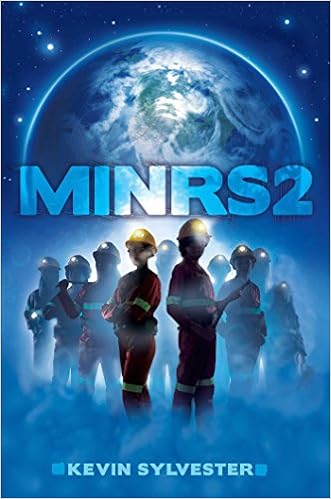
My students and I have been obsessed with the MiNRS series from Kevin Sylvester since the inaugural book last year.  In fact, they kept asking whether I could somehow get them a copy of book 2 before school was out.  Alas that did not happen but I did receive an ARC this summer.  It is so good.  Page turner, sucks you in, can’t believe I now have to wait another whole year to wait for the third book.  This is a must add series 4th grade and up and yes my 7th graders love it too.  (Note: Only available for pre-order)

From Amazon:

They are coming to get you.
Hide.
Hide.

Hide.

The children of Perses have been receiving this message on repeat, from Earth, for weeks. Christopher, Elena, and the other survivors of the attack on their space colony know two things: their victory over the Landers will be short-lived and a new wave of attacks is imminent.

New Landers arrive sooner than expected. Led by the ruthless Kirk Thatcher, and armed with a new lethal kind of digger, they vow to hunt down and destroy everyone.

The kids have nowhere to go but underground. Again. But resources and patience are running low and the struggle to keep everyone safe is complicated by all the infighting amongst the kids.

As Christopher navigates the burden of leadership, he also has to decide whom he can trust. There are no easy answers. And with deadly consequences on the line, there is no room for mistakes.

Will Christopher be able to successfully lead the group back to Earth? Or will Thatcher make sure no one survives?
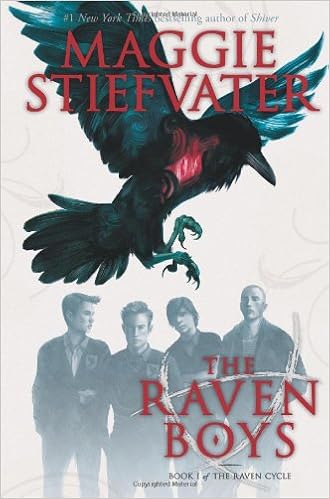
How I have managed to go these years without falling in love with The Raven Boys series by Maggie Stiefwater I am not sure.  This has been one of my most recommended books this summer because I dropped everything just to read this whole series in a week.  Now that that the whole series is out there is no reason to wait to get this for your classroom library, I would recommend middle school and up.

From Amazon:

Every year, Blue Sargent stands next to her clairvoyant mother as the soon-to-be dead walk past. Blue never sees them–until this year, when a boy emerges from the dark and speaks to her.

His name is Gansey, a rich student at Aglionby, the local private school. Blue has a policy of staying away from Aglionby boys. Known as Raven Boys, they can only mean trouble.

But Blue is drawn to Gansey, in a way she can’t entirely explain. He is on a quest that has encompassed three other Raven Boys: Adam, the scholarship student who resents the privilege around him; Ronan, the fierce soul whose emotions range from anger to despair; and Noah, the taciturn watcher who notices many things but says very little.

For as long as she can remember, Blue has been warned that she will cause her true love to die. She doesn’t believe in true love, and never thought this would be a problem. But as her life becomes caught up in the strange and sinister world of the Raven Boys, she’s not so sure anymore.
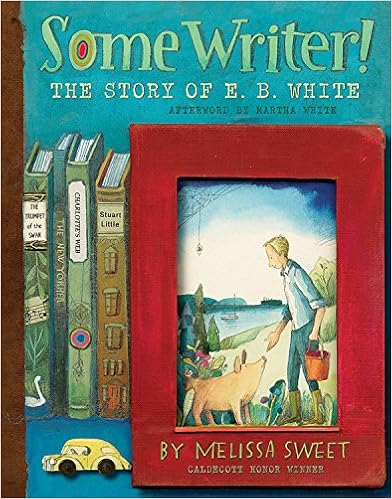
Hands down one of the best non-fiction autobiographies I have ever read.  Melissa Sweet’s Some Writer! about E.B. White is a masterpiece in visual layout as well as text.  I have ordered another copy to house permanently in my classroom and will be using it to teach writer’s craft.  I cannot wait for children to fall into the delight of these pages and to be inspired to write more themselves.  (Note: Available for pre-order).

From Amazon:

“SOME PIG,” Charlotte the spider’s praise for Wilbur, is just one fondly remembered snippet from E. B. White’s Charlotte’s Web. In Some Writer!, the two-time Caldecott Honor winner Melissa Sweet mixes White’s personal letters, photos, and family ephemera with her own exquisite artwork to tell his story, from his birth in 1899 to his death in 1985. Budding young writers will be fascinated and inspired by the journalist, New Yorker contributor, and children’s book author who loved words his whole life.
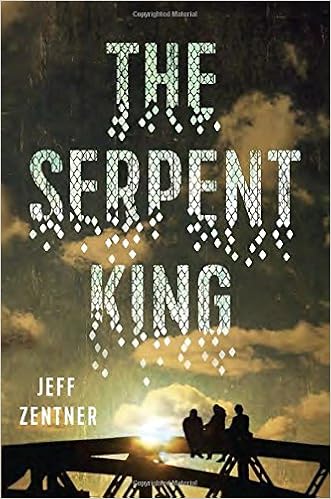
The Serpent King by Jeff Zentner is the first book I plan on booktalking this year.  This is the book I hope most of my students discover.  This is the book I keep recommending.  A masterpiece in story-telling that I could not put down and neither could those I have handed it too.  This debut author has taken everything that is right about a great YA and put it into a book.  I cannot wait for his next book.

From Amazon:

Dill has had to wrestle with vipers his whole life—at home, as the only son of a Pentecostal minister who urges him to handle poisonous rattlesnakes, and at school, where he faces down bullies who target him for his father’s extreme faith and very public fall from grace.
 
The only antidote to all this venom is his friendship with fellow outcasts Travis and Lydia. But as they are starting their senior year, Dill feels the coils of his future tightening around him. Dill’s only escapes are his music and his secret feelings for Lydia—neither of which he is brave enough to share. Graduation feels more like an ending to Dill than a beginning. But even before then, he must cope with another ending—one that will rock his life to the core.
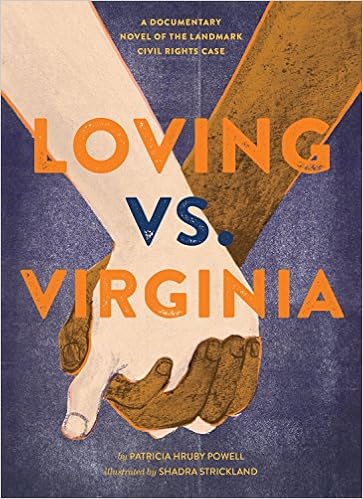
 

Another incredible non-fiction text, this time in free verse (Oh how I adore free verse), Loving Vs. Virginia by Patricia Hruby Powell and illustrated by Shadra Strickland is a must add to your library.  This text sheds light on the landmark case of marriage equality and is riveting in how it unfolds.  You fall in love with the Lovings and their simple fight to simply be allowed to be married.  (Note: Available for pre-order now).

From Amazon:

From acclaimed author Patricia Hruby Powell comes the story of a landmark civil rights case, told in spare and gorgeous verse. In 1955, in Caroline County, Virginia, amidst segregation and prejudice, injustice and cruelty, two teenagers fell in love. Their life together broke the law, but their determination would change it. Richard and Mildred Loving were at the heart of a Supreme Court case that legalized marriage between races, and a story of the devoted couple who faced discrimination, fought it, and won.
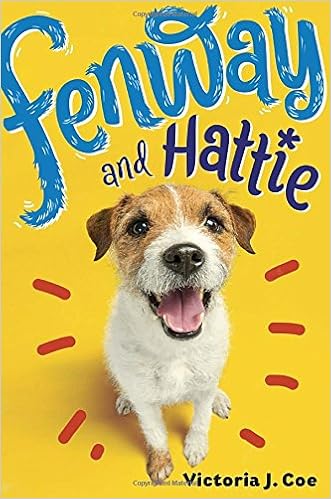
I was handed Fenway and Hattie by the author herself, Victoria J. Coe, and read it the very next day. Delightful, fun, and imaginative I have recommended this book to many people since.  I love how Victoria Coe writes it from the perspective of a dog and will be using this to show perspective writing with my 7th graders.  While this is geared toward a younger audience, I think some of my 7th graders will enjoy it as much as I have.  This is also a contender for Global Read Aloud 2017.

From Amazon:

Fenway is an excitable and endlessly energetic Jack Russell terrier. He lives in the city with Food Lady, Fetch Man, and—of course—his beloved short human and best-friend-in-the-world, Hattie. 

But when his family moves to the suburbs, Fenway faces a world of changes. He’s pretty pleased with the huge Dog Park behind his new home, but he’s not so happy about the Evil Squirrels that taunt him from the trees, the super-slippery Wicked Floor in the Eating Room, and the changes that have come over Hattie lately. Rather than playing with Fenway, she seems more interested in her new short human friend, Angel, and learning to play baseball. His friends in the Dog Park next door say Hattie is outgrowing him, but that can’t be right. And he’s going to prove it!
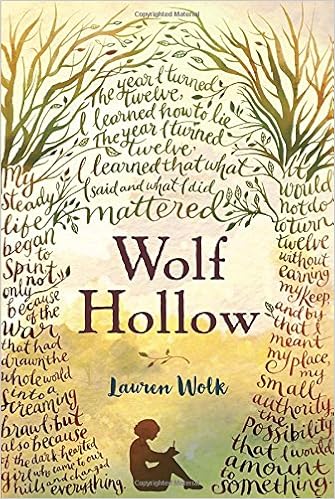
What an incredible book Wolf Hollow by Lauren Wolk is.  In fact, I would be surprised if we did not see this book receive awards later this year.  Unlike anything I have read in a long time, Wolf Hollow draws you into a world that speaks of simpler times and yet the story unravels in a way you would not expect.  From 4th grade and up, this book is also a must add in middle school.

From Amazon:

Growing up in the shadows cast by two world wars, Annabelle has lived a mostly quiet, steady life in her small Pennsylvania town. Until the day new student Betty Glengarry walks into her class. Betty quickly reveals herself to be cruel and manipulative, and while her bullying seems isolated at first, things quickly escalate, and reclusive World War I veteran Toby becomes a target of her attacks. While others have always seen Toby’s strangeness, Annabelle knows only kindness. She will soon need to find the courage to stand as a lone voice of justice as tensions mount.
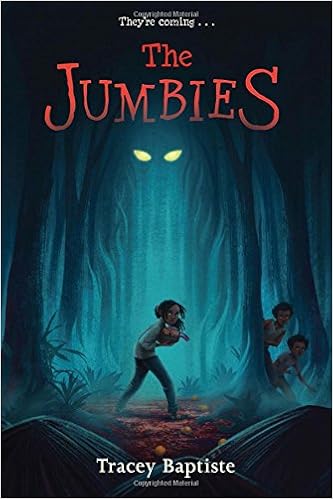
I loved the scary tale and the beautiful language of The Jumbies by Tracey Baptiste. I rooted for the main character Corinne as she fights for her father and the rest of her island, protecting them from the supernatural beings that live in the forest.  For kids that love a great scary story, I cannot wait to book talk this, and even better; there is a sequel coming.

From Amazon:

Corinne La Mer claims she isn’t afraid of anything. Not scorpions, not the boys who tease her, and certainly not jumbies. They’re just tricksters made up by parents to frighten their children. Then one night Corinne chases an agouti all the way into the forbidden forest, and shining yellow eyes follow her to the edge of the trees. They couldn’t belong to a jumbie. Or could they?

When Corinne spots a beautiful stranger at the market the very next day, she knows something extraordinary is about to happen. When this same beauty, called Severine, turns up at Corinne’s house, danger is in the air. Severine plans to claim the entire island for the jumbies. Corinne must call on her courage and her friends and learn to use ancient magic she didn’t know she possessed to stop Severine and to save her island home.
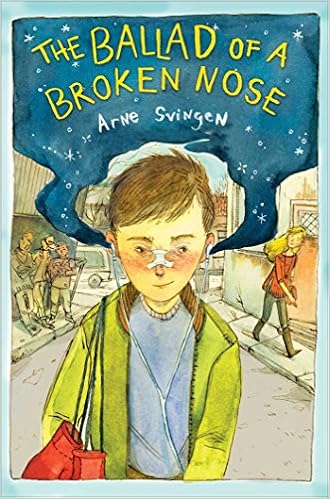
Although I hail from Denmark originally I tend to not read many Scandinavian childrens’ books.  They simply do not fall into my hands often.  I was therefore thrilled when a copy The Ballad of a Broken Nose by Arne Svingen made it into my hands.  Refreshing and honest and also very Scandinavian, I think this book will provide a wonderful read for 5th grade and up.  This is also a global read aloud contender for 2017.

From Amazon:

Bart is an eternal optimist. At thirteen years old, he’s had a hard life. But Bart knows that things won’t get any better if you have a negative attitude. His mother has pushed him into boxing lessons so that Bart can protect himself, but Bart already has defense mechanisms: he is relentlessly positive…and he loves opera.

Listening to—and singing—opera is Bart’s greatest escape, but he’s too shy to share this with anyone. Then popular Ada befriends him and encourages him to perform at the school talent show. Ada can’t keep a secret to save her life, but Bart bonds with her anyway, and her openness helps him realize that his troubles are not burdens that he must bear alone.
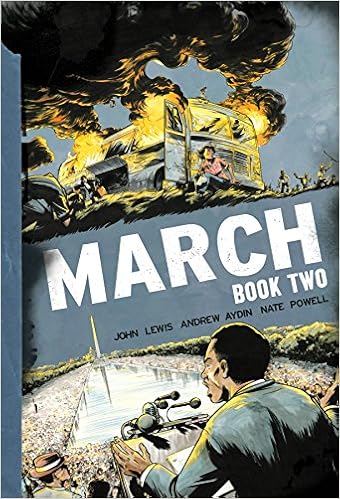
Some of the most important graphic novels to be published ever are the March trilogy created by John Lewis, Andrew Aydin and Nate Powell.  The first two books were already popular with my students,  in fact, I had to re-purchase my set as the first two had left my classroom.  I thought I knew a decent amount about the civil rights movement and its history and yet the March trilogy just proves once again how little I know.  I am so grateful for the knowledge these books will pass on to my students.

From Amazon:

Congressman John Lewis, an American icon and one of the key figures of the civil rights movement, continues his award-winning graphic novel trilogy with co-writer Andrew Aydin and artist Nate Powell, inspired by a 1950s comic book that helped prepare his own generation to join the struggle. Now, March brings the lessons of history to vivid life for a new generation, urgently relevant for today’s world.

After the success of the Nashville sit-in campaign, John Lewis is more committed than ever to changing the world through nonviolence — but as he and his fellow Freedom Riders board a bus into the vicious heart of the deep south, they will be tested like never before. Faced with beatings, police brutality, imprisonment, arson, and even murder, the movement’s young activists place their lives on the line while internal conflicts threaten to tear them apart.

But their courage will attract the notice of powerful allies, from Martin Luther King, Jr. to Attorney General Robert F. Kennedy… and once Lewis is elected chairman of the Student Nonviolent Coordinating Committee, this 23-year-old will be thrust into the national spotlight, becoming one of the “Big Six” leaders of the civil rights movement and a central figure in the landmark 1963 March on Washington for Jobs and Freedom.
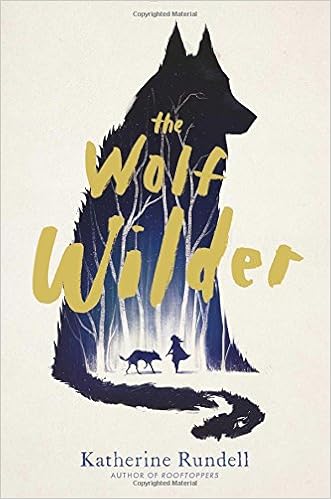
 

The Wolf Wilder by Katherine Rundell is a book I didn’t expect to love as much as I did.  I had heard from others that it was a great title and yet whenever I picked it up, I just didn’t quite fall into the appeal of it.  Its tale of honor, family, and yes, wolves left me mesmerized from page 1.  This is the best of books; nature and survival, historical fiction and fast paced adventure.  This is a must for 4th grade and up.

From Amazon:

A girl and the wolves who love her embark on a rescue mission through Russian wilderness in this lyrical tale from the author of the acclaimed Rooftoppers and Cartwheeling in Thunderstorms.

Feo’s life is extraordinary. Her mother trains domesticated wolves to be able to fend for themselves in the snowy wilderness of Russia, and Feo is following in her footsteps to become a wolf wilder. She loves taking care of the wolves, especially the three who stay at the house because they refuse to leave Feo, even though they’ve already been wilded. But not everyone is enamored with the wolves, or with the fact that Feo and her mother are turning them wild. And when her mother is taken captive, Feo must travel through the cold, harsh woods to save her—and learn from her wolves how to survive.
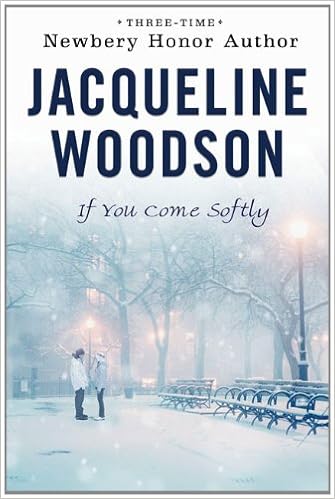
One of these days I might write an entire post about how much I admire the talent and work of Jacqueline Woodson.  The conversations she invites us to have in our classrooms are profound and I am so thankful I finally discovered her book If You Come Softly.  While the story is set in high school it is not high school langue which makes it even more accessible to many students.  This book about race and love and growing up is one I won’t forget.  I also read, and loved, Behind You, the follow up novel.

From Amazon:

Jeremiah feels good inside his own skin. That is, when he’s in his own Brooklyn neighborhood. But now he’s going to be attending a fancy prep school in Manhattan, and black teenage boys don’t exactly fit in there. So it’s a surprise when he meets Ellie the first week of school. In one frozen moment their eyes lock and after that they know they fit together — even though she’s Jewish and he’s black. Their worlds are so different, but to them that’s not what matters. Too bad the rest of the world has to get in their way.
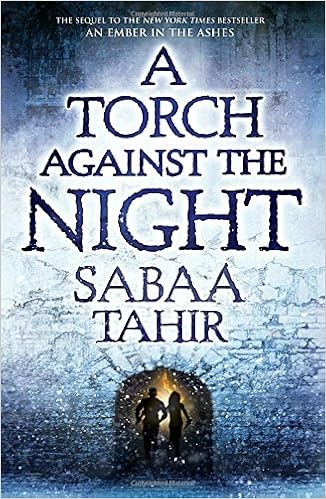
We loved the first book in Sabaa Tahir’s series An Ember in the Ashes and so I was so excited to read the sequel A Torch Against the Night.  Sabaa Tahir delivers a masterful follow up to this great YA series, fast-paced with magic, adventure, and a little bit of love, this is the type of books that many of my 7th graders gravitate toward.  This comes out at the end of August and I cannot wait to book talk the two books to my students.

From Amazon:

Elias and Laia are running for their lives.

Following the events of the Fourth Trial, an army led by Masks hunts the two fugitives as they escape the city of Serra and journey across the vast lands of the Martial Empire.
 
Laia is determined to break into Kauf—the Empire’s most secure and dangerous prison—and save her brother, whose knowledge of Serric steel is the key to the Scholars’ future. And Elias is determined to stay by Laia’s side…even if it means giving up his own chance at freedom.
 
But Elias and Laia will have to fight every step of the way if they’re going to outsmart their enemies: the bloodthirsty Emperor Marcus, the merciless Commandant, the sadistic Warden of Kauf, and, most heartbreaking of all, Helene—Elias’s former friend and the Empire’s newest Blood Shrike.

Helene’s mission is horrifying, unwanted, and clear: find the traitor Elias Veturius and the Scholar slave who helped him escape…and kill them both.


being a teacher, books, Literacy, new year, picture books, Reading

My 10 First Day Picture Books 2016 #pb10for10

The very first thing we do on the very first day is to read a picture book.  The look of surprise on my 7th graders when I ask them to come on over to the rocking chair is worth it every year.  We are a classroom of books, of stories,  of illustrations and they surround us beginning on the very first day.  All summer I scour my local book stores and libraries.  I read reviews, I reach out to friends.  I search high and low for that perfect book, the one that will make us wonder, make us laugh, make us think.  Make us start to believe again that reading is something magical.  Our pile of ten books is one that I look back upon remembering that this is what framed our very first day.  That will frame the experience we are about to have.

So as the students come on over, scoot in as close as possible so they can see all of the details, these are the 10 books that will be held up high for a vote.  I cannot wait to see which books they choose this year.

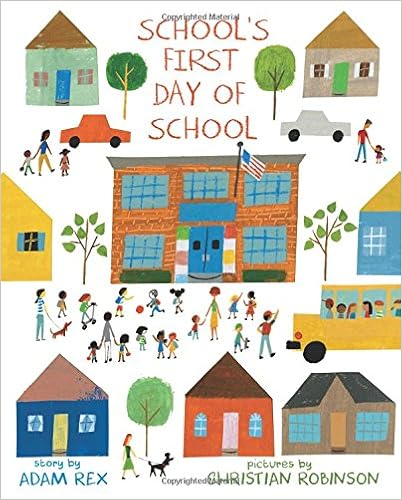
How many gushing words can I say about School’s First Day of School written by Adam Rex and illustrated by Christian Robinson.  I am fairly sure that these two have created one of the best picture books not just of 2016 but of many years to come.  This is bound to be a classic at every grade level.

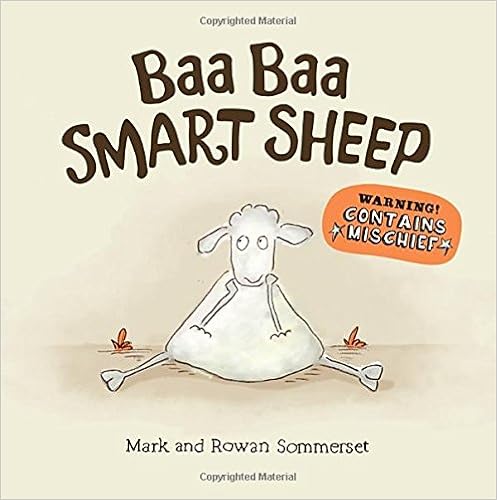
How great is Baa Baa Smart Sheep created by Mark and Rowan Sommerset? This story of a sheep that sets out to trick a turkey is laugh out loud funny and sure to gain attention.  There is even a sequel out which I also cannot wait to share.

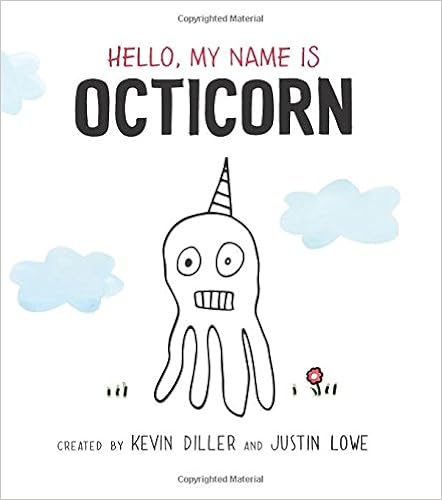
Hello, My Name is Octicorn created by Kevin Diller and Justin Love is also in my pile of books for the first day of school.  Funny yet poignant in its message, this will also make a great picture book to teach theme.

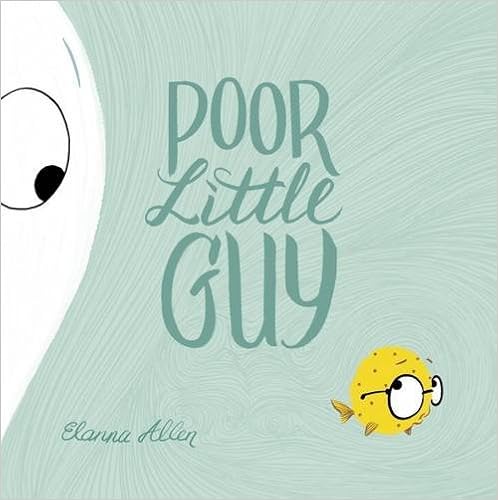
I laughed out loud when I read Poor Little Guy by Elaina Allen, but this book is not just funny, it also carries a great message; don’t judge others by their looks because you never know what will happen.  I am a fan of this book.

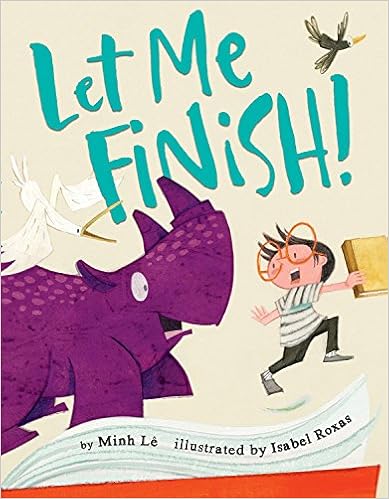
What happens when those around you decide to keep spoiling the book for you and all you want to do is read in peace?  That is exactly what Mihn Le shares in his fantastic picture book Let Me Finish illustrated by Isabel Roxas.  How fantastic will this picture book be for discussing reader identity?

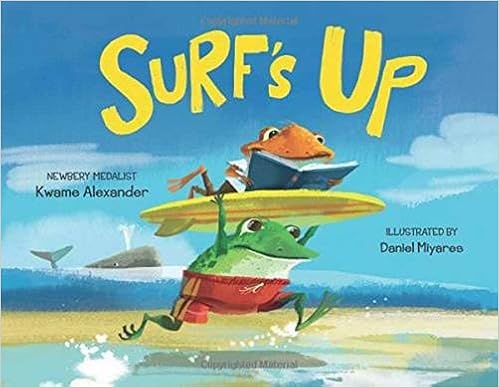
Kwame Alexander is the reason many of my self-identified non-readers are now readers, so this picture book was a given.  Come to find out Surf’s Up illustrated by Daniel Miyares (another of my favorite writer/illustrators out there) is all about the pleasure of reading.  Yes please!

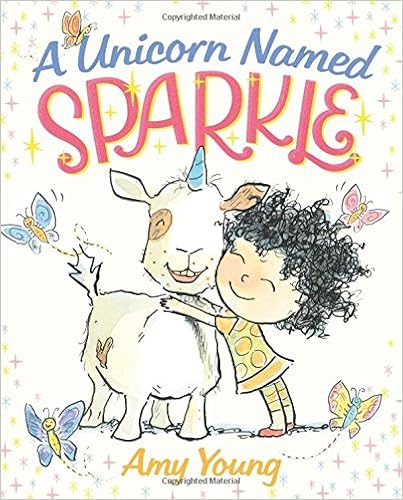
My friend Jillian Heise told me to read A Unicorn Named Sparkle by Amy Young because I would love it and she was right.  Funny yet with such a great message about how we can fall victim to wrong impressions, this book is a great book for all ages.

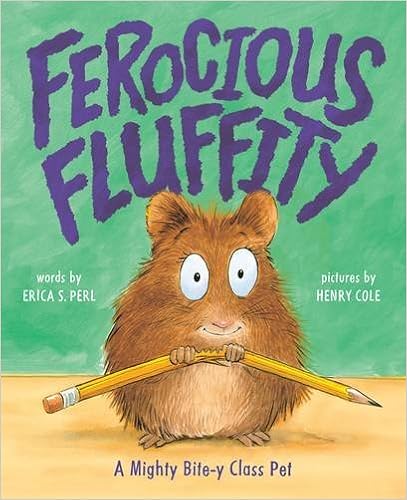
What happens when your classroom pet turns out not be so ice and cuddly?  Ferocious Fluffity written by Erica S. Perl and illustrated by Henry Cole is a tale of just that.  Sure to hold their attention and make us laugh.

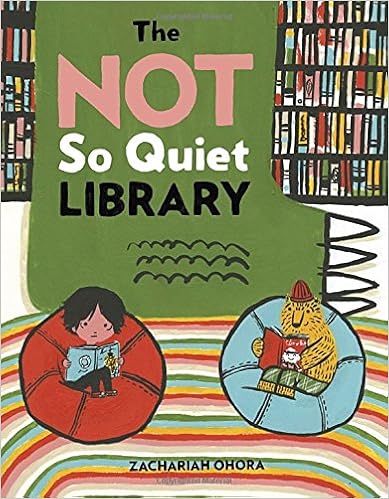
What happens when an angry monster shows up at the library and interrupts Oskar and Theodore’s quiet time?  Well, you will have to read The Not So Quiet Library by Zachariah Ohora to find out.  What a fantastic way to introduce our classroom library that should not always be quiet.

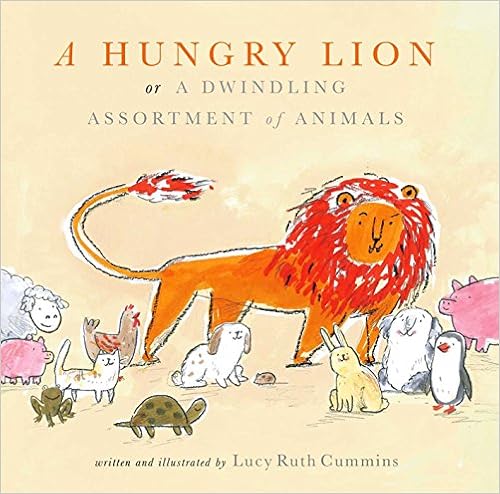
Every person I have had read A Hungry Lion or A Dwindling Assortment of Animals by Lucy Ruth Cummins has loved it.  Funny and surprising, I have loved the reaction that children and adults have to this book.  What do we do when our initial prediction turns out not to be true after all?

There you have it, my 10 picture books for the first day of school and also my blog post for the fantastic Picture Book Ten for Ten that happens every year on August 10th.  Make sure you check out the hashtag #pb10for10 and all of the other great posts to receive some more inspiration.

To see all of our lists for favorite picture books, please go here.  

being a teacher, Literacy, Reading, Reading Identity, students

As We Plan Our Reading Classes

If the children aren't reading in our classrooms, then what are we really teaching? @pernilleripp

We start almost every single day with 10 minutes of reading in our classroom.  With 10 minutes dedicated just to eye on eye on text.  With 10 minutes dedicated to the noble pursuit of falling into a great story.  I wish we could dedicate more time, but teaching 45 minute English blocks, means that 10 minutes is all I have been able to give so far.  To an outsider it may look like not much teaching happens, like there must be more important things to do than just the solitary pursuit of story.  In fact, when I first started embracing independent reading time, I remember making excuses to my principal as to why I wasn’t teaching more at the time.  I am sure he didn’t need the excuses, but I thought he did.  And that’s it, isn’t it.  We mistakenly think that when students are sitting in silence, hopefully immersed in a book, that we are not doing our job as teachers.  That we are somehow not fulfilling  our responsibility or promises.

So we cram as much other stuff into our English classes and leave independent reading time for those days where we have the time.  We plan our lessons down to the last-minute and plan for reading last so that it becomes a reward at the end if we get through everything else.  We plan for it once a week or every couple of days hoping that that is enough and then we sacrifice the time set aside the minute we must cover something else.  Our independent reading time is hardly ever sacred because it doesn’t look like real teaching.  I get it too.  I already feel the panic of the upcoming year and all of the things we should experience.  I already get nervous when I look at how few days we really have together and just how much we have to do.  Yet in the past many years as a teacher of reading and English, the time to read has been the one thing that has made the biggest difference. Even if it meant some days not getting to everything I had hoped.  So we can hope that our students will read outside of our classrooms, perhaps they all will, or we can make sure that we give them the one thing that is the most important in our instructional time; time to read.  Time to find a book.  Time to develop a reading life.  We can assign reading, we can punish those who don’t, or we can simply build our classes around the need for reading, even if we teach in incredibly small blocks of time.

Yet when we speak of developing readers.  When we teach reading.  When we teach English; silent sustained reading time with support should be the very first thing we plan for.  The very last thing we sacrifice.  Our independent reading time should be the one thing that does not get cut.  The one thing that we must fit everything else around.  This is not just a fancy notion, it is research based, just see this post that the incredible Donalyn Miller took the time to put together. There is so much research out there supporting the notion of every child needing time to read in school that entire books have been written to defend it.  (Here’s just one of them!).  And if you are an administrator reading this, you are instrumental in making this happen.

Independent reading time should be a right for all children in English, not just for those who got through whatever they needed to get through.  It should be  a guarantee for all of the children that enter our doors, much like those who enter a science classroom know that they will, indeed, do science.  So why is reading any different?

I know it is not easy to find the time.  I know it is so hard to give up even just one  minute.  So when we cannot change the system and give ourselves more time, how can we fit reading in?

I am currently working on a new literacy book, two separate literacy books.  While the task is daunting and intimidating, it is incredible to once again get to share the phenomenal words of my students as they push me to be a better teacher.  The book, which I am still writing, is tentatively Passionate Readers and will be published in the summer of 2017 by Routledge.  So until then if you like what you read here, consider reading my book Passionate Learners – How to Engage and Empower Your Students.  Also, if you are wondering where I will be in the coming year or would like to have me speak, please see this page.


being a teacher, Literacy, picture books, Reading, Reading Identity

A Few (Or More) Great New Picture Books

Oh summer, I love you for many reasons; waking up because my children ask me to get up and make them breakfast and not because of the alarm, nights on the deck, lightning bugs, and naps, I am fairly certain, I could be a professional napper.  And the books…oh the books.  How much sweet er is summer time reading where I have the time to sit for an hour or more and just fall into the pages of the books I choose?  Or time to grab a whole stack  of picture books and read them end to end, pretending not to notice how much they will cost me but knowing that they will make our school year that much better.  So I think it is time to share a few (or more) of my very favorite reads of this summer.  Some are out now, a few are coming out soon.

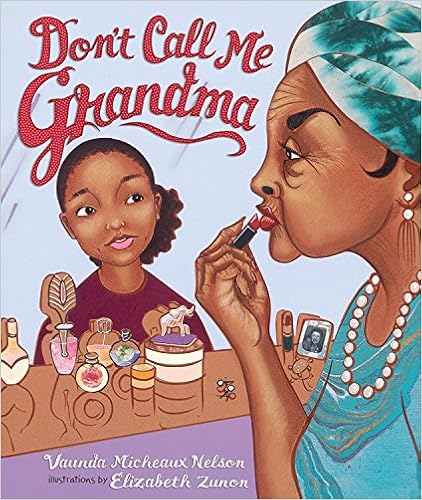
Don’t Call Me Grandma written by Vaunda Micheaux Nelson and illustrated by Elizabeth Zunon is not at all what I expected.  I loved the narrative of the grandma that is not like a grandma is supposed to be and then the unexpected hints of why she is the way she is.  I will be using this one for teaching Contrast & Contradictions from Notice & Note.  To see all of the picture books I like to use for that, go here. 


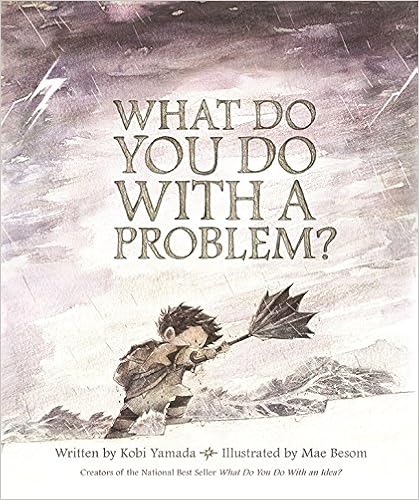
I have used Kobi Yamada’s book what Do You Do With an Idea for a while now and was eager to read his latest What Do You Do With a Problem?   What a fantastic addition to any classroom library for the message it sends of resilience and also the conversations it may lead to.

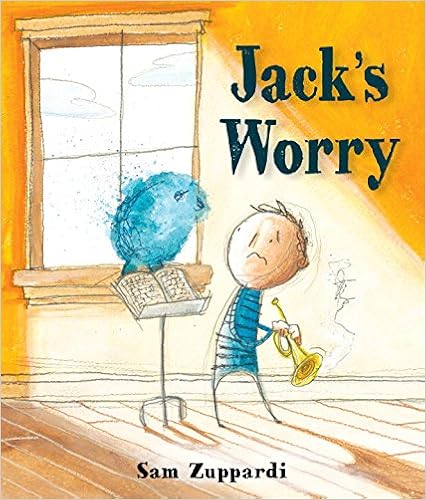
Another fantastic picture book to discuss problems and anxiety is Jack’s Worry from Sam Zuppardi.  I love the illustrations of how Jack’s worry follows him around and how he ends up solving it.  Many children would benefit from this book in their classrooms.

Hello, My Name is Octicorn created by Kevin Diller and Justin Love is in my pile of books for the first day of school.  Funny yet poignant in its message, this will also make a great picture book to teach theme.

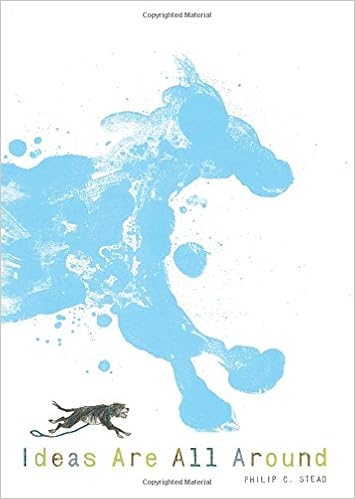
What do you do when you are supposed to write but just don’t have any ideas?  You read Ideas Are All Around by Philip C. Stead.  Beautiful illustrations coupled with a story that will make you think, this is a must for any writing workshop classroom.

I laughed out loud when I read Poor Little Guy by Elaina Allen, but this book is not just funny, it also carries a great message; don’t judge others by their looks because you never know what will happen.  I am a fan of this book.

Baa Baa Smart Sheep by Mark and Rowan Sommerset is so wrong, yet so right.  This book and its sequel I Love Lemonade are both worthy additions to any classroom library that is looking to recapture the fun of reading.  I cannot wait for the reactions of my students when they hear this book.

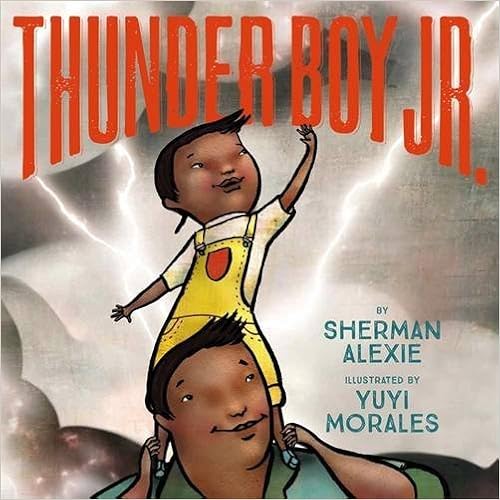
While I have been reading about the controversy surrounding Thunder Boy Jr. the debut picture book from Sherman Alexie and illustrated by Yuyi Morales, I think it is a great addition to our classroom.  I believe that a picture book that has controversy surrounding it is always a great addition because it will offer my students a perspective into something they may not otherwise think about.  Beyond the controversy though, it is also a picture book that speaks of pride in self and culture.

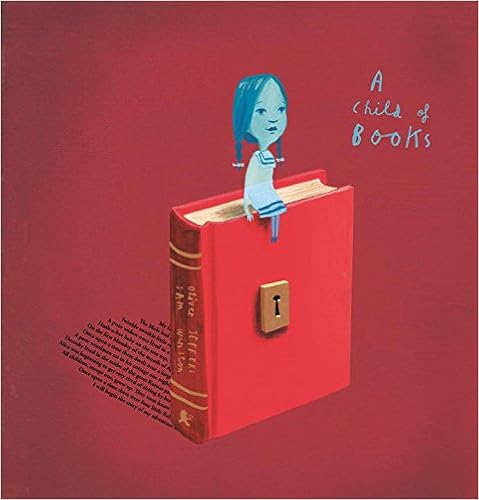
I have few words for this brand new picture book A Child of Books written by Oliver Jeffers and Sam Westman.  It is as if they went into my mind and gave me everything I need to try to convince children that writing can be magical.  Beautiful.  This is out in September, I encourage you to pre-order it now.

School’s First Day of School written by Adam Rex and illustrated by Christian Robinson (who is a brilliant illustrator)  is the book I secretly hope all of my students want read aloud on the first day of school.  Written from the perspective of a school and its first day, I love the feel of the book, the theme of the book and immediately reread it after the first read through.

What happens when those around you decide to keep spoiling the book for you and all you want to do is read in peace?  That is exactly what Mihn Le shares in his fantastic picture book Let Me Finish illustrated by Isabel Roxas.  How fantastic will this picture book be for discussing reader identity?

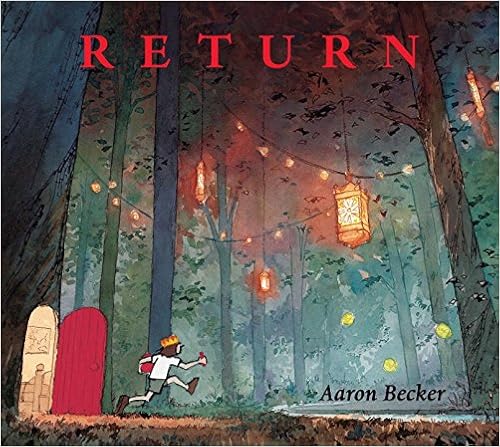
Return by Aaron Becker is simply a masterful conclusion to his extraordinary trilogy that started with the book Journey.  What a powerful set of wordless picture books.

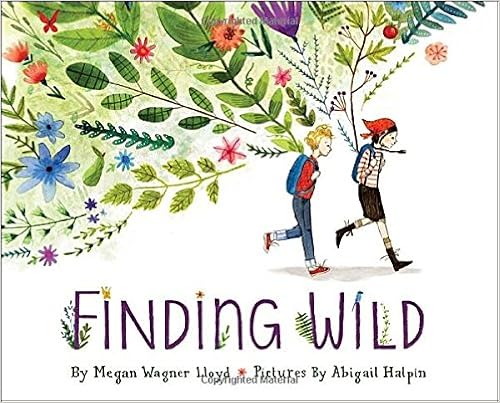
Finding Wild by Megan Wagner and illustrated by Abigail Halpin takes on a quest into the wild.  Beautifully illustrated with a text that begs to be shared, this is a great text for descriptive writing.

In my book Cale Atkinson can do no wrong and he goes on to prove that in Explorers of the Wild.  A dual part narrative that would be an amazing way to talk about how we judge others based on assumptions rather than knowledge.

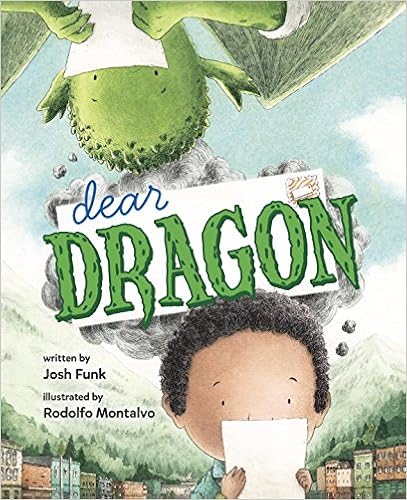
Another incredible dual perspective picture book is Dear Dragon by Josh Funk and illustrated by Rodolfo Montalvo.  Not only do I love the story of the two narrators a lot, but also how this book can lead to bigger conversations about what we assume when we hear someone share their story.  As I get ready to teach social justice, this book is the perfect entry into the danger of a single story.  This book is out September 6th, but is a must for pre-ordering.

Kwame Alexander is the reason many of my self-identified non-readers are now readers, so this picture book was a given.  Come to find out Surf’s Up illustrated by Daniel Miyares (another of my favorite writer/illustrators out there) is all about the pleasure of reading.  Yes please!  This is also in my first day pile of choices for my students.

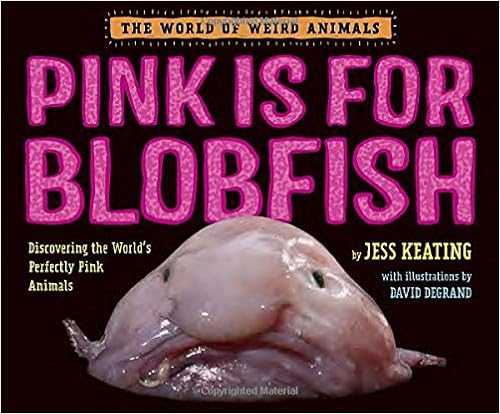
You haven’t seen amazing non-fiction writing if you have not read Pink is for Blobfish written by Jess Keating and illustrated by David Degrand.  Not only is this a book that students have to pick up when they see it, they keep returning to it.  What a fantastic mentor text for how to do nonfiction writing right.

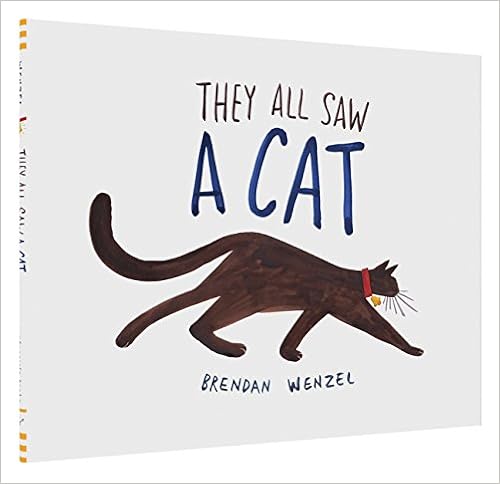
I was lucky enough to be given a finished version of They All Saw a Cat by Brendan Wenzel at ILA.  It is gorgeous.  It is mesmerizing.  And it is for all ages.  This book….yeah…there may be some awards in its future.  I cannot wait to use it to teach multiple perspectives.  It comes out August 30th, definitely worth ordering now.

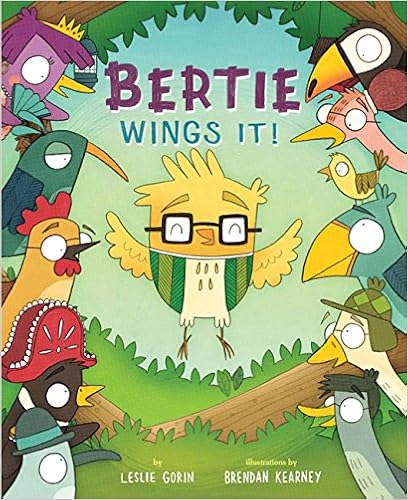
What happens when you stop trusting yourself and instead start listening more to everyone else’s opinion?  Find out in Bertie Wings It written by Leslie Gorin and illustrated by Brendan Kearney.  What a great conversation starter about staying true to yourself.

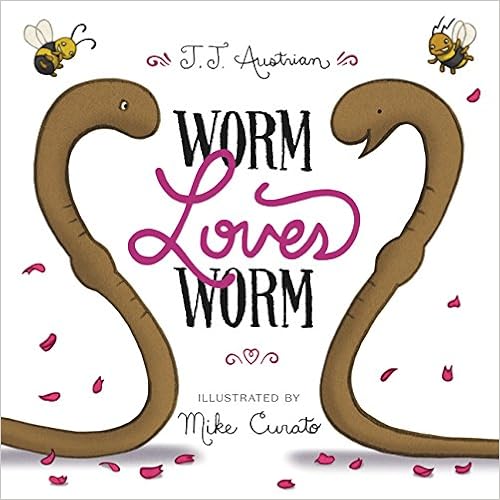
I hope it comes as no surprise that I would love the picture book Worm Loves Worm written by J.J. Austrian and illustrated by Mike Curato.  A picture book that makes us think about the labels we feel inclined to put on people and how unnecessary they can be; yes please.

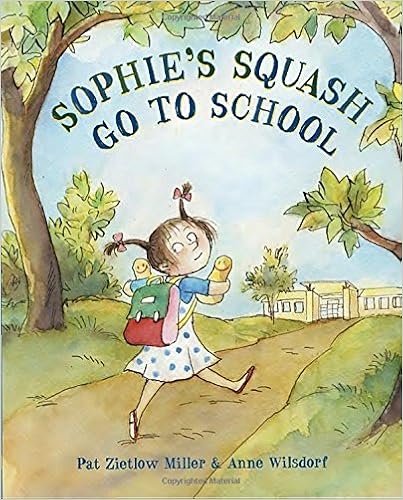
Pat Zietlow Miller continues to enthrall me with each new release.  Sophie’s Squash Go to School is the sequel to the super funny Sophie’s Squash and a great sequel indeed.  I love the theme of friendship and acceptance and also how it builds upon the first book.

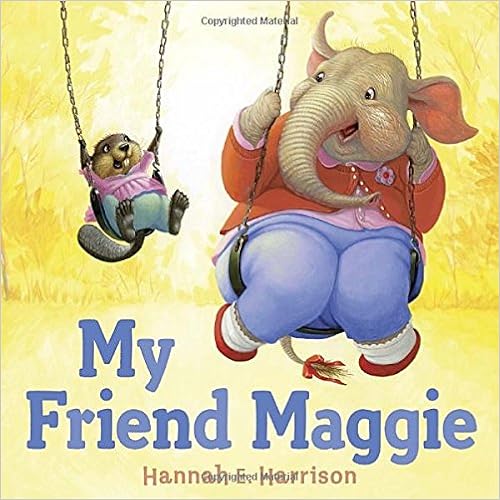
I first fell in love with the work of Hannah E. Harrison when I read Extraordinary Jane (this is another must add to your library) and her latest picture book My Friend Maggie is incredible.  What happens to a beautiful friendship when an outsider starts to criticize one of the friends?  Pre-order this picture book, out August 9th, and find out.


Ok, I have more, but I will stop for now.  And yes, I purchased almost all of these books out off my own pocket because that’s what we do, and they were worth every single penny I spent.  If you want to stay up-to-date with what I am reading, I have decided to dedicate my Instagram account to that exact purpose, you can follow me there if you would like.

To see all of the many other lists of favorite books I have made over the years, go here.

being a teacher, Literacy, organization, Reading

How I Teach English in the 45 Minute Timeframe

One of the question I am asked the most is how do you teach English in 45 minutes?  Not just reading, not just writing, but everything that English encompasses.  And I can tell you; it is not easy, nor is it perfect, nor do I have everything figured out.  The 45 minute block of time is the bane of my English existence.  Yet as I have figured out it is within our biggest problems that we find our biggest inspiration, and that is very true for this situation.  I have to try to make 45 minutes work while my students and I pine for more time.  In fact, this is the core of the book I am currently writing; how do you create passionate readers when you barely have any time to teach, let alone have conversations?

I am not alone in this quest to solve it.  Many great minds of literacy such as Nancie Atwell, Penny Kittle, and Donalyn Miller have all helped shape my thinking.  As have countless English teachers that have trodden the path before me.  While I rest my class on a workshop foundation, I have had to make some tweaks to make it work for us.  So I thought I would share a few ideas here.

We start with 10 minutes of self-selected independent reading.  Every day of the year, almost.  This is the very last thing I will take away from our schedule.  From the second day of school this starts and the students know to “settle in and settle down” as they fall into their book.  I spend the 10 minutes conferring with 2 or 3 students, as detailed in this post here.  Students have done their own attendance, all I have to do is enter it.  Students can also book shop during this time.  A timer or my voice brings us back when the 10 minutes are over.

2-4 minutes of book talks.  I sometimes book talk the same book in all 5 classes or 5 different ones.  As the year progresses, students will also book talk their books to the class if they feel like it.  Inspired by Penny Kittle I do not just book talk books that I have read, but also new books that I am excited about.  These book talks are a must as students try to figure out who they are as readers and should be transferred to the students when possible so they can find their reading buddies.

10 minutes or less;  teaching point.  I used to do a full mini-lesson every day but my students asked me to please stop.  They made me see how varied their needs were so depending on what we are doing, most days we have a very short whole class discussion point or lesson.  My students have asked me to instead do small group lessons or one-on-one conferring/teaching based on needs.  The text that I most often use for a mini lesson is a picture book.  Almost all new concepts are introduced through picture books, before we move into nonfiction, multimedia or short stories.  Picture books allow us to get to the point quickly and in a way that allows all readers to access the text.  They also bring a lot of joy back into our reading community.  To see some of our favorites, please see all of the lists here.  

The rest of class time; student work-time.  Again, this looks different based on what we are doing, but most often I am either conferring with students as they come to me or I am going to them and doing coach-ins over their shoulder.  If we are doing book clubs then I listen in on conversations from the side, if students are writing then I most often confer with them at a side table.  All writing conferences start with me asking them what I should be looking for.  They need to be able to come up with a goal for me instead of just having me check “whether it is good or not?”  This is a great way to get students to take ownership over their writing and start to understand what they need to work on.  Reading conferences always start with “What are you working on as a reader?”

The biggest learning point for me has been to limit my teacher-talk in order to get students to have more time.  If we have a day where I know my teaching will expand beyond the 10 minutes, then I often tell the students that so that they know to expect.  That way they can also understand the purpose of the lengthier instructional time.  As far as figuring out which child needs what, which yes, is one of the biggest challenges, I have students self-reflect a lot, but I will also be using a sheet like this more often so that they can tell me what they need to work on.

I am not sure this post is even helpful, It could be about 30,000 more words or so, however, this should offer a small glimpse into what a typical day in our classroom looks like.  We do not do reading or writing separately but often have both in a day, what we do though is have different focuses for our quarters, so quarter 1 and 3 are more focused on reading explorations, whereas quarter 2 and 4 are more focused on writing explorations.  Please feel free to leave your questions in the comments if I can help in any way.

I am currently working on two separate literacy books.  While the task is daunting and intimidating, it is incredible to once again get to share the phenomenal words of my students as they push me to be a better teacher.  The first book titled Reimaging Literacy Through Global Collaboration is scheduled for release November, 2016 by Solution Tree.  The second, which I am still writing, is tentatively Passionate Readers and will be published in the summer of 2017 by Routledge.  So until then if you like what you read here, consider reading my book Passionate Learners – How to Engage and Empower Your Students.  Also, if you are wondering where I will be in the coming year or would like to have me speak, please see this page.