books, Literacy, notice and note, picture books

Great Picture Books to Teach Tough Questions – Notice and Note

One of the main texts we use to guide our reading instruction is the amazing Notice and Note: Strategies for Close Reading by Kylene Beers and Robert Probst.  This book provides us with the foundation for having deeper reading conversations and a common language as we develop our thoughts.  While the book has excellent text ideas to use as mentor texts, I thought it would be nice for my students  to use picture books on the very first day of a new strategy before we delve into the longer text excerpts.  I have therefore looked for picture books I could use with the different strategies and will publish posts as I have them for the 6 different strategies since I cannot be the only one looking for ideas.

The first post was on Contrast & Contradictions, then followed Aha Moments, so this week it is Tough Questions.  Apparently, this is a harder one to find picture books for so I found a few, but then turned to the awesome Notice and Note Facebook group I am a part of to crowd source more ideas.

My Ideas

White Water by Michael S. Bandy and Eric Stein has several tough questions in it and also doubles as an amazing book to discuss a really powerful topic with students; racial segregation.  This is the book I used to introduce the strategy to my students with the bonus of having aha moments and a contrast and contradiction in it as well.

The Three Questions by Jon J. Muth starts out with three obvious tough questions and then explores them the rest of the book.

A book near and dear to my heart The Yellow Star By Carmen Agra Deedy.  Although the story is not true, it still speaks of my people’s fight against the Nazi occupation and opens up great conversations.  The tough question is when King Christian wonders what can be done to fight the yellow stars.

What Do You Do With An Idea? by Kobi Yamada is a book I use a lot in the classroom as it is great for inferencing, and inspiring creativity, but it also works well for this strategy as it starts out with tough questions and then has several more further in.

The Numberlys By William Joyce and Christina Ellis has several tough questions and is definitely a great way to highlight conflict.

The tough question is not posed as a question in Henry’s Freedom Box by Ellen Levine but instead as a desire to be free.  I would use this later in the strategy to teach students that tough questions are not always in a question format.

Boats for Papa by Jessixa Bagley only has one question int it but it will lead to great questions and will also be a great inference exercise.

Crowd Sourced Ideas

The Rainbow Fish by Marcus Pfister

Train to Somewhere by Eve Bunting

The Gold Coin by Alma Flor Ada

Riding the Tiger by Eve Bunting

The Old Woman Who Named Things by Cynthia Rylant

Fly Away Home by Eve Bunting

Bully by Patricia Polacco

Wanda’s First Day by Mark Sperring

Alexander and the Wind-Up Mouse by Leo Lionnei

Pink and Say by Patricia Polacco

Which ones did we miss?

If you like what you read here, consider reading my book Passionate Learners – How to Engage and Empower Your Students.  The 2nd edition and actual book-book (not just e-book!) just came out!

being a teacher, books, Literacy, picture books, Reading

10 + 1 Picture Books to Teach Inference

I remember I was told to teach inference as a 4th grade teacher, it was one of the many skills students were supposed to develop in literacy, and I was a stickler for following the rules.  So the first year I sat with my lesson plans, every word penciled out and guided my students through the lesson.  We inferred because the book told us to.  When a child asked me why they were learning this, I answered, “Because you will need it next year.”  That successfully quieted the child, and I felt satisfied, I had been able to give them a reason for what we were doing and so they did it.

Yet, the act of inferring is so much bigger than “next year.”  It is so much bigger than learning how to read text better.  It is a life skill.  One we need to navigate difficult situations.  One we need to read other people.  One we need to become better human beings that care about others.  And so we infer, yes, but we also start to trust ourselves and our opinions, build confidence in our intuition and get more astute in our observations.  And picture books are about one of the best ways we can teach it in our classrooms.  So here are some of my favorite titles that I use.

I have to start with one of my favorites and the one I chose to start this year’s lessons with; I Want My Hat Back by Jon Klassen.  Beloved by so many, the students laugh out loud, love to infer right away, even when you tell them not to and fall in love with the simple yet devilish story of who took the bear’s hat.  Magic I tell you.

And I have to highlight the kind of sequel This Is Not My Hat also by Jon Klassen.  I use this as a follow up book, to give my students another chance at visiting the magical world that seems to be Jon Klassen’s mind and they love it as much as the first one.  I also love all of the theories of what happened to the little fish that my student concoct.

Boats for Papa is a new picture book by Jessixa Bagley that I immediately fell in love with.  The story does not tell us where papa is, nor why the mother does what she does, leaving this open for interpretation by the students.

Knock Knock: My Dad’s Dreams For Me by Daniel Beaty is an emotional book that leaves the reader wondering where the father is.  I love the emotional connection that my students can feel to this book, as well as what they conclude.  This book will also provide us with a window into the lives of our students as they share their own experiences.

This amusing story of what really happened to a sandwich will allow you to peek into the minds of how deeply students understand textual clues, as well as how well they look for evidence.  The Bear Ate Your Sandwich by Julia Sarcone-Beach is one that makes me giggle every time I read it aloud and then leads to heated discussions of what exactly did happen to that sandwich?

Another book that is great for deeper level conversations as students try to decide why that skunk keeps following the main character.  I cannot wait to hear what my students will come up with, as well as what they would do in this situation if a skunk were to follow them home.  I have many of Mac Barnett’s and Patrick McDonnell’s book and love having The Skunk as well

Rules of Summer by Shaun Tan is one of those books you can turn to again and again because of the complexity within it.  I have used it to teach Contrast & Contradictions and will now also use it for deeper inferences.  What I love the most is that each child can truly have their own unique interpretation of what the entire book means and I don’t have enough books that allow us to do that.

Yes, I am biased when it comes to Amy Krouse Rosenthal,, she is after all the Global Read Aloud picture book author study this year.  But Duck Rabbit is a great inference and discussion book.  The simple text and witty illustrations means that every student is bound to have an opinion in the ongoing debate of whether that is a duck or a rabbit.  I always keep my opinion to myself.

Another wordless picture book on this list is The Red Book by Barbara Lehman.  Again, this levels the playing field for all students as they try to figure out what is happening in the story and have to be careful observers to support their conclusions.  Plus, I just love the message this book sends.

Another new picture book to me this summer is Shhh!  We Have a Plan by Chris Haughton.  I love asking my students what they think will happen if the group succeeds and what their purpose really is.

Before I published this post, I asked on Twitter for people to share their favorites.  Here are some crowd sourced ones as well.

No, David! by David Shannon

The Rabbits by Shaun Tan and John Marsden

Dear Santa Claus by Alan Durant

Mr. Peabody’s Apples by Madonna and Loren Long

Which ones did I miss?

If you like what you read here, consider reading my book Passionate Learners – How to Engage and Empower Your Students.  The 2nd edition and actual book-book (not just e-book!) just came out!

books, Literacy, Passion, Reading, student voice

On Reading Identity – An Essential Question to Ask Our Students

http---www.pixteller.com-pdata-t-l-190454

I have been watching my students carefully the last few weeks, waiting, holding my tongue, and just seeing what happens.  We have started every day with 10 minutes of independent reading, which yes, sometimes is so hard to give because I feel the pressure of what I have to cover bear down on me.  And yet, I know that giving my students independent reading time, particularly in the middle school, will make the biggest difference between whether they are readers or not.

So I have watched, and I have noticed the child that has already read 5 books on his device.  Absorbed, enthralled, and recommending books to me.  The child that is still re-reading the same old books that he has re-read the last few years, afraid to take a chance on something new.  There is the child that has asked me if she could please listen to the next book and will that count as reading?  (The answer is yes, of course).  And then there is the girl that has been sharing her truth with me in small casual comments; she hates reading, always has.  Reading was fun in kindergarten when she had to listen but that was it.  She says it likes it’s no big deal.  Like it is fact.  Reading is not for her and never will be.  So I tell her I will try to make reading better and she answers “That’s what they all say, Mrs Ripp.”

That’s what they all say.

Every teacher who has had her has told her the same thing; I will help, I will make it better, I will try.  And yet, she stands before me now confessing that reading makes no sense to her.  That even when she has pictures it makes no sense.  And it doesn’t matter how many strategies she tries, it’s too hard and she will just read whatever,just so she can get through it.  Because getting through reading is the only thing she knows how to do.  Even though she has support.  Even though she has teachers who care.  And So I ask more questions, trying to discover just who she is, and what her reading identity means to her.

So often, we feel the pressure to teach.  We feel that every time we speak to a student we must offer them up a kernel of truth, some inspiration, and a thing to try.  We do it so that reading can become better for them, so they can comprehend deeper, understand it more, and develop their skills.  Yet, in slowing down these past few weeks, I have learned yet another lesson when it comes to our readers;  We cannot teach them well if we do not know their reading identities.  And sure, that comes through speaking with them, but it also comes through quiet observation and casual conversations.

The students know what we want to hear.  They will not tell us their truths until they trust us. So I withhold my judgment, reel back my eagerness to fix, and I pay attention, and I listen.  Our students speak so loudly, yet we often forget to hear it.

So as they read or not read, depending on their choice, I sit next to them and ask quietly; “Are you a reader?”  They are often surprised at the question, yet how they answer it tell me so much.  I thank them and I move on.  I take notes on my reader profile sheet and I ponder what the next step should be.  How this year will help them and not hurt them.

We are not yet ready to talk strategies.  We are not yet ready to talk goals, other than finding great books.  We are not ready to analyze text, break it apart, or even compare.  Not as a class any way.  But we are ready to share our truths.  They are ready to declare whether reading is for them or not.  And I am ready to listen.  Are you?

If you like what you read here, consider reading my book Passionate Learners – How to Engage and Empower Your Students.  The 2nd edition and actual book-book (not just e-book!) just came out!

being a teacher, books, Literacy, picturebooks

Great Picture Books to Use for Aha Moments

One of the main texts we use to guide our reading instruction is the amazing Notice and Note: Strategies for Close Reading by Kylene Beers and Robert Probst.  This book provides us with the foundation for having deeper reading conversations and a common language as we develop our thoughts.  While the book has excellent text ideas to use as mentor texts, I thought it would be nice for my students to use picture books on the very first day of a new strategy before we delve into the longer text excerpts.  I have therefore looked for picture books I could use with the different strategies and will publish posts as I have them for the 6 different strategies since I cannot be the only one looking for ideas.

The first post was on Contrast & Contradictions, so this week I am turning to Aha Moments.  These are the books my students and I will use as we explore this concept a little further.

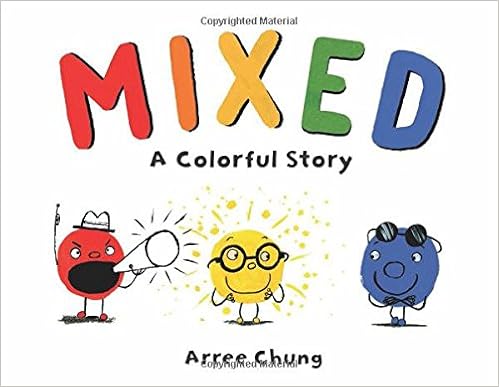
Fantastic Aha Moment in Mixed – A Colorful Story by Arree Chung as the community realizes that it is more fun to be mixed than separated.

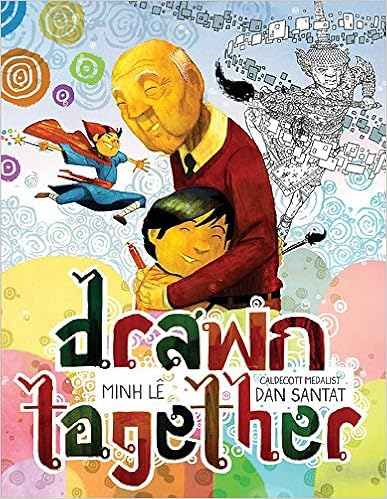
The little boy realizes that he is more alike with his grandfather than not in amazing Drawn Together by Minh Le and Dan Santat.

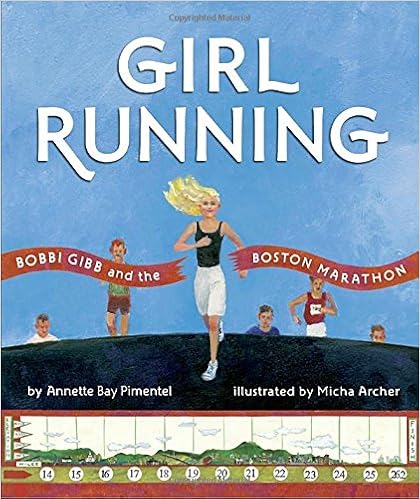
Girl Running by Annette Bay Pimentel and Micha Archer.  Bobbi Gibb realizes that she is good enough to run the marathon.


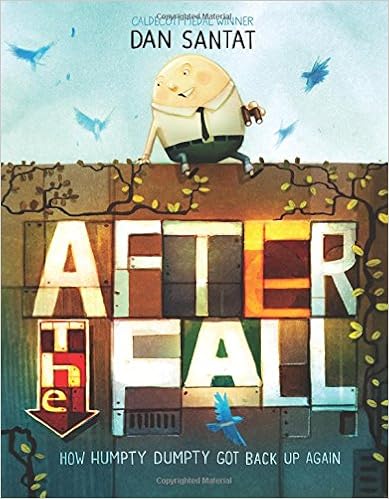
After the Fall (How Humpty Dumpty Got Back Up Again) by Dan Santat

Humpty Dumpty has to overcome his own fears, but how can he?

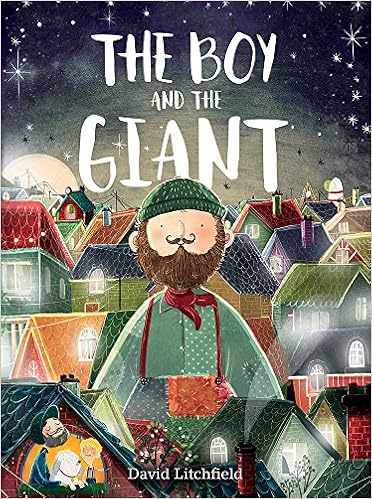
Billy realizes that instead of being scared of the giant, he needs to be how he would like others to treat him.
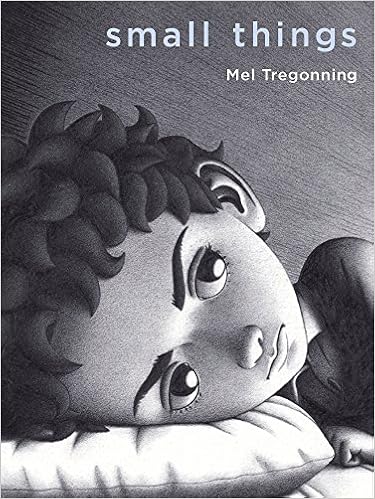
In this wordless picture book, we see the aha moment rather than read it when a boy has to figure out how to handle his anxiety.
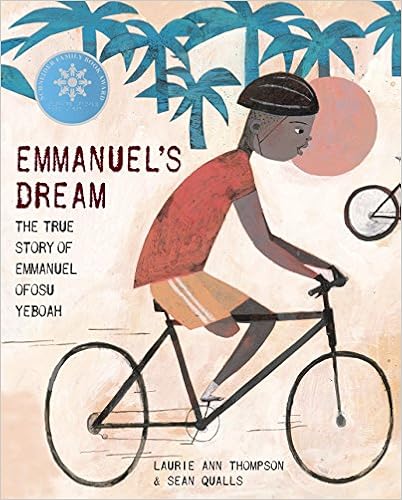
The aha moment is mixed in with words of the wiser from Emmanuel’s mother and is embedded into the story.  This is a good book to use when it may not be as obvious.


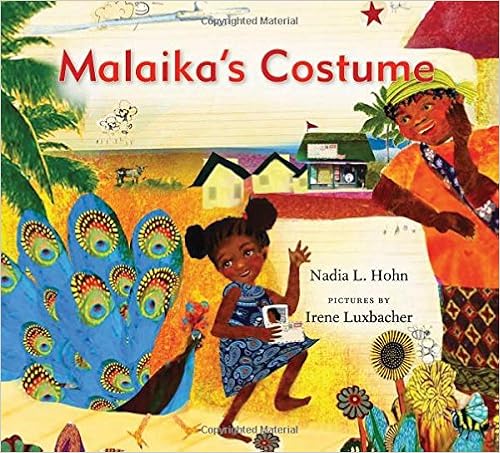
Malaika’s Costume
Malaika has to figure out how to navigate without the money her mom promised she would send to get her a costume for Carnival.
After a great discussion with her swim teacher (Words of the Wiser), Abigail realizes that she should not care what others say.

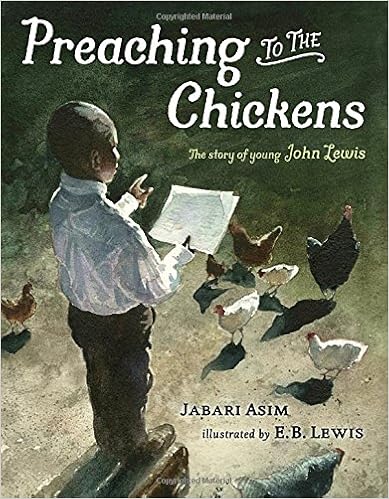
Preaching to the Chickens by Jabari Asim and illustrated by E.B. Lewis shares all of the Aha moments and realizations that John Lewis had as a young child.

The Soccer Fence by Phil Bildner and illustrated by Jesse Joshua Watson not only serves as a wonderful mentor text for Aha moments , but also an an important historical reminder for us all.

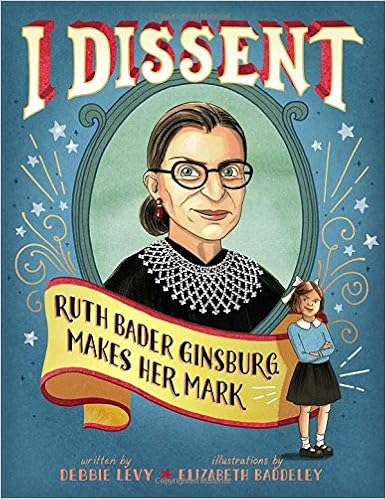
I Dissent – Ruth Bader Ginsburg Makes Her Mark written by Debbie Levy and illustrated by Elizabeth Baddeley is a phenomenal informational picture books that really show how having an aha moment truly shapes RBG’s life.  I love this picture book for many reasons and this is just one of them.

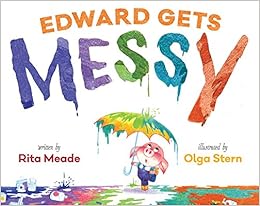
Edward Gets Messy written by Rita Meade and illustrated by Olga Stern has a wonderful tale of a pig that thinks his life needs t be a certain way but then realizes that it is okay to get a little messy.  This picture book could also be used for Contrast & Contradictions.


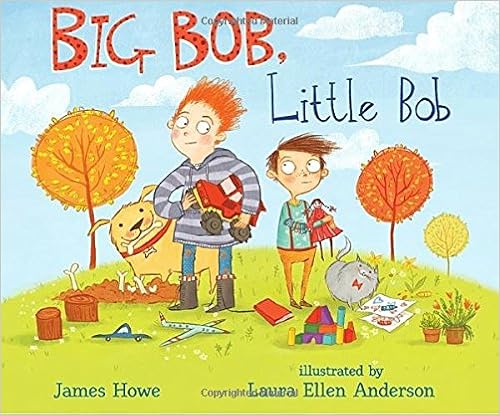
Big Bob, Little Bob written by James Howe and illustrated by Laura Ellen Anderson has a pretty awesome Aha moment toward the end that leads into a perfect conversation about the theme of acceptance and appreciating our uniqueness.


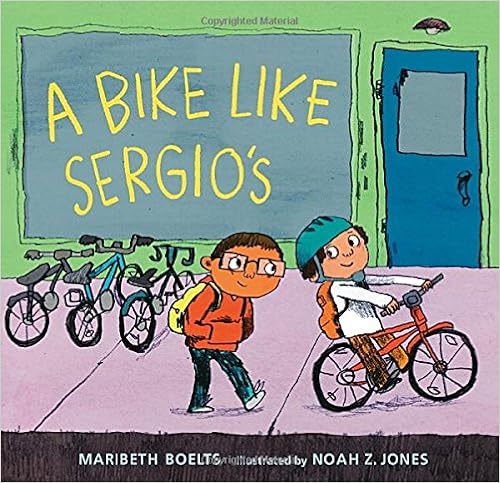
What do you do when you find money that doesn’t belong to you but you really want a new book?  A Bike Like Sergio’s by Maribeth Boelts and illustrated by Noah Z. Jones not only has an Aha moment, but will also lead to a great discussion between doing what is right or wrong.

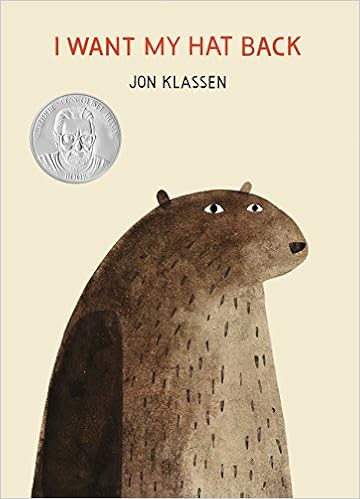
There is no way to go wrong with using Jon Klassen books.  I love all three of his hat trilogy book because not only do they all contain Aha moments, but they are also crowdpleaser.  The Aha moment in I Want My Hat Back is a conflict aha moment and I love the discussion that naturally occurs when the students just have to discuss whatever happened to that rabbit.

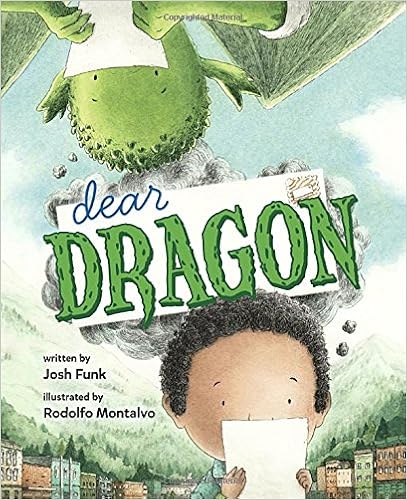
Dear Dragon written by josh Funk and illustrated by Rodolfo Montalvo is a must add to any classroom library.  The Aha moment is one that students can relate to and I love the theme of the book so much; yes we can be friends with people who lead vastly different lives than us.


While Oscar’s Spots by Janet Robertson is more than 20 years old, I still love the copy we have in our classroom.  Oscar has a pretty big moment when he realizes that maybe he doesn’t want to get rid of his spots after all.


We are huge fans of Mustache Baby by Bridget Heos, and so I am thrilled that I can use its sequel Mustache Baby Meets His Match to teach Aha moments.  I love how Billy changes his tune late in the book.


Henny by Elizabeth Rose Stanton is a quirky book and yet the aha moment cannot be denied when Henny realizes that maybe having arms is not such a bad thing after all.  My students are always puzzled when they first encounter this book but then end up liking it.


I am pretty sure I can teach all of the Notice and Note signposts with the help of Peter H. Reynolds.  His beautiful book Ish is a fantastic example of aha moment and will probably be the one that I use when I teach the strategy to the class.  It’s a good day when Peter’s books are read aloud.


While there is no specific aha moment in What Do You Do With An Idea? by Kobi Yamada, I feel like the whole book is an aha moment.  I am looking forward to the discussion that will happen around this book.


Each Kindness by Jacqueline Woodson is one of those picture books you can use for so many things; memoir, aha moment, words of the wiser, teaching empathy and such.  I have used this book for so many things that it only seems natural to discuss the aha moment that Chloe has.


A Perfectly Messed Up Story by Patrick McDonnell is one of many amazing picture books from this author.  I love the simple aha moment of realizing that it can be good enough even if it is not perfect.  This is a great read for many of our students who push toward perfect every time to the detriment of their own sanity.


The Promise by Nicola Davies is a story meant to be discussed.  I love it for its beautiful illustration, for its message, and also for its use as a mentor text.  The aha moment is one that I hope students will remember and apply in their own life.


Elwood Bigfoot: Wanted Birdie Friends by Jill Esbaum is not only a great book to discuss friendship and how we must stay true to ourselves, but is great for aha moments as well.  Elwood has a pretty big one and hopefully so will our students.


You Are (Not) Small by Anna Kang is a great book for those who really need direct aha moments to relate to.  This one is pretty straight forward and will be a great book to have students explore by themselves as well.

I am sure there are more out there, please make sure you share.

If you like what you read here, consider reading my book Passionate Learners – How to Engage and Empower Your Students.  The 2nd edition and actual book-book (not just e-book!) just came out!

being a teacher, books, community, Literacy, Passion, students

A Powerful Lesson in Book Choice and Discovery

tumblr_nutjskxIhY1qzr04eo1_1280
image from icanread

I felt so guilty this morning planning final details of my lesson.  After all, we are three weeks into the quarter and there is so much to do already.  Three weeks and what have we really done?  And yet, the books had been piling up.  I had seen the students book hopping, abandoning at a rapid pace.  And I knew there were so many great books to share.  If only we did not have to do these other things.  If only we had the time.

So this morning, I realized that we needed to find the time.  That book shopping was not a luxury I could hope to get to but instead was a necessity.  And not in a hurried, five minutes at the start of class kind of way either.  Not in a “let’s fit it in quick so we can get to this other thing” kind of way.  No, we had the need to make book shopping THE thing to do today.  No matter what else we should have been doing.

They came in and immediately saw the piles of books; my favorite reads from the summer, brand new books that I haven’t even read, and some older favorites that I know they need to discover.  Right away, the questions started.  “What’s this?  Did you see this?”  As the students grabbed their readers’ notebooks, I interrupted their conversation.  “Come on over.”  And they did, surrounding me in the rocking chair as I read aloud the inspiring It’s A Book by Lane Smith.  I love reading this book aloud to older students because they always giggle and then look to me to see if I got it too.  And I do and I giggle too, and we marvel at the wonders of simply reading a book.

I asked them how they find new books to read and we brainstormed a list together.  Nothing extraordinary but a simple reminder to indulge in the art of looking for a book.  To take the time to truly go through the books and not just cast a glance at the cover and then make a decision.

They were itching to go. The books calling out for them and yet, I held them back for another few minutes as I book talked a select few books in each pile.  Already the students were writing down titles.

“I know Echo by Pam Munoz Ryan looks like a giant book, but the pages will fly by as you read.”

“You think that The False Prince is a good book, but then you get to page 88 and it becomes a book you have to read as quickly as you can to see what happens next. And did you know the same author wrote A Night Divided?

“In my hand I am holding the best book I have read so far this year.  Yes, Orbiting Jupiter by Gary D. Schmidt is really that good.”

Finally, I told them to take their time, that I would give them the whole class period if they wanted it.  And off they went.  Their papers clutched tightly and their hands reaching out for all the books.

I stood back, observed, and smiled.  Everywhere students were reading pages, sharing books, offering recommendations and scribbling down titles.  Questions floating through the air as students told each other why they had to read this one, or how they couldn’t wait to read this other one.  One child proudly showed me they had already found 10 titles to read and they knew they would find more.

As I walked around, the students came to me and offered up book recommendations, asking me to please write it down because they knew that so and so would love the book.  They asked me if they could book shop our regular shelves or if I knew of a book that was like this other one they loved?

As I stood there and observed, I realized that it was not merely book shopping that was happening in front of us.  It was the beginning of a community of readers.  Of students that want to talk about their books, that want to share the stories they love with others, and that cannot wait to read a book.  Not all of them, but many, and the others I will continue to work with.

We may not have gotten to that other lesson I thought we needed.  We may not have gotten all the work time we need for the first speech we are giving.  We may not even have had our independent reading time that we so ferociously protect.  Instead through the discovery of books, we really discovered each other.  I cannot wait to see where these communities will go next.

PS:  If you are wondering which books I book talked, many of them can be found right here.

If you like what you read here, consider reading my book Passionate Learners – How to Engage and Empower Your Students.  The 2nd edition and actual book-book (not just e-book!) comes out September 22nd from Routledge, but rumor has it that it is out on Kindle already!

being a teacher, books, Literacy

If They Loved the Hunger Games – What to Read Next

Most of my students love The Hunger Games, it seems to almost be a rite of passage to have read this series.  I see them start the first book and then this fever comes over them as they race through the pages waiting to find out the fate of the characters.  Hunger Games fever is a real phenomena I think.  Yet, the sadness that overcomes them when they finish the series is also palpable.  Where do they turn to next?  What is the next series that they can fall in love with?  Here are a few suggestions.

Pivot Point and its sequel Split Second by Kasie West is hands down one of my favorites duos ever.  And yet most have not heard of it or read it.  This is a travesty.  I had this in my 5th grade library and in my 7th, it is slightly mature for 5th graders but completely fine for 7th.  I still keep hoping that Kasie West will write a third book although she has said she won’t.

From Amazon:

Addison Coleman’s life is one big “What if?” As a Searcher, a special type of clairvoyant, whenever Addie is faced with a choice, she is able to look into the future and see both outcomes. So when her parents tell her they are getting a divorce and she has to pick who she wants to live with, a Search has never been more important.

In one future Addie is living with her mom in the life she’s always known and is being pursued by the most popular guy in school. In the other she is the new girl in school, where she falls for a cute, quiet artist. Then Addie finds herself drawn into a murder investigation, and her fate takes a darker turn. With so much to lose in either future, Addie must decide which reality she’s willing to live through . . . and who she’s willing to live without.

The Dissonance series by Erica O’Rourke is another often overlooked series that I absolutely love.  Two books are out in the series at the moment but the battle is only getting bigger and better in the books.  This is also fine for  mature 5th grade readers and up.

From Amazon:

Every time someone makes a choice, a new, parallel world is spun off the existing one. Eating breakfast or skipping it, turning left instead of right, sneaking out instead of staying in bed—all of these choices create alternate universes in which echo selves take the roads not traveled. Del knows this because she’s a Walker, someone who can navigate between the worlds, and whose job is to keep the dimensions in harmony.

But Del’s decisions have consequences too. Even though she’s forbidden from Walking after a training session goes horribly wrong, she secretly starts to investigate other dissonant worlds. She’s particularly intrigued by the echo versions of Simon Lane, a guy who won’t give her the time of day in the main world, but whose alternate selves are uniquely interested. But falling for Simon draws Del closer to a truth that the Council of Walkers is trying to hide—a secret that threatens the fate of the entire multiverse.

All Our Yesterday’s by Cristin Terrill is not a series, but it should be.  This book took my breath away when I read it and have found an appreciative audience with my 7th graders as well.  This is a page turner.

From Amazon:

Imprisoned in the heart of a secret military base, Em has nothing except the voice of the boy in the cell next door and the list of instructions she finds taped inside the drain.

Only Em can complete the final instruction. She’s tried everything to prevent the creation of a time machine that will tear the world apart. She holds the proof: a list she has never seen before, written in her own hand. Each failed attempt in the past has led her to the same terrible present- imprisoned and tortured by a sadistic man called the doctor while war rages outside.

Marina has loved her best friend, James, since they were children. A gorgeous, introverted science prodigy from one of America’s most famous families, James finally seems to be seeing Marina in a new way, too. But on one disastrous night, James’s life crumbles apart, and with it, Marina’s hopes for their future. Marina will protect James, no matter what. Even if it means opening her eyes to a truth so terrible that she may not survive it . . . at least, not as the girl she once was. Em and Marina are in a race against time only one of them can win.

Joelle Charbonneau knows how to write a great book, her new book Need is a must add to any 7th grade classroom, but I first fell in love with her writing by reading The Testing series.  This is also fine for mature 5th graders and up (Need probably is not).

From Amazon:

It’s graduation day for sixteen-year-old Malencia Vale, and the entire Five Lakes Colony (the former Great Lakes) is celebrating. All Cia can think about—hope for—is whether she’ll be chosen for The Testing, a United Commonwealth program that selects the best and brightest new graduates to become possible leaders of the slowly revitalizing post-war civilization. When Cia is chosen, her father finally tells her about his own nightmarish half-memories of The Testing. Armed with his dire warnings (”Cia, trust no one”), she bravely heads off to Tosu City, far away from friends and family, perhaps forever. Danger, romance—and sheer terror—await.

The Shattered series by Tahereh Mafi is another great contender for post Hunger Games reading.  There certainly are similarities between the series but it still has a unique concept revolving around the main character.

From Amazon:

I have a curse.
I have a gift.

I’m a monster.
I’m more than human.

My touch is lethal.
My touch is power.

I am their weapon.
I will fight back.

No one knows why Juliette’s touch is fatal, but The Reestablishment has plans for her. Plans to use her as a weapon. But Juliette has plans of her own. After a lifetime without freedom, she’s finally discovering a strength to fight back for the very first time—and to find a future with the one boy she thought she’d lost forever.

I have been gushing about Red Queen by Victoria Aveyard to anyone who will listen.  Yes, it reminds me of so many other  books but at the same time it is so good.  So good.  I was thrilled to put this into the hands of my 7th graders this week.  Only drawback is that this is the only book out so far.

From Amazon:

Mare Barrow’s world is divided by blood–those with common, Red blood serve the Silver- blooded elite, who are gifted with superhuman abilities. Mare is a Red, scraping by as a thief in a poor, rural village, until a twist of fate throws her in front of the Silver court. Before the king, princes, and all the nobles, she discovers she has an ability of her own.

To cover up this impossibility, the king forces her to play the role of a lost Silver princess and betroths her to one of his own sons. As Mare is drawn further into the Silver world, she risks everything and uses her new position to help the Scarlet Guard–a growing Red rebellion–even as her heart tugs her in an impossible direction. One wrong move can lead to her death, but in the dangerous game she plays, the only certainty is betrayal.

I don’t think it is possible to have a post like this without mentioning the Legend series by Marie Lu.  Yes, many have already read it and passed it on but there are still so many that haven’t.  This is also a great entry book into science fiction for students who might not think the genre is for them.

From Amazon:

What was once the western United States is now home to the Republic, a nation perpetually at war with its neighbors. Born into an elite family in one of the Republic’s wealthiest districts, fifteen-year-old June is a prodigy being groomed for success in the Republic’s highest military circles. Born into the slums, fifteen-year-old Day is the country’s most wanted criminal. But his motives may not be as malicious as they seem.

From very different worlds, June and Day have no reason to cross paths – until the day June’s brother, Metias, is murdered and Day becomes the prime suspect. Caught in the ultimate game of cat and mouse, Day is in a race for his family’s survival, while June seeks to avenge Metias’s death. But in a shocking turn of events, the two uncover the truth of what has really brought them together, and the sinister lengths their country will go to keep its secrets.

The Lunar Chronicles series by Marissa Meyer, Cinder is the first book shown here, is so loved in our classroom that I have had to repurchase it a few times.  And yes, we are counting down to November 15th when Winter comes out.  This book is equally loved by 5th and 7th graders and is just one of those series where you want to read the whole thing in one sitting.

From Amazon:

Humans and androids crowd the raucous streets of New Beijing. A deadly plague ravages the population. From space, a ruthless lunar people watch, waiting to make their move. No one knows that Earth’s fate hinges on one girl. . . .

Cinder, a gifted mechanic, is a cyborg. She’s a second-class citizen with a mysterious past, reviled by her stepmother and blamed for her stepsister’s illness. But when her life becomes intertwined with the handsome Prince Kai’s, she suddenly finds herself at the center of an intergalactic struggle, and a forbidden attraction. Caught between duty and freedom, loyalty and betrayal, she must uncover secrets about her past in order to protect her world’s future.

Another modern day classic series is the Unwind series by Neal Shusterman.  I first discovered this last year and had students use it in a book club, it was amazing.

From Amazon:

In America after the Second Civil War, the Pro-Choice and Pro-Life armies came to an agreement: The Bill of Life states that human life may not be touched from the moment of conception until a child reaches the age of thirteen. Between the ages of thirteen and eighteen, however, a parent may choose to retroactively get rid of a child through a process called “unwinding.” Unwinding ensures that the child’s life doesn’t “technically” end by transplanting all the organs in the child’s body to various recipients. Now a common and accepted practice in society, troublesome or unwanted teens are able to easily be unwound.

With breathtaking suspense, this book follows three teens who all become runaway Unwinds: Connor, a rebel whose parents have ordered his unwinding; Risa, a ward of the state who is to be unwound due to cost-cutting; and Lev, his parents’ tenth child whose unwinding has been planned since birth as a religious tithing. As their paths intersect and lives hang in the balance, Shusterman examines complex moral issues that will keep readers turning the pages until the very end.

Of course, a list like this would be woefully incomplete if it weren’t for The Maze Runner by James Dashner.  I don’t know if I even need to say much about this series except that I will never forget the 5th grader that told me to read it.  Thank you so much.

From Amazon:

If you ain’t scared, you ain’t human.

When Thomas wakes up in the lift, the only thing he can remember is his name. He’s surrounded by strangers—boys whose memories are also gone.

Nice to meet ya, shank. Welcome to the Glade.

Outside the towering stone walls that surround the Glade is a limitless, ever-changing maze. It’s the only way out—and no one’s ever made it through alive.

Everything is going to change.

Then a girl arrives. The first girl ever. And the message she delivers is terrifying.
 
Remember. Survive. Run.

If you like what you read here, consider reading my book Passionate Learners – How to Engage and Empower Your Students.  The 2nd edition and actual book-book (not just e-book!) comes out September 22nd from Routledge, but rumor has it that it is out on Kindle already!