being a teacher, classroom setup, new year, Student-centered

Classroom Tour 2014

I have never posted pictures intentionally to show off my classroom before, but since I am in a new room at a new school in a new district, I thought I would.  You see, my classroom isn’t highly decorated or super inspiring, it is functional, bare, and waiting for the students to make their mark.  So pictures from it don’t wow people in general, but I don’t mind.  This classroom is a shell waiting for students to fill it.  Bulletin boards will be made once they are here, things will be moved around, kids will enter and bring the room to life.  


mistakes


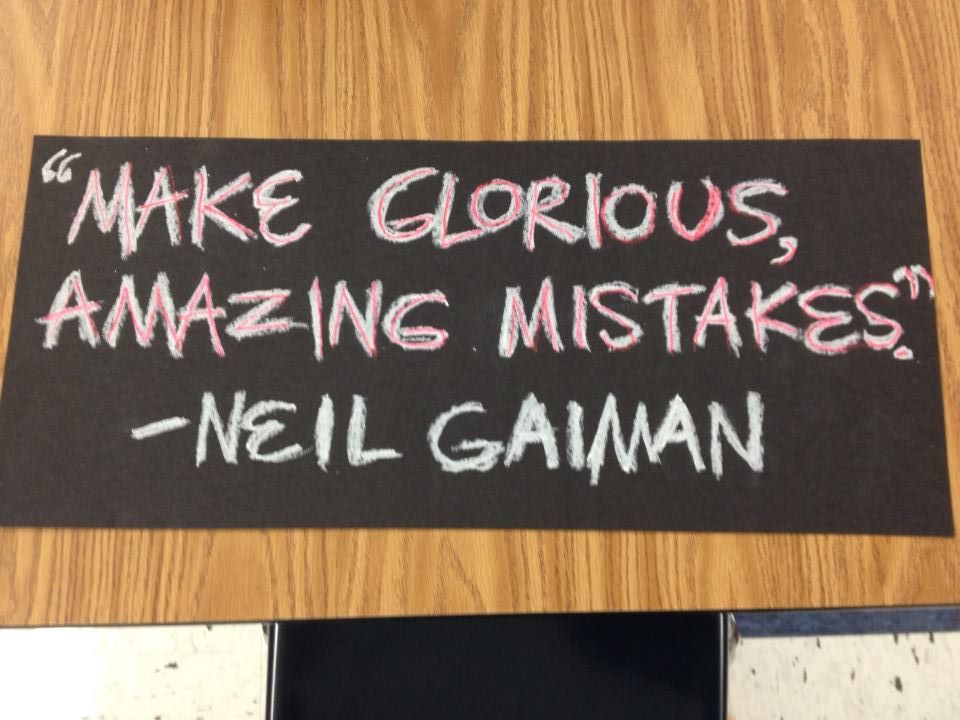
This sign greeted my students last year too.  It hangs on our door and represents my feelings about teaching.  Thank you Neil Gaiman for being so eloquent.


photo 2


Supplies are accessible to students, I would rather have them grab what they need then leave the room to go to their lockers.  There is more to the left of this picture.

phot 1o

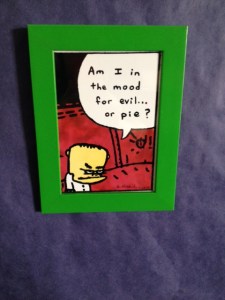
Every day, we make a choice.

photo 3


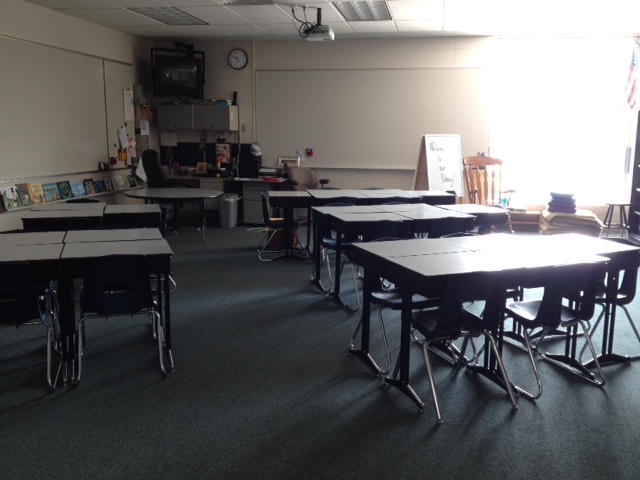
From the door this is what the room looks like.  Desks in pods, ready to be moved as needed, with awesome natural light spilling in.  Our library is my favorite corner.

photo 4

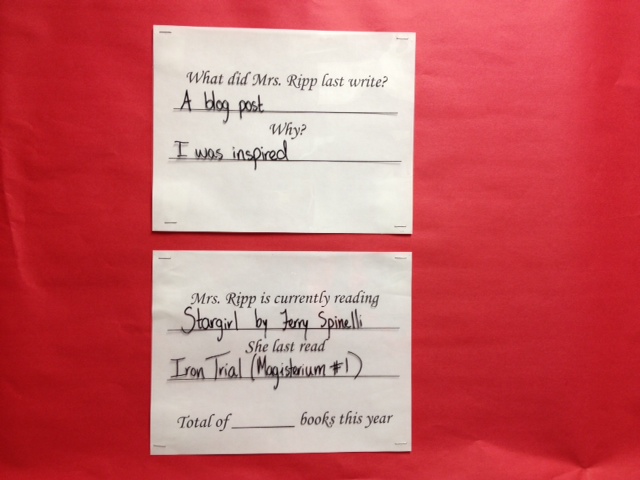
As always I am showcasing covers of what I read (students will be doing the same inside the room later in the year) but this year I am also showing what I am writing and why.  

pho2to


Books read this week counts too for the year, I really need to finish Stargirl.

photo 14

International Dot Day is September 15th.  My 130 students will be making their mark on our bulletin board that day and the rest of the year.

photo 13

Global connections and bringing the world in is what we do.  This year my map will have strings attached to the pins leading to explanations of what we did with the place marked.

photo 12

Our library awaits.  Two students have already borrowed books during locker drop in, that makes me so happy.  New books are below the green arrow for students to read and review.  There is no check out system to the library right now, that may change depending on how the year goes.


photo 11  

Slightly messy desk area.  I got rid of the traditional teacher desk 3 years ago and have not missed it.  This table holds my computer and the stuff I need to teach with.  I need to get a lamp but otherwise it is pretty simple.  Letters from my former students hang next to the desk for me to share with my new students.

pho4to

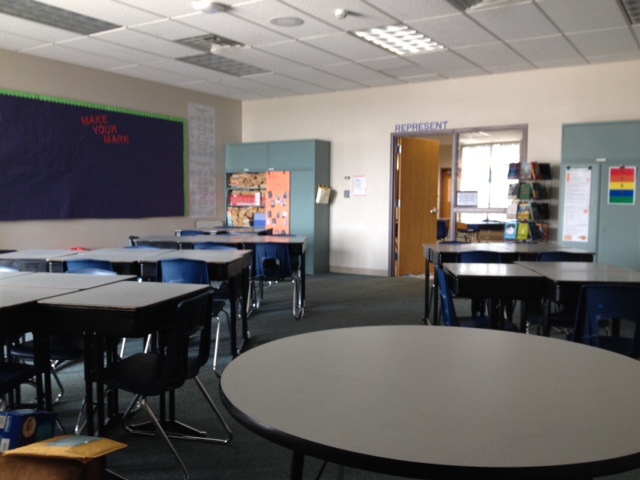
The view from my table and out into the team area.  The round table is for conferencing or when students want to use it.  Most classes have more desks than students so they can work wherever they want.  We also have carpet for laying or sitting on which I love.  Above the door it says “Represent” a message I have used with my students for years.  The rainbow chart is voice level reminders since we are a PBIS school.

  photo 1

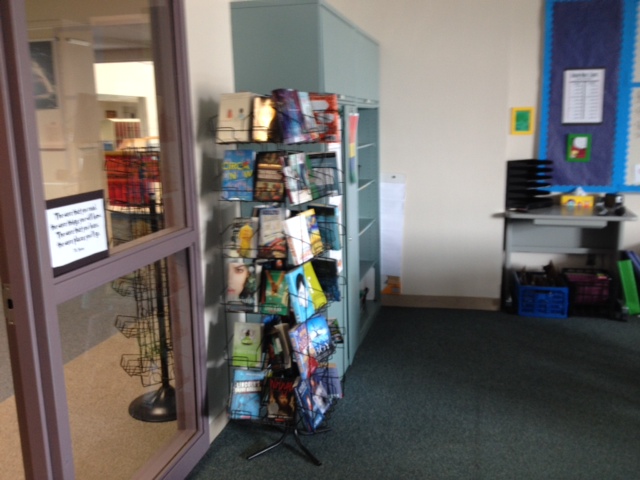
More new books greet students as they leave the room.  Right now the book tree has some of my favorite new and old reads on it.  I love how students who have come into our room immediately start to look at what is on here; mission accomplished. Also a quote about reading is my final message to them as they leave, this will be changed every few weeks.

photo 5

We are the sharks so we each have a shark rug outside of our doors, but more importantly the whole team of students see the message “You matter” above my door.  We cannot say this enough to the people we surround ourselves with.  

There you have it; where I will be every day for the next 180 days – is it September 2nd yet?  I think I need some students to make this place come alive.

I am a passionate  teacher in Wisconsin, USA,  who has taught 4, 5th, and 7th grade.  Proud techy geek, and mass consumer of incredible books. Creator of the Global Read Aloud Project, Co-founder of EdCamp MadWI, and believer in all children. I have no awards or accolades except for the lightbulbs that go off in my students’ heads every day.  First book “Passionate Learners – Giving Our Classrooms Back to Our Students” can be purchased now from Powerful Learning Press.   Second book“Empowered Schools, Empowered Students – Creating Connected and Invested Learners” can be pre-ordered from Corwin Press now.  Follow me on Twitter @PernilleRipp.

Be the change, being me, Student-centered

The Connected Educator Series – First Four Drop Today

via: Corwin.com/connectededucators

Thank you so much to Mark Barnes for writing this post highlighting the incredible series I get to be a part of with my next book “Empowered Schools, Empowered Students.”

Ask any of the thousands of teachers who regularly use Twitter, Pinterest, or Facebook about connected education, and you may get an earful about using digital tools as a means to connect with educators and students worldwide.

But if you ask teachers who have never used a social network, blog, or mobile device for learning in their classrooms to discuss connected education, you are likely to be met with blank stares, furrowed eyebrows and shrugged shoulders.

Enter Corwin Press and the Connected Educators Series.

In an effort to connect all teachers, EdWeek author and Corwin editor Peter DeWitt enlisted the help of his professional learning network (PLN) in order to launch a series of books on digital learning, digital leadership, mobile learning, digital citizenship, and everything else that is connected education.

Peter DeWitt, Connected Educators Series Editor”It is our hope and intent to meet you where you are in your digital journey, and elevate you as educators to the next level.

Corwin’s Connected Educators Series features short books, about 70 pages, in both paperback and electronic formats, aimed at helping educators improve classroom practice and educational leadership in the digital world, something that has been sorely missing in the education book world.

The first books in the series will be published in August and September.

[su_heading size=”28″]Corwin Connected Educators Series[/su_heading]

The Relevant Educator: How Connectedness Empowers Learning, by Tom Whitby and Steven Anderson: Two of the profession’s most connected educators explain how to effectively use social media to build a professional learning network.

Flipped Leadership Doesn’t Mean Reinventing the Wheel, by Peter DeWitt: If we can flip the classroom, why can’t we flip faculty meetings and other kinds of communication with parents and teachers? According to DeWitt, we can.

Connected Educator Series
Connected Educators Series

The Edcamp Model: Powering Up Professional Learning, by The Edcamp Foundation: Professional development has never been so simple than when teachers create it. The Edcamp model connects educators to PD like never before.

Teaching the iStudent: A Quick Guide to Using Mobile Devices and Social Media in the K-12 Classroom, by Mark Barnes: Knowledge is in the palm of learners’ hands, making them iStudents. This book helps teachers understand how to maximize this incredible power.

The Corwin Connected Educators series is your key to unlocking the greatest resource available to all educators: other educators.

Connected Leadership: It’s Just a Click Away, by Spike Cook: In the 21st-century, it’s critical that principals create a transparent school for all stakeholders. Principal Cook shows school leaders how to author blogs, PLNs and more, in order to open up a digital window to your school for parents and community.

All Hands on Deck: Tools for Connecting Educators, Parents, and Communities, by Brad Currie: The connected educator doesn’t just connect with students and colleagues. She connects with parents and community, using 21st-century tools. Currie shows readers how this is done.

Empowered Schools, Empowered Students: Creating Connected and Invested Learners, by Pernille Ripp: Connecting also means empowering. Ripp shares a variety of methods for teachers and school leaders to empower colleagues and students to help each other build a strong learning community.

The Power of Branding: Telling Your School’s Story, by Tony Sinanis and Joseph Sanfelippo: Connected educators must teach students about digital citizenship, and what better way to teach this lesson, according to administrators Sinanis and Sanfelippo, than by showing students how to brand their own schools?

These eight books are the first in Corwin’s ongoing Connected Educators Series. Several more are currently in production and scheduled for publication in early 2015.

For updates, author biographies and other valuable information, visit the Corwin Connected Educators Series website here.

You can order Any books in the Connected Educators Series here. Let us know what you think and what you’d like to see next.

books, Literacy, new year, Reading, Student-centered

Some Ideas for Book Club Books – Upper Elementary

I thought I had been doing book clubs well my first few years of teaching, but it wasn’t until I went to Teachers College and really learned how to do book clubs that I started loving them.  No longer something we had to get through but instead something we were working toward and that students wanted to do.  Yet, when I first started with them I didn’t feel I had the right books to get kids engaged.  So that became my mission last year; find better book clubs to use with kids that mind you may be in 5th grade but had reading abilities ranging from beginning to advanced.  Here are a few of our favorites.

Books I have Used Already:

Mockingbird by Kathryn Erskine

This haunting book has become a favorite of every students who has read it.  Within a simple story lies a lot of thought provoking questions that will lead to deeper discussions.  This can be used with your typical 5th grade reader and up.

From Goodreads:

Caitlin has Asperger’s. The world according to her is black and white; anything in between is confusing. Before, when things got confusing, Caitlin went to her older brother, Devon, for help. But Devon was killed in a school shooting, and Caitlin’s dad is so distraught that he is just not helpful. Caitlin wants everything to go back to the way things were, but she doesn’t know how to do that. Then she comes across the word closure–and she realizes this is what she needs. And in her search for it, Caitlin discovers that the world may not be so black and white after all.

Firegirl by Tony Abbot

I have loved how many students have been surprised by this book, particularly my boy readers.  Often they would not pick this up by themselves but they end up with great discussions on what it means to be a friend.

From Goodreads:

From this moment on, life is never quite the same for Tom and his seventh-grade classmates. They learn that Jessica has been in a fire and was badly burned, and will be attending St. Catherine’s while getting medical treatments. Despite her horrifying appearance and the fear she evokes in him and most of the class, Tom slowly develops a tentative friendship with Jessica that changes his life.

The Lions of Little Rock by Kristin Levine.

This book has been a contender for a few years for the Global Read Aloud because of how accessible it makes this historical topic of integration and racial tensions.  Students cannot believe this really happened and still happens to this day.

From Goodreads:

Two girls separated by race form an unbreakable bond during the tumultuous integration of Little Rock schools in 1958

Twelve-year-old Marlee doesn’t have many friends until she meets Liz, the new girl at school. Liz is bold and brave, and always knows the right thing to say, especially to Sally, the resident mean girl. Liz even helps Marlee overcome her greatest fear – speaking, which Marlee never does outside her family.

But then Liz is gone, replaced by the rumor that she was a Negro girl passing as white. But Marlee decides that doesn’t matter. Liz is her best friend. And to stay friends, Marlee and Liz are willing to take on integration and the dangers their friendship could bring to both their families.

The Watsons Go to Birmingham – 1963 by Christopher Paul Curtis

What I love about this book is that it is such a gateway book to all of his amazing stories.  Students never pick this book up by themselves but they always get sucked into it and then cannot wait to convince other students to read it as well.

From Goodreads:

A wonderful middle-grade novel narrated by Kenny, 9, about his middle-class black family, the Weird  Watsons of Flint, Michigan. When Kenny’s  13-year-old brother, Byron, gets to be too much trouble,  they head South to Birmingham to visit Grandma, the  one person who can shape him up. And they happen to  be in Birmingham when Grandma’s church is blown  up.

Out of My Mind by Sharon Draper

This was the official Global Read Aloud book of 2013.  Phenomenal conversations abounded globally as well as students spurred to action.  Melody and her story sat with us for the whole year as we thought about our own actions.

From Goodreads:

Eleven-year-old Melody has a photographic memory. Her head is like a video camera that is always recording. Always. And there’s no delete button. She’s the smartest kid in her whole school;but no one knows it. Most people;her teachers and doctors included, don’t think she’s capable of learning, and up until recently her school days consisted of listening to the same preschool-level alphabet lessons again and again and again. If only she could speak up, if only she could tell people what she thinks and knows . . . but she can’t, because Melody can’t talk. She can’t walk. She can’t write.

Being stuck inside her head is making Melody go out of her mind—that is, until she discovers something that will allow her to speak for the first time ever. At last Melody has a voice . . . but not everyone around her is ready to hear it.

The Real Boy by Anne Ursu

The students that picked this book had some of the deepest book club discussions I have yet to see.  The questions and reflections they had only intensified when they connected with the author via Twitter.

From Goodreads:

On an island on the edge of an immense sea there is a city, a forest, and a boy. The city is called Asteri, a perfect city that was saved by the magic woven into its walls from a devastating plague that swept through the world over a hundred years before. The forest is called the Barrow, a vast wood of ancient trees that encircles the city and feeds the earth with magic. And the boy is called Oscar, a shop boy for the most powerful magician in the Barrow. Oscar spends his days in a small room in the dark cellar of his master’s shop, grinding herbs and dreaming of the wizards who once lived on the island generations ago. Oscar’s world is small, but he likes it that way. The real world is vast, strange, and unpredictable. And Oscar does not quite fit in it.

But it’s been a long time since anyone who could call himself a wizard walked the world, and now that world is changing. Children in the city are falling ill, and something sinister lurks in the forest. Oscar has long been content to stay in his small room in the cellar, comforted in the knowledge that the magic that flows from the trees will keep his island safe. Now, even magic may not be enough to save it

Three Times Lucky by Sheila Turnage

Once the students had gotten past the “whodunnit” part of their discussions they started to dig for clues, analyze actions, and really pondered why the author wrote this or that in a certain way.  A mystery is a great way for students to consider author purpose and this text was loved by many.

From Goodreads:

Rising sixth grader Miss Moses LoBeau lives in the small town of Tupelo Landing, NC, where everyone’s business is fair game and no secret is sacred. She washed ashore in a hurricane eleven years ago, and she’s been making waves ever since. Although Mo hopes someday to find her “upstream mother,” she’s found a home with the Colonel–a café owner with a forgotten past of his own–and Miss Lana, the fabulous café hostess. She will protect those she loves with every bit of her strong will and tough attitude. So when a lawman comes to town asking about a murder, Mo and her best friend, Dale Earnhardt Johnson III, set out to uncover the truth in hopes of saving the only family Mo has ever known.

Books I Want to Use:

All of these books are ones that i have read and thought of using for The Global Read Aloud, some of them became the chosen books.  All of these books have something to discuss for kids at varying reading stages, some of them are more mature so as with anything I would suggest reading them beforehand to see if they fit with your student group.

The Desperate Adventures of Zeno and Alya by Jane Kelley

From Goodreads:

An orphaned African grey parrot who can speak 127 words. A girl so sick, she has forgotten what it means to try. Fate––and a banana nut muffin––bring them together. Will their shared encounter help them journey through storms inside and out? Will they lose their way, or will they find what really matters?

One For the Murphy’s by Lynda Mullaly Hunt (Official GRA book 2014)

From Goodreads:

Twelve-year-old Carley Connors can take a lot. Growing up in Las Vegas with her fun-loving mother, she’s learned to be tough. But she never expected a betrayal that would land her in a foster care. When she’s placed with the Murphys, a lively family with three boys, she’s blindsided. Do happy families really exist? Carley knows she could never belong in their world, so she keeps her distance.

It’s easy to stay suspicious of Daniel, the brother who is almost her age and is resentful she’s there. But Mrs. Murphy makes her feel heard and seen for the first time, and the two younger boys seem determinded to work their way into her heart. Before she knows it, Carley is protected the boys from a neighbourhood bullly and even teaching Daniel how to play basketball. Then just when she’s feeling like she could truly be one of the Murphys, news from her mother shakes her world.

Circa Now by Amber McRee Turner

From Goodreads:

Twelve-year-old Circa Monroe has a knack for restoring old photographs. It’s a skill she learned from her dad, who loves old pictures and putting fun digital twists on them. His altered “Shopt” photos look so real that they could fool nearly anybody, and Circa treasures the fun stories he makes up to explain each creation.

One day, her father receives a strange phone call requesting an urgent delivery, and he heads out into a storm. The unimaginable happens: a tornado, then a terrible accident. Just as Circa and her mom begin to pick up the pieces, a mysterious boy shows up on their doorstep, a boy called Miles who remembers nothing about his past. The only thing he has with him is the photograph that Circa’s dad intended to deliver on the day he died.

As Circa tries to help Miles recover his identity, she begins to notice something strange about the photos she and her father retouched-the digital flourishes added to the old photos seem to exist in real life. The mysteries of the Shopt photos and Miles’s past are intertwined, and in order to solve both, Circa will have to figure out what’s real and what’s an illusion.

Absolutely Almost by Lisa Graff 

From Goodreads:

Albie has never been the smartest kid in his class. He has never been the tallest. Or the best at gym. Or the greatest artist. Or the most musical. In fact, Albie has a long list of the things he’s not very good at. But then Albie gets a new babysitter, Calista, who helps him figure out all of the things he is good at and how he can take pride in himself.

Paperboy by Vince Vawter

From Goodreads:

An 11-year-old boy living in Memphis in 1959 throws the meanest fastball in town, but talking is a whole different ball game. He can barely say a word without stuttering, not even his own name. So when he takes over his best friend’s paper route for the month of July, he knows he’ll be forced to communicate with the different customers, including a housewife who drinks too much and a retired merchant marine who seems to know just about everything.

The paper route poses challenges, but it’s a run-in with the neighborhood junkman, a bully and thief, that stirs up real trouble–and puts the boy’s life, as well as that of his family’s devoted housekeeper, in danger.

The Liberation of Gabriel King by K.L. Going

From Goodreads:

Gabriel King was a born chicken. He’s afraid of spiders, corpses, loose cows, and just about everything related to the fifth grade. Gabe’s best friend, Frita Wilson, thinks Gabe needs some liberating from his fears. Frita knows something about being brave— she’s the only black kid in school in a town with an active Ku Klux Klan. Together Gabe and Frita are going to spend the summer of 1976 facing down the fears on Gabe’s list. But it turns out that Frita has her own list, and while she’s helping Gabe confront his fears, she’s avoiding the thing that scares her the most.

A Snicker of Magic by Natalie Lloyd

From Goodreads:

Midnight Gulch used to be a magical place, a town where people could sing up thunderstorms and dance up sunflowers. But that was long ago, before a curse drove the magic away. Twelve-year-old Felicity knows all about things like that; her nomadic mother is cursed with a wandering heart.

But when she arrives in Midnight Gulch, Felicity thinks her luck’s about to change. A “word collector,” Felicity sees words everywhere—shining above strangers, tucked into church eves, and tangled up her dog’s floppy ears—but Midnight Gulch is the first place she’s ever seen the word “home.” And then there’s Jonah, a mysterious, spiky-haired do-gooder who shimmers with words Felicity’s never seen before, words that make Felicity’s heart beat a little faster.

Felicity wants to stay in Midnight Gulch more than anything, but first, she’ll need to figure out how to bring back the magic, breaking the spell that’s been cast over the town . . . and her mother’s broken heart

Ophelia and the Marvelous Boy by Karen Foxlee

From Goodreads:

Unlikely heroine Ophelia Jane Worthington-Whittard doesn’t believe in anything that can’t be proven by science. She and her sister Alice are still grieving for their dead mother when their father takes a job in a strange museum in a city where it always snows. On her very first day in the museum Ophelia discovers a boy locked away in a long forgotten room. He is a prisoner of Her Majesty the Snow Queen. And he has been waiting for Ophelia’s help.

As Ophelia embarks on an incredible journey to rescue the boy everything that she believes will be tested. Along the way she learns more and more about the boy’s own remarkable journey to reach her and save the world.

A story within a story, this a modern day fairytale is about the power of friendship, courage and love, and never ever giving up.

Zebra Forest by Adina Rishe Gewitz

From Goodreads:

When eleven-year-old Annie first started lying to her social worker, she had been taught by an expert: Gran. “If you’re going to do something, make sure you do it with excellence,” Gran would say. That was when Gran was feeling talkative, and not brooding for days in her room — like she did after telling Annie and her little brother, Rew, the one thing they know about their father: that he was killed in a fight with an angry man who was sent away. Annie tells stories, too, as she and Rew laze under the birches and oaks of Zebra Forest — stories about their father the pirate, or pilot, or secret agent. But then something shocking happens to unravel all their stories: a rattling at the back door, an escapee from the prison holding them hostage in their own home, four lives that will never be the same. Driven by suspense and psychological intrigue, Zebra Forest deftly portrays an unfolding standoff of truth against family secrets — and offers an affecting look at two resourceful, imaginative kids as they react and adapt to the hand they’ve been dealt.

Pictures of Hollis Woods by Patricia Reilly Giff

From Goodreads:

Hollis Woods has been in so many foster homes she can hardly remember them all. When Hollis is sent to Josie, she’ll do everything in her power to make sure they stay together.

And the list could go on and on.  Let’s help each other out – what books have you used successfully for book clubs, please leave them in the comments!

The Boy on the Wooden Box by Leon Leyson (Non-fiction)

From Goodreads:

Even in the darkest of times—especially in the darkest of times—there is room for strength and bravery. A remarkable memoir from Leon Leyson, one of the youngest children to survive the Holocaust on Oskar Schindler’s list.Leon Leyson (born Leib Lezjon) was only ten years old when the Nazis invaded Poland and his family was forced to relocate to the Krakow ghetto. With incredible luck, perseverance, and grit, Leyson was able to survive the sadism of the Nazis, including that of the demonic Amon Goeth, commandant of Plaszow, the concentration camp outside Krakow. Ultimately, it was the generosity and cunning of one man, a man named Oskar Schindler, who saved Leon Leyson’s life, and the lives of his mother, his father, and two of his four siblings, by adding their names to his list of workers in his factory—a list that became world renowned: Schindler’s List.

Those are just some of my favorites to help anyone get started with book clubs.  I would love more suggestions in the comments section!

I am a passionate  teacher in Wisconsin, USA,  who has taught 4, 5th, and 7th grade.  Proud techy geek, and mass consumer of incredible books. Creator of the Global Read Aloud Project, Co-founder of EdCamp MadWI, and believer in all children. I have no awards or accolades except for the lightbulbs that go off in my students’ heads every day.  First book “Passionate Learners – Giving Our Classrooms Back to Our Students” can be purchased now from Powerful Learning Press.   Second book“Empowered Schools, Empowered Students – Creating Connected and Invested Learners” can be pre-ordered from Corwin Press now.  Follow me on Twitter @PernilleRipp.

lll1
Be the change, being a teacher, new year, student choice, Student-centered, voice

Some Myths About Student Choice and Voice

If you ever listen to me speak, whether in a podcast, at a conference, or just over tea here in Wisconsin, chances are at some point I will mention student voice.  And then, if we continue discussing teaching, student choice will also pop up.  I can’t help it.  It is what I fervently believe in.  It is what I live for in the classroom.  Yet, sometimes when I bring it up, I get strange looks, like “Is she insane?” type of looks.  Or just confused expressions, nonchalant shrugs, or even indifference.  Sometimes though I get excitement, then confusion, then questions.  Those are my favorite types of moment.

So what are some of the most common myths about student voice and choice?

That it is hard.  Giving students a voice is not hard.  Asking them for their opinion is not hard.  Implementing it is.  Listening to it without judgment is.  But asking the first question, not hard, not even brave.  Acting on what they tell you, now that takes courage.

That is a mess.  Sure, students working on different things can be messy, but it is far from a mess. A mess would indicate no direction, no instructions, no real purpose.  Messy can indicate a variety of things; creativity in progress, exploration at hand, failure and triumph all at the same time.

That it is utopian.  Offering students a choice in what they are doing, even if it is a small one, is not an unrealistic expectations for students to have.  After all, as adults (which I believe children will be some day) we are given choices all of the time.  Sure, certain things are determined by things outside of our control, but so many things can be handed over to students to decide.  We just have to look for them.

That it stands in the way of learning.  Often choice is seen as a hindrance to cover what we need to cover, yet, in my experience the opposite is true.  Giving students choices and a voice in the world will help you cover more curriculum.  You can have students unpack the standards with you and come up with ways to cover multiple ones in projects.  Plus student engagement inevitably goes up when they are engaged in the learning progress.

That it will breed negativity.  Often the assumption is that if you give students a voice all they will do is complain, but that is simply not true.  Sure, there will be complaints, but there will also be constructive criticism, braistorming, ideas, questions, and hope.  We will not know what we get without asking first.

That it is the answer to everything.  I love student choice and voice, but there is more than this to creating a successful learning journey.  You can add it, but it won’t fix everything.  To do that you have to figure out whether you would want to be a student in your own classroom and then start fixing what you wouldn’t like.  Student choice and voice are just parts of the solution.

I am a passionate  teacher in Wisconsin, USA,  who has taught 4, 5th, and 7th grade.  Proud techy geek, and mass consumer of incredible books. Creator of the Global Read Aloud Project, Co-founder of EdCamp MadWI, and believer in all children. I have no awards or accolades except for the lightbulbs that go off in my students’ heads every day.  First book “Passionate Learners – Giving Our Classrooms Back to Our Students” can be purchased now from Powerful Learning Press.   Second book“Empowered Schools, Empowered Students – Creating Connected and Invested Learners” can be pre-ordered from Corwin Press now.  Follow me on Twitter @PernilleRipp.

Be the change, classroom management, new year, Student-centered

How to Make Your Anti-Rewards Philosophy Fit in A Pro-Rewards/PBIS School

image from icanread

4 years ago I decided that rewards in its most basic sense of trinkets, special events, and things to earn had no place in my classroom.  I threw it all out, decided to go rewards free and then held my breath.  3 years ago my former school adopted PBIS.  And I was in a dilemma.  Questions like what do you do when you are anti-rewards but part of a school that has a school-wide reward system?  What do you do when you are seemingly the only person like this?  How do you follow the expectations and rules without betraying your own philosophy? surrounded my brain.  Turns out I am not the only one in this situation.  In fact, this is one of the most common emails I get from people who have read my book “Passionate Learners” or this blog; how do you fit into a school that does rewards when you don’t believe in it yourself?

It would be easy to say that you stand your ground.  That you refuse to give them.  That you tell everyone how wrong they are and that you will never, ever participate.  But let’s be real.  If I had done that it would have been put in my file as being a non-team player.  I also would have looked like a jerk.  And nobody wants to look like a jerk.  So instead there is a few things you can do if you find yourself in this situation.

You can participate like everyone else.  I did this my first year.  I followed all of the expectations, didn’t ask any questions (for a while any way) and made sure I gave it a chance.  I did not want to judge something that so many people loved before I had fully tried it.  What I discovered helped me shape how I worked with the expectations in my own classroom.

I discovered that PBIS, or similar all school “management philosophies” works on noticing the positive.  That I could stand behind.  It also works on common expectations and common language.  That I also believe in.  So those parts were fine with me.  What I didn’t like so much was the handing out of rewards to earn something materialistic, the singling out of certain students, and the exclusion of others.  I had a hard time being okay with handing a student a ticket for walking properly in the hallway, following normal rules, and pretty much just doing what was expected.  And yet I had to work with it, not against it and thus make it work.  So, some ideas to work with this are:

  • Create your own “awards”– rather than trading tickets in for things, my students could show them to me and get a thumbs up/wohoo/high five etc.  This may sound totally ridiculous but my students work on being noticed for their great behavior and so I worked on noticing those.  Often we get too busy with teaching that we don’t see or say when kids are being great, a few seconds here or there for positive call outs go a long way.  So when students were awesome, I told them that.  When students weren’t so awesome, I also told them that.  They would rather have words from me than a ticket.  However, if you have to hand out tickets for students to earn things, see if they can earn time with you, earn time to read more, earn time to read a picture book etc.  That way you are still following school rules but getting rid of the trinkets.
  • Have class parties.  My students never earned these in the traditional sense, I would surprise them with a special afternoon when they had worked really hard.  Parents knew and would help behind the scenes, but the students most of the time did not know it was coming.  They never acted in a certain way to get something and no one ever lost the privilige to take part.
  • Have students pick students to be recognized.  I was put in the uncomfortable position or picking two kids to honor at an assembly.  Uncomfortable because I really had a lot more than two that could have been honored.  So instead of picking, I let the students vote.  That way they were recognizing their peers, which meant more in the long run.
  • Have them set their own rules.  Yes, we were a PBIS school with PBIS rules, but I also wanted students to set their own expectations for behavior within our class.  I wanted them to decide how they would get the most out of school by deciding what their learning environment should look like and feel like.  This was not to replace what the school had decided but to supplement it.  Students made rules that worked for them in their language and then modified/fine-tuned throughout the year.
  • Plant a seed.  It is okay to start a conversation on how PBIS or other all-school reward/award philosophies can be changed to fit your school and all kids better.  You don’t have to come out with guns blazing, you can bring up small questions and points, thus planting the seed of change.  You can discuss how you would rather not reward students with trinkets for what they are supposed to do, and then offer alternatives.  You can discuss how you work with it in your class.  You can also have students discuss it.  When I asked my students whether they thought the tickets made a difference, some of them laughed.  They did not care much about them and saw them as silly since it seemed random as to whether they got them and the prizes associated with them were not very good (gotta love 5th graders’ honesty).
  • Band together.  Find people who also question some of the philosophies and discuss it with them, this is not to form a terror group of “we are right, you are wrong” but rather to not be alone in presenting your views.  If more than one person is questioning certain parts, a better conversation can be had with differing viewpoints.
  • Make it work for you.  I think we can take even some of the strictest systems and make them work for us by starting thoughtful conversations with those in charge, by asking for small tweaks and changes and explaining why.  Don’t try to ridicule the system because parts of it does work, but find ways to work with it without making yourself sick.  There are always battles to pick and fight, but compromise goes a long way as well.  Yes, in a perfect world, we would not have to change our own philosophies to fit our school’s, but we work in buildings with many needs.  What works for us may not work for others and if we model that belief we can create a space where we all fit.

I know I am not the only one in this boat, so what has worked for you?

I am a passionate  teacher in Wisconsin, USA,  who has taught 4, 5th, and 7th grade.  Proud techy geek, and mass consumer of incredible books. Creator of the Global Read Aloud Project, Co-founder of EdCamp MadWI, and believer in all children. I have no awards or accolades except for the lightbulbs that go off in my students’ heads every day.  First book “Passionate Learners – Giving Our Classrooms Back to Our Students” can be purchased now from Powerful Learning Press.   Second book“Empowered Schools, Empowered Students – Creating Connected and Invested Learners” can be pre-ordered from Corwin Press now.  Follow me on Twitter @PernilleRipp.


being a teacher, new year, reflection, Student-centered, students

I Know What Students Want So Why Do I Forget It?

image from etsy

The new year anxiety and excitement is creeping in.  The days are ticking down.  I am awake more often with dreams of schools and ideas trailing around my mind.  Can I do this?  haunts me in my thoughts  Do I know what I am doing? keeps me awake.

Then I remember.  I know what students want.  Not my new students, those I have yet to uncover, but year upon year when I have asked my students what they need from school and teachers their answers have been the same.

We need someone who cares.

We need someone who listens.

We need someone that believes in us.  Notices when we are not there.  We need someone who likes what they are doing.

They need us to be kind.  To be honest.  To be present.

They need us to have open minds, open hearts, and open arms.

They need a safe place to try.

But it is not just what they need that I remember.  It is also what they want.

They want to be respected.

They want to be pushed.

They want us to see that having in fun in school does not mean learning has stopped.

They want to have a voice, to have choice, to know that their opinion matters and so do their ideas.

They want to know that what they are doing is relevant and not just because.  They want to know we trust them,

They want to feel loved.  To feel important.

They want what so many of us want; a place where they belong.

So why do we forget this every year?  Why do we allow the curriculum to push us into a frenzy, forgetting about these most basic things?

Children don’t remember the tests, the homework, not even always that crazy, cool project you did.  They don’t remember the posters, the seating, or even the rewards necessarily.

But they do remember how they felt, and that we can control.  They do remember if our rooms felt like home, and whether they mattered.  Don’t forget that as our year gets busy.  We know what to do, just do it.

I am a passionate  teacher in Wisconsin, USA,  who has taught 4, 5th, and 7th grade.  Proud techy geek, and mass consumer of incredible books. Creator of the Global Read Aloud Project, Co-founder of EdCamp MadWI, and believer in all children. I have no awards or accolades except for the lightbulbs that go off in my students’ heads every day.  First book “Passionate Learners – Giving Our Classrooms Back to Our Students” can be purchased now from Powerful Learning Press.   Second book“Empowered Schools, Empowered Students – Creating Connected and Invested Learners” can be pre-ordered from Corwin Press now.  Follow me on Twitter @PernilleRipp.