being a student, being a teacher, inspiration, Student dreams

What Drives Your Instruction?


http---www.pixteller.com-pdata-t-l-359318Once in awhile I have the honor of having other educators visit our classroom, room 235D.  While it is always nerve-wracking to have strangers watch you teach and ask your students questions, it always leaves me feeling so very grateful for the district I teach in, for the colleagues I have, for the students I teach.   Yesterday was no different as I heard the students explain why we start with reading, why books matter to them, and what learning in this classroom looks like.
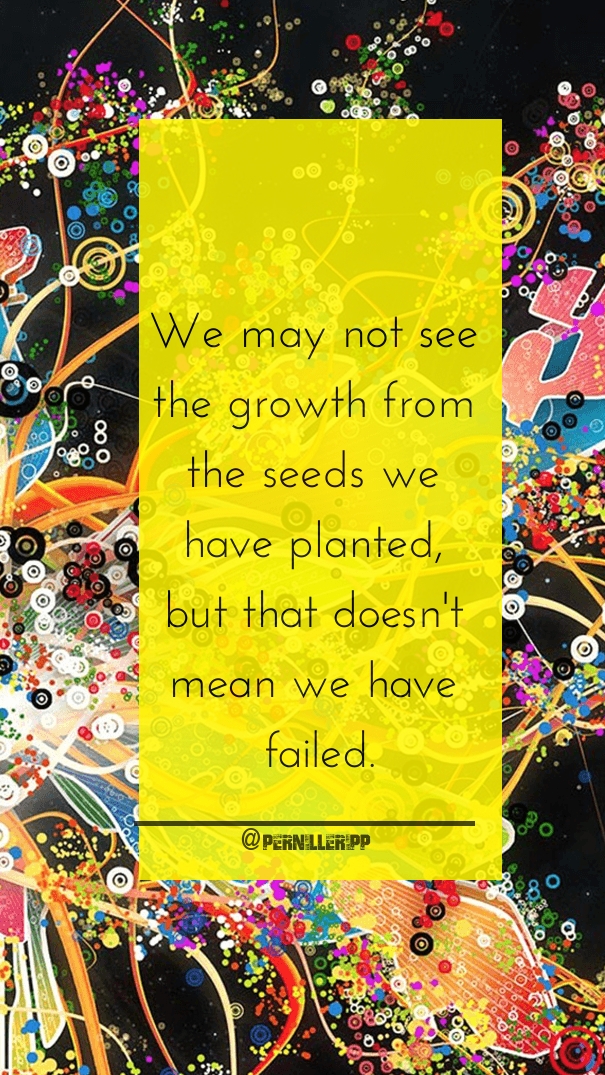


Later in conversation, I was asked what drives our instruction?  Having only 45 minutes to teach all of English, what is our ultimate goal?  How do we possibly fit it all in and feel like we are not just getting things done? Before I talked about the standards that shape our choices.  Before I talked about how our quarters are split up on their focus.  Before I talked about the power of choice when it comes to what we teach, before I talked about how we listen to the kids in order to make it about them again, I knew what the answer was.

What drives our instruction?  Helping kids fall in love with reading and writing (again).

Not the Common Core.  Not the standards.  Not covering content or getting-things-done.  Not checklists, nor grades.  Not comprehension or skills.  Not things, nor projects.

Love.

And not just love for reading, for writing, for speaking, but for being immersed in an environment that focuses on learning for human development.  Not for test scores, next year, grades, or honor rolls.  Not for rankings or best of lists.  No.  What drives our instruction is much more simple, yet so much bigger.

Being a teacher isn’t just about teaching things, it is about teaching human beings, and those human beings need to know that what we do is bigger than a skill.  Bigger than a subject.  Bigger than getting through 7th grade.

So what drives your instruction?  What would the students say?

If you are wondering why there seems to be a common thread to so many of my posts as of late, it is because I am working on two separate literacy books.  While the task is daunting and intimidating, it is incredible to once again get to share the phenomenal words of my students as they push me to be a better teacher.  Those books will be published in 2017 hopefully, so until then if you like what you read here, consider reading my book Passionate Learners – How to Engage and Empower Your Students.  Also, if you are wondering where I will be in the coming year or would like to have me speak, please see this page.

being a teacher, Literacy, Reading, Reading Identity, Student dreams, student driven

I Don’t Read…Thanks

http---www.pixteller.com-pdata-t-l-348828

Before school starts, my school, Oregon Middle School, does two days of locker drop off giving students a chance to bring their supplies in, try their new lock, and even poke around the building.  My first year there, I was at work in my classroom on the first day of this event.  The books were all meticulously displayed.  Brand new picture books lined our whiteboards.  The bean bags were fluffed and ready.  Every bin had a specific book faced out.  My reading poster for the summer was up and I could not wait to see the reaction of my incoming students.  Surely, they would be excited when they saw all of the books waiting for them.  

A mother followed by her son came into the room and introduced themselves.  He was one of my future students and so I eagerly shook his hand and asked him if he liked to read.  As soon as the words left my mouth, his facial expression changed to one of pure disgust.  He looked me straight in the eye and said, “I don’t read… thanks.”  As if I had offered him a particularly disgusting food item.  His mother looked at me and then added, “Yeah, he has not read much the last few years, we are not quite sure what to do.”  I plastered a big smile on my face and told her we would work on it together.  He did not seem impressed by my eagerness and asked if they could go now.  

I left that day wondering once again why I had moved from the incredible oasis that is 5th grade to this new reality of 7th.  What on Earth had possessed me to think that I had any chance in reaching 7th graders?  That I knew anything about getting 12 year olds to read.  There were days my first year that I cried.  Feeling so lost in my mission to make kids like school again.  There were days where I felt like I failed, that every thing I did made little difference and that surely one of these days those kids I taught would call me out as the fraud that I felt like.  But they didn’t.  Instead, they seemed to rally around me, around us, as we figured out how to make English a better class for them.  As we figured out who we were together, who they were as individuals and how their new identities could involve being readers.  I felt the urgency every day to make school better, as do so many of my colleagues, to make reading something worth doing, worth falling in love with.  I still do.  Even if kids still tell me that they don’t do reading, and good luck convincing them otherwise.

At the end of my first year, I had not changed that boy and his dislike of reading.    There was no grand transformation or success story where all of a sudden he read every single night.  That is not teaching.  Teaching would be so much easier if we could see the influence that the learning may have on a child, but most of the time we don’t.  So we can’t expect miracles every day, even if we hope for them, even if we work for them.  Because if we do, we will only see ourselves as failures.  As though we cannot teach well.  Instead, we must hope for small changes that will someday lead to a big transformation.

That boy, he read, once in awhile.  He abandoned books, still.  He had a million excuses for why he did not have a book that day, but not always.  So at the end of the year when he stopped me in the hallway, I would never have guessed the reason why.  “Hey, Mrs. Ripp…have you read Gym Candy?  It’s kind of mature but I really like it.  The librarian found it for me.  You should read it.”  I stood there not quite believing what my ears had just heard.  He recommended a book to me.  Not because I asked him to.  Not because we were in class.  But because within the year we were finishing up he discovered that perhaps he could be a reader after all.  That perhaps there were books for him.  

So whenever a child tells me they do not read.  That books are not for them.  That they hate reading, I always think of the little change that perhaps I can help inspire.  Of the small steps we can take together.  Of how we may not see the transformation but that if we make loving reading an urgent endeavor then perhaps we are planting a seed.  And one day, maybe years later, that child will not feel like they have to say “I don’t read…thanks” but will instead bring a book with them wherever they go because they cannot imagine not doing so.

If you are wondering why there seems to be a common thread to so many of my posts as of late, it is because I am working on two separate literacy books.  While the task is daunting and intimidating, it is incredible to once again get to share the phenomenal words of my students as they push me to be a better teacher.  Those books will be published in 2017 hopefully, so until then if you like what you read here, consider reading my book Passionate Learners – How to Engage and Empower Your Students.  Also, if you are wondering where I will be in the coming year or would like to have me speak, please see this page.

assessment, being a teacher, grades, No grades, Student dreams

How to Make Grades About Students Again

http---www.pixteller.com-pdata-t-l-292057.jpg

Our first semester ended last week.  I have been working on grades, both standards scores and letter grades, for the past 3 days.  Pondering.  Wondering.  Pulling my hair out as I try to figure out which box to place my students in as we try to assess the growth that has happened.  In the end of it all, I am reminded of how much I still hate grades.

And yet, within this process of distilling my students down to a single letter comes an amazing opportunity for conversation.  Within the very simplification of all of the learning they have done, we have had an awesome chance to change the notion of what that score or letter means.

So how can we make grades and scores about the students again?

Start with a student definition.  Our very first conversation was the definition of each letter grade; a seemingly simple topic of conversation that shows just what students think grades measure; hard work, effort, being able to follow deadlines.  Very few students really understood that grades are supposed to measure knowledge.  Not work habits.  Not personalities.  In fact, many students said that the teacher is who is in control of grades (which, of course, there is an ounce of truth in) but they had never thought about how they could control the score.  How the choices they make result in the score they get.  The light-bulb moment for some students was tangible.

Have them grade themselves.  And not just for fun, but really.  After each grading period, my students either write which standard score they should get and why or which letter grade and why.  This very simple act – it takes about 5 minutes – become the seeds of conversations we need to have next.

Have them do a semester survey.  I continually want to be a better teacher for my students and that means that I need to face some ugly truths; some students are not getting enough help, some students feel I talk too much, some students are still not reading but getting very good at faking it.  How do I know?  I asked them on our end of semester survey and they told me their truths.  

Ask them what they are proud of.  As students came up one-by-one, this was the very first question I asked.  Not what their grade should be, not what their goal is.  But what are they proud of.  Why that?  What else?  Then what are goals?  How can I help best?  How can I support?  I read their survey and we discussed things right then.  Their voices came first, not their score.

Then discuss their grades.  The majority of students had picked the same letter I would, but some had either scored themselves too high or too low.  And while this is always interesting to see,  the bigger truth can be found in why they have picked that letter to define them.  Those simple statements they use to explain their answer; I am not that smart, I don’t understand, I work hard, I can teach others.  All clues to how they see themselves and their own learning.  All clues we can use to change the very essence of the conversation, because the conversation cannot just be about the grade, it needs to be about them.  About more than what they are distilled to on paper.  About how they see themselves, about their strengths, about their needs, about their dreams.

So while I work in a system that still asks me to define students through a score, we can reclaim that very conversation.  We can change the focus of the grade.  We can go deeper, make it more meaningful but we have to take the time to do it.  We have to assure that students have a voice in the process if we ever want it to be meaningful, if we ever want them to care.  We cannot do that through a letter, we cannot even do it through a report card comment.  It is not enough.  This conversation is the very least we can do to make grades about the students again.

If you like what you read here, consider reading my book Passionate Learners – How to Engage and Empower Your Students.  Also, if you are wondering where I will be in the coming year or would like to have me speak, please see this page.

being a student, being a teacher, being me, questions, student choice, Student dreams, student driven, student voice, Student-centered

A Most Important Question


http---www.pixteller.com-pdata-t-l-281535.jpgAsking my students to reflect, to give feedback, to set goals and try to peek into their minds has been a mission of mine for the last many years.  The questions I ask change, but the purpose does not; to create a better educational experience for them.  To create a classroom they actually want to be a part of.  To find out how I can change so that I can be a better teacher.
For all of the questions I have asked, and it has been a lot so far,  there is one that stands out.  One that has given me the most significant answers.  One that has led me to question myself and what I focus on in the classroom, day after day, student upon student.

And it is one of the simplest ones indeed.

What do you wish I would notice?


Tucked at the end of the survey, when they are already thinking, when they have already shared.

Some write nothing, some say I am noticing what I need to.  But then there are the others, those whose answers always stop me, change me, and sometimes even keep me up at night.

I wish Mrs. Ripp would notice how hard I am trying.

I wish she would notice that I am funny.

I wish she would notice how tired I a.

How I need help.

How I don’t know what to say.

How shy I am.

And I am grateful for their answers, for their faith in me to now begin to notice so that I can be better.  So that we can be better.  So that school can be about them again, just the way it was meant to be.

If you like what you read here, consider reading my book Passionate Learners – How to Engage and Empower Your Students.  Also, if you are wondering where I will be in the coming year or would like to have me speak, please see this page.

being a teacher, being me, Student dreams

Broken Child

http---www.pixteller.com-pdata-t-l-283415.jpg

She’s got my eyes, you know.

Blue mixed with gray depending  on the weather.   She’s got my long legs, arms for miles, and a laugh that comes from her heart.  Her hands look like my grandfather’s who gave her her name.  And those feet of hers are just like mine, growing too fast for her shoes to keep up.

She’s got her daddy’s sense of humor, always ready to make you smile.  And also his artistic eye, declaring one day she will be an artist.  She will paint the sky with every color she knows.

But she doesn’t have my skills of sitting still.  Of staying quiet.  Of focusing in.

She doesn’t smile easy or understand when others are kidding.  Friendships are sometimes hard to find.

Some would say she is a broken child.  Some would say she is a broken child.

We come up with fixes to help her learn more.  To help her sit still.  To help her conquer the noise of the classroom.  We give her fidgets, wiggle seats, quiet time and breaks.  And when we run out of fixes we ask more people for help.

And I cry sometimes when I think of how hard she works to gain knowledge that came so easy for me.  I cry sometimes when I think ahead because sometimes as a teacher your curse is that you know too much and so you worry even when others wouldn’t.

She’s got my eyes, you know, but not the way I think and some would say she is a broken child.

So we stand in our kitchen discussing the latest reports, the latest assessment, and we thank our lucky stars that the teachers she has sees what we see.  A child with heart.  A child that loves.  A child that wants nothing else but to fit in and feel smart.

And yet, when we compare her to others, even though I know we shouldn’t, some may say she needs fixing.  That we just need to find the thing that makes her right.  That perhaps the doctor knows why she cannot sit still, why she cannot stay focused, why she cannot find friends easily.  Because surely something must need fixing.

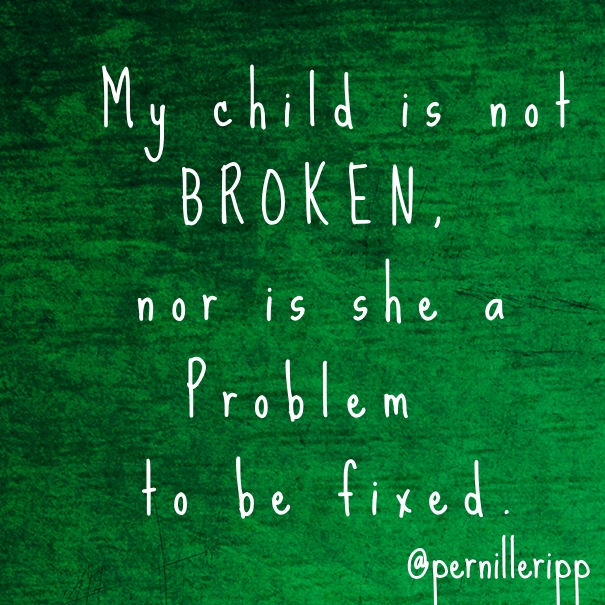
And I know that sometimes I feel like I failed.  Like somehow I created this situation.  That perhaps in her childhood if I had only done more, she would have it easier.  But then I remember that my child is not broken. That my child does not need to be fixed.

That she is smart.

That she is kind.

That she works hard.

Even when her brain distracts her every step of the way.

And I know she is not a broken child.

And I know she is not a broken child.


aha moment, being a teacher, MIEExpert15, Personalized Learning, student choice, Student dreams, student driven, student voice, Student-centered

The Five Tenets of Personalized Learning

Cross-posted from the Corwin Connect Blog.

I did not know what I was doing when I decided to change the way I taught. I did not know that somewhere out in the education world there was already a term floating around for some of the ideas I had for change, a term that would capture so many of my ideas in one. It was not until a few years of blogging about the changes I had made that someone left a comment on my blog suggesting I learn more about personalizing learning because it seemed like that is what I was talking about. That day, as I googled the term I realized that in my endeavor to create passionate classroom, I had indeed been personalizing learning for all of my students. I was seeing them all as individuals and trying to cater our multi-faceted classroom to fit all of their needs; personalization at its core.

Yet, now when I see all of the discussion of personalized learning, I do not really recognize the term anymore. Over time the term has become associated with technology-laden, self-paced learning, preferably on a device, with little adult teaching and much more student autonomy. While I recognize the inherent good in those components, those are not the powerful aspects of personalized learning and I worry what will happen to those that attempt to personalize learning if they think this is all it is. Because personalizing a child’s learning is so much more than a device, or even a student figuring things out by themselves. Instead it is about knowing your students so well that you can help them navigate their learning journey. That your students have ample opportunity to find out how they learn best and then implement this knowledge as they master the curriculum we have to cover. It means that every child has voice in what they do and that the teacher knows their students well enough to help them grow.

When I wrote my book, Empowered Schools, Empowered Students, as well as Passionate Learners, I kept thinking about the type of environment that I would have thrived in as a child and that my own children would thrive in now. I kept coming back to a few tenets that used to be a part of personalized learning but seems to have gotten lost in the powerful PR campaign of Personalized Learning in 2015. Those tenets are so simple that we often forget to plan for them or even consider them as we craft our curriculum.

The five tenets of personalized learning:

  1. Student Voice.

So much of what we do is about promoting the voice of our students and yet while we ask the world to listen to what our students have to say, we often forget to listen ourselves. Therefore, for any personalized learning journey to be successful, we must start to ask the tough questions. I ask my students what they dislike about school, what they dislike about the subject I teach. I ask them when they started disliking school and why. It is not just to have students feel validated in their emotions, it is so I can work with the demons they bring into our learning environment. If a child dislikes school because they feel powerless then I can combat that dislike by giving them power back. If a child dislikes school because they find it irrelevant well then that becomes my mission for change. If we do not ask our students the tough questions, and also figure out what part we play in their disengagement, then we cannot change it, we cannot personalize. So the true journey into personalized learning begins with getting to know your students really well and then acting on the information they tell you.

  1. Student Choice.

Choice, of course, is a must in any type of class or curriculum, and yet choice to some means chaos or that every child is doing their own thing. Choice can vary depending on the day, on the task, on the curriculum to conquer. Choice does not mean that everything needs to be a free-for-all but instead that choice is always present throughout the day. Choice starts with choice in learning environment. It is time to stop dictating where students sit in the classroom. It is time to stop dictating that all student sit while learning. Choice involves how they learn something, so for some that may mean by listening to a lecture, by working with a partner, by using technology to uncover information. Students must be exposed to many ways of learning so they can discover how to navigate all of the ways, as well as determine how they learn best. Choice also becomes in how they show mastery. I always have a laid out path for students, as well as one where they build their own. Students needs change and so their show of mastery has to change as well. Finally, there must be choice in when they show mastery. Children learn at different rates and so we must find ways within our curriculum to allow for re-application of content if a child had not mastered a standard earlier. Yes, there can be deadlines and cut-off dates, but please allow a child to circle back to a previous standard if they have grown in it.

  1. Student Planning.

This is one of the biggest things for me when I think of personalizing learning. We cannot plan our lessons in isolation anymore, at least, not all of the time. We can certainly be the gatekeepers of where we need to end up and we can also bring our ideas to the table, but at some point, please allow for students to plan with you. It is simple yet so powerful when we discuss our learning goals and then plan together how we will reach them. I have always been inspired by the ideas that my students have brought to the table, as well as been educated on how students learn best. You do not have to do it all of the time, but take the chance and ask students how they would like to cover something, I guarantee you will be surprised at just how much wherewithal the students will have as they work through this process with you, as well as the increased engagement and buy-in simply because they crafted part of the lesson.

  1. Student Reflection.

When I moved to 7th grade, I remember feeling the rush of the curriculum constantly. With only 45 minutes to teach, and oh so much to cover, there was no way we would ever have time to reflect; yet, I discovered the true power of reflection on the days where my lessons were met with disdain. It is easy to dismiss an eye roll or a groan, but when a majority of a classroom participates in such displays, it is our cue to stop and ask why. So reflection became a natural tool for us in 7th grade as we personalized the curriculum that we had to cover. I had to find out how my students felt they were doing. I had to find out what their path forward would be, and that started with a journal and a prompt. Sometimes rather than a written reflection we would speak; as a group, in partnerships or one on one with me. The prompts did not change much throughout the years; how are you doing, what have you learned, what are you working on now? And yet as the conversations grew, so did their understanding of what they needed and where they had to grow. Personalization to me means that a child knows how they learn best and that is not something I can tell them. I can offer them hints and I can point out things they may have missed, but at some point during our very busy days, reflection has to be done so that students can decide their own path.

  1. Student Action.

This final piece is one that gets a lot of attention it seems because this is where personalized learning becomes a thing of beauty; when our students start to change the world. When our students make, create, and have authentic purposes. Yet, student action, to me, is an inward piece as well. Yes, I want students who have a voice in the global education debate, that is why they blog, but I also want students who know how to advocate for themselves as human beings, and as learners. I want students who can successfully navigate tricky conversations and come out feeling like their voice was heard and respected. I want students who when they see a problem, do not just think about it, they do something about it. Whether that problem is a global one or a personal one. So involving students in action, setting up situations where they can see the impact they may have, guiding them through tough conversations, becomes part of personalized learning as well. I have realized that part of my job as a teacher is to help students discover the tools they already have to help them learn best, even if they are faced with an environment that allows for little personalization. I need to help them discover what they can do to make it better for themselves and for others. I need to help them see that their words have power as well as their actions.

So if you are starting on a journey of personalized learning, keep these tenets in mind. Sure, add on the technology but do not make it the focal point. That is not the point of personalizing, however, it can enhance it. Personalizing learning is the key to keeping students engaged and curious, but it also means that there is not one system to follow. Instead, spend the time to truly discover who your students are and help them find their path. Be the teacher that made a difference, not just because you cared about them, but because you taught them how they could be better learners. Our jobs have never been just about covering curriculum and personalizing learning reminds us of that.

If you are looking for a great book club to join to re-energize you in January, consider the Passionate Learners book club on Facebook.  We kick off January 10th.