being a teacher, being me, conferences, connect

Well Hello #NCTE15

For a few years I have sighed every November when it seems like every literacy genius that I follow have headed to NCTE and then shared all about it.  For a few years I have thought that maybe I would go, but then when it comes to be time, there never seemed to be enough time.  And so I haven’t.  And I have been fine, but boy ,have I felt like I was missing out.

So thanks to the amazing Lynda Mullaly Hunt who thought that maybe we should propose a session on the Global Read Aloud.  Thanks to all of my amazing Nerdy Book Club friends who told me that this was the best conference ever, thanks to my district for believing fervently in professional development, and thanks to Skype for believing in me and the GRA, this is the year I get to go.  And I am counting down the days like it is a countdown to Christmas.

So where will I be?

On Friday, I get to be on a panel with Franki Sibberson, Ruth Ayres, Bill Bass, Ann Marie Corgill, Katie Muhtaris, Katherine Hale, Colby Sharp, and Kristin Ziemke.  Yup, I am so honored to be presenting along these amazing minds on Keeping Reading Authentic and Student-Centered with Technology at 11 AM.

Later that day, I get to do my 3rd ever Ignite.  And I am nervous; how can you not be when you only get 5 minutes to share what you are passionate about?  But at 2:30, I am going to try.

Saturday at 8 AM, it is then to the session that started it all; The Global Read Aloud.  I will be the one pinching herself when I get to sit with Lynda Mullaly Hunt, Sharon Draper, Kate Messner, Jenni Holm, and Katherine Applegate, as well as Michelle Kedzierksi as we talk about the project and more importantly the community that it creates.

Now for some reason none of these come up with my name in the app, which actually feels rather symbolic, after all, I cannot believe that I get to go. I cannot believe that I get to learn and be inspired finally at this conference.But trust me, they are happening, I will be there, and I will be grinning from ear to ear.

So if you see me, and I look pretty much like me, please say hi.  Please tell me which book you are reading, tell me what you’re up to.  I will be the one amazed at simply being there, surrounded by so much passion.


books, Literacy, notice and note, Passion, picture books, Reading

Great Picture Books to Use for Notice and Note – All Signposts

Yesterday I posted my final picture book post for all of the signposts in the amazing book  Notice and Note: Strategies for Close Reading by Kylene Beers and Robert Probst.  It has truly been awesome finding picture books to go along with the strategies that can be used for many grade levels and through so many lenses.  I thought it would be nice to gather all 6 posts here for easy reference and also to highlight a few rockstar picture books that can be used for more than one signposts, that way if you have a limited budget for book buying (don’t we all), you can start with these few and still cover a lot.

Here are the links to the original posts, make sure you check out the comments as even more picture book ideas were shared there.

Contrast and Contradiction

Aha Moments

Words of the Wiser

 Tough Questions

Again and Again

Memory Moments

And here are some of the best picture books that can be used with multiple signposts:

The Creatrilogy by Peter H. Reynolds featuring Ish, The Dot, and Sky Color will cover almost all of the signposts.  All you have to do is add You and Me and The North Star and you can teach all 6 signposts using picture books that Peter H. Reynolds and Susan Verde has created.  How is that for the power of amazing picture books.

You Are Not Small by Anna Kang showed up on several lists.

So did a lot of Eve Bunting’s books, Fly Away Home is one of my favorites.

Each Kindness by Jacqueline Woodson breaks my heart every time I read it and was mentioned several times.

The Yellow Star by Carmen Agra Deedy also was mentioned several times.

Which books are you must have’s?  Which books are the ones you can use for more than one signpost?  Please share your ideas.

books, Literacy, notice and note, picture books

Great Picture Books to Use For Memory Moments – Notice and Note

One of the main texts we use to guide our reading instruction is the amazing Notice and Note: Strategies for Close Reading by Kylene Beers and Robert Probst, and I have loved gathering all of these picture books to be used with this amazing book. This is therefore the last installment of these posts,  Please keep sharing your ideas in the comments because I know many are looking for great picture books to use with these deeper reading strategies.

The first post was on Contrast & Contradictions, then followed Aha Moments,Tough Questions, Words of the Wiser,  Again and Again, and now, finally, the last one for Memory Moments.  Here I really tried to find picture books that have a true memory moment, which means a character stops the story to share a memory, these can be harder to find.  Happy reading!

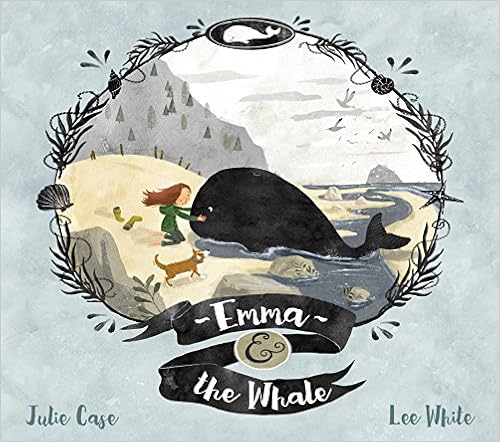
Emma and the Whale by Julie Case and Lee White has two flashbacks in it that can be considered brief memory moments.

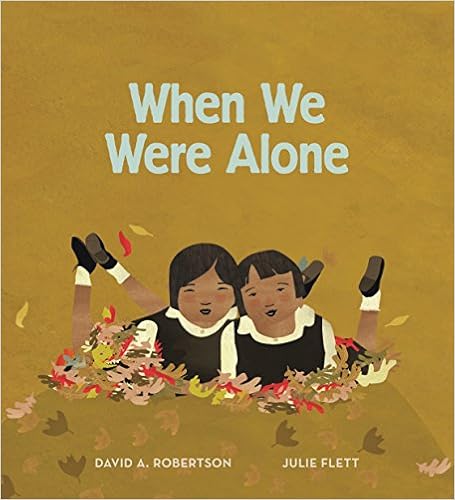
An incredible picture book, When We Were Alone by David A. Robertson and Julie Flett have a memory moment every time the grandmother answers her grandchild’s questions. Powerful message that will capture curiosity.  This is the book I will use with my 7th graders.


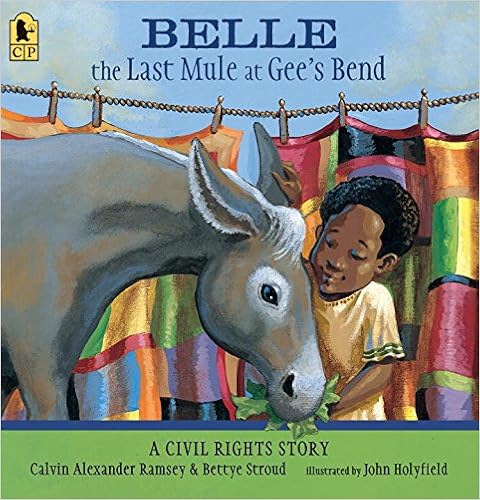
Belle the Last Mule at Gee’s Bend by Calvin Alexander Ramsey & Betty Stroud, illustrated by John Holyfield tells the true tale of one of the mules that carried the coffin of MLK Jr.  Told through memory moments as a child asks about the mule, this is a great picture book to teach an untold story as well as memory moments.

Both The Day the Crayons Quit and its follow up The Day the Crayons Came Home by Drew Daywalt and illustrated by Oliver Jeffers have great memory moments as the crayons tell Duncan how they were used and what they remember.  Considering these are must have picture books for any classroom, since there are so many things you can teach with them, I am thrilled that both can be used for this strategy as well.

The retelling of the story of King Christian X in The Yellow Star by Carmen Agra Deedy and illustrated by Henri Sørensen is an example of a memory moment in the lesson that we are all to glean from it.  The fact that the story is not true does not hinder its deeper meaning.

The books of Peter H. Reynolds has been featured in all of my signpost picture books, and it speaks to their incredible versatility.  You and Me written by Susan Verdi and illustrated by Peter H. Reynolds is a memory moment from the start as the characters reminisce about what would have happened had their day not unfolded the way it did.  A beautiful story of friendship and serendipity.

A beautiful memory moment exists in the pages of A Chair for My Mother by Vera B. Williams as we learn the story of the chair.

Memories abound as the Wolf shares the story of what really happened with the pigs in Tell the Truth B.B. Wolf by Judy Sierra and illustrated by Jotto Seirold.

As always, I turned to the awesome Notice and Note community on Facebook and asked them to share their favorites as well.  Here they are.

Storm in the Night by Mary Stolz and illustrated by Pat Cummings.

Tough Cookie by David Wiesniewski

Christmas Tapestry by Patricia Polacco.

Wilfred Gordon McDonald Partridge by Mem Fox and illustrated by Julie Vivas

When I Was Young in the Mountains by Cynthia Rylant and illustrated by Diane Goode.

Saturday and Teacakes by Lester Laminack

A Christmas Memory by Truman Capote

Train to Somewhere by Eve Bunting and illustrated by Ronald Himler

As always, please add your favorites for Memory Moments in the comments.  Also, did you see the new Notice and Note for Nonfiction?  I am so excited to read it.

aha moment, being a teacher, student voice, writing

A Few Ideas for Better Writing Conferences

http---www.pixteller.com-pdata-t-l-224750

Thea, our oldest, missed her bus today which meant that I missed my morning prep as I drove her to school.  Missing my prep is usually not a big deal, but this morning I was feeling rather sleep deprived (thanks to the amazing book An Ember in the Ashes which I just had to finish last night) and overall rather discombobulated.  My very first instinct as I tried to get ready in the 4 minutes before the students showed up was to cancel the writing conferences I had planned with the kids, after all, I was not ready.  I had not pre-read all of their drafts, made copious amounts of comments in them, nor had I carefully selected who I would meet with.  Surely, I could not lead their conferences.  Surely, they could would get anything out of it if I did.

Yet, a tiny voice inside me kept whispering that I had promised them a writing conference and I had to keep that promise.  That perhaps this was my chance to not lead their conferences.  To not have all of the answers, but instead be ready to listen and support.  To let them tell me what they needed rather than vice versa.  So I did, and it felt like I held my breath all day, but it worked.  It worked!  And I could not be happier with the outcome.  So what did we do?

I had the students sign up to confer.  Rather than me telling them to meet with me, I left it open for those who wanted to meet.  This meant that those kids with burning desires to show their work got a chance to do so.  In the one class where I didn’t have a lot of students sign up, I walked around and did mini-conferences as they wrote, only interrupting when there was a good moment to ask my questions.  At the end of the day, I marked down whom I had conferred with so that I can keep track of who I still need to meet with and will plan accordingly in the days to come.

I asked them what our purpose was for the conference.  Using the question, “What would you like me to look for?” really helped students narrow the focus of our conference.  Often times, a student will tell me they just want my opinion, but through follow up questions, we were able to narrow it down.  Some kids had an immediate idea of what they needed from me, others needed a little more prodding.  Typical requests became wanting to see if they had too many details, if their flow was choppy,  or other specific needs that were important to them.  Because they had to describe what they needed, they had to reflect on their piece and purposefully weigh those needs.  Rather than just having me read it for an opinion, they ended up with specific feedback that could support them as they continued writing.

I didn’t write suggestions.  I purposefully did not add my thoughts to their document in front of them, nor will I for a while yet.  I think with the advent of Google Docs our comments/suggestions/edits have become just another checklist for fixing their writing, rather than supporting them in becoming better writers.  As my friend, Jess Lifshitz  pointed out, “We need to teach students how to be writers, not just follow our directions to fix their writing.” (paraphrase)  I couldn’t agree more.

We kept it short.  Because I was only given one purpose, students and I spoke briefly and then they were off to work again.  Because I was not editing their work, we quickly got to the point of their needs and they could continue working on their vision for their piece, rather than be tainted by my ideas.

I held my tongue.  I have a wide variety of writers in our classroom, many who identify themselves as non-writers.  I therefore knew that this very first writing conference would set the tone for the rest of the year and further fuel their relationship with writing for better or for worse.  I therefore stopped myself from pointing out all of the things they could work on, all the mistakes that should be fixed, all of the things that should get attention.  We will get to it later, right now they just need to write.

I didn’t give them my opinion.  And not one asked for it either.  Often our opinion is what students strive to hear, to get that seal of approval.  Yet, I have seen what an honest opinion can do to a child that is still drafting their story.  How even the most carefully wrapped sentence can totally stop a child from writing.  Instead, I kept it to the chosen focus.  I asked them their opinion, I asked them to speak about their piece.  And they did.  And I listened, and then they found their own path rather than attempting to walk on mine.

At the end of today, I was excited, not exhausted as I normally would have been.  It was not me who had done most of the talking, it was the students.  It was not me who had set the purpose, it was the students.  Not once had a child asked me if their story was long enough.  Not once had a child asked me whether their story was good enough.  Instead they had told me how excited they were to write, how they could not wait for me to see the final version, how they might try a new story if this one doesn’t go as planned.  Just as I had hoped.  Just like it should be.  Perhaps being discombobulated on a Monday was not such a bad thing after all.

If you like what you read here, consider reading my book Passionate Learners – How to Engage and Empower Your Students.  Also, if you are wondering where I will be in the coming year or would like to have me speak, please see this page.

being a teacher, being me, books, picture books, Reading, students

The Things That Matter the Most

http---www.pixteller.com-pdata-t-l-222659

I have spent a week listening to my students as they told me what they were proud of and how I could change to make 7th grade English a better class for them.  Child after child.  Conversation after conversation, and although my brain is tired from all this sitting, and I am ready to go back to working with all of them, I could not help but notice the things that kept coming up in as we spoke.

They told me that they are becoming stronger readers.  That they have these goals that they need to accomplish, perhaps with some help from me.  That class is fun (at times).  That it is not as bad as they thought it might be.  And over and over and over they tell me about the things that have mattered the most to them…

Having books in our classroom.  They know that when they finish a book, another one is  right there.  That if they need to abandon the one they have selected, that many others await.  That they love our school library but are so thankful for the library we have as well.  The books seem to call out to them as they sit in our room asking to be read.

Having time to book shop.  Once every few weeks we spend half a class simply book shopping.  We lounge in our time with the new (and old) books waiting for us on the tables.  I book talk a few and then watch as they meander along the piles, picking up book upon book and gazing at the pages.  Writing a few down, sharing them with others.  Book shopping is an event, something to look forward to and they ask for it as they see the piles of books grow by my table.

A list of books to be read.  We have several pages in our readers notebook dedicated as our to-be-read list.  The students are now getting in the habit of using it whenever they need a new book.  They are sharing them with each other too, “Did you add this book yet?  Oh, we have the same book listed.”  They do not forget about the books they are waiting for (right now Orbiting Jupiter and Crenshaw have a very long wait list) and with their list in hand they always find their next read.

A shared love of picture books.  All students are accomplished readers in our room because they can all pick up a picture book and “get it.”  They can all discuss the problem of Mustache Baby.  They can all discuss the theme of Unicorn Thinks He’s Pretty Great.  They can all learn about courage from Malala and Iqbal.  Because those stories are found within picture books.  Because picture books allow us to love reading.  To access complex texts that no one has ever told us is not at our level.    To remember that reading is meant to be fun, even if it is a sad book.

And finally, they told me that the teacher matters.  That they need a teacher that does not judge.  A teacher that loves books.  A teacher that reads.  A teacher that does not give up.  A teacher that hounds them at times and holds them accountable.  A teacher that sees them, even when they try to be invisible.  A teacher that I try to be, even when I feel I fall short.

And those are the things that mattered the most.

If you like what you read here, consider reading my book Passionate Learners – How to Engage and Empower Your Students.  Also, if you are wondering where I will be in the coming year or would like to have me speak, please see this page.

aha moment, being a teacher, being me, books, Literacy, Passion, students

A Story of A Boy and a Book

http---www.pixteller.com-pdata-t-l-222284

This originally was posted on The Reader Leader Blog from Scholastic.  You should really see the other posts on the blog!

He came to me with anger seeping out of every pore, a cloud of dismay surrounding him. Looking at us with eyes that told the world that he was not afraid, that he knew that we could not make him do whatever it was we intended to ask. That he would fight us with every cell in his body just to stay in control. Yet, for all of his anger, for all of his glances directed my way, he wasn’t one of mine. I didn’t have the pleasure of teaching him. He was in a separate English class, trying to be taught all of those things he had missed because of his anger and outbursts.

He wasn’t afraid of me, nor very angry. I posed no threat since I was not one of the ones asking him to please do, please sit, please stop. So every day I greeted him, smiled when our paths crossed, and told him that all of those books I had in my classroom could be his if only he wanted to read one. That even if he wasn’t mine, those books were still meant for him. Every day, he smiled and went on his way, seeing little need for any of the books I might have to share. As the weeks passed, he grew. He pushed his boundaries as children can do so well, always inching along that very fine line of control and struggle. I watched from afar; after all, he was not mine, so all I could do was smile and nod and remind him of the books that awaited.

One day, he didn’t just smile, but instead asked in all earnestness, “When can I be your student? When can I come to your class?” It wasn’t because he didn’t like the class he was in, or the teacher who taught him, but the books were calling, as they often do to so many kids that feel lost. I smiled and shrugged, repeated that the books were there for him whether he was mine or not. For weeks this played out until one day, he entered our classroom and I held my breath; after all, now he was mine, now I was one of the ones that would ask him to stop, to sit, to do. And I was scared of what would happen.

He sat quietly that first day in class. Bent his head and wrote ever so slowly, picking out his words with care, wanting so much to fit in and not just be known as that kid with anger issues. As the other students cleared out, he lifted his head, looked at the clock and asked, “Is it now? Can I pick my book now?” And he walked to the shelf of the book he had eyed and grabbed it, holding on to it as if I would ask him to put it down. “What do I do now?” he asked. “You read it,” I said, “And then you bring it back.” “That’s it?” “That’s it.”

So he left that morning, clutching Amulet: Book 1 to his chest as if it were a safety blanket. And I figured that the minute he left our classroom, that book would be forgotten; his day would develop, and soon our conversation would be a distant memory as his ingrained behaviors clouded his judgment once again. So I wasn’t surprised when at lunch he walked up to me and handed me back the book. “Did you not like it?” I asked, already running a possibility of other titles in my head that I could offer him. “I am done,” he said. “Done? But I thought you were so excited to read it?” I asked, my voice laced with confusion. “I did…I loved it…Can I have the next one please? I promise to bring it back.” He had read it already. He had fallen in love with a book. He was ready for the next one. For one moment in that day, he was just a kid who loved a book, just a kid like all the other kids, asking for the next book in a series that had spoken to him. So we walked into our classroom, found the next book and he left, clutching it to his chest once more, ready to wrestle anyone who would try to take it away.

We fall in love with books when they speak to us. When within their pages, we find a piece of ourselves we didn’t know we were missing. We clutch these books to our chests long after we have stopped reading them as a way to shield us from a world that we sometimes do not understand. Books become absorbed into our identity and allow us to risk, to love, to care about something even when we feel the most vulnerable. Even when we feel the world is not for us, we can find safety within the pages of a book. That is why my classroom is filled with books–so that every child has a chance to find a piece of armor, so that every child has a chance to find a vessel that will hold his dreams and protect them when they need to be.  My students may not understand each other’s pasts, each other’s behaviors, but they understand books, and so when a child falls in love with a book and it becomes part of him, it builds a bridge for others to understand that child better. For others to be let in.

Books provide us with the magic that we dream of as teachers. Books, whether fiction or non, chapter or picture, give us the building blocks that we need to connect with our hardest students. To connect with those that we sometimes feel at a loss to reach.  That boy didn’t stop being angry. He didn’t stop feeling that the world was out to get him, but he did start believing that somewhere in the world was a place for him to fit in. That he too could be a reader, that he too could belong. That his anger would not be the only thing that defined him, even when it spoke the loudest. That boy knew he had a home with us whenever he needed it. He still does, even though he is no longer around. My door is always open, the books always calling out for anyone who needs to belong, if even for a moment. I will never forget that boy and his book.

If you like what you read here, consider reading my book Passionate Learners – How to Engage and Empower Your Students.  Also, if you are wondering where I will be in the coming year or would like to have me speak, please see this page.