being a teacher, being me, books, Literacy, picture books, Reading

Great Picture Books to Teach Theme

I need to apologize.  This post will be the longest one yet with the most suggestions of which picture books to use for something.  But it makes sense; theme is one of those things that is present in so many great picture books, so when I started going through my classroom library, I ended up with a huge stack.

Some of these books I use in guided groups with the students, meaning that their theme may need a little more thinking to find, others I hand to the students for them to use in their discussions and reflection.  Which ones depend on the class and the conversations we are having.  I love how many of these picture books can be found on my other lists, this truly shows just how many times a picture book can be used in a classroom.  These are investment books, not “just” for fun, and give us a shared experience that will shape our community and conversations all year.

Note:  While I am writing a blurb on what the theme of the book is, many of these books have multiple themes, so my blurb is not the only one.

If you would like just a list without images and theme suggestion, please go here. 

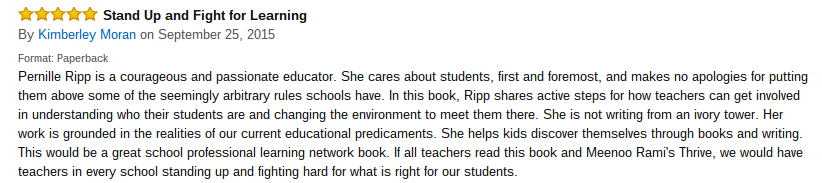
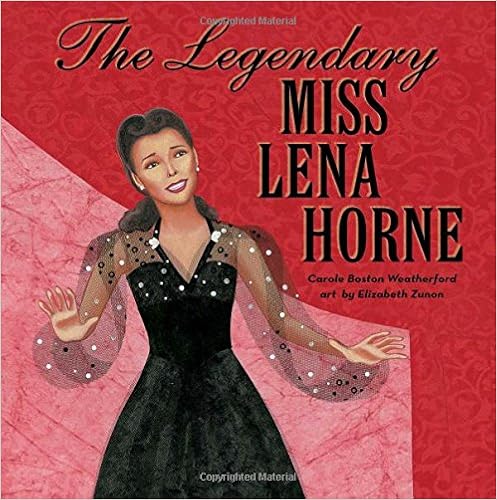
I had certainly heard of Lena Horne, however, I honestly knew very little about her.  This picture book has set me straight; her inspiring life not only as an entertainer but also a civil rights activist is one every child should be aware.  With themes of resilience, courage, and perseverance, this is a great addition.
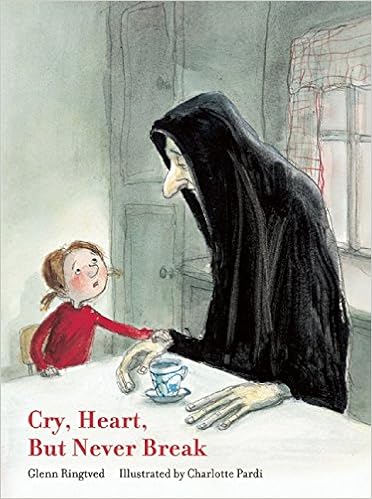
A picture book about death not meant to frighten but meant to help children understand the beauty of a life well-lived, this Danish picture book, is truly one to add to your collection.  Picture books can help us broach such difficult conversations in our classrooms and this one certainly does.
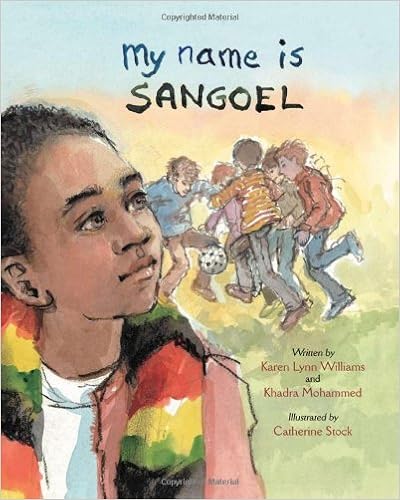
What’s in a name?  As educators, we know the inherent power of pronouncing a child’s name correctly to make them feel accepted and included.  This picture book from 2009 shares the story of Sangoel, a refugee from Sudan, and what happens when he comes to America.  A must add as we try to break down walls and build understanding for others in our classrooms.
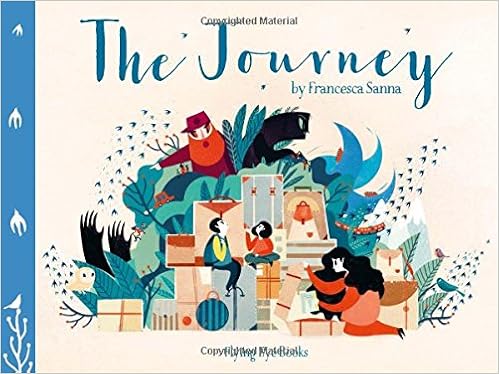
One of the most powerful picture books to be published in 2016, The Journey is about a family as they flee from war and the decisions they have to make as they search for safety.  Beautifully illustrated this picture book packs a punch.
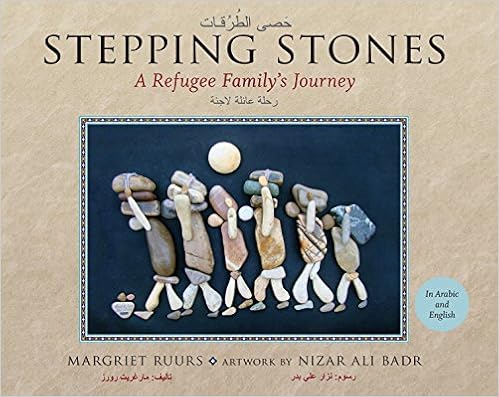
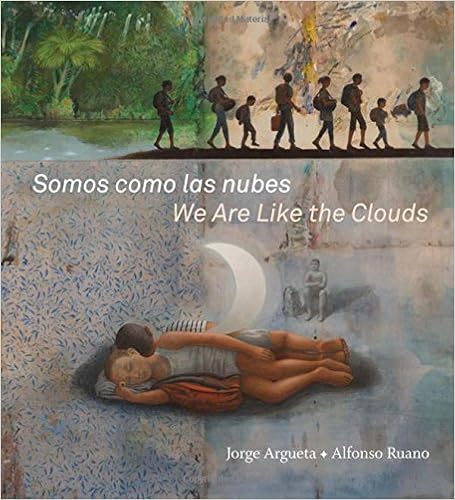
Also a picture book about a family that has to leave their country in search of safety, the artwork is all done by stone.  With both English and Arabic text, I am so grateful for the vision of this picture book.
Why would a child set out on foot toward America, knowing that there were thousands of miles filled with danger ahead of them?  This picture book illustrates the journey that more than 100,000 children have taken as they try to reach safety in the United States.  Told in poetry, this picture book helps us understand something that can seem inconceivable.

I cried the first time I read Ida, Always by Caron Lewis and Charles Santoso.  I cried the second time I read it as well.  With its story of love surpassing death, it is a must add to any classroom.

Yard Sale written by Eve Bunting and illustrated by Lauren Castillo is a fantastic book to discuss what it means to have a home and a family.  This is another book that made me cry.

We discuss needing diverse books in our classrooms and Jacob’s New Dress is most definitely a book we need.  Written by Sarah and Ian Hoffman for their own son, my students had wonderful discussions about what it means to fit the mold that society gives us.

The Night Gardener by the Fan Brothers is beautiful not only in its illustrations, but also in its message about what one person can do for a community.

Be A Friend by Salina Yoon is a wonderful addition to any classroom collection.  Its simple story allows for a rich discussion about friendship and finding our place in the world.

The Heart and the Bottle by Oliver Jeffers (Global Read Aloud contender) is a masterful book for students in discovering theme.  Love, loss, death, acceptance and rediscovery were all themes my students fund in the book.

The Wildest Race Ever:  The Story of the 1904 Olympic Marathon by Megan McCarthy is a great addition to our theme collection.  I love when non-fiction picture books can be used to discuss theme.

I have several of Pat Zietlow Miller’s picture books in our classroom and find them all to be incredible additions.  Sophie’s Squash always makes me laugh.  Pat’s latest picture book The Quickest Kid in Clarksville illustrated by Frank Morrison was an instant hit with my students and the theme only brought further conversation.

Another non-fiction picture book, Solving the Puzzle Under the Sea by Robert Burleigh and illustrated by Raul Colon has made its way into our classroom, not only teaching us about the incredible life of Marie Tharp but also about perseverance, having dreams, and the power of curiosity.

Snappsy the Alligator (Did Not Ask to Be In This Book) written by Julie Falatko and illustrated by Tim Miller is a sure hit with kids and adults alike.  Funny and with a great message of friendship, my students have read this one multiple times.

I am an unabashedly major fan of Bob Shea and his books show up on many of my lists.  The second installment of his Ballet Cat series is already a favorite in our classroom as well as with my own children.  In Dance! Dance! Underpants! we can find the themes of friendships, judgment, and also how to succeed while getting another great laugh.

I love wordless picture books for discussing theme because it lets readers look at just the illustrations without wondering about the words.  Skunk on a String by Thao Lam is a great conversation starter for perseverance and creativity.


Chopsticks by Amy Krouse Rosenthal, our picture book author study for Global Read Aloud is about finding your place in the world and having courage to try new things.

Also by Amy Krouse Rosenthal, The Ok Book is a great one for why you should keep trying things until you discover what you are great at.

The Man Who Walked Between the Towers by Mordecai Gerstein is all about following your dreams and doing the impossible.  It is also my chosen read aloud every September 11th.

Mr. Tiger Goes Wild by Peter Brown where Mr. Tiger just will not conform.  When he tries to change his ways, he loses his real identity.

This Is A Moose by Richard T. Morris and Tom Lichtenheld is a great example of the what happens when others try to make you into something you are not.

What I love about Gaston by Kelly DiPucchio, illustrated by Christian Robinson, is that most of my students can relate to its message about being expected to fit in in a certain way.

Any day I can use Pete and Pickles by Berkeley Breathed is a good day in our room. The universal theme of friendship and change is easy to spot here.

While Oscar’s Spots by Janet Robertson is more than 20 years old, I still love the copy we have in our classroom.  The theme of staying true to yourself and self worth is great one.

I am pretty sure I can teach almost anything with the help of Peter H. Reynolds.  His beautiful book Ish is a fantastic book for theme and what it means to discover your own talents and not let self doubt ruin it for you.

Each Kindness by Jacqueline Woodson is one of those picture books you can use for so many things; memoir, aha moment, words of the wiser, teaching empathy and such.  The theme of forgiveness, the impact of decisions, and how kindness gets passed on is a great lesson for all kids.

A Perfectly Messed Up Story by Patrick McDonnell is one of many amazing picture books from this author.  I love the simple aha moment of realizing that it can be good enough even if it is not perfect.  This is a great read for many of our students who push toward perfect every time to the detriment of their own sanity.

Elwood Bigfoot: Wanted Birdie Friends by Jill Esbaum is not only a great book to discuss friendship and how we must stay true to ourselves, but is great reminder to students.

You Are (Not) Small by Anna Kang is about how we judge others and what it all really means.

I have long been a loud fan of Bob Shea’s for a long time.  After all, he is the genius that wrote Unicorn Thinks He’s Pretty Great so I had to get Ballet Cat The Totally Secret Secret.  It is laugh out loud funny.  And the best part is that I can completely relate to the story and so will my students.

Marilyn’s Monster by Michelle Knudsen is one I think many of my students will gravitate toward with its quiet message.  I know I will be using it to facilitate deeper conversations about finding our own path in the world.

Wild About Us by Karen Beaumont is a beautiful book in many ways.  The illustrations done by Janet Stevens pop off the page and catch your eye, but the message of the book is what really got me.  We all have things that we can pick apart, but what we do with those things is what matters.

Thea, my kindergartner, came home and told me that I had to get this book about a big red crayon.  Okay…. I thought.  But she was right, Red – A Crayon’s Story by Michael Hall was one that I had to read aloud to my 7th graders.  And then we had to discuss what it meant staying true to one’s own nature as well as facing the pressures of others.  I swear this book was written for middle schoolers and not young children secretly.

It is a celebration in my life whenever the talented Ame Dyckman comes out with a new picture book and Wolfie the Bunny was definitely a cause for celebration.  This book about assumptions and what they can lead to has not only made my students laugh out loud, but more importantly, has led us to question our own assumptions about others.

I have Bluebird by Bob Staake on many favorite picture book lists, and there is a reason for that.  The shock on my students faces when we get to that page.  The questions, the discussion when I step out of the way are priceless.  This is a wordless picture book which also means that my students love interpreting the ending and allows them to find confidence when they are discovering what theme means.

Chrysanthemum by Kevin Henkes once again teaches students what it means to be proud of yourself and not try to change for others.

The Day I Lost My Superpowers by Michael Escoffier is a book that tells a familiar tale of childhood imagination.  I hope to use this to bring my students back to when they thought anything was possible and to reignite their passion for thinking they have the ability to make a difference in the world.

Orion and the Dark by Emma Yarlett is stunning. The story about a boy who is afraid of the dark is sure to elicit conversations about our fears and what we can do to conquer them.  I cannot wait for my students to discover all the details of this book.

Language surrounds us all but by middle school certain words seem to lose their off limit-ness.  That’s why I love Little Bird’s Bad Word by Jacob Grant.  This book will give us a way to discuss what our language says about us as people and how our casual conversations can harm others.  What a great conversation to have.

An amazing wordless picture book by Jon Arne Lawson and Sydney Smith that tells the tale of Sidewalk Flowers and what happens when we are too busy to notice the world around us.

Ben Clanton’s Something Extraordinary is just that – extraordinary.  Once again a simple story unfolds leading us to rich conversations about imagination and how it can color our world.

The beautiful story of Last Stop On Market Street by Matt De La Pena is one meant to spur conversation about our lives, our assumptions, and how we view the world.  But the illustrations?  They tell an even richer story, one that I cannot wait to discuss with my students, many of whom have never ridden a bus or even been in an urban neighborhood.

I am always in favor of a picture book that allows us to discuss how we treat others, particularly when teaching middle schoolers.  I love the story in Henry Hyena, Why Won’t You Laugh by Doug Jantzen and think it will resonate with many of my students with a fairly easy theme for them to discover and discuss.

The Most Magnificent Thing by Ashley Spires continues to be a crowd favorite in my classroom with its theme of not giving up and seeing the usefulness in things we otherwise may discard.  I love when students pick out the details that are in the illustration and we refer to it often when we create ourselves.

On my daughter’s 6th birthday she was gifted Beautiful Oops by Barney Saltzberg.  I took one look at it and then bought a copy for my classroom.  Students are so quick to dismiss their own mistakes, but this book with its simple show of what you can do with those “oops” is sure to inspire a moment to re-think and re-draw before a supposed mistake is discarded.

I am sure I was not the only one jumping up and down when the Caldecott award was announced this year and The Adventures of Beekle – The Unimaginary Friend was the big winner.  I have cherished this book in the classroom for its simple message about imagination and taking control of ones own destiny.  The illustrations are divine in the book and have inspired many students to draw their own imaginary friends.

I love the giggles that students, yes even 7th graders, get whenever I read aloud Froodle by Antoinette Portis.  The message to embrace their uniqueness and let their true personality shine is not one that is lost on them.

Another book by Mac Barnett on the list is Extra Yarn.  I have loved using this book to discuss theme with students but I also love how it shows that you can take something simple that you can do and turn it into something extraordinary.  Often this is the biggest aha moment that students get from this book.

6352012

The North Star by Peter H. Reynolds, I told you he is a genius.  This is the final book I read to my students every year as I hope it inspires them to take a risk and find their own path in life.

Unicorn Thinks He's Pretty Great by Bob Shea

Unicorn Thinks He’s Pretty Great by Bob Shea is one of the best tales for discussing the theme of how often we misjudge others.

From the title to the illustrations, think of the discussion My Teacher is a Monster – No, I Am Not by Peter Brown  will elicit.  I loved the message, but also the nuance with which it is presented, and let’s face it; many students think their teachers are not quite human and this is a great book to discuss just that.

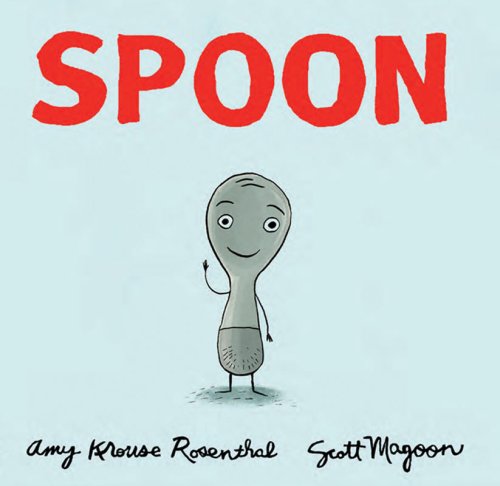
We love Spoon by Amy Krouse Rosenthal.  This sweet story of a spoon trying to fit in and finding his place in the world was one that made us laugh and think about our own place in the world.

What can I say about The Dot that countless others have not said already?  The simple message of making your mark on the world and being good enough is one that left its mark on us.

Journey by Aaron Becker was used as the culmination of our first reading unit, which happened to be a lesson I was observed during.  I asked the students why I picked this book to share with them as our celebration book and their reasons blew me away.  “We are on a journey in reading like the girl.”  “We also can create what we want 5th grade to be like she does with her world” were among some of the things said.  Again a wordless picture book brought some of our deepest conversations.

I pulled this book out after a recess incident that had really rattled my team.  Whenever I send my students out to play and be with their friends, I never think that they may not be friends outside, that they may say mean things about each other, that they may exclude, and yet that day they proved me wrong.  I knew we had to discuss what had happened but instead of another lecture from me about the power of our community, the sanctity of what we have built, and how we should all fit in, I let this picture book, Zero by Kathryn Otoshi do the talking for me.

The Big Box by Toni Morrison and Slade Morrison is a great picture book for more advanced thinking, the students will get it with prompting though and it leads to some pretty amazing conversations.

Patricia Polacco is a master storyteller, Mr. Wayne’s Masterpiece is great for discovering courage and sharing experiences where we had to overcome our fears.

I love Billy’s Booger – A Memoir by William Joyce for discussing great ideas and how they can be interpreted.

I know there are more, but thought this was a good start.  So many of these books are incredible, so many of them can be used for many teaching points, so many of these books will become favorites in your classroom.  Happy reading and please do share your favorites!

If you like what you read here, consider reading my book Passionate Learners – How to Engage and Empower Your Students.  The 2nd edition and actual book-book (not just e-book!) just came out!
being a teacher

Reading Forms I Use

There are certain forms and surveys that I use to prompt conversations, as well as do managerial things with my students.  Why not share them?  So feel free to modify and make them your own, just make a copy and you can edit them.

Mature Books Permission Slips for Elementary.  I used this to get parent approval for students to read YA in my class.

Classroom Library Letter for Parents.  This letter is adapted from letters that Kate Messner and Jillian Heise shared and is a letter I send home at the beginning of the year to explain the variety of books in our classroom letters.

Reader Survey.  This survey is for my students at the beginning of the year as I try to learn their reading truths.

Reader Identity Profile.  This is a vital part of my recordkeeping and helps me get all information straight that my students give me at the beginning of the year. This is a work in progress.

being a teacher, being me, books, classroom setup, Literacy, Passion, Reading

If My Classroom Library Was For Me

image from icanread
image from icanread

If my classroom library was for me there would be no dog books.  Well, almost no dog books because Rain Reign deserves to be there.  There would be no sports books, except for maybe Stupid Fast.  There would be no books with mermaids, unicorns, or any kind of princess, except for the feisty ones.  If my classroom library was for me, I would have only books that I know would fit all of my readers, that no one would ever object to or question.  I would take the easy way, after all, who needs more worries in their life?

There would be shelves and shelves of dystopian science fiction mixed with a little bit of love.  There would be historical fiction but mostly the more recent stuff.  Realistic fiction would be a major section, but fantasy would be reserved for the stuff that makes sense, after all, who needs books about dragons?

But it is not.

Our classroom library is filled with dog books.  With books about kings and queens, footballs, and dragons.  It is filled with books about men who went to war and never came back, and women who conquered the world.  It is filled with science, with history, and even with joke books because who doesn’t need a good laugh now and then.

Our classroom library is not just for me.  It serves more than 120 students and some may have similar tastes as me, but  most of them don’t.  So when I choose whether a book deserves a spot in our library, I cannot just think of myself.  I cannot be afraid to place books in it that scare me.  I cannot be afraid of what others may think if I know that a book is needed.  I cannot use myself as a measuring stick.  If I did, our library would not be for the students.

So when we purchase books.  When we decide what to display.  What to book talk.  What to remove, keep this in mind; our classroom libraries are meant to be homes to all readers.  Not just the ones that are like ourselves.  Not just the ones who have seemingly quiet lives filled with normal things like family dinner and soccer.  Not just the ones who love to read.  Not just the ones who tell us which books to buy and raise their hand when we ask who wants to read it next.

Our classroom libraries are for all kids that enter our classroom.  Especially for the ones who are lost, who have not found that book, or that story that made them believe that they are a reader, that their life matters.  We must have books that allow all children to feel that way.  To feel like there is not something wrong with them.  It is no longer a matter of just having diverse book, it is about having the right books for all those kids that come to us and wonder whether they are ok and then displaying them.  Whether they are normal.  The books speak for us, so make sure they speak loudly.  Make sure that in your classroom children can find that book that will make the biggest difference.  Make sure you do not stand in the way.  Make sure fear of what others may think does not stop you from helping a child.

If you like what you read here, consider reading my book Passionate Learners – How to Engage and Empower Your Students.  The 2nd edition and actual book-book (not just e-book!) just came out!

books, Literacy, notice and note, picture books

Great Picture Books to Teach Tough Questions – Notice and Note

One of the main texts we use to guide our reading instruction is the amazing Notice and Note: Strategies for Close Reading by Kylene Beers and Robert Probst.  This book provides us with the foundation for having deeper reading conversations and a common language as we develop our thoughts.  While the book has excellent text ideas to use as mentor texts, I thought it would be nice for my students  to use picture books on the very first day of a new strategy before we delve into the longer text excerpts.  I have therefore looked for picture books I could use with the different strategies and will publish posts as I have them for the 6 different strategies since I cannot be the only one looking for ideas.

The first post was on Contrast & Contradictions, then followed Aha Moments, so this week it is Tough Questions.  Apparently, this is a harder one to find picture books for so I found a few, but then turned to the awesome Notice and Note Facebook group I am a part of to crowd source more ideas.

My Ideas

White Water by Michael S. Bandy and Eric Stein has several tough questions in it and also doubles as an amazing book to discuss a really powerful topic with students; racial segregation.  This is the book I used to introduce the strategy to my students with the bonus of having aha moments and a contrast and contradiction in it as well.

The Three Questions by Jon J. Muth starts out with three obvious tough questions and then explores them the rest of the book.

A book near and dear to my heart The Yellow Star By Carmen Agra Deedy.  Although the story is not true, it still speaks of my people’s fight against the Nazi occupation and opens up great conversations.  The tough question is when King Christian wonders what can be done to fight the yellow stars.

What Do You Do With An Idea? by Kobi Yamada is a book I use a lot in the classroom as it is great for inferencing, and inspiring creativity, but it also works well for this strategy as it starts out with tough questions and then has several more further in.

The Numberlys By William Joyce and Christina Ellis has several tough questions and is definitely a great way to highlight conflict.

The tough question is not posed as a question in Henry’s Freedom Box by Ellen Levine but instead as a desire to be free.  I would use this later in the strategy to teach students that tough questions are not always in a question format.

Boats for Papa by Jessixa Bagley only has one question int it but it will lead to great questions and will also be a great inference exercise.

Crowd Sourced Ideas

The Rainbow Fish by Marcus Pfister

Train to Somewhere by Eve Bunting

The Gold Coin by Alma Flor Ada

Riding the Tiger by Eve Bunting

The Old Woman Who Named Things by Cynthia Rylant

Fly Away Home by Eve Bunting

Bully by Patricia Polacco

Wanda’s First Day by Mark Sperring

Alexander and the Wind-Up Mouse by Leo Lionnei

Pink and Say by Patricia Polacco

Which ones did we miss?

If you like what you read here, consider reading my book Passionate Learners – How to Engage and Empower Your Students.  The 2nd edition and actual book-book (not just e-book!) just came out!
being a teacher, books, Literacy, picture books, Reading

10 + 1 Picture Books to Teach Inference

I remember I was told to teach inference as a 4th grade teacher, it was one of the many skills students were supposed to develop in literacy, and I was a stickler for following the rules.  So the first year I sat with my lesson plans, every word penciled out and guided my students through the lesson.  We inferred because the book told us to.  When a child asked me why they were learning this, I answered, “Because you will need it next year.”  That successfully quieted the child, and I felt satisfied, I had been able to give them a reason for what we were doing and so they did it.

Yet, the act of inferring is so much bigger than “next year.”  It is so much bigger than learning how to read text better.  It is a life skill.  One we need to navigate difficult situations.  One we need to read other people.  One we need to become better human beings that care about others.  And so we infer, yes, but we also start to trust ourselves and our opinions, build confidence in our intuition and get more astute in our observations.  And picture books are about one of the best ways we can teach it in our classrooms.  So here are some of my favorite titles that I use.

I have to start with one of my favorites and the one I chose to start this year’s lessons with; I Want My Hat Back by Jon Klassen.  Beloved by so many, the students laugh out loud, love to infer right away, even when you tell them not to and fall in love with the simple yet devilish story of who took the bear’s hat.  Magic I tell you.

And I have to highlight the kind of sequel This Is Not My Hat also by Jon Klassen.  I use this as a follow up book, to give my students another chance at visiting the magical world that seems to be Jon Klassen’s mind and they love it as much as the first one.  I also love all of the theories of what happened to the little fish that my student concoct.

Boats for Papa is a new picture book by Jessixa Bagley that I immediately fell in love with.  The story does not tell us where papa is, nor why the mother does what she does, leaving this open for interpretation by the students.

Knock Knock: My Dad’s Dreams For Me by Daniel Beaty is an emotional book that leaves the reader wondering where the father is.  I love the emotional connection that my students can feel to this book, as well as what they conclude.  This book will also provide us with a window into the lives of our students as they share their own experiences.

This amusing story of what really happened to a sandwich will allow you to peek into the minds of how deeply students understand textual clues, as well as how well they look for evidence.  The Bear Ate Your Sandwich by Julia Sarcone-Beach is one that makes me giggle every time I read it aloud and then leads to heated discussions of what exactly did happen to that sandwich?

Another book that is great for deeper level conversations as students try to decide why that skunk keeps following the main character.  I cannot wait to hear what my students will come up with, as well as what they would do in this situation if a skunk were to follow them home.  I have many of Mac Barnett’s and Patrick McDonnell’s book and love having The Skunk as well

Rules of Summer by Shaun Tan is one of those books you can turn to again and again because of the complexity within it.  I have used it to teach Contrast & Contradictions and will now also use it for deeper inferences.  What I love the most is that each child can truly have their own unique interpretation of what the entire book means and I don’t have enough books that allow us to do that.

Yes, I am biased when it comes to Amy Krouse Rosenthal,, she is after all the Global Read Aloud picture book author study this year.  But Duck Rabbit is a great inference and discussion book.  The simple text and witty illustrations means that every student is bound to have an opinion in the ongoing debate of whether that is a duck or a rabbit.  I always keep my opinion to myself.

Another wordless picture book on this list is The Red Book by Barbara Lehman.  Again, this levels the playing field for all students as they try to figure out what is happening in the story and have to be careful observers to support their conclusions.  Plus, I just love the message this book sends.

Another new picture book to me this summer is Shhh!  We Have a Plan by Chris Haughton.  I love asking my students what they think will happen if the group succeeds and what their purpose really is.

Before I published this post, I asked on Twitter for people to share their favorites.  Here are some crowd sourced ones as well.

No, David! by David Shannon

The Rabbits by Shaun Tan and John Marsden

Dear Santa Claus by Alan Durant

Mr. Peabody’s Apples by Madonna and Loren Long

Which ones did I miss?

If you like what you read here, consider reading my book Passionate Learners – How to Engage and Empower Your Students.  The 2nd edition and actual book-book (not just e-book!) just came out!

assessment, assumptions, Be the change, being a teacher, grades, ideas

7 Simple Things that Make Feedback and Assessment About the Students Again

http---www.pixteller.com-pdata-t-l-191398

I think we all are always looking for ways to ease the assessment and feedback process in our classrooms, I know I am!  And I get it, giving feedback and doing great assessment with 120 students, or even just 20 students, can seem like an unwieldy beast at times.   So while I wrote about lessons I have learned while trying to limit grades, I thought I would also offer up the practical things that have made my day-to-day better.  Behold, a few things to maybe make your feedback and assessment process easier.

Background:  I now work in a district that is doing Standards Based Grades and moving away from letter grades.  We also believe that formative work is practice work and can therefore not count toward a summative score, and finally, that students have the right to re-take work.  At my middle school, we have a 2 week automatic re-take policy that we encourage students to use in case they need extra help with a concept.  

They have a notebook that stays in the room.  I have learned the hard way that when students leave with their notebooks,  they sometimes do not come back with them.  So this year, I instead created a readers notebook for them to keep in the classroom.  Yes, it was a lot of paper, but it means that my students always know where to write their thoughts, it means that all writing about reading only happens in the classroom, and it also means that I have access to them at all time.  This means that not only do we have a routine established for responding to reading, which frees up time, but also that student scan see their thoughts develop over time along with the feedback I give them.  Each class has a bin on my shelf for easy access every day and they grab them when they come in before they start their independent reading time.

They have a manila folder with their names on it in real life or electronically.  Each class is separated into 5 different groups and each group has a folder.  All work that students do that is not in their readers notebook go in these folder.  This year, the students will even file it themselves to save time.  Why collect the work?  Because my students write way more than I can assess, so this allows them a gathering place for all of their work.  When a unit is nearing its end, I ask them to pick the one piece that they want me to assess.  I also do this for anything we do electronically (but I respect the fact that some of my students want to hand write rather than type).  The discussion that happens based on what they select for me to look at are richer because I know they had to think about it and not just hand me the last thing they wrote.  This also signals to them that they are not working to get through things, but to learn, and that every piece of work they create has value eve if it does not get assessed

I have pre-printed labels with comments.  Not for everything, but when I give feedback in their readers notebooks there are certain things that crop up again and again.  That is what the pre-printed labels are for.  These change throughout the year and I do not reuse the same ones from unit to unit.  It is always catered to what we are working on  what I am noticing with the students, and are explained before they are put on their work.

The students self-assess before I assess.  At the end of unit, before anything is handed back by me, the students will then set goals and reflect on their work.  This involves them scoring themselves as far as where they are with their  proficiency in the chosen standard.  The score is based on a standard they have deconstructed to put into student-friendly language, and also based on a rubric they have built with me or we have discussed.  I want my students’ to have a chance to reflect before their confidence is skewed by my words.

Standards are assessed twice at least.  We have 7 standards to cover in English this year and all of them will be assessed for a summative score at least twice in separate quarters.  It is a chance for students to truly see that mastery may come at a different time for them than their peers and that that is ok.  It also allows us to establish a baseline score and then see how they grow.  When a standard is only assessed once, we assume that all students grow at the same rate, which we know is not true.   So instead, make it a point to show students that knowledge is something we gain at all times and that they are the masters of their growth.

They have a chance to disagree.  Once students have self-assessed, it is my turn.  I will either handwrite their assessment or speak to them about it.  But even then it is not final, it is a conversation, and students know that this is their chance to speak up.  Too often we gloss over the assessment piece by handing things back at the end of class and forget that this is one of the largest opportunities we have for meaningful conversations about their learning journey.  Don’t rush through it but take the time to discuss, reflect, and set new goals.

All work is kept in the classroom, pretty much.   I need to know what my students know.  Not what others know, not what they later figured out, but what they know right now.  So any kind of summative work is done in the classroom, not at home, so that I can see how they work on a product with time management and the need for them to think deeper.  This also fits into my policy of limited homework.  And it forced me to evaluate what I am asking them to do, since I can see how much time something takes.  ( I also do all of the work my students have to do, which has definitely been an eye-opening experience).

PS:  For the how-to for eliminating or limiting grades, please consider reading my book Passionate Learners.  There is a whole chapter dedicated to not just the why, but the actual how.