books, picture books

Great Poetry Picture Books

I am spending most of the day in my classroom getting it ready for after spring break.  As I thought of what picture books to display I immediately knew that I had to celebrate April which is poetry month.  So as I pulled all of our favorite poetry(ish) picture books to put them on display, I thought I should share what my students will hopefully be enticed to read.  Please add your favorites as well.  These are in no particular order.


Winter is Coming by Tony Johnston and illustrated by Jim LaMarche

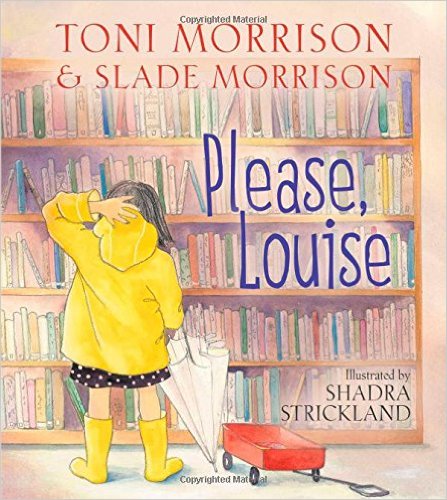
The Big Box by Toni Morrison and Slade Morrison, illustrated by Giselle Potter

All Different Now: Juneteenth, The First Day of Freedom by Angela Johnson and illustrated by E.B. Lewis

What Forest Knows by George Ella Lyon and illustrated by August Hall

Come On, Rain! by Karen Hesse illustrated by Jon J. Muth

One Today by Richard Blanko and illustrated by Dav Pilkey

Ubiquitous: Celebrating Nature’s Survivors by Joyce Sidman and illustrated by Beckie Prange

Sail Away by Langston Hughes and illustrated by Ashley Bryan 

A Place Where Hurricanes Happen by Renee Watson and illustrated by Shadra Strickland

Instructions by Neil Gaiman and illustrated by Charles Vess

Follow Follow by Marilyn Singer and illustrated by Josee Masse

What You Know First by Patricia MacLachlan engravings by Barry Moser

Diamond Life: Baseball Sights, Sounds, and Swings by Charles R. Smith

Jazz Day:  The Making of a Famous Photograph by Roxanne Orgill and illustrated by Francis Vallejo

Hi, Koo!  A Year of Seasons by Jon J. Muth

Poem Runs by Douglas Florian

Black Cat Bone by J. Patrick Lewis and illustrated by Gary Kelley

Baseball Is…by Louise Borden and illustrated by Raul Colon

Drum Dream Girl by Margarita Engle and illustrated by Rafael Lopez

Dark Emperor & Other Poems of the Night by Joyce Sidman and illustrated by Rick Allen

I hope this list is helpful as you find great picture books to add to your classroom. Please add your favorites in the comments and to see our other lists of favorites, go here.   Don’t forget about poem in your pocket day on April 21st.

being a teacher, Literacy, Reading, Reading Identity, Student dreams, student driven

I Don’t Read…Thanks

http---www.pixteller.com-pdata-t-l-348828

Before school starts, my school, Oregon Middle School, does two days of locker drop off giving students a chance to bring their supplies in, try their new lock, and even poke around the building.  My first year there, I was at work in my classroom on the first day of this event.  The books were all meticulously displayed.  Brand new picture books lined our whiteboards.  The bean bags were fluffed and ready.  Every bin had a specific book faced out.  My reading poster for the summer was up and I could not wait to see the reaction of my incoming students.  Surely, they would be excited when they saw all of the books waiting for them.  

A mother followed by her son came into the room and introduced themselves.  He was one of my future students and so I eagerly shook his hand and asked him if he liked to read.  As soon as the words left my mouth, his facial expression changed to one of pure disgust.  He looked me straight in the eye and said, “I don’t read… thanks.”  As if I had offered him a particularly disgusting food item.  His mother looked at me and then added, “Yeah, he has not read much the last few years, we are not quite sure what to do.”  I plastered a big smile on my face and told her we would work on it together.  He did not seem impressed by my eagerness and asked if they could go now.  

I left that day wondering once again why I had moved from the incredible oasis that is 5th grade to this new reality of 7th.  What on Earth had possessed me to think that I had any chance in reaching 7th graders?  That I knew anything about getting 12 year olds to read.  There were days my first year that I cried.  Feeling so lost in my mission to make kids like school again.  There were days where I felt like I failed, that every thing I did made little difference and that surely one of these days those kids I taught would call me out as the fraud that I felt like.  But they didn’t.  Instead, they seemed to rally around me, around us, as we figured out how to make English a better class for them.  As we figured out who we were together, who they were as individuals and how their new identities could involve being readers.  I felt the urgency every day to make school better, as do so many of my colleagues, to make reading something worth doing, worth falling in love with.  I still do.  Even if kids still tell me that they don’t do reading, and good luck convincing them otherwise.

At the end of my first year, I had not changed that boy and his dislike of reading.    There was no grand transformation or success story where all of a sudden he read every single night.  That is not teaching.  Teaching would be so much easier if we could see the influence that the learning may have on a child, but most of the time we don’t.  So we can’t expect miracles every day, even if we hope for them, even if we work for them.  Because if we do, we will only see ourselves as failures.  As though we cannot teach well.  Instead, we must hope for small changes that will someday lead to a big transformation.

That boy, he read, once in awhile.  He abandoned books, still.  He had a million excuses for why he did not have a book that day, but not always.  So at the end of the year when he stopped me in the hallway, I would never have guessed the reason why.  “Hey, Mrs. Ripp…have you read Gym Candy?  It’s kind of mature but I really like it.  The librarian found it for me.  You should read it.”  I stood there not quite believing what my ears had just heard.  He recommended a book to me.  Not because I asked him to.  Not because we were in class.  But because within the year we were finishing up he discovered that perhaps he could be a reader after all.  That perhaps there were books for him.  

So whenever a child tells me they do not read.  That books are not for them.  That they hate reading, I always think of the little change that perhaps I can help inspire.  Of the small steps we can take together.  Of how we may not see the transformation but that if we make loving reading an urgent endeavor then perhaps we are planting a seed.  And one day, maybe years later, that child will not feel like they have to say “I don’t read…thanks” but will instead bring a book with them wherever they go because they cannot imagine not doing so.

If you are wondering why there seems to be a common thread to so many of my posts as of late, it is because I am working on two separate literacy books.  While the task is daunting and intimidating, it is incredible to once again get to share the phenomenal words of my students as they push me to be a better teacher.  Those books will be published in 2017 hopefully, so until then if you like what you read here, consider reading my book Passionate Learners – How to Engage and Empower Your Students.  Also, if you are wondering where I will be in the coming year or would like to have me speak, please see this page.

being a teacher, Literacy, Reading, Reading Identity

They Are Not All Struggling Readers

http---www.pixteller.com-pdata-t-l-346801

I think I have finally figured out my hesitance when it comes to the term “Struggling readers.”  It is not that we do not have these types of readers in our midst; children where every word read is a victory in itself, where comprehension is a slow, painful discovery.  Where we count their success not in books, but in pages.  We all have readers who struggle.  Yet, for too long, we have declared all of of our under-performing readers to be struggling.  We have let a label stop us from seeing the whole child.  For too long we have taken this title and applied it to a whole group of students that may not be where they should be.  We have labeled our students and then not gone beyond that, instead sticking to the term and everything it encompasses.  Yet, this is not enough for the very students we teach, for within this term is a myriad of reasons why the students are not reading.  Of why they struggle.   Because the truth is they are not all struggling readers.  There is so much more to them than that.

Some are resistant.  They will fight us every step of the way, not because they can’t read, but because they won’t.  They often start as struggling and in that very struggle is where their new identity comes from; reading is hard and so they will use everything they can to not engage in reading.  They will abandon book after book because they have long since figured out that if they at least look like they are reading, we will not be quite as worried.  They will tell us proudly that they hate reading, offering up the challenge as we start a new year.  Being a kid who dislikes reading is not something they are ashamed of and they wear their hatred with pride daring every teacher to change their mind.

Some are lost.  They used to love reading but lost that love a few years back.  Sometimes through the very choices we have made as teachers, often times through a combination of many factors both within and outside of our control.  It is not that they won’t read, they just don’t know how to fall back into it, how to find a great book that will bring them back to the reading fold.  How to continue to grow as a reader rather than stand still.  How to unslump themselves before their new habits of not reading become a permanent fixture of who they are as a person.

Some are confused.  They think they are doing ok but continue to miss the point of the book.  They struggle with meaning not because they cannot decode but because their mind for some reason cannot hold all of the information needed to make sense of what they are reading.  Some of my most confused readers would tell you they are doing just fine, not because they are trying to trick you but because they truly believe it.  They make as much sense as they can and then move on, wondering why others have not understood the book the same way they have.  They read, even if reading for pleasure makes little sense to them when it is such a tiring process.

Some consider themselves bad readers.  A label they have conjured based on grouping, interventions, or other things that we have used in our classrooms to help them achieve success.  Oftentimes how they self-identify becomes a self-fulfilling prophecy because if you think you are bad at something, well then you become bad at it.  Finding out what is causing them to think this way is a must as we try to help them back to reading.

Some are still a mystery.  We cannot seem to crack the code of why reading is hard and sometimes it is because they do not know themselves.  Sometimes it is because they have so many things working against them that it is hard to know where they start, and yet, we try every trick in our book and we ask as many questions as we can, trying to help them uncover a better reading identity.

There are more facets to reader identity than these, by no means is this an exhaustive list,  because we teach children and children are complicated.  So while I wish there was one direction that could guide my instruction, that could help me make all of the decisions I need to make when I support my readers, there isn’t.  And pretending there is does nothing to help me prepare.  Does nothing to help me create an environment where students have a positive reading experience, no matter their self-identification.

Sure, we could label them all struggling, but it would not be enough to help them, to support them as they have a better reading experience.  We must dig deeper into who they are.  We must ask questions not just about their reading life, but their reading identity.  We must create opportunities where they can re-frame the essence that they carry as a reader.  Our instruction must go past that of “struggling reader” and instead see the bigger reason for why they are where they are.  While our journey to create passionate reading environments sometimes seems like an uphill battle, we must remember this; all children can have a better relationship with reading, all children can become readers.  But they must know themselves first, they must know what helps or hinders, what motivates or what distracts. And so must we.  It is too easy to be satisfied be applying one label to a group of kids, but it is not satisfaction we should be after, we should be after understanding, because through understanding we can teach better.  We owe it to the kids, whether they struggle or not.

If you like what you read here, consider reading my book Passionate Learners – How to Engage and Empower Your Students.  Also, if you are wondering where I will be in the coming year or would like to have me speak, please see this page.


being a student, books, Literacy

Great Books for Resistant Readers in Middle School and High School

I have been on the hunt as of late for books that I can hand to one of my hardest student groups; my resistant readers.  Not just reluctant readers, not just readers that may have forgotten how much they like reading, no, the students that really do not want to read and would rather fake read every single day of the year rather than actually read.  These are the kids I am book hunting for.  So what are some of the books that seem to be hooking not just my reluctant readers but even my resistant ones (and almost every other reader as well)?

Handed Cold Day in the Sun by Sara Biren to one of my hockey players and she could not put it down.  Her word of mouth recommendation means that it is flying through the classroom, and kids who told me they hate reading are devouring it.

Image result for hey kiddo

Kids cannot believe that this is a graphic novel.  With its unflinching look at how addiction shaped his life and his talents, Hey, Kiddo by Jarret J. Krosoczka is flying through the room.

“Mrs. Ripp, I only want to read books like this one…” so said one of my most resistant readers this year, and it happens every year.  Jordan Sonnenblick’s Drums, Girls and Dangerous Pies is one of those books I can count on to be a great reading experience for almost every child I hand it to.
Dear Martin by Nic Stone is one of those books that takes you by the heart and then twists it painfully.  Unyielding in its honesty, this book stays with you long after the last page.
What happens when the alpha bully at a middle school hits his head and forgets everything about himself?  I think so many of my students can connect with Gordon Korman’s Restart for many different reasons.  It is fast-paced and Chases’ dilemma makes you want to read on; will he go back to how he was?
Jason Reynolds is a natural treasure and his latest free verse book Long Way Down is haunting.  Written in the aftermath of Will’s brother’s murder, this whole story is set in an elevator as he decided whether to follow the rules of the neighborhood and shoot the boy who killed his brother.
Also by Jason Reynolds, Miles Morales – Spiderman is the first full-length novel that features the comic book character Miles Morales as Spiderman.  Need I say more?

Orbiting Jupiter by Gary D. Schmidt has hands-down been the biggest game changer for a lot of my readers.  I have 7 copies circulating and none of them sit on the shelf for more than a day.  We have it on Audible as well for students who prefer to listen to their books.

Another frequently read book (and listened to as well) is All American Boys by Brendan Kiely and Jason Reynolds.  Masterful story telling and a gripping narrative means that this book has been flying off the shelves.

Noggin’ by John Corey Whaley is one that has been passed from student to student and is probably one of the most frequently book-talked books in our room.  The story is easily accessible to many levels of reading development and grips the students with its premise of cryogenics and what it means to be 16 in a a 21-year-old’s body.

 Rhyme Schemer also by K.A. Holt is about a bully who becomes the victim.  I love how students relate to this story and often see this passed from kid to kid.

Who would think that our most resistant readers start to fall in love with reading through free verse?  What Kwame Alexander’s The Crossover has done for our reading life cannot be underestimated.  I have already had to replace my copies of this book this year and students are eagerly awaiting Booked on it’s arrival date of April 5th.

Reality Boy by A.S.King may have a very angry protagonist but I think the anger and “realness” of the books is what draws readers to it.  This is another book that is often recommended from student to student.

Another free verse book, this one is House Arrest by K.A. Holt has been making the rounds as well.  The discussions in class that this book leads to are powerful for many students.

When a resistant reader recommended this book to me I knew it had staying power in our classroom.  Carl Deuker’s Gym Candy is not your typical sports book and I think that is why it has been so popular with many resistant readers.  It is a little bit raw and a little bit unresolved, a perfect choice for many of my more picky readers.

Another Jason Reynolds book, Ghost is book one in the Track series and left my students wanting to read the next book, Patina, right away.  Easily accessible langueg with a relatable character who does not have the easiest life, this was a book many kids declared as a favorite.  

Boost by Kathy Mackel was book talked last week and has not been in my classroom since, quickly passing hands from student to student.

For the first time ever, I used We Were Liars by e.lockhart (Emily Jenkins’ pen name for her YA books) and I was not disappointed.  It was clear that my group of readers quickly became absorbed as they begged for just one more minute of reading time.

It can come as no surprise that Monster by Walter Dean Meyers is a book many readers gravitate to.  I have loved the reflections and thoughtful dialogue that this book creates but even more so how many students have recommended to each other.

What are your must adds/must-reads that will hook resistant readers?

being a student, being a teacher, global

Audience Needed for Elephant & Piggie Performances

The students have been hard at work figuring out how to be better speakers and they are now ready to show the world.  Tomorrow my students will be performing Elephant & Piggie stories to their peers while I record them. We are looking for other classrooms to view some of these recorded performances and rate them using a simple form.  Classroom audiences can be any grade as these are picture books being performed so we would especially love K-3.  While students appreciate the feedback I give them, they really need a bigger audience than just their classmates and me to grow as real speakers.

If you are interested in perhaps viewing a few, please fill out the form below.  You can view just one or as many as you want, what matters is the feedback!  I will email you further details once the videos go live.  Thank you so much for considering helping out these amazing 7th graders.

being a teacher, books, classroom setup, Literacy, Reading

On the Need for Classroom Libraries for All Ages

It took me 3 seconds to decide that I was going to move my entire classroom library into my 7th grade classroom.  Coming from 5th grade I wasn’t quite sure what the use of a classroom library would be on my new adventure, after all, we would only have 45 minutes together, but I couldn’t leave my books behind.  I couldn’t leave them in boxes.  Even if we didn’t need the books as a class, I needed them.  My books were home to me and when you change schools, when you change districts, when you change grade levels, you need all of the pieces of home you can find.

My husband carried every single box of books into my classroom.  There were more than 100 and they took up an entire wall as I waited for my bookshelves to arrive.  He didn’t mind too much, he has realized a long time ago that I my obsession with books is part of who I am.  As I opened each box and shelved the books in their new home, I couldn’t help but wonder if any child would ever read them?  If dust would soon become their second skin rather than the hands of children.  Was there any point in my meticulous placement of books?

On the first day as a 7th grade teacher, I was not sure how the students would react to the books.  After all, in elementary school, most kids expected a classroom library.  Most kids were used to the access.  So I waited and soon enough the comments came.

“Are these all of your books?”

“Have you read them all?”

“How many books do you have?”

“Can we read them?”

Slowly, students began to ask more pointed questions.

“How do I check this one out?”

“Can I read this one?”

“Did you read this book, I have wanted to read it…”

It turns out my worry was unfounded.  It turns out that middle schoolers in all of their bravado love classroom libraries as much as younger kids.  That middle schoolers get as much use out of a classroom library if we let them.  That they needs books now just as much as they needed them then.

In the past 2 years as a 7th grade teacher our classroom library has only grown.  Teaching more than 100 students quickly made me realize just how many books I need to keep all readers invested and engaged with their reading.  In fact, I started with the research on classroom library sizes and knew that while these were great starting points, that was exactly it, a start.  When you teach that many students with reading abilities ranging from 2nd to 12th grade, interests spanning all topics, you need way more than you think, because middle schoolers can be fickle, so the message that my classroom library sends is; there is always another book waiting, there is always another chance at falling in love or remaining in love with reading.

And it is not because we do not have a school library, we have a beautiful one, one that is filled with incredible books and staffed with incredible people.  But when the students are with me, during our 45 minutes of instruction every day, they also need books right at their fingertips.  As Donalyn Miller and Teri Lesesne have said even a school library right across the hall from you is too far away for many students.  And it is true, even a beautiful, well-stocked school library is too far away when a child needs a book right then.  Because our students need to be enticed by another book the moment they finish or abandon their current one.  They need books as a way to create community as they share their love (or dislike) of them with others.  They need books to hand to their friends, to their teachers.  They need books that will inspire them to read more.  To discover who they are as a readers and who they want to become.   They need to be able to go into our library and come out with something that speaks to them.  Not just because the teacher tells them they have to read or the assignment requires them to.

I asked a child last year if our classroom library made a difference and his answer was simple yet powerful.  “It made the biggest difference because the books were right there, so I read them.”  And that is what I see every single day in our classroom, books being read because they are right there and there is no option to not read them.


As we increase the demand on students to read for knowledge rather than pleasure, we see their love of reading decline.  Students have less time and less choice as they go through their years of schooling.  So is it any wonder that by the time students graduate high school, 33% of them will never read another book?  Having a classroom library in our middle and high school classrooms is therefore not a frivolous thrill, it is a vital necessity to create passionate reading environments.  Having a classroom library should not be an investment we only make for our younger students, but should be one we make for all students, no matter their age.  And it is not too late to start right now.  We start by buying one book, then another, and we build our collection day by day.  We book talk and we hand books to students.  We create displays that entice, we create time to read, but first we have to have the books and access to them for all the kids we teach.

Our collection now probably holds more than 1,000 books and I know that I still do not have enough.  After all, there are still students that search our shelves and come up empty-handed, but at least they had books to browse, at least they had books to try. I continue to add whenever I can, knowing that one day I will run out of walls pace and bookshelf space, but that when that day comes it will be a day of celebration because perhaps we now have a book for every interest, for every reader, for every child we teach.

For more ideas on creating a classroom library and knowing books to purchase, go here.

If you like what you read here, consider reading my book Passionate Learners – How to Engage and Empower Your Students.  Also, if you are wondering where I will be in the coming year or would like to have me speak, please see this page.