I need to apologize. This post will be the longest one yet with the most suggestions of which picture books to use for something. But it makes sense; theme is one of those things that is present in so many great picture books, so when I started going through my classroom library, I ended up with a huge stack.
Some of these books I use in guided groups with the students, meaning that their theme may need a little more thinking to find, others I hand to the students for them to use in their discussions and reflection. Which ones depend on the class and the conversations we are having. I love how many of these picture books can be found on my other lists, this truly shows just how many times a picture book can be used in a classroom. These are investment books, not “just” for fun, and give us a shared experience that will shape our community and conversations all year.
Note: While I am writing a blurb on what the theme of the book is, many of these books have multiple themes, so my blurb is not the only one.
If you would like just a list without images and theme suggestion, please go here.

I cried the first time I read Ida, Always by Caron Lewis and Charles Santoso. I cried the second time I read it as well. With its story of love surpassing death, it is a must add to any classroom.

Yard Sale written by Eve Bunting and illustrated by Lauren Castillo is a fantastic book to discuss what it means to have a home and a family. This is another book that made me cry.

We discuss needing diverse books in our classrooms and Jacob’s New Dress is most definitely a book we need. Written by Sarah and Ian Hoffman for their own son, my students had wonderful discussions about what it means to fit the mold that society gives us.

The Night Gardener by the Fan Brothers is beautiful not only in its illustrations, but also in its message about what one person can do for a community.

Be A Friend by Salina Yoon is a wonderful addition to any classroom collection. Its simple story allows for a rich discussion about friendship and finding our place in the world.

The Heart and the Bottle by Oliver Jeffers (Global Read Aloud contender) is a masterful book for students in discovering theme. Love, loss, death, acceptance and rediscovery were all themes my students fund in the book.

The Wildest Race Ever: The Story of the 1904 Olympic Marathon by Megan McCarthy is a great addition to our theme collection. I love when non-fiction picture books can be used to discuss theme.

I have several of Pat Zietlow Miller’s picture books in our classroom and find them all to be incredible additions. Sophie’s Squash always makes me laugh. Pat’s latest picture book The Quickest Kid in Clarksville illustrated by Frank Morrison was an instant hit with my students and the theme only brought further conversation.

Another non-fiction picture book, Solving the Puzzle Under the Sea by Robert Burleigh and illustrated by Raul Colon has made its way into our classroom, not only teaching us about the incredible life of Marie Tharp but also about perseverance, having dreams, and the power of curiosity.

Snappsy the Alligator (Did Not Ask to Be In This Book) written by Julie Falatko and illustrated by Tim Miller is a sure hit with kids and adults alike. Funny and with a great message of friendship, my students have read this one multiple times.

I am an unabashedly major fan of Bob Shea and his books show up on many of my lists. The second installment of his Ballet Cat series is already a favorite in our classroom as well as with my own children. In Dance! Dance! Underpants! we can find the themes of friendships, judgment, and also how to succeed while getting another great laugh.

I love wordless picture books for discussing theme because it lets readers look at just the illustrations without wondering about the words. Skunk on a String by Thao Lam is a great conversation starter for perseverance and creativity.

Chopsticks by Amy Krouse Rosenthal, our picture book author study for Global Read Aloud is about finding your place in the world and having courage to try new things.

Also by Amy Krouse Rosenthal, The Ok Book is a great one for why you should keep trying things until you discover what you are great at.

The Man Who Walked Between the Towers by Mordecai Gerstein is all about following your dreams and doing the impossible. It is also my chosen read aloud every September 11th.

Mr. Tiger Goes Wild by Peter Brown where Mr. Tiger just will not conform. When he tries to change his ways, he loses his real identity.

This Is A Moose by Richard T. Morris and Tom Lichtenheld is a great example of the what happens when others try to make you into something you are not.

What I love about Gaston by Kelly DiPucchio, illustrated by Christian Robinson, is that most of my students can relate to its message about being expected to fit in in a certain way.

Any day I can use Pete and Pickles by Berkeley Breathed is a good day in our room. The universal theme of friendship and change is easy to spot here.

While Oscar’s Spots by Janet Robertson is more than 20 years old, I still love the copy we have in our classroom. The theme of staying true to yourself and self worth is great one.

I am pretty sure I can teach almost anything with the help of Peter H. Reynolds. His beautiful book Ish is a fantastic book for theme and what it means to discover your own talents and not let self doubt ruin it for you.

Each Kindness by Jacqueline Woodson is one of those picture books you can use for so many things; memoir, aha moment, words of the wiser, teaching empathy and such. The theme of forgiveness, the impact of decisions, and how kindness gets passed on is a great lesson for all kids.

A Perfectly Messed Up Story by Patrick McDonnell is one of many amazing picture books from this author. I love the simple aha moment of realizing that it can be good enough even if it is not perfect. This is a great read for many of our students who push toward perfect every time to the detriment of their own sanity.

Elwood Bigfoot: Wanted Birdie Friends by Jill Esbaum is not only a great book to discuss friendship and how we must stay true to ourselves, but is great reminder to students.

You Are (Not) Small by Anna Kang is about how we judge others and what it all really means.

I have long been a loud fan of Bob Shea’s for a long time. After all, he is the genius that wrote Unicorn Thinks He’s Pretty Great so I had to get Ballet Cat The Totally Secret Secret. It is laugh out loud funny. And the best part is that I can completely relate to the story and so will my students.

Marilyn’s Monster by Michelle Knudsen is one I think many of my students will gravitate toward with its quiet message. I know I will be using it to facilitate deeper conversations about finding our own path in the world.

Wild About Us by Karen Beaumont is a beautiful book in many ways. The illustrations done by Janet Stevens pop off the page and catch your eye, but the message of the book is what really got me. We all have things that we can pick apart, but what we do with those things is what matters.

Thea, my kindergartner, came home and told me that I had to get this book about a big red crayon. Okay…. I thought. But she was right, Red – A Crayon’s Story by Michael Hall was one that I had to read aloud to my 7th graders. And then we had to discuss what it meant staying true to one’s own nature as well as facing the pressures of others. I swear this book was written for middle schoolers and not young children secretly.

It is a celebration in my life whenever the talented Ame Dyckman comes out with a new picture book and Wolfie the Bunny was definitely a cause for celebration. This book about assumptions and what they can lead to has not only made my students laugh out loud, but more importantly, has led us to question our own assumptions about others.

I have Bluebird by Bob Staake on many favorite picture book lists, and there is a reason for that. The shock on my students faces when we get to that page. The questions, the discussion when I step out of the way are priceless. This is a wordless picture book which also means that my students love interpreting the ending and allows them to find confidence when they are discovering what theme means.

Chrysanthemum by Kevin Henkes once again teaches students what it means to be proud of yourself and not try to change for others.

The Day I Lost My Superpowers by Michael Escoffier is a book that tells a familiar tale of childhood imagination. I hope to use this to bring my students back to when they thought anything was possible and to reignite their passion for thinking they have the ability to make a difference in the world.

Orion and the Dark by Emma Yarlett is stunning. The story about a boy who is afraid of the dark is sure to elicit conversations about our fears and what we can do to conquer them. I cannot wait for my students to discover all the details of this book.

Language surrounds us all but by middle school certain words seem to lose their off limit-ness. That’s why I love Little Bird’s Bad Word by Jacob Grant. This book will give us a way to discuss what our language says about us as people and how our casual conversations can harm others. What a great conversation to have.

An amazing wordless picture book by Jon Arne Lawson and Sydney Smith that tells the tale of Sidewalk Flowers and what happens when we are too busy to notice the world around us.

Ben Clanton’s Something Extraordinary is just that – extraordinary. Once again a simple story unfolds leading us to rich conversations about imagination and how it can color our world.

The beautiful story of Last Stop On Market Street by Matt De La Pena is one meant to spur conversation about our lives, our assumptions, and how we view the world. But the illustrations? They tell an even richer story, one that I cannot wait to discuss with my students, many of whom have never ridden a bus or even been in an urban neighborhood.

I am always in favor of a picture book that allows us to discuss how we treat others, particularly when teaching middle schoolers. I love the story in Henry Hyena, Why Won’t You Laugh by Doug Jantzen and think it will resonate with many of my students with a fairly easy theme for them to discover and discuss.

The Most Magnificent Thing by Ashley Spires continues to be a crowd favorite in my classroom with its theme of not giving up and seeing the usefulness in things we otherwise may discard. I love when students pick out the details that are in the illustration and we refer to it often when we create ourselves.

On my daughter’s 6th birthday she was gifted Beautiful Oops by Barney Saltzberg. I took one look at it and then bought a copy for my classroom. Students are so quick to dismiss their own mistakes, but this book with its simple show of what you can do with those “oops” is sure to inspire a moment to re-think and re-draw before a supposed mistake is discarded.

I am sure I was not the only one jumping up and down when the Caldecott award was announced this year and The Adventures of Beekle – The Unimaginary Friend was the big winner. I have cherished this book in the classroom for its simple message about imagination and taking control of ones own destiny. The illustrations are divine in the book and have inspired many students to draw their own imaginary friends.

I love the giggles that students, yes even 7th graders, get whenever I read aloud Froodle by Antoinette Portis. The message to embrace their uniqueness and let their true personality shine is not one that is lost on them.

Another book by Mac Barnett on the list is Extra Yarn. I have loved using this book to discuss theme with students but I also love how it shows that you can take something simple that you can do and turn it into something extraordinary. Often this is the biggest aha moment that students get from this book.

The North Star by Peter H. Reynolds, I told you he is a genius. This is the final book I read to my students every year as I hope it inspires them to take a risk and find their own path in life.

Unicorn Thinks He’s Pretty Great by Bob Shea is one of the best tales for discussing the theme of how often we misjudge others.
 From the title to the illustrations, think of the discussion My Teacher is a Monster – No, I Am Not by Peter Brown will elicit. I loved the message, but also the nuance with which it is presented, and let’s face it; many students think their teachers are not quite human and this is a great book to discuss just that.
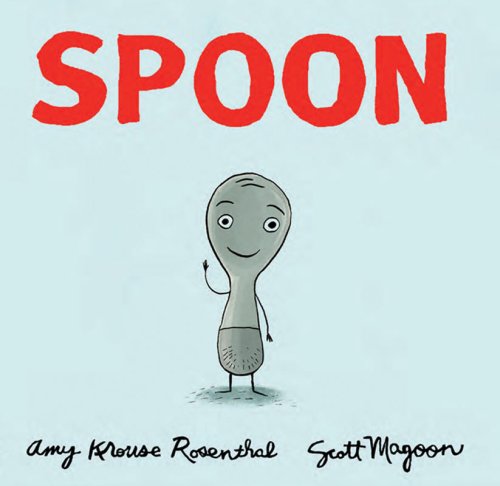
We love Spoon by Amy Krouse Rosenthal. This sweet story of a spoon trying to fit in and finding his place in the world was one that made us laugh and think about our own place in the world.
 What can I say about The Dot that countless others have not said already? The simple message of making your mark on the world and being good enough is one that left its mark on us.
 Journey by Aaron Becker was used as the culmination of our first reading unit, which happened to be a lesson I was observed during. I asked the students why I picked this book to share with them as our celebration book and their reasons blew me away. “We are on a journey in reading like the girl.” “We also can create what we want 5th grade to be like she does with her world” were among some of the things said. Again a wordless picture book brought some of our deepest conversations.

I pulled this book out after a recess incident that had really rattled my team. Whenever I send my students out to play and be with their friends, I never think that they may not be friends outside, that they may say mean things about each other, that they may exclude, and yet that day they proved me wrong. I knew we had to discuss what had happened but instead of another lecture from me about the power of our community, the sanctity of what we have built, and how we should all fit in, I let this picture book, Zero by Kathryn Otoshi do the talking for me.

The Big Box by Toni Morrison and Slade Morrison is a great picture book for more advanced thinking, the students will get it with prompting though and it leads to some pretty amazing conversations.

Patricia Polacco is a master storyteller, Mr. Wayne’s Masterpiece is great for discovering courage and sharing experiences where we had to overcome our fears.

I love Billy’s Booger – A Memoir by William Joyce for discussing great ideas and how they can be interpreted.
I know there are more, but thought this was a good start. So many of these books are incredible, so many of them can be used for many teaching points, so many of these books will become favorites in your classroom. Happy reading and please do share your favorites!
If you like what you read here, consider reading my book Passionate Learners – How to Engage and Empower Your Students. The 2nd edition and actual book-book (not just e-book!) just came out!


 Pernille Ripp