Be the change, being me, punishment

On Public Shaming and Our Classrooms

image from icanread
image from icanread

I used to yell students’ names across the classroom, making sure that everyone knew who was now in trouble.  I had the teacher voice down coupled with the stern glance.

I used to have students write their names on the board when they messed up.  That name served as a public reminder of their poor decisions all day and showed them that I meant business.  It was a wonderful display of who could not figure out how to behave well.

I used to have students call their parents in the middle of class to tell them when they were having a bad day.  Three strikes you are out was the way we worked.  I figured it didn’t matter that the rest of the class could hear their call, after all, that would probably just act as a deterrent for the rest of them.

I did not think I was shaming children, after all, children thrive on rules and routines.  Therefore, these rules were definitely helping them become better citizens of our school.

After a year, the names on the board did not seem to work so well, so I switched to sticks in a cup.  Everyone started in the green cup, your poor decisions moved you to yellow or red.  The sticks never moved backwards and we reset at the end of the day.  The names were no longer on the board, but the stick moving, that happened in front of the class.  That walk of shame where all eyes were on a child as they were told to “Move their stick” was a daily occurrence.  In our classroom everyone knew who the “bad kids” were, and so did their parents, after all, students love to share stories about how so and so got in trouble that day.

Then my firstborn got a little older.  She got a little more energy.  She wasn’t that good at sitting still or even paying attention at times.  She had so much to do and so many things to see.  And in her, I quickly saw the future.  If she got a teacher that used these systems of public shaming, she would be the kid that would move her stick.  She would be the kid whose name would be on the board.  And I would be that parent, wondering why my child was being publicly shamed for behaviors she was trying so hard to control.  For things that she did not do to intentionally harm the instruction, but simply needed support to work through.

So I stopped.  I threw it all out.  It turns out that you can have classrooms that thrive without the shaming from public punishment.  That you can have well-functioning classrooms without the public behavior charts.  That students will try to correct behavior and set goals with you when you remove the element of shame and try to problem solve instead.  That they will see you as an ally, rather than just a punisher, and that will get you much further when you try to help them become better human beings.

There are only a few things I am willing to fall on the sword for on this blog.  Previous experiences have shown me that most ideas in education are not black and white.  There are always more than 2 sides to every story, and every teacher teaches differently, and that does not mean they are not good teachers, it just means they are different.  But today, I will make an exception.

The public shaming that happens to students in our schools has to stop.  The reliance on public displays of punishement as a way to control behavior has to stop.  And the first place we stop it is by getting rid of public behavior charts.  Those clip systems that tell the whole world something that should be a private conversation between a teacher, a student, and the parents.

Whether it is a clip-system, the move-your-stick, the flip-your-card, or the put-your-name-on-the-board, and yes I used most of them myself, we have to find a better way.  We have to try because we are creating schools where children hate coming.  Where parents worry that their child will be singled out for having energy, for being excited, for not being able to sit still all day.  Where teachers are forced into roles as enforcers rather than nurturers.  I know that there needs to be consequences.  I know that we have to help students navigate behavior in our classrooms, but there are better ways then asking a child to create a permanent reminder and public display of how they are having a very bad day.

I am not proud of the mistakes I have made as a teacher.  I am not proud of the things I have tried that have hurt children rather than helped them.  But I am willing to write about it in the hopes that it will start a dialogue.  That perhaps someone, somewhere, will take a moment to rethink something that seems to be so ingrained in our classrooms.  That perhaps this post will help someone wonder what they can do instead.   Because there is so much that can be done instead, there are so many ways to build community, to build better relationships, to still have consequences, and create classrooms where kids have a chance at thriving.  All kids, not just the ones that know how to behave.  But we have to take the first step.  We have to take down the charts, remove the cups, erase the names.  We have to create classrooms that do not run on shame, but run on community. I speak not just from my teacher heart, but from that of a parent.  Our children deserve better than this.  And it starts with us.  Even if it makes us nervous.  Even if we are not sure of what to do instead.  I will help.  Just ask.

If you like what you read here, consider reading my book Passionate Learners – How to Engage and Empower Your Students.  The 2nd edition and actual book-book (not just e-book!) just came out!

Be the change, being a teacher, being me, students

Do We Forget What We Are Asking Students to Do All Day?

http---www.pixteller.com-pdata-t-l-186667

Yesterday I was in Michigan, surrounded by passionate educators, trying to make a change in the way they teach.  I was lucky enough to give the keynote at Googlefest and after I was done speaking, my job was to listen.  And so I did.  With every inch of me I listened to their stories, tried to answer their questions, and soak in the knowledge that I was being given.  What a gift it was.

It was exhausting.

By the time I reached the airport, my brain called out for sleep and food.  No more computers.  No more work.  By the time I sat down, I couldn’t fathom doing anything productive although my to-do list screamed out for attention.  My brain was full.  My brain was so tired.  And there was nothing I could do to trick it into thinking anything smart or productive.  Thank goodness I did not have a looming deadline.  So that’s when it struck me…

This is what happens to our students every single day.  

We ask them to give us their full attention.  For them to be on high alert all day as they learn. Ask any student and they will tell you they mostly listen throughout the day, interjecting knowledge throughout, yet their brain is constantly processing.  Constantly working to make sure they are fulfilling what we demand students do:  pay attention, be ready, learn.  And be ready to prove it to us, no slacking allowed, whenever we feel like calling on them.

As adults we forget how tiring that must be.  How not only are they asked to pay attention, but they are also asked to sit still, take notes, and be ready to answer any question we throw their way.  We expect them to care about what we are doing and give us their very best, every minute, every day.

So today as I plan for the learning to come, I cannot help but think of how I need to make sure my students are moving.  How I need to make sure they are talking and discussing.  How I need to make sure we are doing something with the knowledge that we are working with, so they are not just paying attention, not just getting more information.  And how I also need to be more understanding when they tell me they are tired.

We ask so much of our students because so much was asked of us when we went to school, yet we forget how hard it can be to live up to our standards.  Do you have room for students brains to take a break?  Do you plan for engagement and not just listening?  Do you ask the students what they need so they are not exhausted by the end of the day?  No wonder, students ask us to rethink  homework, when all their brain is asking for is to take a break.  I hope this is a lesson I don’t forget.

If you like what you read here, consider reading my book Passionate Learners – How to Engage and Empower Your Students.  The 2nd edition and actual book-book (not just e-book!) just came out!
Be the change, being a teacher, being me, Passion, power

A Rally Cry for Our Girls (And Boys)

11872287_893262384056709_8164193695113575675_o

A woman I admire greatly, Joyce Valenza, keynoted today on female leadership.  Before her keynote she asked me and other women I admire greatly to share their experiences of what it means to be a woman in education.  The following is roughly what I shared in a short video clip, I thought it only best to share it here as well but written instead of spoken.

I am the mother to 4 children all under the age of six.  I am the mother to 3 daughters that will one day, hopefully, become independent leaders, not afraid to speak up or speak out.  But for them to become just that, our society has to change.  Our classrooms need to change.  Our language needs to change.

In how many classrooms are girls expected to follow the rules better?  To sit still?  To listen quietly?  If a girl runs around, full of energy she is “acting like a boy.”  If she does it on a regular basis then something must be wrong with her.  If a girl raises her voice, has high energy, then she must be having a bad day.  She is labeled “wild” and “unruly.”  Because that is not how girls are supposed to be.  It goes against their very nature.

The same goes for boys, except only opposite.  If a boy is quiet, if a boy shows emotion, then something must be wrong.  If a boy does not engage in rough housing he must have a problem or be a wimp.  We call our boys “sensitive” like it’s a swear word.

As educators, we must see our students as full human beings that can act in whichever way they choose, even if that means not being a “good” girl every day.  As mothers, we must protect our children from the language that is sure to shape their identity so that they can be what they want to be, not just the archetype of a woman that society has bestowed upon us.

We are raising the future so I raise my girls to be independent.  To be brave.  To be fierce.  I raise my son to be proud of his emotions and to say no when he wants to.  That he does not have to fit into any gender stereotype someone else has decided for him.  But most of all, I raise my children to be themselves, no matter their gender.  Our classrooms, our very language, should protect that.

If you like what you read here, consider reading my book Passionate Learners – How to Engage and Empower Your Students.  The 2nd edition and actual book-book (not just e-book!) just came out!

being me, books

Welcome to the Physical World “Passionate Learners”

It started with an email this morning and culminated with a package this afternoon.  Then this happened…

mybook

That is me holding my book “Passionate Learners – How to Engage and Empower Your Students” and the twins wondering why I am so excited.  Yup.  My book was officially released today as an actual book, not just an e-book.

It’s a 2nd edition because Routledge, my publisher, thought it deserved a larger audience.

It’s a 2nd edition because I wanted to rewrite it with a lens of both elementary and middle school, which I would not have thought would be such a huge difference, but it really is at times.

It is a 2nd edition because I added many more ideas and went into further details trying to make changing the way we teach and involving students in their own education into a doable process.

But most importantly, it is a 2nd edition because my incredible 7th graders had so much they wanted to say to the world about how we can be better teachers.  Their quotes are in every chapter, I was honored to give them a platform so they can change the world of education for the better.

To hold this book in my hands today, to have physical proof of my journey as an educator, to put it all out there in the hopes that someone else will not feel so alone in their journey toward change.  That matters.  To have hope that someone might read the book and be inspired.  That matters.  For someone to give me a way to amplify my voice, to help others, to become a better teacher myself. What a feeling that is.

12002443_901720203210927_5695186749578734139_o

PS:  While Amazon says right now that it will take 1-2 months to ship , this is not true.  Also I believe is on a special promotion through Kindle right now.

being me, global read aloud

Global Read Aloud: One Book to Connect the World – A Video #GRA15

The International Literacy Association (formerly IRA) has been a huge supporter of the Global Read Aloud for a few years.  They put this video together for us as I prepare for the 6th project to start October 5th. I thought it might be nice to share it here.

Also, join me on Wednesday, September 10th at 8 PM EST for #ILAchat as we discuss all things reading aloud and the Global Read Aloud.

PS:  If you are wondering how to get your own reading warrior shirt, go here.

being a teacher, being me, Literacy, making a difference, notice and note, Reading

Great Picture Books to Use for Contrast & Contradictions – Notice and Note

One of the main texts we use to guide our reading instruction is the amazing Notice and Note: Strategies for Close Reading by Kylene Beers and Robert Probst.  This book provides us with the foundation for having deeper reading conversations and a common language as we develop our thoughts.  While the book has excellent text ideas to use as mentor texts, I thought it would be nice for my students to use picture books on the very first day of a new strategy before we delve into the longer text excerpts.  I have therefore looked for picture books I could use with the different strategies and will publish posts as I have them for the 6 different strategies since I cannot be the only one looking for ideas.

First up, “Contrast & Contradictions.”  Here are a few picture books I have used or will use with the kids.

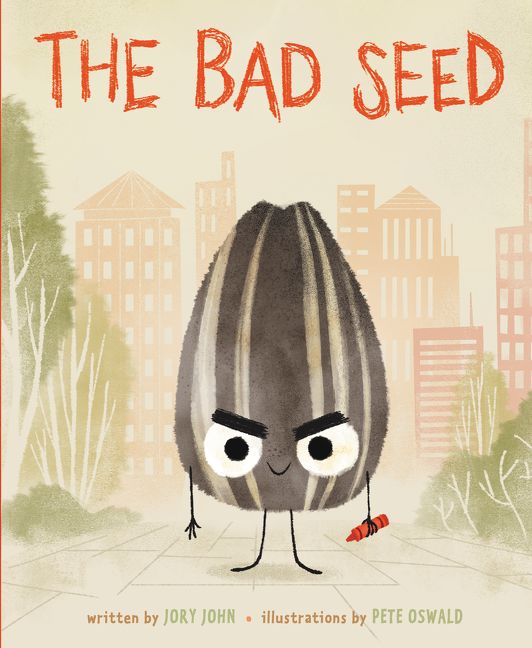
It’s like this picture book was written just for this lesson.  The Bad Seed by Jory John and illustrated by Pete Oswald features two changes in character and also a powerful message about trauma and what can happen to you even after bad things happen.
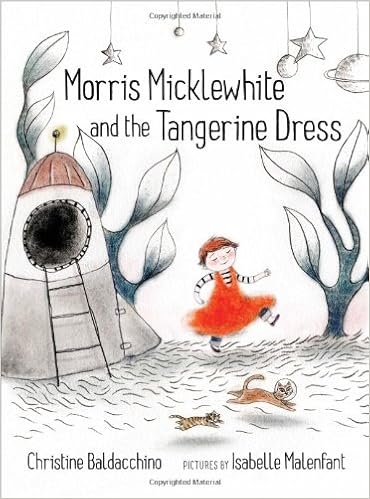
In Morris Micklewhite and the Tangerine Dress by Christine Baldacchino and Isabelle Malenfant, Morris goes from being sad and timid, unsure of his choice to wear a tangerine dress.  As the book progresses he changes as he realizes that he wants to be himself.
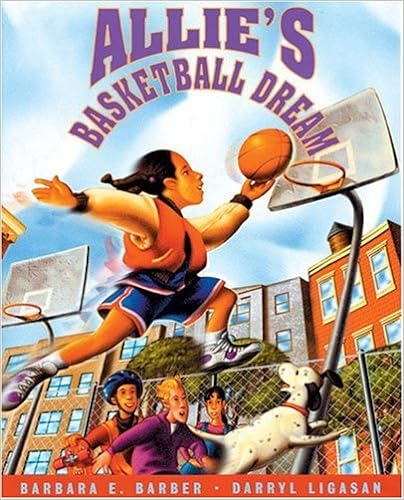
According to the boys watching Allie play, girls can’t play basketball.
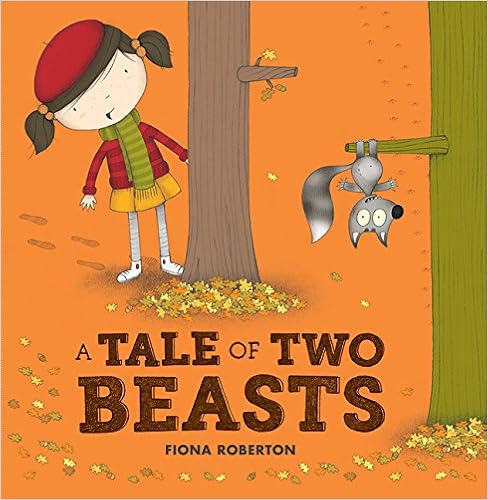
In A Tale of Two Beasts by Fiona Robertson, the C&C is how the two sides view the story.
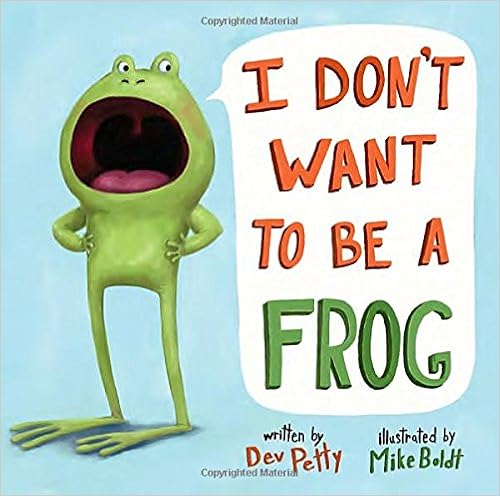
I Don’t Want to Be a Frog by Dev Petty and illustrated by Mike Boldt is C&C throughout.  The main character does not want to be what he is supposed to be and protests it every way he can.
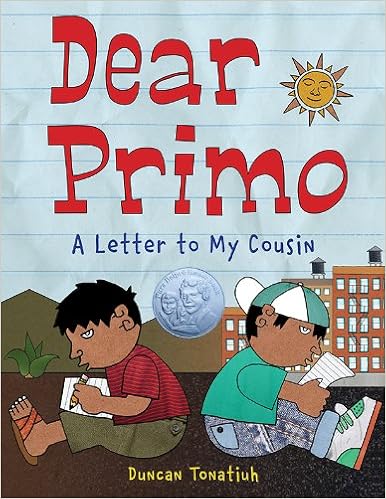
As two cousins write to each other, we see the contrast (and similarities) between their lives.

Tuesday by David Wiesner started us off in our discussions about contrasts and contradictions.  This fantastic nearly wordless picture book is an easy entry into this discussion as it allows students to easily see how the magical event with the toads floating is in contrast to what frogs normally do.


With one of my classes I also used Rules of Summer by Shaun Tan, where the contrast lies in the rules being shared and the images.  While this one was a little more advanced for the students, they greatly enjoyed the illustrations and discussing what they might mean.

Another contrast and contradiction text between self and society in Mr. Tiger Goes Wild by Peter Brown where Mr. Tiger just will not conform.  When he tries to change his ways, he loses his real identity.

This Is A Moose by Richard T. Morris and Tom Lichtenheld is a great example of the contrast between what a moose is supposed to be like and what they really are.

The Story of Fish & Snail by Deborah Freedman is a wonderful example about change in a character as Snail is too scared to follow Fish on a new adventure.

That Is Not A Good Idea by Mo Willems is another great example of a character changing and acting in a different way than we would expect.  I do love this devious little tale.

What I love about Gaston by Kelly DiPucchio, illustrated by Christian Robinson, is that most of my students can relate to its message about being expected to fit in in a certain way.  The contrast lies between the characters and how their upbringing has shaped them.

Any day I can use Pete and Pickles by Berkeley Breathed is a good day in our room.  Here, we focus on the change that Pete the pig goes through as he meets Pickles.  Great book also to use for character development and inferring.

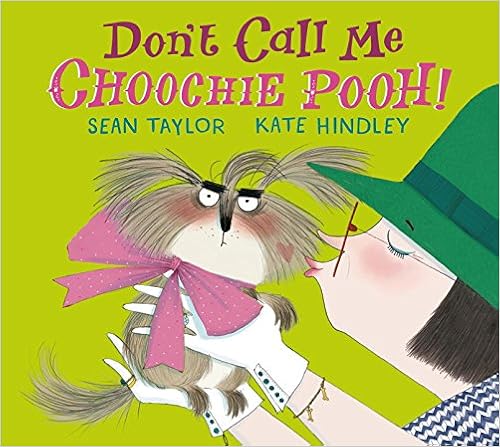
Don’t Call Me Choocie Pooh by Sean Taylor and Kate Hindley follow the story of a dog that does not want to be treated in a certain way afraid of what the other dogs will think.  Great ending that shows the change in the character.

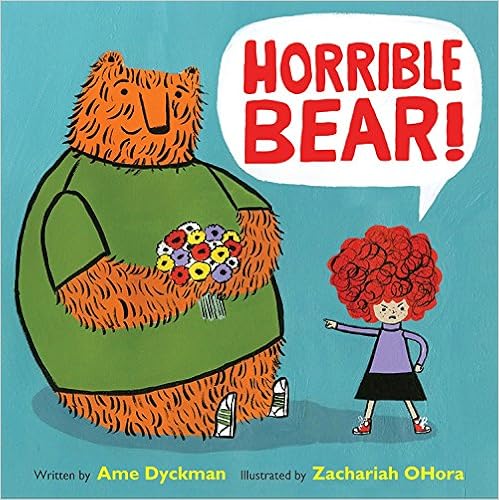
Horrible Bear written by Ame Dyckman and illustrated by Zachariah O’Hora is a lovely picture book that shows what happens when you don’t do what is expected.

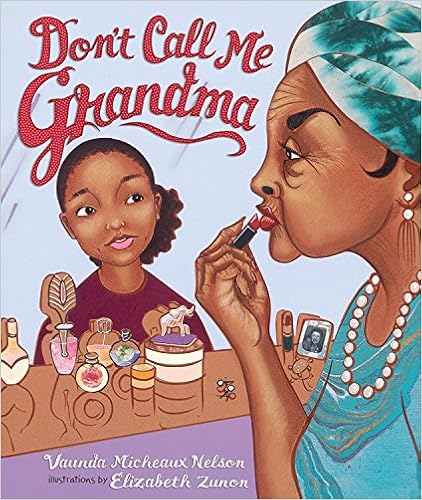
Don’t Call Me Grandma by Vaunda Micheaux Nelson and illustrated by Elizabeth Zunon is a perfect example of a character that does not fit the stereotype.  Great-Grandmother Nell isn’t anything but warm and fuzzy and as the great-grand daughter starts to understand why, we see a great slice of history as well.

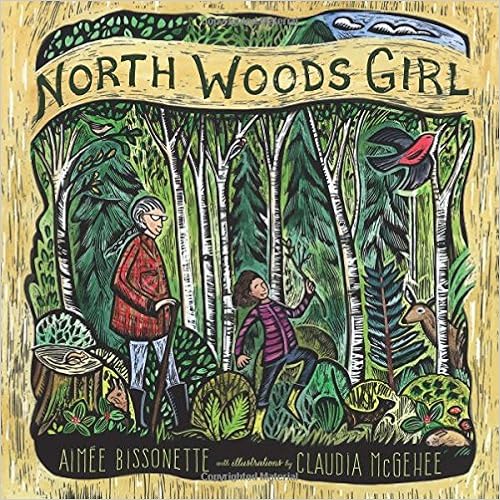
North Woods Girl written by Aimee Bissonette and illustrated by Claudia McGehee is also about a grandma that doesn’t quite fit the mold.

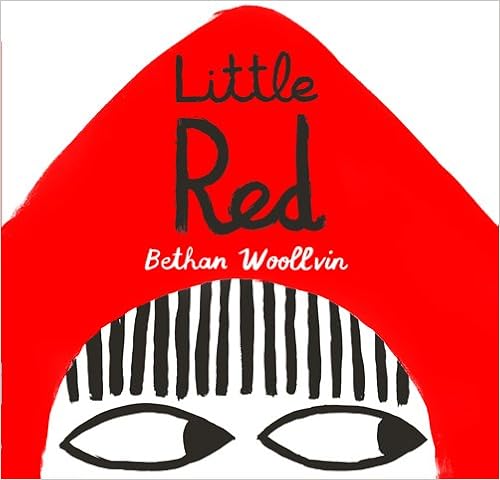
Little Red by Bethan Woolvin is wickedly funny, it follows the path of the regular story but with a twist at the end and it is that twist that provides our contract and contradiction.

Which books have you used for contrast and contradictions?

If you like what you read here, consider reading my book Passionate Learners – How to Engage and Empower Your Students.  The 2nd edition and actual book-book (not just e-book!) comes out September 22nd from Routledge, but rumor has it that it is out on Kindle already!