blogging, student blogging, Student-centered

Paper Blogs: A Lesson in Commenting on Student Blogs

IMG_2135

IMG_2136


We have been hard at work on our paper blog as we prepare to unveil the actual blog experience this Friday.  One of the essential things I do (and tweak) every year is the using paper blogs to get my 5th graders to think about how to comment, and more specifically how to start a conversation with their comments.  While the idea is not mine, I borrowed it from McTeach, it has developed over the years into something I love doing and find essential as we prepare to blog and converse with the world.

The whole idea is very simple.

Creating the blogs:

  • Show students samples of previous years’ paper blogs to give them a visual of what to expect.  I accidentally kept one class set a year so I have a great variety of blogs that I lay out on tables so they can see and read them.  Otherwise, I take pictures of them year and after year and have those ready as well if needed.
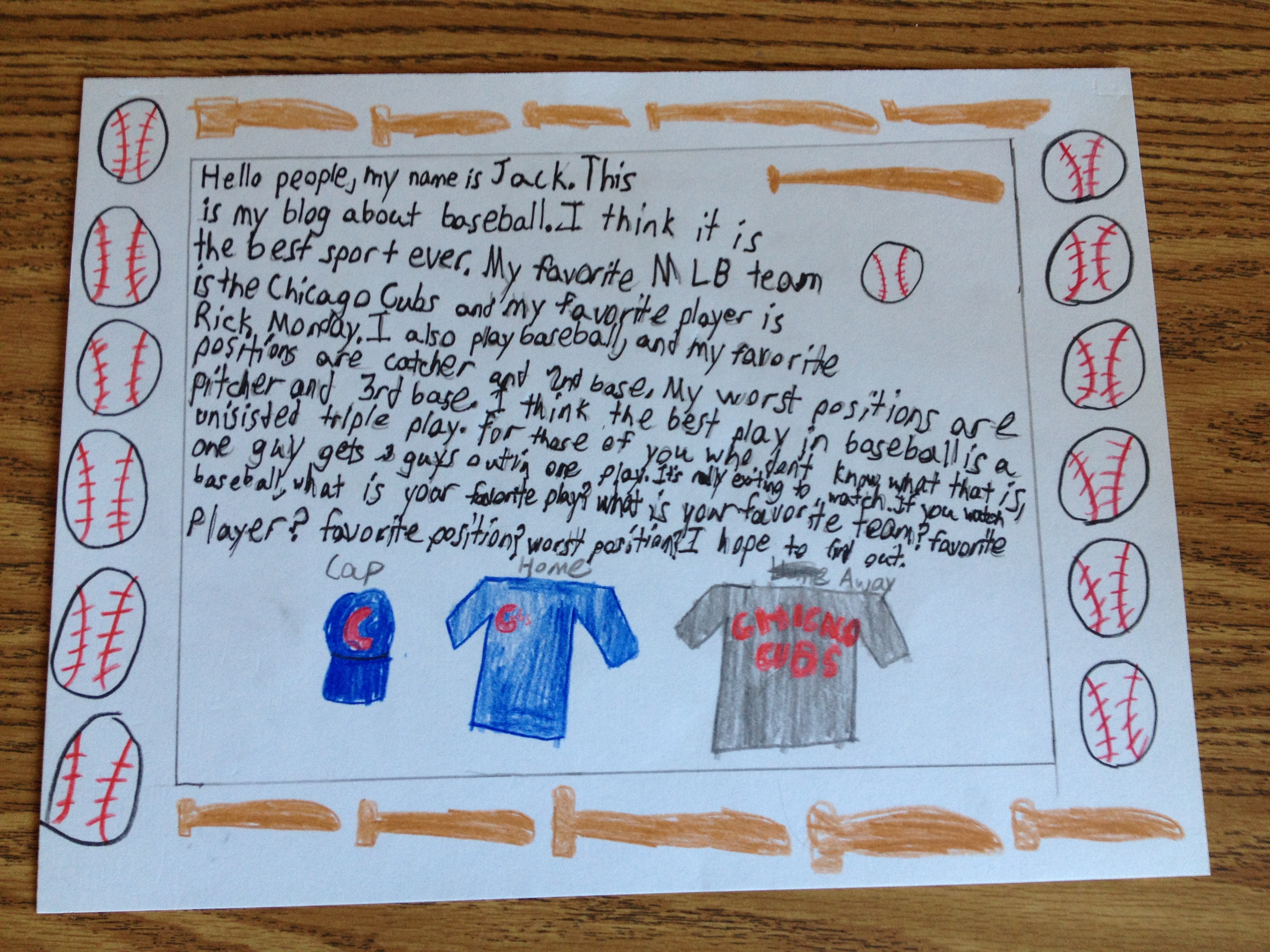
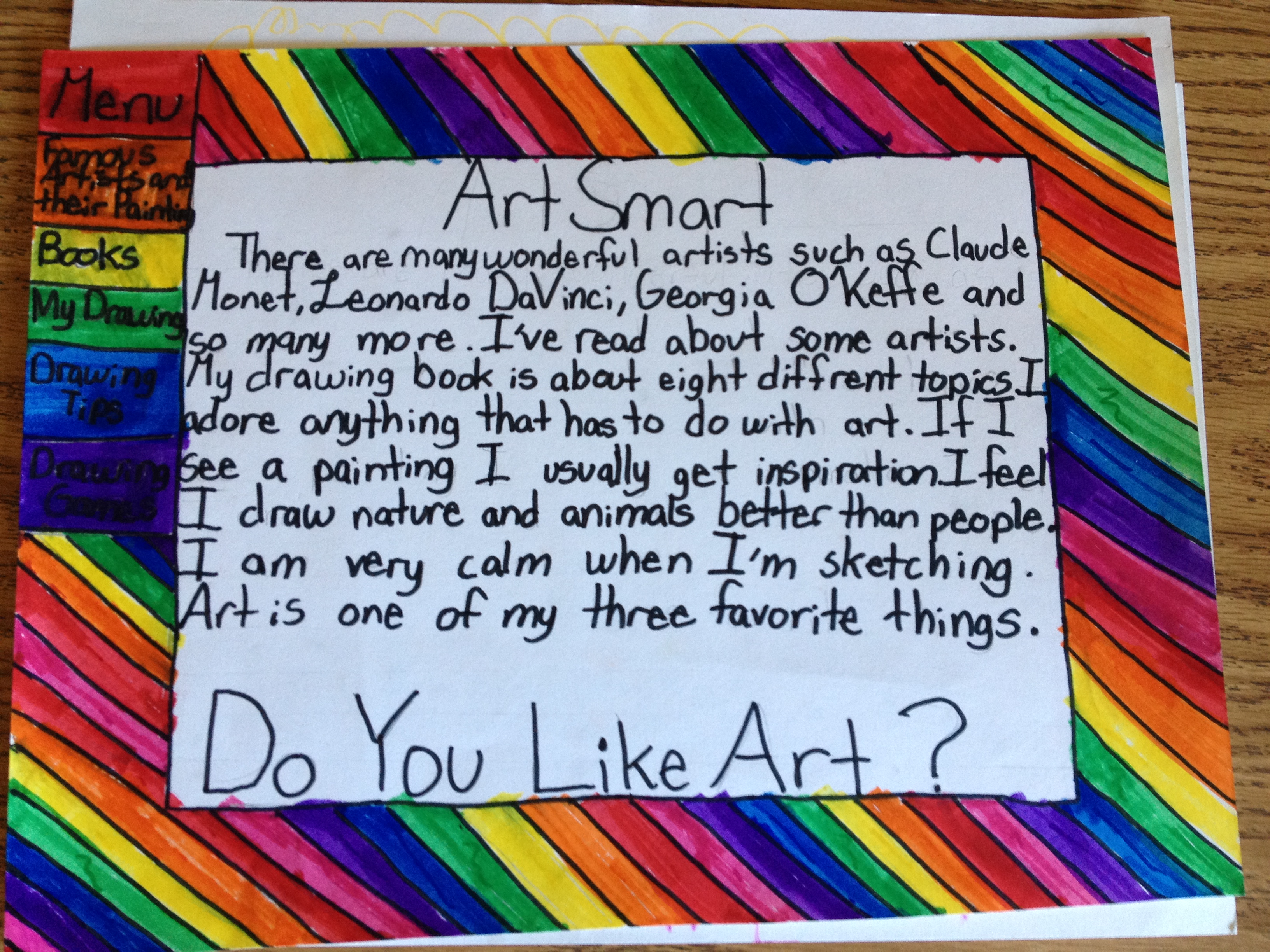
  • There are a few rules here:  It should showcase something the students are passionate about, it should include their name, and every paper blog should have a border.   I also ask students to write their “post” in pencil first so that I may check their spelling.  We want to emphasize spelling in their blog posts from the start.
  • Students are encouraged to be creative with their title, their layout, and what they write.  We discuss what would make a great introductory post and how they can let their readers know what their blogs will be about.  I have students choose all sorts of things they are passionate about:  The Badgers, various sports, books, ribs, their family, dogs etc.
  • I tend to give them several class periods to work on these since it is a nice break in the hectic schedule of beginning of school and it allows me to see what pace students work at.

When blogs are done:

  • When most of the blogs are done, we get to the main point of the lesson:  Commenting – this is why I do all of this.
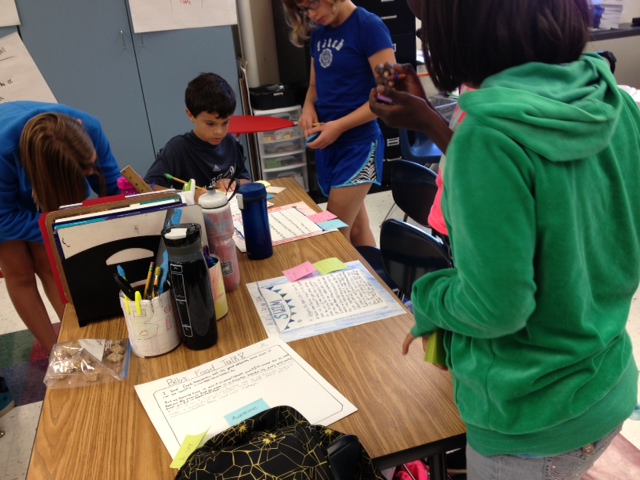
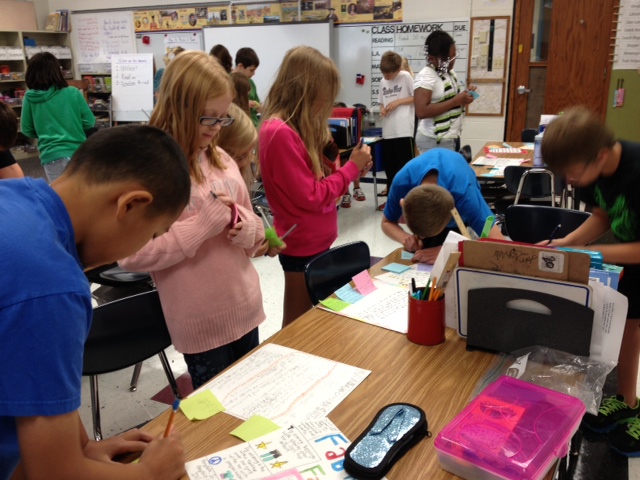
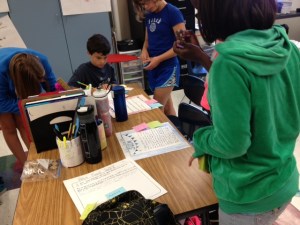
  • Students are each given a pad of post-its and lay their paper blog out on their table.  Then armed with post-its they walk around and read each others’ blogs.  On a post-it they are asked to leave a comment and sign their name.  This is in order to teach them that comments should never be anonymous, they need to stand behind their words.
  • We have discussed what makes a great comment in previous lessons so I only ask them to remind me.
  • I give the students 15 to 20 minutes to walk around and comment.

After the walk-around

  • Once time is up students return to their blogs.  If they have comments with questions on them, they answer the question and pass the post-it back to the person who wrote it.  This symbolizes the conversation that could take place.
  • I then ask for a student volunteer who helps me act out the conversations we will have based on post-its I have grabbed from the blogs.
  • I want the students to understand the difference between a “dead end” comment and a “highway” comment.  Dead end ones end the conversations and may include the standard “I like your post” comments.  Highway comments include comments that ask questions, share experiences, and link back to their own blog (here by leaving a name).  Because we act these out, the students quickly get what makes for a better comment
  • We wrap up the whole experience by creating another reminder poster of what makes a great comment and students either bring their blogs home or I showcase them in the hallway. photo 1
I am a passionate 5th grade teacher in Wisconsin, USA, proud techy geek, and mass consumer of incredible books. Creator of the Global Read Aloud Project, Co-founder of EdCamp MadWI, and believer in all children. I have no awards or accolades except for the lightbulbs that go off in my students’ heads every day.  First book “Passionate Learners – Giving Our Classroom Back to Our Students Starting Today” will be released this fall from PLPress.   Follow me on Twitter @PernilleRipp.

books, Literacy, Reading

My 10 Favorite Books From This Summer’s Reading

I read a lot of books this summer, even more than I thought I would muster, and now as school has started my students keep asking me which ones were my absolute favorites.  While it is hard to choose and these are in no means in order, here are some of the ones that I cannot wait to get into the hands of anyone looking for a great read.

Counting by 7s by Holly Goldberg Sloan.  I gushed over this book and have already pressed it into the hands of 3 students either physically or through email.  This book grabs you on the first page and then does not let you go until the very end.  What a phenomenal story and so appropriate for 4th and up.

Pivot Point by Kasie West.  Another page turner, but this time in a not too unrealistic science fiction version.  While this one is more young adult, the story itself is gripping and you just want read on and on, no matter how many children are smiling at you hoping you will make them dinner.

The Mortal Instruments Series by Cassandra Clare.  So really this is a series of 6 books, and yet, it still makes the list as a whole.  While the cover is slightly too much for me, the story inside is worth every minute of your time.  Part fantasy, part love story, and tons of action, this is a great read for more mature 5th graders.

Out of This Place by Emma Cameron.  Though not at all appropriate for 5th graders, I would place this book into the hands of many high schoolers.  Breathtaking and so genuinely written that you can feel the anguish through the pages.  Emma Cameron is now someone I will be looking to for great books.

Delirium Trilogy by Lauren Olivier.  Again not a single book but rather a standard trilogy.  This one taking place in the future where love has been deemed a disease and all 18 year olds are cured of it.  I loved the society created and also the ending, which I will not give away.

Between Shades of Gray by Ruta Sepetys.  A heart wrenching must read for students that can handle hard truths.  I thought I knew a lot about World War II, but I had never heard this story.  Now it is one I cannot forget due to the storytelling in this book.

Tiger Rising by Kate DiCamilo.  I am probably one of the last people on earth who had not read this book.  After having read it, I now understand why everyone else has read it already.  A poignant and deceivingly short story that will speak to many students.

Hattie Big Sky by Kirby Larson.  I had heard many singing the praises of this book for a long time, but the cover just did not appeal to me.  I know as a teacher that should not stop me from picking u a book but sometimes it does, sorry.  When I finally cracked it open I could not believe how fast I read the book and Hattie Ever After.  Both brilliant, both read aloud worthy, both must reads for 5th graders.

The Lions of Little Rock by Kristin Levine.  There is a reason this was 1st runner up for the Global read Aloud 2013.  Taking such a serious topic and bringing it to a level where students can not only understand it, but also connect to it takes mastery of both the history behind it and the written word.  Kristin Levine has both, this is an incredible read that will be read aloud in my class later this year.

The Testing by Joelle Charbonneau.  I loved this book, I loved the premise, I loved the characters, and now I just hate waiting to hear what will happen next.

It is hard to pick when you are spoiled by so many great books.  There are out there and we should be getting them in the hands of our students.  To see more of my great reads this summer, visit my review site here.

new year, Reading, Student-centered

A Reading Survey – Why Not?

photo (5)

I love that my students know that I am passionate about reading already.  Even though we have only been in each others’ learning lives for 4 days they can tell you how much I love books.  They also know about my never-ending reading stack, my penchant for anything sci fi or fantasy, how I sneak reading in when I sit at stop lights, and how buying books is my most guilty pleasure.   I am thrilled that they know me as a reader, but the problem is with 27 students I don’t know them yet.  Sure, I can start to see which books they gravitate too, some have started telling me about the best book they ever read, and others have even asked to take books home.  Yet, I have only conferenced with 2 and have had little time for those amazing reading conversations that I love.  So why not do a reading survey?  While in no means a replacement for the reading conversations I want to have, it gives me a glimpse into them as readers and will provide me with background information that I can use.

I ask for their honesty here because I want to know how they label themselves.  I think it is important for me, vital even to know if a child considers themselves a poor reader, I need to know what their labels are so that I can help them break out of those or strengthen them.   So as always as I created this survey with a little bit of inspiration from many other reading surveys, I knew I would share, I may even make it a Google form.  Please feel free to make a copy and make it your own.

How Are You As a Reader Survey

And here it is as a Google Form courtesy of Michelle Krzmarzick

project, Social studies, Student-centered

Surviving the Zombie Apocalypse – A Lesson in Land Regions for Social Studies

This art from Jordan Crane hangs in my living room

I have been obsessed with zombies for a long time, not that I can watch many movies with them in it because I am wimp who gets nightmares, but books, art, and the whole concept has fascinated me for many years.   This year as I try to get my students invested in social studies and the study of the United States history we always start with land regions, so what better way than to get them researching these with the help of a zombie apocalypse?

While this is meant to be a hook, it is not meant to be a study of zombies, but rather a new way to get to know a certain land region.  Students must prepare a presentation to the citizens of their land region suggesting two possible safe places for them to go.  Before they can present they therefore have to research major cities, climate, elevations, major transportation routes, main bodies of water and anything else that can aid them in defending their citizens and riding out the attack.  I will also ask the students what else they should be researching and adding to their presentation.  Because this is our first presentation of the year I want to see which tools they have and also how they research.  Students will pick partners and then I will pair up the partnerships, this way I can also study the group dynamics.

I made sure to mention this project at back to school night to hopefully ensure parents understand the educational value behind it.  I am looking forward to seeing how the students react and will start of by showing David Hunt’s video as an introduction.  To see the student hand out (that will probably change before I am happy with it) please click here.  As always, feel free to borrow this idea, I did not invent it , I just tweaked it to fit my needs.

Update:  I cannot tell you how wonderful this project has been in my classroom.  The students have been motivated, engaged, and driven by their curiosity.  In fact, to see one student’s take on it, read her blog post.  I also created two rubrics with the help of Rubistar for the project, here is the self evaluation one and here is the presentation rubric.

Here is a video of an actual presentation by the Southeast Region group.

Uncategorized

Why the Internet is Like the Mall – Discussing Online Safety With Students

The poster we created as we discussed

Another cross posting from my other blog, this one has taken on a life of its own, with others putting their own spin on it.  When we discuss internet safety, it is vital that we are able to relate it to students’ lives, so that they can understand that being behind a computer does not mean that they are protected.  While I am not in the business of scaring students, there are plenty of other ways that can happen, we can stress the importance of proper behavior.  And thus this lesson came about; linking the internet to going to the mall.

I believe in the importance of honest conversation with the kids, where they supply the answers, rather than me hitting them over the head with it.  I simply started out this lesson by writing the words “Internet Safety” on my whiteboard and turned to the kids.  They volunteered what these words meant to them and then I ventured into the mall analogy; so what would they do to stay safe at the mall if their parents dropped them off?  

Some of the students answers were

  • That they would not talk to strangers
  • Give anyone their information if approached
  • Go only to the place they were supposed to
  • And they wold go straight there, rather than take detours or stop at other places 
  • They wouldn’t give their money to strangers
  • Not get caught by good deals or lured into things they probably shouldn’t do

 By having the students provide the safety rules, taken from their own memory of rules drilled into their heads by their formidable parents, they connected real life danger with things that can happen on the internet.  Sometimes students think they are safe on the net, as we all know, and this brought the responsibility home for them.  

 So as we continue learning proper safety and etiquette, we will keep referring back to the mall analogy, for example, would you walk up to a friend and tell them their outfit was ugly when talking about how to comment?  Today was one of those moments where I was able to make students understand something they have to learn in this day and age.  A lesson not just meant for 4th graders or 5th graders but hopefully something they will keep in the back of their minds when they go on the internet themselves, or maybe even next time they go to the mall.  Once again today I realized how huge my responsibility is for these kids and how glad I am to be their teacher.