Be the change, student choice, Student dreams, Student Engagement, student voice

On Student Voice and How All Means All

If I asked most of my students, they would consider me a great teacher for them. They would tell you how safe they feel in our classroom, how they feel respected, how they feel like what we do is worth their time. It is easy feeling like a great teacher if those are the only voices you pay attention to. But if you were to speak to a few, perhaps the ones who would need some extra goading, perhaps those who choose to remain mostly silent throughout our time together, a different story would emerge. They still hate English, they still hate reading and writing, they find little value in what we do, and some, probably, also see little value in me.

I don’t think I am alone in that. Our schools are filled with both kids who flourish and those who don’t. Those who see the value added to their lives in what we do and those who don’t. Those whose days consist of success and those who have limited success. But whose voices are being heard in our conversations? Whose voices are shared in assemblies? Whose voices are shared when we invite incoming families in to discuss what a school experience consists of with us?

And what happens when we don’t monitor whose voices get the most space within our school? When we once again select the few kids that we know will speak up, speak eloquently, and will stick to the message that we know reflects us best? It means that we create a false sense of accomplishment, as if student voice is something we can checkoff, as if everything we do is exactly right and all we need to do is just stay the course.

I worry about the echo-chamber we sometimes create, whether inadvertently or purposefully. How many of us purport to support student voice but then only give the biggest space to those we know will shine a positive light. How we assume that a child must view their schooling as favorable as long as their scores, grades, percentages show them as successful. How we squelch the voices of those who may have less than stellar experiences to share. How we dismiss their voices as simply kids carrying a grudge, or not understanding, or simply just being in a tough spot. How easily we dismiss their experiences rather than recognizing them for the incredible learning opportunity they are. A chance to dive into what we still need to work on, a chance to create a partnership with those whose experiences are not successful despite our carefully laid plans and best intentions.

When I ask others to make space for students to reclaim their voices, I don’t just mean those whose voices echo our own sentiments. I don’t just mean those who will present us in the best of lights. All means all and that includes those who will tell us the unguarded truth even when the truth hurts. This is why in all of my presentations there is truth that hurts, statements that made me grow, that felt like failures when I first was given them. It is important to model to others what real feedback looks like, to acknowledge that at times we will fail our students. That at times we will not be the teacher, or the school, or the district that they needed us to be and we now have to figure out how we can do better, with them. Because that is what the truth does; it gives us a chance to grow. To become something more than we were before, but we cannot do that if we only make space for those voices who will tell us all of the good we are doing without mentioning the bad. If we only select a few to represent the many without giving everyone a proper chance to speak up, to be heard, to shape their experience.

So survey all of the kids. Give space to all of the kids. When students are invited to speak at your training events, at your staff meetings, at your school board meetings, invite a broad range of perspective. Sure, invite those kids in where the system is clearly working, but also invite those who tell us through their behavior that it’s not. Who perhaps may be doing well but who really do not love it. Monitor who you give space to so that all experiences can be represented because if you don’t then it is really just a sham representation. And then ask meaningful questions, not just those where students will provide you with sound-bytes that will do little to move the conversation along.

Ask them if they feel respected.

Ask them if they feel valued.

Ask them if they feel represented.

Ask them if what we do matters.

Ask them how by working together we can make it better.

And then listen to their voices, all of them, and instead of dismissing their words take them for what they are; the biggest gift to do better, to be better. An invitation to create an education that matters to all, not just some, and who can say no to that?

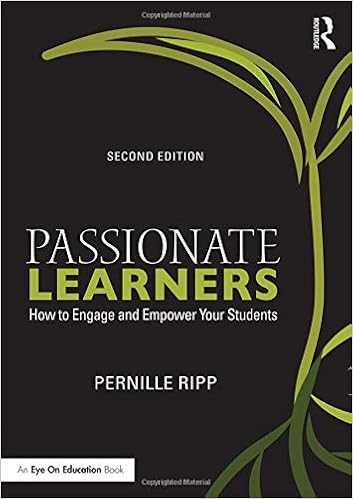
If you are wondering where I will be in the coming year or would like to have me speak, please see this page. If you like what you read here, consider reading my book, Passionate Readers – The Art of Reaching and Engaging Every Child.  This book focuses on the five keys we can implement into any reading community to strengthen student reading experiences, even within the 45 minute English block.  If you are looking for solutions and ideas for how to re-engage all of your students consider reading my very first book  Passionate Learners – How to Engage and Empower Your Students.  
Be the change, building community, community, Literacy, Reading, Reading Identity

A Few More Steps Toward a Successful Reading Experience for All

Voting ends for the Global Read Aloud 2019 in two days. In two days, they will be tallied, I will sit and ponder, feel the gravity of the decision and finally, at some point, make it official. The weight of it is sometimes paralyzing. After all, I am not just selecting a book to read aloud to my own students, but making the largest recommendation to the world as I can. Holding titles, and with them the creators behind the work, and telling the world that these experiences are worth every moment of their time.

It is not much different, in a way, from the way we hold books up in our classrooms day after day. How we share our opinions on social media. How we give our blessings any way we can. The weight it carries is the same; we shape our students’, our children’s, our own reading lives by the choices we make. By the texts we give our time to, by the texts we don’t. We tell the world what we value within every choice, within every recommendation, within every ounce of time we give something. By ever instructional minute we offer up in order to dive in, dig in, tease out.

So when I am asked how to help someone like reading more, I keep coming back to the choices we make. The finite amount of time we have for any kind of influence. How it is impossible for me to change someone’s feelings about reading, but what I can do is provide them with an opportunity to change them themselves. So where does the work begin for us because, as we know from so many of our readers, it is not enough to simply find a book that may change their mind, even if that is where the journey may start.

Think of your environment. What are kids surrounded by as you promote reading? Is it books (I hope)? Is it comfort? Is it calm? Is it safe? Reading carries a lot of emotions and so for a child to immerse themselves in a text they need different things. Some need slight noise, others need absolute quiet. Some need to feel safe because reading does not feel safe for them, in fact, for some being surrounded by books just feels overwhelming rather than good. Some need a friend, some need a corner. Knowing how kids feel within our environment is key to helping them adapt to it in order to create a successful reading experience.

Consider asking: Where do you read best? What do you need to feel comfortable so you can focus on a book?

Think of your requirements. What are kids expected to do once they are reading? What are they expected to do while reading? So often, it is not the act of reading itself that kids want to stay clear from, it is all of the work that they have to do with it. Also, how are readers being limited? What may seem as no big deal to us, such as telling kids they can only select books that are over 100 pages or they can’t read children’s book if they are older, may be the exact obstacle that stands in the way of a reader.

Consider asking: What makes you want to stop reading? What obstacles need to be removed in order for you to have a better reading experience?

Think of your community. Do you speak books? Does your classroom or school community? When we speak book we speak in shared experiences such as read alouds or book clubs, we pass books and other texts from hand to hand, we share recommendations not because we are forced to but because we want to. We find as many people to speak books to, including all of the other adults in the building, and then we try to come up with ways to include those outside of our school community to speak books with us as well.

Consider asking: Who do you speak books with? Who are your book people?

Think of your emotional investment. We have to recognize that for some reading is a reminder of everything they have failed at, that unless we protect the hope of being readers in all kids, then we may be inflicting additional negativity when it comes to the reading experiences we create. Trust and honesty then are pillars of a functioning reading community, and that includes kids who identify as kids who hate reading to still have a space within our community. So how are all readers handled? Are their identities honored and given space to change and grow. Are the small steps toward a mores successful experience being honored or only the big ones?

Consider asking: Who are you as a reader and how do you know?

Think of your reasons for reading. Are kids reading for points? For grades? To pass levels? To avoid punishment? Or are they reading because they find true value in it? Joy even? While extrinsic motivators certainly can cause a sense of urgency within a child to read, they are often short lived, and research shows again and again that the only rewards that truly change reading behaviors long term is to have more books and time to read. Not trinkets, grades, or achievement boards. Why do we then continue to gravitate toward extrinsic motivators? Because for some kids they do work in the short-term (and yes, short-term can be a whole school year), for some kids they seem to spark a change, yet, how often do those kids then stop reading the minute the program/reward/grades are removed? How many of the kids who were motivated to read to get a high score on the test are also motivated when there is no test to be taken? We do this a lot in education; implement short term solutions that do long-term damage. So instead of going for the “quick” fix, invest in the long-term building of a reading community, which yes may mean kids are slower to change their reading identities but it should mean a more meaningful long-term change is happening.

Consider asking: Why do you read? If programs are implemented ask: How do you feel about the program? Do you plan on reading over the summer – why or why not?

Think of your timeline. Just because a child is not liking reading more half-way through the year or even by the end of the year, does not mean it has all failed. It might just mean that it is going to take a lot more time. That is why continuation of shared reading beliefs is so important for kids and for the educational communities they are are in. If there is a foundational right to self-selected, teacher-supported, independent reading in the early years then that right should be carried through until graduation. It doesn’t help if we merely implement best practices for a few years and then forget all about them as children grow older. In fact, it is awfully hard to change reading behaviors and feelings all by yourself, and it often leads to an artificial change, one that is not sustained after they leave you. That doesn’t mean you shouldn’t try, but it does mean that you should be involving your broader school community in the work as well.

Consider asking: What are the reading rights of children every year?

So often when we really want kids to love reading, we forget to dig deeper into all of the components that go into creating meaningful reading experiences. In fact, this goes for so much in education. We implement and support short-term solutions that do not really change the foundational experience as much as they should and then wonder why it doesn’t work for all kids. But the change can start within the very questions we ask and we reflect on. So much of what I have learned through the years have come from our students. Have come from our team conversations. Have come from our community. So while all students deserve choice, access, time, and meaningful reading opportunities, they also deserve a safe community with an ongoing dialogue about how else their reading experiences can be shaped. And that starts with us.

Be the change, being me

On Forgiveness…

Black,                 Free Image

I have been thinking a lot about forgiveness. Not so much forgiveness in the sense of feeling at peace with the world, but instead the forgiveness we sometimes lack in education; the forgiveness of ourselves. While we spend our days often forgiving others for the things they say, the things they do, the slights that are bound to happen when we work with and around other human beings, we seem to forget to give ourselves the same treatment. To realize at the end of the day that we, too, are only human, and that as humans the best we can do is the best we can do.

I think of forgiveness more often as the days tick closer to yet another break in an already tumultuous winter. With all of the days off, with the weather driving us inside more than ever, we never quite seemed to settle into the lull of the winter routine, where we find comfort in the small moments shared within our learning spaces. Where we find comfort in the trust we have placed within the community to allow us to be the people we are. Instead, it felt rushed at times, forced at times, and sometimes as if we had altogether forgotten what the community that we had painstakingly built up really felt like.

And so as the children we work with at times seem to push us away harder than ever before, I have spent many nights reflecting on what else I can do. What else we can do? What now? What next? And I will admit, there are simply nights where I have come up shorthanded. Where I have realized that my bag of tricks has run dry and that for right now, there is nothing more new I can try to re-engage a disengaged child. There is nothing new I can try to help a child stay engaged, help a child learn, help a child read a book. It is a hard thing to swallow. After all, we are supposed to work daily miracles within our rooms, never giving up on a child, never resting until every child is learning, every child is reading, every child sees value in what we do, what we are together.

And yet, sometimes we don’t work miracles. Sometimes even the best of ideas fail. Sometimes the team cannot brainstorm anything else to to try. Sometimes even what has worked for every child before this one, fails. And we carry that failure with us as yet another added weight in already heavy load. We carry that failure as if it means that we have failed all of the children we teach, as if we will never be a good educator again.

Those who work on the fringes of education, those who sit in power, may tell us that the fault lies within us, the educators. That if we only gave more choice. That if we only gave more freedom. That if we only gave students more space to be who they are and not who we want them to be, then, then….they surely would learn. That if we just brought in more technology, if we only let them lead, if we only gave them the reigns, then, then…they surely would thrive. And yes, those truths ring loudly, that has been the journey I have been on with my students for the past nine years. There is so much to be gained when we have freedom, when education focuses around the individual and not around the group, when the explorations we do are led by students, created by students, and valued by students. There is so much to be gained when we create equitable spaces that are focused on the humanity of each individual and not just tests, homework, and grades.

Yet to always fault the educator with no mind for what is already in place is to dismiss the larger problem. That true education is a collaboration. That for students to really be invested in learning, they have to first be invested, and yes, that means feeling safe enough to invest. That we can provide amazing opportunities for self expression and for some kids it is simply not enough, right now.

So this week, I realized that I am only human and that perhaps others needed to forgive themselves too. That at some point, stepping away from a child who has actively refused every single opportunity we have provided to learn, to change the system, to engage somehow, is the only next step we have at that moment. And that stepping away does not mean giving up. That stepping away, for now, does not mean that that child cannot learn, that that child cannot re-engage, that that child cannot find meaning. But it does mean that right now, I am not the teacher they need, I need time to come up with new ideas, and I need to be okay with that. That perhaps what we all need is a break once in awhile to remind ourselves that we are not meant to be saviors, but instead the bringers of opportunities. And sometimes that means stepping away and forgiving ourselves.

If you are wondering where I will be in the coming year or would like to have me speak, please see this page. If you like what you read here, consider reading my book, Passionate Readers – The Art of Reaching and Engaging Every Child.  This book focuses on the five keys we can implement into any reading community to strengthen student reading experiences, even within the 45 minute English block.  If you are looking for solutions and ideas for how to re-engage all of your students consider reading my very first book  Passionate Learners – How to Engage and Empower Your Students.  

Be the change, being a student, being a teacher

Every Day

I have been thinking a lot about the way we show others that we trust them. About how we code switch between our different environments, how we let down our guard when we feel the safest because that is the only place we can truly just be without having to worry about the potential judgment we face within our uncensored self. How sometimes, when kids trust us the most it is when they show us the hardest sides of them. When they let us see their anger, their tears, their silence.

And I get it. We all carry our guards up, hoping that others will allow us to lower them enough and not reject us when we are the most vulnerable. I think of my journey on here, and how there have been times where I couldn’t believe I shared the thoughts and yet, somehow, somewhere they resonated with someone else.

I think of how long relationships take to truly form, even when we see the same kids every day. How some, right away, click with us and we move into comfort quickly, while others look from afar, not quite sure how to take us, to use us, to fit in with us.

I think of the ways students show us they trust us. How they let us into their identity and how they view themselves little by little. How they start to give us slivers of themselves in order to see how we will handle those parts, evaluating whether we will be able to handle all of them, if we will take care of them, or just use it as ammunition when they push us to our limits. When I tell my 7th grade students that I feel I have to earn their trust every year, I mean it. I don’t take it for granted, nor is it assumed. Yet trust is not always shown quietly.

I think of the kids who slam our doors. Who refuse every single trick we have. Who reject us purely out of determination. Who won’t even tell us how to make it better. How they are easy to see as troublemakers. How they are easy to discuss only in labels and incidents, rather than the child they really are. How despite their seemingly hurtful acts, how despite their sometimes loud emotions, they still need us there as a safe person, our rooms as a safe place to scream, to vent, to slam, to break.

Sometimes my students’ love language is yelled through clenched teeth. Sometimes their declaration of loyalty to us is written through swear words and exclamation points. Sometimes it takes us a moment to remember just what those emotions mask – kids who want ot be seen, to be heard, to feel safe. So the least I can do is recognize them for the full human being they are, even when the language they speak is at odds with what we would like to hear.

So every day, we say, “Welcome.” Every day, we say, “We’re glad you’re here.” Every day we remember that all kids deserve adults who remember that today is a new day, a new chance to continue to build something that wasn’t there before. That every day, no matter how it ends, marks the beginning of a chance to help every child feel safe, feel trust, feel home. And that every kids deserves that every day.

If you are wondering where I will be in the coming year or would like to have me speak, please see this page. If you like what you read here, consider reading my book, Passionate Readers – The Art of Reaching and Engaging Every Child.  This book focuses on the five keys we can implement into any reading community to strengthen student reading experiences, even within the 45 minute English block.  If you are looking for solutions and ideas for how to re-engage all of your students consider reading my very first book  Passionate Learners – How to Engage and Empower Your Students.  
books, Literacy, picture books, Reading

A Few Picture Books to Celebrate Women’s History Month

Last week, before the calendar switched to March, I changed our book displays in our classroom. Not because we stop celebrating Black history and excellence but because we wanted to add the component of females in history.

I was asked if I would share my list here, and while I don’t mind sharing it, I will say that it has holes. While I wanted to showcase an inclusive mix of picture books, I am still adding picture books that go beyond the well-known stories. I feel like there are many unknown women whose picture books are not on our shelves at the moment, so I am working on finding these for the future. I also want to continue to work on including more indigenous or First Nation stories, as well as stories of women who defy the narrow definition of their gender.

So what is gracing our shelves right now?

Image result for miss mary reporting
Image result for turning pages
Image result for viva frida
Image result for game changers picture book
Image result for ruby bridges book
Image result for counting on katherine
Image result for how the cookie crumbles
Image result for midnight teacher
Image result for i dissent
Image result for so tall within
Image result for drum dream girl
Image result for one plastic bag
Image result for girl running picture book
Image result for danza picture book
Image result for margaret and the moon
Image result for a computer called katherine
Yup – two books about the incredible Katherine Johnson
Image result for anything but ordinary addie
Image result for gloria's voice
Image result for the quickest kid in clarksville
Technically not nonfiction but it introduces/reminds students to Wilma Rudolph
Image result for brave girl
Image result for the world is not a rectangle
Image result for dolores huerta picture book
Image result for in mary's garden
Image result for are you an echo


Image result for wilma's way home
Image result for mama africa picture book
Image result for her right foot
Technically not a person
Related image
Image result for shaking things up
Image result for shark lady picture book
Image result for hillary rodham clinton picture book
Image result for rescue and jessica
Image result for heather has two mommies
Technically not nonfiction but representation matters as far as stories
Dorothea Lange: The Photographer Who Found the Faces of the Depression
Image result for i am jazz picture book
Image result for grace hopper picture book
Image result for malala picture book
Image result for dangerous jane
Image result for ada lovelace poet of science
Image result for side by side lado a lado
Image result for martina and chrissie

By no means is this an exhaustive list. We also have some of the picture books left out from last month that feature courageous women. If I had more space, I would have any more. Which are your favorite picture books for March?

being me

To the Moments

This is not a revolutionary post. One that will echo through our chambers as it brings forth the message of new. This is not radical, nor groundbreaking, but instead a gentle reminder to the world at large of what the small things can really do.

That when we take a moment, the moment, to say thank you, to acknowledge, to praise, the ripples that emanate may just one day turn into waves. May make the difference between a child who felt school was unsafe now is a place for her after all.

That when we go out of our way, come back to the way, of what it means to see how a child is trying, how a child is doing, what a child wants to be, we may just remind them that they are, indeed, all we need them to be.

So this is a thank you to the smiles and the hi’s. To the people who stand outside their classrooms, their offices, their schools and busses and every day greet the people with the loudest hello they can.

To the notes and the postcards, to the gotcha’s, and high fives. To the praise that matters and the shoulders that carry. To the scoot in’s and scoot overs. To the “Are you ok’s?” “I got this” and “Any time…” To the hugs, the goodbye’s, the thank you’s and taking the time. Every time. Any time.

A thank you to the quiet moments and the not so quiet. To the questions, the laughs, the aha’s and uh-oh’s.

But most of all, thank you to the people who saw our daughter for everything she was and not everything some wanted her to believe. Today, through your recognition, she started to believe it a little bit more, that she, too, is somebody worthwhile. Today, she saw for the first time in a really long time, what we have never lost sight of. A kid that matters. A kid that matters to others. A kid that is somebody.