books, Literacy, picture books, Reading

10 Picture Books I Cannot Wait to Share With My New Students

This Is Why I Teach
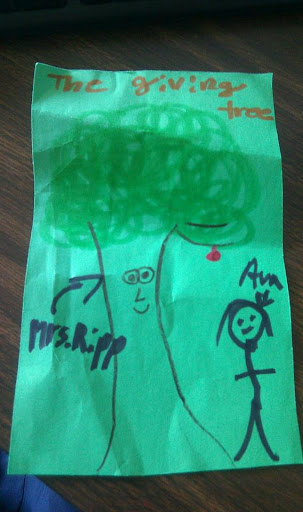
The drawing of me as the giving tree

I am excited to take part in the August Picture Book 10 for 10 event taking place all over the blogosphere today thanks to Mandy Robek and Cathy Mere.  So as this list needs little explanation, here are the 10 picture books I cannot wait to share with my new students.  (And, of course, there are about 100 more…)

Chu’s Day by Neil Gaiman – a more simple yet deep story is hard to find.  I love this book for how simple its message is, ilove this book for how funny it is, and I love this book because before I read it aloud I get to tell my new students about how Thea giggles every time Chu almost sneezes.  

Pete & Pickles by Berkeley Breathed – I fell in love with this book this summer after Carrie Gelson recommended it.  A deep story of love and friendship with simply beautiful illustrations.  I cannot wait to see how my students react to it.

Bluebird by Bob Staake– I never got wordless picture books until last year.  Now I love this book for how the students will be able to go beyond the pictures and tell the story in their own words.  And the message?  Oh my, what a message.

This Is Not My Hat by Jon Klassen – we love all of his books but this has been a favorite for a while now.  I think my students will find it just as funny as Thea does.

Open This Little Book by Jesse Klausmeier – we were lucky enough to see Jesse in person this summer and the way she pointed out all of the details in the illustrations and made the story come alive made me want to share this early with my new students.  I cannot wait to see which discussions this will lead to.

The Wolves in the Walls by Neil Gaiman – I love Neil Gaiman but there is a reason for that.  He writes such a variety of books, he is brilliant, and this book is scary and funny at the same time.  I use this as an all school secret read aloud every year and there is a reason it continues to be a favorite.

Boy + Bot by Ame Dyckman – I have been slightly obsessed with this book for about a year now, I don’t know what it is but it just makes me smile.  And it makes my students smile.  So one day very early on we will all settle in for the story of a beautiful friendship between a boy and a robot.

It’s a Book by Lane Smith – This book crack sme up every time I read it and I think my blog savvy students will as well.  I love the message of this book as it shows the power of a book and cannot wait to share it.

The Giving Tree by Shel Silverstein – This book takes on a deeper meaning every time I share it with someone.  I once had a student call me the giving tree and I cannot help but tear up a little every time I think of that.  I have yet to decide whether the tree is foolish or simply in love, I cannot wait to discuss it with my students.

Chrysanthemum by Kevin Henkes – My great friend gave me this book shocked that I did not own it or know it.  After I read it, I saw why this is a classic for any classroom as we build community and try to see how we all fit together in this new constellation.

These 10 books barely scratch the surface of what I cannot wait to share with my students, but these represent some of the first ones I will pull off the shelves as I ask them  to enjoy a tale, to sit back and listen, to discuss and explore the deeper meanings of these books.  Another year awaits, a new groups of kids await, and I can’t wait.

I am a passionate 5th grade teacher in Middleton, Wisconsin, USA, proud techy geek, and mass consumer of incredible books. Creator of the Global Read Aloud Project, Co-founder of EdCamp MadWI, and believer in all children. I have no awards or accolades except for the lightbulbs that go off in my students’ heads every day.  First book “Passionate Learners – Giving Our Classroom Back to Our Students Starting Today” will be released this fall from PLPress.   Follow me on Twitter @PernilleRipp.

mystery skype

Mystery Skype Jobs Created by My Students

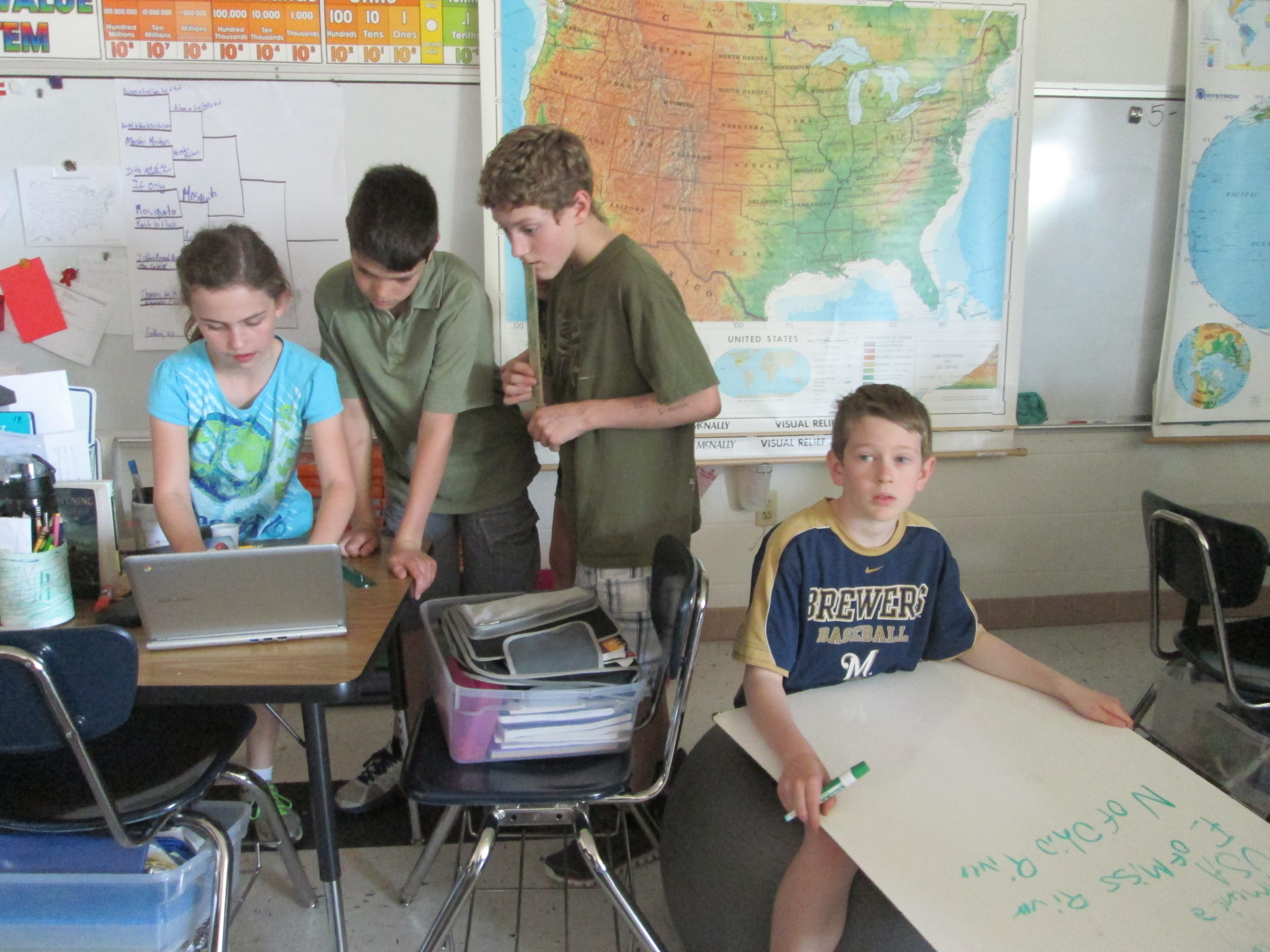
my students during a call
My students during a call

Last year was my personal best for Mystery Skype.  We did one almost every week, and by we I mean my incredible students.  They took ownership and pride in ding the calls quickly, professionally, and efficiently, and I often stood back in awe watching them unfold.  My kids were Mystery Skype masters by the end of the year and I look forward to start over with a new group of 26 students this year.

So it was only natural for my students to develop the original jobs into something that worked better for them.  So here you have an updated list of possible jobs for a great Mystery Skype call.

Greeter -1 student – Does exactly that: greets the incoming class by speaking about our class and going over the rules.  At the end of the call they are also the ones that thank for the call.  Once their job is done they merge into the think tank.

Questioner – 1 or 2 students – they are the kids that ask the yes or no questions, often it is beneficial if these kids have a decent grasp of geography and can come up with questions on the fly.

Filter – 2 kids or more – These kids act as a filter between the runners and the questioners assessing the questions that are coming their way.  They have to pay close attention to what answers are and what has already been asked as the think tank often misses an answer.  They can then use their common sense to filter the best questions to the questioners.

Answerer – 1 student – answers yes or no to the questions and should have a good grasp of geography.

Runners – 3 students – the runners are responsible for communication between all of the different posts and often wear signs or their shirts to identify them.  We love the runners because they keep the chaos down.

Google Mappers – 2 students – Use Google Maps to try to help with questions or find the answer.  Should be connected to think tank.

Wall map & atlas mappers – as many kids as you want – part of the think tank but are using any map tools they can to come up with more questions.

Lead thinker – the boss of the think tank – this kid needs to be a gentle leader that can keep everyone organized and on track.  They ensure the think tank runs smoothly.

Supervisor – 1 student – this student oversees the entire operation and takes notes on what works and doesn’t work.  They lead the debriefing we have after every Skype call to discuss what we need to work on and be proud of.

Note taker – 1 or 2 students – writes down all answers and questions during the call for easy access by filters and if any confusion occurs.

Tweeter – 1 or 2 students – these students are in charge of the backchannel whether through Twitter or TodaysMeet and add the extra layer of connectivity to the world live tweeting results and questions.

Reporters – 2 students – these two take pictures and notes throughout the call to then write a blog post on our classroom blog after the call is done.  That way we can show off all of the great calls we get to be a part of.

Often at the beginning of the year I ask students to try various jobs so that they can figure out which ones they are really good at.  I cannot wait to see how the kids do this year and if you want to do a Mystery Skype with us – reach out – school starts September 3rd!


Great Mystery Skype Questions to Get You Started 

So You Want to Do Mystery Skype

How to Do Mystery Skype

Uncategorized

A Little Bit of Hope and Luck…

photo (3)

7 weeks ago we got the biggest surprise of our lives; a positive pregnancy test telling us that our 4th child will be joining us at the end of February.  While unplanned, this child is so wanted.  And so when my body turned against me last week, we thought we had lost our little miracle.

24 agonizing hours later I got to see our little baby kicking , unaffected so far by the hemorrhage that I also have in my uterus.  And so begins a fight for this baby and its life.  While what I have comes in many forms, it tends to not be a big deal and yet my body has decided to make it a big deal.  Just within the last 7 days I have had 3 midwife appointments to check whether the baby is still alive.  Every time I have left these appointments so grateful for the fighter that continues to grow within me.

I have gone back and forth with whether or not we should share the news of my pregnancy.  I have wanted to scream it from the mountain tops but at the same time when there is no guarantee of success, I don’t want to burden others either.  And yet, I have to celebrate the miracle that has happened for us.  I want to make it public to tell this little baby that we believe that we will get to hold it in our arms come February.  That we will need every seat in our stupid minivan, that Brandon will need to build us a 5 bedroom house one day.

So I need a little bit of hope and good luck from all of you.  A little bit of good thoughts to tell this baby to keep fighting my stupid body which had no complications carrying twins but here sees to have met its match.  Just a little bit of love, a little bit of perseverance, so whatever lies ahead is something we can all get through.

Thank you,

Pernille

Be the change, reflection

What Is Our Definition of Normal?

image from icanread

Once in awhile words stop you in your track, you take a breath, and then realize just how important those words are, whether they were meant to be or not.  Last night as I sat in bed with a tired body after the twins’ birthday party, I turned on the PBS POV documentary “Neurotypical” and only 2 minutes into the movie, I heard these words….

“I had been abused and hurt so much by people trying to make me normal…”  says Wolf, an adult living with Autism.

Normal – what is my definition?  I immediately thought to my own children and what I deem normal behavior, whatever society deems normal.  And yet, I know how tainted my view of normal is just from my upbringing, my culture, my experience.  To be normal, you must fit in, but to fit in you must be like me.

Later, a young adult says, “…if people are normal they are allowed to act however  they want to some extent, but if people have a syndrome everybody feels like they need to improve them.”

Another punch to the gut as I realized the truth behind these words.  People who we deem “normal” we give plenty of leeway when it comes to what we expect as normal societal behavior, but the minute a child comes to us with a label of some sort our leeway decreases in a sense.  We expect them to play by our rules because our rules are what is normal.

So I get when parents refuse the labels for their children.  I get when my friends are hesitant to draw attention to a need their child may have.  I get why I look at Thea and wish for her to be normal in every way, just so society wont try to change her.  That is what normal has done to me.  I wonder what it has done to all of us?


conferences, new teacher, new year, Student-centered

How To Do Student-Led Conferences

Image from icanread

I seem to have written a lot about the why of student-led conferences but then have never given a step by step approach on how to do it.  Fresh in my mind from my webinar for SimpleK12 – here are the steps.  Use them as you wish.

First to the Why:

Let Them Speak – Why Student-Led Conferences Are the Right Choice

Now the How

Before you start:

  • Think about your reasoning; what are you trying to accomplish with them?
  • Determine if you want full or hybrid.  Full meaning all student-led with only a few minutes of teacher talk or hybrid meaning half and half between teacher ad student.  I do a mixture depending on the child and the time of year.
  • The age of the child, the make up of your district, and how crazy of an idea this is can all help you make your decision.

First Week of School:

  • Inform the students that they will be leading their own conferences  and why so that this does not come as a surprise to them later in the year.
  • This is an overall philosophy so make sure you have ways to gather their learning whether in journals, portfolios or some place for them to gather evidence.
  • Student-ownership of learning should be from day one.  A constant question in your classroom should be, “How are you doing and what do you need work on next?”
  • Plant the seeds for student goal setting and help them set goals starting now.  I start this on my beginning of the year student questionnaire.

Two Weeks Prior:

  • Have a classroom discussion to discuss the learning.  What have you explored since we started, what are major themes, where have we been heading?
  • Then discuss assessment.  How do you get assessed?  How do you assess yourself?  What are district assessment tools?  How do you know how you have been doing?
  • Discuss performance – how will the students assess themselves?  This can be daunting for some kids and so a class discussion or small group discussion is often a great way to get started.
  • Student self-reflection time – Students should have plenty of time to continue their reflection of themselves as learners.  This should be a continuation of what you have been doing since the first day.
  • Student preparation sheet – this sheet can be tweaked to fit your needs and I often have students bring this to the conference as a support.  I have a general one and a specific 5th grade spring preparation sheet.  I often project these and ask students for feedback and we tweak the form to fit their needs before I give them copies of this.  And this fall I actually updated my sheet – I like this one a lot better!
  • Start reminding parents that students are leading this and therefore must be present at their conference – I put it in newsletters and in general emails.

One Week Prior:

  • Check in with whole class – are there major questions or confusion that needs to be addressed?
  • Individual check-in with students.  “Walk me through your evidence and what you want to show your parents.”
  • Give them time to gather the evidence that they want to show their parents, make copies, find work etc.  I hand them a folder to keep it all in.
  • Think of ways you can showcase the classroom.  Last year we had QR codes parents could scan that would show off different videos from our classroom.
  • Continue to remind parents that students must be present.

Day Off:

  • Role-play a conference with a student in front of the whole class.  Often students are anxious about the experience, so doing a fishbowl demonstration really helps settle nerves and answer any last minute questions.
  • Have each child check their folders for everything they need.
  • At the end of the day, my students leave their folders and what they may need right on their table.  That way when they come in they can grab it and not waste any time.
  • Have students remind their parents that they must be present.  (It seems like overkill, but every year without fail a parent shows up without their child).

During:

  • Welcome and introduce the concept of student-led conference.
  • Showcase the parent list of questions  (I laminate a copy and leave it on the table) and encourage parents to jump in.
  • Let the student do their thing.

Final minutes:

  • Take the last few minutes to wrap up and address any parent concerns.  Ask if another meeting needs to be scheduled.
  • Hand over student questionnaire and parent questionnaire and ask them to bring it back the next day.
  • Repeat the students goals and make a note of them (I use one of my teacher sheets and always tell parents I will give them a copy of the sheet).
  • Make sure students leave behind their preparation sheets, these are great to pull out for the next round of conferences as they prepare for them and reflect back on the year.

That’s really it for me.  I have all of the forms I use on this page, please feel free to use and adapt to fit your needs.  If you have any questions, just reach out, my email is p (at) globalreadaloud (dot) com

new year, students

It’s Not the First Day That Is the Most Important – It is All the Others

image from icanread

August is upon us and I cannot help but giddily count down the days until the very first day of school.  Call it the curse of the teachers: we are still on vacation but our minds are drifting back to school weeks before we actually have to be there.  I cannot wait to see what this year will hold.  I cannot wait to figure out what we will do the first day of school.  I cannot wait to see what the students will think of me.

As much as I worry about that very first day of school and what we should do, I have started to realize that although the first day is important – first impressions always are – it is really what comes after that very first day that sets the tone for the rest of the year.

Students expect an exciting first day.  They, themselves, are often nervous and filled with energy, ready to see their friends, ready to hear what the year will hold, ready to meet their teacher.  That energy bubbles into a classroom and sustains it for the day.  That energy is contagious.  We do fun things, we set the tone, we explain and explore, and I always end with a challenge.  At the end of the day, I am exhausted and exhilarated, ready for an amazing year.  And I hope my students go home and tell their parents that 5th grade will be an incredible year.

Yet for me it is the next day that the true tone is set for the year and the days after that.  When the energy is diminished, students are starting to realize that summer is over and school is back.  Some have realized that they are more nervous than they thought and some may have even realized that their teacher is not what they thought they would be.  That is when we start to make our true impression.  When we no longer have time to do the fun beginning of the year activities, when we start to feel the pressure of everything we have to get done, when students start to show their true personalities, that is when the tone is set for the year.  That is when the students start to see who we really are and how we really will be as a teacher.

Anyone can fool kids for a day.  But no one can fool kids for a whole year.  So I ask you not what you are doing on the very first day but instead, what are you doing the rest of the week?  The rest of the month?  The rest of the year to set the tone?  That is where we should  be focusing our efforts.

I am a passionate 5th grade teacher in Middleton, Wisconsin, USA, proud techy geek, and mass consumer of incredible books. Creator of the Global Read Aloud Project, Co-founder of EdCamp MadWI, and believer in all children. I have no awards or accolades except for the lightbulbs that go off in my students’ heads every day.  First book “Passionate Learners – Giving Our Classroom Back to Our Students Starting Today” will be released this fall from PLPress.   Follow me on Twitter @PernilleRipp.