being a teacher, new year

Ideas for Working With the January Slump

http---www.pixteller.com-pdata-t-l-268942.jpg

We go back to school in 2 days.  Last night, I entered scores, sent a parent email and planned for the week ahead.  I realized that I was excited to go back, I always am, even though leaving my own children behind is bittersweet.  But I also realized that I was tired, nervous about the coming week because surely the students would be just as tired, perhaps a bit unmotivated, and maybe even unhappy to be back at school.  Knowing this I always treat January much as I treat September.  It is chance for us to get to know one another again, to recommit to the community we have built, to laugh, and to learn and to not just think that school is one more thing we just have to get through.

So how do we work through the January slump that sometimes happens?  A few ideas to help.

Bridge the past.  We will start with an honest discussion of the non-fiction picture book project they handed in before break, a reflection of some sort, and then they will get their assessments back.  We will take time to celebrate their accomplishments out loud but also set new goals.  Because many kids did just fine, but just fine will not change the world.

Make it special.  I should be doing a million things but choose to do a Mock Caldecott unit instead as we prepare for the ALA awards January 11th.  We love picture books in our classroom but have drifted away from reading them because of time constraints, so this week marks a recommitment to picture books but also to critical thinking as we try to predict who the winner and the honors books will be.  The other stuff will wait until after that.

Set the expectations.  On the first day of school, my students discussed their community expectations and we have since then lived by them.  Now is the time to refresh them because those kids I taught in September have changed a lot.  So once again, I will ask them to decide how our classroom should sound, feel and look like, give them time to discuss, and give them to time recommit.

Acknowledge the energy.  Too often we get upset when students are tired and yet, who can blame them?  Their bodies are in vacation mode as much as ours.  So instead of getting mildly upset, I will embrace it; more time for quiet, more time for reading, while also picking up the pace ever so slightly every day.  And yes, I will continue to be that annoyingly positive teacher who pretends not to be tired every day because the energy of the classroom starts with us.

Try something new.  January is the perfect time to start something new, whether it is just new to these students, or new to you.  You know each other, you have your routines somewhat down, and the classroom could use a boost.  So do something you haven’t done before this year; we will finally start blogging in the middle of January and I cannot wait, I have missed it a lot this year.

Bring others in.  January is also great for cross collaboration as it allows the students to think about your class in a different way.  So reach out to someone and see if they are up for doing a project together, whether it be in your school, or outside of your district.  Simply having the component of others involved is an automatic energy infuser.  We will be doing the 2030 Global Schools Project with the integrated literacy class at our school.  (And the rest of the world).

Clean up.  I took a day this break to clean our classroom.  Dust the bookshelves, declutter books, wipe off the tables and take down displays.  When the students arrive on Monday they will enter a fresh and inviting classroom with books eager to be read.  Our rooms get as worn down as our brains, so take the time to set up it again; note, that does not mean spending tons of time on new things or new displays.  Make it feel fresh again.

Protect what you hold dear.  Much like I took time to clean our classroom over break, it is time to clean up our to-dos.  Dust off those things you hold dear as a class and give them more time, declutter from stuff that is unneccessary and try to work it in a new way.  Look at your plans and your schedule and recommit your focus on those things that matter most to your kids.  A few months in is when we often get bogged down by all of the to-dos rather than the things that really matter.

Re-ignite your own passion.  A deflated January can often lead to the famous February and March slump so now is your chance to surround yourself with others who want to share ideas, try new things, and lift each other up.  Join something just for you.  Whether it is a class you want to take, a book you want to read, or even joining an online book club like the one we are doing for Passionate Learners on Facebook; add something that will make you fall even more in love with teaching and give you new ideas to try.

I know I am not the only one thinking of how to make January successful?  What are your great ideas?  What will you be trying?

If you are looking for a great book club to join to re-energize you in January, consider the Passionate Learners book club on Facebook.  We kick off January 10th.  

Be the change, being a teacher, being me, new year

Do Something

http---www.pixteller.com-pdata-t-l-267255.jpg

I have always loved December 31st, the last day of the year, our oldest daughter’s birthday.  While the promise of a new year lies ahead, the old is not quite finished, not quite over and the wonder of it all hits me.  Look at all that has happened in the past year.  Look at all we have done.

And yet, there is so much still out there to accomplish.  So many changes.  So many choices to make.  Because too often we sit back and wait for others to decide, we wait for others to fix, to mend, to invent, and to create.  We wait for others to share their ideas because we are unsure of our own.  We think to ourselves, “if only…” but the words never leave our mouths.  And it’s a waste.  It is a shame.  It is our own fault that we wonder what change could really look like, what our ideas may become, when we choose to remain unsure.  When we choose to remain silent.

So my wish for the new year is a simple one; do something.  Something to make it better.  Something to make it worth more.  Don’t sit there and wait while others do, change the world yourself.  Find your comfort zone and take a small step out.

Be the change.  Be the voice.  Be the person that does.  I know I am going to try.

If you are looking for a great book club to join to re-energize you in January, consider the Passionate Learners book club on Facebook.  We kick off January 10th.  


aha moment, being a teacher, MIEExpert15, Personalized Learning, student choice, Student dreams, student driven, student voice, Student-centered

The Five Tenets of Personalized Learning

Cross-posted from the Corwin Connect Blog.

I did not know what I was doing when I decided to change the way I taught. I did not know that somewhere out in the education world there was already a term floating around for some of the ideas I had for change, a term that would capture so many of my ideas in one. It was not until a few years of blogging about the changes I had made that someone left a comment on my blog suggesting I learn more about personalizing learning because it seemed like that is what I was talking about. That day, as I googled the term I realized that in my endeavor to create passionate classroom, I had indeed been personalizing learning for all of my students. I was seeing them all as individuals and trying to cater our multi-faceted classroom to fit all of their needs; personalization at its core.

Yet, now when I see all of the discussion of personalized learning, I do not really recognize the term anymore. Over time the term has become associated with technology-laden, self-paced learning, preferably on a device, with little adult teaching and much more student autonomy. While I recognize the inherent good in those components, those are not the powerful aspects of personalized learning and I worry what will happen to those that attempt to personalize learning if they think this is all it is. Because personalizing a child’s learning is so much more than a device, or even a student figuring things out by themselves. Instead it is about knowing your students so well that you can help them navigate their learning journey. That your students have ample opportunity to find out how they learn best and then implement this knowledge as they master the curriculum we have to cover. It means that every child has voice in what they do and that the teacher knows their students well enough to help them grow.

When I wrote my book, Empowered Schools, Empowered Students, as well as Passionate Learners, I kept thinking about the type of environment that I would have thrived in as a child and that my own children would thrive in now. I kept coming back to a few tenets that used to be a part of personalized learning but seems to have gotten lost in the powerful PR campaign of Personalized Learning in 2015. Those tenets are so simple that we often forget to plan for them or even consider them as we craft our curriculum.

The five tenets of personalized learning:

  1. Student Voice.

So much of what we do is about promoting the voice of our students and yet while we ask the world to listen to what our students have to say, we often forget to listen ourselves. Therefore, for any personalized learning journey to be successful, we must start to ask the tough questions. I ask my students what they dislike about school, what they dislike about the subject I teach. I ask them when they started disliking school and why. It is not just to have students feel validated in their emotions, it is so I can work with the demons they bring into our learning environment. If a child dislikes school because they feel powerless then I can combat that dislike by giving them power back. If a child dislikes school because they find it irrelevant well then that becomes my mission for change. If we do not ask our students the tough questions, and also figure out what part we play in their disengagement, then we cannot change it, we cannot personalize. So the true journey into personalized learning begins with getting to know your students really well and then acting on the information they tell you.

  1. Student Choice.

Choice, of course, is a must in any type of class or curriculum, and yet choice to some means chaos or that every child is doing their own thing. Choice can vary depending on the day, on the task, on the curriculum to conquer. Choice does not mean that everything needs to be a free-for-all but instead that choice is always present throughout the day. Choice starts with choice in learning environment. It is time to stop dictating where students sit in the classroom. It is time to stop dictating that all student sit while learning. Choice involves how they learn something, so for some that may mean by listening to a lecture, by working with a partner, by using technology to uncover information. Students must be exposed to many ways of learning so they can discover how to navigate all of the ways, as well as determine how they learn best. Choice also becomes in how they show mastery. I always have a laid out path for students, as well as one where they build their own. Students needs change and so their show of mastery has to change as well. Finally, there must be choice in when they show mastery. Children learn at different rates and so we must find ways within our curriculum to allow for re-application of content if a child had not mastered a standard earlier. Yes, there can be deadlines and cut-off dates, but please allow a child to circle back to a previous standard if they have grown in it.

  1. Student Planning.

This is one of the biggest things for me when I think of personalizing learning. We cannot plan our lessons in isolation anymore, at least, not all of the time. We can certainly be the gatekeepers of where we need to end up and we can also bring our ideas to the table, but at some point, please allow for students to plan with you. It is simple yet so powerful when we discuss our learning goals and then plan together how we will reach them. I have always been inspired by the ideas that my students have brought to the table, as well as been educated on how students learn best. You do not have to do it all of the time, but take the chance and ask students how they would like to cover something, I guarantee you will be surprised at just how much wherewithal the students will have as they work through this process with you, as well as the increased engagement and buy-in simply because they crafted part of the lesson.

  1. Student Reflection.

When I moved to 7th grade, I remember feeling the rush of the curriculum constantly. With only 45 minutes to teach, and oh so much to cover, there was no way we would ever have time to reflect; yet, I discovered the true power of reflection on the days where my lessons were met with disdain. It is easy to dismiss an eye roll or a groan, but when a majority of a classroom participates in such displays, it is our cue to stop and ask why. So reflection became a natural tool for us in 7th grade as we personalized the curriculum that we had to cover. I had to find out how my students felt they were doing. I had to find out what their path forward would be, and that started with a journal and a prompt. Sometimes rather than a written reflection we would speak; as a group, in partnerships or one on one with me. The prompts did not change much throughout the years; how are you doing, what have you learned, what are you working on now? And yet as the conversations grew, so did their understanding of what they needed and where they had to grow. Personalization to me means that a child knows how they learn best and that is not something I can tell them. I can offer them hints and I can point out things they may have missed, but at some point during our very busy days, reflection has to be done so that students can decide their own path.

  1. Student Action.

This final piece is one that gets a lot of attention it seems because this is where personalized learning becomes a thing of beauty; when our students start to change the world. When our students make, create, and have authentic purposes. Yet, student action, to me, is an inward piece as well. Yes, I want students who have a voice in the global education debate, that is why they blog, but I also want students who know how to advocate for themselves as human beings, and as learners. I want students who can successfully navigate tricky conversations and come out feeling like their voice was heard and respected. I want students who when they see a problem, do not just think about it, they do something about it. Whether that problem is a global one or a personal one. So involving students in action, setting up situations where they can see the impact they may have, guiding them through tough conversations, becomes part of personalized learning as well. I have realized that part of my job as a teacher is to help students discover the tools they already have to help them learn best, even if they are faced with an environment that allows for little personalization. I need to help them discover what they can do to make it better for themselves and for others. I need to help them see that their words have power as well as their actions.

So if you are starting on a journey of personalized learning, keep these tenets in mind. Sure, add on the technology but do not make it the focal point. That is not the point of personalizing, however, it can enhance it. Personalizing learning is the key to keeping students engaged and curious, but it also means that there is not one system to follow. Instead, spend the time to truly discover who your students are and help them find their path. Be the teacher that made a difference, not just because you cared about them, but because you taught them how they could be better learners. Our jobs have never been just about covering curriculum and personalizing learning reminds us of that.

If you are looking for a great book club to join to re-energize you in January, consider the Passionate Learners book club on Facebook.  We kick off January 10th.  

being a teacher, books, Literacy, picture books, Reading

10 More Picture Books to Add to Your Collection

I cannot do a best of the year book list.  There are too many that I have loved.  There are too many I have yet to discover.  A book always gets left off and I wonder why I forgot it.  So instead, I will continue my tradition of offering up some great new additions to our classroom library.  I have been on a year long mission to get as many great picture books into the hands of my students, and so here is the latest batch that we have been reading aloud, discussing, using, and sharing.

When I wanted to send a picture book to Australia, I knew that I wanted to send one by Wisconsin native Pat Zietlow Miller.  So I sent the  book Wherever You Go.  Not only does it have the best message, but I have also found that every age group I have read it to has loved it.  It is a new classic in my opinion.

My school is very focused on creating an inclusive environment for all students and so I have been on a mission to include more picture books that speak to all of my students.  Jacob’s New Dress by Sarah and Ian Hoffman is a book a child may need, I don’t need, but in case they, I want it to be there for them.

As my students created their own non-fiction picture books I needed strong mentor texts to show them just how amazing this genre can be.  Growing Up Pedro by Matt Tavares is an incredible example of a sports focused nf picture book that does not read like a long list of facts.  This is a book that will be read and used for years to come.

The same goes for the historical nf picture book Lillian’s Right to Vote by Jonah Winter and Shane W. Evans.  In it we learn about the fight for voting rights for African Americans as Lillian walks up the stairs to cast her vote.  Masterfully told, this one moved me to tears.

Picture books don’t usually make me cry, but this one did as I read it aloud to my own children.  Eve Bunting is a master storyteller, Fly Away Home is a book I have used many times.  The pairing here in Yard Sale with Lauren Castillo’s beautiful illustrations is really out of this world, and the conversations, the inferring that can happen because of this book is powerful.

Can Kadir Nelson do anything wrong?  If You Plant A Seed not only has a great message for all ages, but the illustrations are breathtaking.

Groundhog’s Dilemma by Kristen Remenar and illustrated by Matt Faulkner is not just a book for Groundhog’s Day.  It is a book for all ages that need to discuss what peer pressure can do to you and how to navigate friendships.

This one, Once Upon an Alphabet by Oliver Jeffers, is the reason Oliver Jeffers is a Global Read Aloud Contender for the picture book category.  While perhaps hard to read aloud in one sitting, it is definitely still worth sharing with others as each little story will make you laugh or wonder.  I also cannot wait to see what type of writing might be inspired by this book.

I love a narrator that speaks to their reader, it gets me every time.  Snappsy the Alligator (Did Not Ask to Be in This Book) by Julie Falatko and illustrated by Tim Miller is laugh out loud funny, and yet, is bound to also lead to a great conversation about how to deal with others.  How many of our students could need a little with that?

How many of us have taught students whose parents or other people they know are in jail?  Visiting Day by Jacqueline Woodson once again means that we have a book that can start hard conversations.  That students can find themselves in even if they do not want to share about their own experiences.

There are always more books to highlight, to share, but for now I will leave it at these 10.  To see other lists of favorite books, go here, I try to share as much as possible.

aha moment, being a teacher, books, Literacy, Reading

How Do You Know Which Books To Purchase? A Few Tips to Help Build A Better Classroom Library


http---www.pixteller.com-pdata-t-l-264644.jpgSeveral years ago, I had a classroom library that was filled to the brim with books.  Every shelf crammed.  Every space occupied, yet every independent reading time it never failed; a student would ask if they could please go to the library to find a book.  I didn’t think twice about it.  Of course, they could go to the library, where else would they get books?  One day it finally did strike me as odd; why in the world were the students not going to our library first to see all the books there.  There were great books on the shelves, there had to be, right. I mean, I am sure there was, they just had to find them first.

And that was exactly it; our library was full.  Full of left over books I had picked up when other teachers weeded.  Full of books picked up from our local goodwill store and garage sales.  A few random selections from Scholastic bonus points that did not really fit my students.  Full of books inherited when the teacher before me had left the room.  Full of books with torn covers, broken spines, and even a few missing pages.  The library was full and not a child was reading.

So I did the unthinkable; I threw out books.  I got rid of all of those books that no child had read for years.  The ones with the covers falling off, the ones that I wouldn’t even read.  I got rid of the old, the broken, and even sometimes the new.  The too mature.  The unwanteds and the forgotten.  And then I stood back and looked at my very empty library, wondering what to do.  Because now I had an empty library and my problem was not solved.  There still were no books to read.

Research says different things on how many books we need in our classroom libraries.  Some say 20 books per child.  Others say between 300-600 total.  But the number doesn’t matter if the books are not good.  So instead of focusing on quantity, I figured that was a lost cause any way since I had not won the lottery,  I focused on quality.  I focused on getting high interest books in the hands of my students when I could.  And slowly but surely our library grew and it continues to do so to this day. So how did I figure out which books to purchase?

I asked the students. Paying attention was not enough so  I started by asking them which books they liked to read.  Something so simple that had the biggest results.  They wrote me lists so I knew what to focus my limited budget on.

I handed them Scholastic catalogs.  For all of those books that we had not read yet, I needed to know what looked good to them.  So they would hand me catalogs back with books circled.  If more than one child circled a book, I knew it would probably be a good buy.  I also took better advantage of all of the bonus point deals from Scholastic and I told parents what my plans were.  More parents purchased books so we could earn more points, and when we fell short, I funded it because let’s face it, that’s what we do as teachers.

I asked them to weed.  While I had done the initial purge without them, I asked them to go through the library once more.  However, this time books could be saved by students.  So if a child wanted to pull a book, another child could argue to have it kept.  This also had the added bonus of familiarizing the students with the books we already had and led students to talk more about books.

I started to read their books.  I had been reading books of my own, but adult books, which meant I had nothing to recommend to my students.  So I started by asking them what I should read and then I did.  When I finished a book, I would book talk and leave it out for the kids to read.  Sometimes I would hand it to a specific student that I thought of while I read it.   Slowly, we started a community of book talkers that continues to this day.

I used the public library.  Those librarians know a thing or two about amazing children’s books so I started to pay attention.  What did they have on display?  What did they recommend?  I would also borrow books and read them before I decided what to buy.  I still do this a lot with the picture books I buy.  I also used our local book stores more; what did they have on display?  What was popular for them.  Use the knowledgeable people that surround you.

I became better friends with my own school librarian.  I have had the honor of working with some incredible librarians that love books as much as I do.  And yet, I hardly ever spoke about books with them.  What a wasted opportunity.  So find out who the book lovers are in your school and befriend them if you have not already.  Talk books whenever you can.

I fell in love with The Nerdy Book Club.  There was my tribe of people who  loved books, who had to recommend books, who knew just what books to invest in.  To this day, the Nerdy Book Club is one of the only blogs that gets delivered straight to my inbox so I don’t miss a single post.

I paid better attention.  I started to really notice what my students were reading, what they were abandoning.  We started to speak more about the books we loved and why.  Then I would go forth and try to find other books like that.  Creating a community of book lovers is something that takes time, takes commitment, and will not just happen on its own.   The students have so much to share if only we ask them.

I found the best kept secret.  I still remember the moment I was told about Books4Schools, a dark warehouse here in Madison, WI that sells brand new overstock books for less than $2.  Yup.  And not random titles either but books my students want to read by authors like Cassandra Clare, John Green, Rick Riordan and so many others.  While their only physical location is here, they also sell online and just as cheaply.  Trust me, the deals are worth it and their stock changes all of the time.

4 years ago I realized that while our library was full, it was not great.  It was not something the students could use.  It was not something they wanted to use.  So I embarked on a journey to get better books in the hands of my students.  I found a better way to spend the precious money we have to get books for our libraries.  And it worked.  Slowly, our library has grown to now encompass more than 2,000 books.  Books that the students want to read.  Books that are worn out from use and not from age.  Getting rid of books is one of the best decisions I made for out library, what has been yours?

To see some of our favorite books, go here.

To read more about what we do as readers in our classroom, go here.

If you are looking for a great book club to join to re-energize you in January, consider the Passionate Learners book club on Facebook.  We kick off January 10th.  


aha moment, Be the change, being a teacher, new year

Purpose and Re-Purpose

http---www.pixteller.com-pdata-t-l-263112.jpg

In all of our clutter and madness.  In all of our piles of things.  In all of our new toys, books, and unnecessary items, I seem to have found my peace.  Mind you, it was not like that this morning when we left the house upside down, Christmas morning and a visit from Santa seems to do that to you.  But now, after organizing, sorting, cleaning, and taking the time to appreciate all that we have, I am at peace.  I am happy.   Because the truth is; we really have so much.  And not just in terms of gifts or newness, but in the things that still work.  In the furniture we love.  In the things that make this house a home.

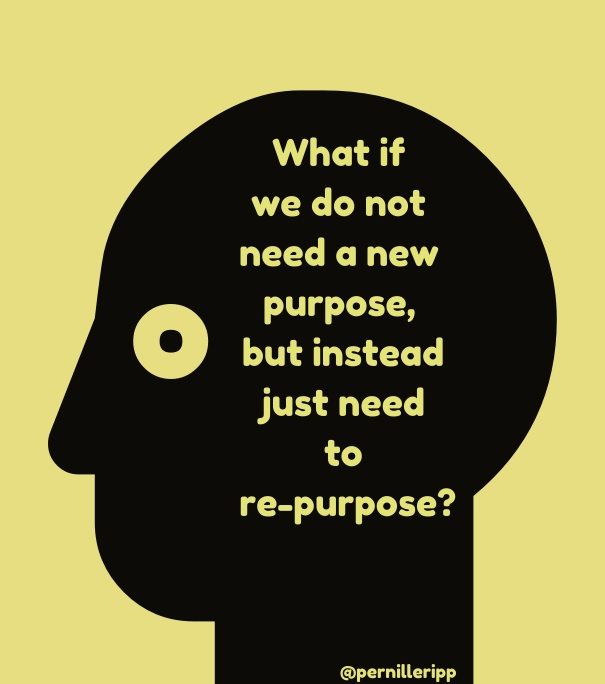
So while this morning, I thought we needed more furniture, more bins, more things to control all of the new, I now know that it is not new that we need, it is better use of the old.  It is the time to see the beauty in what we already have and find better uses for it that suits the family we are now.

And so I look to my classroom as well.  How often we are enticed by all of the new and shiny.  How often I assume that I need to do even more when my teachings seems off kilter, our metaphorical house a mess?  That because the students surely will come back from break dragging their feet a bit, I better ready with all of the glitz.  All of the glam.  And in that need for reinvention is an assumption,  I must throw out my ideas and replace them with something they have never tried before.  Because what we are doing must be inherently broken.  That what we are doing is beyond salvage simply because the components have been used before.

Today reminded me that this assumption is not true.  That rather when something has been done the same way for so long, we tend to lose the purpose of it.  That because it is now old, we no longer see its full potential.  The wonder of it all that drew us to it in the first place.

So as I think ahead to the new year, as I contemplate ever so slowly of what my students need right now, I think of what I can re-purpose.  Of what I can re-use but in a way that will make us love it again.  In a way that will make us understand something deeper.  Of what I can do to make it feel like a new classroom when they return, and yet also feel like theirs.    Because it always has to feel like theirs or my purpose would be lost.

If you are looking for a great book club to join to re-energize you in January, consider the Passionate Learners book club on Facebook.  We kick off January 10th.