being a teacher, collaboration, global, skype, student voice

Mind Your Skype Manners – Tips for Better Skype Calls

http---www.pixteller.com-pdata-t-l-245510.jpg

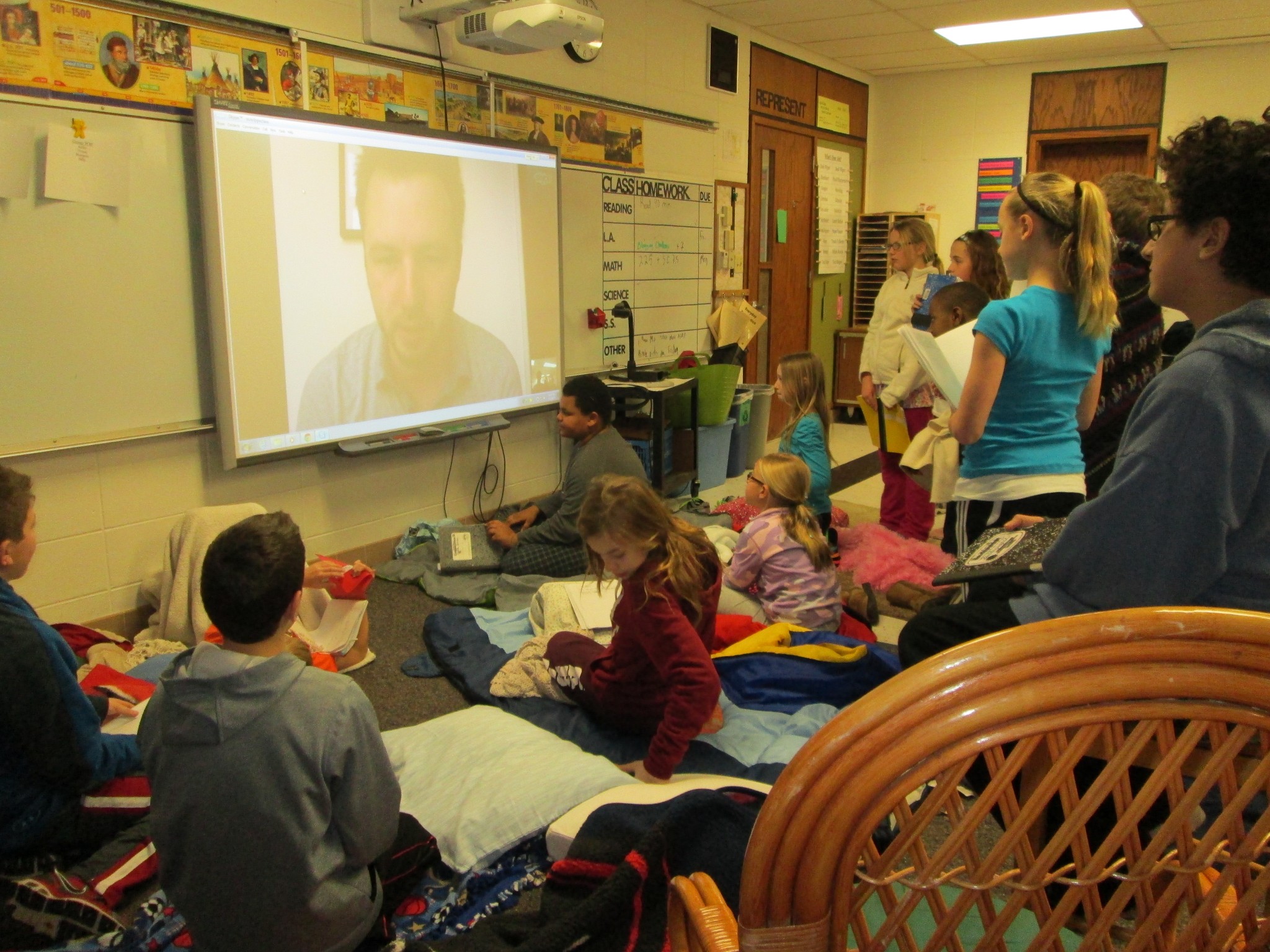
For the past many years, my students have Skyped with classrooms around the world as we have tried to let others into our class.  We have shared our love of books through the Global Read Aloud, we have guessed their location through Mystery Skype, and we have asked questions as we did market research for projects we are doing.  Skype is a part of our classroom and I would not want it any other way.  But every year I have to remind my students how to act while Skyping, to mind their Skype manners as we proceed.  Not because they are poorly behaved but because for some, this is the first time they have worked with others in this way and there are things they may not be aware of.

So what follows are our tips for minding your Skype manners.

Make your purpose meaningful and clear.  We not only discuss how we will be Skyping but why and what the expected outcome should be.  This small discussion allows my students to see the potential of the experience they are about to have, rather than just roll with it and assume it will be great.

Have roles or questions prepared.  For Mystery Skype, each of my students has a job that they have picked and are held accountable for, for other Skype calls they have prepared questions in advance.  They write them on notecards and hand them to me and I hand them back when it is time to ask it, at the end we always leave time for extra questions to be asked that have popped up as we listened.

Have a way to introduce yourself.  I usually give students this job and some time to prepare something about our class.  This also serves as a reminder of what the purpose is of the call as they restate that.

Brief the audience on body language.  I have a wide lens camera when we Skype which means a lot of the kids can be seen in the background.  We therefore discuss what our body language should look like and also what is visible on camera.  The students know that if their shoulders are slumped or head is down, even though it is just because they are realizing, it may send a message of disinterest to others.

Mind your tone.  My 7th graders are pretty funny but sometimes their sense of humor does not translate well via Skype.  We therefore always a have a discussion of tone and the words we choose before we Skype.  A gentle reminder is often all that they need to be aware of how they sound and to speak in a way that suits our audience.

Introduce yourself always.  The students always start out by saying their name and then maintaining eye contact throughout.

Stay while listening.  Often the natural reaction of a student is to ask their questions and then sit down, however, we think it is important to stay and listen to the whole answer then thank the speaker.

Give them a task during besides just listening.  I have had students doodle during a class, take notes, or even have a backchannel on Todaysmeet.  This is not just to share our learning but to focus students in.  Even the most exciting Skype call can wear a kid out, so having them do something while they are listening helps them stay engaged and will make the call more meaningful.

Debrief.  After the call we tend to just move on, yet, part of the magic of Skype is discussing what you learned.  After our Mystery Skypes the students debrief in an attempt to get better.  Other calls can be debriefed via conversation, small group aggregation of information and then crowd sourcing information into a Padlet or Google doc.  Do something after the call to acknowledge what just happened rather than just move on.

Finally, don’t be afraid to end a call.  I have only  had to end a call once in our years of Skyping but I am so glad I did.  My students were trying to be funny but were really coming off as rude.  I simply told the other teacher that due to their behavior we had to end the call.  We then discussed as a class what to do better next time.  It was a great lesson for the kids, particularly when the tables were turned a few weeks later and they felt the other class was being rude to them.

If you are looking for great Skype opportunities, join the Skype in the Classroom site or become a member of the Global Read Aloud Facebook page, you can post requests on both.

 

being a teacher, collaboration, global

Would You Like to Be Our Readers?

As part of our epic non-fiction picture book project, we are looking for students to share these books with.  The books have been created in Google slides so you will not need to print anything or send anything, just read them and fill out a form.

If you would like to receive some of our finished picture books to give feedback on and your teach 4th grade or younger, please fill out the form.  Picture books will be shared at the end of December and you will have until mid-January to provide the feedback.

being a teacher, collaboration, global, Literacy, MIEExpert15, picture books, projects, Reading, skype, student choice

Our Epic Nonfiction Picture Book Project Take 2

For the past few years, my students have written nonfiction picture books for younger audiences around the world.  Last year, I decided to share the lesson plan to serve as inspiration for those who wanted it, and this year I thought I would do the same.  While the foundation is the same, the process has been tweaked a bit for a more meaningful experience for the students.

The goal of the project is rather simple; create a 15 to 25 slide/page nonfiction picture book meant for a 2nd or 3rd grade audience on anything you wish to write about.  Throughout this project we have been able to successfully marry tech tools with writing, as well as use Skype, Padlet, Twitter and other interactive tools.

Why this project?  Because within it we have been able to work on:

  • How to take organized notes in a way that works for them.
  • How to write a paragraph and all of the myriads of lessons that are attached to that.
  • Grammar!  Spelling!  Punctuation!
  • How to find legal images.
  • How to cite sources, including images, books, and websites.
  • How to uncover reliable sources (yes, there is a place for Wikipedia in our research).
  • How to search the internet better.
  • How to conduct market research using Skype to ask 2nd or 3rd graders what they want to read and how they want to read it.
  • How to rewrite information in our own words.
  • How to do design and layout on a page to make it inviting.
  • How to create good questions.
  • Exploring our own interests.
  • How to write assessment rubrics.
  • How to work as a peer mentor group.
  • How to monitor self-engagement.

So a few details about the project:

  • This is a 3-week long project, anchored by a 10 or so minute mini-lessons every day and then work time the rest of class.
  • Mini-lessons have centered around how to take notes ( I showed them 3 different ways), how to research well, how to write paragraphs, how to rewrite information, and anything else we have had to address.
  • Students were able to ask questions to 2nd and 3rd grade classrooms via Skype to do market research, and incorporate that feedback into their project.
  • I am using this blog and Facebook to find classrooms that will assess the final product.  If you would like to be one, please fill out the form at the end of the post.  Those that sign up to give us feedback, fill out this Google form.
  • Students create their books in Google Slides for easy access for all (we check out Chromebooks), as well as easy design and layout.

Major Changes for this year:

The addition of Google Classroom.

This year we have been using Google Classroom to post tools, create the project, as well as use as a gathering point.  This addition has made it much more manageable as far as giving students the information they need, as well as seeing where students are.  If you have not looked into Google Classroom, this is a great project to use it for.

The Peer Mentor Group.

Students are in peer mentor groups as of today.  These groups are meant to be support groups that also help hold each other accountable.  Students gave me three names; a friend they know well, someone they kind of know, and a name for someone they would like to know.  I then made the groups puzzling out their requests.  Groups are between 2 and 4 people are will be used almost every day as an informal check-in.

The shortened timeline.

Last year we did this project for 6 weeks and although the students stayed fully engaged, we shortened it to 3 because we realized we could achieve the same deep engagement with a shortened product.  It also means the students are using their time better because they know every minute counts.

The actual lesson plan:

Expectations:

  • Finished product should be a 15 to 25 page book, created in Google Slides,  that not only includes 4-5 or so “chapters/sub-topics” but also has a glossary, table of contents, works cited, front and back cover, as well as an about the author.
  • Font size of text should be at least 20.
  • Students will use at least one print research material and supplement with reliable internet sources.
  • We will use the website Easybib.com to cite all of our sources which will be done in conjunction with tech tools.  Cross collaboration is a great idea here.
  • We will spend time in class researching, writing, as well as sharing our work.  Students should be able to finish this in class if time is spent wisely.  

Sample:  Will be shown in class and linked to here.

Modifications/Support provided:

  • Some students will be invited to work in small groups with me and/or support teachers.
  • Graphic organizers and templates can be provided for those who need to follow a format.  To access them, please go to this Google presentation and make a copy as needed.

Mini-Lesson Materials:

Every day, we will focus on a mini-lesson meant to bolster the skills and needs of the students.  The following mini-lessons will be taught (in order):

  1. Exploring NF picture books; what are their text features and why are they important?  Template for this discovery can be found here.
  2. What do you want to teach the world?  Narrowing down topic and finding research materials.  Brainstorming research questions to guide their reading.  
  3. Who is your audience?  What do we know about 2nd and 3rd graders? Preparing for our market research Skype call.  Creating a Padlet with what we think we know about 2nd and 3rd graders reading preferences.  An example can be seen here.  Students also meet in their peer mentor groups to share their topics, their questions and what they are excited about.  
  4. Skype call to classrooms, during the call students will take notes for themselves and afterwards we will update our Padlet with what we know now.  Research time reading their books.
  5. Taking 3 column notes in notebook or Google docs.  Example template can be found here.  More information on this type of note-taking can be seen here
  6. Taking notes on notecards and providing graphic organizers for the notes.  (I glued 6 envelopes into Manilla folders and then laminated them many years ago.  These work well for students because they can use them to organize their notes in sub-topics and can write on the folders using dry erase markers.)  Here is what I share with them as an example.
  7. Using Diigo as a way to take notes (refresher from Tech tools).
  8. Unscrambling a paragraph – parts of a paragraph  (example taken from here)
  9. Fill in the main idea and conclusion – found here
  10. Informal to formal paragraph – found here Alternate is writing a sample paragraph
  11. Teach to your partner, checklist can be found here
  12. Table of contents – what does it do, what does it need?
  13. Glossary – what does it do, what does it need?
  14. Self-assessment, peer edit if they want to and review, checklist can be found here
  15. Turn in 

That’s it, pretty much.  Feel free to modify/adapt/share.

If you would like to receive some of our finished picture books to give feedback on and your teach 4th grade or younger, please fill out the form.  Picture books will be shared at the end of December and you will have until mid-January to provide the feedback.


authentic learning, global, projects, students

Want to Be Our Audience?

My fantastic 7th graders are working on short choral poetry performances and would love a real-live audience.  Well not live, but actual kids to watch their short videos and then give them feedback on their performance.  We are looking for 4th grade and lower to assess us, videos will be shared via Google Drive and feedback will be given via a short Google Form.  This is open to anywhere in the world.  Videos will be posted next week and then we would love feedback by the following Monday, November 9th.

If you are interested, please fill in the form below and you will receive a link with the videos when they are available, you can do as many as you would like.

being a teacher, global, Reading, students

The Future of Literacy

I always knew that I would find my calling among books.  From my childhood bicycle trips straight across town to fill up a bag at the local library, to the constant book in my hands asking for my attention, the nights spent reading under the covers after my lights should have been out.  Books seem like they have always been a constant in my journey and now, as a literacy teacher, I feel like I have come home.

Right now is an exciting time to be doing anything with reading and writing.  With new technology bringing the world into our classrooms, amazing books being churned out daily, and the incredible amount of knowledge that exists a few clicks away, it is an exciting time to be a book lover and a literacy teacher at the same time.  It appears that now may just be the very best time to look ahead, to predict what is coming, and to cherish what we have right now.  So I think the future of literacy will center around 5 themes that all very much interconnect to provide us with an even bigger opportunity to create passionate learning environments.

Theme 1:  Global Collaboration.  I have to start with something that is so near and dear to my heart; global collaboration within our literacy programs.  Students are no longer limited to contained experiences within our classrooms but can instead read aloud with the world, create products to share with others, create awareness, or simply work on a project with a classroom across the globe.  Teachers in isolated locations can still be part of a global collaborative network using whichever tools they have access to.  Why does this matter?  Because we are teaching generations of children who need to function within a world that is truly at their fingertips at all times.  No longer is group work contained to just being able to work with kids from their own community, but instead it can focus on developing skills needed to be an international citizen.

Theme 2:  Meaningful Technology Integration.  For a long time I struggled with good integration of technology into my literacy instruction but I have found now that a few tools support the instruction in our classroom in a way that wasn’t possible before.  So tools that allow students to read in a multitude of ways like e-readers are embraced, although print books are not ignored  We use apps on our devices to not just record what we read, but suggest, review, and ask questions about our reading.  Writing can occur both traditionally or in electronic format depending on the purpose, as well as the audience, and the process desired.  Literacy researchers, experts, and other professionals can be accessed via social media allowing us to have constant professional development.  And students can connect with other readers around the world, as well as authors and content experts.  We truly live in a time where technology is enriching our literacy classrooms, not just creating more work for us.

Theme 3:  Student Voice and Choice.  This has for too long been limited to what we allowed students to tell us, but with visionary leaders like Donalyn Miller and passionate literacy teachers across the globe paving the way; our students voices are finally beginning to be heard!  This means that creating rich literacy environments start with the needs and desires of the students.  No longer are their voices dismissed when it comes to reading choice, reading style, and also product creation, but instead their ideas are embraced, enhanced, and placed into curriculum when possible.  Why does this matter?  Because our students have for too long become disenfranchised due to teachers telling them what to read, what to talk about, and dismissing their desires.  In the future of literacy, student voice and choice will take its rightful place alongside the amazing literacy research we have access to that drives our instruction.

Theme 4:  Authentic Purpose and Audience.  Students should no longer be creating just for the teacher or for the class, instead the use of technology allows us not only to have a “real” audience, but also to create products that have an impact.  Student words can change the world around them and so teachers are finding ways to use their literacy programs to create a real change, rather than create for fictitious purposes.   Simple tools such as Skype, Kidblog, or WriteAbout means that students no longer create in a vacuum but instead can get authentic responses and feedback on their work, thus allowing them to be “real” creators.  Students no longer have to wait for when they leave school to have an impact on the outside world, we can use the tools we have to do so right away.

Theme 5:  Teaching the Students You Have.  This one may seem crazy, but what I mean is that we are taking the curricula that districts are purchasing for us and adapting it to fit the needs of our students, rather than assume that the program will fit all of our children.  This is powerful because I do not teach the same students as Lucy Calkins, Kylene Beers, Kelly Gallagher or any of the other great literacy experts.  I teach my students, and those students change every year, which means that the way I use our curriculum has to change as well.  More and more districts are seeing the need for some type of personalization so that all student needs’ can be met.  It used to be just teachers doing what they felt students needed, and oftentimes hiding the fact that they were personalizing it, but now there seems to be an upswing in letting teachers adapt program and being proud of it!

The future of literacy depends on us.  We are told that the kids aren’t reading, the kids aren’t writing, and some kids don’t even want to come to school.  It is up to us to create real change.  It is to us to make the future come alive now, not wait and hope for someone else to lead the way.  The future starts today.

Hat-tip to John Spencer for this post

I am a passionate teacher in Oregon, Wisconsin, USA but originally from Denmark,  who has taught 4th, 5th, and 7th grade.  Proud techy geek, and mass consumer of incredible books. Creator of the Global Read Aloud Project, Co-founder of EdCamp MadWI, and believer in all children.  The second edition of my first book Passionate Learners – How to Engage and Empower Your Students” is available for pre-order now.   Second book“Empowered Schools, Empowered Students – Creating Connected and Invested Learners” is out now from Corwin Press.  Join our Passionate Learners community on Facebook and follow me on Twitter @PernilleRipp.

being me, global, MIEExpert15, mystery skype, student voice

A Few Ideas for Using Skype in the Classroom

There are technology tools that come along and make your day easier, that make your day better.  There are technology tools that integrate themselves so seamlessly into your lessons that you soon forget what life was like before.  There are tools that you know you can rely on whenever you need them.  And then there are tools that encompass all that and oh so much more.  Tools that elevate your teaching ideas to places you never thought they could have gone.  That’s how I feel about Skype.  Skype and I have been faithful friends for the past 16 years, ever since I moved to America, but our relationship really deepened 5 years ago when I brought it into the classroom.

So why has Skype been such a central piece of my classroom?  Because it is free, efficient, easy to use, and opens up a world of possibility that I never could physically bring into my classroom, yet through its power and immense network I can.  Skype simply makes what we are doing better.  It gives us audiences, authors, experts.  It connects us with places around the world and gives my students a way to change the world.

So what are some of our best ideas?

Students speak to author Adam Gidwitz

How about using Skype to do market research?  We did just that in our epic nonfiction picture book project where the students had to write a book catered to a K and 1st grade audience.  So voila, through the magic of Skype we spoke to several classrooms throughout North America and learned what we need to learn to make our books so much better.

How about speaking with an author?  This has always been one of my favorite ways to use Skype since so many authors speak to classrooms either completely free or for very cheap.  It is powerful for students to see the genius behind their most favorite books and only heightens their experience with the book.  Did you know that the incredible Kate Messner has a list of authors who Skype for free?

How about working on geography skills while building community?  That is exactly what playing Mystery Skype has done for my students.  If you have never tried this simple guessing game, please make sure you plan one this year.  They are so easy to plan and incredible to be a part of. This is always one of the most favorite things my students do throughout the year.

How about having students teach others how to do something?  My students have used Skype to teach others how to blog and how to play Mystery Skype.  They have been teachers for other classes and other teachers.  Think of the power in that!

How about using it to share book recommendations?  As summer nears, my students are adding books to their “Plan to read” lists and a great way to get more suggestions is by scheduling Skype calls with other students eager to recommend great books.  This is a great way to get new suggestions both for my students and for my own classroom library and it seems to hold more power when it is a student-to-student recommendation rather than just me book-talking.

How about bringing an audience to you?  It would cost a lot of money for my students to visit an elementary school to perform or speak, but via Skype our audience can come to us.  So whenever the chance exists, I try to bring in a live audience through the camera.  Having the live audience ups my students’ performance and gives us a way to connect with others.

How about learning about other cultures?  I think we often think that every call has to be planned out and structured but sometimes just giving students tim e to  speak to other students can be exciting within itself.  One of my classes spoke to a school in inner-city New York, something I did not think would mean much to them because it was not out of the country, but the experience rattled them.  They could not believe how different their school and community was from theirs.  That call cemented something that I had been telling them all year but that they didn’t quite believe; America is a very diverse nation indeed.

How about to raise awareness?  My students have used Skype calls to raise awareness about the “R” words, bullying, and other issues near and dear to their heart.  Again, by providing them with a platform to spread their message that extends beyond our classroom walls, they see the significance that their words may carry.

And finally, how about to learn something more?  With the massive network of experts that Skype In the Classroom provides it has never been easier to bring in someone who knows more than me to help the students learn.  All I have to do is search for what I need and I can almost always find someone who matches that.  I love showcasing new fields of information to the students, and they love getting to ask even the weirdest questions.

I am a passionate teacher in Oregon, Wisconsin, USA but originally from Denmark,  who has taught 4th, 5th, and 7th grade.  Proud techy geek, and mass consumer of incredible books. Creator of the Global Read Aloud Project, Co-founder of EdCamp MadWI, and believer in all children.  The second edition of my first book Passionate Learners – How to Engage and Empower Your Students” is available for pre-order now.   Second book“Empowered Schools, Empowered Students – Creating Connected and Invested Learners” is out now from Corwin Press.  Join ourPassionate Learners community on Facebook and follow me on Twitter @PernilleRipp.