As summer continues here in the Northern Hemisphere, I am excited to move into my next free Masterclass focusing on developing and supporting an individual student reading identity. This is the work I have been invested in with my students for the past six years in particular and I am so excited to offer others a deep dive into all of the components that we integrate into the curriculum as we try to create and maintain experiences that center on the individual student’s journey in reading. These sessions will be live as well as recorded for later access if the times do not work for you.
This masterclass is in 4 parts:
July 8th at 11 AM PST – Passionate Readers: The Art of Reaching and Engaging Every Child.
This first 1-hour session is focused on the birdseye view of the entire year, the research behind why student identity needs to be at the core of our work as well as practical ways to start or continue the focus on reading identity. This will also focus on how to do an all-district or school reading audit and how we can align practices better so that students are not victims of an educational lottery where some get access to meaningful reading experiences that center on personal reading, and others do not.
July 15th 1:30 PM PST – But They Still Hate Reading: Establishing and Cultivating a Personal Reading Identity- Part 1.
July 22nd 11 AM PST – But They Still Hate Reading: Establishing and Cultivating a Personal Reading Identity- Part 2
July 29th 11 AM PST – But They Still Hate Reading: Establishing and Cultivating a Personal Reading Identity- Part 3.
These three parts will focus on all of the components that make up our year together: Creating and maintaining an inclusive book collection, supporting independent and joyful reading, reflection and goal setting throughout, scaffolds and supports we can use to help kids whose reading experiences have been negative, using book clubs as a meaningful way to discuss the world, individual reading challenges, and of course, how to help students find space for reading in their life outside of school. The three sessions will take place on the following dates. This is an invitation into the work I do behind the scenes, the work my students take on, as well as planning for a virtual or hybrid school start.
While the sessions will take on the form of presentations, there will be office hours to go along with them. These office hours are meant for questions, discussion, resource sharing, as well as anything else related to the sessions. These are also free, but not recorded.
The final masterclass after this one will be embedding authentic choice and voice as we start the year together with students. It will be focused on all of the things I am trying to wrap my head around as we prepare for our new year together. The information for those can also be seen on the website and sign up will be open soon.
Also, if your district or conference are interested in bringing me in virtually throughout the school year, please see information here. I have been supporting teachers remotely as they plan for meaningful literacy instruction in a virtual and hybrid model throughout the summer and would love to help others as well.
Moving to America at the age of 18, gave me a whole new education. An education in privilege, in control, in power, and how to know your place. To pursue your dreams but only if others see you as worthy of that dream.
Becoming a teacher in the American public school system has been one of my greatest joys but also one of my biggest frustrations, my biggest moments of failure, of regret. The power handed those of us with teaching degrees is immeasurable; I can continue the systemic inequities of the structures we work within, or I can learn, listen, question, dismantle, disturb, and create an education that is truly for all kids. I didn’t know that when I started as an educator, my own privilege awarded me blinders and ear muffs. But 10 years ago I started to wake up, a little at a time, although not fast enough, and I recognized that how I used control as a way to ascertain my power in the classroom meant that not all kids could thrive, that not all kids were cared for. That my classroom might have said “Welcome” but those were shallow words. And it was echoed in the curriculum we did and how I helped students grow, how I used choice, how I used rewards and punishment.
And so I started to change the way I taught, the way I thought of education, of my own power within the classroom. I immersed myself in the expertise and wisdom of others who have been on this journey so much longer than I have, I started to ask my students questions I should have been asking from the start and I started writing this blog; sharing my thoughts out loud, inviting others on the journey as I stumbled through and tried to create an education that might work for all kids. A shared experience that would center on the identity of each child rather than the curriculum. It is the work I continue to do and will for a long time. I continue to stumble through on this journey, I continue to share on here, I continue to learn and grow from others while offering my own journey up and now I have been invited by CUE and Microsoft to share through their channels as well as a way to invite you into the journey.
And so I invite you into a conversation surrounding the writing we do in our classrooms with students and how we can use storytelling not just as a way to teach standards but to help students examine and find power within their own identity and story. To come along with me as I share the questions we discuss in our community, the writing we do, and also the resources I have learned from so perhaps you can learn from them as well. So if you have space in your life or a desire to go on this journey with me, please go here to register
The Masterclass will be three parts much like the other masterclass I have done this summer, you can join live or access the recording when it is posted here. I will also be finishing up Embedding Authentic Choice and Voice. part 3 this week, on Thursday at 11 AM PST.
Posting this today, I also know that not everyone is in a place for PD or perhaps that this is not the type of PD you want to immerse yourself in, this is okay. The world is rightfully continuing to need our attention and perhaps you are putting in your energy elsewhere or fully taking a break. I know I have been taking many breaks the last few weeks as I plan for actions in the fall and right now, but for those of you who want to learn with and from me, please know that there will be several offerings all the way through summer.
Live office hours will start up next week – my first drop in one is on the 22nd at 8 AM PST. This is a great opportunity for you to bring problems of practice and we can brainstorm together for an hour or so. If you participate in the Global Read Aloud, you can also use the office hours to brainstorm with me or just ask questions.
All of these sessions are free and the sessions are recorded (office hours are not) so even if you can’t or don’t want to be there live, you can access them later.
The schedule for the rest of the summer’s free PD from me looks like so:
Sessions:
6/17 7 AM PST – Masterclass: Passionate Writers Pt1
6/18 10:30 AM PST – Choice and Voice Pt 3
6/24 7 AM PST – Masterclass: Passionate Writers Pt 2
8/13 7 PM PST – Repeat Masterclass: Embedding Authentic Choice and Voice as we get ready for a new year Pt 1
8/20 7 PM PST – Repeat Masterclass: Embedding Authentic Choice and Voice as we get ready for a new year Pt 2
8/27 7 PM PST – Repeat Masterclass: Embedding Authentic Choice and Voice as we get ready for a new year Pt 3
Office hours:
6/22 – 8 AM PST
6/28 – 8 AM PST
7/2 – 7 PM PST
7/5 – 8 AM PST
7/12 – 8 AM PST
7/19 – 8 AM PST
7/26 – 8 AM PST
7/29 – 7 PM PST
8/7 – 8 AM PST
8/15 – 8 AM PST
8/16 – 8 AM PST
8/23 – 8 AM PST
I hope I can be of service through these sessions. I hope to see some of you there.
If you are wondering where I will be in the coming year or would like to have me speak, please see this page. I offer up workshops and presentations both live and virtually that are based on the work I do with my own students as we pursue engaging, personalized, and independent learning opportunities.I also write more about the design of my classroom and how to give control of their learning back to students in my first book, Passionate Learners.
I didn’t want to let a global pandemic stand in the way of gathering the titles of the amazing books my 7th graders loved this year. This is the fifth year that my students have gathered what they deem the very best books that they read this year and shared their recommendations with the world. As always we have favorites that seem to pop up every year, but this year we also had a lot of new titles join the mix.
As always, I loved seeing what made the cut because I simply could not do the work I do without the help of these incredible books. Some of these are fine for all 7th graders, some are more mature, I am including them all so that you can make your own decision. All parents are informed of the range of books that are present in our classroom library so that students can choose something that speaks to them. Not all of these books are in my library but are books that the students have found and read independently.
It was interesting to see just how many of these books I myself had read and book-talked, as well as how many have been favorites two or more years in a row. There were also many of these books that were book-talked by more than one student such as Until Friday Night, Yummy, Scythe, and the Mortal Instruments. Yet this also seemed to be the year where students continued to read about stories that they may not be familiar with themselves, however, despite my book talks, there are still certain gaps in what our students are loving. I hope you find their recommendations helpful. This year, they created a slide to speak about their choice. Scroll down to see the list.
Other things I noticed were:
The most requested book was Long Way down by Jason Reynolds, followed closely by any of Angie Thomas’ books, Children of Blood and Bone by Tomi Adeyemi, and the whole Scythe series by Neal Shusterman.
High school drama books that had a romantic twist were in heavy rotation.
So were free verse books and graphic novels.
Social justice books continue to carry a deep impact and are passed from hand to hand.
Kids reading interests range widely, some students gravitated toward more traditional literature this year while others solely devoured lighthearted middle grade – this shows the incredible need for a broad and inclusive selection for all of our students.
I have gathered the list for shopping purposes at Bookshop.org – a fantastic website that partners with independent booksellers and pays them a higher percentage for anything they sell than Amazon. So please consider using them when ordering books.
Without further ado, here they are as reported by my 74 seventh graders this year
The Call of the Wild is a short adventure novel by Jack London published in 1903 and set in Yukon, Canada during the 1890s Klondike Gold Rush, when strong sled dogs were in high demand. The central character of the novel is a dog named Buck. The story opens at a ranch in Santa Clara Valley, California, when Buck is stolen from his home and sold into service as a sled dog in Alaska. He becomes progressively feral in the harsh environment, where he is forced to fight to survive and dominate other dogs. By the end, he sheds the veneer of civilization, and relies on primordial instinct and learned experience to emerge as a leader in the wild.
Sixteen-year-old Bri wants to be one of the greatest rappers of all time. Or at least win her first battle. As the daughter of an underground hip hop legend who died right before he hit big, Bri’s got massive shoes to fill.
But it’s hard to get your come up when you’re labeled a hoodlum at school, and your fridge at home is empty after your mom loses her job. So Bri pours her anger and frustration into her first song, which goes viral . . . for all the wrong reasons.
Bri soon finds herself at the center of a controversy, portrayed by the media as more menace than MC. But with an eviction notice staring her family down, Bri doesn’t just want to make it–she has to. Even if it means becoming the very thing the public has made her out to be.
Insightful, unflinching, and full of heart, On the Come Up is an ode to hip hop from one of the most influential literary voices of a generation. It is the story of fighting for your dreams, even as the odds are stacked against you; and about how, especially for young black people, freedom of speech isn’t always free.
Jason tumbles into a quest to save a magical in this #1 New York Times bestselling start to Brandon Mull’s Beyonders fantasy series.Jason Walker has often wished his life could be a bit less predictable–until a routine day at the zoo ends with Jason suddenly transporting from the hippo tank to a place unlike anything he’s ever seen. In the past, the people of Lyrian welcomed visitors from the Beyond, but attitudes have changed since the wizard emperor Maldor rose to power. The brave resistors who opposed the emperor have been bought off or broken, leaving a realm where fear and suspicion prevail.In his search for a way home, Jason meets Rachel, who was also mysteriously drawn to Lyrian from our world. With the help of a few scattered rebels, Jason and Rachel become entangled in a quest to piece together the word of power that can destroy the emperor and learn that their best hope to find a way home will be to save this world without heroes.
For seventh grader Mila, it starts with an unwanted hug on the school blacktop.
The next day, it’s another hug. A smirk. Comments. It all feels…weird. According to her friend Zara, Mila is being immature, overreacting. Doesn’t she know what flirting looks like?
But it keeps happening, despite Mila’s protests. On the bus, in the halls. Even during band practice-the one time Mila could always escape to her “blue-sky” feeling. It seems like the boys are EVERYWHERE. And it doesn’t feel like flirting–so what is it?
Mila starts to gain confidence when she enrolls in karate class. But her friends still don’t understand why Mila is making such a big deal about the boys’ attention. When Mila is finally pushed too far, she realizes she can’t battle this on her own–and finds help in some unexpected places.
In a future where the Population Police enforce the law limiting a family to only two children, Luke, an illegal third child, has lived all his twelve years in isolation and fear on his family’s farm in this start to the Shadow Children series from Margar.
Kek comes from Africa. In America he sees snow for the first time, and feels its sting. He’s never walked on ice, and he falls. He wonders if the people in this new place will be like the winter – cold and unkind.
In Africa, Kek lived with his mother, father, and brother. But only he and his mother have survived, and now she’s missing. Kek is on his own. Slowly, he makes friends: a girl who is in foster care; an old woman who owns a rundown farm, and a cow whose name means family in Kek’s native language. As Kek awaits word of his mother’s fate, he weathers the tough Minnesota winter by finding warmth in his new friendships, strength in his memories, and belief in his new country.
For generations, four Clans of wild cats have shared the forest according to the laws laid down by their ancestors. But the warrior code has been threatened, and the ThunderClan cats are in grave danger. The sinister ShadowClan grows stronger every day. Noble warriors are dying–and some deaths are more mysterious than others.
In the midst of this turmoil appears an ordinary housecat named Rusty… who may turn out to be the bravest warrior of them all.
Sixteen-year-old Starr Carter moves between two worlds: the poor neighborhood where she lives and the fancy suburban prep school she attends. The uneasy balance between these worlds is shattered when Starr witnesses the fatal shooting of her childhood best friend Khalil at the hands of a police officer. Khalil was unarmed.
Soon afterward, his death is a national headline. Some are calling him a thug, maybe even a drug dealer and a gangbanger. Protesters are taking to the streets in Khalil’s name. Some cops and the local drug lord try to intimidate Starr and her family. What everyone wants to know is: what really went down that night? And the only person alive who can answer that is Starr.
But what Starr does–or does not–say could upend her community. It could also endanger her life.
One touch is all it takes. One touch, and Juliette Ferrars can leave a fully grown man gasping for air. One touch, and she can kill.
No one knows why Juliette has such incredible power. It feels like a curse, a burden that one person alone could never bear. But The Reestablishment sees it as a gift, sees her as an opportunity. An opportunity for a deadly weapon.
Juliette has never fought for herself before. But when she’s reunited with the one person who ever cared about her, she finds a strength she never knew she had.
Brooklyn, 1998. Biggie Smalls was right: Things done changed. But that doesn’t mean that Quadir and Jarrell are cool letting their best friend Steph’s music lie forgotten under his bed after he’s murdered–not when his rhymes could turn any Bed Stuy corner into a party.
With the help of Steph’s younger sister Jasmine, they come up with a plan to promote Steph’s music under a new rap name: the Architect. Soon, everyone wants a piece of him. When his demo catches the attention of a hotheaded music label rep, the trio must prove Steph’s talent from beyond the grave.
As the pressure of keeping their secret grows, Quadir, Jarrell, and Jasmine are forced to confront the truth about what happened to Steph. Only, each has something to hide. And with everything riding on Steph’s fame, they need to decide what they stand for or lose all that they’ve worked so hard to hold on to–including each other.
Magnus Chase, a once-homeless teen, is on a death-defying quest across the Norse realms, literally. As a resident of the Hotel Valhalla, this son of the god Frey is now one of Odin’s chosen warriors. Magnus and his friends, Hearthstone the elf, Blitzen the dwarf, Samirah the Valkyrie, and other heroic characters must use all their wits and special talents in order to defeat fearsome giants, lethal creatures, and meddlesome gods in order stave off Ragnarok.
Can you love someone you can never touch?
Stella Grant likes to be in control–even though her totally out of control lungs have sent her in and out of the hospital most of her life. At this point, what Stella needs to control most is keeping herself away from anyone or anything that might pass along an infection and jeopardize the possibility of a lung transplant. Six feet apart. No exceptions.The only thing Will Newman wants to be in control of is getting out of this hospital. He couldn’t care less about his treatments, or a fancy new clinical drug trial. Soon, he’ll turn eighteen and then he’ll be able to unplug all these machines and actually go see the world, not just its hospitals.Will’s exactly what Stella needs to stay away from. If he so much as breathes on Stella she could lose her spot on the transplant list. Either one of them could die. The only way to stay alive is to stay apart. But suddenly six feet doesn’t feel like safety. It feels like punishment.What if they could steal back just a little bit of the space their broken lungs have stolen from them? Would five feet apart really be so dangerous if it stops their hearts from breaking too?
What if all the crushes you ever had found out how you felt about them.all at once? Sixteen-year-old Lara Jean Song keeps her love letters in a hatbox her mother gave her. They aren’t love letters that anyone else wrote for her; these are ones she’s written. One for every boy she’s ever loved-five in all. When she writes, she pours out her heart and soul and says all the things she would never say in real life, because her letters are for her eyes only. Until the day her secret letters are mailed, and suddenly, Lara Jean’s love life goes from imaginary to out of control.
How hard do you have to shake the family tree to find the truth about the past? Fifteen year-old Rae Kerrigan never really knew her family’s history. Her mother and father died when she was young and it is only when she accepts a scholarship to the prestigious Guilder Boarding School in England that a mysterious family secret is revealed. Will the sins of the father be the sins of the daughter? As Rae struggles with new friends, a new school and a star-struck forbidden love, she must also face the ultimate challenge: receive a tattoo on her sixteenth birthday with specific powers that may bind her to an unspeakable darkness. It’s up to Rae to undo the dark evil in her family’s past and have a ray of hope for her future.
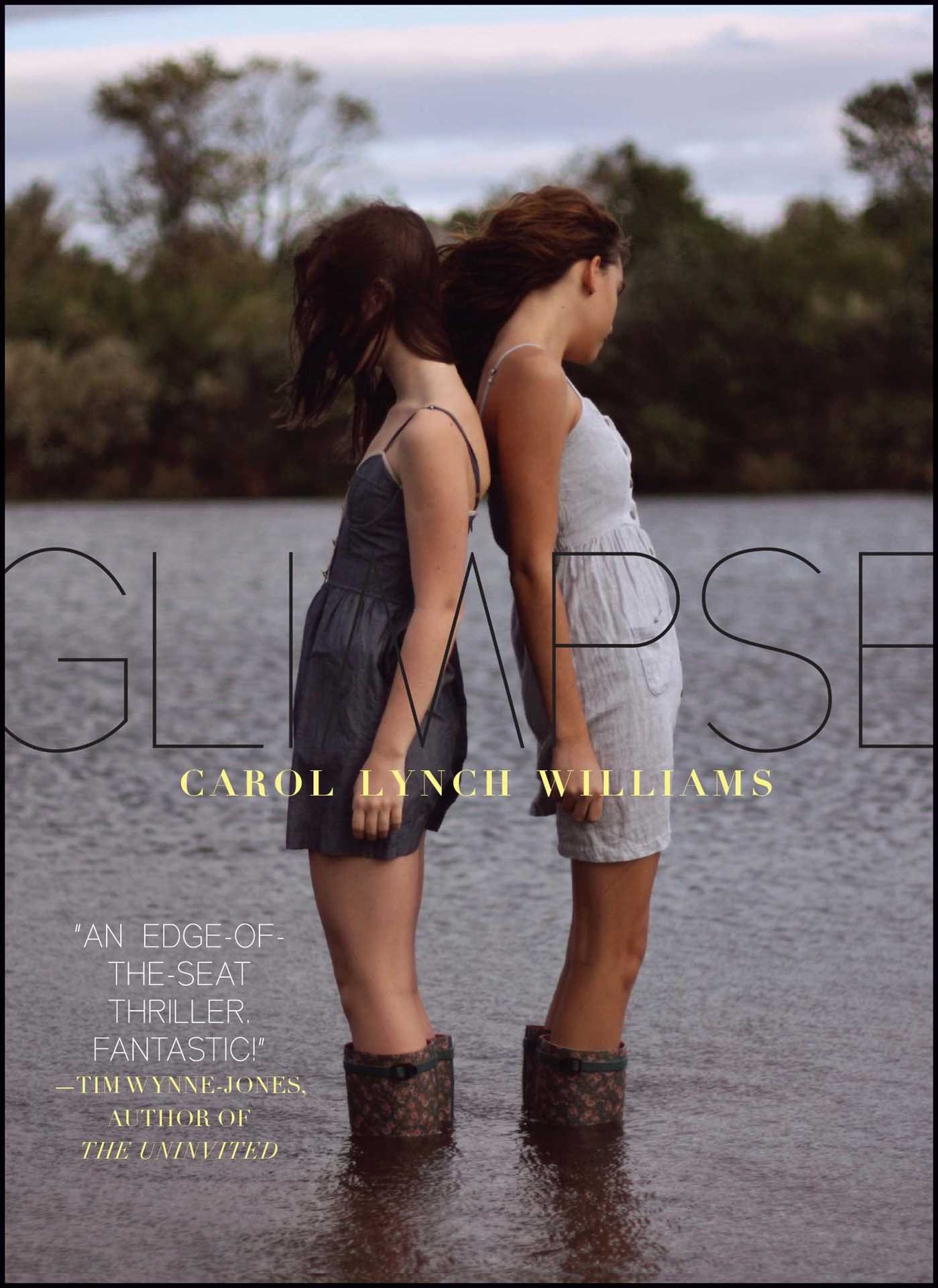
In one moment it is over. In one moment it is gone. Twelve-year-old Hope’s life is turned upside down when her older sister, Lizzie, becomes an elective mute and is institutionalized after trying to kill herself. Hope and Lizzie have relied on each other from a young age, ever since their dad died. Their mother, who turns tricks to support her family, is a reluctant and unreliable parent—at best. During the course of this lyrical and heartbreaking narrative, told in blank verse from an exceptionally promising YA voice, readers will discover the chilling reason why Lizzie has stopped speaking—and why Hope is the only one who can bring the truth to light and save her sister.
One choice can transform you. Beatrice Prior’s society is divided into five factions–Candor (the honest), Abnegation (the selfless), Dauntless (the brave), Amity (the peaceful), and Erudite (the intelligent). Beatrice must choose between staying with her Abnegation family and transferring factions.
Her choice will shock her community and herself. But the newly christened Tris also has a secret, one she’s determined to keep hidden, because in this world, what makes you different makes you dangerous.
When snow shuts down Greg Heffley’s middle school, his neighborhood transforms into a wintry battlefield. Rival groups fight over territory, build massive snow forts, and stage epic snowball fights. And in the crosshairs are Greg and his trusty best friend, Rowley Jefferson.It’s a fight for survival as Greg and Rowley navigate alliances, betrayals, and warring gangs in a neighborhood meltdown. When the snow clears, will Greg and Rowley emerge as heroes? Or will they even survive to see another day?
Two teens must learn the “art of killing” in this Printz Honor-winning book, the first in a chilling new series from Neal Shusterman, author of the New York Times bestselling Unwind dystology.A world with no hunger, no disease, no war, no misery: humanity has conquered all those things, and has even conquered death. Now Scythes are the only ones who can end life–and they are commanded to do so, in order to keep the size of the population under control.
Citra and Rowan are chosen to apprentice to a scythe–a role that neither wants. These teens must master the “art” of taking life, knowing that the consequence of failure could mean losing their own.
Rowan and Citra take opposite stances on the morality of the Scythedom, putting them at odds, in the chilling sequel to the Printz Honor Book Scythe from New York Times bestseller Neal Shusterman, author of the Unwind dystology.
The Thunderhead cannot interfere in the affairs of the Scythedom. All it can do is observe–it does not like what it sees.
A year has passed since Rowan had gone off grid. Since then, he has become an urban legend, a vigilante snuffing out corrupt scythes in a trial by fire. His story is told in whispers across the continent.
As Scythe Anastasia, Citra gleans with compassion and openly challenges the ideals of the “new order.” But when her life is threatened and her methods questioned, it becomes clear that not everyone is open to the change.Will the Thunderhead intervene?Or will it simply watch as this perfect world begins to unravel?
When Ada’s clubfoot is surgically fixed at last, she knows for certain that she’s not what her mother said she was–damaged, deranged, crippled mentally as well as physically. She’s not a daughter anymore, either. Who is she now?World War II rages on, and Ada and her brother, Jamie, move with their guardian, Susan, into a cottage with the iron-faced Lady Thorton and her daughter, Maggie. Life in the crowded home is tense.
Then Ruth moves in. Ruth, a Jewish girl, from Germany. A German? Could Ruth be a spy?As the fallout from war intensifies, calamity creeps closer, and life during wartime grows even more complicated. Who will Ada decide to be? How can she keep fighting? And who will she struggle to save?
Twelve-year-old Shayla is allergic to trouble. All she wants to do is to follow the rules. (Oh, and she’d also like to make it through seventh grade with her best friendships intact, learn to run track, and have a cute boy see past her giant forehead.)
But in junior high, it’s like all the rules have changed. Now she’s suddenly questioning who her best friends are and some people at school are saying she’s not black enough. Wait, what?
Shay’s sister, Hana, is involved in Black Lives Matter, but Shay doesn’t think that’s for her. After experiencing a powerful protest, though, Shay decides some rules are worth breaking. She starts wearing an armband to school in support of the Black Lives movement. Soon everyone is taking sides. And she is given an ultimatum.
Shay is scared to do the wrong thing (and even more scared to do the right thing), but if she doesn’t face her fear, she’ll be forever tripping over the next hurdle. Now that’s trouble, for real.
What was once the western United States is now home to the Republic, a nation perpetually at war with its neighbors. Born into an elite family in one of the Republic’s wealthiest districts, fifteen-year-old June is a prodigy being groomed for success in the Republic’s highest military circles. Born into the slums, fifteen-year-old Day is the country’s most wanted criminal. But his motives may not be as malicious as they seem.From very different worlds, June and Day have no reason to cross paths – until the day June’s brother, Metias, is murdered and Day becomes the prime suspect. Caught in the ultimate game of cat and mouse, Day is in a race for his family’s survival, while June seeks to avenge Metias’s death. But in a shocking turn of events, the two uncover the truth of what has really brought them together, and the sinister lengths their country will go to keep its secrets.
Lena has her killer style, her awesome boyfriend, and a plan. She knows she’s going to make it big. Campbell, on the other hand, is just trying to keep her head down and get through the year at her new school.
When both girls attend the Friday-night football game, what neither expects is for everything to descend into sudden mass chaos. Chaos born from violence and hate. Chaos that unexpectedly throws them together.
They aren’t friends. They hardly understand the other’s point of view. But none of that matters when the city is up in flames, and they only have each other to rely on if they’re going to survive the night.
For years, Grace has watched the wolves in the woods behind her house. One yellow-eyed wolf–her wolf–is a chilling presence she can’t seem to live without. Meanwhile, Sam has lived two lives: In winter, the frozen woods, the protection of the pack, and the silent company of a fearless girl. In summer, a few precious months of being human . . . until the cold makes him shift back again.Now, Grace meets a yellow-eyed boy whose familiarity takes her breath away. It’s her wolf. It has to be. But as winter nears, Sam must fight to stay human–or risk losing himself, and Grace, forever.
At the dawn of the nineteenth century, two very different magicians emerge to change England’s history. In the year 1806, with the Napoleonic Wars raging on land and sea, most people believe magic to be long dead in England-until the reclusive Mr Norrell reveals his powers, and becomes a celebrity overnight.Soon, another practicing magician comes forth: the young, handsome, and daring Jonathan Strange. He becomes Norrell’s student, and they join forces in the war against France. But Strange is increasingly drawn to the wildest, most perilous forms of magic, straining his partnership with Norrell, and putting at risk everything else he holds dear.
After the tragic death of their father, Emily and Navin move with their mother to the home of her deceased great-grandfather, but the strange house proves to be dangerous. Before long, a sinister creature lures the kids’ mom through a door in the basement. Em and Navin, desperate not to lose her, follow her into an underground world inhabited by demons, robots, and talking animals. Eventually, they enlist the help of a small mechanical rabbit named Miskit. Together with Miskit, they face the most terrifying monster of all, and Em finally has the chance to save someone she loves.
They have always scared him in the past—the Rangers, with their dark cloaks and shadowy ways. The villagers believe the Rangers practice magic that makes them invisible to ordinary people. And now 15-year-old Will, always small for his age, has been chosen as a Ranger’s apprentice. What he doesn’t yet realize is that the Rangers are the protectors of the kingdom. Highly trained in the skills of battle and surveillance, they fight the battles before the battles reach the people. And as Will is about to learn, there is a large battle brewing. The exiled Morgarath, Lord of the Mountains of Rain and Night, is gathering his forces for an attack on the kingdom. This time, he will not be denied. . . .
Everyone in Fairview knows the story.Pretty and popular high school senior Andie Bell was murdered by her boyfriend, Sal Singh, who then killed himself. It was all anyone could talk about. And five years later, Pip sees how the tragedy still haunts her town.But she can’t shake the feeling that there was more to what happened that day. She knew Sal when she was a child, and he was always so kind to her. How could he possibly have been a killer?Now a senior herself, Pip decides to reexamine the closed case for her final project, at first just to cast doubt on the original investigation. But soon she discovers a trail of dark secrets that might actually prove Sal innocent . . . and the line between past and present begins to blur. Someone in Fairview doesn’t want Pip digging around for answers, and now her own life might be in danger.
Thirteen-year-old Teddy Youngblood is in a coma fighting for his life after an unspecified football injury at training camp. His family and friends flock to his bedside to support his recovery–and to discuss the events leading up to the tragic accident. Was this an inevitable result of playing a violent sport, or was something more sinister happening on the field that day?
To twelve-year-old Molly Nathans, perfect is:
–The number four –The tip of a newly sharpened No. 2 pencil –A crisp white pad of paper –Her neatly aligned glass animal figurines
What’s not perfect is Molly’s mother leaving the family to take a faraway job with the promise to return in one year. Molly knows that promises are sometimes broken, so she hatches a plan to bring her mother home: Win the Lakeville Middle School Poetry Slam Contest. The winner is honored at a fancy banquet with white tablecloths. Molly is sure her mother would never miss that. Right…?
But as time passes, writing and reciting slam poetry become harder. Actually, everything becomes harder as new habits appear, and counting, cleaning, and organizing are not enough to keep Molly’s world from spinning out of control. In this fresh-voiced debut novel, one girl learns there is no such thing as perfect.
They killed my mother. They took our magic. They tried to bury us.
Now we rise.
Zélie Adebola remembers when the soil of Orïsha hummed with magic. Burners ignited flames, Tiders beckoned waves, and Zélie’s Reaper mother summoned forth souls.
But everything changed the night magic disappeared. Under the orders of a ruthless king, maji were killed, leaving Zélie without a mother and her people without hope.
Now Zélie has one chance to bring back magic and strike against the monarchy. With the help of a rogue princess, Zélie must outwit and outrun the crown prince, who is hell-bent on eradicating magic for good.
Danger lurks in Orïsha, where snow leoponaires prowl and vengeful spirits wait in the waters. Yet the greatest danger may be Zélie herself as she struggles to control her powers and her growing feelings for an enemy.
Ryn has one unread text message on her phone. And it’s been there for almost a year.She hasn’t tried to read it. She can’t. She won’t. Because that one message is the last thing her best friend ever said to her before she died.But as Ryn finds herself trapped in the Denver International Airport on New Year’s Eve thanks to a never-ending blizzard on the one-year anniversary of her best friend’s death, fate literally runs into her.And his name is Xander.When the two accidentally swap phones, Ryn and Xander are thrust into the chaos of an unforgettable all-night adventure, filled with charming and mysterious strangers, a secret New Year’s Eve bash, and a possible Illuminati conspiracy hidden within the Denver airport. But as the bizarre night continues, all Ryn can think about is that one unread text message. It follows her wherever she goes, because Ryn can’t get her brilliantly wild and free-spirited best friend out of her head.Ryn can’t move on.But tonight, for the first time ever, she’s trying. And maybe that’s a start.
Monday Charles is missing, and only Claudia seems to notice. Claudia and Monday have always been inseparable–more sisters than friends. So when Monday doesn’t turn up for the first day of school, Claudia’s worried.
When she doesn’t show for the second day, or second week, Claudia knows that something is wrong. Monday wouldn’t just leave her to endure tests and bullies alone. Not after last year’s rumors and not with her grades on the line. Now Claudia needs her best–and only–friend more than ever. But Monday’s mother refuses to give Claudia a straight answer, and Monday’s sister April is even less help.
As Claudia digs deeper into her friend’s disappearance, she discovers that no one seems to remember the last time they saw Monday. How can a teenage girl just vanish without anyone noticing that she’s gone?
Winning means fame and fortune. Losing means certain death. The Hunger Games have begun. . . .In the ruins of a place once known as North America lies the nation of Panem, a shining Capitol surrounded by twelve outlying districts. The Capitol is harsh and cruel and keeps the districts in line by forcing them all to send one boy and one girl between the ages of twelve and eighteen to participate in the annual Hunger Games, a fight to the death on live TV. Sixteen-year-old Katniss Everdeen regards it as a death sentence when she steps forward to take her sister’s place in the Games. But Katniss has been close to dead before-and survival, for her, is second nature. Without really meaning to, she becomes a contender. But if she is to win, she will have to start making choices that weigh survival against humanity and life against love.
Raina wakes up one night with a terrible upset stomach. Her mom has one, too, so it’s probably just a bug. Raina eventually returns to school, where she’s dealing with the usual highs and lows: friends, not-friends, and classmates who think the school year is just one long gross-out session. It soon becomes clear that Raina’s tummy trouble isn’t going away… and it coincides with her worries about food, school, and changing friendships. What’s going on?
Six days ago, astronaut Mark Watney became one of the first people to walk on Mars.Now, he’s sure he’ll be the first person to die there.After a dust storm nearly kills him and forces his crew to evacuate while thinking him dead, Mark finds himself stranded and completely alone with no way to even signal Earth that he’s alive–and even if he could get word out, his supplies would be gone long before a rescue could arrive.
Chances are, though, he won’t have time to starve to death. The damaged machinery, unforgiving environment, or plain-old “human error” are much more likely to kill him first.But Mark isn’t ready to give up yet. Drawing on his ingenuity, his engineering skills–and a relentless, dogged refusal to quit–he steadfastly confronts one seemingly insurmountable obstacle after the next. Will his resourcefulness be enough to overcome the impossible odds against him?
The Garretts are everything the Reeds are not. Loud, numerous, messy, affectionate. And every day from her balcony perch, seventeen-year-old Samantha Reed wishes she was one of them . . . until one summer evening, Jase Garrett climbs her terrace and changes everything. As the two fall fiercely in love, Jase’s family makes Samantha one of their own. Then in an instant, the bottom drops out of her world and she is suddenly faced with an impossible decision. Which perfect family will save her? Or is it time she saved herself?
Todd Hewitt is the only boy in a town of men. Ever since the settlers were infected with the Noise germ, Todd can hear everything the men think, and they hear everything he thinks. Todd is just a month away from becoming a man, but in the midst of the cacophony, he knows that the town is hiding something from him — something so awful Todd is forced to flee with only his dog, whose simple, loyal voice he hears too. With hostile men from the town in pursuit, the two stumble upon a strange and eerily silent creature: a girl. Who is she? Why wasn’t she killed by the germ like all the females on New World? Propelled by Todd’s gritty narration, readers are in for a white-knuckle journey in which a boy on the cusp of manhood must unlearn everything he knows in order to figure out who he truly is.
“Speak up for yourself–we want to know what you have to say.” From the first moment of her freshman year at Merryweather High, Melinda knows this is a big fat lie, part of the nonsense of high school. She is friendless, outcast, because she busted an end-of-summer party by calling the cops, so now nobody will talk to her, let alone listen to her. As time passes, she becomes increasingly isolated and practically stops talking altogether. Only her art class offers any solace, and it is through her work on an art project that she is finally able to face what really happened at that terrible party: she was raped by an upperclassman, a guy who still attends Merryweather and is still a threat to her. Her healing process has just begun when she has another violent encounter with him. But this time Melinda fights back, refuses to be silent, and thereby achieves a measure of vindication. In Laurie Halse Anderson’s powerful novel, an utterly believable heroine with a bitterly ironic voice delivers a blow to the hypocritical world of high school. She speaks for many a disenfranchised teenager while demonstrating the importance of speaking up for oneself.
A cannon. A strap. A piece. A biscuit. A burner. A heater. A chopper. A gat. A hammer A tool for RULE
Or, you can call it a gun. That’s what fifteen-year-old Will has shoved in the back waistband of his jeans. See, his brother Shawn was just murdered. And Will knows the rules. No crying. No snitching. Revenge. That’s where Will’s now heading, with that gun shoved in the back waistband of his jeans, the gun that was his brother’s gun. He gets on the elevator, seventh floor, stoked. He knows who he’s after. Or does he?
As the elevator stops on the sixth floor, on comes Buck. Buck, Will finds out, is who gave Shawn the gun before Will took the gun. Buck tells Will to check that the gun is even loaded. And that’s when Will sees that one bullet is missing. And the only one who could have fired Shawn’s gun was Shawn. Huh. Will didn’t know that Shawn had ever actually USED his gun. Bigger huh. BUCK IS DEAD. But Buck’s in the elevator?
Just as Will’s trying to think this through, the door to the next floor opens. A teenage girl gets on, waves away the smoke from Dead Buck’s cigarette. Will doesn’t know her, but she knew him. Knew. When they were eight. And stray bullets had cut through the playground, and Will had tried to cover her, but she was hit anyway, and so what she wants to know, on that fifth floor elevator stop, is, what if Will, Will with the gun shoved in the back waistband of his jeans, MISSES.And so it goes, the whole long way down, as the elevator stops on each floor, and at each stop someone connected to his brother gets on to give Will a piece to a bigger story than the one he thinks he knows. A story that might never know an END…if Will gets off that elevator.
Manor Farm is like any other English farm, expect for a drunken owner, Mr Jones, incompetent workers and oppressed animals. Fed up with the ignorance of their human masters, the animals rise up in rebellion and take over the farm. Led by intellectually superior pigs like Snowball and Napoleon, the animals how to take charge of their destiny and remove the inequities of their lives. But as time passes, the realize that things aren’t happening quite as expected. Animal Farmis, one level, a simple story about barnyard animals. On a much deeper level, it is a savage political satire on corrupted ideals, misdirected revolutions and class conflict-themes as valid today as they were sixty years ago.
Seconds before the Earth is demolished to make way for a galactic freeway, Arthur Dent is plucked off the planet by his friend Ford Prefect, a researcher for the revised edition of The Hitchhiker’s Guide to the Galaxy who, for the last fifteen years, has been posing as an out-of-work actor. Together this dynamic pair begin a journey through space aided by quotes from The Hitchhiker’s Guide (“A towel is about the most massively useful thing an interstellar hitchhiker can have”) and a galaxy-full of fellow travelers: Zaphod Beeblebrox–the two-headed, three-armed ex-hippie and totally out-to-lunch president of the galaxy; Trillian, Zaphod’s girlfriend (formally Tricia McMillan), whom Arthur tried to pick up at a cocktail party once upon a time zone; Marvin, a paranoid, brilliant, and chronically depressed robot; Veet Voojagig, a former graduate student who is obsessed with the disappearance of all the ballpoint pens he bought over the years. Where are these pens? Why are we born? Why do we die? Why do we spend so much time between wearing digital watches? For all the answers stick your thumb to the stars. And don’t forget to bring a towel!
Rose Howard is obsessed with homonyms. She’s thrilled that her own name is a homonym, and she purposely gave her dog Rain a name with two homonyms (Reign, Rein), which, according to Rose’s rules of homonyms, is very special. Not everyone understands Rose’s obsessions, her rules, and the other things that make her different–not her teachers, not other kids, and not her single father.
When a storm hits their rural town, rivers overflow, the roads are flooded, and Rain goes missing. Rose’s father shouldn’t have let Rain out. Now Rose has to find her dog, even if it means leaving her routines and safe places to search.
Other Books Heavily in Rotation this Year:
The two-time Newbery Honor winner Gary D. Schmidt delivers the shattering story of Joseph, a father at thirteen, who has never seen his daughter, Jupiter. After spending time in a juvenile facility, he’s placed with a foster family on a farm in rural Maine. Here Joseph, damaged and withdrawn, meets twelve-year-old Jack, who narrates the account of the troubled, passionate teen who wants to find his baby at any cost. In this riveting novel, two boys discover the true meaning of family and the sacrifices it requires.
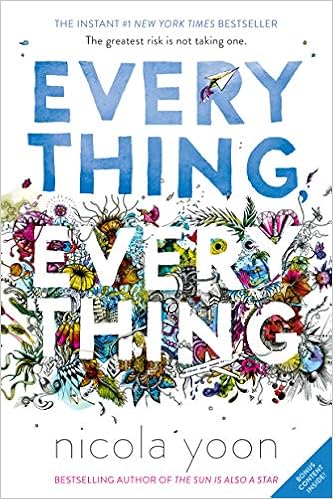
My disease is as rare as it is famous. Basically, I’m allergic to the world.I don’t leave my house, have not left my house in seventeen years. The only people I ever see are my mom and my nurse, Carla.
But then one day, a moving truck arrives next door. I look out my window, and I see him. He’s tall, lean and wearing all black—black T-shirt, black jeans, black sneakers, and a black knit cap that covers his hair completely. He catches me looking and stares at me. I stare right back. His name is Olly.
Maybe we can’t predict the future, but we can predict some things. For example, I am certainly going to fall in love with Olly. It’s almost certainly going to be a disaster.
To everyone who knows him, West Ashby has always been that guy: the cocky, popular, way-too-handsome-for-his-own-good football god who led Lawton High to the state championships. But while West may be Big Man on Campus on the outside, on the inside he’s battling the grief that comes with watching his father slowly die of cancer.
Two years ago, Maggie Carleton’s life fell apart when her father murdered her mother. And after she told the police what happened, she stopped speaking and hasn’t spoken since. Even the move to Lawton, Alabama, couldn’t draw Maggie back out. So she stayed quiet, keeping her sorrow and her fractured heart hidden away.
As West’s pain becomes too much to handle, he knows he needs to talk to someone about his father—so in the dark shadows of a post-game party, he opens up to the one girl who he knows won’t tell anyone else.
West expected that talking about his dad would bring some relief, or at least a flood of emotions he couldn’t control. But he never expected the quiet new girl to reply, to reveal a pain even deeper than his own—or for them to form a connection so strong that he couldn’t ever let her go…
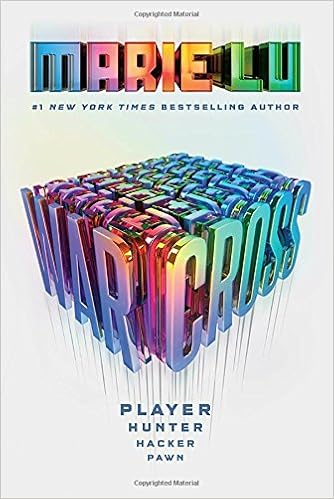
For the millions who log in every day, Warcross isn’t just a game—it’s a way of life. The obsession started ten years ago and its fan base now spans the globe, some eager to escape from reality and others hoping to make a profit. Struggling to make ends meet, teenage hacker Emika Chen works as a bounty hunter, tracking down Warcross players who bet on the game illegally. But the bounty-hunting world is a competitive one, and survival has not been easy. To make some quick cash, Emika takes a risk and hacks into the opening game of the international Warcross Championships—only to accidentally glitch herself into the action and become an overnight sensation.
Convinced she’s going to be arrested, Emika is shocked when instead she gets a call from the game’s creator, the elusive young billionaire Hideo Tanaka, with an irresistible offer. He needs a spy on the inside of this year’s tournament in order to uncover a security problem . . . and he wants Emika for the job. With no time to lose, Emika’s whisked off to Tokyo and thrust into a world of fame and fortune that she’s only dreamed of. But soon her investigation uncovers a sinister plot, with major consequences for the entire Warcross empire.
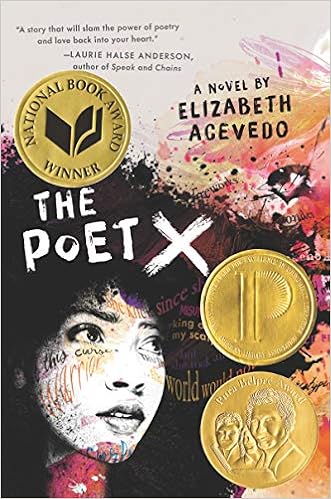
Xiomara Batista feels unheard and unable to hide in her Harlem neighborhood. Ever since her body grew into curves, she has learned to let her fists and her fierceness do the talking.
But Xiomara has plenty she wants to say, and she pours all her frustration and passion onto the pages of a leather notebook, reciting the words to herself like prayers—especially after she catches feelings for a boy in her bio class named Aman, who her family can never know about.
With Mami’s determination to force her daughter to obey the laws of the church, Xiomara understands that her thoughts are best kept to herself. So when she is invited to join her school’s slam poetry club, she doesn’t know how she could ever attend without her mami finding out. But she still can’t stop thinking about performing her poems.
Because in the face of a world that may not want to hear her, Xiomara refuses to be silent.
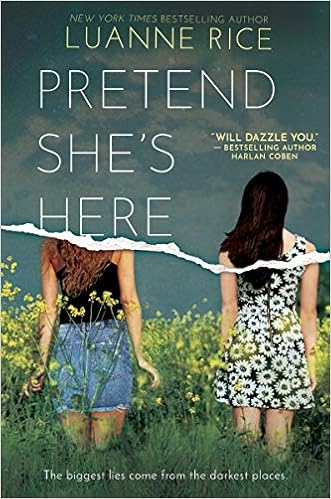
Emily Lonergan’s best friend died last year.
And Emily hasn’t stopped grieving. Lizzie Porter was lively, loud, and fun — Emily’s better half. Emily can’t accept that she’s gone.
When Lizzie’s parents and her sister come back to town to visit, Emily’s heartened to see them. The Porters understand her pain. They miss Lizzie desperately, too.
Desperately enough to do something crazy.
Something unthinkable.
Suddenly, Emily’s life is hurtling toward a very dark place — and she’s not sure she’ll ever be able to return to what she once knew was real.
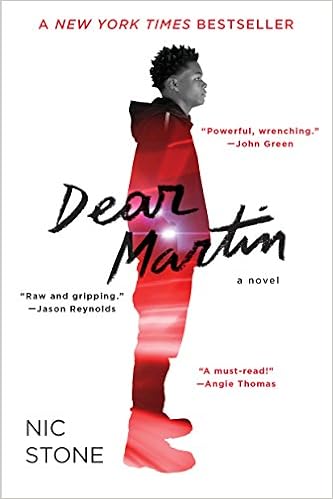
Justyce McAllister is a good kid, an honor student, and always there to help a friend—but none of that matters to the police officer who just put him in handcuffs. Despite leaving his rough neighborhood behind, he can’t escape the scorn of his former peers or the ridicule of his new classmates.
Justyce looks to the teachings of Dr. Martin Luther King Jr. for answers. But do they hold up anymore? He starts a journal to Dr. King to find out.
Then comes the day Justyce goes driving with his best friend, Manny, windows rolled down, music turned up—way up, sparking the fury of a white off-duty cop beside them. Words fly. Shots are fired. Justyce and Manny are caught in the crosshairs. In the media fallout, it’s Justyce who is under attack.
“With a bolt of lightning on my kicks . . .The court is SIZZLING. My sweat is DRIZZLING. Stop all that quivering. Cuz tonight I’m delivering,” announces dread-locked, 12-year old Josh Bell. He and his twin brother Jordan are awesome on the court. But Josh has more than basketball in his blood, he’s got mad beats, too, that tell his family’s story in verse, in this fast and furious middle grade novel of family and brotherhood from Kwame Alexander.
Josh and Jordan must come to grips with growing up on and off the court to realize breaking the rules comes at a terrible price, as their story’s heart-stopping climax proves a game-changer for the entire family.
If you are wondering where I will be in the coming year or would like to have me speak, please see this page. I offer up workshops and presentations both live and virtually that are based on the work I do with my own students as we pursue engaging, personalized, and independent learning opportunities.I also write more about the design of my classroom and how to give control of their learning back to students in my first book, Passionate Learners.
It continues to amaze me how many fantastic books are accessible to us as readers. 2020 started off strong and continued to amaze as more books made their way into my hands. While some were sent to me via publishers in order to be considered potentially for the Global Read Aloud, many others were recommended by friends and students, I am so grateful for these. While many were brand new books, some were just brand new to me. Either way, there are many books here to potentially check out, so in no particular order, here are my favorite reads so far in 2020.
I haven’t really been reading much. Not like I normally do. Not like when I am home and the days are long and my to-be-read shelf beckons every moment I pass by it. Where I swallow a book a day, share it with the world, eager to pick up the next one.
Right now, my shelf makes me feel guilty. The abandoned books piled around the house. Starting the same book over and over again because I am sure it is good if I can just pay attention. Reading comes in short bursts between kids needing me, my computer pulling me away, my phone a distraction. The need to sleep. To simply sit and ponder. To be outside trying to connect with a world that feels very far away right now. It’s simply hard to read right now.
It’s hard to read when my children demand attention through their yelling matches and “I’m bored, Mom…” and their school work consumes hours of our time and it hasn’t even really begun yet.
It’s hard to read when my favorite genre, dystopian, hits a little too close to home.
It’s hard to read when the to-do’s of my job keep piling on, navigating new territory every day, not quite sure if what I am doing is even close to effective.
It’s hard to read when you worry.
When breathing is harder.
When loss is present.
When sleep is elusive.
When worry is a constant companion.
It’s hard to read when the world outside is scary.
(Even when I sit in my heated house, with a fridge that’s full and my paycheck still intact.)
I read to learn. To escape into worlds and stories unlike my own. To relax. To have my imagination lit up. To be transported and while right now may seem like the perfect time to escape, the tethers that hold me firmly in place are thickened steel, and my mind refuses to settle.
I cannot be the only one that feels that way. I am not the only one that feels that way.
My students tell me that they haven’t really been reading. That they sleep a lot. That there is so much work to be done now that school is back in session whatever this means. That they don’t have books. That they can’t find a good book. That they don’t like reading digitally. That they read the only book they had. That they tried but they have to keep going back to reread, hoping to grasp the story that slips through their concentration. That they don’t know what to read next because nothing sounds good.
And I get it. My assignment of reading 2 hours a week is merely an aspiration at this time. Of saying I hope you’re safe enough to read. I hope you are fed enough to read. I hope you are okay enough to read. That those taking care of you have what they need so you have what you need.
And so we send books to those who don’t have any (a survey and Amazon direct shipment helped us out with that). We send them links to digital books. We fill our Audible account with great books. We leave book reviews on Flipgrid in case they have a way of ordering books. We read aloud to pretend that we are still together.
Because that’s all it can be right now.
An invitation to those that are in a place to receive it.
A way to offer up a slice of normalcy for those who can access it.
Not as a way to punish or grade.
Not as a way to go on with life as normal, because it is everything but.
To demand someone read right now is to fail to recognize what may be happening in their world. Is to ask for the impossible for some.
That doesn’t mean we stop hoping but it does mean that we ask a lot more questions than we might usually: Are you okay? Are you safe? Are you feeling ok? Do you have what you need? Food? Heat? Books? Do you have a safe space to read? Do you have enough time to read? And we respect that students may not tell us their truth because they don’t have to. That all we can do is ask and try, not demand and want.
And we wrap our students in patience rather than demands. In understanding rather than expectations. And we fully sit with the knowledge that this reality is not like anything we have seen before and therefore our approach must change as well.
That perhaps a child can read but not think clearly. That perhaps a child doesn’t have the room for deep analysis right now. That perhaps they don’t have the energy to write but could speak? That perhaps a whole book seems much too much but a short story is accessible. That perhaps picture books are all they can do right now.
Choice, personalization, and giving options for students has to be central to what we do right now, to what we do all through the year.
That what we may be working through in our tiny slice of the world may look nothing like what our students face.
That if we, professional adult readers, are struggling, how does it feel for the kids?
Today, I am going to try to read. I have been fighting what my doctor assumes is Covid-19 but a mild case and the exhaustion is all consuming. I am going to get through 2 or 5 or 10 pages and then congratulate myself. Be happy that I tried, even if normally I would be able to finish a book quickly. Even if I normally would feel lazy if I didn’t read at least a book a day.
Today I am going to try again because yesterday I tried too. And I am going to encourage my students to try and to to keep trying. But I am going to continue to know that sometimes trying is all we can do. Trying is what will happen rather than completing and that is good enough for now.
Right now is nothing like normal. Let’s not push normal expectations on kids either.
If you are wondering where I will be in the coming year or would like to have me speak, please see this page.
I am at our public library right now and it is deserted. Wisconsin was ordered to close their schools this coming week as more and more cases of Covid-19 pile up. The world is upside down.
As we prepare to switch to online learning, I have been thinking of the power of the read aloud. How having the social connection through shared books can bring us together. How doing a read aloud in this stressful time can calm us. And so as we plan for what we will do, I immediately thought of reading picture books aloud to my students and having them respond to them in a short paragraph through Google Classroom. However, there is one glaring problem; copyright violations, I don’t want to break copyright by reading aloud a book and then sharing it with students. So instead, I compiled as many lists as I could find here featuring the creators reading aloud. Perhaps the list will be helpful to you?
Kate Messner has a post that details which publishers have given limited permission to read their books aloud following their guidelines, see the post here.
Indianapolis Public Library has a compiled list here with more than 100 titles
I will keep adding resources here as I find them and as they are shared with me. If you know of any more, please share.
Take care, stay safe, and take care of others. We will get through this.
And by the way, if you can’t feed your family in the coming weeks or months, please reach out to me. I will try to send you a giftcard for groceries if I can.
If you are wondering where I will be in the coming year or would like to have me speak, please see this page.






















 Pernille Ripp