being me, education, Passion, Personalized Learning, Reading, student choice

The One Thing That All Readers Need the Most

I used to think that teaching students to become great readers meant that I showed them as many reading strategies as I could and then we would practice each one until they could do it practically in their sleep.  Connections – check. Predictions – check.  Inferring, visualizing, character changes – check, check, check.  We had our strategies under control.

I used to think that providing my students with as much time as possible to discuss reading would make them stronger readers.  After all, through the talking they would be able to dig deeper into their own process and mimic others.

I used to think that my students constantly had to stop and jot so they could record and prove their thinking on little post-its.  That the more post-its they had in a book, the better of a reader they were becoming.  I used them for proof that they were growing.  I used them for proof that they understood the steps.

I used to think that reading was all about talking.  I used to think reading was all about taking it apart.  I used to think reading was all about proof.

Now I know that reading should be about reading.  That in all of that talking there was very little reading.  In all of that jotting there was no room for flow or getting in the zone.  That in trying to give the teacher proof that they were reading, they were losing valuable reading time.  We stopped all of the time.  We lost independent reading minutes because we had to make sure we had something written down.

For students to become better readers, they need time to read.  We know that, I know that.  Yes, they need strategies, yes, they need to speak about reading, yes they need to think and grow, but  what they need most of all is time to read.  Every day, any chance, and it needs to be uninterrupted.  So now as I plan my days, my sacred 45 minutes I get with every class, 10 of that is dedicated to no-talking, uninterrupted, choice based reading.  10 minutes of quiet in the zone reading where no one tells them what to do.  I wish it was more, the students wish it was more, but it is a start.  It is their chance to read, everything else comes after.  Everything else is less important.

What do you do in your room to preserve independent reading time?

I am a passionate teacher in Oregon, Wisconsin, USA,  who has taught 4th, 5th, and 7th grade.  Proud techy geek, and mass consumer of incredible books. Creator of the Global Read Aloud Project, Co-founder of EdCamp MadWI, and believer in all children. I have no awards or accolades except for the lightbulbs that go off in my students’ heads every day.  First book “Passionate Learners – Giving Our Classrooms Back to Our Students” can be purchased now.   Second book“Empowered Schools, Empowered Students – Creating Connected and Invested Learners” is out now from Corwin Press.  Follow me on Twitter @PernilleRipp.

being a teacher, being me, books, MIEExpert15, Passion, Personalized Learning, Reading, student choice, student voice

Why Book Clubs Suck And We Need to Talk About It

image from icanread

I had meticulously made my lists.  I had thoughts of habits, tastes, personalities, reading preferences, pace and yes, even their assessment data.  I had scoured the book room, gone book shopping spending my own money and used most of my Scholastic points.  More than 50 choices awaited my students, I couldn’t wait to start book clubs.

So when I announced that today was the day they would know their book club groups, I had not planned for the groan of disapproval that met me.  The disgusted stares and the change in body language; slumped shoulders, heads down.  Clearly, they were not as excited as I was.  And so I did what I always do; I asked why.  Or more specifically, I mimicked what a student said, which was that book clubs suck, and I asked “Tell me all of the reason why book clubs suck…”

And boy did they ever.

“We hate being forced to read certain books.  Sometimes we have read them before, sometimes they are boring, sometimes we cannot relate to them no matter how hard we try.  We want choice, we want things that we want to read, we can decide by ourselves.

We hate being told when to read, how many pages, and what we should discuss.  Sometimes we want to read only a few pages because we know we are busy, other times we want to read a lot.  We want to come up with our own questions and we don’t want a teacher to facilitate.  Let us try to navigate it ourselves.  Let us try to lead the conversations.  Help us when we need it but don’t assume we need it all of the time.

We hate having a book take weeks and weeks to finish.  Sometimes we just want to read because it is so good, and what is wrong with that.  When it drags on we lose interest.  When it drags on we forget what is happening.

We hate being stuck with a book even if we chose it.  We hate being placed in groups with students we have nothing in common with.  We hate having to keep logs, write reports, and do group work when all we want to do is read and discuss.  Don’t you see, we hate book clubs.”

So I listened, and I answered their questions whether they wanted me to or not.  Carefully explained my vision for the next few weeks and why.  Would there be writing – no, just the thoughts they felt they needed to jot down to facilitate a discussion.  Would there be choice – of course, the books were waiting patiently for them and if they found none here then we have a library to go to.  They kept asking and I kept explaining, and as we went on their faces changed and the shoulders came back up.

Every class I taught that day went through the same process.  I didn’t expect to have those conversation 5 times in a row but that is exactly what happened.  Every time I mentioned book clubs, the groan came at me like a wave.  And yet, as we discussed I once again learned more about my students and their reading habits.  I learned how they want to be independent readers and thinkers, how they want to be able to have choice in everything so that they can invest themselves fully.  How it is okay that I put them into groups as long as I explain why those groups were made and that it wasn’t just based on one thing.

I could have ignored their groans, a few years ago I would have, I would have told them to “Suck it up, deal with it and make the best of it.”  Yet, I know from experience that if we want book clubs or anything that has to do with reading to work then we have to have these hard conversations.  We have to discuss, tear apart, and work through the demons that students carry, those preconceived notions of what is going to happen in the next few weeks, before we ever get an authentic buy-in; a reading experience that matters.

The day after the conversation, I had them book shop.  Every group went from choice to choice and debated the merits of the books laid out before them.  Every group weighed their options, and only one group  out of about 30 needed my guidance in book choice.  Yesterday, as I revealed the books they were going to read, most groups cheered.  Some kids asked if they could start right away?  Please, because the book looks really good and we are so excited.

Had I not stopped and listened to my students.  Had I not stopped the plan of what I was going to do.  Had I forged ahead, gone on with our day, there would have been few cheers and instead the next few weeks would have been filled with the passive resignation that middle schoolers do so well.  Yeah book clubs suck, but they don’t have to.  We have to find a way to talk about it and change the way they are done. And the first place we start is by asking out students why they suck or any other word that may describe their feelings toward them.

I am a passionate teacher in Oregon, Wisconsin, USA,  who has taught 4th, 5th, and 7th grade.  Proud techy geek, and mass consumer of incredible books. Creator of the Global Read Aloud Project, Co-founder of EdCamp MadWI, and believer in all children. I have no awards or accolades except for the lightbulbs that go off in my students’ heads every day.  First book “Passionate Learners – Giving Our Classrooms Back to Our Students” can be purchased now.   Second book“Empowered Schools, Empowered Students – Creating Connected and Invested Learners” is out now from Corwin Press.  Follow me on Twitter @PernilleRipp.

books, Literacy, Reading

10 Favorite Books from 7th Grade So Far – 2015

The books have been flying off the shelves in our classroom library, sometimes to be read and other times to be forgotten at the back of lockers.  But one thing is for sure, I have a lot of readers in my life.  I was worried about not having the right books for my 7th graders, however, I should have known; many of my favorites are also the favorites of the students.  So what have the 7th graders been reading and passing on?  Note the varying levels of maturity!

Loot: How to Steal A Fortune by Jude Watson was on heavy rotation this year.

Can’t Look Away by Donna Cooner was a favorite for many.

Gae Polisner’s The Summer of Letting Go was voraciously read by many.

The Shiver Trilogy by Maggie Stiefwater made reluctant readers read again.

With the movie out, The Fault In Our Stars by John Green remained in heavy rotation.

Even in 7th grade, students still love The Diary of A Wimpy Kid series by Jeff Kinney, as they should.

Everybody seemed to start the year by reading If I Stay by Gayle Forman.

Many eagerly waited for their turn to read Sisters by Raina Telgemaier.

The Raft by S.A. Boden was a page turner for many students.

Someone is always reading Amulet by Kazu Kibuishi. 

being a teacher, being me, Reading, students teach me

The Things I Did That Stopped A Love of Reading

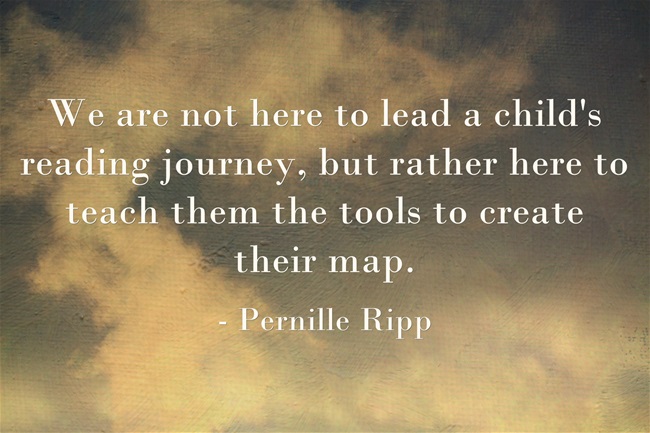
We-are-not-here-to-lead

I have always had good intentions, my heart and mind has always been in the right place whenever I have done anything “to” my students.  I don’t think any teacher sets out to destroy, I don’t think any teacher wants to harm a child’s love of reading.  And yet, they say that the road to Hell is paved with good intentions, and nowhere is that more visible than when it comes to our reading instruction.  When I look back upon the things that I have done, the things that I did because I thought they would help, but now know the results, oh boy. Well, let’s just say I am lucky that I have had amazing students that have helped me see the wrong in my rights.

So what did I do that was so wrong?  Over the last 7 years as a teacher, this is how I have changed based on feedback from my students.

Then:

I forced them to read certain books because I knew better.  Armed with levels and lessons, I have forced many a child in giving up the book they were certain to struggle through and handed them a better suited one.  Better suited based on levels, reading abilities, but typically not interest.

Now:

Students have free choice to read with few restrictions.  Throughout the year they have to read 25 books, 15 of which must be chapter books.  If a child is continuously abandoning books we discuss, adjust, and try new things.  We also spend time selecting books together and work on strategies to get through books that may be a bit out of their “level.”

Then:  

Students had to prove they had read either through worksheets or a reading log.  Worksheets never worked for me because they didn’t give me the deeper level thoughts I wanted, plus it meant that students had to read the same book, and reading logs are something I will never subject a child to again if I can help it.

Now:  

Students prove to me that they are reading in a myriad of ways without a reading log or a worksheet, the most common one being conversation.  We discuss books frequently in class and even within my 45 minute class period the students still get 10 minutes of independent reading time.  There are so many ways we can see whether a child is reading, we just have to tap into it.

Then: 

We did the whole class book throughout the year.  This was to make sure we had a common text to discuss and I also believed that my developing readers could learn a lot from the stronger readers (which I still believe), however, this format slowed down some kids while it burned out others.

Now:

We do the whole class read aloud.  Starting with the Global Read Aloud we have a whole class text read aloud every day as part of our mini-lesson.  Students can develop their discussion skills around a shared text and I have a text to use every day as a springboard.  Students are then still free to read whichever book they want and apply our strategies discussed to that one once the read aloud portion of the day is complete.

Then:

All students had to use post-its.  This was a way for me to see their thinking while they read, they would even hand them in.

Now:

Students show me their thinking however they want.  Some still use post-its which I have readily available, others their notebook, their blog, or any other way they can think of.  What matters is that they are finding a way for them to stop and think and then jot down their thoughts so that we can have some deep discussions.

Then:

I always had an independent text to use for every small group.  I always did guided reading with the same kids every week and we always had either a pre-selected book club book or a text that I had selected.  This way I could control the strategies we developed because I had pre-read everything and could thus lead the conversation.  Students answered questions but no real discussion ensued.

Now:

Sometimes I have a text but more likely I have a picture book.  Students and I read the text together and then work our way through it.  All ages love picture book sand I have been spent a lot of money getting great ones into the hands of my students.  We read the book and then apply the strategy to their own book right then and there so that I can see whether they fully understand it.  If a child needs extra time, I hold them back while I release the others.

Then:  

Students did book clubs with me as the guide.  This type of guided reading was something I worked very hard at but frankly it was exhausting.  I always had to read ahead and prepare the discussions so that I could lead the conversations.  Often I had a hard time keeping the 6 different books I was using straight, and trying to find multiple texts centered around the same theme was also hard.  Students did little discussion but at least they had a shared reading experience.

Now:

Students run the book clubs.  I check in and help them push their thinking but they set the pace, they select the books  based on group conversations, and they “manage” the club.  I have to step in once in a while to help a student who is not adhering to the group’s etiquette but mostly the students are in control.

Then:

Groups were created based on level.  I did not look at pace, interest, or specific skills needed, only what level the computer or Rigby said the child was at.  While this is a great place to start for the year I didn’t move past it until I realized this was not a great way for my students to learn from others.

Now:

Students are grouped based on needs.  Typically students go in and out of small groups that crop up throughout a week based on how they are doing on certain skills.  This means that students don’t feel labeled as beign a “bad” reader because they are not in the same group day after day.  They instead see that we are helping them with the skill they need and then released once they have it.

Then:

Students shared their reading lives with the class.  I always knew I wanted a classroom that was focused on reading, one in which reading took a central role throughout all curriculum.  One where our reading lives were visible to each other.   But I didn’t think to share it with others.

Now:

We share our reading with the world.  Students share their books on our blogs, ask for recommendations, and ask questions of other students that are reading the same book.  Our reading lives are not just something we discuss, it is up for everyone to discuss, and the world has a lot to offer.

There are so many things we choose to do within our reading instruction, or any instruction for that matter, that we think will help students, but end up robbing them of the spark that carries them forward as readers,  While some of these things may work for other teachers, they have not worked for me.  I am just grateful that my students have had the courage to tell me these things but they would not have done so if I hadn’t asked.  So please, if nothing else, ask your students what helps them become better readers and then do more of that.

I am a passionate  teacher in Wisconsin, USA,  who has taught 4th, 5th, and 7th grade.  Proud techy geek, and mass consumer of incredible books. Creator of the Global Read Aloud Project, Co-founder of EdCamp MadWI, and believer in all children. I have no awards or accolades except for the lightbulbs that go off in my students’ heads every day.  First book “Passionate Learners – Giving Our Classrooms Back to Our Students” can be purchased now from Powerful Learning Press.   Second book“Empowered Schools, Empowered Students – Creating Connected and Invested Learners” is out now from Corwin Press.  Follow me on Twitter @PernilleRipp.

being a teacher, Reading, students

What Stands in the Way to Reading – Lessons From My Students

image from etsy

I used to think that reading could only be done in silence.  That we had to be alone with our thoughts, that our eyes must be on the text at all times so that we could stay immersed.  I used to think that reading meant post-its, partner conversations, and frequent check-ins with a teacher, of course.  That it was something easy to do as long as books were there, after all, anyone will want to read as long as there is choice.  I used to think a lot of things but now my 7th graders have taught me a thing or two.

Now I know that reading is sometimes better while listening to music.  That post-its can interfere.  That partner conversations are mostly stilted unless you trust the person.

Now I know that frequent check-ins are not always necessary and that a quick hallway conversation or walk-by can also be powerful.  That what works for me may not work for others.  That sometimes our eyes need a break and that doesn’t mean we are not reading, but that we simply need a moment to ponder, or let our minds wander.

I used to think that reading meant constantly thinking about what you read.  That it meant sharing more books.  To keep their piles full and their brains always spinning with what’s next, what’s next, what’s next.  Now I know that sometimes we read to be immersed, sometimes we read to discuss, sometimes we read because we have nothing better to do and that is ok too.

I used to think that books would cure all but now I see the mountain I have yet to conquer.  Yes, incredibly books are a weapon in the fight for reading, but it cannot be the only one.  Passion, discussion, choice, and time are equals in this fight.   And so is guidance, abandonment, and time to think.  Bean bags, carpet squares, and even dimming the lights enter too.  We never know what it is that will turn a child from a non-reader to a reader, and yet there are so many things we exclude because we think we know best.

I may not have convinced them all just yet that reading is powerful, that reading is magical.  But I have hope, because they are still with me on this journey.  They still give me their attention, and they still ask for books.  We may think that we lose a reader but they are never quite lost.  It is up to us (and them) whether they find their way back or not. For now, i will keep giving them everything I’ve got.  After all, this is definitely worth it.

I am a passionate  teacher in Wisconsin, USA,  who has taught 4, 5th, and 7th grade.  Proud techy geek, and mass consumer of incredible books. Creator of the Global Read Aloud Project, Co-founder of EdCamp MadWI, and believer in all children. I have no awards or accolades except for the lightbulbs that go off in my students’ heads every day.  First book “Passionate Learners – Giving Our Classrooms Back to Our Students” can be purchased now from Powerful Learning Press.   Second book“Empowered Schools, Empowered Students – Creating Connected and Invested Learners” is out now from Corwin Press.  Follow me on Twitter @PernilleRipp.

being me, ideas, Reading

So What Has Actually Been Working – 7th Grade Readers Workshop

Every year I start with so many ideas of what we will try, what will do, things we can accomplish.  Every year, I have a long list of all of my ideas from the summer waking me up at night, getting me excited to teach again.  And then…the year starts, I try some things, others are forgotten, some work, some don’t.  This year with a new grade level and a new subject and only 45 minutes, there has not been a dull moment yet.   So why not share, hopefully we can learn from each other.

What has worked:

  • Starting with independent reading.  Jillian Heise shared this wonderful idea of having the first 10 minutes dedicated to independent reading,  and while that cuts class time down to 35 minutes, this is the best use of 10 minutes I can think of.  Students get settled, they actually read, and we all get a nice start to class.
  • Status of the class.  This great idea from Donalyn Miller is a simple check in tool where students write down what they read in the 10 minutes.  I use it to have students track their reading habits, such as whether or not they are actually reading and whether or not they are picking good books.
  • The “What to Read Next List.”  Rather than showcase new books one at a time, I save them up and have book shopping time.  Yet, with 5 English classes they cannot take any of the books until the end of the day.  Thus the need for somewhere to write it down.  Students get free time to browse the piles of books on the tables and share their excitement with others.  They always have a book they cannot wait to read without it taking too much time.
  • Blogging!  I was very nervous about whether we could fit blogging in but I am so glad we found the time.  We blog every other week in class but then the students can blog as much or as little as they want outside of class.  They can’t believe the comments they are getting, I cannot believe how much I am learning about them, but again, their voices and ideas are getting a place in the world, which matters so much.
  • Mini-lessons.  I wasn’t sure how 7th graders would respond to this but it has worked well.  We are able to get through the teaching so they can get to work.  They don’t mind gathering on the carpet in chairs or on the floor and I like that we have a smaller area for discussion.
  • “Adult” discussion.  We actively work on how to discuss our thoughts without raising our hands, I love how the students are figuring out how to do this while listening and responding to each other.  We have a long way to go but the seed has been planted.
  • Choice.  These students need to choose their books in order to keep reading.  I have been a proponent of choice for many years and even more so with this age group.  Some of my students hate reading with a passion and much of that hate comes from being forced to read certain books.
  • Picture books.  I wasn’t sure if 7th graders would be too cool for picture books, but once again these timeless tales are capturing their audience.  I love when I see two 7th graders sharing a picture book somehow thinking they are getting away with it.  Reading is reading no matter what.  And there is always time for a great picture book.
  • A huge library.  I knew I needed a lot of books to keep 121 7th graders reading, and boy was I right.  The taste, abilities, and needs are so varied that I am so glad I didn’t get rid of my “easier” books, nor nixed some of my tougher ones.  Sure the library is a bit more messy than it was in my 5th grade but it also getting a lot of use, even though we have a fantastic library here too.  I have even had teachers come in and borrow books, now that is a success.

What has not worked:

  • Post-its for all.  I really drove the use of post-its home with my 5th graders but have fund it less useful with my 7th graders.  Some need the, some use them, others don’t need them at all, and stil others need an entirely different system to get them thinking.  What matters is that each child is on the path to figure out what works best for them in order to push their thinking.
  • Outside reading.  I have yet to see a huge growth in outside reading.  While the students know they are supposed to read, some choose not to, some don’t have time, and others forget.  I am not enforcing it through a system simply restating the expectation every day.  I will keep working on it.
  • My old conferencing ways.  I used to call students to my table with all of their stuff but have found this wastes too much time.  Instead I pop next to them with a sheet of address labels and I write my anecdotes on those.  They then get transferred to an “I Have Noticed” sheet that I keep in their section binder.
  • Partnering students.  I had partnered students based on personalities and not friendships, this has definitely backfired.  I forgot how shy some 7th graders can be and have to re-think how to partner them better.  They do not have assigned seating which has been fine so far so perhaps self-chosen partners wont be a bad idea.

While this is just a snapshot, I am happy to see more ideas that have worked than not.  Working under the 45 minute time constraint has given me a whole new appreciation for middle school and high school teachers and all they do.  Whew, there is a lot to cover int hat amount of time.  What has been working for you?